1. Breaking: The Compliance King of the U.S., Kalshi, Joins Forces with Solana to Capture Liquidity
On the morning of December 1, 2025, CNBC broke the exclusive news: Kalshi, the first and currently only fully regulated prediction market platform by the CFTC (Commodity Futures Trading Commission) in U.S. history, has begun allowing users to buy and sell tokenized versions of its event contracts on the Solana blockchain.
This also means: By tokenizing all compliant betting contracts, Kalshi has connected billions in liquidity from the crypto world to the legal markets of all 50 U.S. states.
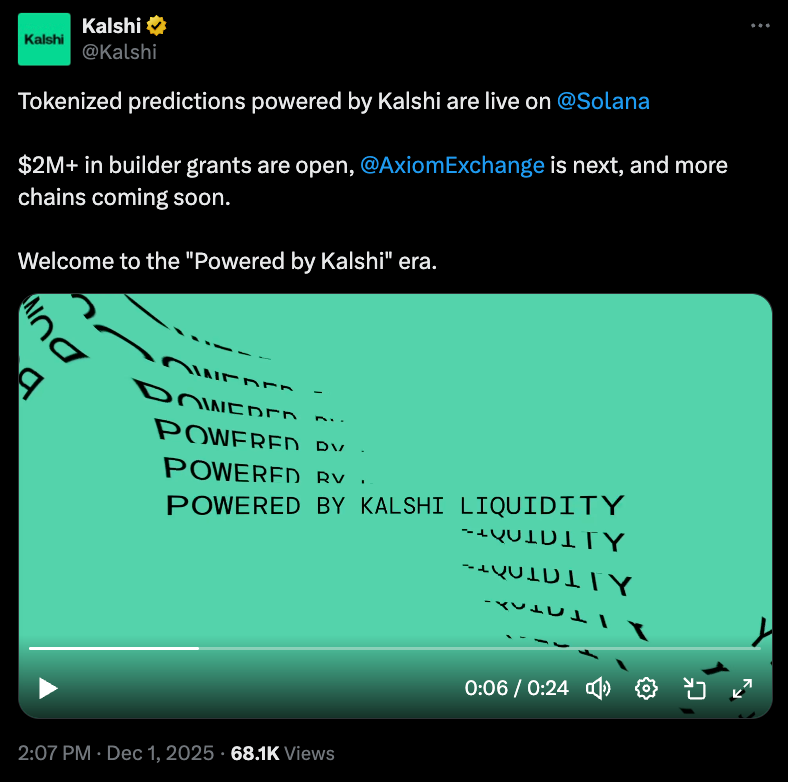
John Wang, head of Kalshi's crypto business, publicly stated in a media interview that by entering the $3 trillion digital asset market, Kalshi will be able to obtain the liquidity needed to scale its products, especially as investor demand for prediction markets is rapidly growing.
To achieve this, Kalshi has taken two key actions:
- It currently supports decentralized finance (DeFi) protocols like DFlow and Jupiter to connect Kalshi's off-chain order book with Solana liquidity.
- It announced over $2 million in "Kalshi Builder Grants," with the next official partner confirmed as Axiom, and will support more chains in the future.
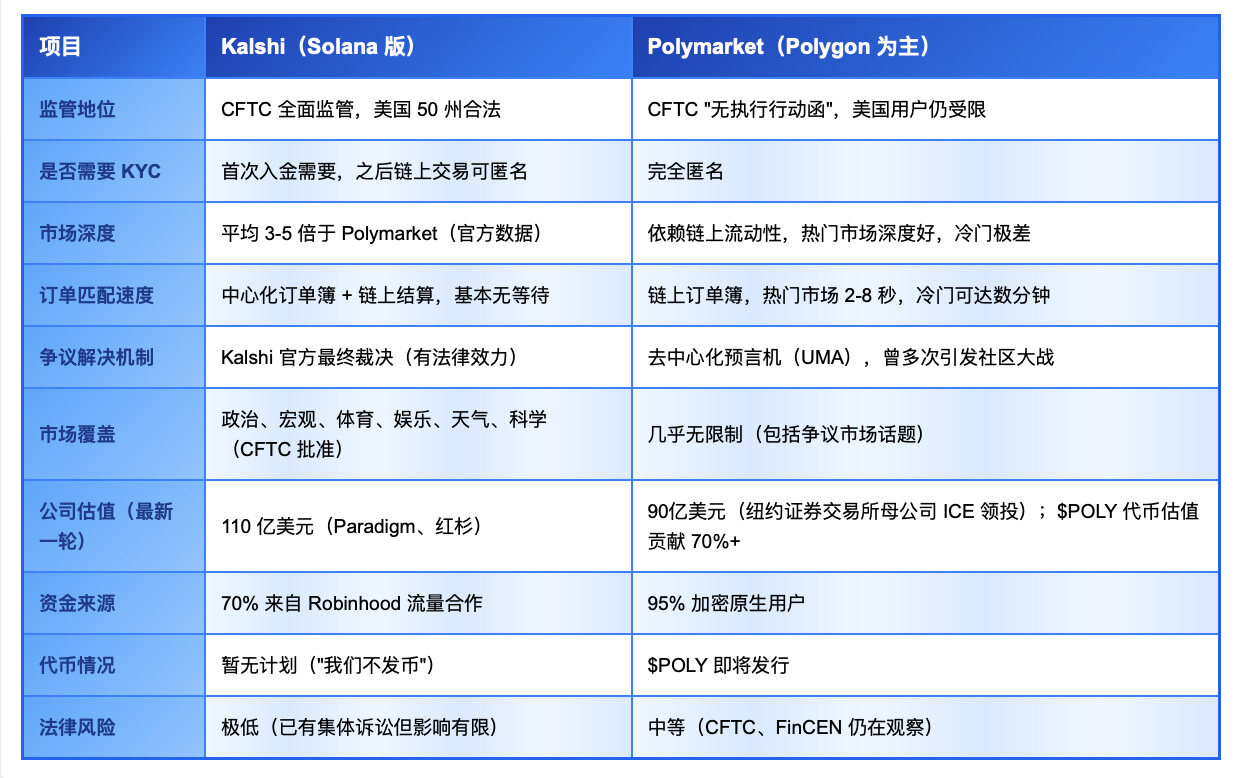
Additionally, the November funding round led by Sequoia Capital and CapitalG raised $1 billion for Kalshi, with a valuation of approximately $11 billion. This positions it as a strong competitor to Polymarket—the latter announced a strategic investment agreement with the Intercontinental Exchange (ICE, the parent company of the New York Stock Exchange) at the end of October, with ICE committing to invest up to $2 billion, pushing Polymarket's post-money valuation to about $9 billion (pre-money around $8 billion).
2. Why Now? Why Solana?
Let's rewind to three months ago. In September 2025, Kalshi's monthly trading volume first surpassed Polymarket's ($1.3 billion vs. $773 million), and in October, both set historical highs almost simultaneously: Kalshi at $4.39 billion and Polymarket at $3.02 billion. After the election windfall faded, both realized that the next $100 billion track lies not in politics, but in sports, macro data, entertainment, and weather. However, their paths are completely different:
Polymarket: Chose to continue "deepening decentralization," preparing to officially return to the U.S. market in 2026 + issuing the $POLY token;
Kalshi: Decided to "partially go on-chain": keeping the core settlement and compliance layers in-house, but opening the liquidity layer entirely to the crypto world.
The choice of Solana was almost a no-brainer:
- Real user transaction throughput has long been stable at 700–1,000 TPS, peaking over 3,000–5,000 TPS, far exceeding most public chains; single transaction gas fees are usually below $0.002, even during congestion, they remain well below $0.01;
- Jupiter is the absolute dominant router and aggregator in the Solana ecosystem, with a TVL of $2.6 billion;
- Phantom wallet's monthly active users have surpassed 15 million, and its mobile experience (with a built-in DApp browser, native NFT support, and one-click swap) is widely considered superior to MetaMask's mobile version;
In the past 12 months, Solana's ecosystem prediction market protocols (such as Parcl, Hedgies, Limitless, etc.) have educated and accumulated a large number of users familiar with prediction markets, providing a ready user base and mindset for Kalshi's on-chain contracts.
What Kalshi needs is not to "build another chain," but to "attach ready-made wings." Solana is precisely those wings.
3. Kalshi vs Polymarket: The Ultimate Comparison Table of 2025
4. After the Strong Join Forces: Who is Hit? Who Will Benefit?
The Heaviest Hit: Polymarket and its "Crypto Native Users"
Over the past year, Polymarket has prided itself on being able to allow an Iranian address and an Argentine address to bet on the U.S. election without barriers. Now, Kalshi has perfectly broken this barrier with "KYC once, then play freely." Many medium-sized whales have begun migrating funds from Polymarket to Kalshi Solana because:
- Smaller slippage;
- No fear of oracle disputes;
- Still able to maintain wallet anonymity.
The tokenization initiative will pose a real challenge to the market share of prediction platforms like Polymarket by granting Kalshi users higher anonymity, backed by compliance.
The Biggest Beneficiary: The Solana Ecosystem
Overnight, Kalshi has directly channeled massive liquidity from compliant prediction markets to Solana:
TVL will visibly skyrocket, Jupiter will experience unprecedented real order depth, and the Phantom wallet will surge back to the top of the App Store tool rankings—this is not short-term speculation, but the true activation of Solana's "super entrance to prediction markets."
From now on, all uncertainties in the real world—politics, sports, macro, entertainment—will have the fastest, cheapest, and deepest trading venues on Solana.
Long-term Beneficiaries: The Entire Prediction Market Sector
The result of competition will only lead to further concentration of liquidity, tighter spreads, and exponentially improved user experience. Before the 2026 U.S. midterm elections, breaking $10 billion in monthly trading volume is already a foregone conclusion.
5. Polymarket's Counterattack Window: Only 6–9 Months Left
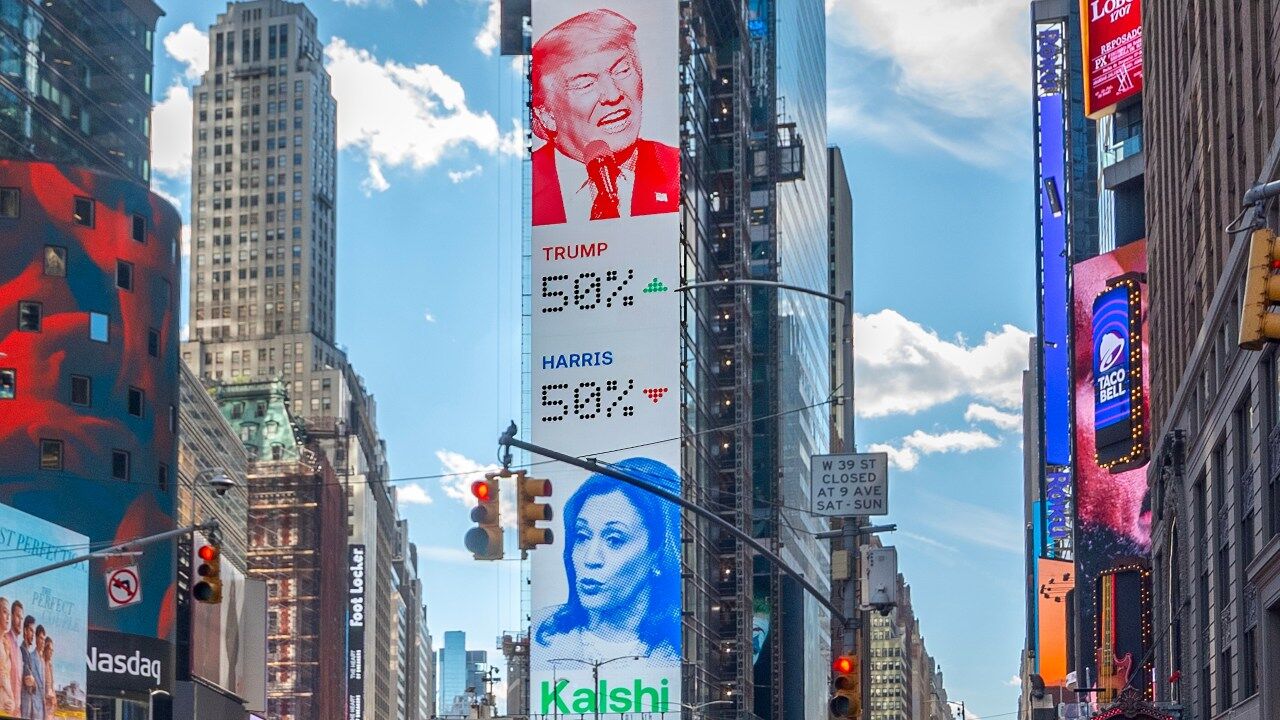
Currently, Polymarket still holds three cards:
- $POLY token (community incentives + fee dividends);
- Officially returning to the U.S. in 2026 (CFTC exemption is in the final stage);
- More aggressive market themes (as long as it's not illegal, it will always dare to play more than Kalshi).
But time is running out. Kalshi has already proven: regulation is not a burden, but the sharpest spear.
When you can provide both the security of compliance and the ultimate experience on-chain, the so-called "decentralized faith" is actually laughably fragile in the face of real money.
6. Conclusion: The Next Trigger to Ignite
December 1, 2025, will undoubtedly be written into the annals of prediction market history. It is neither crypto defeating traditional finance nor traditional finance defeating crypto.
It is simply a fundamental business truth being validated once again: users will always invest in the side that is "more usable, cheaper, and safer," even if it is only 5% better than the opponent.
And the "liquidity" switch that Kalshi pressed today on Solana has prematurely ignited the second half of the prediction market.
What remains to be seen is only one thing: Can Polymarket press its own switch before the summer of 2026?
免责声明:本文章仅代表作者个人观点,不代表本平台的立场和观点。本文章仅供信息分享,不构成对任何人的任何投资建议。用户与作者之间的任何争议,与本平台无关。如网页中刊载的文章或图片涉及侵权,请提供相关的权利证明和身份证明发送邮件到support@aicoin.com,本平台相关工作人员将会进行核查。