After repeated negotiations that began in 2025, multiple media outlets reported in mid-May 2026 that the United States and Iran were close to reaching an agreement on a memorandum of understanding. The draft included three key provisions: an extension of the current ceasefire arrangement by another 60 days, the reopening of the Strait of Hormuz, and the United States lifting some port blockades. At the same time, some reports mentioned a framework for subsequent nuclear negotiations, while the intense mutual denial of details between Iranian and Saudi media highlighted that this game is still ongoing. On May 24, the Prime Minister of Pakistan publicly expressed willingness to sincerely promote peace and hoped to host the next round of U.S.-Iran talks in his country soon. Under this narrative, market sentiment tended to bet on a temporary easing of geopolitical tensions. However, alarms were simultaneously sounding on-chain: based on Cosmos, the EVM-compatible blockchain Evmos decided to stop operations according to an on-chain proposal, halting block production at around height 37,318,000, marking the exit of a long-tail public blockchain; on the same day, StablR's issued USDR and EURR became unpegged, with PeckShield Alert indicating that EURR's price temporarily dropped by about 20%, with a single source claiming that relevant contracts were suspected to have been attacked, leading to potential losses exceeding 3 million U.S. dollars. On a macro level, the draft for ceasefire and transit arrangements temporarily cooled expectations for an escalation of the conflict; on a micro level, the suspension of the public blockchain and the decoupling of pegged assets reminded participants that even if external geopolitical risks seem to be paused, structural risks of blockchain projects are still accumulating and could surface dramatically during any seemingly calm weekend.
Ceasefire Proposal and Reopening of Hormuz
The "memorandum of understanding" cited by multiple media outlets suddenly occupied the center of macro narratives in mid-May because the draft included three highly symbolic clauses: an extension of the current ceasefire arrangement by 60 days, the reopening of the Strait of Hormuz, and the United States lifting blockades on certain ports. For economies and asset markets that rely on energy imports, this is interpreted as a kind of stage-wise "time buffer"—for at least two settlement cycles, tankers and cargo ships will not have to queue at the strait waiting for fate's verdict, temporarily reducing the tail risks of supply interruptions and giving risk-prone assets a predictable breathing window from a macro perspective.
However, there are multiple uncertainties regarding the implementation of this draft. Reports indicate that the document also attempted to embed a framework for subsequent negotiations around nuclear issues, with Saudi media even suggesting that "Iran plans to pause uranium enrichment above 3.6% for 10 years," which was categorically denied by Iran's Tasnim News Agency as "fundamentally erroneous," revealing significant differences in details of the negotiations between sources. At this point, Pakistan actively stepped forward, with the Prime Minister publicly stating on May 24, 2026, that he hoped to host the next round of U.S.-Iran talks soon, adding weight to the mediation role. Yet, there is still no authoritative channel confirming that this memorandum has been formally signed, leaving the market oscillating between the narratives of "ceasefire extension" and "repeated reversals," continually pricing in this uncertain status.
Nuclear Topic Denials and Information Conflicts
At the moment when the "60-day ceasefire extension" proposal was still at the reporting level, Saudi media threw out a more impactful assertion: Iran allegedly proposed to suspend enrichment activities of uranium above 3.6% for 10 years, bundling the ceasefire and nuclear issues into a future framework. Almost simultaneously, Iran's Tasnim News Agency cited insiders stating that such nuclear reports are "fundamentally erroneous," emphasizing that the current negotiation focus is on how to end the ongoing war, with evident discrepancies in various versions regarding nuclear details. The two narratives appeared closely in time, indicating a contest of public opinion outside the negotiation table, one side focusing on long-term nuclear constraints while the other downplayed or denied the inclusion of nuclear topics in the memorandum.
This kind of misalignment is not only seen in nuclear issues. The clause regarding whether the 60-day ceasefire in the U.S.-Iran MOU can be extended was included by some media as a potential option, but there is still a lack of official confirmation from both sides; some media also attempted to directly link the drop in oil prices and rebound of crypto assets with the negotiation progress, yet the specific data and causal relationships remain to be verified. In this phase of overlapping sources of information and intense narrative competition, any single report tends to reflect the rhetoric of one side participating in the game rather than concrete facts that can directly translate into positional decisions. Investors, in the absence of a unified stance, need to lower their trust weight on any single news item, viewing it as one of the scenarios rather than a predetermined conclusion.
Evmos Halts Block Production and Cosmos Long-Tail Exit
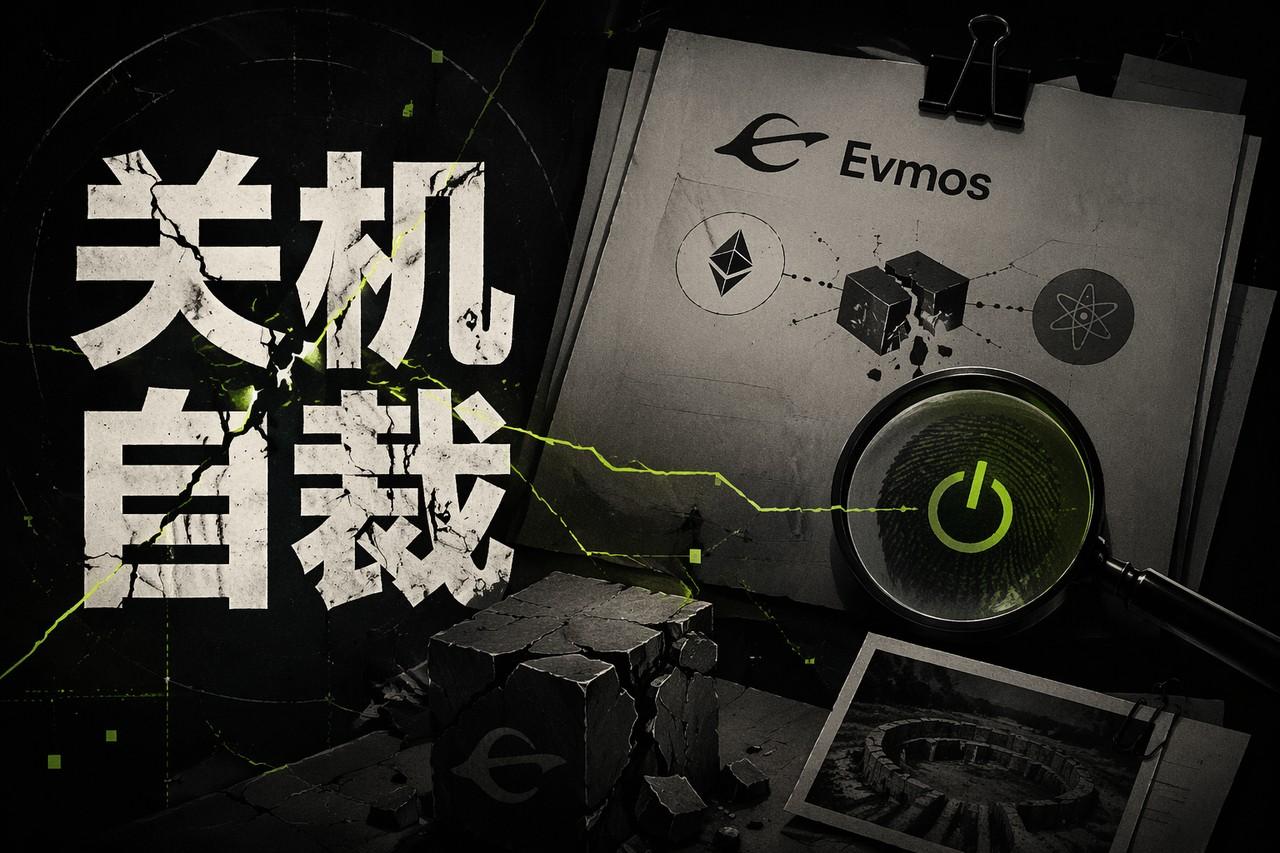
While the macro narrative was still tugging over ceasefire expectations, on-chain signals had already issued a more direct "exit notice." Based on the Cosmos tech stack, Evmos, positioned as an EVM-compatible chain, decided to stop operations in mid-May 2026 based on a network proposal, with a single source stating that it completed its last block at an approximate height of 37,318,000, after which no more blocks would be produced. Official statements emphasized that this was a decision made according to community governance processes, not a sudden technical incident, and specific motivations were not disclosed beyond "team dissolution." As block production ceased, Evmos’s on-chain contracts and asset statuses were frozen, and users could no longer initiate new interactions; applications dependent on this chain would have to choose asset liquidation or migration to other public chains.
Returning this scene to the Cosmos ecosystem, it appears more like a long-tail public blockchain passively submitting results after a bear market. In recent times, some smaller Cosmos-based chains have demonstrated signs of slowed development pace and decreased community activity; thus, Evmos’s shutdown has written this "cooling off" into an endpoint based on on-chain height. For users and developers whose businesses and assets are highly tied to this single long-tail chain, it means they need to reassess deployment risks: once the chain level chooses to halt operations through a governance proposal, contracts and assets will all be paused, and who bears the migration costs and uncertainties will magnify variables that were previously overlooked. Such events are reshaping the market's risk pricing for long-tail public blockchains.
USDR and EURR Decoupling and Contract Attack Clouds
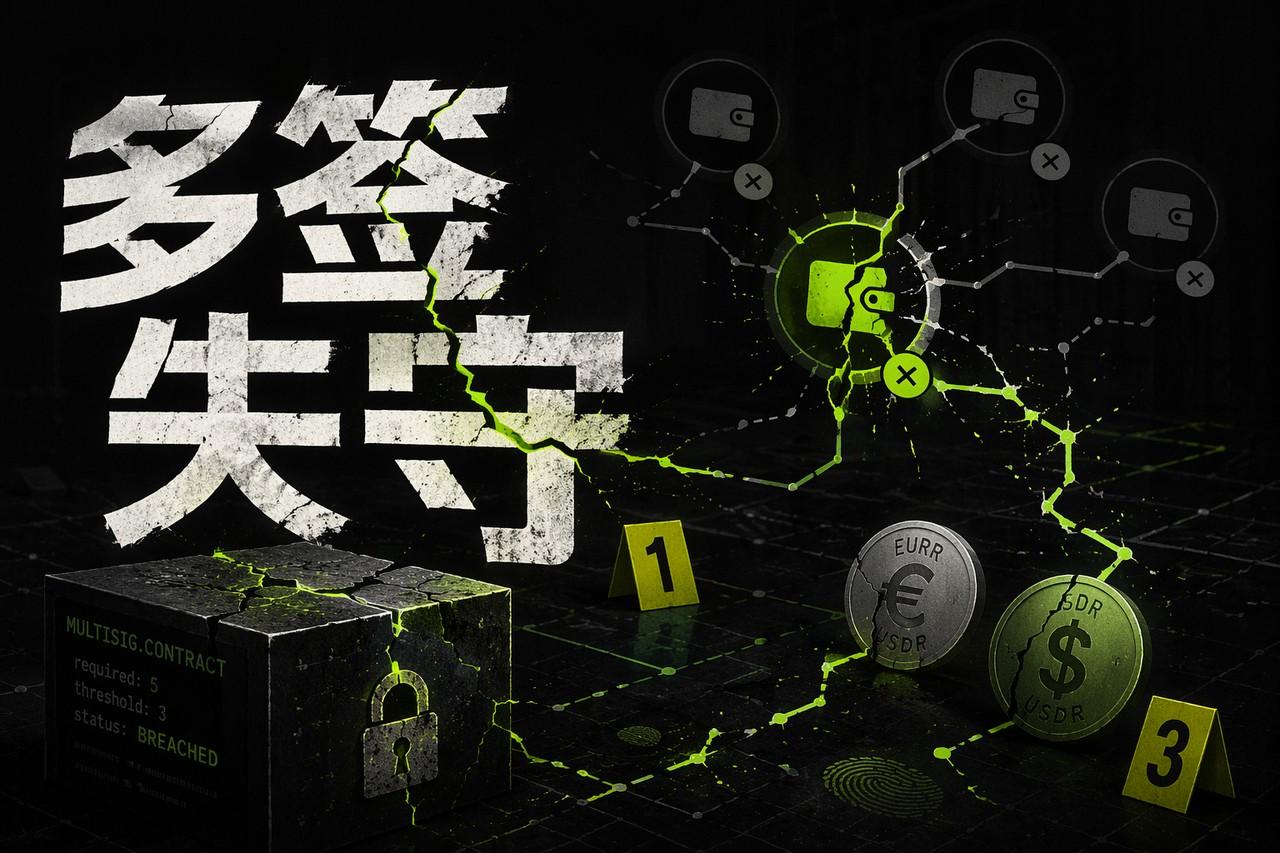
Shifting perspectives from the systemic risks of chain suspension to the asset layer is quite natural. On May 24, 2026, PeckShield Alert indicated that StablR's issued USDR and EURR had become unpegged, with the EURR, pegged to the Euro, dropping in price by about 20% at one point. At the same time, a single source claimed that StablR's related contracts were suspected of being attacked, with potential losses exceeding 3 million U.S. dollars; however, specifics of the attack path, which functions or permissions were exploited, and where the funds ultimately flowed remain undisclosed, nor is there authoritative information clarifying whether USDR and EURR will be restored to peg and through what mechanisms, leaving the event more at the narrative level of "attack clouds" and crumbling credit expectations.
The risks associated with fiat-pegged assets do not only manifest in price fluctuations themselves but expose two vulnerable links: first, contract security, including whether it has been adequately audited, if there are single-point permissions, and whether emergency switches are pre-set to handle anomalous operations; second, the transparency of issuance and redemption mechanisms, whether the external parties can clearly see the underlying asset allocations, liquidation orders, and risk contingency plans. The decoupling of USDR and EURR along with rumors of attacks has made the market realize again that once niche issuers show uncertainty in contracts or information disclosure, user trust can quickly reverse. Therefore, when choosing such assets, contract audit reports, restrictions on contract changes by the team, and the issuer's transparency regarding underlying assets and risk control mechanisms must be treated as equally important decision variables alongside interest rates and convenience.
Expectations for Easing and On-Chain Risks Running Parallel
Looking back on the timeline, in mid-May 2026, the U.S.-Iran memorandum of understanding remained at a stage intertwined with media reports and statements from both sides, with positive narratives about "extending the ceasefire for 60 days, reopening Hormuz, and lifting some port blockades," alongside Iranian denials about suspending high-enriched uranium enrichment. On May 24, the Prime Minister of Pakistan publicly expressed hope to host the next round of talks soon, providing a new time window for continued negotiations. Parallel to this, on the on-chain level, Evmos ceased block production based on a proposal and formally exited, while USDR and EURR experienced decoupling and faced suspected contract attacks, though details and compensation plans were not yet clarified. According to AiCoin data, this combination of "macro easing expectations + individual project explosions" enables both benefitting at the narrative level and pressures from specific agreements to coexist, making it easier for the market to evolve towards differentiation between segments and assets, with structural opportunities and risks being placed at the same table. Going forward, key variables to closely monitor are whether the U.S.-Iran memorandum is ultimately formally signed, plans for asset migration and community takeover within the Evmos ecosystem, and whether the investigation conclusions and compensation paths from the StablR incident can be implemented.
Join our community, let's discuss and become stronger together!
On-chain Telegram community: https://t.me/AiCoinWhaleData
On-chain community: https://www.aicoin.com/link/chat?cid=N6OVMor5g
AiCoin on-chain Twitter: https://x.com/aicoinwhaledata
Exclusive Hyperliquid benefits for AiCoin: https://app.hyperliquid.xyz/join/AICOIN88
Exclusive Aster benefits for AiCoin: https://www.asterdex.com/zh-CN/referral/9C50e2
免责声明:本文章仅代表作者个人观点,不代表本平台的立场和观点。本文章仅供信息分享,不构成对任何人的任何投资建议。用户与作者之间的任何争议,与本平台无关。如网页中刊载的文章或图片涉及侵权,请提供相关的权利证明和身份证明发送邮件到support@aicoin.com,本平台相关工作人员将会进行核查。