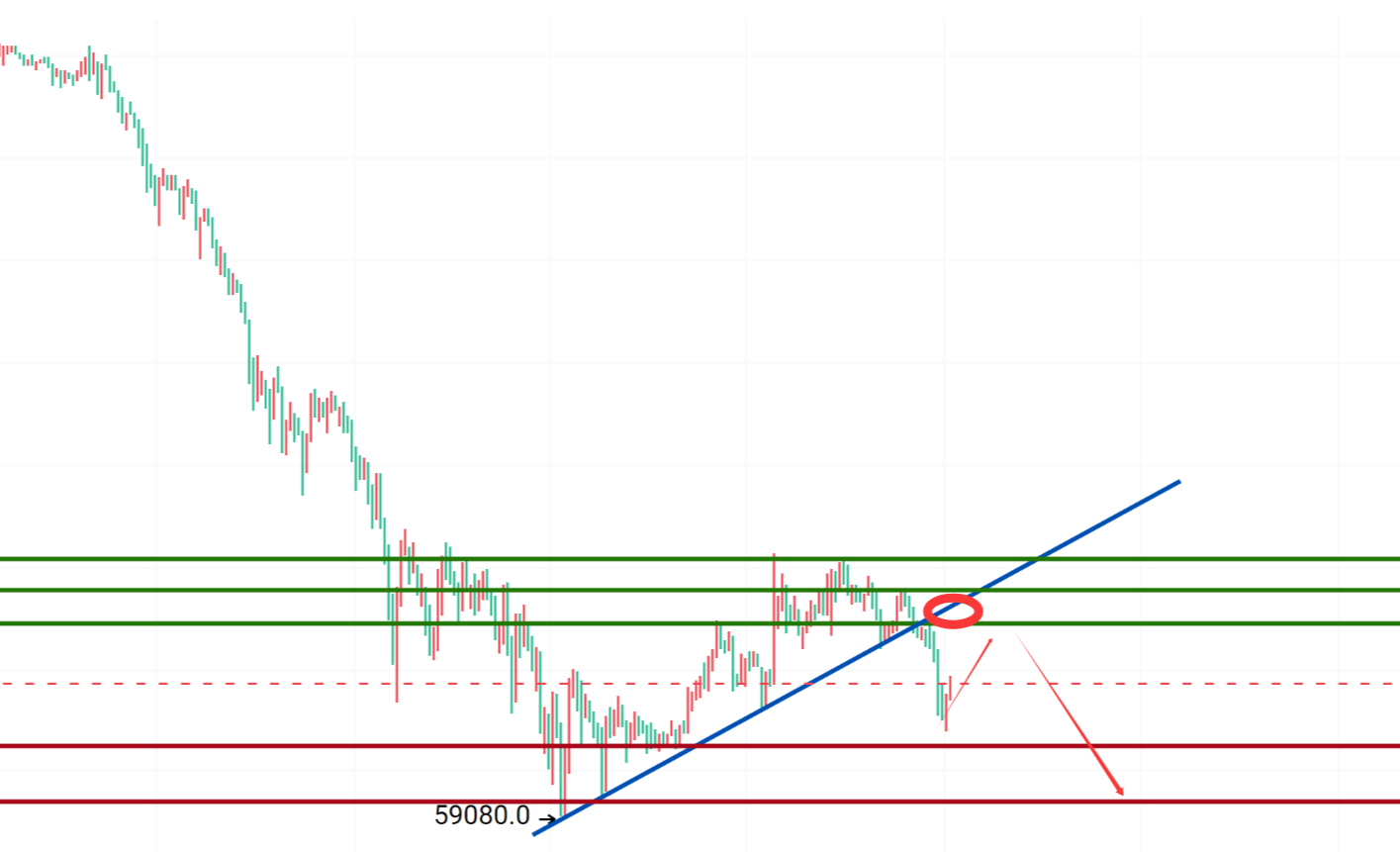
On June 10, 2026, the K-line on the screen almost turned downwards at the same moment: during the U.S. stock trading session, the S&P 500 index fell by more than 2%, with the technology and semiconductor sectors, represented by AMD down about 10.1% and Intel down about 9.5%, leading the decline. In South Korea, SK Hynix retraced about 10.85% from its intraday high, and Samsung Electronics dropped about 9.4% from its peak, as if the global tech supply chain had been pressed with a unified “liquidation” button. The energy sector exhibited a different sense of rupture—EIA had just raised its 2026 WTI price forecast to about $88.32 per barrel in the latest short-term energy outlook, bullish on medium to long-term oil prices, yet that day WTI futures plunged nearly 5% around $86.747 per barrel, and Brent dropped about 4.33%, with expectations running in the opposite direction of prices. Almost simultaneously, Trump publicly claimed that Iran shot down a U.S. Apache helicopter in the Strait of Hormuz and emphasized that the U.S. must respond appropriately, casting a geopolitical shadow over this vital energy corridor. According to AiCoin data, approximately $368 million in the crypto derivatives market was liquidated within the past 24 hours, of which about $284 million were long positions, with the concentrated long liquidation, coupled with the tech stock sell-off and oil price "expected reversal," creating an asset-crossing risk aversion transmission chain from Wall Street to crude oil and then to the crypto market.
EIA is bullish on oil prices, yet faces a 5% plunge
Also on June 10, fundamental signals and market prices began to race in opposite directions. EIA released its latest short-term energy outlook, raising the WTI and Brent price expectations for 2026, with WTI elevated from about $85.68 per barrel to about $88.32 per barrel, essentially "anchoring" future oil prices higher in the report. By common sense, this seemed bullish—indicating that the medium to long-term supply and demand landscape is not pessimistic; theoretically, energy assets should obtain higher risk compensation under geopolitical disturbances.
However, according to AiCoin data, on the same trading day as the report was published, the market provided a completely opposite response: WTI crude oil futures were reported at about $86.747 per barrel, with an intraday drop of nearly 5%, Brent crude fell about 4.33%, as oil prices chose to "dive" in the face of higher forward expectations. Behind this, the market may be re-pricing not 2026 oil, but the elasticity of demand and risk premium for the next few quarters: in an environment where tech stocks are collectively being valued down and geopolitical uncertainty has surged, traders are more willing to first cut their high beta long positions before slowly understanding the few lines of adjusted numbers in the report. The result is a classic oil market "long bullish, short bearish" scenario—institutions are bullish on forward prices in research reports, while the market responds with a substantial drop in near-month contracts to this mismatch, laying a clear tension for subsequent sentiment to spill over from commodities to crypto assets.
Chip stocks collectively stall: the valuation backlash under the AI boom
The "long bullish, short bearish" mismatched sentiment from the commodity side had not been digested yet when it was further amplified by a collective sell-off of tech stocks on the same trading day. On June 10, the S&P 500 index had an overall decline of over 2%, driven not by traditional cyclical stocks, but by the semiconductor sector that had been lifted to high levels by the AI narrative over the past two years: AMD dropped about 10.1%, Intel down about 9.5%, and in the South Korean market, according to trade.xyz data, SK Hynix fell about 10.85% from its intraday high, while Samsung Electronics dropped about 9.4% from its peak. The leading companies in both the U.S. and South Korea were almost simultaneously sold off, clearly signaling that the AI hardware chain is no longer a “sure bet” that only rises without falling.
This round is not just a simple emotional correction but a repricing of "high valuation + difficult realization." Market commentator Herman Jin bluntly stated, "CPO currently faces severe capacity bottlenecks and significant yield issues," and such voices from key segments have led investors to begin questioning the entire AI supply chain's expansion pace and profitability realization paths. Against the backdrop where semiconductor and AI-related stock valuations have already been pushed to high levels by expectations, any doubts regarding shipment pace, yield, or capacity are quickly magnified into a discounted requirement for the entire tech sector. The long bearish candle of June 10, which fell synchronously, was implicitly informing funds: the high beta growth story no longer permits leniency of "counting later," as subsequent risk appetites contract, the order of withdrawal often starts from the most expensive and volatile assets, laying a clear narrative starting point for the chain reaction from tech stocks to crypto assets.
Clouds over Hormuz: Geopolitical sparks ignite risk aversion
On the same trading day when high valuation tech stocks were collectively pressed the “decrease” button, Trump suddenly shifted the focus from earnings reports and capacity to the Strait of Hormuz. He publicly stated that Iran shot down a U.S. Apache helicopter in this crucial shipping lane and emphasized that the U.S. "must respond to this attack." For funds already highly sensitive to macro and valuation, this was not a normal military news item but felt like stomping on the thinnest layer of confidence. The Strait of Hormuz itself is one of the key channels for global energy transport, especially crude oil transport; any military friction there would instinctively heighten market worries about supply security.
The price reactions were almost synchronous. On June 10, international oil prices sharply turned downward in the tug-of-war between news and expectations: WTI crude futures fell nearly 5% intraday, Brent crude prices dropped about 4.33%, starkly contrasting with the EIA raising its 2026 WTI and Brent price forecasts on the same day. More subtly, as of current public information, no specific military actions or diplomatic responses from the U.S. or Iran following this incident have been disclosed, the only thing confirmed is that uncertainty itself is rising rapidly. When oil prices fluctuate violently, the S&P 500 index falls over 2%, and tech and semiconductor leaders’ stock prices drop together, geopolitical risk is no longer an independent variable, but an overlay on existing anxieties about "overvaluation and slow growth," pushing all risky asset pools in the same direction—any high volatility, highly leveraged assets must pay a higher discount due to this layering of unease.
$368 million in long positions buried: Crypto passively follows risk retreat
According to AiCoin's summary of industry derivatives data, approximately $368 million in contracts were liquidated across the network in the past 24 hours, of which about $284 million were long positions, a significantly high proportion. The timing of the concentrated liquidations coincided highly with the plunge of U.S. tech stocks and the significant intraday decline of crude oil around June 10, indicating that crypto assets did not follow an independent path but were "processed" together with high Beta tech stocks and commodity longs, facing passive selling and liquidation under the same risk reduction logic.
Structurally, this wave resembles a collective squeeze of leveraged longs rather than a chain collapse triggered by a specific project's failure or regulatory blitz: the existing public information does not point to a single cryptocurrency, a single platform, or a single policy as the catalyst; the concentration of liquidations more reveals the entire market's limited ability to bear macro and geopolitical noise, with the rapid amplification of external fluctuations, compounded by high-leverage positions, swiftly transforming into technical liquidations and violent fluctuations at the trading levels. However, solely based on this $368 million liquidation data, we can only confirm that short-term risk preferences are rapidly contracting, which is far from sufficient to derive a conclusion that the medium to long-term trend has been completely reversed.
How will multi-assets be repriced under the tug-of-war between expectations and reality?
In the same time window on June 10, EIA raised its 2026 WTI forecast to about $88.32 per barrel, while WTI and Brent on the market both dropped nearly 5% and 4.33% respectively; the divergence of "expected oil price increase—spot price decrease," combined with the S&P 500 dropping over 2%, and the declines of AMD, Intel, and South Korean semiconductor leaders, along with a concentration of liquidation in crypto derivatives long positions amounting to about $284 million, comprised a typical cross-market mismatch: the medium-term tight balance in models collided head-on with the market’s repricing of current demand, geopolitical uncertainty, and high valuation risks. The core of the current game is not a simple binary choice of "Has the bear market arrived?" but whether the market is digesting the geopolitical shocks and demand noise in the short term or leveraging the situation to systematically reduce the margin of safety premium assigned to tech stocks and high Beta crypto assets. Going forward, the further expected adjustments on oil price paths from official energy agencies, the performance and guidance of U.S. tech and semiconductor giants, whether the situation in Hormuz escalates, and the leverage levels and liquidation paces in the crypto market will all be key variables in determining whether this round of repricing evolves into a medium to long-term structural turning point. In the absence of more detailed on-chain funding and position structure data to corroborate, simply extrapolating this violent fluctuation as a unidirectional trend lacks rigor and fails to provide sufficient justification for one's risk-bearing.
Join our community, let’s discuss and grow stronger together!
AiCoin exclusive Hyperliquid benefits: https://app.hyperliquid.xyz/join/AICOIN88
AiCoin exclusive Aster benefits: https://www.asterdex.com/zh-CN/referral/9C50e2
On-chain Telegram community: https://t.me/AiCoinWhaleData
On-chain community: https://www.aicoin.com/link/chat?cid=N6OVMor5g
AiCoin on-chain Twitter: https://x.com/aicoinwhaledata
免责声明:本文章仅代表作者个人观点,不代表本平台的立场和观点。本文章仅供信息分享,不构成对任何人的任何投资建议。用户与作者之间的任何争议,与本平台无关。如网页中刊载的文章或图片涉及侵权,请提供相关的权利证明和身份证明发送邮件到support@aicoin.com,本平台相关工作人员将会进行核查。