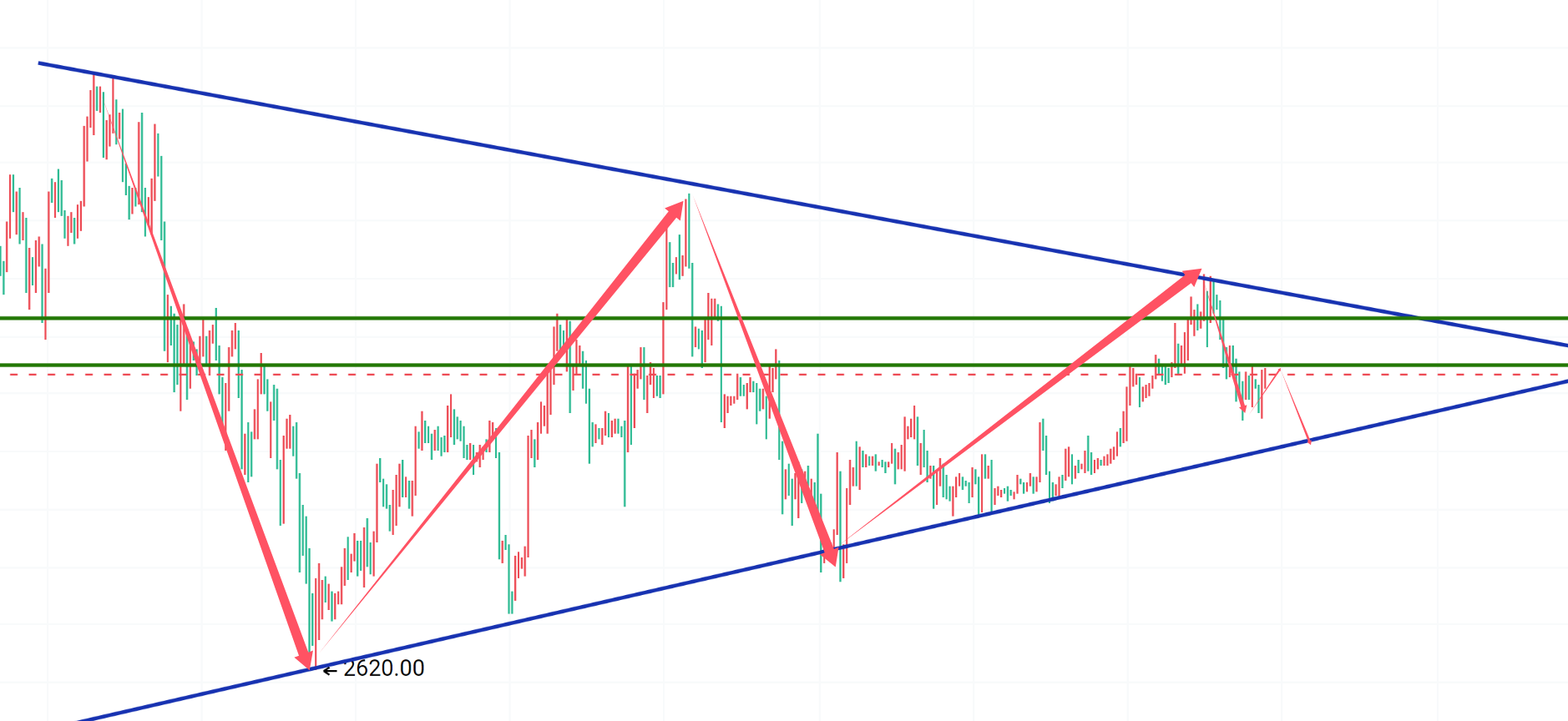
At the beginning of 2026, in the East 8th Time Zone, the on-chain world is experiencing an invisible watershed: on one side, there is a sharp increase in the demand for data protection from users and institutions, while on the other side, global regulations are continuously tightening compliance, auditing, and tracking capabilities. Between these increasingly tense lines, the privacy track is shifting from early "optional anonymity tools" to "Privacy 2.0" underlying infrastructure, while Bitcoin is slowly transitioning from a speculative asset to a narrative upgrade as a national-level strategic asset. These seemingly parallel threads are beginning to show potential intersecting trajectories under the influence of multiple forces such as AI data on-chain, large-scale institutional participation, and geopolitical games: when privacy infrastructure is no longer just a safe haven for retail investors but becomes the technical foundation that sovereign entities and large institutions must face when allocating Bitcoin, whether Privacy 2.0 and the nationalization of Bitcoin will meet on the same main channel in the next cycle is becoming the invisible main line of industry discussion.
From Surveillance Panic to the New Normal of Default Privacy
In recent years, on-chain transparency has been regarded as one of the most revolutionary features of blockchain: all transfers, contract calls, and asset flows are publicly traceable, providing unprecedented verifiability to the market. However, with the proliferation of on-chain analysis tools and the maturity of blacklist mechanisms and address profiling systems, this extreme transparency has gradually revealed another side: users' funding habits, social relationships, and even business strategies are disassembled by algorithms into easily analyzable tagged profiles, leading ordinary participants to unknowingly enter a state of "being continuously monitored." Multiple regulatory actions targeting specific address groups and compliance blockages have also reinforced this surveillance panic, transforming privacy anxiety from a minority "geek preference" into a psychological consensus among an increasing number of participants. Accompanying this emotional evolution, the viewpoint that "privacy is evolving from an optional feature to a system default infrastructure" has begun to be repeatedly cited, referring not just to a new functional module but to an overall leap in narrative hierarchy: privacy is no longer an embellishment attached to applications but is reinterpreted as a system-level requirement on par with consensus and security. Especially in scenarios where AI is massively trained and inferred on-chain, and institutional asset management and settlement processes are on-chain, the flow of data expands exponentially. Once training data sources, model invocation logs, counterparty information, and risk control parameters are exposed, it is no longer just a "personal privacy" issue but directly points to trade secrets, compliance responsibilities, and even national security. In such a future scenario, providing refined permission control and minimal data exposure privacy infrastructure without sacrificing audit and regulatory visibility is transforming from an abstract vision into a rigid necessity that must be prioritized.
Zcash's Turn and the Path Divergence of Privacy 2.0
The embryonic form of Privacy 2.0 was not designed out of thin air on a whiteboard but gradually took shape in the process of being forced to turn after colliding with regulatory walls in the early extreme anonymity narrative. A group of early privacy projects represented by Zcash initially marketed "full-chain anonymity" as their core selling point: key information such as transaction amounts, addresses, and notes were encapsulated by zero-knowledge proofs, making it difficult for outsiders to track the flow of funds. This "pure anonymity narrative" attracted a large number of users seeking privacy protection in the early days. However, as countries' requirements for anti-money laundering and counter-terrorism financing continued to escalate, completely black-box solutions on-chain were quickly labeled as high-risk. Against the backdrop of the EU promoting new rounds of regulatory frameworks like AMLR, service providers were required to have capabilities for transaction tracking and reporting suspicious behavior, forcing privacy projects to begin reconstructing their technology and business models. Zcash gradually introduced a selective disclosure mechanism, allowing users to open transaction details to regulatory agencies or auditors under specific conditions, achieving a compromise of "invisible to the public, visible to specific entities." This audit-friendly design became a hallmark shift for the privacy track from 1.0 to 2.0. During the same period, projects like Aztec Network and Railgun explored different technical branches: the former leaned towards building a Layer 2 environment that combines privacy and programmability, allowing developers to construct complex DeFi logic while ensuring user privacy; the latter, while emphasizing the concealment of transaction details, faced the pressure of compliance more directly, making it an unavoidable issue in its narrative to avoid being seen as synonymous with "black-box privacy." Thus, the two paths of Privacy 2.0 are becoming clearer: one end insists on extreme anonymity, minimizing compromises with regulation as "black-box privacy," while the other end is "compliance-friendly privacy," starting from selective disclosure, compliance interfaces, and auditing tools. Privacy is no longer a one-dimensional "the more anonymous, the better," but is redefined in a regulatory context as a multi-layered permission management and differentiated visibility system engineering.
Privacy Fund Reflow and Observation Under Regulatory Pressure
Under the continuous pressure of regulatory crackdowns, the funding cycle in the privacy track has also shown distinct structural differentiation. After experiencing early enthusiasm and subsequent crackdowns, judgments about "the structural warming of the privacy track in 2025" have begun to emerge in the market, with funding attitudes shifting from a simple "risk-averse retreat" to a more nuanced "tentative reflow": no longer willing to pay for purely confrontational anonymous narratives, but also beginning to seek projects that can provide privacy technology benefits within a compliance framework as mid- to long-term allocation targets. This shift is inseparable from the continuous clarification of global regulatory attitudes. The South Korean Financial Services Commission (FSC) plans to impose fines of up to 10% of the stolen assets on exchanges that have been hacked, clearly signaling a tough stance from regulators on security and compliance: security incidents are no longer "technical black swans" but will directly translate into compliance costs and financial penalties. In this climate, whether exchanges, custodians, or on-chain financial infrastructures, all are forced to reassess their risk exposure and privacy capabilities, as relying solely on the "on-chain transparency + post-event accountability" model clearly fails to meet the dual expectations of regulators and users. Regulatory pressure has not simply compressed privacy demand; rather, it has, to some extent, forced project parties to shift from an extreme anonymity route to compliance-compatible privacy infrastructure: embedding KYC interfaces, optional audit windows, compliance reporting interfaces, and risk isolation mechanisms within the protocol layer has become an unavoidable design prerequisite for the new generation of privacy projects seeking financing and landing cooperation. Funding has also formed new selection criteria in this process, being more willing to provide patient capital to teams that can clearly explain "how to achieve privacy protection within regulatory red lines," while generally maintaining a wait-and-see or even direct avoidance stance towards projects that continue to emphasize "absolute untraceability."
The Imagination and Game of Bitcoin as a National Asset
In response to the tug-of-war between technology and regulation in the privacy track, the grand narrative of Bitcoin is also undergoing a change in hierarchy. Cathie Wood, founder of ARK Invest, posits that "Bitcoin will play a core strategic role," which is essentially not a simple bullish price prediction but rather a long-term framework that examines it within the context of national-level anti-inflation and geopolitical games: in an environment where fiat currency credit cycles are increasingly volatile, regional conflicts are frequent, and sanction tools are rampant, an asset that is not controlled by a single sovereign and is globally liquid is seen by some as a natural "strategic option." At the same time, ARK believes that the clarity of Bitcoin regulation is expected to improve in 2025-2026. This time perspective reflects a longer cycle of narrative evolution: from the early "pure speculative asset" to gradually being included in institutional asset allocation, and then to discussions about whether it could become part of a national balance sheet, the role that Bitcoin carries is being continuously elevated. Some countries have already practiced holding Bitcoin at the fiscal or treasury level, using it as a diversified allocation tool beyond foreign exchange reserves, while the question of whether major economies like the United States will incorporate Bitcoin into a more formal strategic reserve system at some future stage has formed a long-term debate at the policy level. On one hand, supporters emphasize that Bitcoin can provide a new safety net for countries in the context of a fragmented global financial system and traditional reserve assets being politically constrained; on the other hand, opponents worry about its price volatility, regulatory uncertainty, and potential side effects that could undermine existing financial power structures. In this tug-of-war, every step of Bitcoin's nationalization path must find a delicate balance between macro-financial stability, monetary sovereignty, security considerations, and technical realities.
When Privacy Infrastructure Meets National Asset Allocation
If we further extrapolate the scenario where Bitcoin truly enters national asset allocation, the tension between privacy infrastructure and national-level usage needs will become even sharper. On one hand, when holding and deploying Bitcoin, countries and large institutions need to meet highly stringent audit transparency and financial disclosure requirements; any large-scale fund transfer may become the focus of market and public attention. On the other hand, due to the needs of financial monitoring, security protection, and strategic confidentiality, these entities cannot accept having their entire operational process fully exposed on a public chain. How to leave a verifiable footprint on-chain that meets accounting standards and auditing processes while not exposing every strategic adjustment, counterparty information, and risk hedging path becomes a question that Privacy 2.0 must address. The selective visibility and permission layering emphasized by the Privacy 2.0 path provide a theoretical solution for such high-sensitivity usage scenarios: under the premise of meeting KYC and compliance reporting, using technologies like zero-knowledge proofs, multi-party secure computation, and threshold signatures to encapsulate the detailed data of national or institutional addresses, only opening necessary views to specific regulatory agencies, auditing institutions, or internal risk control systems, while presenting a strictly abstracted minimal information set to the public and ordinary on-chain observers. In this framework, the privacy track and the nationalization narrative of Bitcoin may produce synergies on multiple levels: in the direction of compliance-friendly privacy, providing audit-able, regulatory-compliant but not fully public asset custody and settlement solutions for central banks, sovereign funds, pension funds, and other participants; in the custody and multi-sign governance layer, utilizing privacy technology to protect the structure of signers and internal permission configurations, reducing security risks arising from the exposure of key positions; in cross-border settlement and batch clearing scenarios, using privacy proofs to hide specific counterparties and price parameters while ensuring that the macro-level settlement scale is verifiable. This intersection does not mean that Bitcoin will inevitably move towards a "completely black-box" national asset but rather indicates a more complex technical-institutional hybrid: privacy tools are quietly evolving from a weapon for retail self-protection to an infrastructure option for sovereign and institutional participation in the Bitcoin system.
Navigating the Gray Area: The Mutual Shaping of Privacy and Mainstreaming
Reviewing the evolution of the narratives around Privacy 2.0 and Bitcoin as a strategic reserve reveals that, despite their different starting points, both point towards a more complex reality: technological innovation no longer develops in a vacuum but is forced to explore in the gray area under the multiple constraints of high-pressure regulation, geopolitical games, and macro-financial stability. Privacy projects are moving from extreme anonymity to compliance compatibility, while Bitcoin is transitioning from a decentralized ideal to a potential role as a national asset, both essentially attempting to redefine the boundaries between transparency and confidentiality, public and control. In the short term, regulatory pressure and compliance costs will continue to create uncertainty, and projects face not only technical challenges but also a whole set of "non-technical costs" such as auditing interfaces, compliance team building, and cross-jurisdictional collaboration; capital will also oscillate repeatedly under the disturbances of regulatory winds and policy expectations. However, in the medium to long term, as more scenarios like AI, institutional finance, and public services go on-chain, infrastructures that can provide refined privacy protection within the legal framework are expected to become indispensable underlying components of mainstream financial on-chain, just like consensus algorithms and security modules. For investors and builders, it is more important to construct a clear thinking framework: not simply betting on the extreme narratives of "absolute anonymity" or "unconditional compliance," but rather seeking incremental space at the intersection of Privacy 2.0 and Bitcoin nationalization within regulatory red lines—this includes compliance-friendly privacy protocols aimed at sovereign and institutional participants, privacy middleware serving custody and settlement layers, and cryptographic proof tools supporting regulatory reporting and risk control modeling. The truly long-term valuable opportunities are likely buried within these seemingly technical details, which will fundamentally reshape the relationship between assets and sovereignty.
Join our community to discuss and grow stronger together!
Official Telegram community: https://t.me/aicoincn
AiCoin Chinese Twitter: https://x.com/AiCoinzh
OKX Benefits Group: https://aicoin.com/link/chat?cid=l61eM4owQ
Binance Benefits Group: https://aicoin.com/link/chat?cid=ynr7d1P6Z
免责声明:本文章仅代表作者个人观点,不代表本平台的立场和观点。本文章仅供信息分享,不构成对任何人的任何投资建议。用户与作者之间的任何争议,与本平台无关。如网页中刊载的文章或图片涉及侵权,请提供相关的权利证明和身份证明发送邮件到support@aicoin.com,本平台相关工作人员将会进行核查。