"What if we could buy and sell cryptocurrencies directly on a world-class social media platform?"
This has always been seen as a dream by those in the crypto community, but when dreams turn into reality, it often comes as a surprise.
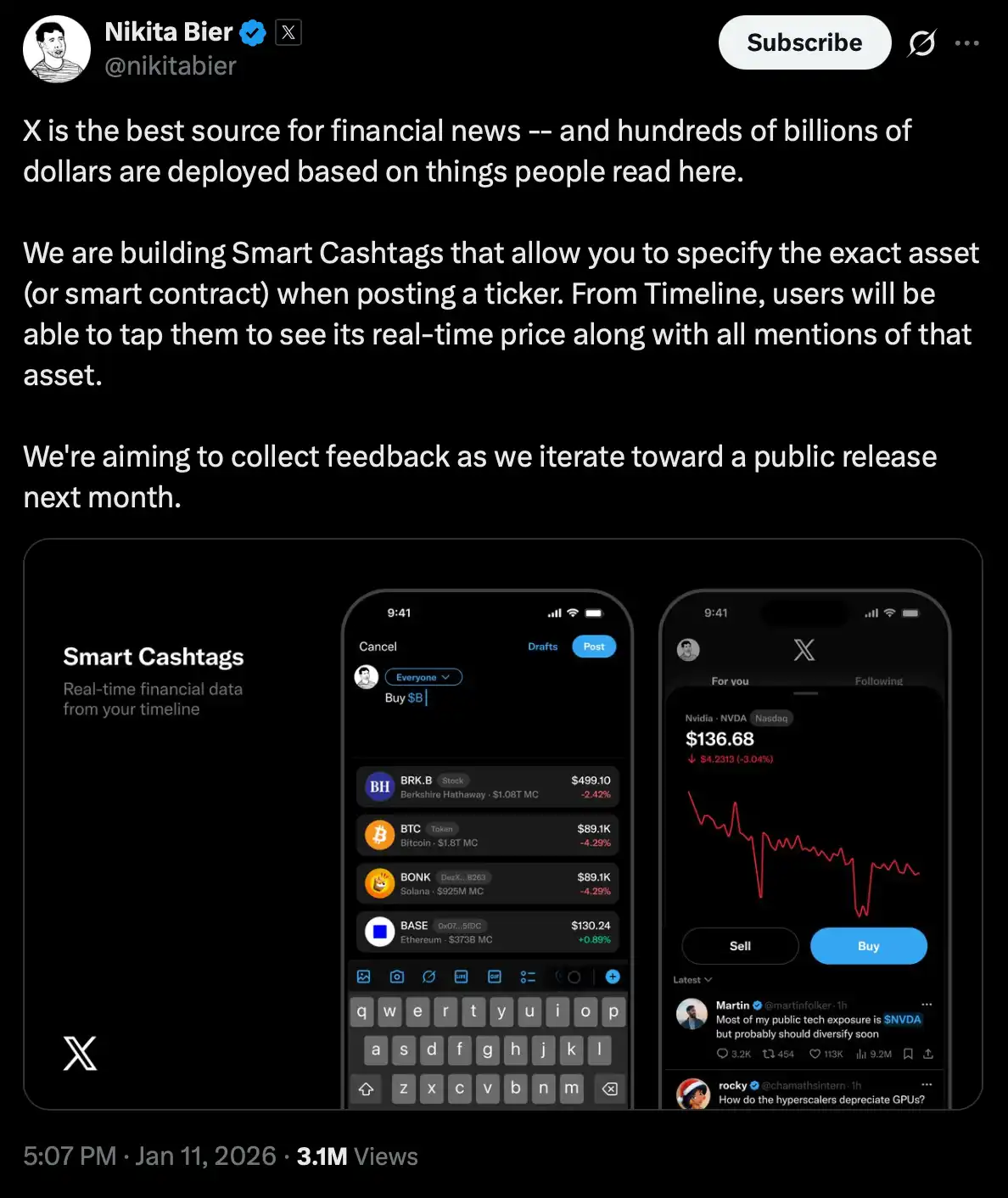
On January 11, Nikita Bier, the product head of X (Twitter), announced that the Smart Cashtags feature would be publicly launched next month. This feature will allow asset tickers mentioned in tweets to point directly to the target assets, especially cryptocurrencies, which can be accurately referenced by the token's contract address. When users click on these tickers in tweets, they will be able to see the corresponding real-time price trends and all discussions surrounding that asset on X.
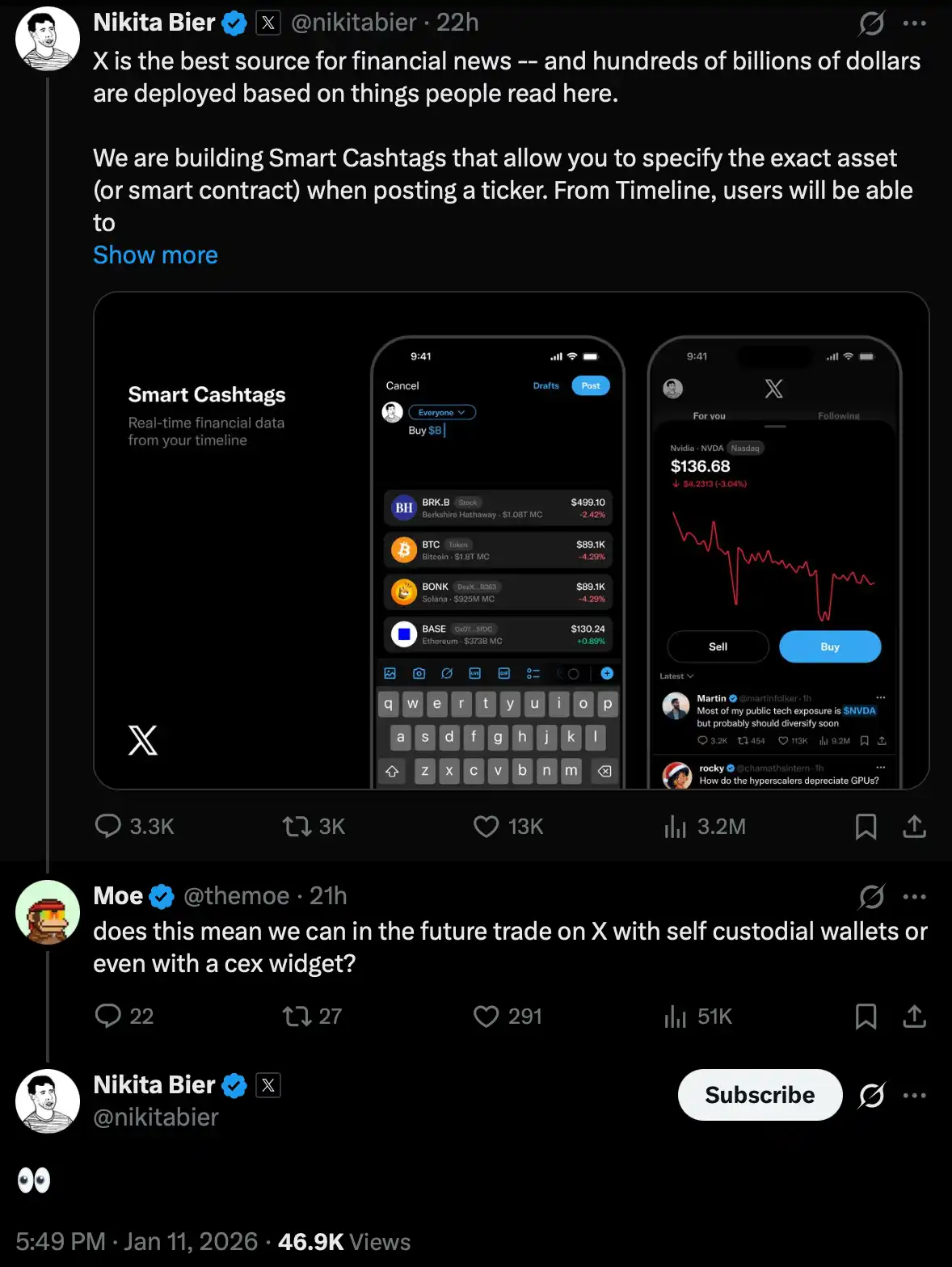
Nikita Bier included a preview image of the feature in his tweet, where we can see the appearances of $BTC, $BONK, and $BASE, along with an interface for buying and selling Nvidia stocks.
In the comments, someone asked, "Does this mean that in the future, we will be able to trade directly on X through self-custody wallets or CEX plugins?" The response was a pair of eyes representing possibility.
However, just a day before this announcement, the crypto community was "rioting" on X, targeting none other than Nikita Bier. It was as if a coalition of warlords had just gathered to attack Dong Zhuo, only for Dong Zhuo to disband his troops and invite everyone to restore the Han dynasty. Could a "Crypto Lives Matter" movement allow us to trade cryptocurrencies on Twitter? Or is there something we are missing behind the scenes?
"Crypto Lives Matter" Movement
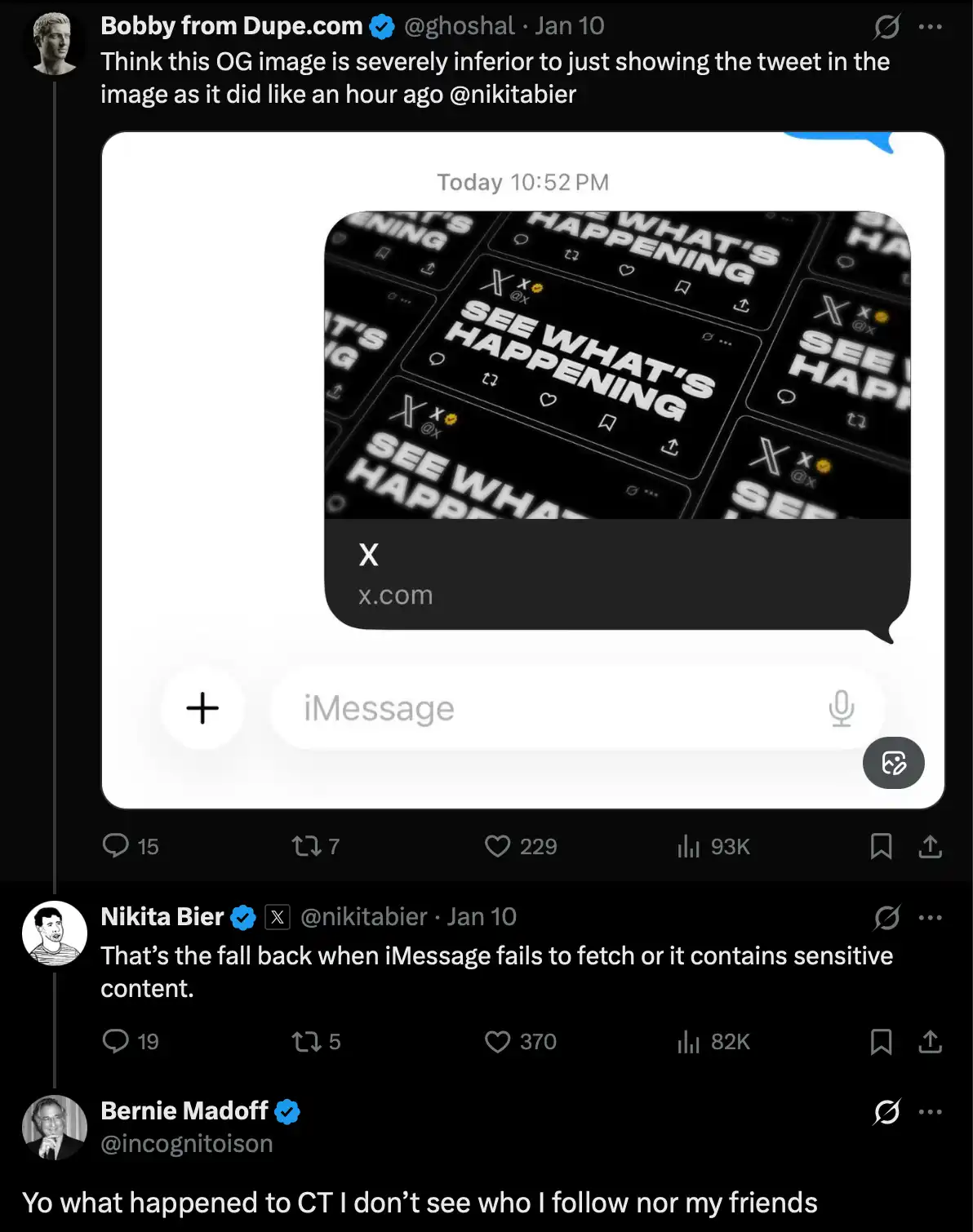
Nikita Bier often appears in various tweets related to X product issues, and as the product head, he is considered to be "surfing" on X daily. He initially responded to a simple question where someone suggested that when sharing tweet links on iMessage, it would be better if the link's cover image displayed the tweet content directly. He replied that this happens when iMessage retrieves incorrect or sensitive tweet content, which defaults to showing a cover image. At this moment, a crypto player followed up under Nikita's reply, asking, "Yo, what's up with crypto Twitter? I can't see the people I follow or my friends' posts."
Nikita's reply then became the spark that ignited the "Crypto Lives Matter" movement:
"In October of last year, a new rumor began circulating in crypto Twitter, saying that if you comment a lot every day, you can gain visibility. The reality is that every time you tweet, it consumes your daily exposure. We can't show all the new tweets you post every day to your followers because users typically only see 20-30 tweets a day."
"Crypto Twitter users are wasting their exposure by spamming 'gm' every day, and when they finally post serious content, like project announcements, they have no exposure left and then blame the algorithm for being unfriendly to crypto Twitter. Crypto Twitter is self-destructive; it has nothing to do with the algorithm."
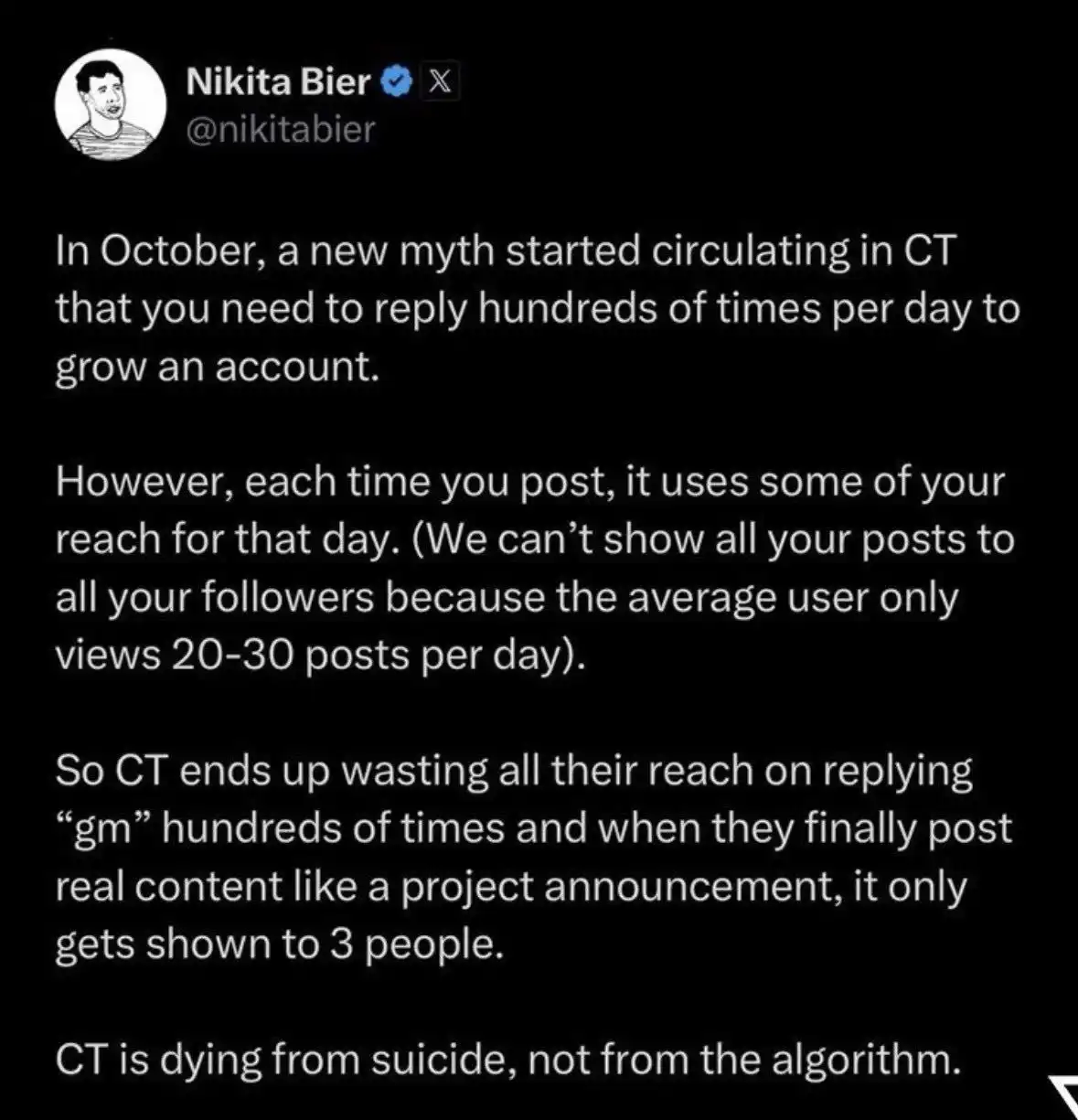
The abbreviation "gm" for "good morning" is not only the most common greeting among crypto enthusiasts but also an important part of crypto culture. Nikita was merely trying to illustrate what he considers to be worthless spam content in the crypto community, but using "gm" as an example was particularly poor, akin to being silenced in a public space for simply saying hello. Coupled with previous incidents where English-speaking KOLs like Mitch and Mr. Frog, as well as meme coin projects like Nubcat, were banned, and the low-quality comments from AI accounts and InfoFi projects like Kaito, the anger of the crypto community erupted.
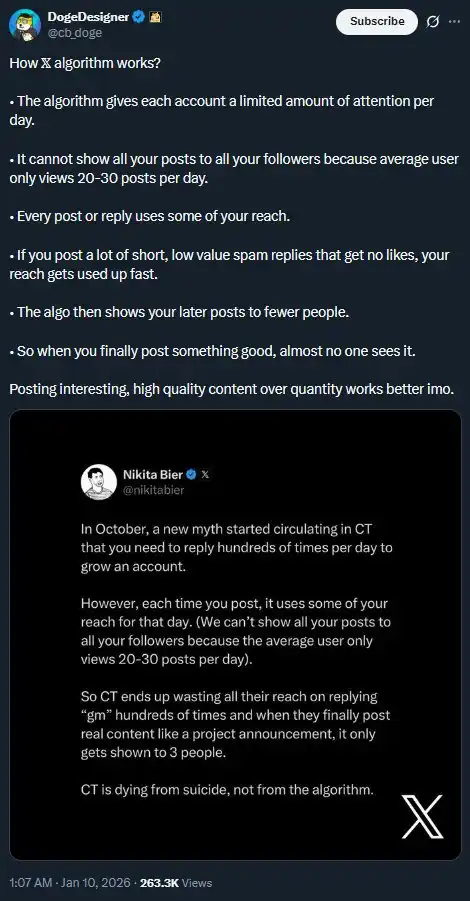
DogeDesigner provided a detailed explanation of Nikita's reply and concluded that users should post interesting, high-quality content and refrain from meaningless short comments and content. This explanation, however, only added fuel to the fire. After Nikita deleted his original reply, DogeDesigner also deleted his tweet because a user had tagged it as "inaccurate" based on Nikita's later response.
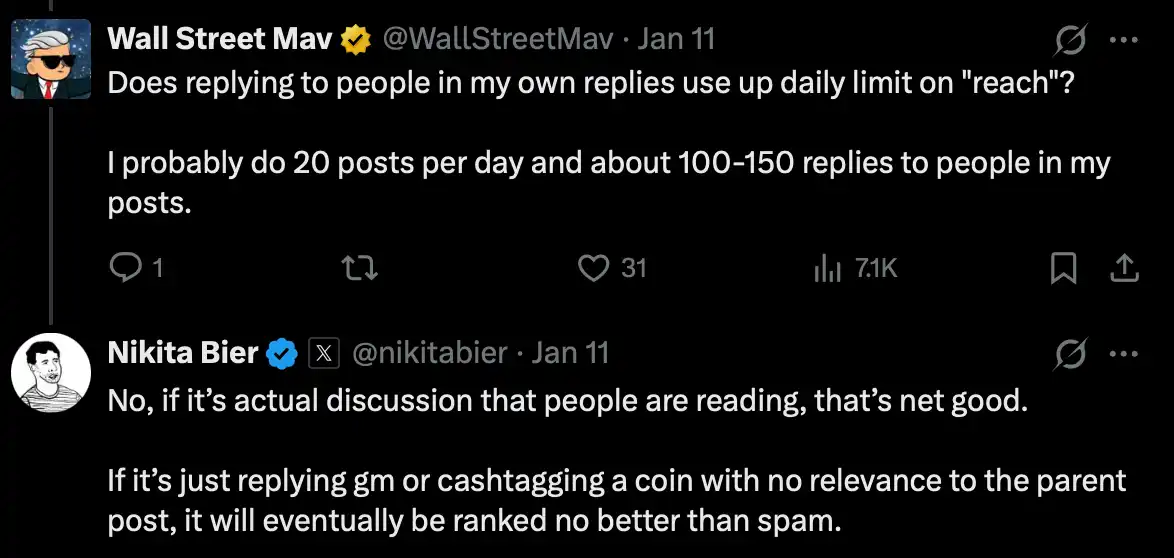
Nikita's updated statement was that if you are just aimlessly spamming "gm" under a tweet or recklessly promoting a coin in the comments, it would be considered spam and thus limited in exposure.
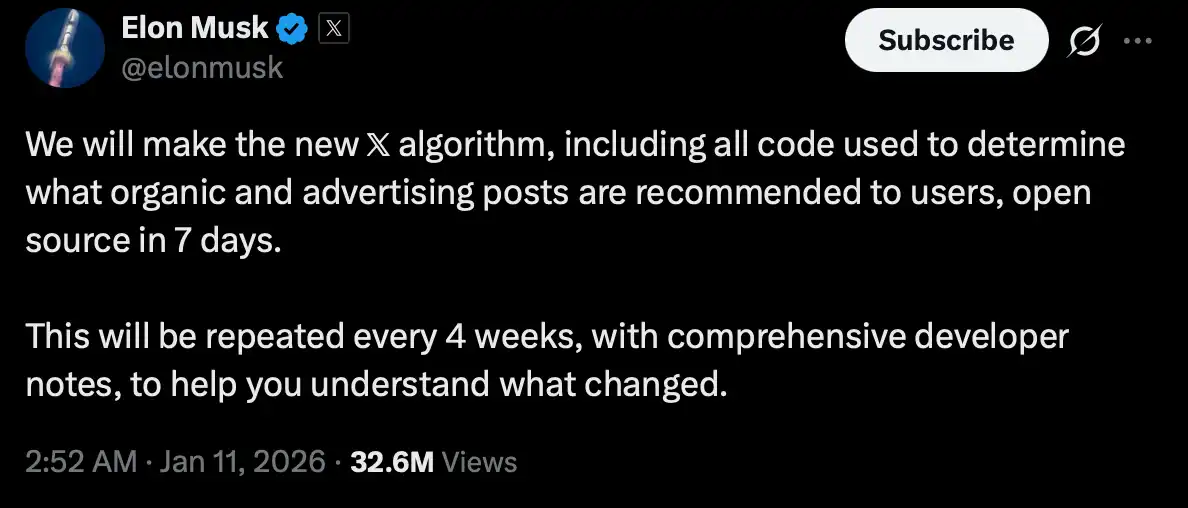
However, once the emotions spread, this kind of clarification became ineffective. At this point, Elon Musk stepped in with explosive news—X's content recommendation algorithm would be updated and open-sourced within a week, with updates occurring every four weeks, continuously. By this stage, the "Crypto Lives Matter" movement had gained incredible momentum—never before has a top social media platform opened its content recommendation algorithm; this was unprecedented. This development occurred right after the crypto community began to collectively retaliate against Nikita due to their anger.
Here, we interject some of the crypto community's backlash. There were many who directly called Nikita a jerk, but let's look at something more interesting:
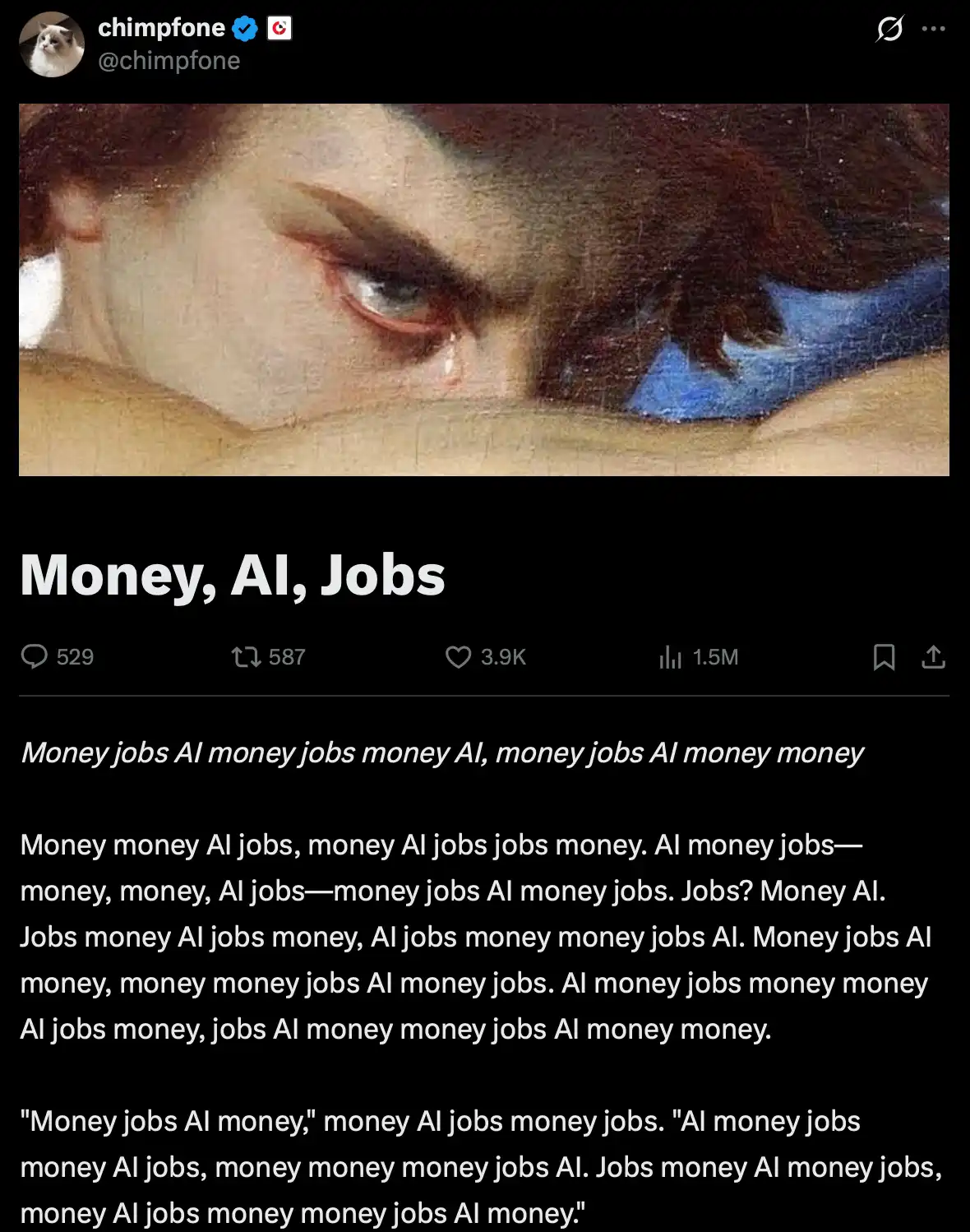
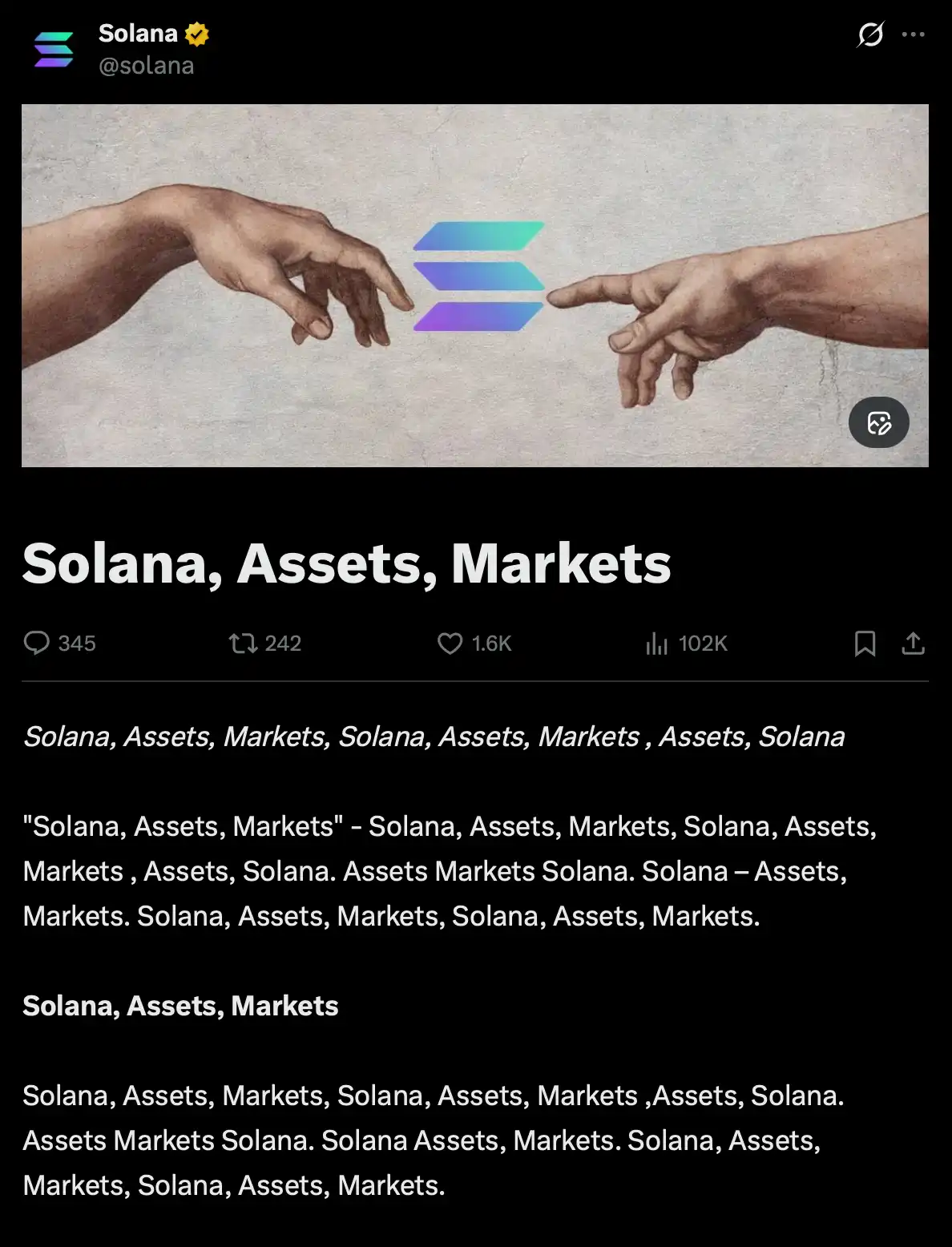
Above is an article titled "Money, AI, Jobs" by chimpfone, consisting of just these three words, mocking Nikita's "spam theory." This creative approach was recognized and emulated by Solana:
Solana co-founder Toly quoted a tweet from Nikita stating that the current low discussion levels of crypto on various platforms present a good opportunity to create high-quality content, and the quoted content was simply "gm."
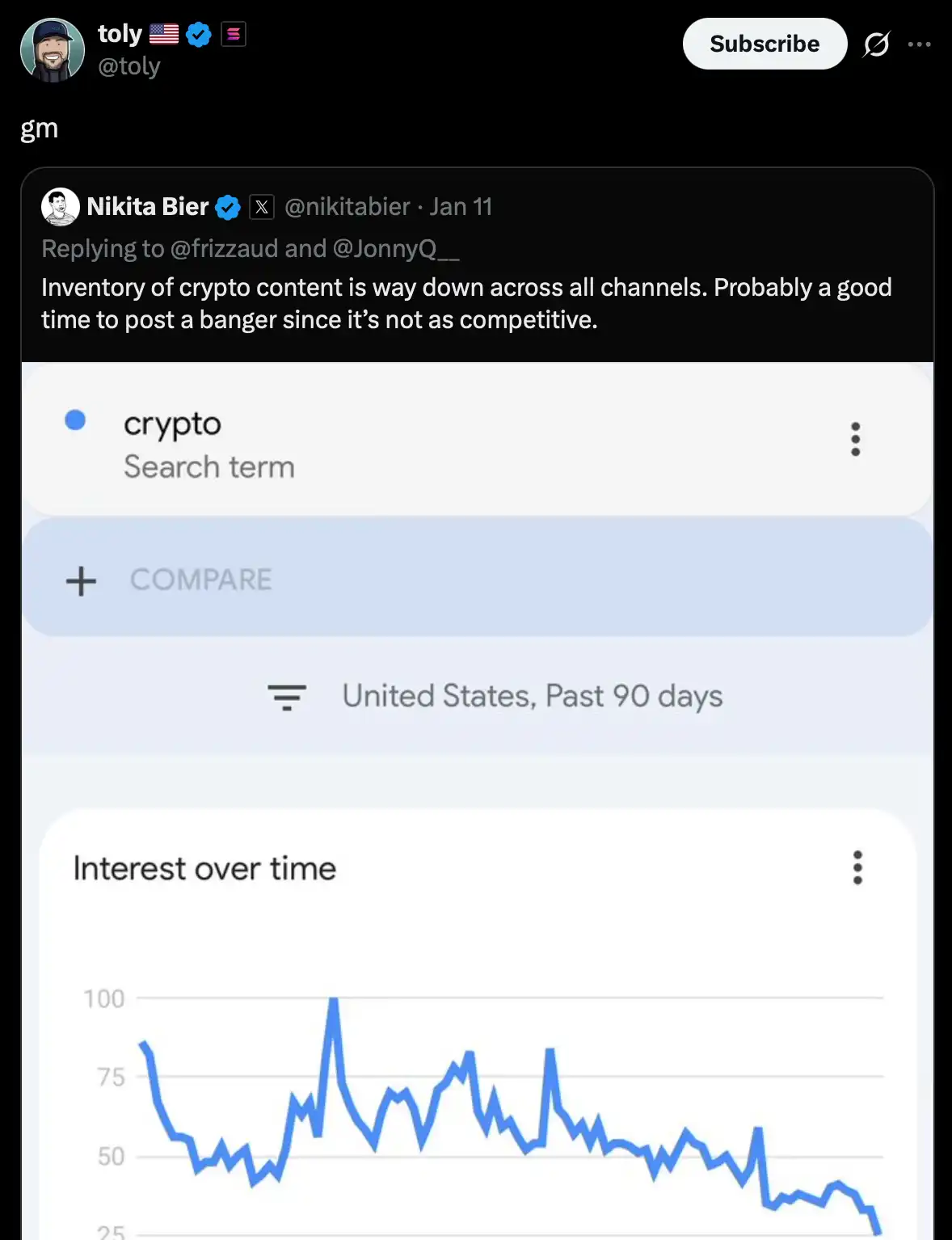
Nikita also replied "gm" under Toly's tweet, maximizing the comedic effect.
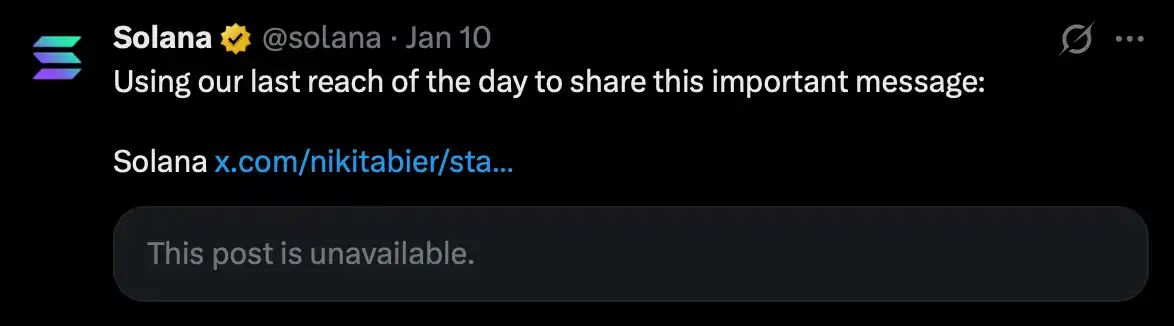
Solana took the lead in this "Crypto Lives Matter" movement, demonstrating a keen sense of internet culture. A classic example includes quoting Nikita's deleted reply and adding, "Using up our last exposure today to convey an important message from Nikita, Solana."
@boneGPT's "Nikita Boar" meme, created last November, went viral due to this incident, depicting Nikita as a pig. Nikita responded to this meme in a way that the crypto community appreciates—by engaging with the meme himself.
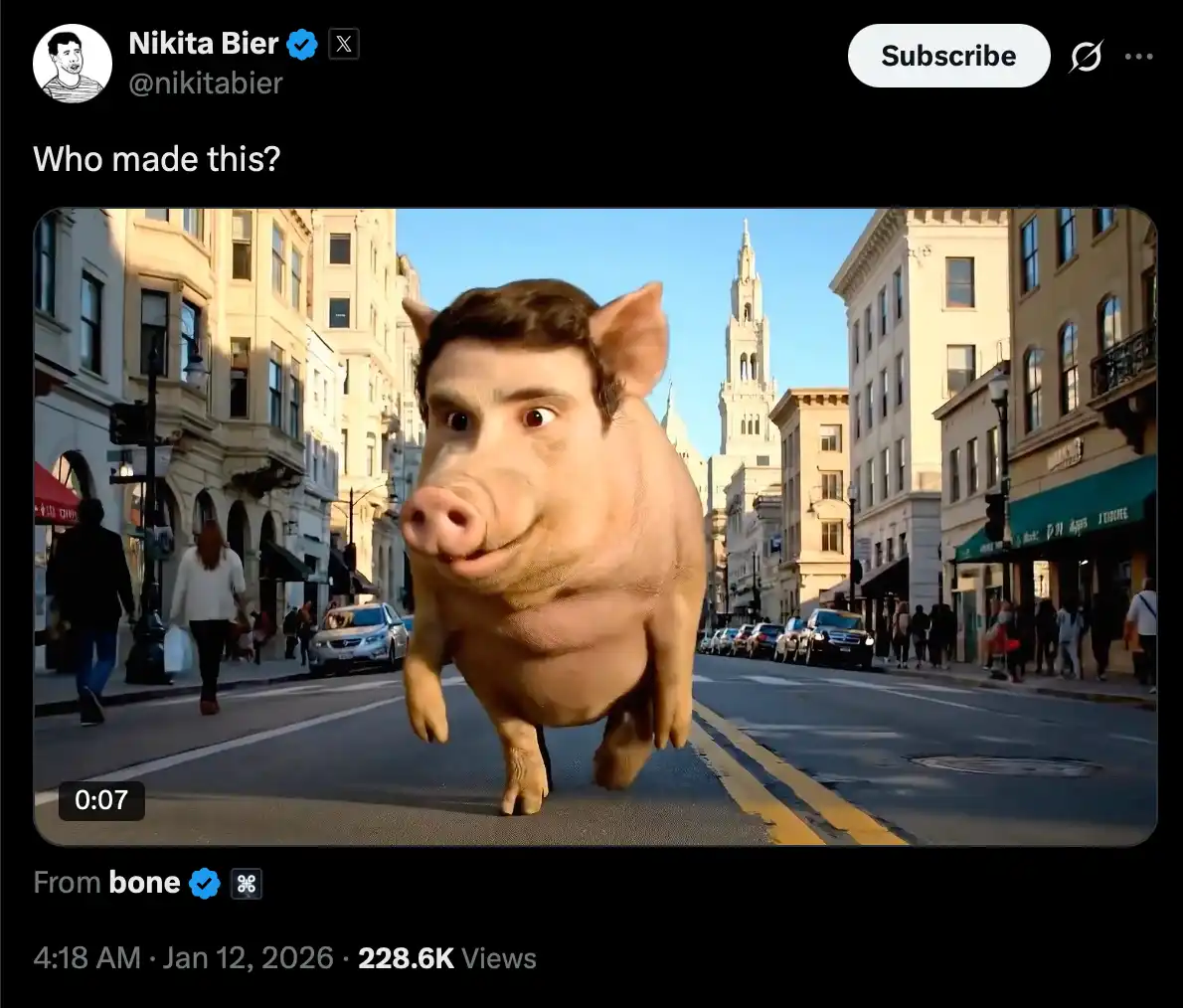
Nikita: Who made this video?
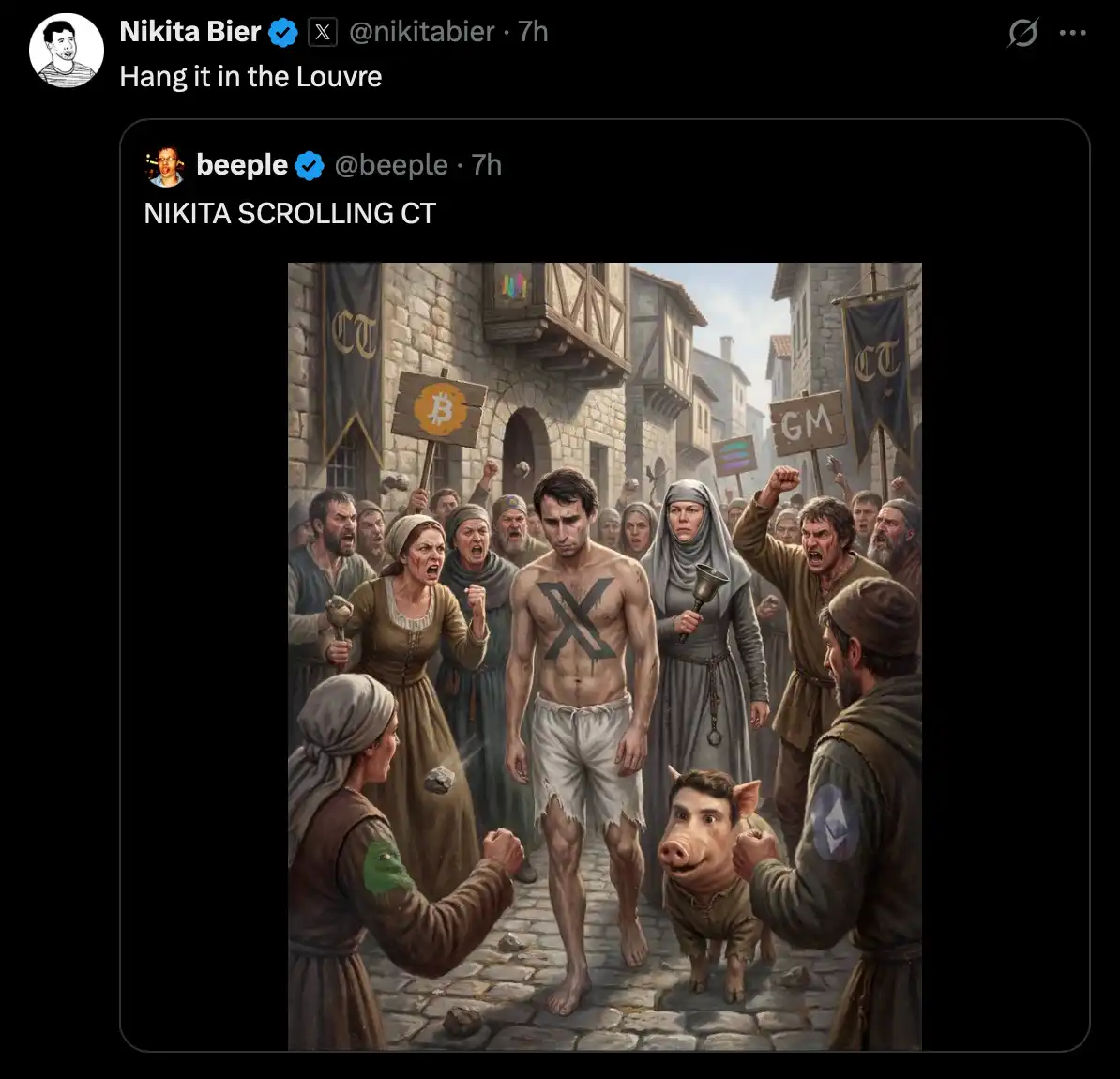
Beeple also created a meme featuring the pig image, depicting Nikita facing criticism from the crypto community. Nikita remarked that this piece should be hung in the Louvre. He even shared this image on his Instagram with the caption, "Achievement unlocked: became a subject of Beeple's creation."
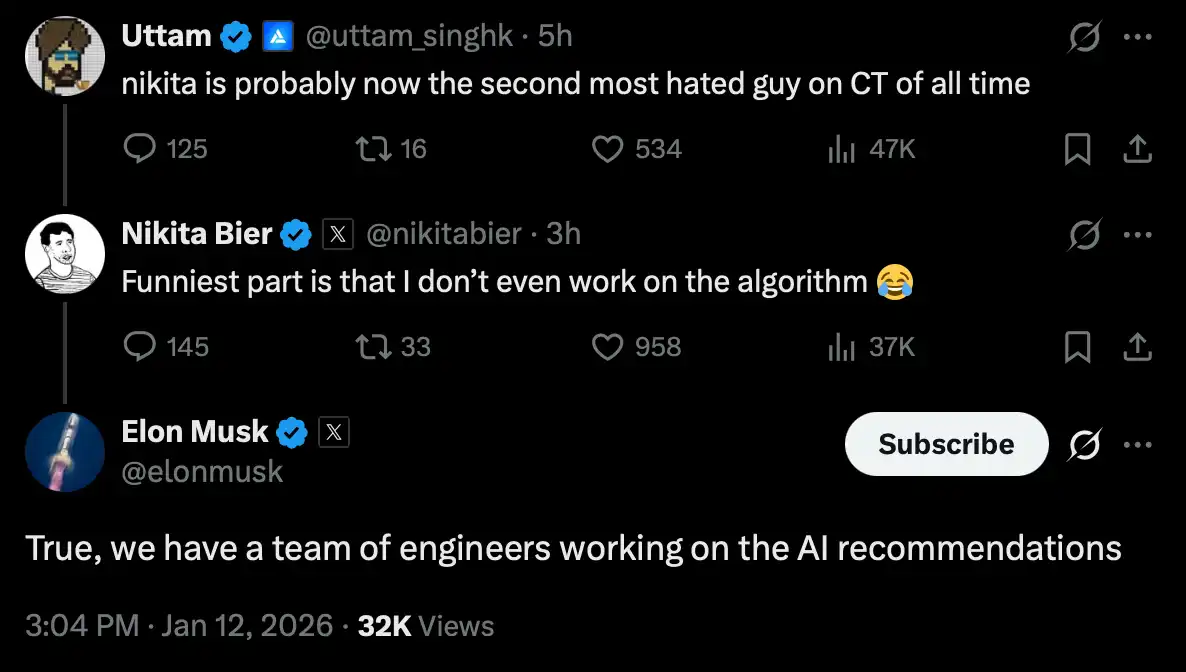
At this point, the entire incident's origin is mostly explained. In fact, Nikita is not responsible for X's content recommendation algorithm, but by a stroke of bad luck, he almost became the most disliked person in the crypto community overnight. He himself found the situation amusing, and even more amusing was that Musk once again stepped in to clarify—Nikita indeed has no connection to the content recommendation algorithm; we have a dedicated team of engineers working on that.
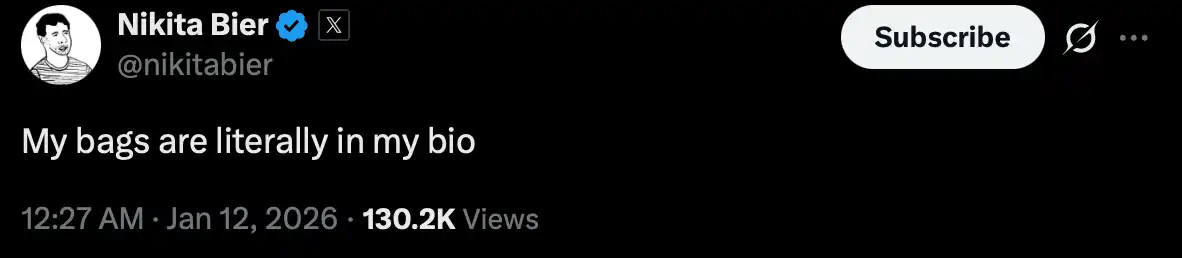
Leading the charge, Solana was ironically "countered" by Nikita—"My holdings are in my bio." And in Nikita's bio, it states, advisor @solana.
Was the whole incident a coincidence or a deliberate strategy? I tend to believe that a coincidence triggered collective emotions, which then led to a deliberate market strategy. Nikita later mentioned several times, "I was intentionally trying to bait you for the new feature release," but this seems a bit contrived and somewhat contradicts his initial behavior of deleting posts and providing serious explanations. Perhaps X had already prepared these new features and planned to release them at the right time, and this miscommunication inadvertently drew the entire crypto community's attention, making the subsequent response both flexible and timely.
Nikita's previous experiences prove that he has the ability to transform negative public sentiment into positive marketing communication.
Master of Crisis Transformation
Before becoming the product head at X, Nikita was already a fairly successful entrepreneur. In 2017, he founded the anonymous liking app for teenagers, TBH, which surpassed 5 million downloads just nine weeks after its launch and was quickly sold to Facebook. In the early stages of TBH, he didn't spend a dime on advertising; instead, he targeted three high schools in Alabama, generating widespread curiosity by following students with a private Instagram account.
In 2022, he launched Gas, which can be seen as an upgraded version of TBH. Within three months of its launch, it reached 10 million downloads, and this time it generated significant revenue through a paid subscription model, eventually being acquired by Discord.
Gas once faced a rumor crisis, with claims that a mysterious white van was following teenagers using Gas and abducting them. Nikita tweeted at the time that 3% of users deleted their accounts within a day due to this nonexistent mysterious white van. Rather than avoiding the controversy, Nikita directly addressed it, stating that it was an organized conspiracy against Gas, which elevated the discussion around Gas to a higher level and garnered more visibility. He also leveraged the support of actor Ashton Kutcher, who has long been concerned about human trafficking cases, to shift the social media narrative and avoid further confusion.
These instances demonstrate Nikita's exceptional ability to capture and utilize attention.
Looking back at his past tweets, his views on the crypto community were neutral to somewhat negative in his early years. It wasn't until early 2025 that he began to express more affection for cryptocurrencies and share his direct experiences with them. In March 2025, he announced that he had started serving as an advisor to Solana, stating that his views on cryptocurrencies had been mixed over the years, but the world had changed, making it increasingly attractive and meaningful to build applications in the crypto space.
Thus, Solana's leading charge by Nikita has a somewhat flirtatious feel to it.
X's Ambition
After Musk's massive acquisition was completed, his ambition has always been to turn X into an "Everything App," a comprehensive application like WeChat or Alipay.
Twitter is not just a past name; it is merely a past product form. Although we still feel that there is not much difference between the current X and the old Twitter when using it, we still habitually refer to it as Twitter.
Musk spent $44 billion to acquire Twitter, and if Twitter were to remain a pure social company that survives on advertising revenue, just like before, this massive acquisition would be meaningless. Therefore, we see the introduction of paid blue checks and revenue sharing for creators, with the social network being viewed as the foundational layer of the "Everything App," requiring continuous expansion of traffic entry points. Features like tweet editing, long tweets, Community Notes for fact-checking, long video uploads, improvements to Spaces, and live video streaming… these updates have made X's content more diverse and in-depth, rather than just simple text posts.
Bundling users into a paid ecosystem is the first step in changing X's business model. Using revenue sharing for creators as "bait," the platform provides users with more creative space through feature updates, attracting more paying users by incentivizing high-quality content.
X aims to do even more. For instance, X has a complete Grok AI integration, which greatly assists users in content creation, data queries, fact-checking, and even serves as an entertainment tool at times, like a "clothing changer," with Grok itself becoming a meme generator on X. The chat feature of X has evolved into a communication app form to achieve end-to-end encryption, effectively turning many old group chats into dead groups. Another feature that may be somewhat vague in users' memories is X TV; Musk hopes to turn video content on X into an application, allowing users to watch it on their phones or TVs.
X Money, as its payment service, has already obtained money transmission licenses in over 40 states in the U.S. In June 2025, then-CEO Linda Yaccarino even made a bold statement that users would soon be able to complete payments, investments, and trading on the X platform, and the company was exploring the launch of credit or debit cards.
However, if the social network cannot suppress competitors like Threads, how can it become an "Everything App"? Therefore, Musk stated, "We are still paying creators too little, and the distribution is not good enough; YouTube does a much better job in this regard."
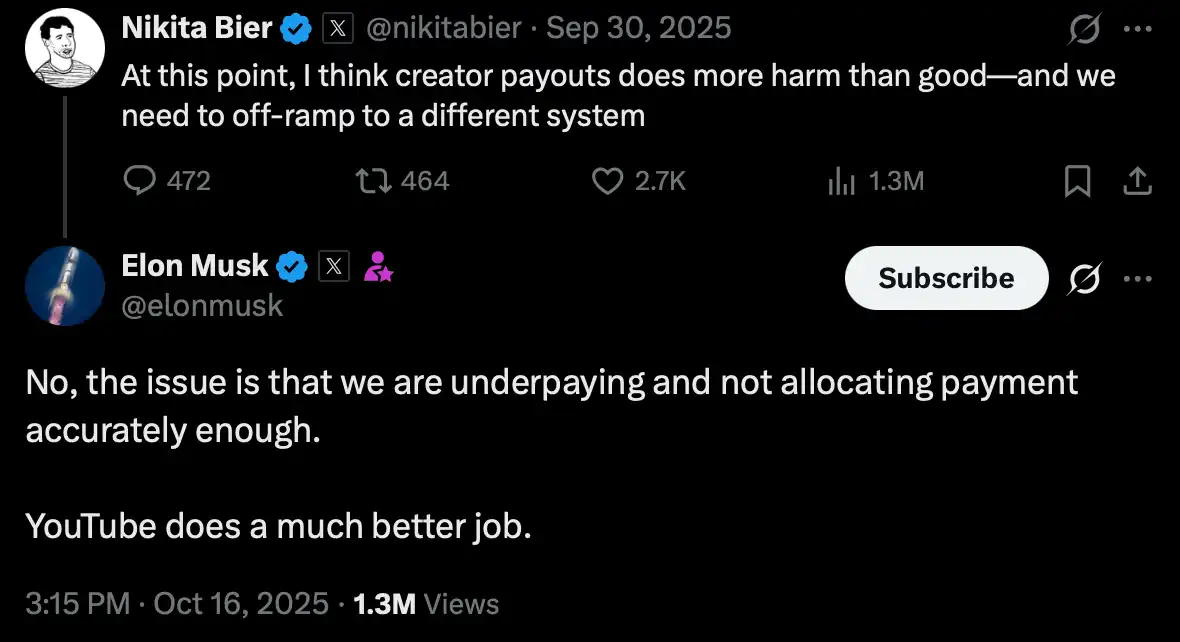
The pressure brought by this ambition is not just about "not doing well enough in creator revenue"; it transcends the communication between Musk and his employees and extends to users' actual perceptions, which is a problem X currently faces.
What is the actual perception of users? There are both good and bad aspects to the feature updates. For example, X has a complete Grok AI integration, which greatly assists users in content creation, data queries, fact-checking, and even serves as an entertainment tool at times, like a "clothing changer," with Grok itself becoming a meme generator on X. On the downside, X's chat feature has recently received very poor user feedback; in the pursuit of end-to-end encryption, many old group chats have become dead groups.
However, what users truly perceive is that X wants everyone to "get involved," but the result of this involvement has not provided users with a more comfortable social environment. Users are beginning to lose the relaxed and humanized experience on X, as the algorithm pursuing viral content increasingly leans towards political content, ragebait (content designed to provoke arguments), or mindless repetitive low-quality AI content. Genuine small accounts are buried, while large accounts that cater to the incentivized algorithm act like "fake people," solving "problems" on a social platform and reaping rewards.
The deeper reason behind the "Crypto Lives Matter" movement is users' dissatisfaction with X's attitude of "pushing everyone to work like oxen"—I just want to come to X every day and say "gm" to my friends; I tweet just for fun. I don't want your company to educate me on what posts I should make, and it is precisely your guidance that has ruined the previously good environment.
Conclusion
In an era where algorithms dominate attention, the profit extraction of large companies has become a silent and brutal assembly line, making the "Crypto Lives Matter" movement on X a rare display of "humanity." Although the aggrieved group this time is still just a small portion of specific crypto players on X, their expression of anger is not only a protest against the disrespect for crypto culture reflected in Nikita's words but also a protest against the distortion of the social environment caused by algorithms.
I believe X should feel fortunate because if this group of users did not have a certain sense of belonging to X, they would simply leave instead of concentrating their anger. I also think users have reasons to feel happy because this protest against the cold algorithm has received a response from the company's higher-ups. Regardless of whether such a response is satisfactory, at least we are not facing a silent algorithm but rather living individuals like Nikita and even Musk.
Has the "Crypto Lives Matter" movement come to an end? It doesn't seem so, as Nikita continues to challenge the crypto community:
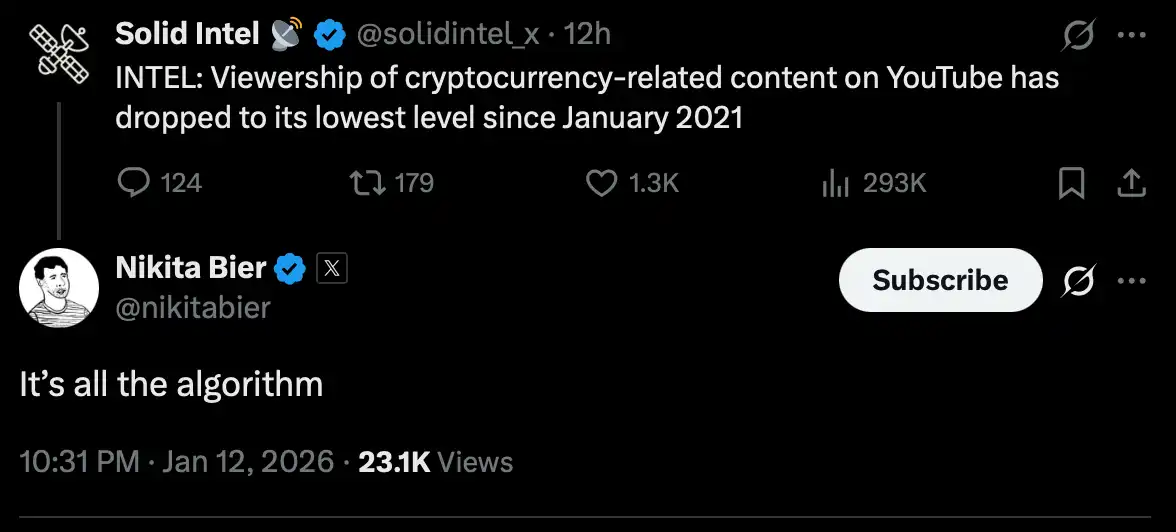
"The viewership of cryptocurrency-related content on YouTube has dropped to its lowest level since January 2021," Nikita: "It's all because of the algorithm."
At the same time, he continues to engage with users, persistently deleting replies that provoke outrage. For example, he proposed a metric to measure "posting ability," replacing the simple follower count with the ratio of followers to total posts. Someone replied, "This clearly doesn't work because you often delete posts." Then Nikita mocked this user by posting their total post count and follower count:
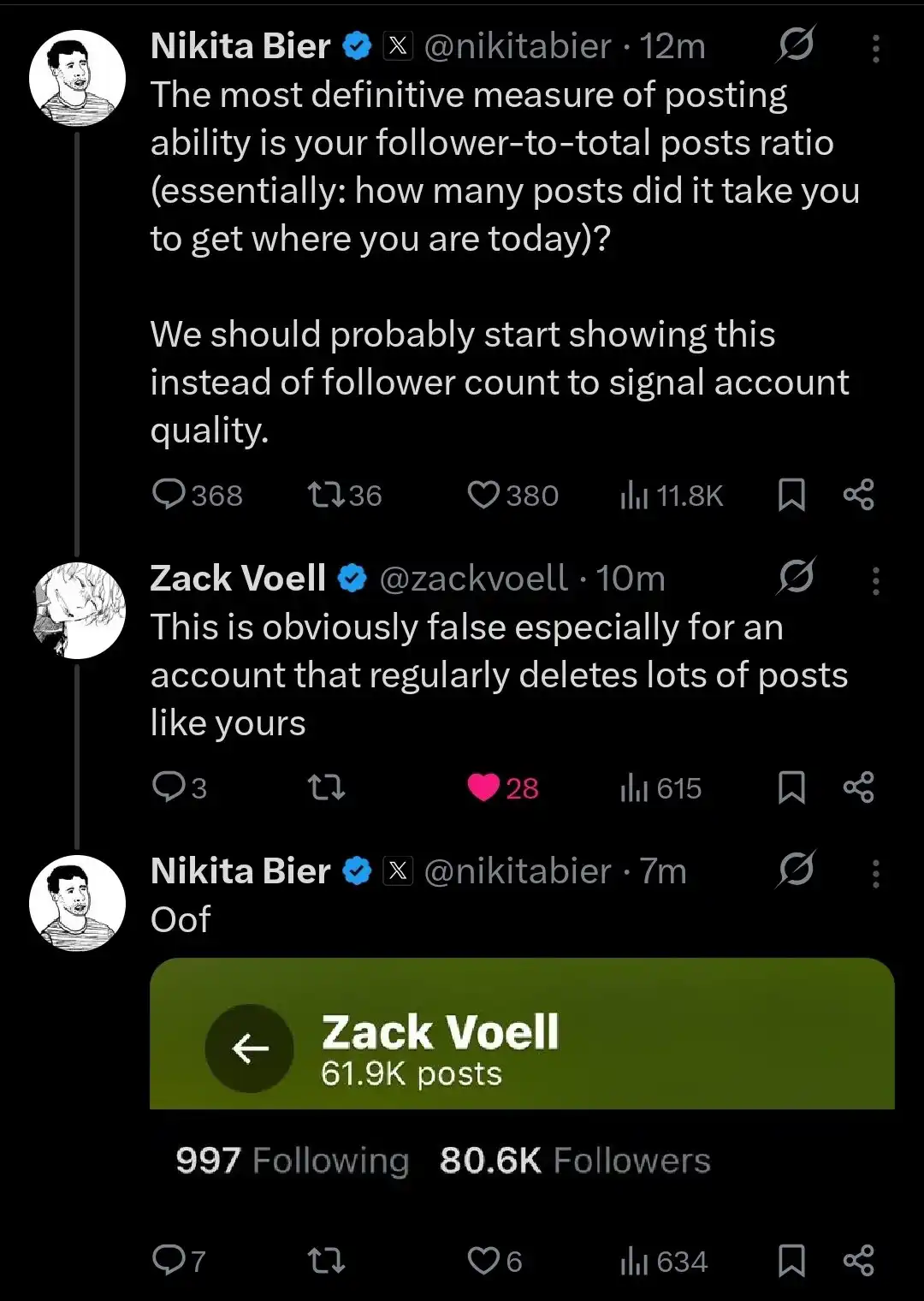
Such turmoil, however, brings us closer to a historical moment where we might be able to trade cryptocurrencies on Twitter.
免责声明:本文章仅代表作者个人观点,不代表本平台的立场和观点。本文章仅供信息分享,不构成对任何人的任何投资建议。用户与作者之间的任何争议,与本平台无关。如网页中刊载的文章或图片涉及侵权,请提供相关的权利证明和身份证明发送邮件到support@aicoin.com,本平台相关工作人员将会进行核查。