
Author: Fidelity Digital Assets Research
Translation: Bibi News
In 2026, the digital asset market is entering a crossroads of maturity and transformation. This report is translated from Fidelity Digital Assets Research's "Look Ahead 2026," which outlines the technological upgrades, governance evolution, institutional investment dynamics, and macroeconomic impacts of Bitcoin, Ethereum, and mainstream tokens. The article reveals not only Bitcoin's resilience and maturity after multiple market shocks but also explores the evolution of token holders' rights and their implications for future investments.
Stable Prices, Dramatic Changes: How Digital Assets are Reshaping the Industry — CHRIS KUIPER, CFA
Introduction
In the "2025 Outlook," the Fidelity Digital Assets research team discussed a question that troubles many investors: "Am I too late?"
This sentiment stems from the strong gains and accelerating momentum of 2024. After a lackluster year-end performance, the question in investors' minds may have shifted to: "What exactly happened?"
2025 seemed poised for record-breaking performance, supported by strong fundamentals, unprecedented inflows into exchange-traded products (ETPs) and funds, a clearer regulatory environment, and the historical cyclical bull market pattern appearing to align with multiple new all-time highs. However, despite periods of strong momentum throughout the year, Bitcoin and the broader digital asset market ended nearly flat by the end of 2025. As investors, we often use historical analogies to clarify the current path. A recent analogy that came to the research team's mind is the story of container shipping.
In the book "The Box," author Marc Levinson details how a seemingly obvious cost-saving invention—the rectangular steel shipping container—struggled for decades before achieving widespread adoption. While some have technically likened containers to blocks in a blockchain (each carrying information or data), the analogy may run deeper. Containers drastically reduced logistics costs and shipping times, reshaping global trade and creating entirely new industries. They reduced loading costs by 95% or more, shortened the time required to load a ship from a week to just a few hours, and required less labor. Loading costs also plummeted from over $5 per ton to just a few cents.
However, it took the world decades to recognize containers as viable and trustworthy. This update required significant infrastructure changes: new cranes, trained operators, retrofitted ships, rail cars, and trucks, as well as the relocation of ports and factories. This reshaping process took years, and most people did not recognize this transformation as it unfolded. The digital asset industry may similarly be in a "valley of disillusionment" phase, with many still skeptical or outright questioning.
Yet, like the early days of containers, there are signs that businesses are beginning to "reshape" for the new digital asset industry. In 2025, many traditional banks, brokerages, and financial institutions announced or launched digital asset strategies or capabilities. Traditional payment providers have also moved beyond the experimental phase, with reports of a key player making a $2 billion acquisition, indicating a deeper commitment to the space. The momentum of stablecoins and tokenization continues unabated, with major companies steadily integrating these capabilities. Reshaping is also occurring at the government level, with an executive order on digital assets issued in early 2025, followed by the passage of the first U.S. crypto-specific regulations, the European framework beginning to operate, and even a U.S. state establishing a strategic Bitcoin reserve. Institutional adoption has also made progress, with a growing cohort of large investors increasing allocations or expressing heightened interest.
Notably, those groups with the greatest adoption barriers are now getting involved: pensions, endowments, sovereign wealth funds, and even a central bank. Realizing the full potential of digital assets may take years, if not decades. While the massive capital being funneled into the space may not yet have translated into visible change, beneath the surface, the existing industry is redefining how financial assets are valued, transferred, and custodied.
Here are the insights from the Fidelity Digital Assets research team for 2026.
We first examine the ongoing integration of digital assets with capital markets, followed by a discussion of the emergence of new token holder rights. We explore the potential impacts of Digital Asset Treasury (DAT) companies and artificial intelligence (AI) on the market, the latest concerns within the Bitcoin community regarding forks and quantum computing, and conclude with a macro outlook.
Integration of Digital Assets and Capital Markets — MARTHA REYES
Since Bitcoin was introduced as a speculative experiment, it has evolved into a rapidly institutionalizing ecosystem—echoing the trajectory of stocks and other assets, but at a noticeably faster pace.
Just as the Amsterdam Stock Exchange integrated fragmented stock trading and regulatory enhancements post-1929 bolstered institutional confidence, digital assets have transitioned from informal forums to regulated exchanges, robust custody solutions, and complex financial instruments.
The rise of digital asset ETPs, regulated futures and options, and institutional lending may mark the dawn of a new era where digital assets operate as a complete asset class, integrating infrastructure and products, including ETPs, derivatives, and trading venues. These developments achieve capital efficiency, risk management, cross-margining, and structured strategies, unlocking deeper pools of capital.
Unlike stocks, which matured over decades, blockchain-based assets appear to be accelerating in development driven by programmable settlement, 24/7 liquidity, and borderless infrastructure. The process of integrating blockchain technology into capital markets may deepen with more investment tools, ultimately leading to the tokenization of traditional assets.
As institutional adoption grows, digital assets may also become a core component of portfolio construction. With increasing demand for leverage, hedging, and yield generation, new opportunities may arise, accompanied by some risks. This shift towards institutionalization reflects a broader trend across all digital assets.
However, it seems to contradict Bitcoin's original vision as a decentralized, censorship-resistant payment network, supported by a scarce monetary commodity that does not require or rely on financial intermediaries. Financialization introduces intermediaries and synthetic leverage exposures that attract institutional investors but may also amplify volatility and often bypass on-chain activity.
Nonetheless, Bitcoin's hard supply cap of 21 million is still enforced at the protocol level, ensuring its scarcity, much like gold but easier to verify. Investors can always choose to self-custody and transact peer-to-peer.
While the long-term dynamics of miner fees remain uncertain, Bitcoin appears poised to accelerate its evolution into a widely accepted and integrated financial asset—thanks to the growth of financial products and infrastructure developed around it.
This increasing integration may further position Bitcoin as a reserve asset, given its scarcity, verifiability, and transparency, which allow for clear visibility of positions held within the network.
From Speculation to Structure: Parallels with Stock Institutionalization
Tradable stocks originated in the 17th century with joint-stock companies that issued shares to finance overseas trade. These stocks enabled risk-sharing, capital aggregation, and asymmetric return potential. The emergence of the Amsterdam Stock Exchange was transformative as it created liquidity through secondary markets. Other countries later established exchanges, where stocks initially traded in fragmented, informal venues, leading to poor liquidity and inadequate price discovery.
In contrast, blockchain was initially conceived as a peer-to-peer trading network without intermediaries. Yet even Bitcoin's pseudonymous creator envisioned future exchange sites to match buyers and sellers.
As retail interest surged, digital asset exchanges proliferated. However, liquidity remains fragmented today, with pricing and risk management lacking industry standards. From speculative origins, stocks evolved into a financial pillar. Participation expanded over time, but institutional investors such as banks, insurance companies, and pensions did not become active until the late 19th and early 20th centuries.
Institutionalization accelerated with the growth of pensions and mutual funds. This led to the emergence of derivatives in the 1970s, enabling institutions to better manage risk and develop structured investment strategies.
Digital assets have followed a similar trajectory. Initially dominated by retail speculation and fragmented, unregulated venues, they lacked robust custody, settlement, and hedging infrastructure.
Today, the emergence of regulated custodians, ETPs, futures, options, and evolving regulatory frameworks echoes the path of the stock market towards institutionalization.
Derivatives: Origins and Their Increasing Role in Digital Assets
In 1973, the Chicago Board Options Exchange (CBOE) introduced stock options, followed by futures in the 1980s. On the first day, approximately 1,000 contracts were traded for individual stocks.
By 2025, the average daily volume of stock futures and options cleared by the OCC reached 61.5 million contracts. In 2024, nominal options flow exceeded $3 trillion, more than five times the daily trading volume of underlying stocks and ETFs.
For digital assets, volatility (even when declining) makes hedging important for institutions.
In 2025, the annualized volatility of spot Bitcoin ranged between 40-50%.
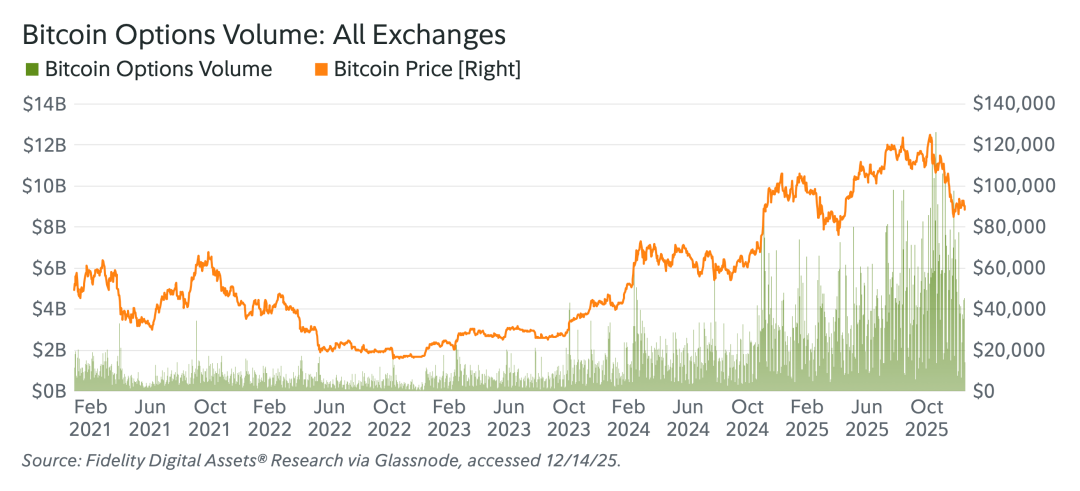
During the pullback in October 2025, Bitcoin options open interest and volume hit record highs. Even as volatility continues to decline, capital efficiency or short-term trading could drive continued growth in derivatives.
Perpetual futures have been the preferred tool for investors, far exceeding spot trading volume, as they provide continuous, leveraged exposure without the need to roll over expiring contracts or physical delivery.
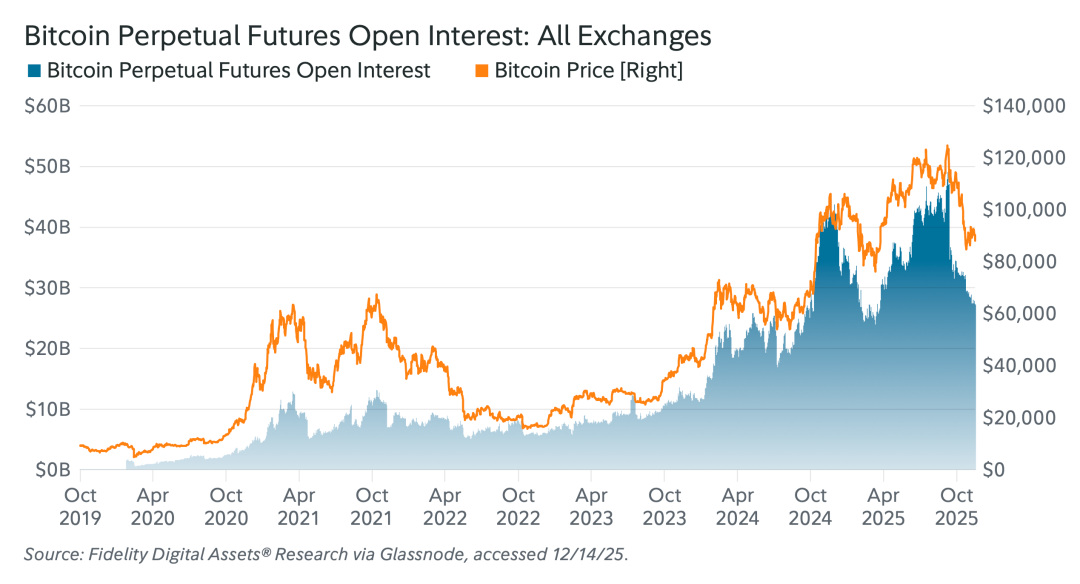
Meanwhile, CME Bitcoin futures have become an effective proxy for institutional activity, with open interest reaching $11.3 billion.
Unlike perpetual contracts, these are traditional tools with mostly fixed expiration dates available for institutional and professional investors. They are cash-settled, cleared through financial institutions, and seamlessly integrated into existing systems. Historically, a significant portion of the exposure has been hedge funds going long on spot or ETPs and shorting futures to capture the premium. CME futures open interest is now comparable to that of leading domestic exchange Binance, although the volume critical for large institutional trades remains far below that of perpetual contracts.
The introduction of spot quote futures that can be held for up to five years and 24/7 trading will better align CME products with the digital asset ecosystem, attracting more participants.
In contrast, the average open interest for CME gold futures in November 2025 was $196 billion, with an average volume of $128 billion. The nominal open interest in gold futures is approximately 0.7% of the gold market value, similar to CME Bitcoin futures.
While perpetual futures allow traders to take directional views or engage in cash arbitrage, options are used for speculation as well as specific hedging, yield, and volatility strategies. In stocks, options activity is high because they are favored by both institutional and retail investors. Bitcoin options may ultimately exceed spot trading volume. During the volatility spike in October 2025, BTC options volume set a record, with open interest exceeding $60 billion—mostly on the offshore exchange Deribit—surpassing perpetual futures open interest.
The Role of ETPs
The U.S. spot digital asset ETP was launched in January 2024, and by early December 2025, the assets under management had grown to $124 billion, with institutional participation accounting for about 25% of the total by the second quarter of 2025. These ETPs provide a convenient, traditionally regulated way to enter the digital asset space.
ETP options have also become a major part of the broader options market, gaining traction since the early 2000s. Similar to other asset classes, Bitcoin ETP options are highly favored by investors. This trend was evident during the autumn sell-off of 2025, when trading activity surged, with put option volumes hitting record highs and open interest climbing to $40 billion.
In December 2025, Nasdaq applied to increase the options position limit for the largest Bitcoin ETP from 250,000 contracts to 1 million contracts, unlocking additional liquidity. Banks are increasingly providing lending solutions for institutions and high-net-worth clients, using ETPs as collateral, leveraging regulated exchanges and traditional clearing systems. Structured products are also emerging, with direct BTC and ETH holdings for institutional lending expanding, as Cantor Fitzgerald reserved $2 billion, and other major banks announced their own plans.
The U.S. Commodity Futures Trading Commission (CFTC) launched a pilot program allowing the use of Bitcoin and Ether as collateral. Digital assets are becoming a structural component of the financial system. The key question now is how quickly and to what extent this integration will occur. Much of this evolution has already taken place behind the scenes—through regulated products, custody solutions, and institutional strategies—even as headline price movements remain relatively calm. If history is any guide, institutions will drive this evolution, expanding synthetic exposure without diminishing Bitcoin's appeal as a reserve asset—we expect this role to strengthen over time.
The Year of Mainstreaming Token Holder Rights — MAX WADINGTON
The Fidelity Digital Assets research team believes that 2026 will be the year when token holder rights become a primary design variable rather than an afterthought.
In previous cycles, most tokens only provided exposure to a narrative rather than cash flow or executable rights.
Protocols generate fees and establish treasuries, while token holders often have no direct or indirect claim to revenue, and there is no mechanism for capital return if the core team ceases development, with no correlation between project performance and token issuance.
These structural misalignments create a gap between the underlying business and token value, often making it extremely difficult to assess the space. For institutional allocators accustomed to underwriting clear cash flow claims, this disconnect is a primary reason they view tokens as trading cards rather than lasting positions.
Buybacks: A Point of Entry for Token Holder Rights
The disconnect between the underlying business and its token is beginning to be bridged through a simple yet powerful mechanism: revenue-funded token buybacks.
Hyperliquid is the clearest reference point for the rise of token holder rights and can be said to be a major driving force. Hyperliquid directs its trading revenue (from derivatives and spot markets) to an automated system for repurchasing its native token. This establishes a transparent link between exchange trading volume and token demand. Currently, 93% of all trading revenue is directed to this buyback engine, totaling over $830 million in the past 12 months.
Pump.fun adopted a similar model shortly after Hyperliquid, using launchpad revenue to buy back its tokens on the open market, totaling $208 million since July 2025.
These two applications have been the most popular in the digital asset space over the past year, attracting significant attention—prompting mature DeFi players to align with the same trend.
A key driving factor seems to be the reduction of regulatory risks associated with this structure. For example, Uniswap governance is shifting to allocate a portion of protocol and L2 fees to UNI buybacks, citing regulatory developments and token holder prioritization as motivation. Aave has introduced a periodic buyback program funded by excess cash. In each case, these blue-chip DeFi applications have recognized that programmatic token buyback mechanisms benefit token holders and are retroactively adjusting token designs to prioritize this group.
The chart "Fees Generated by Applications Implementing Buyback Programs" shows the fees generated by leading crypto-native applications after implementing token buyback mechanisms. These applications span multiple sectors, including trading, lending, and stablecoins, highlighting that while many digital assets lack a direct connection to the underlying business, the most successful fee-generating platforms have taken steps to establish substantial token holder rights.
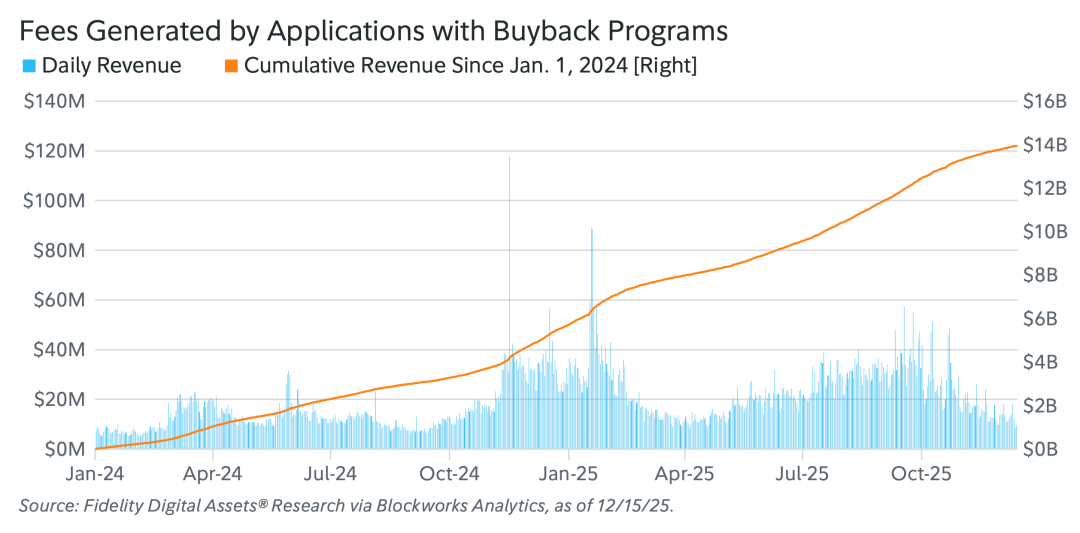
In our view, the market's response to this emerging buyback meta-trend is clear: tokens with credible links to protocol revenue are increasingly seen as early-stage, equity-like claims on the business rather than mere "governance chips." We believe that in 2026, a larger share of total application fees will flow back to digital asset tokens.
The "Stack" of Token Holder Rights
Buybacks represent the first step toward a comprehensive framework for token holder rights.
As more leading protocols adopt value accumulation mechanisms, competition will increasingly revolve around the broader rights stack attached to tokens. While this stack includes many components, three areas have emerged as the most clearly defined sources of value.
1. Fairer Initial Allocations (ICO 2.0)
The initial wave of ICOs was rapid but often unfair, characterized by insiders receiving allocations at very low prices, opaque lock-ups, rigid supply caps, and large pools of tokens with unclear uses. The next generation of token issuance is likely to prioritize fairness by addressing these inefficiencies. Teams that can credibly claim "everyone plays by the same rules" will gain an advantage in both community and institutional settings. These new structures are often far simpler than the currently complex allocations.
We believe that simplicity promotes transparency, and transparency paves the way for greater capital flow.
2. Performance-Linked Vesting and Capital Return
Most current token vesting is time-based, regardless of whether the protocol makes progress. This structure forces token holders to bear the risk of insider vesting without guarantees of progress.
We expect that experiments linking vesting mechanisms to clear on-chain performance metrics (such as revenue or even token price) will gradually increase. Poor performance may slow vesting progress, or companies may completely remove the time component, issuing token rewards only upon achieving measurable performance goals. The core idea is simple and widely used in traditional businesses: insiders are rewarded for delivering positive business outcomes rather than merely waiting for the clock to run out.
3. Governance as Investable Rights
Today's default one-token-one-vote governance model gives token holders a voice but does not necessarily translate into real influence. Holdings are often concentrated, leading to concentrated voting outcomes. The next step is a governance framework that views decision quality as part of the rights package.
This means eliminating the one-token-one-vote model and committing to ensuring a decision-making system based on value creation. For example, Futarchy is a notable model that allows the market to determine whether a proposal is expected to increase business value, binding economic incentives to ongoing governance. While the most effective path remains uncertain, governance in digital asset businesses faces several inefficiencies. This presents differentiated opportunities for fundamentally strong projects.
Impact on Institutions and the Base Layer
As these designs are gradually adopted, the token market is likely to split into two categories: rights-light assets and rights-rich assets. Rights-rich tokens that incorporate comprehensive frameworks (such as buybacks, fair initial allocations, performance-linked vesting, and robust governance) will occupy the high end of the spectrum, expected to command significant premiums relative to rights-minimized tokens.
Rights-light tokens will continue to exist as trading tools but will have limited appeal to institutions. Rights-rich tokens will be easier to model, benchmark, and explain to investment committees. They support equity-like metrics such as dividend ratios, earnings growth estimates, and scenario analyses based on protocol usage. At the network level, this transformation may concentrate economic activity on platforms capable of supporting credible, rights-rich issuances.
In practice, Solana and Ethereum are likely to benefit significantly from the trading volume surge and ongoing investments driven by emerging rights-rich token models. Previous digital asset cycles have shown that tokens are powerful tools for guiding networks but also expose the vulnerability of token value when holders lack real rights.
The buyback trend is the first concrete response to this market flaw.
We expect that 2026 may extend this logic to a more comprehensive rights framework, emphasizing fairer initial allocations, performance-linked vesting, and governance frameworks focused on value creation. As these models spread, some tokens will begin to resemble programmable, auditable claims on digital businesses, providing institutions with reasons to hold beyond beta.
If this trend gains momentum, the market may see the first fully on-chain IPO, characterized by these token holder rights.
The Landscape of Bitcoin Treasury Companies and the Impact of Artificial Intelligence — ZACK WAINWRIGHT
Dissecting Bitcoin Treasury Companies
In 2025, a significant wave of publicly traded companies added Bitcoin to their balance sheets. By the end of 2024, 22 companies held 1,000 or more Bitcoins, having begun accumulating as early as Q4 2017. By the end of 2025, this total more than doubled to 49 companies.
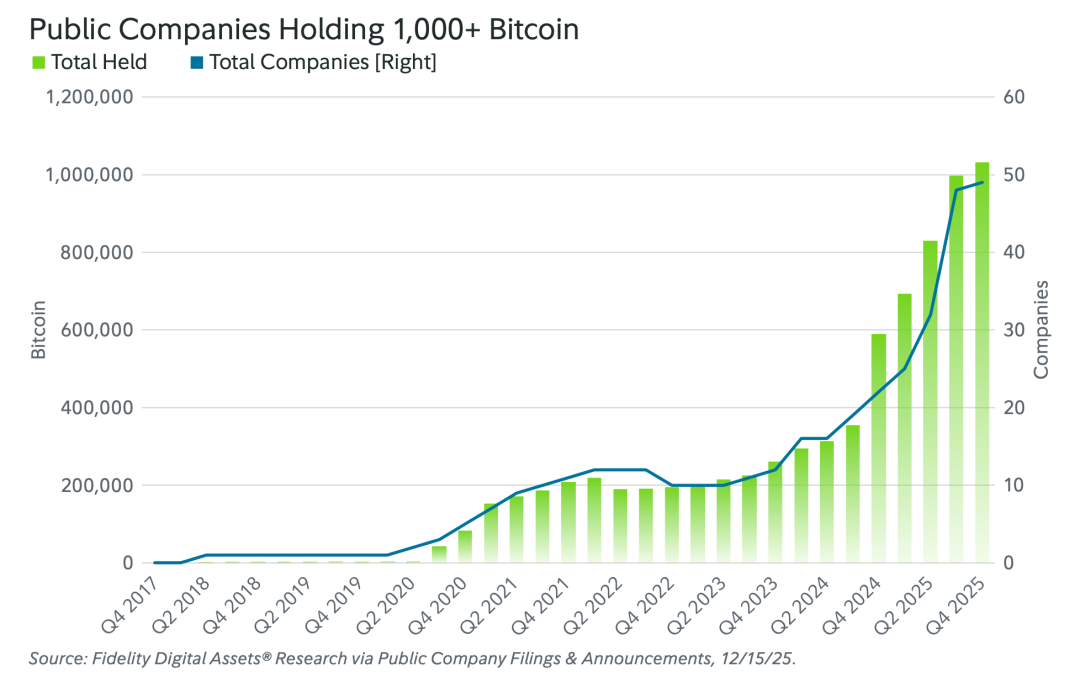
Nearly 5% of the total supply of 21 million is now held by these 49 companies. These companies can be divided into three distinct cohorts:
• Native: Companies that originated in the space and organically accumulated Bitcoin through operations.
• Strategic: Companies that have adopted Bitcoin-focused strategies, primarily aiming to accumulate Bitcoin.
• Traditional: Companies operating outside the Bitcoin ecosystem that allocate a portion of their profits and/or corporate treasury to Bitcoin.
Among these 49 companies, Fidelity Digital Assets research identified 18 as native, 12 as strategic, and 19 as traditional.
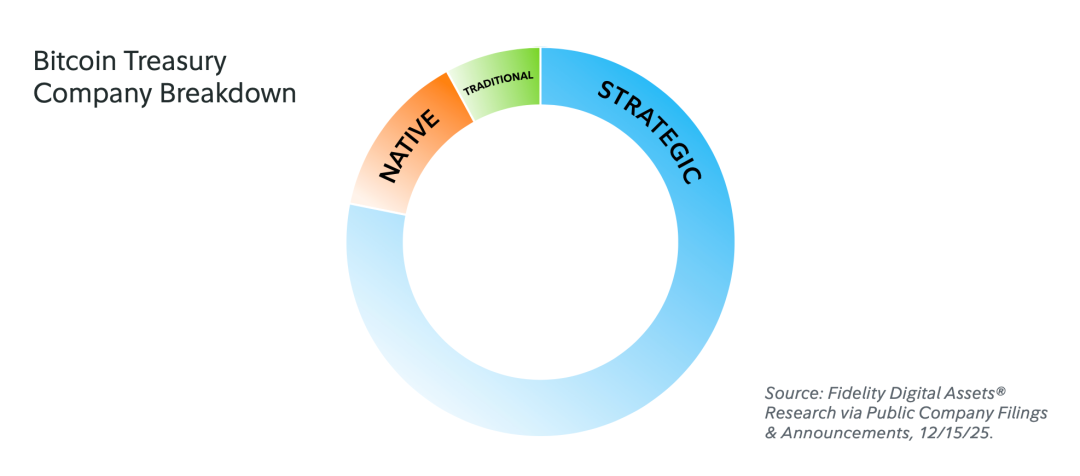
Although fewer in number, the strategic cohort holds nearly 80% of the Bitcoin owned by these companies. In fact, four of the top five Bitcoin holders belong to the strategic category. Excluding the largest holder, the remaining 11 strategic companies average 12,346 BTC.
This places the strategic group far ahead of the native cohort (primarily composed of Bitcoin mining companies, averaging 7,935 BTC) and the traditional cohort (averaging 4,326 BTC).
In the "History of Bitcoin Treasury Companies" chart, each data point represents a company, with the x-axis indicating its first acquisition date and the y-axis showing the total Bitcoin held.
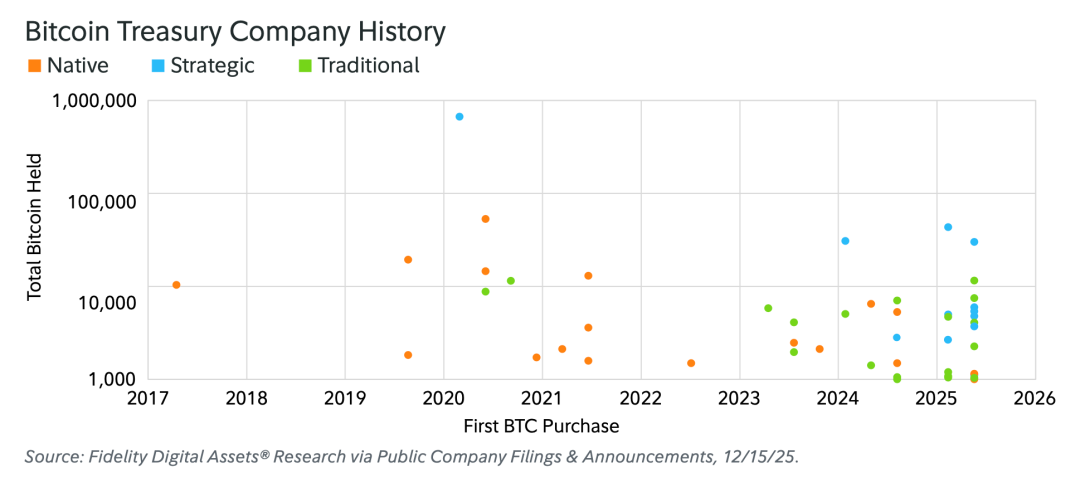
At a glance, several data points stand out, including the absence of new native companies and the substantial Bitcoin holdings among the newly classified strategic companies. The popularity of Bitcoin strategies over the past year has led to a significant influx of strategic and traditional companies.
We believe this trend will continue into 2026. Strategic companies may continue to build Bitcoin reserves, while more traditional companies will leap into Bitcoin.
However, the native category may further evolve. Many native companies are Bitcoin miners, and as they increasingly engage in AI, the competition for energy infrastructure may shift their focus away from pure Bitcoin mining.
Will Hash Rate Flatten in 2026?
One key dynamic we will monitor in 2026 is whether the hash rate begins to flatten due to increased competition for limited energy infrastructure driven by AI.
In 2025, Amazon Web Services signed a 15-year, $5.5 billion leasing agreement with Cipher Mining (CIFR), while Iren Limited (IREN) announced a $9.7 billion cloud services contract with Microsoft (MSFT) for hosting AI workloads.
If mining companies continue to leverage existing infrastructure, priorities may shift from Bitcoin mining as AI offers more profitable economics. According to CryptoSlate reporter Gino Matos, the intersection of Bitcoin mining and AI hosting economics suggests that for a fleet operating at 20 joules/TH, the daily revenue per PH/s ranges between $60 to $70. This means that for most miners operating 20-25 joule devices, the hash price would need to rise by 40-60% from current levels to match the profitability of contracted GPU hosting.
The AI data hosting boom requires substantial energy resources, and Bitcoin miners are uniquely positioned to immediately undertake these projects. This new revenue source introduces something historically lacking for Bitcoin miners: optionality. Previously, miners relied on Bitcoin market cycles. Now, with a potential secondary income source, these companies may become more resilient.
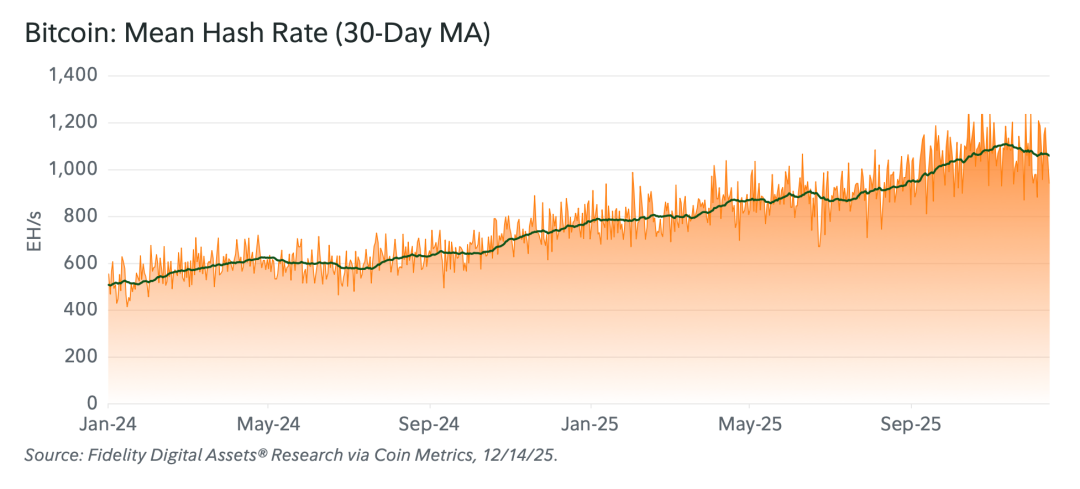
However, several scenarios could realign the dynamics in favor of Bitcoin: a sharp rise in Bitcoin prices or transaction fees could enhance mining profitability; if miners pivot to AI-driven operations, it could further improve economics.
Among these, we believe the most likely outcome is a combination of higher Bitcoin prices and lower hash rates, allowing the mining market to naturally recalibrate.
While a lower hash rate may correspond to reduced Bitcoin security, the emergence of AI hosting as a secondary income source makes miners overall more resilient. Therefore, the Bitcoin network may be strengthened.
Additionally, miners or mining equipment squeezed out due to intense competition may re-enter the market in a lower hash rate environment, potentially leading to a more decentralized mining landscape. Large players pivoting to AI, such as Cipher Mining (CIFR) or Iren Limited (IREN), may also sell excess mining equipment to smaller domestic and international operators. In 2026, as major miners halt expansion and possibly scale back operations to favor more profitable AI hosting income, we may see the hash rate flatten.
From Forks to Quantum Bits: Bitcoin at a Crossroads — DANIEL GRAY
The Rise of Knots
While 2025 ended smoothly for investors, the situation within the developer community was quite different.
Numerous scaling projects and Bitcoin Improvement Proposals (BIPs), such as OPCHECKTEMPLATEVERIFY (CTV) (BIP-119) and OPCAT (BIP-420), still await a path forward.
In addition to these proposals, the Bitcoin Core development team sparked controversy by announcing changes to default policy settings in the upcoming Bitcoin Core version 30. The focus of this controversy is the update to the datacarriersize policy setting, which directly determines the amount of data that can be inserted into the OP_RETURN opcode.
The key point is that OPRETURN represents an unspendable output that nodes can prune from their hard drives, while UTXOs (unspent transaction outputs) must be maintained to validate new transactions. OPRETURN could be a more secure or efficient way to store arbitrary data on Bitcoin.
However, the current incentive structure favors storing data in UTXOs via SegWit and Taproot addresses, as they offer significant fee discounts. Historically, OPRETURN has been limited by policy rules to 80 bytes by default. Larger OPRETURN transactions are not constrained by consensus but are limited by individual node policies, leading some services to allow users to submit "off-chain" transactions that bypass the network's collective mempool and individual policy rules. It is important to note that Bitcoin Core v30 does not change the consensus limit on block size, which remains capped at a total of 4 megabytes.
Assessing the "Garbage" Narrative
Using historical data, we examine the substantive nature of the "garbage" driven growth narrative. While there was indeed a significant acceleration in blockchain size following the launch of the Ordinals protocol in 2023, demand—and the resulting chain growth—has gradually returned to historical norms.
The Fidelity Digital Assets research team’s expectations for block space demand indicate a range of possible outcomes. If the average block size remains around 1.35 megabytes, the total blockchain size will be less than two zettabytes by 2042. In an upper-limit scenario, assuming each block reaches the four-megabyte cap, the chain could exceed four zettabytes in just 16 years.
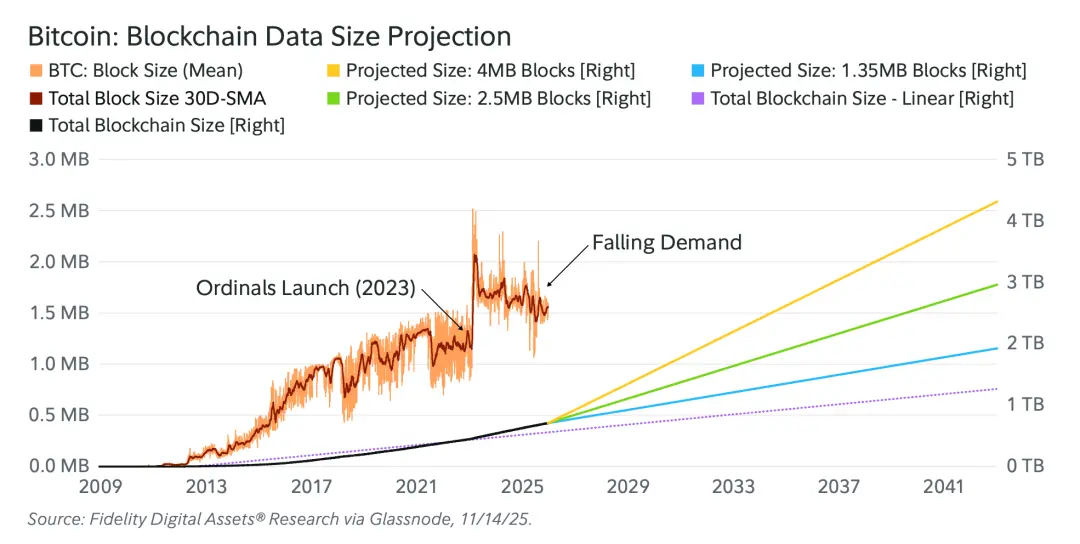
This expected growth assumes stable block sizes, which historically Bitcoin blocks have never been, thus representing extreme cases. More realistic scenarios suggest that by 2042, the total blockchain size will slightly exceed one zettabyte, reinforcing our view: blockchain growth is unlikely to become a major issue due to this change. This debate has split the community into two factions: one supporting the change (Bitcoin Core supporters) and the other opposing it (Bitcoin Knots supporters).
In examining the Core changes, two key questions emerge:
- Can Bitcoin node operators refuse to relay "garbage" transactions?
- Is arbitrary data a problem that Bitcoin can adequately solve?
Fidelity Digital Assets research believes that nodes should retain the ability to customize their own policy rules. Therefore, we disagree with the notion of discarding this policy variable in future Core versions. However, we also understand the rationale behind Core's position, which stems from the second question.
In short, Bitcoin cannot distinguish between "good" data and "bad" data, as it only processes 1s and 0s. Enforcing such a distinction would require a centralized system to judge the data, undermining Bitcoin's fundamental ethos.
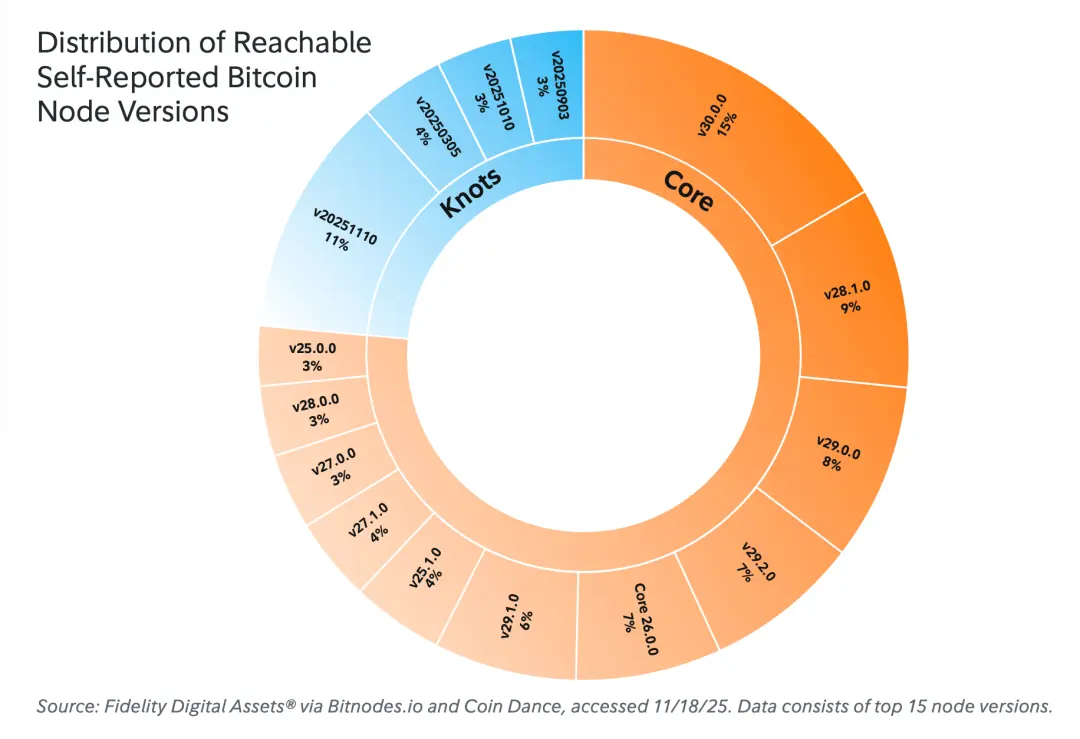
The changes in Bitcoin Core ultimately removed an outdated and ineffective policy rule from the codebase, marking a shift toward a more secure and decentralized method of data embedding that does not rely on specific mining pool services. This update aims to maintain Bitcoin's censorship resistance and acknowledges that Bitcoin will serve purposes beyond payments. Measuring the success of either side of the debate is challenging, but it is noteworthy that nodes claiming to run the Bitcoin Knots version quickly rose to become the top three node versions.
By mid-October 2025, even as Bitcoin Core v30 was being released, the share of Knots continued to grow. Interestingly, as of December 15, 2025, Bitcoin Core v30 nodes accounted for over 15% of the network, while Knots version 29.2 followed closely behind with 11%.
Free Market
The most misunderstood aspect of this debate is the fee market. Fidelity Digital Assets research opposes the argument that increasing OP_RETURN size will lead to chain bloat and the premise that "garbage" is undermining Bitcoin's usability.
Considering on-chain fee data, we must acknowledge that block space demand remained low throughout 2025. Since the emergence of Ordinals, Runes, inscriptions, and BRC-20 tokens—all classified as "garbage" by the Knots camp—block space demand has essentially fluctuated without a trace. Therefore, it seems unlikely that simply making "garbage" easier on Bitcoin will immediately create more demand, given the current lack of demand.
Even in scenarios where "garbage" does drive sustained demand, Bitcoin's fee market is fully capable of handling that environment. The high fees of 2023 and 2024 did not represent a catastrophic failure of the network at the time, nor are they likely to do so in the future. In fact, this dynamic can be seen as a healthy manifestation of Bitcoin's adoption process. As Saifedean Ammous wrote in "The Fiat Standard": "If Bitcoin dies, it will not die because of misaligned economic incentives or high transaction fees. It will die because of a decline in demand for Bitcoin."
Bitcoin Governance: Knots vs. Core
The debate between Knots and Core initially revolved around differences in policy rules. Knots users fundamentally oppose using Bitcoin as a database for non-financial transactions, while Bitcoin Core developers conclude that it is impossible to prevent unwanted transactions without a central planner.
After the launch of Bitcoin Core v30, the Knots camp escalated complaints from technical policy to moral arguments surrounding illegal content. This escalation led to a soft fork proposal that would incorporate policy rules into consensus. This fork has significant implications for the Bitcoin network, its users, and its funds.
While users may disagree on how others use the blockchain, Fidelity Digital Assets research believes it is crucial for the network to remain immutable, decentralized, and censorship-resistant. In the absence of a centralized authority, users will inevitably "misuse" a widely distributed tool or protocol. However, Bitcoin's fee market serves as a deterrent against potential abuse. As block space demand increases, fees will also rise, acting as a filter.
A key insight from this year's low-fee environment is that "garbage" transactions are currently not competing with financial transactions for block space. Demand for Ordinals and similar non-financial uses may remain relatively low, as the immutability of JPEGs and arbitrary data is not a key priority for users. Therefore, the demand for these products seems unlikely to grow. Recent blockchain growth and high fees appear to be expected consequences of using the Bitcoin network rather than direct results of "garbage."
"Better Safe Than Sorry": Staying Ahead of Quantum Threats
Amid advancements in quantum computing, another proposal gaining attention is "QuBit – Pay to Quantum Resistant Hash" (BIP-360). This proposal introduces significant upgrades to the network to protect users from the threat posed by Shor's algorithm, which could reverse-engineer private keys from exposed public keys.
Currently, it is estimated that 6.6 million Bitcoins (worth $762 billion) are at risk of quantum attacks due to exposed public keys. As we enter 2025, the Bitcoin community seems to be preparing for one of several consensus change soft forks in development, but the significant emergence of quantum-related interest is surprising. With improvements in the efficiency and computational power of quantum computers, forgotten and lost Bitcoins held in old output types like Pay-To-Public-Key (P2PK) addresses may become targets. The exact timeline of this threat remains uncertain.
However, it is encouraging to see developers proactively addressing the threat rather than relying on reactive methods, as highlighted by the slogan proposed by the developers of BIP-360: "Better safe than sorry." It is important to note that if future quantum computers can exploit Bitcoin wallets, only addresses with exposed public keys will be at risk. Following best security practices and maintaining good address hygiene can significantly reduce this risk.
In 2026, we expect quantum-focused solutions and custodians to increase to stay ahead of this issue. We also anticipate the emergence of new "quantum-resistant" layers and tokens, as well as promotional activities for products labeled as "quantum-ready." Self-custody users should remain vigilant against human and malicious "software updates" pushed by bad actors. The coming year is suitable for both genuine innovation and opportunists. While we do not expect BIP-360 to achieve broad consensus immediately, the increasing education around this topic is likely to drive momentum toward eventual approval.
Institutional Momentum Meets Macroeconomic Uncertainty — MATT HOGAN
Bullish Argument: Liquidity, Stimulus, Adoption, and Valuation Expansion
Despite a smooth end to 2025, several structural positives suggest that digital assets may be poised for a breakout and return to new historical highs in 2026.
The liquidity situation is undergoing a substantial shift, with quantitative tightening (QT) seemingly coming to an end, and policy signals pointing toward a gradual easing cycle that may accelerate as Federal Reserve Chairman Jerome Powell's term concludes. Fiscal dominance remains a defining theme, with the government increasingly prioritizing growth over austerity.
The mainstream approach appears to rely on escaping debt through growth rather than cutting spending. This is reflected in recent legislation that expands the deficit through tax cuts and increased spending, assuming that economic growth will offset the debt. The U.S. national debt alone has surpassed a staggering $38 trillion, a figure unlikely to be fully repaid, as the ever-growing debt-to-GDP ratio only exacerbates challenges.
Moreover, the interest payments on this debt—currently just under $1 trillion annually—have become the third-largest budget item for the U.S. government. With nominal GDP nearing $30.5 trillion, the U.S. debt-to-GDP ratio is approximately 125%, up from 91% in 2010 and 56% in 2000. If history is any guide, this increasing debt burden is likely to be addressed in the short term through looser monetary policy, creating favorable liquidity conditions for the coming year.
One of the most significant potential liquidity unlocks lies in the $7.5 trillion currently held in U.S. money market funds. These assets have benefited from high short-term yields during the tightening cycle, but as interest rates normalize, the opportunity cost of holding cash will rise.
Shifting from money markets to risk assets—especially those offering asymmetric upside potential like digital assets—could serve as a powerful accelerator for capital inflows. Even a small reallocation of capital could create an environment that significantly strengthens the case for new highs.
Coupled with the possibility of stimulus checks being directly deposited into individual accounts, the market may lay a compelling foundation for increased risk appetite, even in the context of the S&P 500 and gold reaching new historical highs at the end of 2025. Recent increases in global liquidity indicate that major central banks are providing more funds to the economy. This is typically achieved by lowering interest rates or purchasing government bonds and other securities to expand the money supply.
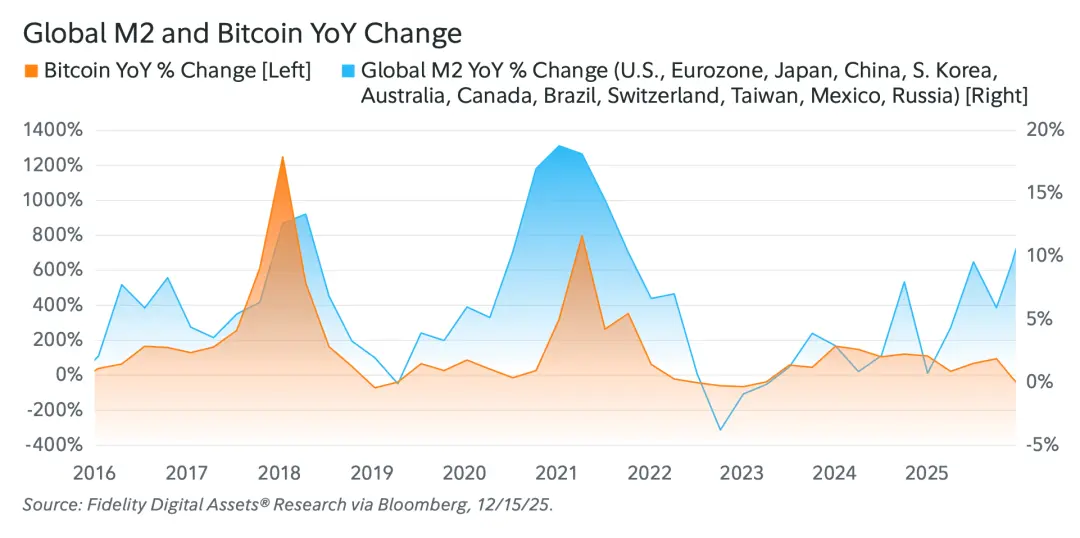
Research from Fidelity Digital Assets shows a close correlation between Bitcoin and liquidity conditions—more specifically, the M2 money supply. When M2 expands, it typically reflects policies by central banks or governments injecting liquidity into the system through lower interest rates, quantitative easing, fiscal spending, or increased lending. Scarce assets like Bitcoin often benefit from this, acting as a "liquidity sponge." When comparing Bitcoin prices to the M2 growth rate of global economies, a clear correlation emerges: Bitcoin tends to rise alongside M2 supply growth.
Historically, Bitcoin bull markets have coincided with periods of increased global liquidity. As a new round of global monetary easing begins and the Fed's QT program concludes, this growth rate is likely to continue rising in 2026, serving as a positive catalyst for Bitcoin prices.
Additionally, institutional adoption continues to deepen, with institutions showing increased interest in exposure to Bitcoin and Ethereum in 2025. This highlights a shift in institutional investors' views on Bitcoin assets: from purely speculative positions to a core component of asset allocation strategies.
Spot ETP inflows remain strong, with spot Bitcoin ETPs collectively holding over $123 billion in assets under management (as of November 18, 2025), up from just under $107 billion at the beginning of the year. Valuation models, from the Puell Multiple to MVRV, indicate that current prices remain below historical peak ranges, especially considering healthy network activity and liquidity inflows. If liquidity truly returns to capital markets, particularly risk assets, digital assets could lead a wave toward new highs.
These dynamics, combined with strong on-chain fundamentals such as rising active addresses, increasing stablecoin velocity, and robust developer activity, create a compelling backdrop for valuation expansion in 2026.
Bearish Argument: Sticky Inflation, Forced Liquidations, Strong Dollar, and Washouts
Despite these bullish signals, macro headwinds remain strong. Inflation, while showing signs of easing, remains sticky, and while policy is gradually becoming less restrictive, it is far from accommodative. The strong dollar persists, even as belief in so-called "devaluation trades" grows, which weighs on global liquidity and risk appetite. Ongoing geopolitical tensions, the U.S. government shutdown in 2025, and regional conflicts inject uncertainty into the market, while stagflation risks loom as growth slows without a corresponding decline in prices.
The long-anticipated recession has yet to materialize, but its shadow continues to suppress sentiment, particularly as fiscal space narrows and concerns about debt sustainability rise. If the market experiences significant stress or faces broader sell-offs in 2026, Bitcoin may be among the hardest hit, partly due to its extreme liquidity and riskier investment characteristics. This possibility may be especially prevalent after the significant increases in valuations of tech and AI companies in 2025.
If these companies begin to sell off, Bitcoin is likely to depreciate alongside them, as it has historically been closely correlated with more volatile tech stocks based on short-term price movements.
If the market shifts toward a general risk-averse direction, particularly if signs of increasing stress begin to show, Bitcoin is unlikely to be immune, as correlations tend to converge during crises.
The short-term outlook for digital assets remains uncertain. Perhaps holders have been taking profits and rotating capital elsewhere, with the absence of new inflows limiting upward momentum.
However, it is worth noting that a major driver of Bitcoin's pullback in the fourth quarter of 2025 was profit-taking by long-term holders, which may signal seller exhaustion and reset the cost basis around a new support level near $85,000.
The washout on October 10, 2025, still casts a psychological and structural shadow. This event triggered forced liquidations and margin calls in the derivatives market, leading to a wave of deleveraging and leaving residual unease. This lingering fragility has suppressed risk appetite, with market participants reluctant to aggressively re-leverage. While this has created short-term downward pressure on digital asset prices, this deleveraging and reset may become a positive factor in 2026. The value erased by this liquidation event far exceeded that of the FTX collapse, but it may highlight Bitcoin's resilience and maturity. Despite the flash crash, Bitcoin stabilized near the local bottom around $80,000, reflecting higher lows during periods of market stress. The depth and liquidity of the Bitcoin market have significantly increased in a short time, enhancing its shock resistance. While we emphasized the potential for looser monetary policy and liquidity unlocks in the previous section, these outcomes largely depend on market data-driven decisions.
Monetary policy may gradually ease, but the pace may not be fast enough. While interest rates are declining, they remain quite restrictive, especially if economic data lags, which may keep them that way. The Fed seems unlikely to achieve its 2% inflation target without causing pressure in the labor market. If it sticks to this mission, the result may be an extended period of restrictive policy and potential market corrections. If this scenario unfolds, we may see this weakness reflected in lower digital asset prices.
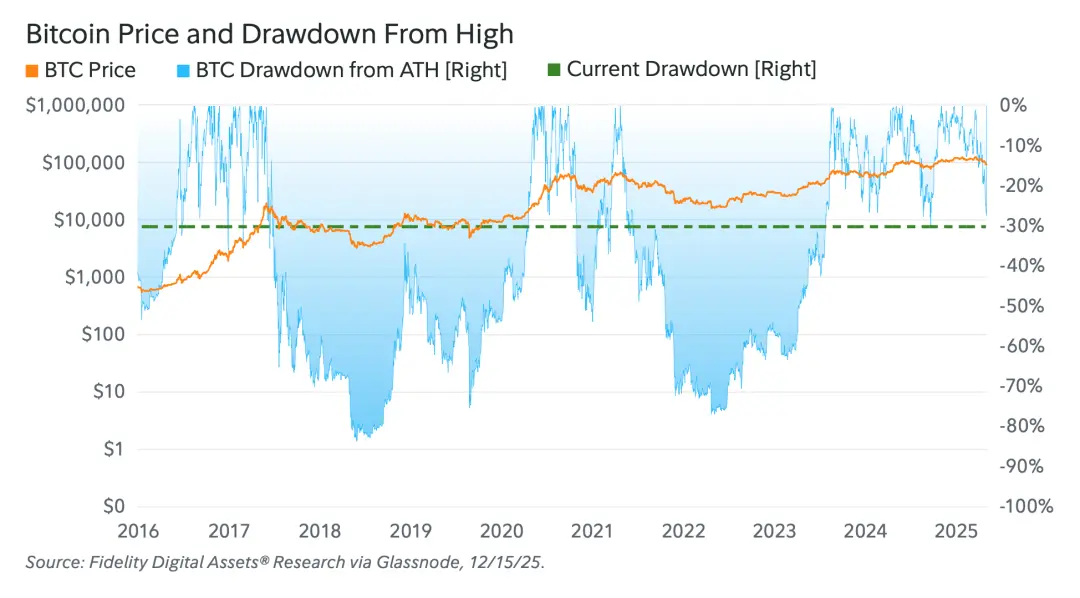
Finally, geopolitical tensions and stagflation risks remain unresolved, while the strong dollar continues to pressure global liquidity. In this environment, even strong on-chain fundamentals may not be enough to offset macro headwinds. Therefore, the path to new historical highs is not only uncertain but may also be nonlinear and fragile, requiring decisive shifts in policy and sentiment to achieve sustainable breakthroughs. Although Bitcoin is down over 30% from its historical highs, this pullback is far shallower than previous corrections, which could reach depths of 80% or more. Additionally, Bitcoin prices seem to hold strong around the $85,000 level, forming higher lows after each pullback from new historical highs.
Stagflation Hasn't Happened… Just Don't Tell Gold! — CHRIS KUIPER, CFA
In the "2025 Outlook," we questioned why it seems no one is discussing stagflation. While this is not a prediction, it seems strange that investors at least do not view it as a potential scenario (even if the probability is low).
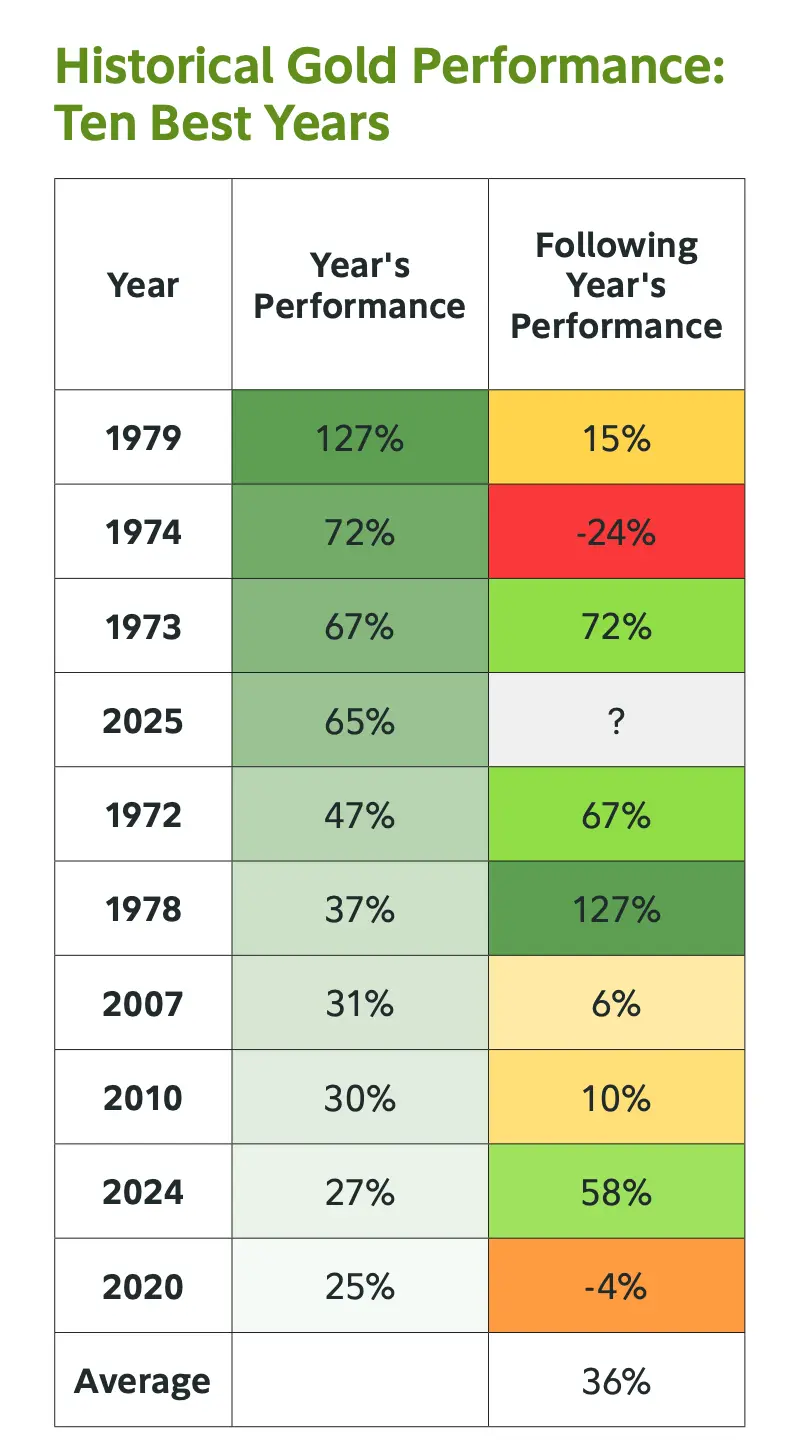
Fortunately, the market in 2025 did not experience the economic contraction or high inflation of a stagflation scenario, although inflation remains stubbornly closer to 3% rather than the Fed's 2% target. However, looking at gold's record-breaking performance, you wouldn't think so. Gold returned 65% in 2025, one of the highest annual increases since the stagflation periods of the 1970s and 1980s.
In fact, the returns in 2025 rank fourth among annual gold returns since the abandonment of the gold standard, as shown in the "Historical Gold Performance: Top Ten Best Years" table. However, unlike that period, today's rally seems driven more by geopolitical and financial risks than by pure inflation hedging. Nevertheless, gold has historically moved in waves, carried by momentum from these large structural shifts. It is not surprising that gold had another strong year.
Central banks around the world have been actively buying gold while reducing their holdings of U.S. Treasuries. Ongoing geopolitical risks, de-dollarization, and a weakening dollar further support this trend. These factors collectively reflect a broader trend: a shift from a dollar-centric system to allocating assets "outside the system."
But what does this mean for Bitcoin?
We still believe that gold and Bitcoin share many similar characteristics as monetary commodities—both are commodities without a central issuer, without cash flows, and primarily used as stores of value. Most importantly, both can serve as globally recognized geopolitically neutral commodities.
The advantage of gold over Bitcoin (which is also one of the reasons for its rise in 2025) lies in its widespread recognition by global institutions, central banks, and governments. It also has thousands of years of history supporting it and boasts a mature infrastructure that facilitates easy purchases by institutions, with significant market depth and scale. However, we believe that more institutions will begin to see some advantages of Bitcoin over gold and may start to allocate accordingly.
Recently, a central bank made its first purchase of Bitcoin, a possibility we discussed in our 2023 outlook. Although this was done with a small amount of funds in a "test account," the fact indicates that the evaluation process is progressing. In our view, this significantly increases the likelihood of others following suit. We believe that, given the current high and persistent fiscal deficits, trade wars, and geopolitical events, both Bitcoin and gold may benefit, making the holding of geopolitically neutral currencies or assets "outside the system" more attractive.
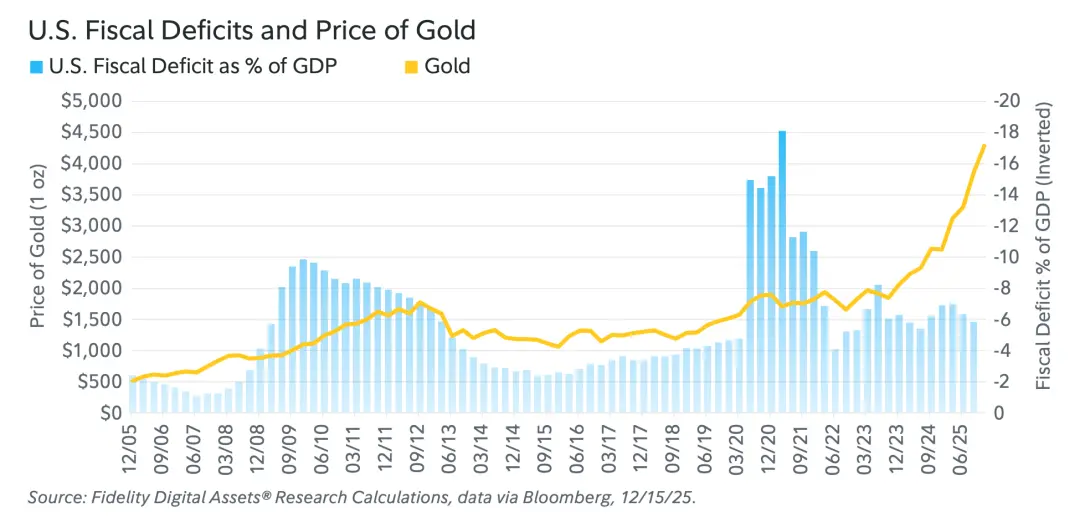
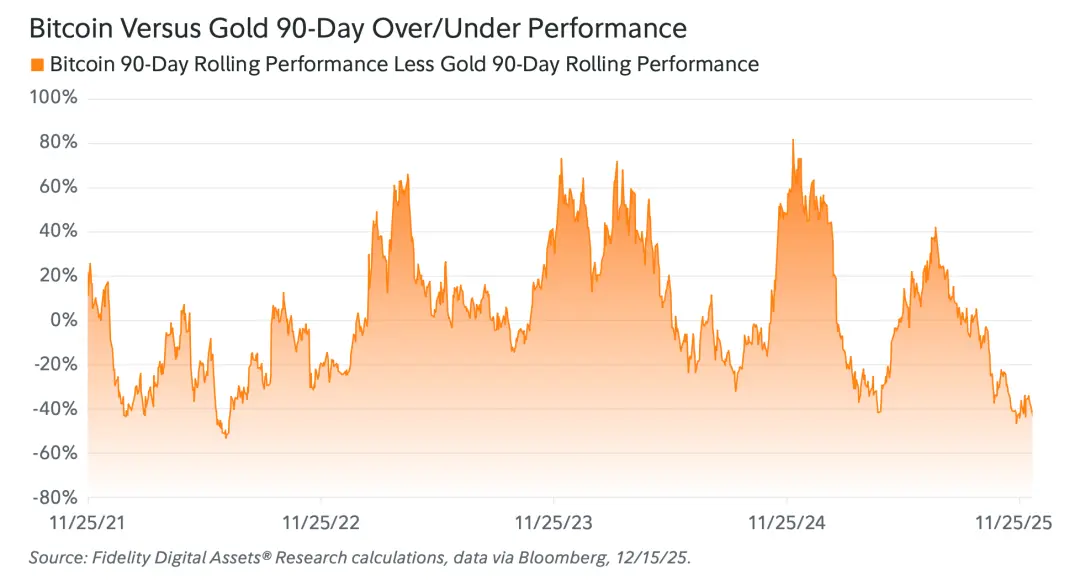
Although gold and Bitcoin occasionally move in sync, their long-term correlation is only moderately positive, which we somewhat counterintuitively find attractive. This suggests that Bitcoin may enhance the risk-adjusted returns of a portfolio without the need to add "leveraged gold" assets.
Historically, gold and Bitcoin have alternated in showing strong performance. With gold shining in 2025, it is not surprising that Bitcoin takes the lead next.
免责声明:本文章仅代表作者个人观点,不代表本平台的立场和观点。本文章仅供信息分享,不构成对任何人的任何投资建议。用户与作者之间的任何争议,与本平台无关。如网页中刊载的文章或图片涉及侵权,请提供相关的权利证明和身份证明发送邮件到support@aicoin.com,本平台相关工作人员将会进行核查。


