On February 2, 2026, with the entire crypto market experiencing a liquidation of approximately $783–784 million, the shadow of leveraged trading once again loomed over the market. At the same time, a large number of high-leverage ETH long positions were concentrated on the derivatives platform Hyperliquid, leading to a massive liquidation event during subsequent volatility, becoming the most controversial focus of this market cycle. On one hand, BTC prices rebounded and the total market capitalization recovered; on the other hand, a wave of liquidations primarily involving long positions occurred, with risks and opportunities overlapping on the same chart. What truly deserves questioning is, against the backdrop of the liquidation wave and increasing volatility, why did large funds still choose to amplify their ETH long leverage exposure, willingly standing on the edge of a knife to gamble on future gains.
Fluctuations Above $79,000 and the Contrast of Long Liquidations
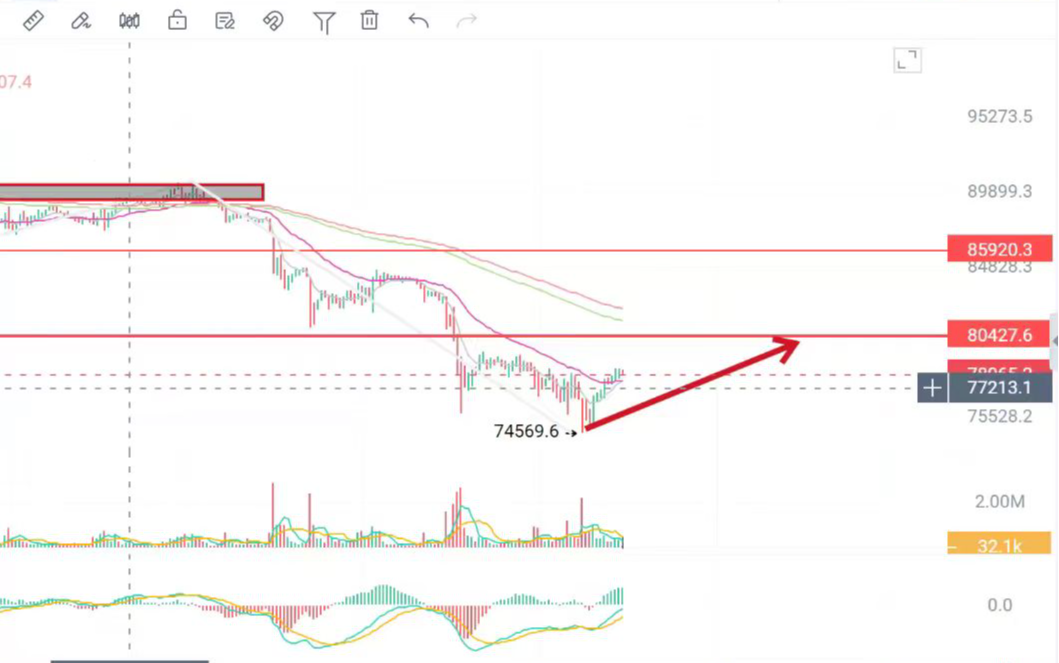
● In terms of price, BTC saw a strong rebound around February 2 in the East 8 Time Zone, rising approximately 2.4%–2.66% within 24 hours, briefly breaking through the $79,000 mark. This upward breakthrough set the tone for the entire market sentiment: nominal prices strengthened, and the market seemed to warm up, providing ample stage for subsequent leverage sentiment, prompting many traders to re-bet on a continuation of the short to medium-term rise.
● However, while prices were rising, the derivatives market experienced brutal liquidations: the total liquidation across the network was approximately $783–784 million, with BTC liquidations around $248 million and ETH liquidations around $286 million. According to a single source, the scale far exceeded typical daily fluctuations. This indicates that despite prices not experiencing a cliff-like drop, leveraged positions were massively swept out during short-term fluctuations, showing that the entire leveraged system was highly strained.
● Even more contrasting is that this round of liquidations was primarily focused on long positions. Prices were generally rising, and the long positions, which should have been on the "correct side," were collectively liquidated during short-term volatility, creating a typical scenario of "as prices rise, the longs disappear." This misalignment between price and position fate not only amplified market fears of volatility but also laid the narrative tension for subsequent ETH longs to choose to leverage up again—some were forced to exit, while others chose to double down.
The Largest Liquidation Occurred in ETH: The Fate of Leverage on the Edge of a Knife
● Among this wave of liquidations, the most notable single liquidation occurred on the ETH-USD contract on Hyperliquid: according to a single source, the single liquidation was valued at approximately $13.5215 million. It is important to emphasize that this data comes from specific media's on-chain and platform statistics, not cross-verified by multiple parties, and there are boundaries in terms of accuracy and coverage, but the magnitude itself is sufficient to illustrate the concentration and aggressiveness of ETH leveraged trading.
● From a timeline perspective, the large high-leverage ETH long positions on Hyperliquid were concentrated during the backdrop of BTC's rebound and rising ETH sentiment, while the liquidations occurred during subsequent severe volatility. This outcome of "generally correct direction but unable to withstand mid-course fluctuations" is a typical fate of leverage: as long as the market experiences sufficient retracement or spikes on the upward path, it is enough to liquidate high leverage before reaching the endpoint.
● From the dimensions of position concentration, high leverage, and single-point risk, a highly concentrated massive long position once faced with liquidation not only poses a devastating blow to the holders but also significantly amplifies the platform and market's perception of ETH leverage risk. A single massive liquidation means that risk is highly concentrated on a few accounts and specific contracts, prompting the overall liquidity of the platform and other participants to instinctively raise risk premiums, thereby intensifying market vigilance towards ETH leveraged longs.
Diverging Paths of Whales Bottoming Bitcoin and Funds Shifting to Ethereum
● In stark contrast to the brutal high-leverage liquidations is the operational style of Bitcoin whales. Market voices cite analyst James Van Straten, who pointed out that during the severe fluctuations and even crashes in Bitcoin prices, ultra-large investors holding over 10,000 BTC continued to buy, being one of the few groups maintaining net inflows. The choices of these entities are closer to "counter-cyclical accumulation" rather than short-term speculation, reflecting a robust bet on BTC's mid to long-term value.
● In contrast, the concentration of high-leverage long positions in ETH on derivatives platforms like Hyperliquid represents a completely different style: on one side, whales are slowly accumulating BTC in the spot or low-leverage dimension, aiming to average costs over a large cycle and extend the time window; on the other side, funds are using high leverage on ETH contracts to directly amplify short-term volatility, compressing what would take weeks or months to realize into days or even shorter timeframes. This forms two parallel yet distinct funding paths: "steady bottom-fishing" versus "aggressive speculation."
● Behind this reflects the different pricing of risk attributes for BTC and ETH: many institutions and whales still view BTC as a "high-volatility safe haven" during increased volatility, using lower leverage or spot holdings to hedge against long-term uncertainties; while ETH is largely treated as a leveraged tool to amplify returns—during times of heightened sentiment and concentrated expectations, it becomes the preferred target for funds to amplify risk exposure and chase excess returns.
Strengthening Fundamentals: Why Ethereum is Chosen as a Leverage Vehicle
● Supporting this leverage narrative is not just short-term price fluctuations, but also the obvious strengthening of ETH on-chain data itself. According to statistics cited by Goldman Sachs, in January 2026, Ethereum's network saw a month-on-month increase of approximately 27.5%, 26.8%, and 36.0% in daily active addresses, new addresses, and transaction counts, respectively. Regardless of absolute values, this set of relative increases is sufficient to indicate that the actual use and interaction within the Ethereum network have significantly accelerated over the past month.
● When such systematic improvements in fundamentals occur, the market often interprets them as mid to long-term positive signals: the rise in on-chain activity is seen as a precursor to real demand warming and the ecosystem regaining momentum. Under this narrative, some traders are more willing to "get on board early" during short-term volatility by using high-leverage long positions to "prepay" for potential price increases, concentrating the anticipated value reassessment within a short timeframe.
● However, it is precisely here that a typical misalignment occurs: the stronger the fundamentals, the more extreme the leverage. Theoretically, a clear long-term logic should guide more patient allocations and low-leverage layouts, but in the highly speculative crypto market, strong fundamentals are often used by short-term traders as a "safety net" for employing extreme leverage, thus over-realizing future gains. The result is that while the long-term logic is sound, it is pulled into more severe price fluctuations and denser liquidation points in the short term due to high leverage.
Coexistence of Opportunities and Abyss: The Next Step for High-Leverage ETH Longs
● From the perspective of capital utilization and potential returns, as Ethereum's fundamentals strengthen, on-chain data improves, and the market holds certain expectations for future trends, high-leverage ETH longs possess a natural appeal for some large funds. Compared to simply holding spot, high leverage can amplify price elasticity without significantly increasing nominal input, compressing what would take weeks or months to realize into days or even shorter timeframes, which is a temptation that all aggressive funds find hard to ignore.
● However, in light of the fact that this network-wide liquidation was primarily focused on long positions, along with the case of a single approximately $13.5215 million large ETH liquidation on Hyperliquid, high leverage also showcased another side during extreme volatility: even if the direction is ultimately correct, as long as the mid-course fluctuation exceeds the margin tolerance threshold, the system will preemptively "liquidate" the holder before the price reaches the endpoint. Thus, the paradox of "seeing the right direction but still getting liquidated" becomes the norm, with high leverage transforming from a tool for amplifying profits into an amplifier of time mismatches and volatility risks.
● Looking ahead, there are several key observation points worth continuous tracking: first, whether leveraged longs will return after a brief retreat or remain cautious for the long term after this round of liquidations; second, whether the pace of liquidations will significantly slow down, indicating that market leverage levels are gradually clearing, or if it continues to trigger liquidations at high levels; third, whether Ethereum's on-chain active addresses, transaction counts, and other fundamental data can maintain high growth rates after January. If the clearing of leverage coincides with continued improvement in fundamentals, ETH's mid to long-term upward space still has logical support; conversely, if leverage rapidly returns while fundamentals do not keep up, new high-leverage longs may just be setting the stage for the next wave of liquidations.
In the future, contracts and leverage will continue to be the core battleground of the crypto market, but in the current context of frequent shifts between fundamentals and narratives, how to control the pace between opportunities and abyss may be more critical than simply betting on direction.
Join our community to discuss and grow stronger together!
Official Telegram community: https://t.me/aicoincn
AiCoin Chinese Twitter: https://x.com/AiCoinzh
OKX benefits group: https://aicoin.com/link/chat?cid=l61eM4owQ
Binance benefits group: https://aicoin.com/link/chat?cid=ynr7d1P6Z
免责声明:本文章仅代表作者个人观点,不代表本平台的立场和观点。本文章仅供信息分享,不构成对任何人的任何投资建议。用户与作者之间的任何争议,与本平台无关。如网页中刊载的文章或图片涉及侵权,请提供相关的权利证明和身份证明发送邮件到support@aicoin.com,本平台相关工作人员将会进行核查。