Author: Zen, PANews
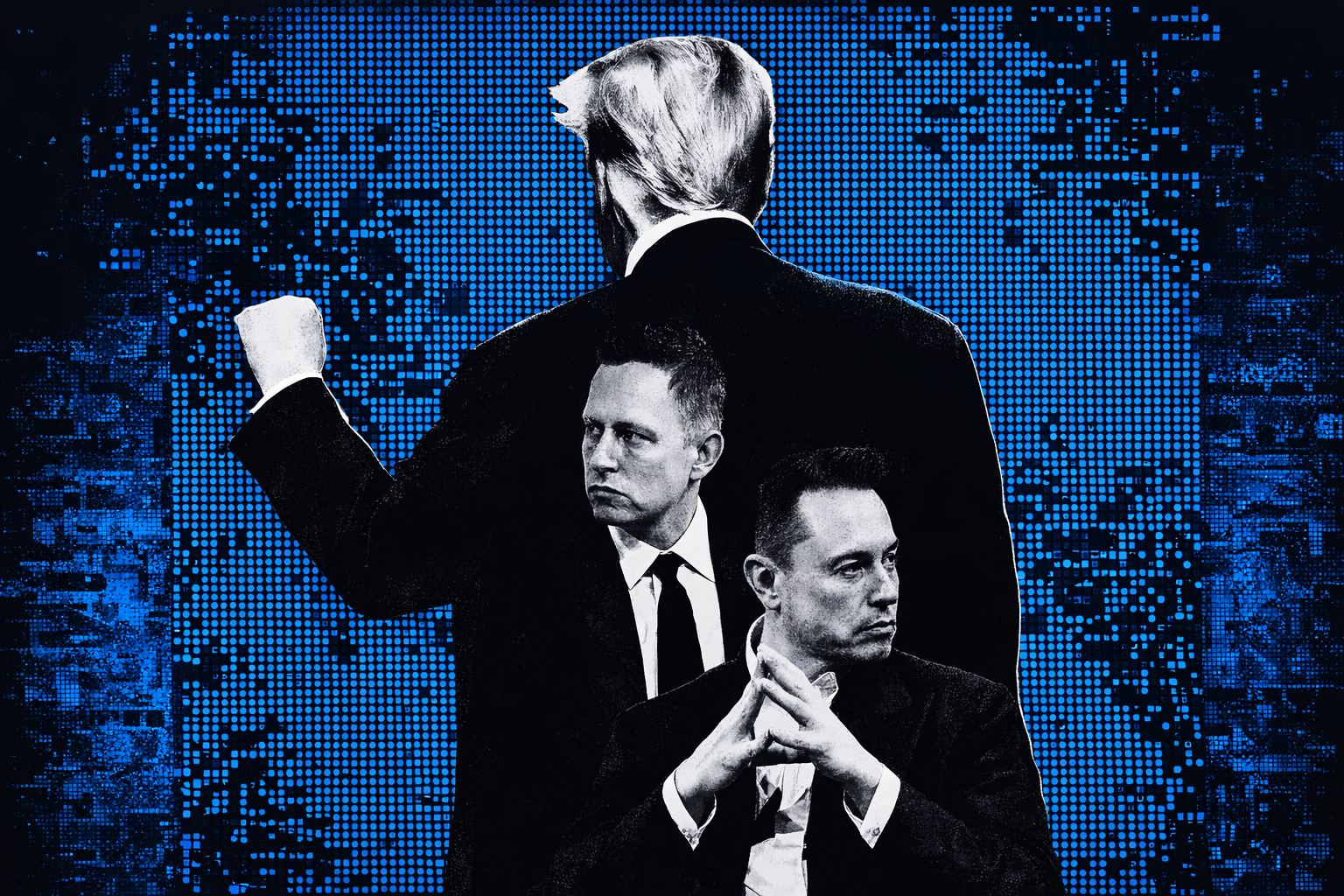
It has been less than a year since the previous $4.6 billion growth fund completed its fundraising, and Peter Thiel's Founders Fund has basically completed a new fund, "Growth IV," of approximately $6 billion. According to reports, about $1.5 billion of the new fund comes from Founders Fund partners' own pockets and has attracted a large number of institutions and investors chasing after it, with external LP subscription demand exceeding the fund's capacity.
Moreover, beyond the capital logic where top funds enjoy strong bargaining power, as one of the most ideologically charged capitals in Silicon Valley, Founders Fund's fundraising expresses a certain declaration again: AI, defense technology, aerospace, and "national capabilities" have become central propositions of capital once more.
What makes Founders Fund unique is that it embeds a very explicit imagination of technology related to politics into its investment practices. From SpaceX, Palantir, Anduril to Stripe, OpenAI, Founders Fund operates a combination that spans national foundational capabilities and platform technologies, which can be directly embedded into national capabilities, becoming part of security, intelligence, aerospace, industry, and infrastructure.
“Returning to the Original Intention”: The Cold War-style Technological Nation Model Reemerges
In recent years, the technology elite in Silicon Valley has gravitated toward the right, becoming a new trend. The prominent characteristics of these tech-right groups often include believing that technological progress, capital, and high-capability elites should dominate social direction while being averse to progressive cultural politics, disliking heavy regulations, and increasingly willing to bind technology with national power.
Many describe this phenomenon as Silicon Valley's "invasion" of the Pentagon. But in reality, Silicon Valley and the U.S. national machinery have never truly separated; what is happening today is merely a re-emergence of this relationship.
In the internet age, the public imagines Silicon Valley as a garage myth filled with technological geniuses, anti-bureaucratic, anti-government, and entirely relying on the free market. However, historically, the birth of Silicon Valley already carried strong genes of defense, military-industrial complex, and national research systems.
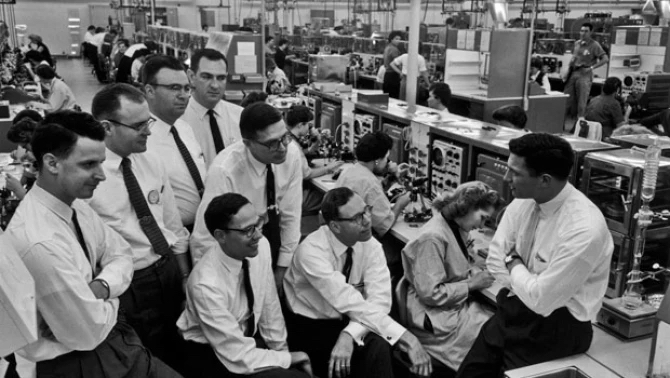
During the Cold War, top universities like Stanford took on many defense-related research projects, with the related startup electronics companies primarily serving military and government clients. Thus, the innovation and growth of the early high-tech industry were closely linked to the U.S. national security system. For example, the roots of the modern internet came from a project by the U.S. Department of Defense's Advanced Research Projects Agency in the 1960s.
Additionally, NASA's Apollo program's specifications and procurement requirements significantly promoted the innovative development and technological maturity of semiconductor manufacturing, helping its manufacturing processes rapidly reduce costs after maturation. In other words, early chips were not first proven in the civilian market and then naturally entered the national system; rather, they were initially supported by national demand and gradually commercialized thereafter.
This is also why Peter Thiel and his allies' current positioning can be described as a revival of a certain "Cold War-style technological nation model." The main characters during the Cold War were more government laboratories, DARPA, NASA, and traditional contractors, while today’s new characters have become venture capital-supported dual-use technology platforms. The Pentagon has not withdrawn; it is merely actively transferring the source of innovation to the commercial technology system.
Peter Thiel embraced this shift earlier and more clearly than most VCs. Founders Fund has not only recently invested in defense technology but was an institutional investor in "AI arms dealer" Palantir from early on (Peter Thiel himself is also a co-founder of Palantir). Founders Fund has long been a core supporter of the "AI defense company" Anduril, investing $1 billion last year as a lead investor, helping Anduril complete $2.5 billion financing at a valuation of $30.5 billion.
Simultaneously, SpaceX, which controls commercial space, military satellites, battlefield communication, and launch capabilities, stands as a typical example of private capital beginning to penetrate critical national infrastructure. It can obtain substantial contracts from NASA and the U.S. National Reconnaissance Office while also establishing a global commercial landscape through launch services, commercial satellites, and Starlink broadband networks. Particularly, Starlink not only provides communication services for remote areas, maritime, aviation, and other scenarios, but also has, in fact, taken on the role of basic communication infrastructure on the Ukrainian battlefield.
Internal Differentiation of the Tech Right
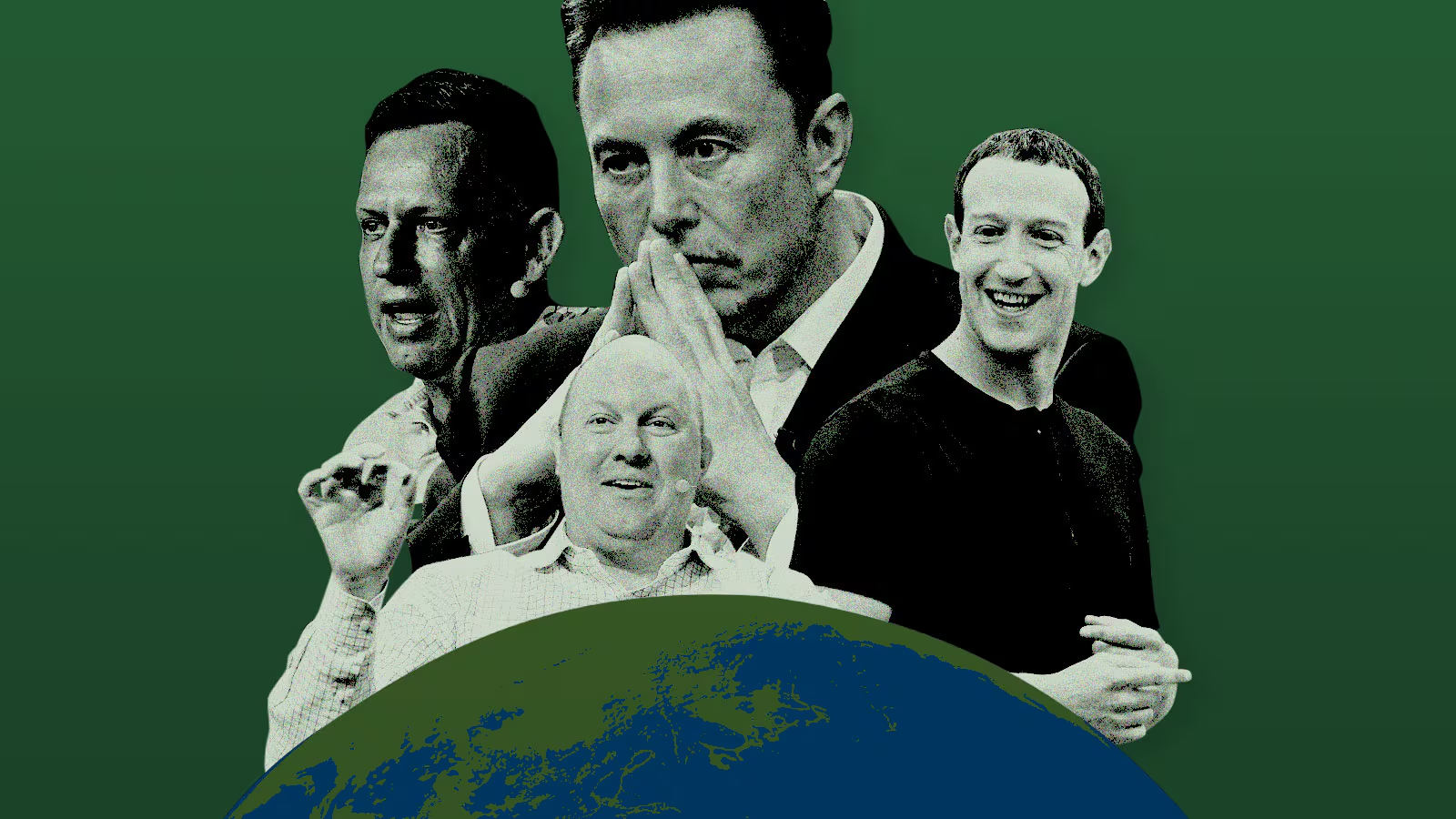
Also prominent within the tech-right camp is a16z, which wields significant influence in the capital market, having completed a massive $15 billion fundraising earlier this year, directly grabbing nearly 18% of the venture capital funds in the U.S.
In recent years, a16z has clearly turned right, no longer satisfied with being a consumer internet fund, but has also begun to make "national interest" part of its investment language. a16z has even established a "American Momentum" focus, aimed at investing in companies that support national interests, covering sectors such as defense, manufacturing, supply chain, education, housing, and public safety.
However, grouping Thiel and a16z's Marc Andreessen into the same faction obscures internal differences; the two paths are actually quite different.
a16z's underlying tone still resembles tech accelerationism rather than Thiel-style elite nationalism. Andreessen emphasizes overregulation, stifled innovation, and the need for America to build. Thus, a16z can heavily invest in AI, crypto, enterprise software, biotechnology, and defense technology, betting on the "technology wave itself," rather than showing a clear inclination toward security state, geopolitical competition, and high-barrier platforms like Thiel.
According to a report by Reuters last year, a16z even plans to raise a $20 billion AI mega-fund, primarily aimed at capturing the global capital allocation impulse toward U.S. AI companies. In contrast, Thiel's Founders Fund appears to concentrate its money on a few "civilizational-level companies," preferring to continue making significant bets on a very small number of winners.
This distinction marks the most important difference between the two paths. a16z believes more in allowing technology to expand freely, while Thiel believes more in allowing a few strategic technology companies to form dominance, which reflects fundamentally different political philosophies. “To create and capture lasting value, businesses should pursue monopoly,” Thiel’s path carries a distinct and even naked elitist consciousness. Reflected in investments, he does not just seek investment growth but prefers those who can structurally reduce competition, raise barriers, and control key nodes.
Consequently, the entire tech-right closely connected to Trump has a naturally fragile alliance with MAGA. Their convergence is based on mutual disdain for the traditional establishment, dislike for recent regulatory and cultural politics of the Democratic Party, and a willingness to treat "great power competition," "American industrial resurgence," and "national capability rebuilding" as a common language.
However, the differences between elites and populists are also evident and cannot be bridged. The social foundation of MAGA leans more toward populist protectionism, anti-immigration, and anti-globalization. In contrast, the tech-right represented by Silicon Valley capital inevitably relies on high-skilled immigrants, a global talent network, and cross-border capital flows. When the Trump administration raised H-1B costs and intensified scrutiny, it has directly impacted American technology companies, as these firms in the AI race would heavily rely on engineers from India, China, and worldwide.
The AI issue accentuates this rift even more clearly. The tech-right tends to regard AI as the core engine for U.S. growth and national competition, harboring hostility toward regulation and security constraints. Trump's attempt to restrict state AI regulations with federal funding aligns with these tech capital preferences. However, the grassroots of MAGA does not share such a united view on AI; they are both worried about job displacement and instinctively skeptical of the cultural positions and power expansions of Silicon Valley giants.
Technological Innovation Dividends Are Becoming Further Away from Ordinary People
Recently, apart from the Founders Fund being reported to complete a $6 billion fund, the venture capital firm General Catalyst is also raising approximately $10 billion. As top funds are brewing large-scale fundraising activities, it reflects a more realistic trend: capital and technology are increasingly concentrating toward a few leading platforms. According to FT reports, in 2024, more than half of U.S. VC fundraising flowed to just nine institutions, while the number of active VCs fell by over a quarter from the peak in 2021.
This has led to two outcomes—concentration of the entrepreneurial ecosystem itself and the retreat of high-potential technology companies from the public market.
On the one hand, top funds are increasingly capable of keeping the leading companies in their portfolios, while the capital required for subsequent rounds is growing larger, resulting in fewer players truly qualified to participate in later-stage financing. On the other hand, large unicorns such as Databricks, Stripe, SpaceX, and OpenAI are seeking to find ways to remain in the private market long-term, with their large-scale private fundraising referred to as “private IPOs.” This means that, without bearing the pressure of public disclosure and public opinion, these companies can achieve expansions that traditionally would only occur in secondary markets through massive private funds.
Therefore, an increasing number of steep early valuation expansions are starting to be absorbed by private markets, and the "public pricing points" that ordinary investors can participate in are arriving later and later. Historically, many great technology companies completed the majority of their market value growth after going public. Extending the timeline, American VC as a whole has also not consistently outperformed the Nasdaq.
This means that ordinary investors may only be able to participate in relatively late-stage and moderate growth in the public market; the most explosive early dividends are increasingly being blocked within private markets.
Moreover, the issue goes beyond that. Once these companies provide not just consumer-facing applications but also national data platforms, government software, or satellite networks, they gradually become part of institutions and infrastructures. Therefore, the question is no longer just whether ordinary investors can share in growth dividends but rather whether private capital is preemptively occupying critical interfaces for the future operation of nations and societies with relatively limited public accountability.
The example of Palantir particularly illustrates this point; its business has accelerated growth in recent years, largely based on a series of government contracts. Enterprises certainly have the right to sell software to the government, but when the platform of the same company deeply enters sensitive systems such as the military, intelligence, and immigration enforcement at the same time, public governance faces a more complex issue. The public's confusion lies in whether what the government procures is merely a tool or if it gradually binds part of the governance capacity, data structures, and decision-making processes to a certain private platform.
Thus, what is truly worthy of caution is not a mysterious "behind-the-scenes controller" narrative. Rather, the concentration of capital, the platformization of state capabilities, and the relative lag of technology regulation are occurring simultaneously. And Peter Thiel is not simply betting on the next round of unicorns; he appears more to be betting on the next round of the U.S. power structure itself, relying on the technology platforms increasingly cultivated by private capital to fulfill this vision.
This process may not necessarily lead to an uncontrollable "technological Leviathan," but it will at least confront democratic societies with a more difficult-to-avoid question: when infrastructure, national capabilities, and capital returns are more tightly bound together, who still possesses enough institutional capacity to impose constraints before they truly cross boundaries?
免责声明:本文章仅代表作者个人观点,不代表本平台的立场和观点。本文章仅供信息分享,不构成对任何人的任何投资建议。用户与作者之间的任何争议,与本平台无关。如网页中刊载的文章或图片涉及侵权,请提供相关的权利证明和身份证明发送邮件到support@aicoin.com,本平台相关工作人员将会进行核查。


