Text | Sleepy.txt
Throughout human history, there have been several large-scale geographic data collection actions, each of which has changed the balance of power.
During the Age of Exploration, Portugal and Spain sent fleets to chart the seas; whoever controlled the accurate routes held the initiative in trade and colonization.
During World War II, the U.S. Army Map Service created military maps covering the globe. Eisenhower later said that one key to the Allies' victory was those maps.
During the Cold War, the United States and the Soviet Union used spy satellites to photograph each other's territories, with image analysts spending their days staring at blurry satellite photos, counting enemy missile silos.
These three actions have a commonality: they were all state actions conducted in secrecy, requiring enormous military budgets, and ordinary people knew nothing about them.
In the summer of 2016, 500 million people voluntarily picked up their phones, walked into parks, took to the streets, and entered shopping malls, scanning everything around them with cameras while playing a game called Pokémon Go. What they didn't know was that they were participating in the largest, cheapest, and most efficient geographic data collection action in human history. Every time someone stepped out, they were uploading ground-level images of buildings worldwide to servers for free.

The founder of the game, John Hanke, initially just wanted to create a fun AR game when he started Pokémon Go. But ten years later, he made another choice that redirected this data to AI and military applications.
This choice has a deeply unsettling clue behind it: when Hanke started his business in 2001, his first funding came from the CIA.
The CIA's First Funding and a Young Man's Dream of Maps
In 1996, John Hanke earned an MBA from the Haas School of Business at the University of California, Berkeley, and then did something that seemed quite reckless at the time: he launched an internet startup.
His first company was called Archetype Interactive and developed an online role-playing game called Meridian 59, one of the earliest 3D online games in history, predating World of Warcraft by nearly a decade. This company was later acquired by 3DO, and Hanke received his first pot of gold.
In 2001, he founded Keyhole.
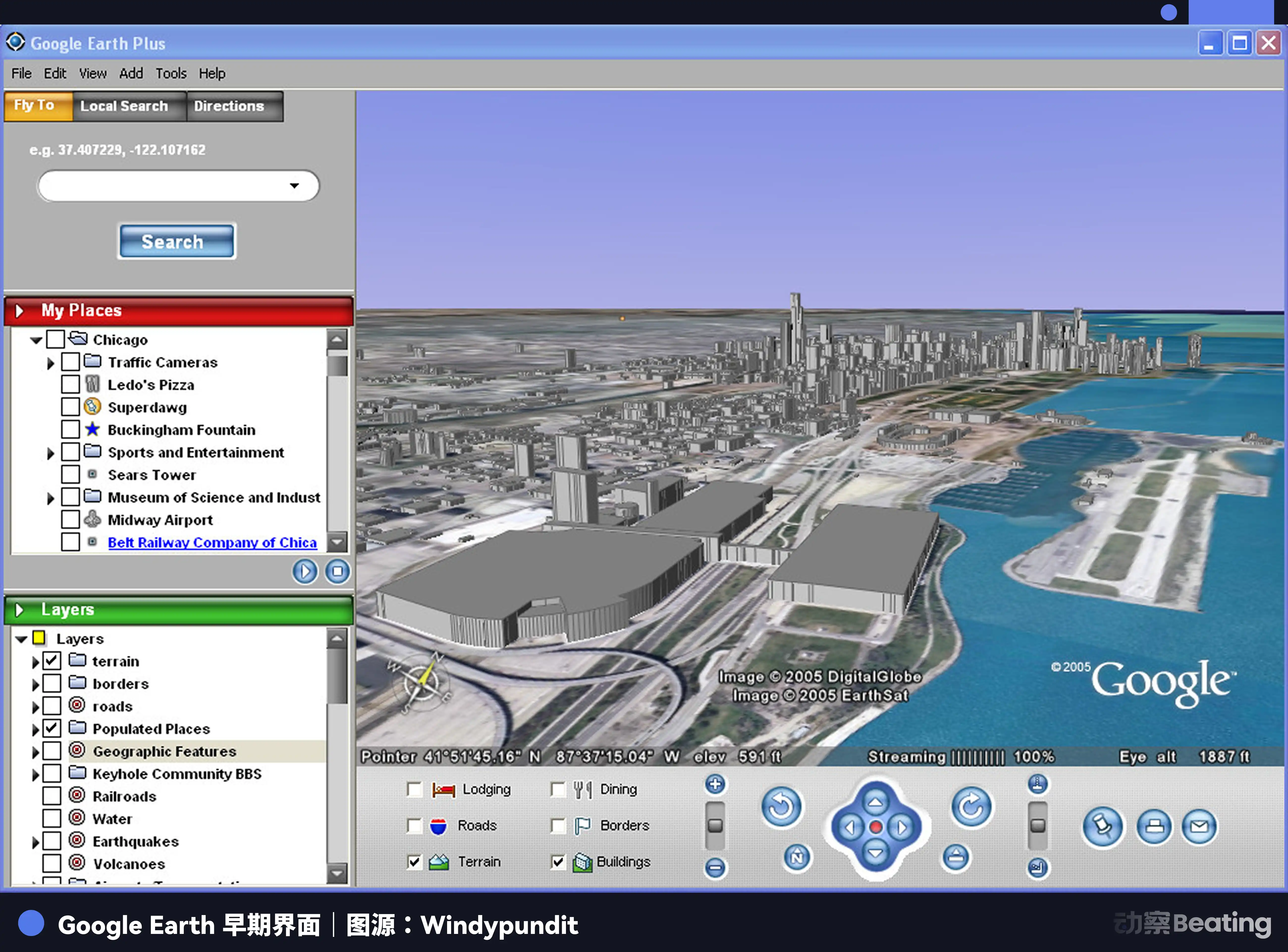
He had a vision for this company: he wanted to stitch together satellite images into an interactive globe that allowed anyone to view any corner of the Earth on their computer screens. At that time, the average internet speed in American households was 56Kbps, and loading a high-definition image took half a minute. Keyhole's product required real-time streaming of satellite images, which was a significant technical challenge.
But one organization immediately recognized its value, and that was In-Q-Tel, the CIA’s venture capital arm.
In-Q-Tel was established in 1999, personally pushed for creation by CIA Director George Tenet. Its operating logic was never about making money; instead, it aimed to bring the most advanced civilian technology into the intelligence system through commercial investments.
At that time, satellite images could only show the top view, while intelligence analysis required ground perspectives, such as building sides, street layouts, entrance locations, and nearby environmental shielding. What Keyhole was doing perfectly met this need.
In 2003, a few weeks before the outbreak of the Iraq War, In-Q-Tel completed its investment in Keyhole. Soon, Keyhole's technology was actually used for battlefield situational analysis, with military analysts using it to study the street layouts of Baghdad and the architectural structure of Saddam’s palaces.
In October 2004, Google acquired Keyhole for tens of millions of dollars. The core technology of Keyhole became what later transformed the world as Google Earth, and Hanke himself joined Google as the Vice President of Geographic Products, leading a larger-scale project.
Almost simultaneously, Peter Thiel used tens of millions he earned from selling PayPal to establish a company called Palantir. The name Palantir comes from the crystal balls in Tolkien’s The Lord of the Rings. Palantir’s idea was to use big data analytics to help intelligence agencies track terrorists amid massive amounts of information.
While mainstream Silicon Valley venture funding dismissed it, In-Q-Tel also became one of Palantir's earliest backers and investors, with the CIA itself becoming Palantir's first customer.
The "Mistake" of the Street View Cars and a Culture of Collecting Data Before Apologizing
Upon joining Google, Hanke led the controversial Street View project.
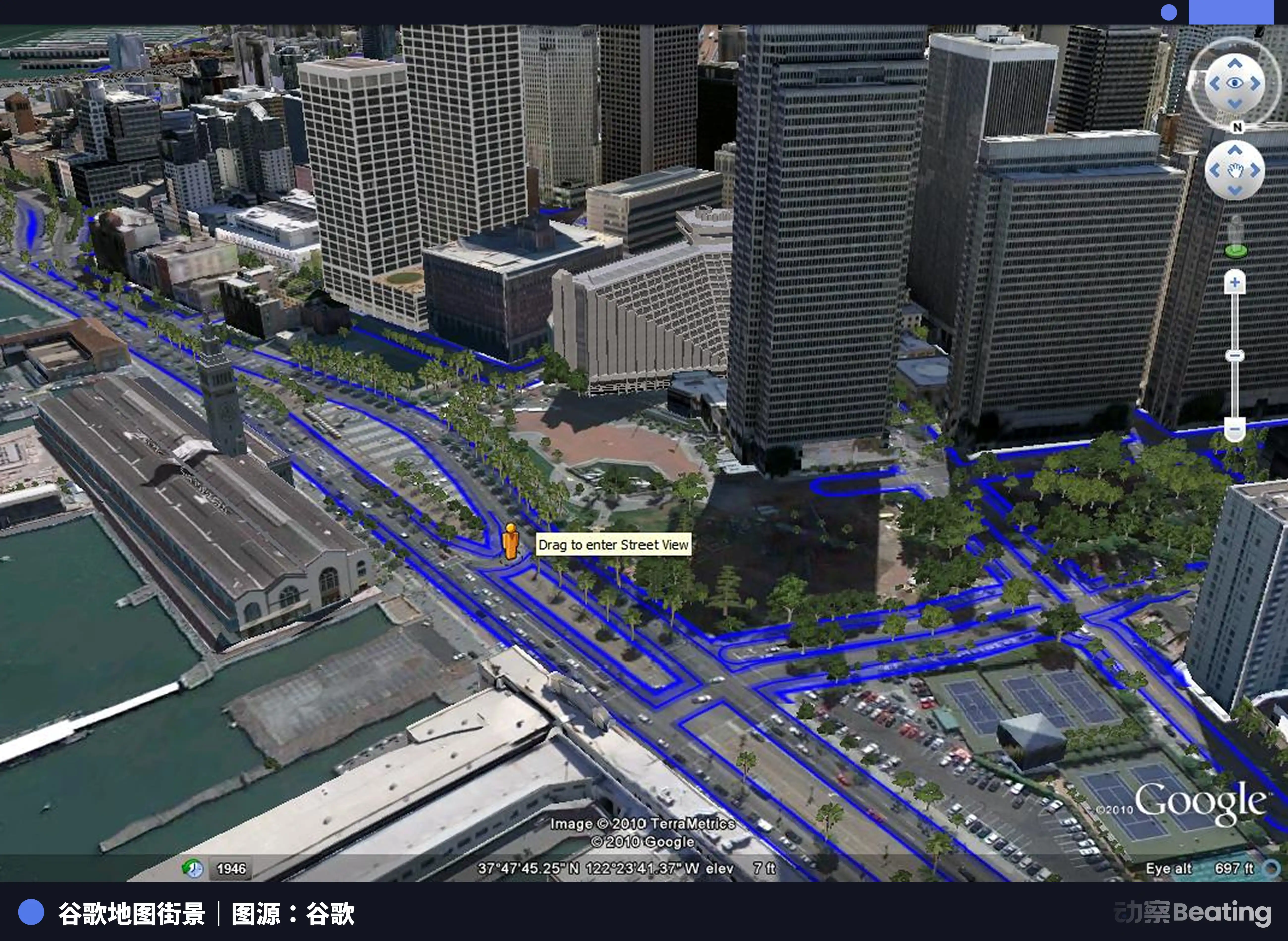
This was the first attempt in human history to use cameras to document streets worldwide. Google specifically designed custom cars equipped with a 360-degree camera array that began driving around from 2007, covering over 60 countries and capturing billions of photos. These photos were stitched together into continuous street views, allowing anyone to walk down any street on Google Maps.
This product changed how humans perceive space. However, in 2010, a scandal completely altered public perception of the project.
The Hamburg Data Protection Authority in Germany discovered during inspections that these street view cars were secretly intercepting Wi-Fi data packets from homes and businesses along the way while photographing streets. The intercepted content included complete data streams containing passwords, emails, medical records, bank information, and even the web pages users were browsing.
This behavior violated communication privacy laws in Germany, France, Australia, the UK, Canada, Spain, and several other countries. Google faced enormous fines globally, the U.S. Federal Trade Commission initiated an investigation, and the U.S. Department of Justice got involved. Ultimately, Google paid $7 million in a settlement in the U.S., was fined €100,000 in France, and paid fines in Germany, Australia, and other places.
Faced with overwhelming evidence, Google’s official explanation was a “technical mistake.” An engineer named Marius Milner had "accidentally" included the data interception feature in the code, while management was completely unaware.
This code operated for three full years on hundreds of cars globally and collected data from over 30 countries without a single internal whistleblower or any management personnel stopping it. The investigation report by the U.S. FCC later revealed that Milner had explicitly described the functionality of this code in internal documents that were distributed to multiple Google engineers.
Pulling back this cover reveals the true Silicon Valley consensus: the bottom line for data is never a physical barrier but rather a pliable substance they can freely manipulate. The cost of being discovered is merely an apology, a fine negligible to Google, and then they move on.
More notably is Google’s handling of the incident. It refused to submit complete data contents to regulatory agencies, citing "engineer privacy" to block direct investigation into Milner, and even retained the data for many years after investigations finished in multiple countries.
With this rogue logic of first invading and plundering, then buying forgiveness, Hanke began to consider leaving Google around 2010 to start anew.
Pikachu is Bait; Data is the Prey
In 2015, Hanke officially founded Niantic. The company initially began incubating within Google in 2010, later becoming independent and receiving $30 million in funding from Google, Nintendo, and the Pokémon Company.
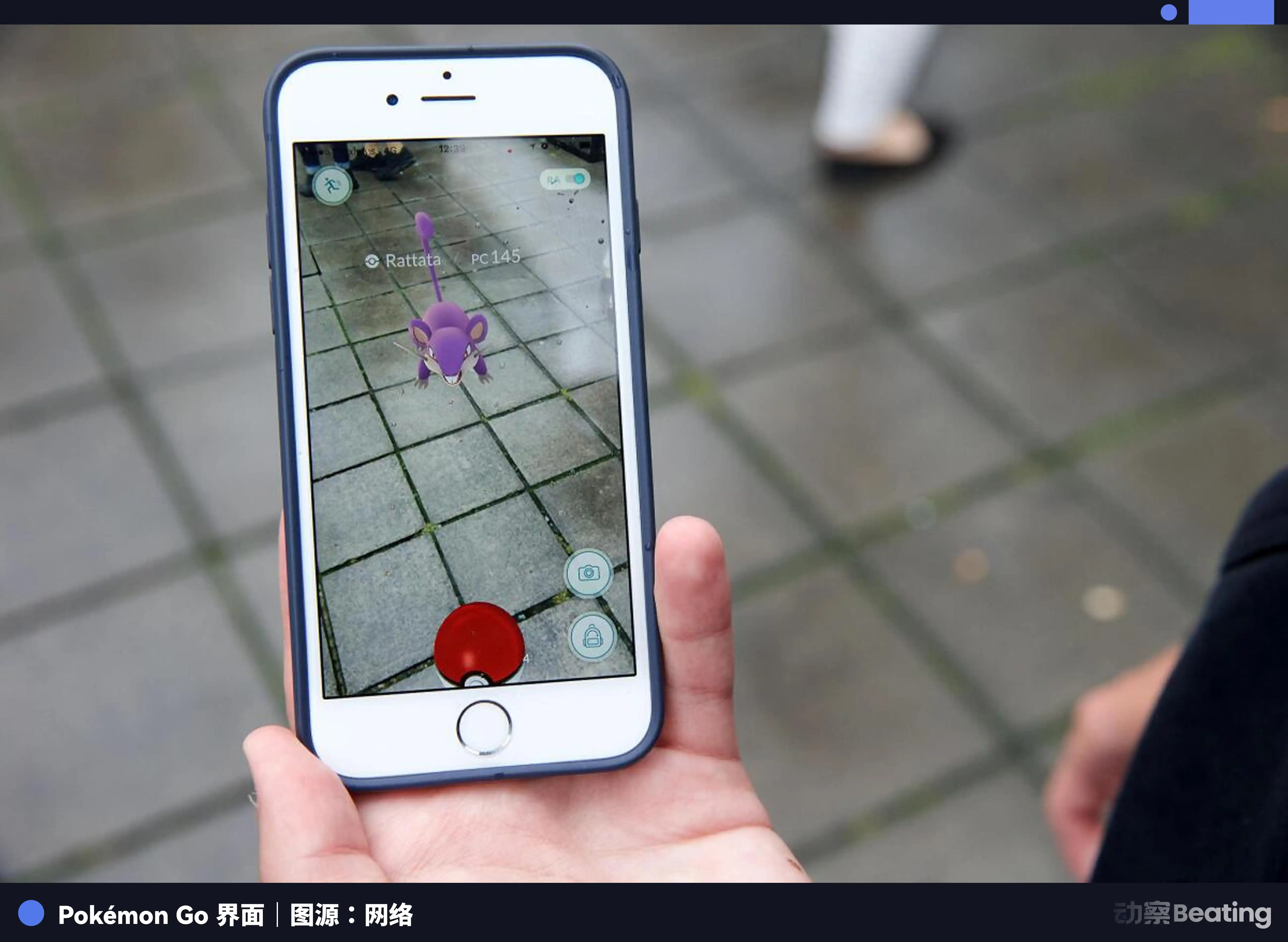
On July 6, 2016, Pokémon Go was launched. Within a week, daily active users exceeded 21 million, surpassing Twitter's daily active users. After 60 days, downloads exceeded 500 million. In the U.S., daily active users of this game once surpassed those of Google Maps.
People ran in parks like they were enchanted, stood like walking posts at intersections, and pointed their phone cameras at every corner just to catch the Pikachu on their screens. This frenzy even evolved into absurdity, with people jumping into others' backyards to catch Pokémon, driving while staring at screens and crashing into trees, and even one naive person showing up at the New Zealand police station asking if he could go in to catch a creature.
Yet if you break down each core mechanism of the game, you'll find every design maximizes the collection of user sensor data.
The tasks in the game direct players to specific locations to scan buildings with their cameras; Pokémon nests encourage players to repeatedly visit the same location, aiding the system in constructing a multi-angle 3D model of that location; gym mechanisms lead players to linger for extended periods, collecting detailed data on indoor and surrounding environments; AR mode directly accesses the camera, overlaying virtual IP on the real environment while capturing images of real scenes.
Each time a capture occurs, the phone uploads not just a photo but a complete sensor data package containing GPS coordinates, phone orientation, tilt angle, and speed. These data are transmitted in real-time to Niantic's servers, processed, and gradually stitched together into a detailed geographic database covering the globe.
Niantic calls this system the "Real World Platform." Undeniably, it has provided billions of players with an unprecedented AR entertainment experience. However, in the underlying logic of commerce and technology, this globally popular game objectively serves as the most efficient geographic data collection network in human history. Players chase childhood dreams, while the system quietly harvests the indispensable spatial coordinates needed to build a digital twin world.
In the early stages of the game, the iOS version even quietly requested full access to Google accounts, theoretically able to read all users' emails, Google Drive files, and search histories. This permission triggered attention from the U.S. Congress after being publicly disclosed by security researcher Adam Reeve. Senator Al Franken sent a formal inquiry letter to Niantic, demanding an explanation for such extensive permissions. Niantic subsequently revoked this permission, repeating the familiar explanation of "technical error."
At that time, governments around the world reacted surprisingly quickly, with many countries outright banning the game. Judgments from these countries were derided by some media as conspiracy theories. However, in hindsight, they simply realized earlier than others that a game enabling 500 million people to voluntarily lift their cameras to scan global buildings was essentially the largest geographic data collection machine in human history.
Moreover, the operational cost of this machine is entirely borne by the users, including data fees, electricity costs, phone depreciation, as well as the time and effort spent walking.
Peeling Off the Game Shell, Leaving Behind a Data Gold Mine, and Then Selling It to the Battlefield
Time reached 2025 when Hanke sold Pokémon Go.
The buyer was the gaming company Scopely, and the real backer behind Scopely was Saudi Arabia's Public Investment Fund (PIF). PIF is a sovereign wealth fund led by Saudi Crown Prince Mohammed bin Salman, managing assets over $700 billion, making it one of the largest sovereign wealth funds in the world. Its investment portfolio includes Uber, Lucid Motors, Nintendo, and shares in several Western tech companies.
This deal means that the historic location data accumulated by hundreds of millions of players over nine years now points to Riyadh.
Why would the Saudi sovereign fund spend $3.85 billion to buy a mobile game whose daily active users have significantly declined from its peak?
The answer likely lies not in the game itself but in the vast network of location data behind it. Pokémon Go's player data contains detailed movement trajectories of billions over the past nine years, including where they live, where they work, the places they pass daily, and how long they stayed in various buildings. This is a dataset coveted by any advertising agency, intelligence agency, or urban planning department.

However, the most ingenious aspect of this transaction lies in what Niantic didn’t sell.
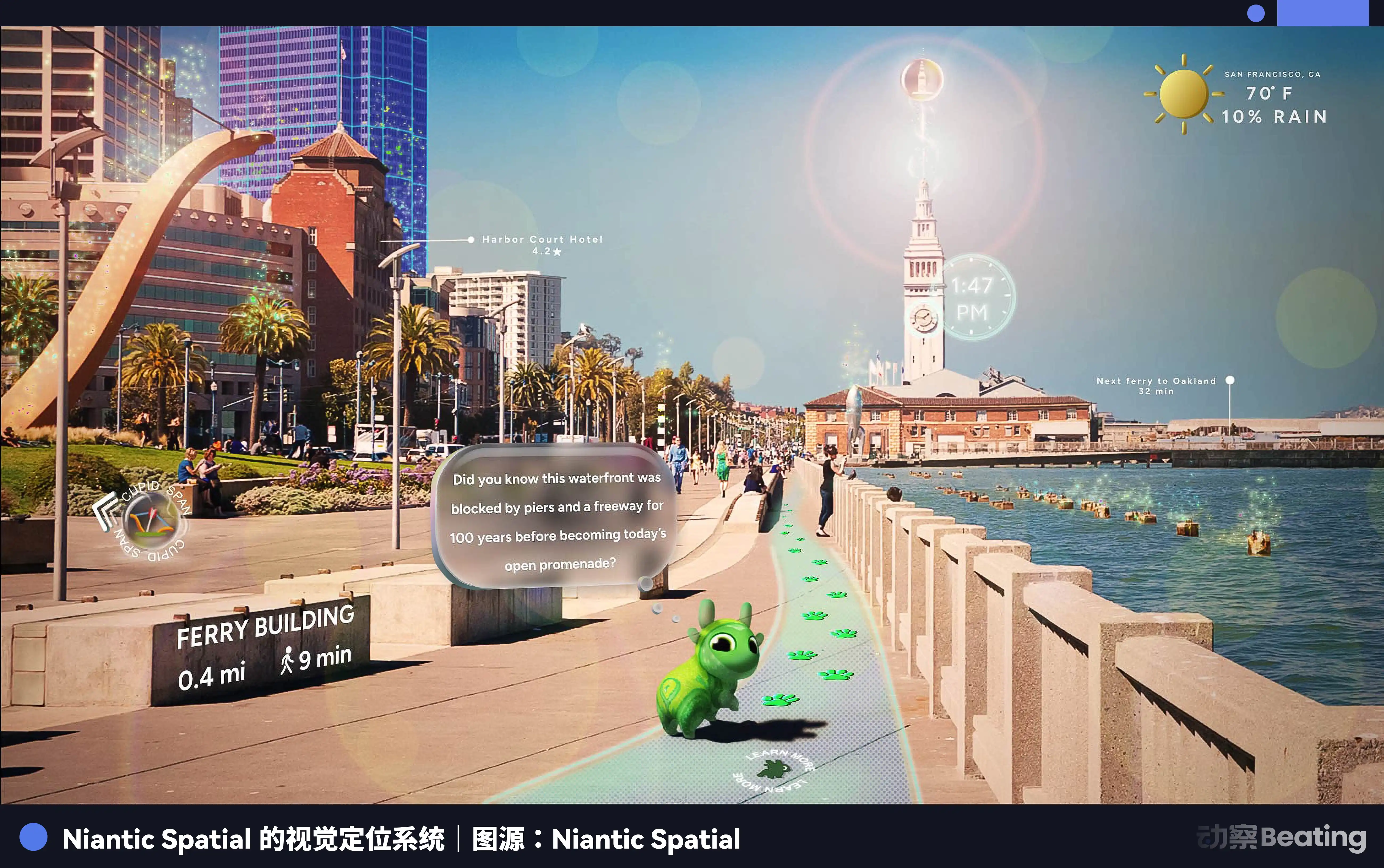
Hanke retained the 30 billion images, the meticulously optimized geographic database built over nine years, and the large geographic spatial model trained on this data. He used these assets to establish a new company, Niantic Spatial, and publicly announced in March 2026 a partnership with delivery robot company Coco Robotics, wherein Coco's robots use Niantic Spatial's LGM for centimeter-level visual positioning in urban canyons with unstable GPS signals.
But commercial robots are merely a civilian showcase for this technology.
In December 2025, Niantic Spatial signed a cooperation agreement with defense company Vantor, using LGM for military drone navigation in GPS-denied environments.
The so-called "GPS-denied environment" is becoming increasingly common on modern battlefields, where electronic warfare disrupts or deceives GPS signals, rendering satellite-navigation-dependent weapon systems ineffective. On the Ukrainian battlefield, Russian GPS jamming devices have caused numerous drones to lose their way. Vantor’s solution is to enable drones to "see" the ground through cameras and confirm their position by matching it with ground visual features stored in LGM.
The ground visual features stored in LGM originate from the 30 billion images captured by Pokémon Go players.
A complete chain finally surfaces. The map company funded by the CIA became the world's largest ground visual data collection game; this data was used to train AI geographic spatial models, ultimately becoming navigation systems for military drones.
At the same time, Palantir—also incubated by the CIA—had its CEO, Alex Karp, openly claiming in public that AI was reshaping the nature of modern warfare. Palantir's AI platform AIP has been deployed on the battlefield in Ukraine to assist the Ukrainian military in target identification and strike decision-making. In Gaza, Palantir's systems were used by the Israeli Defense Forces for intelligence analysis.
Two seeds of intelligence capital planted simultaneously in Silicon Valley: Hanke and Thiel, one collecting data from the physical world, the other analyzing data from the digital one. Twenty years later, they met at the terminus of AI militarization.
No One Told You These
In 2025, Hanke published an article on Niantic Spatial's official blog titled "The Next $10 Trillion in AI Investment Should Flow to the Physical World."
His logic was that while large language models had taught AI to talk, for AI to truly enter the real world—such as driving cars, controlling robots, and navigating cities autonomously—it needed something else: spatial awareness of the physical world. Niantic Spatial aims to become the Google Maps of the AI era, a physical world coordinate system shared by all robots and AI agents.
This vision sounds entirely justifiable. However, it hides a premise that no one has ever publicly clarified: the data for this coordinate system comes from 500 million ordinary users who never consented to have their location data used for military applications.
In 2016, when you registered for Pokémon Go and clicked to agree to the privacy terms, it stated, "We may share data with third-party partners to improve services." No one knew who these partners were, no one knew where the boundaries of "sharing" lay, and certainly, no one anticipated that "improving services" would eventually include assisting drones in navigation on battlefields.
When this data flowed to military applications, no regulatory agency intervened, no user received notifications, and no legal framework from any country could trace back this data flow chain.
There is a comparison here that deserves serious reflection. The U.S. government demanded ByteDance forcibly divest TikTok's U.S. operations, claiming that "data could be accessed by the Chinese government" and held hours-long hearings in Congress. Yet, when Pokémon Go's data was sold to the Saudi sovereign fund for military applications, the U.S. government remained silent. The logic behind this double standard has never been about data security but geopolitics. The security of data depends on whose hands it flows into.
A deeper issue is that this is not merely a problem with Pokémon Go. Meta's smart glasses continuously scan users' surroundings; Apple's Vision Pro is building indoor 3D maps; Waymo's self-driving cars reconstruct detailed models of city roads. These data collection behaviors are fundamentally no different from those of Pokémon Go. In the AI era, every consumer device with a camera is a potential geographic data collection node. Users are almost completely unaware of this.
Now is the time for a thorough penetration into this hidden commercial dark web.
In the summer of 2016, an ordinary person raised their phone to catch a Pikachu, inadvertently scanning the exterior of a building.
This seemingly casual photo was silently uploaded to servers, along with another 30 billion similar photos, training a large geographic spatial model.
Then, this model was packaged into a new guise called Niantic Spatial, and let’s not forget that its founder initially received funding from the CIA.
Now, it serves as an electronic eye for killer drones that have lost GPS signals on the battlefield.
And that game itself has long been priced at $3.85 billion, flipped to the Saudi sovereign fund, keen on transnational surveillance.
Looking inside, every link in this profit chain appears clean and compliant, fitting neatly within legal frameworks. But when all tightly mesh together, they become a leviathan that no law can restrain.
This is perhaps the most thought-provoking paradox of the digital age. A system operating in the sunlight, adhering to commercial compliance logic, whose initial motivation stemmed from people’s pursuit of pure joy, could ultimately become part of a cold war machine under the grip of capital and geopolitics.
Maybe Hanke initially just wanted to create a good game, but under the watchful eye of intelligence capital, this data inevitably flowed to the most lucrative and bloody outlets. Hanke wasn’t lying; he merely swallowed back the bloodiest half of the truth. And those obscured lines are now crossing some battlefield horizon, turning into the roar of guided bombs tearing through the air.
On February 28, 2026, at 10:45 AM, the roar appeared in Minab, Hormozgan Province, Iran.
An American Tomahawk cruise missile accurately struck the local Shajareh Tayyebeh girls' school, and two teaching buildings collapsed instantly, killing 175 people, the vast majority being girls aged 7 to 12. This school was adjacent to a naval base of the Iranian Revolutionary Guard, was once military property, and later transformed into a school. However, under the eyes of Palantir and top AI-driven targeting systems at the Pentagon, it was still regarded as a military stronghold that needed to be removed.
No one knows if any deadly architectural feature that determined the lives of nearly 200 was collected for free ten years ago when some ordinary person held their camera and scanned the street. But we know clearly that in this meat grinder welded together by countless cameras, Silicon Valley data traffickers, and the military-industrial complex, the aphrodisiac of "technology serving humanity" has long since lost its potency. What it ultimately spits back to the real world is only cold, blind, and precisely guided death.
免责声明:本文章仅代表作者个人观点,不代表本平台的立场和观点。本文章仅供信息分享,不构成对任何人的任何投资建议。用户与作者之间的任何争议,与本平台无关。如网页中刊载的文章或图片涉及侵权,请提供相关的权利证明和身份证明发送邮件到support@aicoin.com,本平台相关工作人员将会进行核查。


