Original Title: How Eric Trump Became an Ally of One of China's Biggest Crypto Companies
Original Author: Ryan Weeks, Bloomberg
Original Translation: Luffy, Foresight News
Once regarded by the United States as a national security threat, deeply embroiled in disputes over the safety of mining machines and remote control, Bitmain is the absolute leader in the global Bitcoin mining machine industry. This mysterious Chinese company unexpectedly formed an important business alliance with Eric Trump, the second son of Donald Trump, after facing a White House ban and an investigation by the Department of Homeland Security.
On one side is the Chinese mining giant, questioned for jeopardizing the security of the power grid and military bases, and on the other is a Bitcoin company under the presidential family of the United States. The two sides built a super mining facility in Texas, launching a heavyweight collaboration. This article restores the alliance intertwined with politics and cryptocurrency, revealing how Bitmain turned the tables from being on the U.S. "sanction list" to becoming one of the Trump family's most crucial business partners.
Below is the full translation:
Mining Machine Empire: Mysterious and Monopolistic Bitmain
From dedicated data centers in rural Texas to converted lumber mills in Borneo, rows of shoe-box-like machines stand tall, emitting deafening roars that sometimes even lead to complaints from neighbors. Each machine comprises hundreds of application-specific integrated circuits (ASICs), produced at high costs by advanced factories in Taiwan. These chips are soldered onto three sealed computing boards to conduct brute-force calculations, with all instructions issued from a control board. Depending on the specific model, the machines use built-in fans or liquid cooling systems to prevent components from overheating, consuming massive amounts of electricity regardless of where they are installed.
These devices have only one purpose: to crack the underlying algorithm of Bitcoin, SHA-256. SHA-256 is a so-called one-way function, meaning the only way to solve the mathematical problems it generates is through constant trial and error. Bitcoin miners rely on this; once the calculation is correct, they have the right to verify others' transactions and earn Bitcoin rewards.
Thus, their profits directly depend on how many calculations these devices, known as "Antminers," can attempt per second: currently in the trillions per second. A high-end Antminer can sell for as much as $17,400. Large mining operations possess up to 500,000 mining machines, with initial investments reaching billions of dollars, but compared to potential returns, this capital expenditure is minuscule, at least when cryptocurrency prices are high. Some users liken it to having a printer that prints lottery tickets, but the odds of winning are much higher.
Antminers are the flagship products of Bitmain Technologies Ltd. Not only does the company dominate the Bitcoin mining machine production industry, for most of its development history, it was nearly synonymous with the industry itself, holding over 80% market share.
Few companies maintain such absolute control in a global industry: Alphabet Inc. in the search domain is one; going back several decades, perhaps De Beers, which controlled over three-quarters of global diamond production at its peak; or even centuries ago, companies like the Dutch East India Company that monopolized long-distance spice trade. However, unlike these historical monopolists, many aspects of Bitmain remain a mystery.
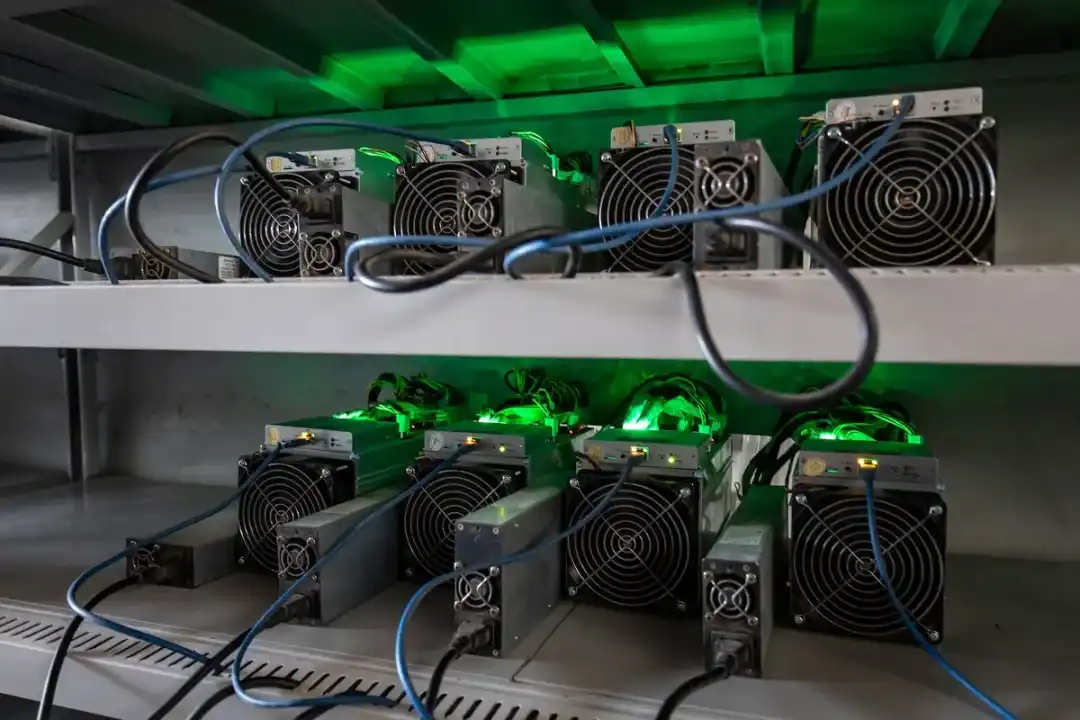
In 2017, Bitmain mining machines in a Chinese mining farm
The company is not publicly listed, and its website does not disclose its global headquarters, CEO, or board members. The closest figure to it is co-founder Jihan Wu, who rarely appears in public and no longer serves as chairman, but it is unclear when he stepped down, who succeeded him, or even if there is a successor.
Until the recent months, Bitmain's spokesperson has consistently refused to clarify even the most basic company structure and governance information, including who the major shareholders are. As the company sells multiple models of mining machines at different price points, its estimated annual revenue varies greatly. An executive familiar with Bitmain and speaking anonymously cited internal research estimating its annual sales between $2 billion to $3 billion. But even this number is at most a reasonable guess.
However, two things are clear: first, Bitmain is headquartered in China; second, it has formed an alliance with one of President Donald Trump's children.
Eric Trump, the president's second son, is the co-founder and chief strategy officer of American Bitcoin Corp, based in Miami. The company went public in September last year, and his shares were valued at approximately $548 million at that time. (This has since significantly dropped as cryptocurrency assets have been sold off.) Eric's brother, Donald Trump Jr., is also an investor, but the scale of his holdings has not been disclosed. American Bitcoin plans to purchase thousands of Bitmain Ant miners, ultimately aiming to become the world's largest bitcoin mining company, and has collaborated with this Chinese company to develop a large data center in Texas.
This collaboration is a stunning turnaround for Bitmain. Just recently, it faced existential threats: the escalating U.S. investigations questioning whether its devices constitute a national security threat. In May 2024, the White House ordered the removal of thousands of Bitmain mining machines near a U.S. Air Force nuclear missile base. Last year, a report from the Senate Intelligence Committee warned that Bitmain machines near some military bases "pose unacceptable risks."
In November, Bloomberg News reported, citing a U.S. official and other informed sources, that Bitmain had been the focus of an investigation by the Department of Homeland Security to determine whether Ant miners could be remotely controlled for sabotaging the power grid or for espionage purposes. Sources stated that this investigation, dubbed "Operation Red Sun," began during the Biden administration and lasted at least until the early days of Trump’s second term. National Security Councils from both administrations have discussed this issue.
Bitmain did not respond to detailed inquiries about potential security risks but stated in a December announcement that the company complies with all applicable laws and that reports regarding its ongoing investigation "seriously misrepresent the facts and are false news." A spokesperson from American Bitcoin claimed the company "adheres to strict standards concerning national security, power grid stability, and operational safety," and "believes that as long as mining hardware is deployed according to modern industrial safety standards, it will not pose a threat to the U.S. power grid or national security."
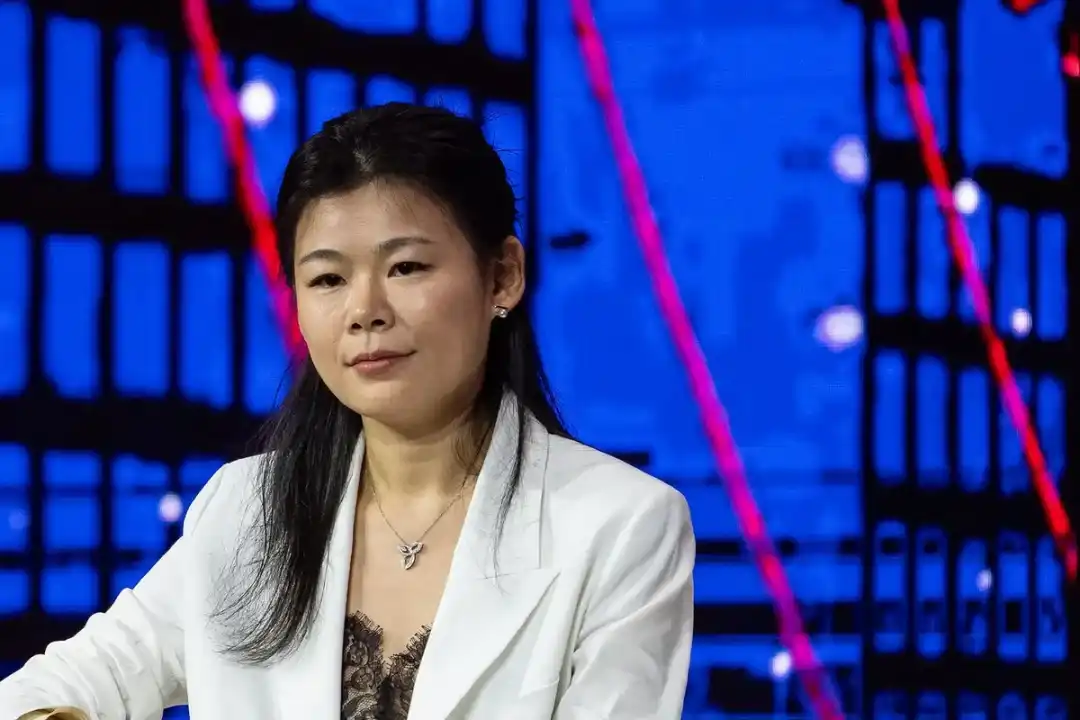
Bitmain's Irene Gao, photographed in 2025
The outcomes of "Operation Red Sun" remain unclear, and the Department of Homeland Security told Bloomberg Businessweek that it "cannot comment on an ongoing investigation." However, Bitmain's collaboration with American Bitcoin continues, and its aggressive push into the U.S. has not stopped. In recent months, the company has slightly opened up to the outside world.
For this report, Bitmain arranged for its global sales director Irene Gao to be interviewed. She praised Trump’s pro-crypto policies, saying "this is a very good thing in the eyes of most of our clients," but when asked about simple information, such as the names of core managers apart from CEO Yang Cunyong, she evaded the question. "We just don't want to disclose any information about the company in this way," Irene Gao said.
Security Shadow: U.S. National Security Investigations and Containment
Alongside speculators seeking quick riches, the cryptocurrency industry has attracted two types of people since its inception: technical geeks and loyal believers. The former mainly focus on the computational and mathematical challenges of creating and trading digital assets; the latter are obsessed with the potential these tools have to change global finance.
The two Chinese entrepreneurs who founded Bitmain happen to belong to these two camps. Jihan Wu is a chip designer and previously founded a startup that developed TV set-top boxes. Micree Zhan was an investment analyst who later became obsessed with cryptocurrency; notably, he was the one who translated the original classic Bitcoin whitepaper from English into Chinese.
Their collaboration began with a dinner in Beijing in 2013. Wu stated that he looked up cryptocurrency on Wikipedia the next morning and immediately decided to start a business with Zhan. According to several sources who have interacted with both men and spoke on condition of anonymity, they share some common traits: both are somewhat socially awkward, have spent most of their professional lives extremely low-key, rarely appear publicly or give interviews; sources say they both become irritable under pressure, with Wu, whose voice is deep and hoarse, having been seen loudly berating employees in the office, audible throughout the building.
When Wu and Zhan established Bitmain in 2013, Bitcoin mining was not dominated by giant data centers operated by publicly listed companies as it is today. It was a world where enthusiasts madly chased the latest cutting-edge equipment. That year, Bitcoin first broke the $1,000 mark, and this cryptocurrency was still in its infancy, with the vast majority of tokens yet to be mined. At that time, having better mining machines still had the potential for significant increases in overall network hashing power, which is a measure of the computing power needed to process transactions on the platform. As long as miners could get their hands on the most advanced mining machines as quickly as possible, they could make money without risk.
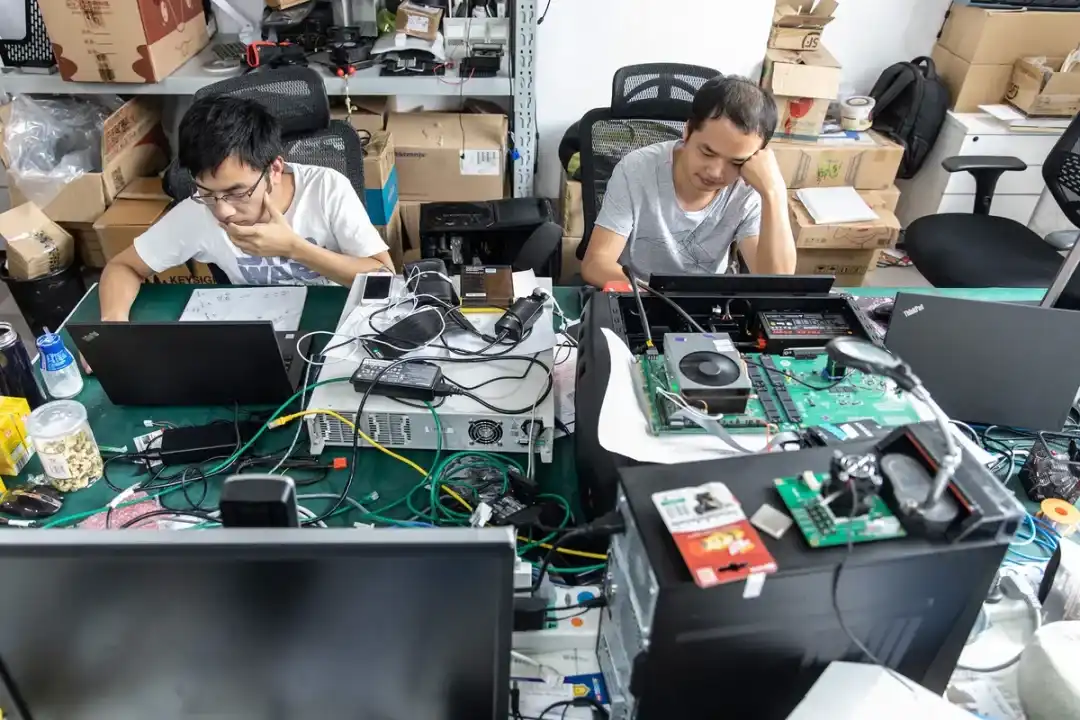
In 2017, employees of Bitmain
Bitmain launched its first mining machine, the Antminer S1, in November 2013. Judged by today's standards, it is very rudimentary, without even a casing, with the computing boards and wiring exposed. However, as one of the earliest mining machines based on ASIC chips, it was also one of the most powerful devices at the time, representing a qualitative leap over competitors and pushing the industry towards dedicated hardware. The subsequent generations of Antminers improved even more, with each iteration almost redefining the market: miners could not compete if they did not purchase the latest model.
In 2017, the price of Bitcoin increased by over 250%, further driving the demand for Antminers. A subsequent round of private financing in mid-2018 valued Bitmain at $12 billion. Its growth drew widespread attention, and a new round of financing in August 2018 even made its way to Jeffrey Epstein's desk. Communications released by the U.S. Department of Justice in January this year show that this disgraced financier was eager to invest up to $3 million in Bitmain's holding company but had some concerns about the transaction structure. The documents did not specify whether this investment ultimately materialized.
Not long after this communication, Bitmain submitted its listing application in Hong Kong, disclosing revenue of $2.5 billion, a significant increase from $137 million two years prior. The prospectus showed that Wu held approximately 36% of the shares at the time, while Zhan held about 20%, with both their net worths reaching billions of dollars. Other shareholders included Sequoia Capital China Fund, IDG Capital, and Coatue.
However, betting wealth on the rising price of cryptocurrency also meant facing disaster when prices fell. As the market crashed again, the listing plan was ultimately shelved. The entire industry entered what is known as the "crypto winter," a lengthy period of price downturn. Meanwhile, the cooperative relationship between Wu and Zhan began to show cracks. According to insiders who requested anonymity, the disagreements stemmed from strategic disputes: Wu wanted Bitmain to expand into artificial intelligence, repurposing chips for applications like training facial recognition technology; while the crypto loyalist Zhan opposed deviating from the company's original mission.
By the end of 2019, Zhan attempted to seize full control of the company, and Wu was removed from his legal representative and chairman position. Wu quickly filed a lawsuit in the Cayman Islands, where Bitmain's holding company is registered. A lengthy power struggle ensued, culminating dramatically in a physical confrontation at a government office in Beijing. Former journalist Hazel Hu witnessed this scene in 2020. She recalled that while Wu was waiting to pick up Bitmain's paper business license at the Haidian District Market Supervision Bureau, supporters of Zhan clashed with supporters of Wu, and both sides got into a tussle over the document, leading the local police to arrive promptly to contain the fight that spilled downstairs and into the street.
The following year, Zhan acknowledged defeat and resigned as CEO and chairman of Bitmain. (The dispute between the two was ultimately settled; Zhan currently serves as the chairman of the mining machine manufacturer Bitdeer Group and a crypto investment platform.) Despite the internal turmoil, Bitmain continued to expand, especially after Bitcoin prices began to rise again in 2020. As the mathematical puzzles between mining companies and profits became increasingly complex, Antminers became essential. "They are currently the most efficient equipment," said Vishnu Mackenchery, senior director of corporate development at U.S.-based Compass Mining.
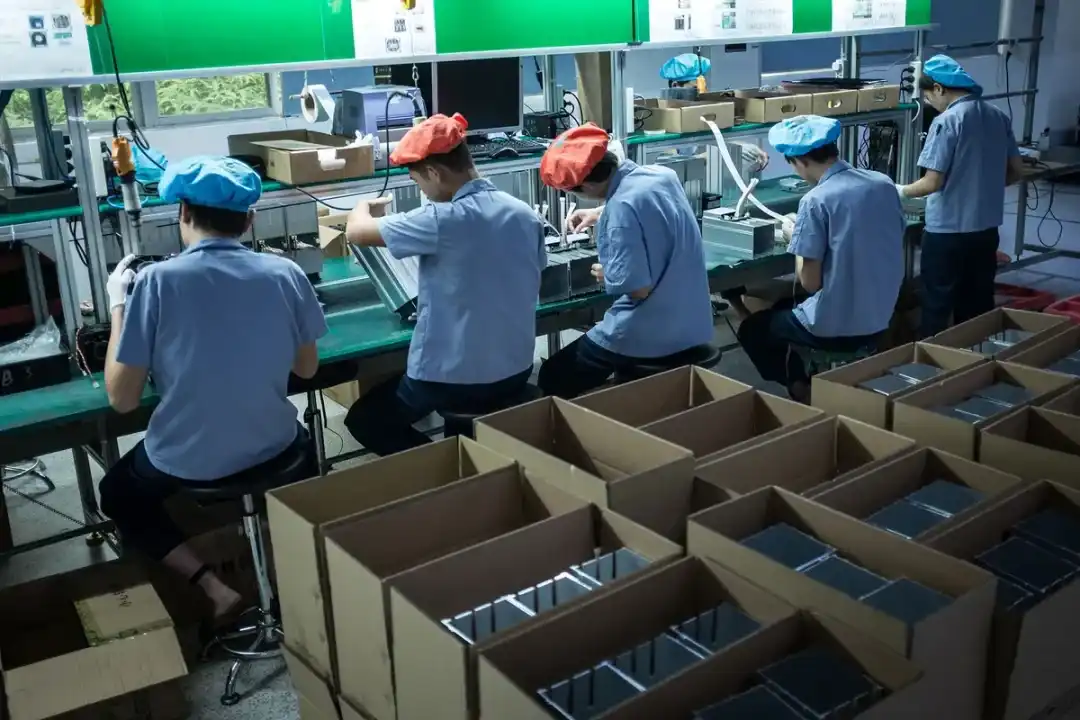
Antminers being assembled at a factory in Shenzhen
At that time, Bitmain's sales were highly concentrated in the domestic market. Data from the Cambridge Centre for Alternative Finance shows that in 2019, China accounted for about three-quarters of the global Bitcoin mining hash rate. However, in 2021, the Chinese government cracked down sharply on the cryptocurrency mining industry under the guise of high energy consumption and carbon emissions. The result was a massive outflow of miners, moving to areas with relatively cheap electricity and favorable regulatory environments—conditions particularly prominent in certain regions of the United States. As a mining machine manufacturer rather than a mining operation, Bitmain was not shut down, continuing its operations in Beijing and establishing distribution centers throughout Southeast Asia. However, from that point on, its future would be decided by the United States.
After the adjustment of Chinese policies, Bitmain intensified its sales efforts towards U.S. miners and expanded a side business to manage mining operations for American clients. To create a public face for the company in the United States, it also transferred Irene Gao to the U.S. Irene Gao joined Bitmain shortly after graduating from university in 2016, and during her early days in the U.S., she often dragged her suitcase across various cities to promote products to clients. Like much of Bitmain's information, sales figures and market share during this period remain unclear, but industry veterans indicate that it is undoubtedly becoming a dominant player.
However, the company soon faced the impact of geopolitical tensions. During Trump’s first administration, the White House imposed 25% tariffs on various electronic products made in China, and Bitmain began to reroute products through Thailand, Malaysia, and Indonesia. This is a common practice among Chinese manufacturers, but U.S. authorities regarded this as a violation of customs regulations. The Trump administration largely maintained these tariffs; in 2022, U.S. Customs and Border Protection inspected a batch of Antminers bound for Connecticut's mining company Sphere 3D Corp.
After opening one of the devices, inspectors discovered tiny "Made in China" labels on the internal components. According to Patricia Trompeter, the then-CEO of Sphere 3D, this batch of 4,000 mining machines was detained for three months. Fearing further delays, some miners began to diversify risks by shifting orders to competitors that had established production bases in the U.S., while Bitmain had not done so at that time.
The most serious accusations against Bitmain are far deadlier than evading tariffs: whether its mining machines might be tampered with for purposes beyond mining. In 2017, suspicions began circulating within the crypto community when an industry media outlet reported that Antminers contained embedded code that allowed Bitmain to shut them down remotely. The company quickly confirmed the existence of the code but stated that its purpose was legitimate, to disable machines if stolen, similar to Apple allowing users to lock lost iPhones. Bitmain later stated that it had removed this function, but two years later, a tech blogger discovered similar code again; the company promptly issued a security patch.
According to an anonymous source familiar with internal confidential review processes, during the Biden administration, U.S. officials commissioned research to assess whether Bitmain mining machines and other Chinese-made mining machines could constitute a national security risk. The source stated that the investigation centered around two different directions: first, whether mining machines could potentially be used for espionage. Crypto hardware experts believe that due to their highly specialized engineering designs, the likelihood of this is extremely low, if not completely impossible; the second, and a point of more concern to the U.S. government: the potential effects of remote shutdown on the American power grid.
When a large power-consuming unit (such as a steel mill) goes offline, it is usually a planned, gradual process, with energy consumption decreasing over two days or longer. A Bitcoin mining facility's consumption could be comparable but could shutdown in seconds. The source stated that U.S. officials are concerned that such "shock events" could lead to a sudden imbalance between power generation and consumption, possibly disrupting power stability. The most frightening scenario is if Chinese authorities issue a command to remotely shut down thousands of Bitmain mining machines situated near military bases or other critical infrastructures that rely on the same power source.
"Anyone who hacks into a whole data center, whether it's AI, cryptocurrency, or a cloud service data center, could cause serious disruption to the power grid," says Michael Bedford Taylor, a professor of electrical and computer engineering at the University of Washington, while also cautioning that Bitmain itself is unlikely to have the motive to do so.
In spring 2024, the Biden administration publicly raised security concerns about a mining facility. The site is located near Cheyenne, Wyoming, covering 12 acres, and a company with connections to China installed up to 15,000 mining machines there, most of which came from Bitmain. The investors of the facility hope it will one day become one of the largest mining sites in the U.S. and benefit from Wyoming's low land costs and abundant power resources. It is conveniently located about one mile from the Warren Air Force Base, one of three bases where the U.S. Air Force deploys land-based nuclear missiles.
On May 13, 2024, Biden issued an executive order forcing the mining operator MineOne Partners LLC to shut down the project. The document states that the Committee on Foreign Investment in the United States "identified national security risks." Although it did not explicitly mention concerns about the power grid, the order indicated that the risks include "special foreign-sourced equipment that may facilitate surveillance and espionage activities." The batch of mining machines was soon loaded onto trucks and removed.
Political Alliance: Joining Hands with the Trump Family to Turn the Tide
This was a significant and public setback, as the U.S. government explicitly linked Bitmain's devices to the possibility of malicious use. But just a few months later, the company began pushing forward a project that could completely change its circumstances.
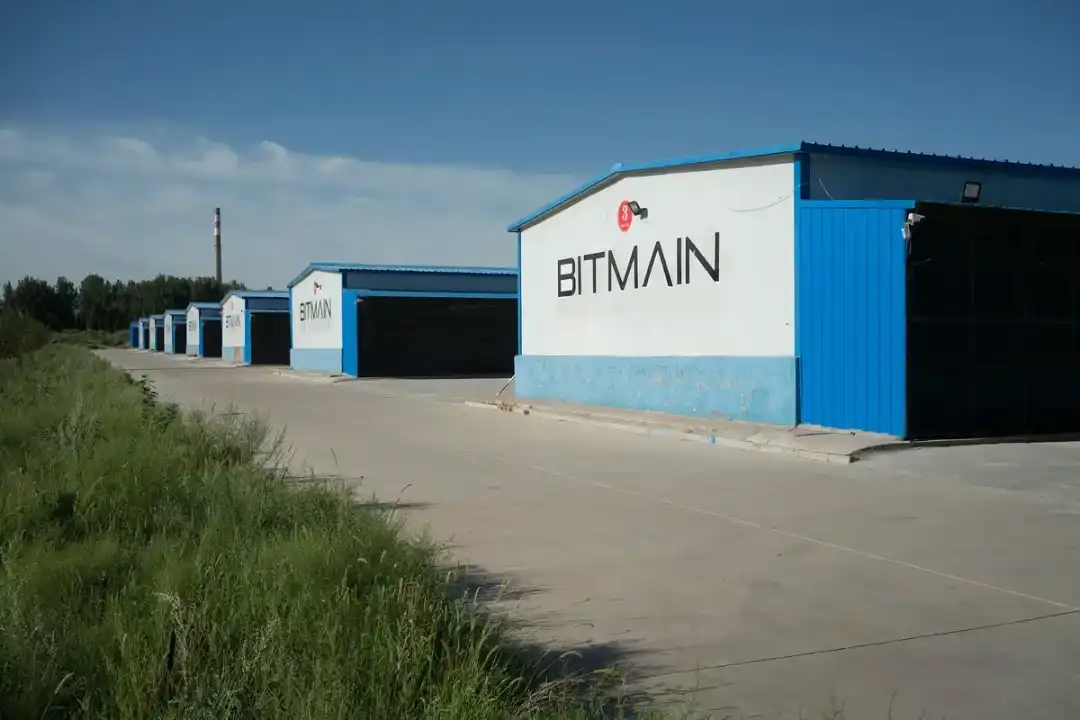
In 2017, a Bitmain mining farm in China
According to Eric Trump's cryptocurrency business partner, Canadian businessman Michael Ho, a series of meetings that led to the president's son founding a Bitcoin mining company began in late 2024. Like Wu, co-founder of Bitmain, Michael Ho is also a loyal believer, boasting that he mined his first bitcoin as a teenager before reaching the legal drinking age. When he met Eric, he and his partner Asher Genoot were operating a Miami-based mining company, Hut 8 Corp, which is a major client of Bitmain's Antminers.
Michael Ho recalls that the two were initially introduced "through many mutual friends in Florida." He said that after several meetings in Miami and the surrounding areas, their relationship quickly warmed up, including a discussion at the Jupiter Trump National Golf Club.
Long-time executive in the family real estate business, Eric Trump was increasingly getting involved in the crypto space. After previously calling Bitcoin a scam, his father embraced the industry during the campaign and promised to make America a "Bitcoin superpower" at a conference in Nashville.
In September 2024, the Trump family launched a company called World Liberty Financial, with a grand yet rather vague vision of providing "everyone access to tools and opportunities long restricted."
Initially, World Liberty Financial appeared to be a failure, as speculators largely ignored its initial token. These tokens conferred no rights to share in the company's revenue, and they could not be resold after purchase, completely contradicting the intention of traditional investments.
However, after Trump's re-election, the situation changed rapidly: the prices of various digital assets skyrocketed, and business people hoping to get close to the presidential family and access resources rushed to invest in many of its enterprises. In February of this year, The Wall Street Journal reported that a significant member of Abu Dhabi's ruling family, Sheikh Tahnoon bin Zayed Al Nahyan, agreed to invest $500 million in World Liberty Financial just before the presidential inauguration.
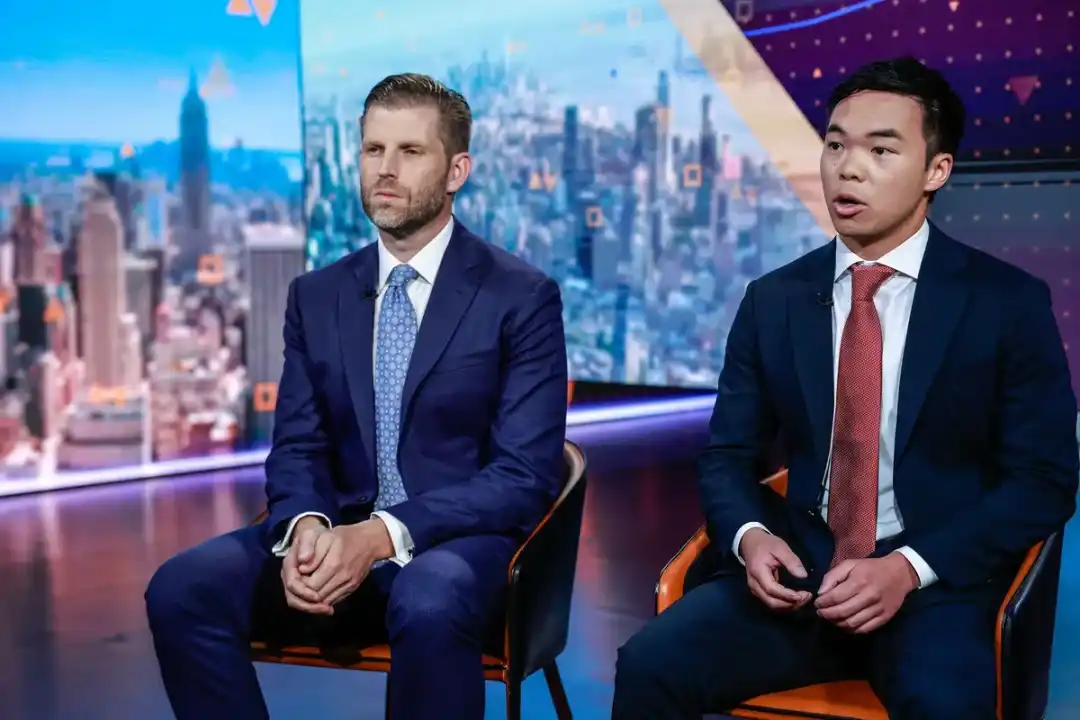
In September last year, Eric Trump, co-founder and chief strategy officer of American Bitcoin, was interviewed by Bloomberg Television along with CEO Michael Ho in New York
Michael Ho claimed that it was not difficult to persuade Eric to enter the mining industry. "After we communicated in person and got to know each other better, we hit it off quickly," he said during an interview with Bloomberg News last year. In March 2025, the two publicly revealed their complex plans.
Just a month before, Eric and Donald Trump Jr. had co-founded American Data Centers. Now, Hut 8 will acquire 80% of the company's shares by paying with mining machines instead of using cash or stock. After acquiring all of Hut 8's Bitmain mining machines, American Data Centers was rebranded as American Bitcoin. The investor presentation claimed that the new entity's goal is "to become the largest and most efficient professional Bitcoin mining company in the world while building a strong strategic Bitcoin reserve."
Just a few months later, American Bitcoin decided to go public not through the conventional IPO disclosures and scrutiny, but by merging with a smaller business, Gryphon Digital Mining Inc. This method is commonly adopted by crypto companies and received regulatory approval. Michael Ho serves as CEO, Genoot as executive chairman. Eric is responsible for business strategy, but due to his many other business interests, his time commitment is expected to be quite limited. A spokesperson for American Bitcoin stated that Eric is "a core member of the company's leadership team."
This ultimately led to an awkward situation. As a candidate, Donald Trump promised to ensure Bitcoin is "mined, minted, and manufactured in America," yet the Antminers on which American Bitcoin relies are entirely Chinese products. Just a year ago, the Biden administration characterized these mining machines as potential national security threats, and now they are set to earn profits for the two sons of the next president.
Perhaps realizing these contradictions and the overall "America First" public sentiment, Bitmain quickly announced adjustments to some business plans. Irene Gao mentioned that the company will establish a new headquarters and assembly line in Texas or Florida and hire 250 local employees.
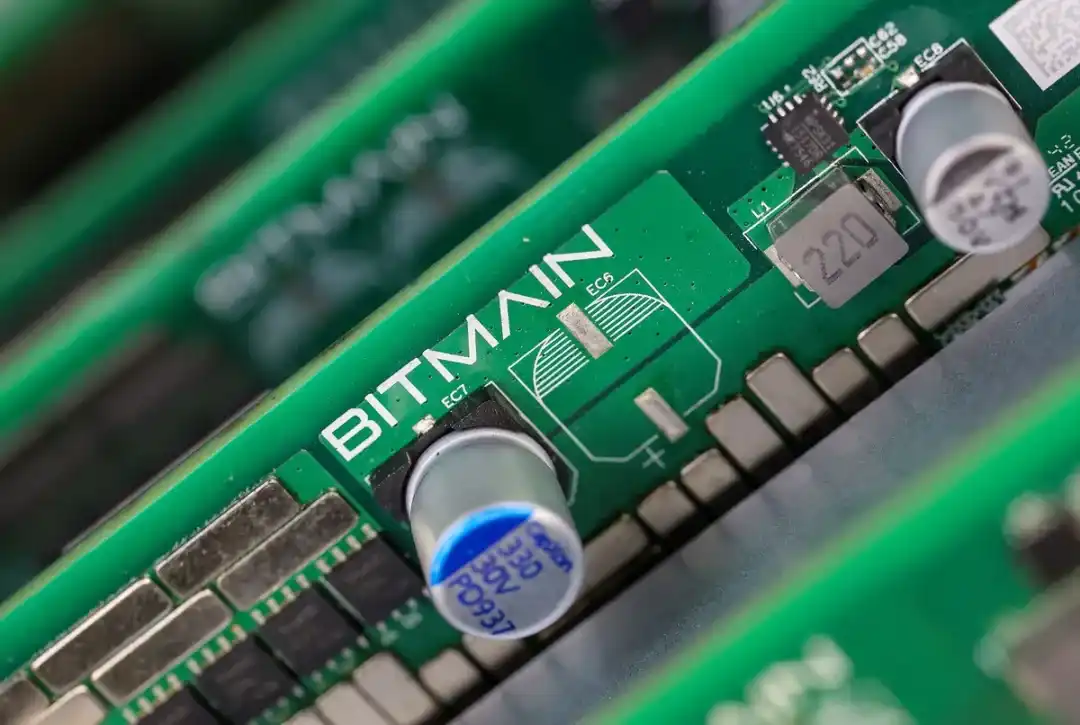
Bitmain's circuit boards
As these plans move forward, Michael Ho downplayed the security concerns regarding Bitmain products. "The facts have already proven that these ASIC chips are programmed for only one purpose, which is to compute the SHA-256 algorithm," he said in an interview with Bloomberg in September. He described choosing Bitmain mining machines as acquiring the most advanced technology: "Bitmain is still the most competitive and efficient."
Even with the most powerful equipment, Bitcoin mining is now harder to profit from than ever before. Over the past six months, the price of Bitcoin has dropped more than 40% to around $74,000 each, and approximately 95% of the fixed supply has been mined. The stock price of American Bitcoin has declined nearly 90% from its peak last September, with a market value of about $960 million. On February 26, the company announced a fourth-quarter loss of $59 million. Despite this, Eric’s association with the company still brings him substantial returns.
Filing documents show no signs that he invested a significant amount of money when the company was formed, but at current stock prices, his shares are valued at approximately $75 million. If Bitcoin rebounds—driven by changes in government policy or other market factors—the value of his and his brother Donald Jr.'s shares is likely to rise significantly.
Bitmain is working with clients to mitigate accusations concerning security vulnerabilities. Months after the Biden administration ordered the removal of Bitmain's mining machines near the nuclear missile base in Wyoming, U.S. mining company CleanSpark Inc. took over the site. The company soon reinstalled mining machines sourced from Bitmain's U.S. subsidiary, with contracts stipulating that all equipment "is not of Chinese origin" or from any country subject to U.S. sanctions. CleanSpark stated in its announcement that it prioritizes national security and operates "completely legally," adding that its operational agreement in Wyoming "was finalized only after receiving approval from the U.S. Committee on Foreign Investment."
Meanwhile, American Bitcoin is expanding its collaboration with Bitmain. The company disclosed in documents submitted to the U.S. Securities and Exchange Commission that it plans to procure over 16,000 Antminers. The terms are unconventional: the company does not need to pay cash but will pay through "staking" Bitcoin, with the price undisclosed, which resembles an option structure that can be exercised at any time within two years. Some industry experts believe that this arrangement, especially the prolonged exercise period, is extremely generous for American Bitcoin.
Another collaborative project between the two companies is taking shape in the Texas Panhandle: a data center roughly the size of five football fields, likely to become one of the largest Bitcoin mining sites globally. Bitmain and American Bitcoin jointly designed this project named Vega, which began operations in June. According to Michael Ho, the mining site is equipped with the new liquid-cooled Antminers.
Bitmain sees American Bitcoin more as a partner than just a customer. Last year, Irene Gao and Genoot jointly attended the cryptocurrency conference Bitcoin Asia held in Hong Kong. The two sat on stage, with a large screen behind showing the Vega project, allegedly costing $500 million to build.
Irene Gao announced that Bitmain's latest model, the S23 Hydro Antminer, had received over $1 billion in pre-sale orders. This practical gray mining machine is priced at $17,400. "All these machines will be produced in the U.S.," she said.
The next day, Irene Gao gave an interview to a reporter from Businessweek in her suite at the Hyatt Regency Hong Kong. She emphasized that sales of Antminers and joint projects like Vega are just the beginning of Bitmain's collaboration with American Bitcoin. "We can work with them very flexibly and completely customize according to their needs," she said, "We will deploy the mining machines within their infrastructure, both to package and sell to our clients and to sell to their affiliates." But she repeatedly declined to answer more specific questions about the relationship between the two companies.
The topic Irene Gao most wants to discuss is her optimism about the future of Bitcoin, particularly Bitmain's future. She indicated that part of her confidence stems from the developments at such conferences. "You will see many influential people," she said, not only crypto enthusiasts but also representatives from the traditional finance industry.
This includes a heavyweight guest who will take the stage the next day: Eric Trump. He will ignite the crowd with an inspiring prediction: the price of Bitcoin will exceed $1 million, about 14 times its current level. "This is a good signal," Irene Gao remarked regarding the number of attendees, "A prosperous sight."
免责声明:本文章仅代表作者个人观点,不代表本平台的立场和观点。本文章仅供信息分享,不构成对任何人的任何投资建议。用户与作者之间的任何争议,与本平台无关。如网页中刊载的文章或图片涉及侵权,请提供相关的权利证明和身份证明发送邮件到support@aicoin.com,本平台相关工作人员将会进行核查。