Author: Curie, Deep Tide TechFlow
On October 28, 2021, Zuckerberg stood next to a legless virtual avatar and announced the company's name change from Facebook to Meta.
At that time, he said the metaverse would reach 1 billion people within ten years, hosting hundreds of billions of dollars in digital commerce and providing job opportunities for millions of creators and developers.
That year, the metaverse was the sexiest concept on Earth.
Microsoft promised to build a metaverse version of Teams, NVIDIA launched Omniverse, Nike opened a virtual store on Roblox... no one wanted to miss the boat.
Meta didn’t just buy a ticket; it bought the whole ship.
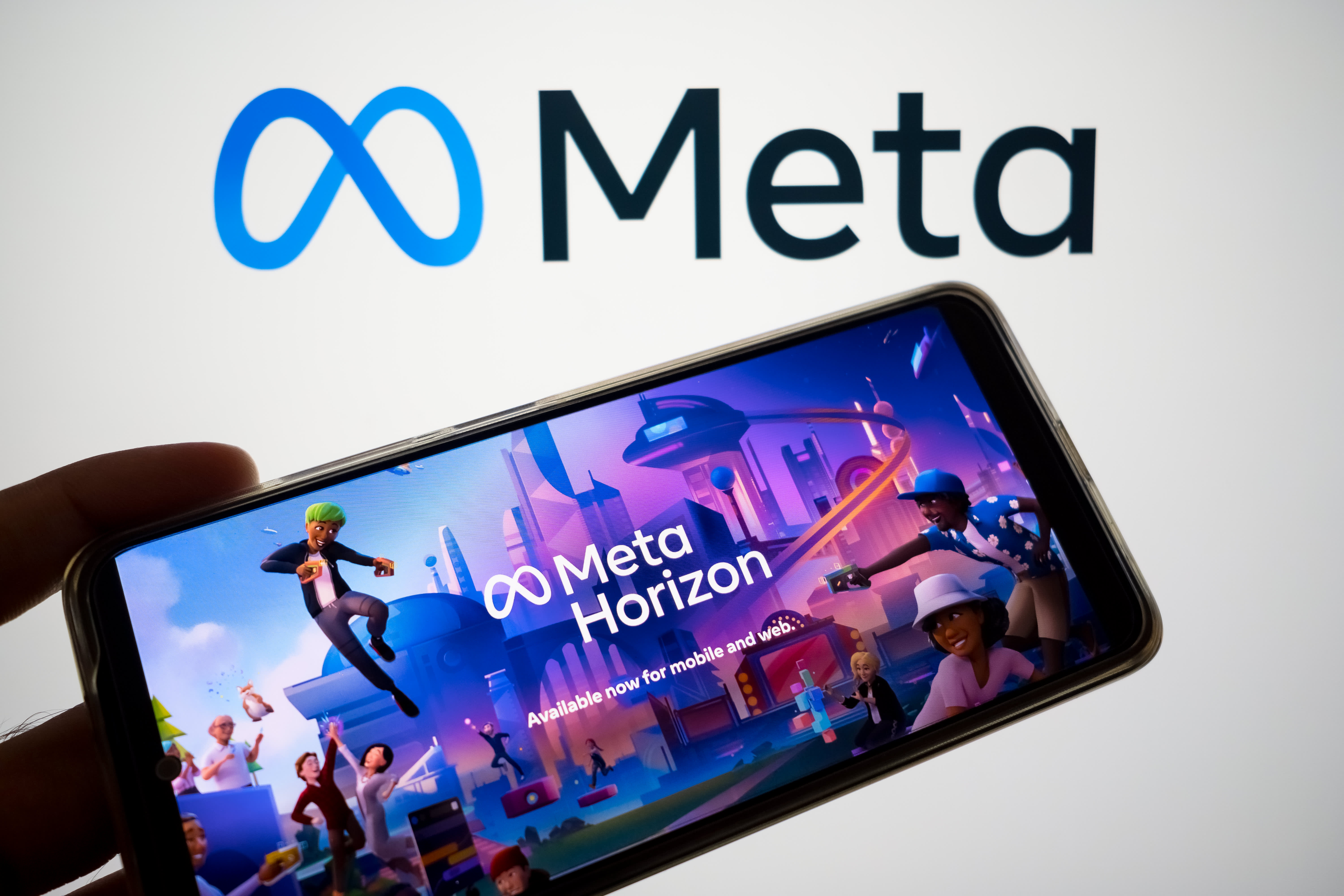
Horizon Worlds, this product, can now be understood as core evidence of Meta's name change story - you put on a headset, enter a virtual world, and stroll, play, and meet with others' cartoon avatars.
When it launched at the end of 2021, it was the flagship presented personally by Zuckerberg. Yet, four and a half years later, not 1 billion people had joined to play.
On March 17, Meta announced in a community forum that the VR version of Horizon Worlds would be completely shut down on June 15, at which point the app would be removed from Quest VR headsets, and the virtual world would no longer be accessible. A mobile version remains on phones, continuing to operate.
It’s a bit like a restaurant shutting down dine-in services and only offering takeout, but this restaurant was initially built for dine-in.
The department footing the bill is called Reality Labs. Over seven years, it has accumulated nearly $90 billion in operating losses. In the most recent quarter alone, it lost $6 billion, with revenues under $1 billion, not even covering one-sixth of the losses.
This January, this department laid off over 1,000 people, closed multiple VR content studios, and cut almost all ongoing virtual world projects.
The ticket everyone feared missing back in 2021—now the ship has sunk, and the tickets are still in hand.
In mid-March, Reuters reported that Meta was planning to lay off about 20% of its employees, nearly 15,000 people. If it happens, this will be the largest layoff since 2022.
Meanwhile, Meta's capital expenditure budget for this year is $115 billion to $135 billion, almost entirely directed towards AI infrastructure.
Shutting down the virtual world, laying off one-fifth of the workforce, and pouring all the saved money and freed-up positions into AI.
On the day the news came out, Meta's stock price rose by 3%. When Zuckerberg stated he would fully bet on the metaverse in 2021, the capital market reacted the same way.
Just a day before the announcement of Horizon Worlds' shutdown, the answer was already laid out on the table.
The virtual world closes, the personal computer makes an appearance
On March 16, Manus, acquired by Meta for $2 billion, launched its desktop version.
It features a function called "My Computer," which allows AI to come down from the cloud and directly access your local computer: reading files, opening applications, running terminal commands.
This happened the day before Horizon Worlds announced its closure.
The experience of Horizon Worlds when it launched was like this:
You spend two to three thousand dollars to buy a Quest headset, put it on, adjust the interpupil distance, draw a safety boundary, and then enter a cartoon-style virtual hall. Everyone inside has no legs and walks by floating. You can explore themed worlds, play mini-games, and chat with strangers' virtual avatars.
After half an hour, the headset starts to press on your face, and after an hour, some people start feeling dizzy.
Meta spent four years and $90 billion on this hall. The result is that they have never released the number of active users. It’s not a secret; it’s just not a good look.
The experience of Manus Desktop is like this:
You download an application, open it, and input a sentence. For example, "Organize the thousands of files in my downloads folder by type," it scans your hard drive, automatically creates subfolders, and organizes the files—all without you touching the keyboard.
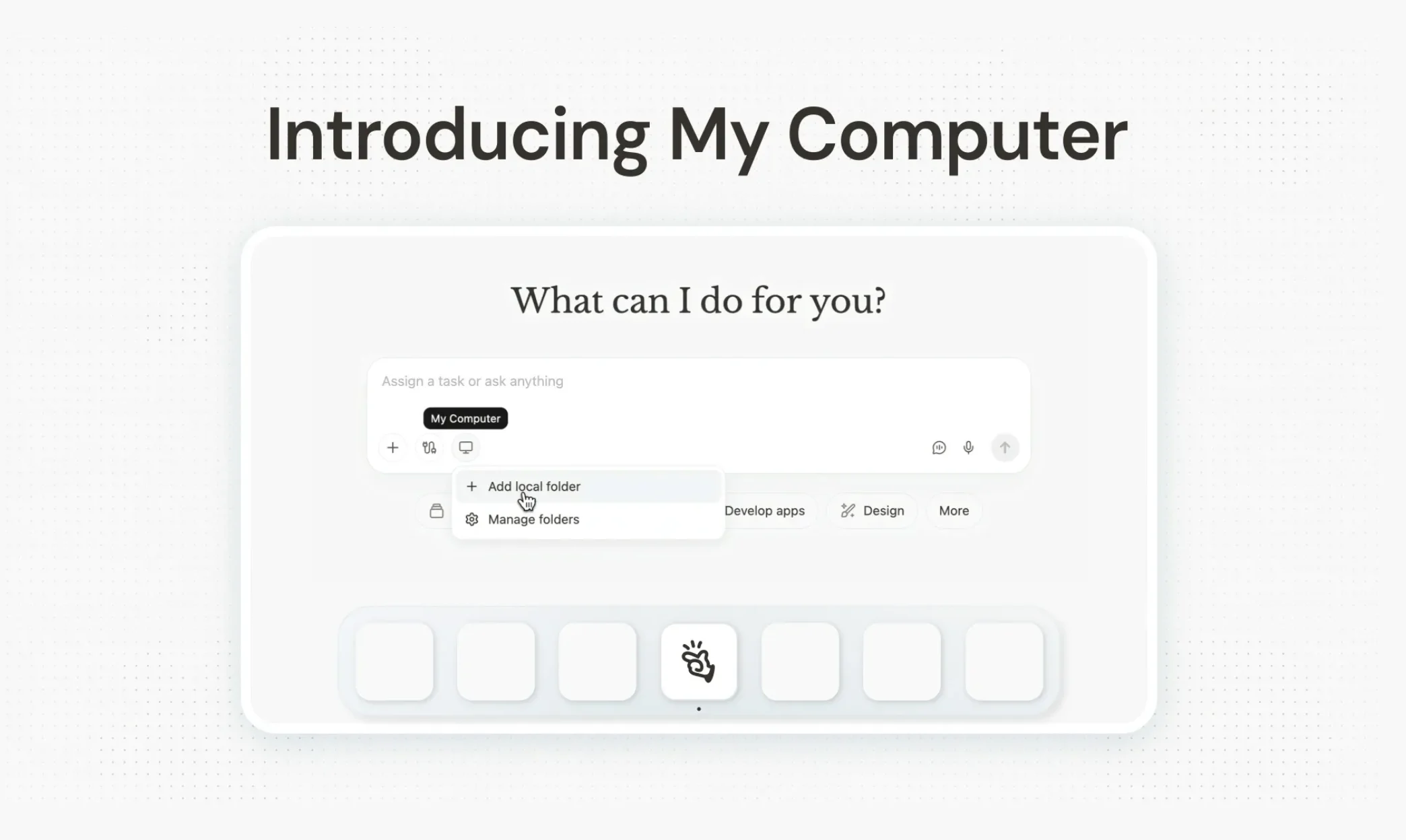
In a demo, someone asked it to write a macOS application from scratch in a local development environment in 20 minutes. Don’t forget, Manus had over a million paid users within eight months of launching, generating over $100 million in annual revenue.
When everyone said that Meta’s acquisition of Manus wasn’t worth it, it might be worth comparing it with the previously shut down metaverse project, Horizon Worlds.
A product that spent $90 billion to invite you into a virtual world where no one went, versus a product that spent $2 billion to step into your real desktop, which has real income and use cases—if it were you, which would you choose?
The same company, the same week, shutting down the former and betting on the latter.
Previously, Meta created a world for you to come into; now, AI is reaching out to you through the screen.
But just because the direction is right doesn’t mean the road is smooth. After the turnaround, Meta doesn’t seem to have become more composed.
The metaverse and AI might be the same kind of FOMO
If you only look at the news headlines, Meta now looks like a company that keeps making poor decisions.
$90 billion burned on the metaverse, and it’s closed. The flagship AI model Avocado was supposed to launch in March, but internal testing found its reasoning and programming capabilities fell short compared to similar products from Google, OpenAI, and Anthropic, and was postponed to May.
The previous generation Llama 4, released last year, had a lukewarm response and didn’t stir much interest in the developer community. It has been reported that there were even discussions within the company about temporarily authorizing Google’s Gemini to fill in for its own products—this is a company that spent $135 billion building AI infrastructure needing to borrow someone else’s model.
Chief AI Scientist Yann LeCun has left to start his own venture; Alexandr Wang, the new AI leader brought in from Scale AI for $14.3 billion, hasn’t delivered results yet...
With layoffs of 20%, closure of the metaverse, and model delays, the news all together within a week makes it look like a company that doesn’t know what it wants to do.
But if you shift your focus away from Meta and look at the entire industry, you’ll notice one thing:
Everyone is doing exactly the same thing, wholeheartedly embracing AI.
In February this year, Block’s CEO Jack Dorsey announced the layoff of 4,000 people, nearly half of the company's employees. The layoff letter had no embellishment, directly stating that intelligent tools have changed the way companies are built and operated, and smaller teams can do more. The stock price surged 25% that evening.
Shopify’s CEO sent a message to the entire company with a new rule: from now on, if you want to apply for more personnel, you must first prove that AI cannot perform the task.
Amazon cut 16,000 positions in January, and in March again affected its robotics department. Atlassian laid off 1,600 people, stating it would focus all resources on AI enterprise software.
In the first 74 days of 2026, 166 tech companies have laid off nearly 56,000 people.
Does this scene feel familiar?
In 2021, it was the same. After Zuckerberg changed the name to Meta, Microsoft said it would create a metaverse version of Teams, NVIDIA launched Omniverse, Nike opened a virtual store on Roblox, Disney established a metaverse division, and Shanghai and Seoul released metaverse strategic plans...
Everyone was chasing the same direction, and everyone feared missing out.
Five years later, the direction has changed, the chase method remains the same.
Last time, the consensus was "the metaverse is the next computing platform," and Meta spent $90 billion proving that this consensus was wrong. This time, the consensus is "AI can replace everything," and all companies are laying off staff, cutting budgets, and pouring saved money into AI.
The only difference is: the last time’s consensus has been disproved; this time’s has not yet.
But a consensus is still a consensus. Its characteristic is that everyone believes at the same time, and then everyone discovers that it is wrong at the same time. The time lag in between is the speed at which money is burned up.
Meta is not a company that is dumber than others. It just places bets larger than anyone else, so every time the consensus shifts, it stumbles the loudest.
In 2021, the whole industry bet on the metaverse, and Meta changed its name. In 2026, the whole industry is betting on AI, and Meta laid off one-fifth of its workforce.
Looking back five years from now, did everyone get it right this time with AI?
No one knows. But we all know that when this question was asked in 2021, everyone’s answer was also, "Of course it was right."
免责声明:本文章仅代表作者个人观点,不代表本平台的立场和观点。本文章仅供信息分享,不构成对任何人的任何投资建议。用户与作者之间的任何争议,与本平台无关。如网页中刊载的文章或图片涉及侵权,请提供相关的权利证明和身份证明发送邮件到support@aicoin.com,本平台相关工作人员将会进行核查。


