Original | Odaily Planet Daily (@OdailyChina)
Author|Golem (@web 3_golem)

The first batch of employees cut by AI has returned to work.
On February 27, Jack Dorsey’s financial technology company Block laid off more than 4,000 employees, reducing the total number from 10,000 to less than 6,000, with Jack citing “AI tools change everything” as the reason for the layoffs. It is already a societal consensus that AI will eventually eliminate some jobs, but the fact that it is first replacing white-collar workers in middle and high-end professions has intensified workplace anxiety among humans. (Related reading: Jack Dorsey's company, 4,000 white-collar workers are being eliminated by AI)
However, less than a month later, some of the laid-off employees have already received invitations to return to work...
According to Business Insider, these re-hired employees come from multiple departments, including engineering and recruiting. A design engineer at Block posted on LinkedIn that leadership told him it was a “wrongful layoff due to a clerical error”; an HR representative, in a deleted post, stated that they were re-hired only after their manager fought for them; and others claimed they received a mysterious call from Block a week after being laid off inviting them back.
Jack has not publicly responded to the re-hiring, and from the proportion, these re-hired employees account for only a small part of those originally laid off, but it may already indicate a problem: for some positions and jobs, AI is not that useful.
Starting from the cost of use, the cost of an enterprise-grade AI employee is definitely higher than that of ordinary labor.
Hiring someone costs money, while hiring AI costs Tokens; for Claude Opus 4.6, the standard base price is $5 for input per million tokens and $25 for output per million tokens; domestic models are cheaper, with Qwen 3.5 plus standard base price at 0.8 yuan for input per million tokens and 4.8 yuan for output per million tokens.
Taking the recently popular OpenClaw as an example, a senior “shrimp farmer” from Odaily Planet Daily indicated that they only use OpenClaw as a personal and research investment assistant, spending about $6,000 on tokens after using it for over a month (they use the Claude 4.5/4.6 model). $6,000 a month, what kind of high-level intellectual cannot be hired (excluding Europe and America)?
If personal use is like this, integrating AI into corporate work is even more costly. For simple customer service replacements, in areas with educational credential inflation, one can hire a good-looking college student as a customer service representative for 3,000 yuan, but training an AI customer service that can truly replace human customer service, handle complex tickets, access multiple knowledge bases, engage in multi-turn conversations, and maintain a stable online presence, the cost absolutely cannot be covered by a mere 3,000 yuan per month.
In 2024, Swedish payment company Klarna loudly laid off over 1,000 people, claiming that AI customer service could replace the workload of 700 customer service agents at the company. However, in May 2025, multiple media outlets including Bloomberg reported that Klarna started hiring customer service agents again, with the company’s CEO admitting that they had indeed “moved too quickly” on AI.
Moreover, AI replacing human labor also involves “Jevons Paradox”.
Jevons Paradox is a concept in economics that states efficiency improvements do not necessarily lead to a decrease in the use of a resource, and may actually lead to an increase in total usage because of lower costs and expanded demand. Translating this theory to the AI era workforce means that when AI technology advances and employees' efficiency improves, companies will not allow employees to rest; instead, they will require them to complete more tasks in the same amount of time.
The so-called efficiency gains have turned into another, more covert increase in burden; the idea that AI liberates human labor is completely a scam.
Capitalists might also believe that in the AI era, companies do not need as many employees anymore, as Jack said, “smaller teams equipped with more intelligent tools.” But what’s the reality? Nowadays, after layoffs, companies did not completely hand over the original work to AI; rather, the remaining employees used AI to increase their workload.
If it were just a simple increase in work tasks, that would be one thing, but one must remember that ultimately, a company is a human organization, and wherever there is organization, there is a “community,” AI can integrate into a company's formal organization, but it will never understand or fit into the informal/invisible organization of the company.
So when layoffs happen due to AI, what is cut is not just labor but organizational muscle; the remaining employees not only bear a heavier workload but also swallow the anxiety, risks, and responsibilities of the original positions. The number of collaborators has decreased, the number of executors has decreased, and most importantly, the number of scapegoats has also decreased.
During Nvidia GTC 2026, Jensen Huang criticized the companies that used AI efficiency as the reason for layoffs, stating, “Those leaders who resort to layoffs to cope with AI are merely unable to think of better solutions; their minds are devoid of new ideas, and even with the strongest tools, they won’t use them for expansion.” These are Jensen Huang's original words.
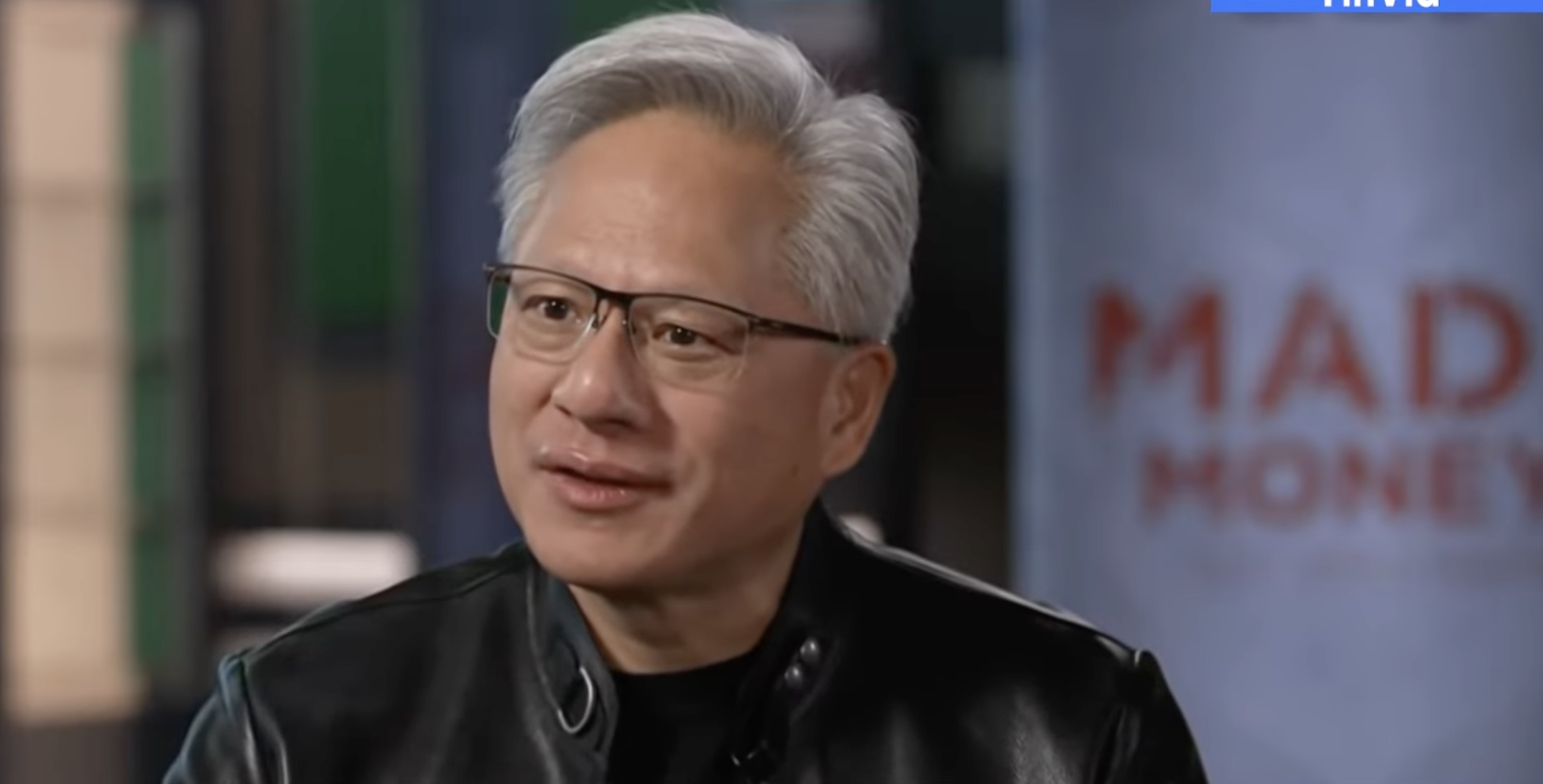
What Jensen Huang means to express is that AI is not here to eliminate employees but to help companies expand and develop new business; instead of cutting jobs, companies should actually increase hiring. If management fails to realize this point, they are fools. But joking aside, the managers in companies are often the smartest of the smart, and they certainly understand the current high costs of AI and the continuing necessity of human labor.
Layoffs by technology companies may just be a guise; the real objective is to reduce costs.
AI has become the universal excuse for layoffs in technology companies; in reality, what AI is truly eliminating are not individuals, but those companies and businesses that still live in the old era. When companies cannot keep up with AI advancements and their business growth stagnates, profits shrink, the AI revolution has rather become a new means for businesses to PUA employees — reducing staff, cutting costs, and piling more work on those who remain, then letting everyone reflect on why they couldn’t become the people who adapt better to the AI era.
If by misfortune the arteries are cut, they can just secretly invite them back. This kind of layoff method is also quite common in Silicon Valley; after Musk completed the acquisition of Twitter in October 2022, he laid off about half of the staff (over 3,000 people) in early November, and then, due to cutting the wrong people or realizing that key positions could not do without humans, he invited back dozens of laid-off employees.
Back to the present, ultimately AI will change many things, but it has not yet become miraculous enough to cover up strategic sluggishness, business aging, and managerial laziness in enterprises. The matter of being laid off by AI and then re-hired, whether the underlying reason is the company realizing that some jobs cannot just “AI changes everything” to automatically disappear, or merely an excuse to reduce costs, is neither passion-filled nor can it be considered a reversal.
It simply shows us that before the future has truly arrived, some individuals have already been harmed by it once.
免责声明:本文章仅代表作者个人观点,不代表本平台的立场和观点。本文章仅供信息分享,不构成对任何人的任何投资建议。用户与作者之间的任何争议,与本平台无关。如网页中刊载的文章或图片涉及侵权,请提供相关的权利证明和身份证明发送邮件到support@aicoin.com,本平台相关工作人员将会进行核查。