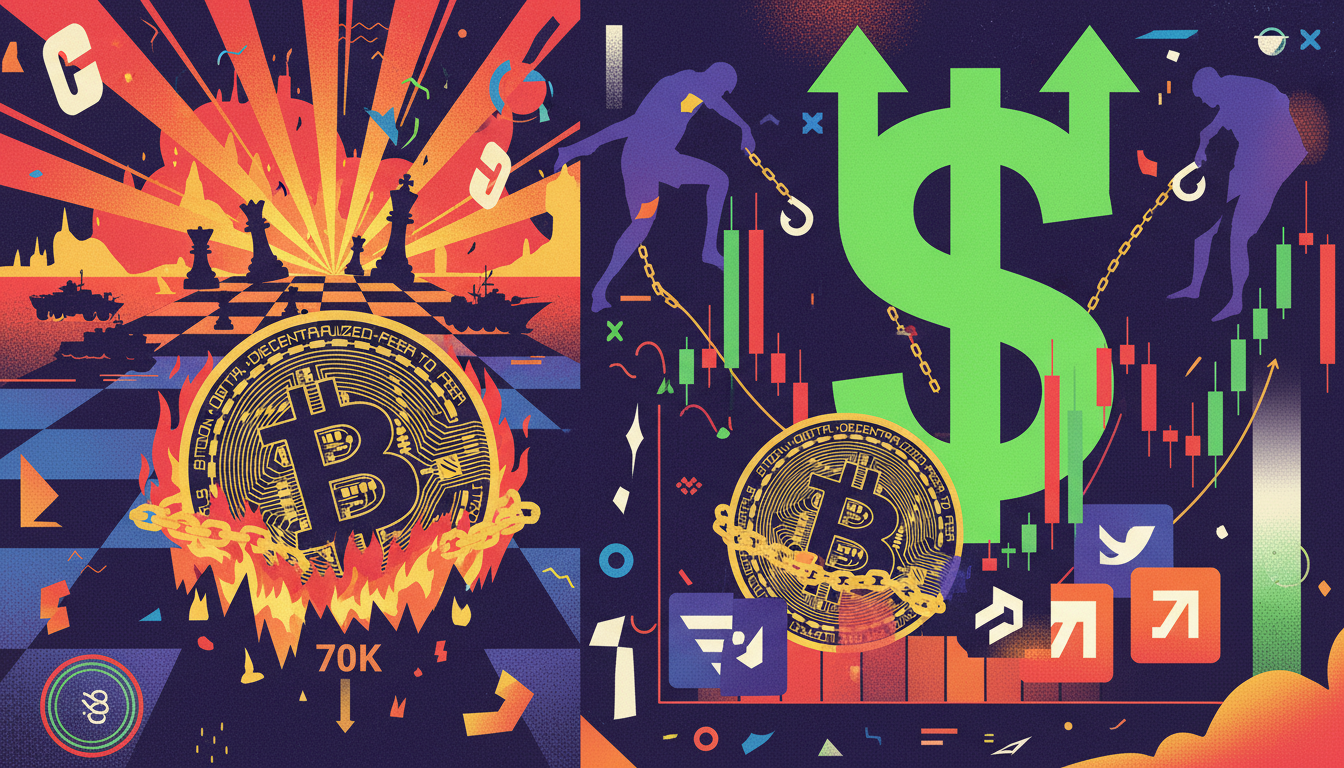
On March 20, Eastern Standard Time, the intertwining of energy shocks, unexpected employment decline, and rising inflation expectations forced the Federal Reserve to make a rapid shift from a loose monetary stance, having to re-evaluate between employment and prices. The number of unemployed increased by 92,000 in February, which, according to traditional logic, should have strengthened market bets on interest rate cuts. However, the rise in energy prices triggered by the blockage of the Strait of Hormuz pushed inflation expectations back into focus, disrupting this rhythm.
Nearly simultaneously, a series of unusual movements began to appear: According to onchainschool.pro, SIGN tokens were concentrated and withdrawn in a single day, worth approximately 3 million dollars; Grayscale transferred 3979 ETH to Coinbase Prime, equivalent to about 8.52 million dollars at the time; while the 2025 financial report of mining company BitFuFu showed a total revenue of 475.8 million dollars (year-on-year growth of only +2.7%), but recorded a net loss of 57.4 million dollars, with a sharp divergence between cloud mining and self-mining revenues in the same report.
During this window where macroeconomic signals and on-chain signals overlapped, the core question became increasingly sharp: when the energy crisis raises inflation expectations, and the Federal Reserve is forced to tighten liquidity, can crypto assets still be regarded as hedging tools, or will they become amplifiers of macro shocks under high leverage and high beta structures?
High Oil Prices Persist, Fed's Rapid Shift from Dovish to Hawkish
Looking back at the timeline, the turning point began with the overlap of February employment data and March energy disturbances. In February, the unexpected increase of 92,000 in unemployed individuals in the U.S. led the market to interpret this as a cooling demand and economic slowdown, reinforcing the imagination of a monetary policy shift to loosen within the year. However, as March came, the situation in the Strait of Hormuz escalated, energy supply was obstructed, and the market's expectations of an oil supply disruption quickly heated up, causing narratives around inflation pressures to overshadow concerns about weak employment.
In this context, Federal Reserve Governor Waller retracted previous dovish statements on interest rate cuts, becoming a symbolic node of policy sentiment reversal. He publicly emphasized that the high and sustained oil shocks "will not be just a temporary impact," directly binding the stickiness of energy prices to the upward movement of the inflation baseline. The market's optimistic narrative of "temporary energy disturbances do not alter the path to ease" was forced to give way to a new narrative of "inflation returning, difficulty in quickly shifting liquidity."
With inflation expectations re-anchored at high levels, this directly compressed the traditional market's imagination of loose liquidity. Interest rate expectation repricing transmitted to stocks, bonds, and currencies: the stock market discounted growth and high-valuation assets, bond market yields faced pressure at higher ends, credit spreads reopened, while the overall discount rate for high-risk assets increased. At the end of this chain, the crypto market was reassessed as a "high beta asset," with price sensitivity to interest rate expectations and liquidity tightening obviously heightened; once loosening fell short or its pace slowed, the slope of funds withdrawal often proved steeper than that of traditional assets.
Strait of Hormuz Locked, IEA Six-Month Clock Begins
The Strait of Hormuz is a key throaty connection for global energy transportation. Once circulation is hindered, the maritime chains for crude oil and natural gas will immediately show bottlenecks. The ongoing risks of blockage have turned "supply chain disruptions" from geopolitical hypotheses into real constraints. The International Energy Agency (IEA) provided a crucial time anchor in its latest warning: under the most optimistic path, the recovery of energy flow in the Gulf region could take as long as six months, effectively indicating to the entire market that this is not an event that can be glossed over as a "short-term disturbance."
IEA Director Fatih Birol bluntly stated that policymakers and the market "have underestimated the severity of the current crisis." This statement means: on one hand, officials worry that inflation will be pushed up again by energy costs and will subsequently have to operate under tighter policy constraints; on the other hand, market participants may collectively be numb in risk pricing, still thinking within the old inflation and interest rate framework while underestimating the impact of supply chain distortions on the medium- to long-term price system.
In this macro context, looking at BitFuFu's financial report is more representative. In 2025, the company achieved total revenue of 475.8 million dollars, with only +2.7% year-on-year growth, yet recorded a 57.4 million dollars net loss. Examining the structure, cloud mining revenue grew 29.4% year-over-year, while self-mining revenue plummeted 60%, showing a stark divergence between light asset and heavy asset models under high energy pressure within the same company. Cloud mining focuses on computing power services and platform matching, with relatively light capital and energy usage; self-mining, however, is deeply tied to power costs and in-house computing infrastructure, leading to substantial pressure on the profit and loss statement when energy prices are high and supply is unstable.
This means that, in an environment where the energy chain is tightened by risks in the Strait of Hormuz, mining companies are no longer simply "cyclical stocks" affected by price fluctuations, but are forced to find new equilibrium between uncontrollable energy costs and rigid computing power demand. Mining models that are heavy on assets, highly leveraged, and reliant on electricity prices from a single region will see their survival space being squeezed first, necessitating the revaluation of profit models under more conservative energy assumptions.
The Ledger of Bitcoin Miners: Profit Loss Maze Amidst Revenue Growth
If we only look at 475.8 million dollars in annual revenue and +2.7% year-on-year growth, BitFuFu appears to be expanding. However, the 57.4 million dollars net loss at the bottom of the financial report makes the contrast of "small revenue growth vs significant deterioration in profit" particularly glaring. Rising revenue scale alongside declining profitability points to profound changes in cost structure or business composition, and this is highly synchronized with the distortions in the energy cycle.
Specifically breaking down the business composition, cloud mining revenue's year-on-year growth of +29.4% indicates that there is still strong demand for "lightly obtained computing power profits" under the conditions where cryptocurrency prices remain attractive and individual retail investors and small institutions struggle to build their own mining sites. In contrast, the self-mining revenue saw a year-on-year decline of -60%, effectively placing the heavy asset sector of the same enterprise below the break-even line due to the pressures exerted by energy costs and competition for computing power in the same macro environment. Under high energy pressure, light asset and heavy asset models experience diverging fates within the same cycle: the former acts as "computing power brokers," maintaining certain elasticity amidst price fluctuations; while the latter bears all the risks of energy and hardware, highly sensitive to every change in electricity pricing, machine depreciation, and operational maintenance.
In the absence of critical cost data such as electricity procurement prices, regional distribution, and locked price structures for electricity contracts, external analysts cannot make accurate profit calculations for mining companies and can only make directional judgments — the rising energy costs and increased supply uncertainty will undoubtedly raise the marginal costs of mining activities and compress profit margins. More complex is the amplified correlation between mining company valuations and cryptocurrency prices during this cyclical period: price corrections not only compress mining revenues but also trigger secondary blows through market capitalization management, financing capabilities, and balance sheet reassessments.
This structural fragility means mining companies expose a "dual beta" during macro shocks: sensitive both to the prices of mainstream cryptocurrencies like Bitcoin, and with substantial exposure to energy cycle shocks. Once energy shocks and price declines occur simultaneously, publicly traded mining companies like BitFuFu will experience concentrated pressure on their financial reports, becoming one of the first asset types to break during misalignment between macroeconomic and cryptocurrency cycles.
On-Chain Movements Amplify Uncertainties: The Silent Migration of SIGN and ETH
While the macro environment tightens, the abnormal flows of on-chain funds add another layer of uncertainty to the market. According to onchainschool.pro, there was a concentration withdrawal of approximately 3 million dollars worth of SIGN tokens in a single day. This figure is not particularly large relative to the overall size of the cryptocurrency market, but its characteristics of "concentration" and "single day" make it easily emotionally interpreted as some kind of warning signal, especially since onchainschool.pro is currently the only public source disclosing this data.
Concurrent with this is the on-chain record of Grayscale transferring 3979 ETH to Coinbase Prime, equivalent to about 8.52 million dollars at the time. This also came from a single public channel's disclosure, showing only the objective movement of "from Grayscale address to Coinbase Prime" on-chain, whether this indicates future sales, staking, or other strategic arrangements cannot be verified under the current informational framework, nor should it be subjectively filled in.
Under the premise of unknown motives, it is essential to distinguish "behavioral facts" from "subjective intentions." On the factual level, we can confirm that in March, when macro uncertainties intensified, some sizable funds underwent concentrated migrations towards specific tokens and mainstream assets; on the intent level, whether for risk hedging, structural adjustment, arbitrage layout or simple operational needs, external observers lack sufficient evidence to make judgments.
Yet, even confined to the factual level, such large-scale migrations will still have amplifying effects on market sentiment and volatility expectations. High-frequency traders monitoring on-chain data are likely to view these transfers as precursors to potential liquidity events, tending to preemptively reduce leverage or make protective hedges. Some emotional traders may even piece together fragmented on-chain segments into "conspiracy narratives," further amplifying panic on social media. The result is that real sell-offs or structural adjustments that have not yet occurred could be preemptively reflected in the pricing due to expectations and emotions.
Liquidity Expectation Reversal, Crypto Torn Between Hedging and Speculation
By stringing together the above clues, a fairly clear compression chain can be observed: the Federal Reserve's tightening expectation resurgence due to energy shocks suggests that future dollar liquidity may become more constrained; the rise in energy costs and supply chain uncertainty directly elevated the operational thresholds for mining companies and infrastructure-related enterprises; under simultaneous pressure from these two forces, the "faucet" that originally provided computing power and transactional liquidity to the crypto ecosystem must also confront the dual squeeze of rising costs and tightening financing channels.
Simultaneously, large on-chain migrations reflect that institutional and large funds are actively adjusting exposures. The 3 million dollars withdrawal of SIGN and Grayscale's transfer of 3979 ETH indicate, regardless of subsequent actions, at least a heightened sensitivity of large funds to position structures in an environment of rising inflation and energy risks. In contrast, the emotional reactions on the retail investor level vary: some investors still adhere to the narrative that "Bitcoin and other crypto assets are hedging tools against inflation," attempting to find alternative assets in fear of erosion of fiat purchasing power; while others, educated by the realities of high leverage, high volatility, and frequent liquidations, are forced to exit in the face of reversals in interest rate expectations and price corrections.
The theoretical label of "hedging against inflation assets" clashes with the actual structure of a "high-leverage speculative market" during the escalation of the energy and monetary policy tug-of-war. On one hand, crypto assets are packaged as macro hedging tools; on the other hand, they rely heavily on cheap dollar liquidity and margin leverage at the trading level. This inherent tension has been amplified unprecedentedly in the current environment. Without the authority to speculate on the specific timeline of future interest rate hikes or cuts, nor making assumptions about institutional repositioning intent, we can only construct situational paths:
● If the energy shock window period indicated by the IEA indeed stretches to six months, then the sustained high operation of oil and related energy products will continuously suppress the speed of inflation decline, making it difficult for the Federal Reserve to quickly shift to a loose policy, and the overall volatility of the crypto market will likely remain high, with prices showing excessive sensitivity to any liquidity clues;
● In such a scenario, the tightening financing environment, rising mining costs, and the overlay of large on-chain migrations may lead to features of "greater price volatility, shorter trend durations" — sharp rebounds and flash crashes could coexist within a short cycle, but it would be hard to establish a smooth unidirectional trend without incremental liquidity support.
Six-Month Window Period: The Struggle for Crypto Pricing Power Under Crisis Narratives
Looking back at March 20, the current landscape is already quite clear: the blockade risk in the Strait of Hormuz and the six-month recovery cycle indicated by the IEA significantly extend the frontlines of the energy crisis; the Federal Reserve is forced to make difficult balances between February's employment weakness and March's energy shocks, with Waller's statement symbolizing inflation once again overshadowing employment and the shadow of tightening returning; beneath this macro main line, crypto assets are gradually transforming from "passive pricing objects" into "accelerometers" of macro games, with any change in expectations being amplified in their prices.
Within the foreseeable six-month window, three scenario paths can be roughly outlined:
● Energy Relief + Mild Easing: If the risks in the Strait of Hormuz gradually dissipate and the supply chain recovers earlier than the fears expressed by the IEA, energy price pressures may subside, leading to inflation expectations returning toward targets. The Federal Reserve could gain some policy flexibility without sacrificing its credibility. In such an environment, the pressure on mining companies' electricity costs would ease marginally, and earnings recovery expectations for companies like BitFuFu would rise, while on-chain funds might shift from defensive migrations to reallocation, with volatility expected to decrease to more manageable ranges.
● Energy Deterioration + Continued Tightening: If the blockade and geopolitical games exceed current expectations, proving the IEA's six-month window overly optimistic, then sustained high energy prices could continue to raise the inflation baseline, forcing the Federal Reserve to extend the tightening cycle or maintain high rates for a longer period. In this scenario, mining companies' self-mining profits would continue to be pressured, while light asset models like cloud mining, despite their relatively favorable position, would also experience demand shrinkage; increasing large on-chain migrations would make the market highly sensitive to any "selling pressure signals," completely overshadowing the crypto assets' hedging narrative with their risk asset attributes.
● Mismatched Policy and Supply Tug-of-War: If the pace of energy supply improvement misaligns with the pace of policy adjustments — for instance, energy might be improving in practical terms while officials maintain a tight stance due to lagging inflation indicators — then the market will fluctuate between data and expectations for an extended period. Mining company valuations and cryptocurrency prices may enter a phase of "directionless, amplified volatility" box games, where on-chain funds will neither fully withdraw nor fully increase holdings, repeatedly digesting information gaps through short-term trading.
Regardless of which scenario unfolds, the one certainty is the necessity to consistently maintain a strict distinction between "verifiable on-chain facts" and "unverifiable speculative intentions" in an environment of high informational incompleteness. The 3 million dollars withdrawal of SIGN, the migration of Grayscale's 3979 ETH, and BitFuFu's 475.8 million dollars in revenue and 57.4 million dollars in net loss are all objective data that can be repeatedly verified through on-chain and financial report records; however, the precise path for policymakers' next steps or the strategic intentions behind large-scale moves by institutions cannot currently be verified and should not be packaged as "certain viewpoints."
For crypto investors, it is crucial to maintain a dynamic assessment framework in the absence of speculations on future policy trajectories or motivations for institutions, continuously updating one’s subjective probabilities for risks and opportunities as the three main threads of energy, interest rates, and on-chain funds evolve, rather than reaching final conclusions for the entire market based on a single narrative at any given moment.
Join our community, let’s discuss and become stronger together!
Official Telegram community: https://t.me/aicoincn
AiCoin Chinese Twitter: https://x.com/AiCoinzh
OKX Welfare Group: https://aicoin.com/link/chat?cid=l61eM4owQ
Binance Welfare Group: https://aicoin.com/link/chat?cid=ynr7d1P6Z
免责声明:本文章仅代表作者个人观点,不代表本平台的立场和观点。本文章仅供信息分享,不构成对任何人的任何投资建议。用户与作者之间的任何争议,与本平台无关。如网页中刊载的文章或图片涉及侵权,请提供相关的权利证明和身份证明发送邮件到support@aicoin.com,本平台相关工作人员将会进行核查。