Author: Sequoia Exchange
Key Points Overview
• This article is a heart health action guide for entrepreneurs: from risk identification, self-test during check-ups, daily prevention, to emergency response, systematically outlining the heart health knowledge essential for entrepreneurs.
• The daily life of an entrepreneur is inherently a high-risk list: long-term high pressure, lack of sleep, overwork, and traditional risk factors being overlooked—these are often not sporadic occurrences among entrepreneurs but rather structurally coexist.
• One indicator in health check-up packages is often neglected: mildly elevated troponin, which poses a high risk even without acute heart disease symptoms.
• "I'm still young" and "I exercise often" may provide a false sense of security: many sudden issues are difficult to predict, and the majority of cardiac arrests occur in the "low-risk populations"; exercise is beneficial, but excessive and anaerobic workouts may trigger issues for hearts with potential risks.
• In the event of a sudden heart attack, the first step is to call 120: ambulances are equipped with devices and medical personnel who can begin treatment en route.
Why Entrepreneurs?
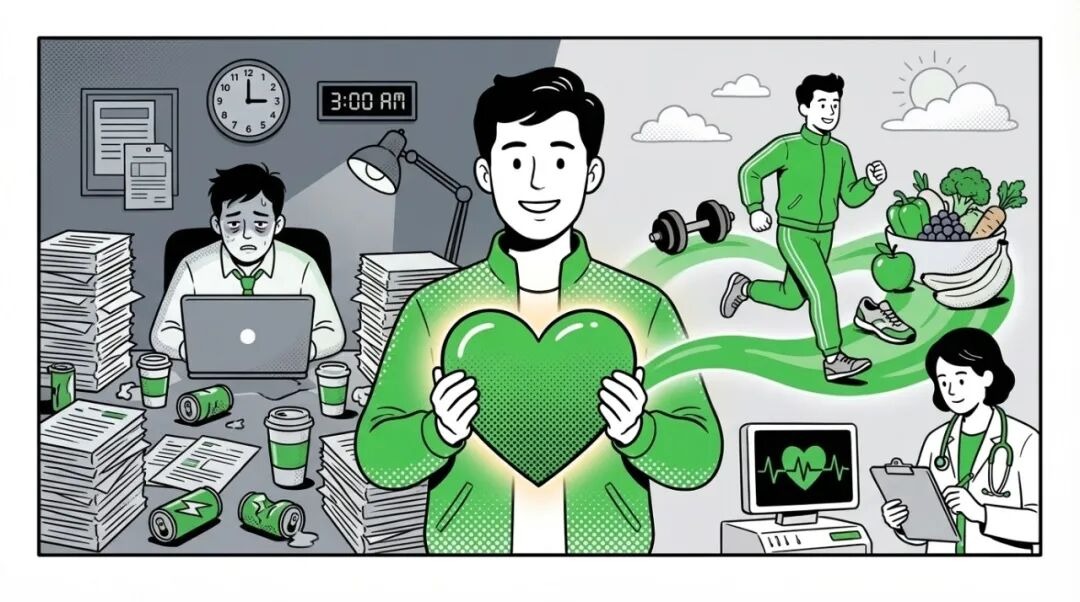
Statistics show that approximately 1 million new heart attack patients emerge each year in our country, with the incidence rate among those under 50 continuing to rise. The population of entrepreneurs, due to long-term high pressure, lack of sleep, and overwork, is one of the highest risk groups. Therefore, we have compiled a heart health action guide for entrepreneurs: from risk identification, self-check during health examinations, daily prevention, to emergency response, hoping to provide some assistance to you as an entrepreneur.
1. Long-term High Pressure: Cortisol is Quietly Damaging Your Blood Vessels
Stress is not just emotional fatigue. Continuous psychological pressure can lead to persistently elevated cortisol levels, which directly damage the inner walls of blood vessels, accelerating the process of atherosclerosis—this is one of the core pathological mechanisms of heart disease. Entrepreneurs face a sustained high pressure that is hard for ordinary people to comprehend: pressure from financing, market demands, team dynamics... these pressures do not vanish due to a successful pitch or impressive data; they are structural and long-lasting.
2. Lack of Sleep: Less Sleep Means More Strain on the Heart
Sleeping less than 6 hours a day leads to continuously rising blood pressure, increasing risks for the heart and brain, with a significantly elevated risk of death. Studies also indicate that working more than 13 hours a day is a critical threshold that requires special attention.
3. Overwork: Not a Metaphor, But a Medical Diagnosis
"Karoshi" sounds like a sociological concept, but its real killer is heart disease. Individuals with vascular disease or coronary heart disease experience sharply rising blood pressure and interruptions in blood supply to the heart when under sustained high pressure and extreme fatigue, leading to sudden death.
4. Traditional Risk Factors: Exacerbated in Entrepreneurs
Smoking, hypertension, high blood lipids, diabetes—systematic validation over decades by the Framingham Heart Study confirms that these four factors are the core inducements for heart disease. Among the population of entrepreneurs, these factors are often neglected due to being "too busy," and by the time they're recognized, they tend to be compounded issues.
How is Your Heart Doing Right Now?
When was the last time you had a health check-up? Two years ago? Three years ago? Or you can't even recall? Being busy is the most common excuse. But the heart does not pause its changes just because you are busy.
Health Check-ups: Essential Tests to Include
With a plethora of health check-up packages, which ones truly impact heart health? Below is a core list summarized by several professional organizations, along with reference values.
■Basic Blood Indicators
• Blood lipids (total cholesterol, LDL-C low-density lipoprotein cholesterol, HDL-C high-density lipoprotein cholesterol, triglycerides): LDL-C is the most critical one—coronary heart disease patients need to control it at 1.8mmol/L; if there have been two or more acute heart attacks within a year, or if accompanied by hypertension, diabetes, or smoking habits, it must be further reduced to 1.4mmol/L.
• Blood sugar (fasting blood sugar + glycated hemoglobin HbA1c): Glycated hemoglobin reflects the average blood sugar level over the past 2–3 months; diabetes patients should keep it under 7%, with fasting blood sugar between 4.4-7mmol/L.
• Blood pressure: Target value 140/90mmHg; individuals with diabetes or kidney disease must adhere to stricter control at 130/80mmHg.
■Heart Structure
• Electrocardiogram (regular + Holter monitor): It's crucial to understand that a normal electrocardiogram does not rule out coronary artery disease. Atherosclerosis cannot be seen on an electrocardiogram, and a Holter monitor can record continuously for 24 hours, capturing occasional arrhythmias.
• Echocardiogram: Assessing heart structure and function, this is the next step when abnormalities are detected in a regular electrocardiogram.
■Body Shape Indicators
• BMI: Should be controlled between 18.5–23.9kg/m²; waist circumference for men is 90cm and for women is 85cm. Abdominal obesity poses a more direct threat to heart health than weight itself.
■The Most Important Indicator to Highlight: Troponin
The BMJ (British Medical Journal) published a large data study including over 250,000 patients finding that mildly elevated troponin—even without acute heart disease symptoms—results in a more than 10-fold increased risk of death for individuals aged 18–29. This indicator has traditionally only been tested in emergencies to confirm heart attacks, but new research indicates it also has significant value for early risk screening.
If you have a family history of heart disease, long-term high pressure, or have already found other abnormal indicators during health checks, you should proactively ask your doctor for a troponin test. Those with a family history or existing abnormalities can inquire further with their doctors to see if they need to undergo coronary CT, coronary angiography, cardiac MRI, or cardiac electrophysiological tests.
Self-Monitoring: Recognizing Your Risks Daily
Health check-ups are annual "snapshots," but the heart operates continuously. Below are some self-monitoring methods recommended by the American Heart Association that can be done daily.
■Smart Watches:
The Most Accessible Heart Rate Monitoring Tool
Smart watches that support heart rate monitoring can continuously log resting and active heart rates, sending alerts when heart rates deviate from normal ranges. For entrepreneurs, this is the minimal threshold for perceiving heart conditions. Some new devices now also support blood oxygen monitoring and arrhythmia alerts—don't ignore abnormal alerts; get a formal electrocardiogram for confirmation.
■Blood Pressure Monitors:
There Should Be One at Home
It's recommended to regularly measure resting pulse and blood pressure to monitor heart health status. Blood pressure monitors are affordable, easy to use, and checking once in the morning can provide immediate feedback on today's status.
■Self-Check List:
Do Not Ignore These Signals
Any of the following symptoms should be taken seriously, especially for men over 35:
• Unexplained dizziness, blackout, particularly after physical activity;
• Chest tightness, unexplained cold sweats lasting several minutes or more, not relieved by rest;
• Shortness of breath with previously easy activities becoming more challenging;
• Palpitations with feelings of irregular or suddenly accelerated heartbeat.
Alternatively, you can perform the following self-evaluations:
• Do you sleep less than 7 hours each day?
• Do you feel "anxious or extremely tense" for more than 3 days a week?
• Do you spend prolonged periods (continuously over 90 minutes) seated without moving?
• Have you not exercised for more than 2 weeks citing "no time"?
• Do you rely on caffeine or energy drinks to stay functional?
• Have you gone over 3 months without fully "unwinding" and resting?
• Do you feel persistently fatigued, unable to recover even with rest?
If you answer "yes" to more than three of these, your cardiovascular risk is already significantly elevated above normal levels.
What Can You Do Daily to Truly Protect Your Heart?
Knowing where the risks lie and which indicators to check—this is the awareness level. But awareness cannot replace action. This section discusses what specifically entrepreneurs can do in daily life. It starts with recognition because there are several misconceptions that, if not addressed first, may lead your brain to "selectively filter" the following habit suggestions.
Misconception 1:
“I exercise often, so I am relatively safe.”
Exercise is not wrong, but it is not a protective talisman. In fact, excessive exercise intensity itself is a risk factor. Serious exercise-related complications—including heart attacks and sudden cardiac death—have increased risks with the intensity, frequency, and duration of the exercise. Moreover, sudden cardiac death is hard to predict—many cardiac arrests occur in the so-called "low-risk groups."
Exercise is a crucial way to protect the heart, as long as it is moderate, aerobic, and progressive. High-intensity anaerobic exercise may be the last straw that breaks the heart for individuals with potential vascular conditions.
Misconception 2:
“I am still young; these issues are far from me.”
Recent statistics from the Chinese Journal of Cardiovascular Diseases show that more than a million new heart attack cases occur annually in China, with the incidence among individuals under 50 continuously rising. "Youth" is becoming a false sense of security. Heart damage is a long-term process, and risks buried in your 30s may manifest in your early 40s.
Misconception 3:
“There will be obvious feelings before a heart attack.”
Not necessarily. Sudden cardiac death often gives no warning; even for heart attacks, a considerable percentage present with atypical symptoms—elderly individuals may only feel fatigue or dizziness, while diabetes patients may exhibit no symptoms at all, medically termed "silent heart attacks." Relying on "feelings" to assess your safety is a dangerous gamble.
Then, make these practices into habits.
■Exercise:
150 minutes of aerobic activity each week
Many cardiovascular professional guidelines recommend at least 150 minutes of moderate-intensity aerobic exercise each week—brisk walking, jogging, swimming, cycling all count, gradually increasing. One rule to remember: heart patients should avoid high-intensity anaerobic exercises (sprint races, heavy weightlifting, high-intensity interval training, etc.). For individuals with multiple risk factors but not yet diagnosed, it’s best to do an exercise stress test before high-intensity workouts.
■Diet:
Two of the most impactful actions
There’s no need to overhaul your diet extensively. There are two key actions that can be very effective:
• Control sodium intake: Limit daily salt intake to 5g (about a beer cap). High sodium is a direct driver of high blood pressure, one of the core risk factors for heart disease.
• Increase dietary fiber: Aim for over 25g daily—sources include vegetables (300-500g/day), fruits (200-350g/day), whole grains (50-150g/day). Most people are far below this standard.
■Sleep:
6 hours is the minimum, not the goal
Sleeping less than 6 hours each day leads to persistently elevated blood pressure, significantly increasing the strain on the heart. "6 hours" is the safety threshold, not an admirable figure. If it's challenging to ensure sleep duration, at the very least, guarantee sleep quality: set consistent sleep and wake times, and put your phone down 1 hour before bed.
The three above—exercise, diet, sleep—are essentially about the same thing: reducing the long-term chronic inflammatory burden on the body and minimizing ongoing damage to the cardiovascular system. Achieving any one of these is extending the life of your heart.
■Quit smoking and limit alcohol:
More challenging than expected, but worth the commitment
Tobacco inflicts direct and lasting damage on the cardiovascular system, just as second-hand smoke does. Regarding alcohol limits: men should consume ≤25g of alcohol per day, women ≤15g. In business settings, "just a little less" is often harder than expected—but this is a line worth maintaining.
■Regular health check-ups and keep a first aid kit at home
A complete heart-related health check-up once a year is the lowest-cost risk management. Additionally, keeping the following items at home is advisable, ensuring family members know where and how to use them: nitroglycerin (sublingual for acute angina), aspirin (chewed if a heart attack is suspected, noting that those with allergy or gastrointestinal bleeding histories should avoid it), and a blood pressure monitor.
The final task: know where the nearest AED is located. Many believe AEDs are only in airports and subway stations, but they are also found in shopping malls, office buildings, and community service centers. Knowing their locations in advance can save precious seconds when it matters most.
What to Do If It Really Happens?
What we discussed earlier was prevention. But the reality is: even if all the right steps are taken, sudden situations can still arise. So when that moment comes, what can be done?
■First Recognize:
When these symptoms appear, immediately enter alert mode
• A squeezing or oppressive pain in the retrosternal area or the heart area lasting more than 30 minutes, not alleviated by rest or sublingual nitroglycerin;
• Pain radiating to the left shoulder, arm, neck, jaw, or back; some may experience upper abdominal pain, often confused with gastrointestinal issues or indigestion;
• Accompanied by: profuse sweating (cold sweat), pale complexion, cold and clammy extremities, difficulty breathing, nausea, or vomiting.
Remember one principle: better to misjudge than to overlook. If any of the above appear, do not hesitate, enter the emergency process immediately.
■Four Steps to First Aid:
Every step is crucial
Step One: Call 120 immediately; do not wait, do not drive yourself.
Many people's first reaction is to "wait and see" or "take a taxi to the hospital." Both choices can be fatal.
The 120 emergency vehicle has equipment and medical personnel who can start treatment en route. Going on your own means giving up the most critical opportunity for medical intervention during that time.
When calling 120, clearly state three things: precise location (to the exact number or specific floor), description of symptoms (how long chest pain has lasted), and medical history (any history of heart disease and current medications).
Step Two: Lie flat on the ground, loosen clothing, and maintain an open airway.
Ensure the patient stops all activities immediately, lies flat, and does not stand or move. Loosen the collar and belt, ensuring easy breathing.
If carrying nitroglycerin, sublingually take one tablet (0.5mg), repeating every 5 minutes, for a maximum of 3 doses.
Be aware of the contraindications for nitroglycerin: blood pressure below 90/60mmHg, heart rate below 50 beats per minute, history of glaucoma, prohibited from use.
Step Three: If the patient loses consciousness—immediately start CPR.
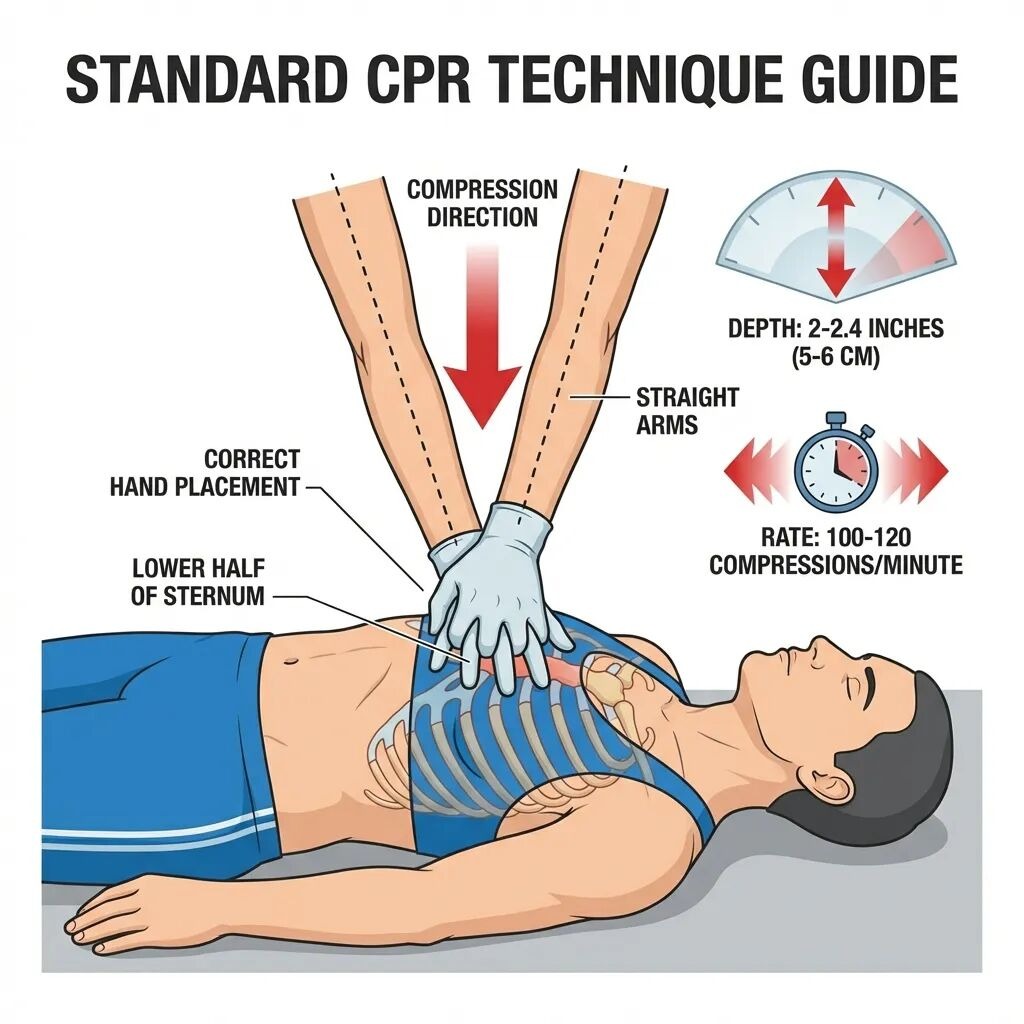
Unconscious + no normal breathing (or only gasping) + no carotid pulse—if these three occur simultaneously, you must immediately begin cardiopulmonary resuscitation (CPR) on the patient.
• Position: Interlace fingers, placing the heel of one hand at the midpoint of the line between the two nipples;
• Force: Press straight down 5–6cm, fully relaxing between compressions to allow the chest to rebound naturally;
• Frequency: 100–120 compressions per minute, with roughly equal times for compression and relaxation;
• Mouth-to-mouth breathing: Provide 2 breaths for every 30 compressions. If unable to perform mouth-to-mouth, just continue with chest compressions; do not stop due to inability to perform assisted breathing.
The purpose of CPR is to maintain basic blood circulation and buy time for defibrillation—continue until emergency personnel arrive.
Step Four: Find the AED and follow the instructions to operate.
An AED (Automated External Defibrillator) is a device that can be operated by a layperson, providing audio guidance for each step. Operational process: turn on → follow prompts to attach two electrode pads → AED automatically analyzes heart rhythm → follow prompts to defibrillate → immediately continue CPR until emergency personnel take over.
In Conclusion
You only have one heart. Cardiac muscle cells number around 2-3 billion, and a severe heart attack can permanently lose about 1 billion of these—they do not regenerate.
Many entrepreneurs may occasionally bet on uncertainties and use overtrading for speed. But your heart is not a wager, and health is not something to be overdrawn. Cultivating the habit of regular check-ups and going to bed early—these are also your most important long-term investments for the company.
免责声明:本文章仅代表作者个人观点,不代表本平台的立场和观点。本文章仅供信息分享,不构成对任何人的任何投资建议。用户与作者之间的任何争议,与本平台无关。如网页中刊载的文章或图片涉及侵权,请提供相关的权利证明和身份证明发送邮件到support@aicoin.com,本平台相关工作人员将会进行核查。


