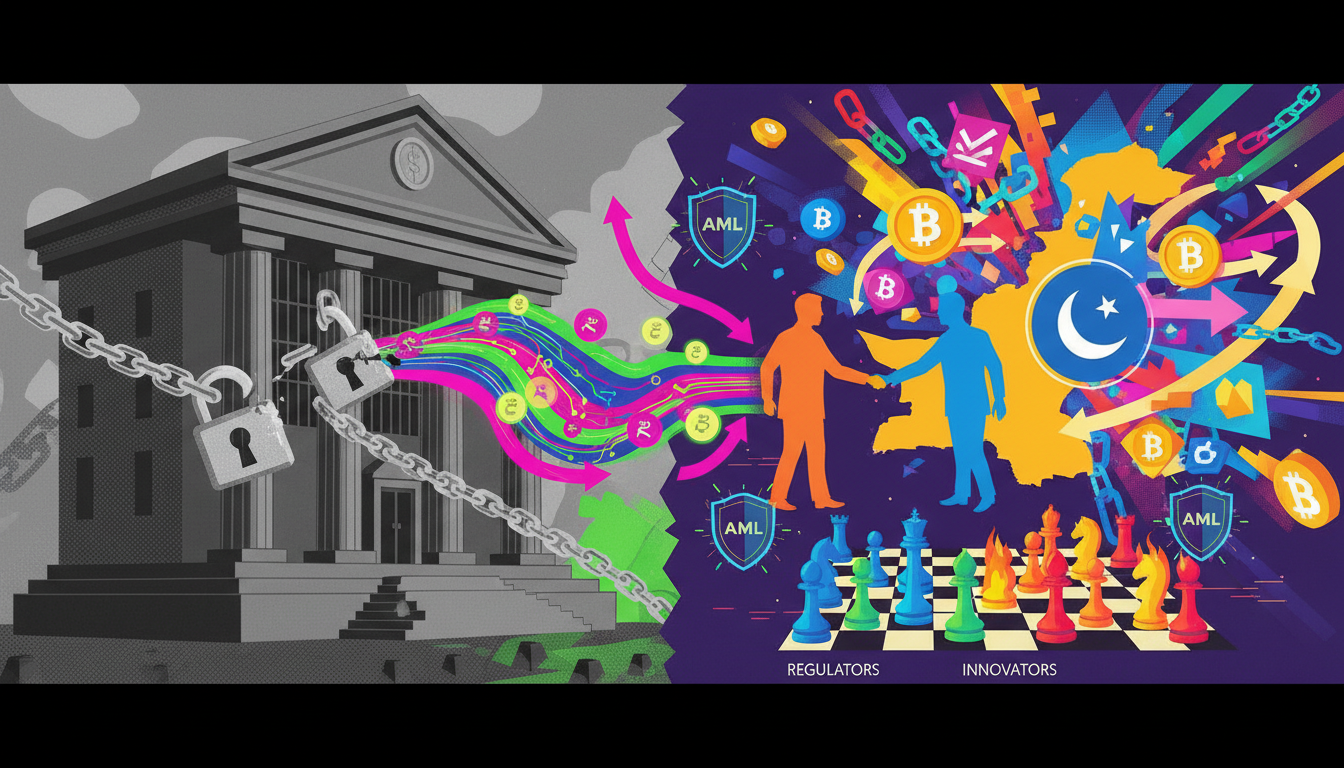
On April 15, 2026, Societe Generale-FORGE announced a partnership with Consensys to integrate its dollar-pegged token USD CoinVertible (USDCV) into the mainstream decentralized wallet MetaMask. For a traditional banking giant like Societe Generale, which is systemically important in Europe, this marks a direct landing from a closed experimental environment to the front lines of open Web3, and signifies one of the first deep integrations of a traditional bank's compliant dollar currency into the mainstream decentralized wallet scene. A banking system centered around licensing, risk control, and KYC is beginning to confront Web3 users, who are accustomed to anonymity and self-custody, on the same interface. The real competition is just beginning: in the open financial world represented by DeFi, can bank-issued dollar currencies truly gain speaking rights and not just become “a more regulatable payment option”?
Paris' Major Bank Issues Currency: From Testing Ground to User Access
Societe Generale-FORGE is the department of Societe Generale dedicated to digital assets and on-chain projects, backed by a well-established bank that holds significant positions in the European capital markets, investment banking, and corporate finance. Unlike many banks that are merely “testing the waters” in the crypto field, Societe Generale has continued to push projects involving tokenized bonds and on-chain settlements in recent years, with FORGE serving as its front-end window to Web3.
On this path, USD CoinVertible is clearly positioned as a dollar-pegged token issued by the bank—information verified by Grok also refers to it as a dollar stablecoin issued by Societe Generale-FORGE. Compared to dollar tokens launched by tech companies or crypto-native institutions, USDCV is embedded within a strict compliance framework from the outset, emphasizing asset authenticity, auditability, and regulatory oversight, which is a natural fit for banks that have historically built their moats around licenses and regulatory relationships.
Previously, bank-led on-chain attempts primarily occurred in institutional and pilot scenarios: on-chain bond issuance for specific corporate clients, limited wholesale payment settlements, and experimental projects supported by regulatory sandboxes, with participants mainly being B-end institutions familiar with financial compliance contexts. With this integration through MetaMask, Societe Generale has for the first time placed its dollar currency in an open entry point aimed at global retail users. As some commentators have noted, “This move marks an important step for traditional banks to expand the audience for compliant digital currencies in the crypto field”—shifting from serving institutions to addressing the C-end represents a strategic upgrade rather than a simple technical integration.
When Banking Stablecoins Meet Decentralized Wallets
To understand the significance of this integration, one must first look at MetaMask’s position in the Web3 ecosystem. As one of the most important browser wallets in the Ethereum ecosystem, MetaMask has long been seen as the default entry point for users into the Dapp world: from DeFi lending and DEX trading to NFT minting and Layer2 interactions, most newcomers’ first on-chain operation may be completed through this fox icon. An entry point signifies traffic and the power to shape preferences; whoever appears here can secure an additional slot in the user asset allocation menu.
USDCV does not quietly integrate as a “back-end settlement channel,” but becomes part of the MetaMask plugin ecosystem through collaboration with Consensys. This integration method means it has the opportunity to directly participate in product design and liquidity routing at the wallet layer, rather than merely being regarded as an option next to the payment button. This technical and ecological binding leaves room for Societe Generale's dollar currency to collaborate with DeFi protocols, cross-chain bridges, and payment plugins in the future.
However, at the same time, traditional banks' KYC, account systems, and freeze clauses create inherent ideological friction with the non-custodial, mnemonic self-holding, open plugin ecosystem that MetaMask represents. One side desires every transaction to be linked to an identifiable real-world identity while the other emphasizes “wallet does not equal identity,” allowing users to freely generate public keys and split funds. Who has the right to define the boundaries of fund flows and who can understand and control identity data is becoming a new power dividing line between banks and Web3 infrastructure. This integration is only the first step; how permission management, compliance prompts, and even blacklist enforcement will manifest on the wallet front end in the future represents a deeper game.
The Three Moves of Compliant Dollar Currency Penetrating Web3
From the perspective of penetration strategy, Societe Generale chose to first conquer the wallet layer rather than breakthrough at a specific exchange or single DeFi protocol, which is no coincidence. Wallets are the starting point for all scenarios: whether users want to lend, provide liquidity, or make payments, the first step is to open the wallet and select an asset. Rather than playing the role of a local payment option in a specific Dapp, it is better to directly enter the “asset list,” positioning USDCV at the same level as native dollar tokens like USDC in users' minds. Whoever occupies the entry will have the right to participate in the subsequent distribution game of scenes.
Based on this, a conceivable path is for USDCV to spread from wallets to scenarios. After completing the integration, if USDCV collaborates with mainstream DeFi lending protocols for collateral or interfaces with some on-chain settlement and trade finance platforms, it will have the opportunity to extend the “compliant dollar” narrative to actual business flows: institutions can use it for cross-border settlements, businesses can record trade receivables and payables on-chain, while also obtaining liquidity in DeFi. Wallet integration is a starting point, not an endpoint.
On the narrative front, both Societe Generale and the banking system behind it clearly aim to use the labels “compliant, secure, and regulatable” to position themselves against the current dollar token system dominated by private entities. Compared to products like USDC, USDCV's greatest selling point is not technological innovation but “this is a dollar currency issued by a bank,” which, in the eyes of some regulatory agencies and conservative institutional investors, is enough to change risk assessment models. For many funds, family offices, and corporate treasuries constrained by compliance frameworks, directly using bank-issued on-chain dollar instruments is often more easily accepted for internal audits and regulatory reporting.
Therefore, even if the on-chain scale and liquidity of USDCV may not compete with leading dollar tokens in the short term, it is still likely to first create a “demonstration effect” among institutional funds: as long as a large compliant fund is willing to use it for on-chain debt financing or settlements, subsequent imitators will quickly arise. The integration at the wallet layer not only reserves a position for future C-end usage but also paves a visible pathway for institutional funds.
Europe's Crypto Landscape: From the Swiss Crypto Valley to Paris Banking Experiment
When taking a broader view of the European landscape rather than focusing on a single event, it becomes apparent that Societe Generale's actions are not isolated. According to data from a single source, the total blockchain financing in the Swiss Crypto Valley reached $728 million in 2025, accounting for about 47% of European blockchain venture capital. This figure reflects a structural reality: Europe's innovation focus has long been concentrated in Switzerland and other jurisdictions more friendly to crypto, while traditional financial centers like France tend to explore paths within regulatory frameworks.
Switzerland is known for its entrepreneurial and technology-driven ethos, yielding a large number of protocol layers, infrastructure, and new financial products from the local crypto valley ecosystem, with capital favoring “bottom-up” technological breakthroughs. In contrast, France is represented by large banks, insurance firms, and regulatory bodies, promoting the financial industry’s embrace of on-chain technology through “top-down” pilot licensing, regulatory sandboxes, and compliance guidelines. The former bets on code, while the latter bets on licenses, creating two complementary yet competitive paths within Europe.
Meanwhile, Europe’s payment and settlement infrastructure is blossoming in multiple areas. Research briefs indicate that payment giants Stripe and Visa have become validation nodes for the Tempo network, which shows that multinational payment companies are also attempting to engage more deeply in the operation of on-chain networks rather than merely providing superficial fiat entry and exit interfaces. As payment companies, banks, and local crypto startups simultaneously engage, Europe's on-chain financial puzzle is accelerating towards completion.
In this context, Societe Generale's promotion of USDCV integration with MetaMask can be viewed as establishing a model for a “European compliant on-chain dollar” under the impending implementation of regulatory frameworks like MiCA. Compared to the dollar token system that has been repeatedly scrutinized by U.S. regulatory agencies, Europe may hope to cultivate a path parallel to, and even partly hedging against, U.S. products through bank-led on-chain dollar tools under the premise of controllable regulation and assessable risks. This is an extension of the financial sovereignty discourse and a preemptive layout for the survival space of local financial institutions in the Web3 era.
Security Anxiety and Trust Migration: Users Swings Between Protection and Freedom
To understand the psychological preference users might have for “bank-backed on-chain dollars,” one must consider the real security pressures faced by decentralized wallets. Research briefs mention that Zerion recently encountered a hacker attack of about $100,000 (according to a single source); while this number is not large in the annals of major attacks in crypto history, it reflects a persistent anxiety: self-custody wallets do not equate to absolute safety. Private keys are phished, plugins are attacked, and signatures are induced—these risks have been repeated during a stage when user education is not yet mature.
In such an environment, some retail users will naturally develop a favorable impression of bank-backed on-chain dollars: if something goes wrong, can there at least be a real entity to hold accountable? If assets are frozen, can legal recourse be pursued instead of having no way to voice grievances? These psychological demands sharply contrast with the complete sovereignty, self-custody, and irreversibility emphasized by crypto fundamentalists.
However, bank credit backing does not mean that on-chain assets are now free of risks. USDCV still operates on top of smart contracts; contract vulnerabilities, oracle anomalies, and integrated interface risks do not automatically disappear just because the issuing entity is a bank. Simultaneously, the design of “regulatable and freezeable” means that regulatory and judicial orders can interfere more directly with asset flows. While it superficially appears to enhance safety levels, fundamentally it is a reconfiguration of technological and regulatory risks.
The question worth asking is: when compliance requirements and freeze clauses enter the front end of wallets like MetaMask through bank-issued dollar currencies, are users gaining more protection, or inadvertently relinquishing their freedom? When certain addresses are one-click disabled on the bank dollar currency level due to being blacklisted, should wallets provide a prompt? Who decides the criteria for blacklisting? These questions currently have no conclusions but will directly impact future Web3 users’ asset class preference choices and determine to what extent banks can reshape this ecosystem rather than just adapt to it.
Long-term Variables for Bank-issued Dollar Currencies in DeFi
In summary, the integration of USD CoinVertible into MetaMask by Societe Generale through Societe Generale-FORGE is a notable milestone in the process of merging traditional finance with Web3: this is the first time a eurozone large bank's dollar-pegged token has officially landed on the user interface of a mainstream decentralized wallet. This action not only alters the sense of distance between banks and DeFi but also signifies that regulatory-friendly dollar currencies are beginning to genuinely reach retail entry points, no longer confined to institutional pilots and closed testing environments.
In the future, the competitive landscape is likely to evolve into a direct confrontation between two lineages of dollar tokens: one side represented by private products such as USDC, relying on first-mover advantage and deep DeFi liquidity networks; the other side represented by bank-issued dollar currencies like USDCV, backed by a large compliance framework and traditional financial clients. Whoever can appeal to regulators, institutions, and retail users simultaneously will have an opportunity to occupy a core position in the next round of open financial infrastructure reconstruction.
Regulatory, technical, and user preference variables will jointly determine the ultimate role of banks in the Web3 world. They can choose to genuinely integrate into open finance, accepting code transparency, contract risks, and multi-party competition, or they can leverage compliance advantages to recreate a more centralized, freezeable, and scrutinizable “new banking” on-chain, merely transferring ledgers from core systems to public chains or consortium chains. The degree of openness will be key to distinguishing these two paths.
In the foreseeable years, a more realistic positioning for bank-issued dollar currencies may be as a bridge between compliant funds and the DeFi world: providing large funds with a testing ground that allows migration to on-chain without immediately crossing red lines. Whether it will genuinely change the power structure of Web3 or merely replicate traditional finance on-chain depends on how much it is willing to sacrifice for openness and composability, as well as whether users are willing to vote with their feet and wallets for a new form of trust.
Join our community to discuss together and become stronger!
Official Telegram community: https://t.me/aicoincn
AiCoin Chinese Twitter: https://x.com/AiCoinzh
OKX welfare group: https://aicoin.com/link/chat?cid=l61eM4owQ
Binance welfare group: https://aicoin.com/link/chat?cid=ynr7d1P6Z
免责声明:本文章仅代表作者个人观点,不代表本平台的立场和观点。本文章仅供信息分享,不构成对任何人的任何投资建议。用户与作者之间的任何争议,与本平台无关。如网页中刊载的文章或图片涉及侵权,请提供相关的权利证明和身份证明发送邮件到support@aicoin.com,本平台相关工作人员将会进行核查。