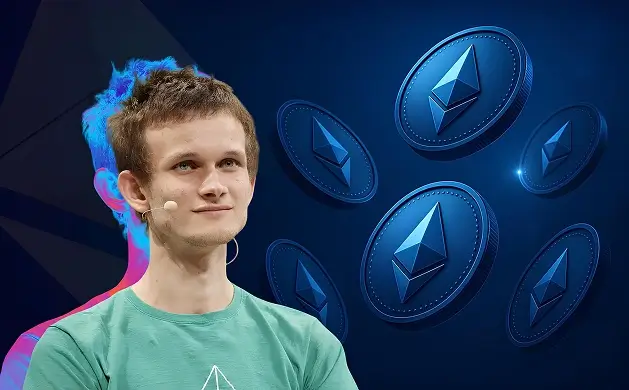
Editor's Note: On April 20, at the highly anticipated opening ceremony of the 2026 Hong Kong Web3 Carnival, Ethereum co-founder Vitalik Buterin delivered a keynote speech, deeply analyzing Ethereum's ultimate vision as a "world computer" and its hardcore roadmap for the next five years. Below is the full text of the speech:
Good morning everyone! Where is the Ethereum protocol headed? I believe that over the past few years, we have seen many significant changes in both the theoretical and ecosystem realms. At the same time, we have also witnessed numerous transformations outside of the Ethereum ecosystem, including the infinite possibilities brought by artificial intelligence, the imminent realization of quantum computing, and advances in areas such as formal verification, cryptography, and zero-knowledge proofs.
I think one of the important things we have been doing is rethinking what is truly meaningful: what is the significance of using Ethereum? Why Ethereum? What characteristics does it have? What makes a decentralized network need these characteristics?
For example, how can we incorporate these new technologies into the Ethereum protocol we have previously written and into the plans for the next five years? What exactly is the utility of Ethereum? I believe it has two main functions:
Firstly, Ethereum serves as a public bulletin board. It is a place where applications can post messages, and everyone can see the posted content and order of messages. These messages can be anything—transactions, hash values, encrypted data, and many other things. In fact, there are many opportunities for applications to use Ethereum as a place to publish data while utilizing other types of protocols to interpret this data (that is, decrypting data and performing calculations on the data).
The second function is computation. Essentially, Ethereum allows you to have shared digital objects controlled by code. These digital objects can be many things, including assets, ERC-20 tokens, NFTs, and their meanings are not limited to theoretical levels (ENS is an example), they can even refer to control over organizations (DAO is an example). You can do many things, thus both are extremely valuable. For decentralized applications, Ethereum ensures autonomy, safety, verifiability, fair participation, and brings together all users.
“Self-sovereignty” basically means that as a user you can participate, verify, and ensure your own security, completely based on your own infrastructure. You don't need to trust any third party to operate Ethereum if you don't want to, nor do you need to trust any third party outside of Ethereum.
Therefore, the ability to verify and validation ensures that the chain operates correctly and verifies that everything that happens is as it should be, while also having the ability to guarantee the rights of anyone and the rights to publish actual information that can be posted on the bulletin board. So this is core; we should view Ethereum as a technological module and think about all the applications that this technological foundation can support. The most interesting applications will be products that combine on-chain and off-chain components. This includes ENS, prediction markets, etc. Prediction markets have on-chain components (that is, assets created for each event that can be traded), and off-chain components (one of which is oracles). Sometimes the design of prediction markets or order matching occurs on-chain, besides, there are aspects involving privacy.
For instance, people have been studying cryptographic protocols for decades aimed at simplifying or implementing secure electronic voting. Many such protocols typically rely on public bulletin boards where people can post information. In this case, they are encrypted ballots, ensuring that everyone can participate. Anything related to privacy must include an on-chain component (for data publication) and an off-chain component (for data interpretation).
If it interprets the data, then it must be done off-chain through a private protocol. So, we have talked a lot about L2 (Layer 2). In my view, to judge which type of L2 is meaningful, we must first understand which type of L2 is meaningless: if you just replicate Ethereum, scale it up by 100 times, and make it more centralized, then that is pointless. I think a truly meaningful L2 is one where you start examining various applications, asking what off-chain components they need? Besides L1, what else do they require? Then you build those things.
What does this mean for Ethereum? We need to scale data, and we need to have the ability to publish more data on-chain. The recently introduced PeerDAS in last year's hard fork has encompassed this, but we still need further advancement. Scaling computing power is also important because, as part of the Ethereum chain, scaling computing power can help different applications come together and enable communication without intermediaries.
If you visit the roadmap website (roadmap.org), you can find a roadmap designed for the next five years. The core goals for the protocol in the short term are: firstly, short-term scaling, continuing to actively increase the gas limit; secondly, starting the rollout of zkEVM. zkEVM allows Ethereum to scale more, perform more complex computations while still easily verifying on-chain information. There are also preparations for the early post-quantum era. We have been thinking about quantum computing for years; we recognized it as a risk long ago and have measures in place. Soon in the short term, we will improve Ethereum's quantum security and refine the entire roadmap.
For example, ultimately, all parts of Ethereum will achieve complete quantum security while being extremely efficient. Additionally, the block building process will be improved, and support for privacy will be strengthened. Therefore, short-term scaling includes many EIP proposals that will be applied to the next stage, such as **Block Access List** enabling parallelization; gas repricing can enhance efficiency and make increasing the gas limit safer.
ePBS (Proposer/Builder Separation) makes Ethereum block verification take longer but becomes safer, and there has also been enhancements to node download state capabilities. There is also EIP-8141 (Account Abstraction Proposal), which is very simple and powerful. Essentially a transaction is a series of calls, where one call might be verification and another might be execution. This allows Ethereum to easily implement native support for smart contract wallets for transaction relaying, supporting quantum-resistant signature algorithms and privacy protocols.
Thus, this broadens the utility of Ethereum, supporting many functions. Quantum-resistant signature algorithms indeed exist; they have been around for 20 years. We know what they are and how to construct them. The problem is they are not efficient. A quantum-resistant signature requires 2000-3000 bytes, while the current signature is only 64 bytes; it also requires 200,000 gas on-chain, while now only 3000 gas is needed. Therefore, there are two types of signatures we can use: one is hash-based, and the other is lattice-based signatures. Our idea is to increase vectorization and incorporate it into the EVM, essentially using the same logic that allows computers to run artificial intelligence quickly. We are actively working to make signatures resistant to quantum attacks and more efficient.
State storage, account balances, and smart contract execution scaling are relatively easy, but storage scaling is relatively challenging, and there is a lot of work that we must put effort into. So, this is all short-term and long-term planning; this is also the direction we genuinely want Ethereum to develop. Ethereum is not meant to compete with high-frequency trading platforms; Ethereum is not meant to be the fastest chain; Ethereum aims to be a secure chain, a decentralized chain that remains online continuously, a chain you can always rely on.
Therefore, one goal is to maximize the assurance of secure consensus. This means that if the network is secure, it can withstand 49% of node failures and can actually endure nearly all nodes going offline, possessing the same characteristics as Bitcoin. If there are issues with the network, you can still maintain 33% of security certainty. This is the first part.
The second part is to formally verify everything. And we have already begun to actively apply artificial intelligence to generate code proofs, proving that the version of the software running Ethereum indeed possesses its required characteristics. We have made progress that was impossible two years ago. Artificial intelligence is evolving rapidly, so we are utilizing this to pursue utmost simplicity, keeping long-term protocols as simple as possible and preparing maximally for the future.
Thus, a network needs to undergo offline testing. If a network needs to be applied, you can rely on it even without a power outlet available. Because this is actually the same principle, and it's what Bitcoin pursues. If you want to be a long-term holder, then you need to ensure your digital assets are safe for the long term; you need to rely on something that can continuously ensure safety, whose security does not depend on the continuous existence of a particular team or on a particular team always working. Ethereum's consensus combines the advantages of both methods: the Bitcoin-style longest chain rule and the BFT (Byzantine Fault Tolerance) approach. This is finality, presenting optimal security characteristics, quantum resistance, and rapid finality.
Thus, finality is achieved within one to three block slots (Slots), and the projected time to complete finality is about 10-20 seconds, or even shorter. zkVM allows you to verify the chain without relying on large computers to personally run all operations. Everyone should verify the chain before you trust it, even your phone or IoT devices should verify the chain. And zero-knowledge virtual machines zkVM are already fast enough to proof that real-time virtual machine execution is feasible. This year’s goal is to make them secure enough, starting with a small proportion of the network using zkVM, then gradually increasing this proportion. By 2028, this enables it to scale, handling more transactions while not sacrificing decentralization.
What is the vision of these things? Ethereum is a world computer. It is both a globally shared layer for making commitments, publishing data, and recording actions; it is a platform for data publication, where one can prove data has been published, and can prove data has not been published, and is open for use by everyone; it is also a globally shared layer to ensure the execution of high-value rules. Ethereum needs to have maximum robustness and be extremely easy to verify. I believe that in the future, with artificial intelligence, it will actually become easier, simpler than we imagine, actually ensuring software security.
If you want to ensure software security, but people are unwilling to ensure it, then software vulnerabilities will multiply by ten, and the number of attacks will also increase by ten times. Therefore, Ethereum, as a blockchain, needs to ensure security first, and then decentralization. When these conditions are met, it needs to provide that security to users as much as possible. Therefore, if you intend to build decentralized applications that guarantee self-sovereignty, security, verifiability, and ensure user participation—this includes finance, decentralized social networking, identity, and some applications that are partially financial and partially non-financial (including ENS, prediction markets, etc.), encompassing a lot of content. Ethereum can make application development easy, and by default, that is the core goal.
The roadmap for the next four years is designed around this goal, thank you!
免责声明:本文章仅代表作者个人观点,不代表本平台的立场和观点。本文章仅供信息分享,不构成对任何人的任何投资建议。用户与作者之间的任何争议,与本平台无关。如网页中刊载的文章或图片涉及侵权,请提供相关的权利证明和身份证明发送邮件到support@aicoin.com,本平台相关工作人员将会进行核查。


