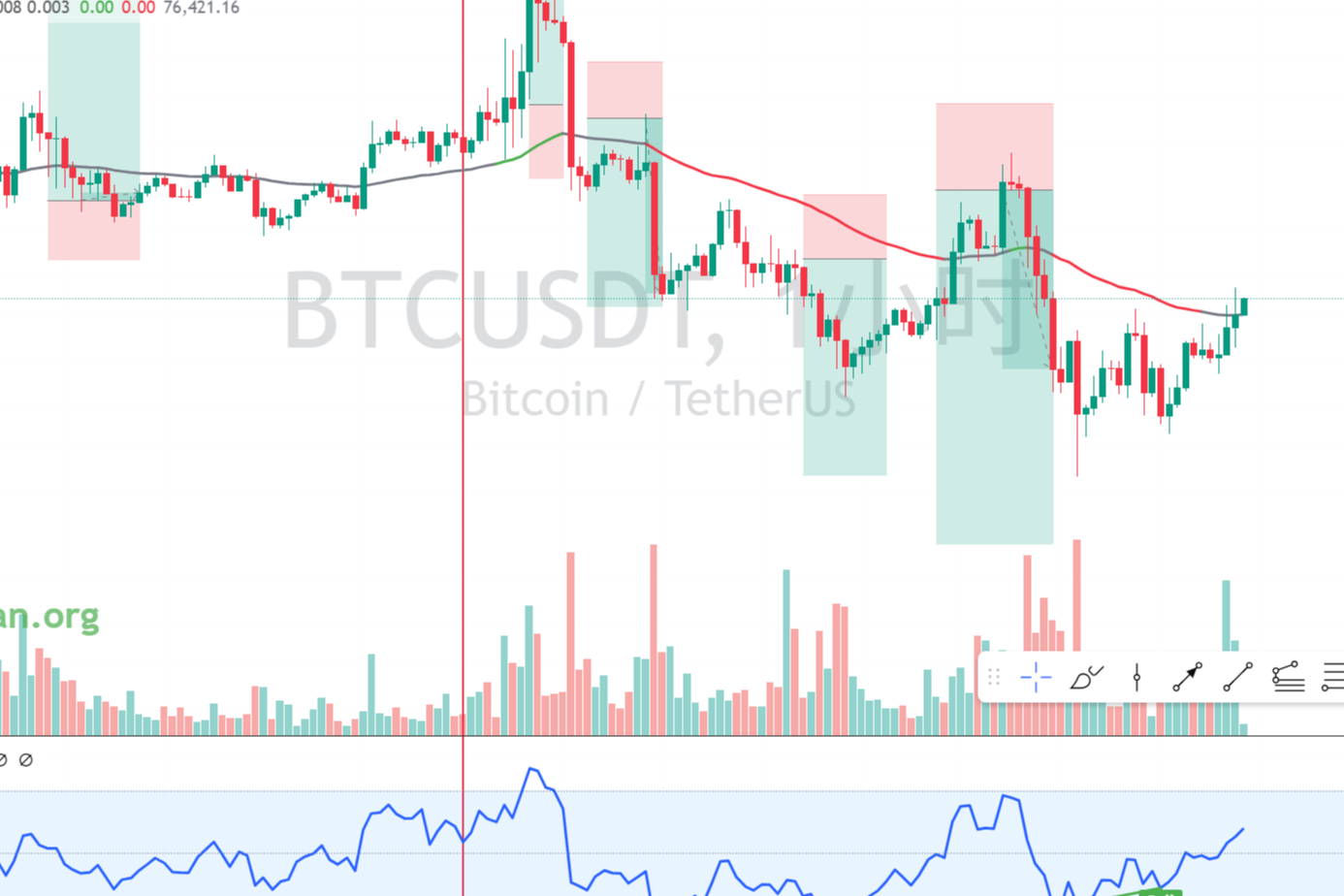
The price of Bitcoin has recently oscillated around $76,000. According to data from Glassnode, this price remains below the True Market Mean, with significant resistance concentrated in the $78,000 to $79,000 range, while key support levels are anchored between $65,000 and $70,000. Meanwhile, the trend of off-exchange funds shows a clear defensive posture, as net outflows have been recorded for the US spot Bitcoin and Ethereum ETFs for three consecutive days. Among them, on April 29, the Bitcoin spot ETF saw a net outflow of about $138 million, while the Ethereum ETF saw an outflow of approximately $87.7 million. Additionally, although the Federal Reserve maintained interest rates at their latest meeting, rare internal disagreements have intensified uncertainties about the inflation trajectory, leading the market to expect "longer-lasting high rates," which continues to suppress risk asset sentiment, placing the cryptocurrency market in a low volatility and low confidence wait-and-see interval.
Beyond macro pressures, on-chain structural risks and capital dynamics are also amplifying simultaneously. Research organization ACDC recently pointed out that in the prediction market Polymarket, low probability bets related to military and government decision contracts exhibit an unusually high success rate, suggesting widespread information asymmetry or insider trading risks. Meanwhile, the Ethereum ecosystem is undergoing severe capital reshuffling: major financial institutions like BitMine and Trend Research have incurred paper losses of $6.95 billion and $534 million, respectively, as the price of ETH falls to around $2,240. On-chain data shows significant differentiation in market participant behavior, with some large traders taking precise profits while whales suffering paper losses choose to withdraw coins from exchanges to average down. Overall, on-chain and off-chain data currently reflect a general weakening of risk appetite, but in a context of highly concentrated information and capital, the intensifying nature of localized dynamics is continually increasing alongside the accumulation of structural risks.
Three days of net outflows from ETFs, Bitcoin pressed below $79,000
In the macro context of the Federal Reserve maintaining interest rates and the emergence of rare internal disagreements, the price of Bitcoin has recently continued to oscillate around $76,000. According to Glassnode data, the current Bitcoin price is still below the True Market Mean, with the upper resistance zone tightly distributed around $78,000 to $79,000, forming an insurmountable "ceiling"; while the main support level below is anchored between $65,000 and $70,000. Although selling pressure in the market has eased recently, spot buying momentum is clearly insufficient, resulting in price fluctuations repeatedly below the key resistance level without forming an effective breakthrough.
The cooling of institutional demand provides data support for this weak trend. According to AICoin data, the US spot Bitcoin and Ethereum ETFs have recorded net outflows for three consecutive days. Among them, on April 29, the Bitcoin ETF saw a net outflow of about $138 million, and the Ethereum ETF experienced a net outflow of approximately $87.7 million. While CME Bitcoin futures positions and ETF managed asset sizes have stabilized overall, strong signs of capital influx or additional positions have yet to be observed. This periodic exit of incremental capital has led to a lack of core driving force for market breakthroughs against high resistance zones in the short term.
The structure of the derivatives market further reveals potential risks under the current low volatility pattern. Currently, short positions in Bitcoin perpetual contracts have surged to historic highs, reflecting generally weak confidence among traders. This weak long-short, narrow consolidation structure has suppressed price performance but has also accumulated momentum for passive short squeezes. If future macro policy expectations improve or market sentiment eases, high short positions may trigger a chain liquidation during price increases. However, under the current expectation of maintaining higher rates for a "longer period," the market overall remains in a wait-and-consume state.
The shadow of high rates and policy division forces risk assets to wait
While the Federal Reserve's latest interest rate meeting maintained rates, the rare disagreements emerging within the decision-making body have become a core variable disturbing market logic. According to AiCoin data, this "division" has been interpreted by the market as a significant rise in uncertainties regarding the inflation trajectory. Kraken's Chief Economist Thomas Perfumo pointed out that, compared to a single interest rate decision, the market is currently more concerned about the uncertainty of the decision-makers on policy continuity. Institutions such as Bitget Wallet and 21Shares believe that the expectation of "maintaining higher rates for a longer time" has continuously suppressed risk assets, including Bitcoin, leading the cryptocurrency market into a stagnant observation phase.
In this macro-pressured environment, the capital flows of spot ETFs and the structure of derivatives further confirm the absence of confidence. As of April 29, the US spot Bitcoin ETF has recorded net outflows for three consecutive days, with a single-day outflow of about $138 million, while the Ethereum ETF also saw a net outflow of approximately $87.7 million during the same period. Although CME positions and ETF asset management sizes have stabilized overall, the short positions in the derivatives market remain at historic highs, reflecting deep concerns about interest rates and growth prospects.
The shadow of macro policies has not only capped price ceilings but also amplified market sensitivity to localized risks. Due to a lack of incremental capital to break the deadlock, signals such as profit concentration in prediction markets, significant paper losses in ETH treasury, and capital adjustments by whale addresses are more likely to be exaggerated by market sentiment in a low volatility environment. This wait-and-see sentiment stemming from macro policy divisions means that any potential anomalies on-chain could easily trigger localized risk fluctuations.
Profit concentration among a few wallets, doubts surrounding Polymarket's integrity
In the context of macro sentiment suppression and slowing capital flows, the transparency and fairness of the prediction market Polymarket are facing severe scrutiny. ACDC conducted systematic research on approximately 435,000 settled markets and a total of about $54.4 billion in transaction data from January 2021 to mid-March 2026. The results show that the platform's profits and price discovery exhibit highly centralized characteristics: research from the London Business School and Yale University noted that only about 3% of traders contribute to the vast majority of the platform's price discovery; while data from blockchain analysis company Solidus Labs is even more aggressive, indicating that less than 1% of wallets capture about half of the platform's profits. This structure, where a very small number of participants hold absolute dominance, raises questions about the credibility of prediction markets as a carrier of "collective wisdom."
Particularly noteworthy is the significant signal anomalies that have emerged in high-sensitivity areas involving military, defense, and government decisions. ACDC found that in contracts of these categories, the actual success rate of low probability bets in some cases exceeds 50%, far exceeding the average level of about 14% for similar bets in political markets, suggesting severe information asymmetry or insider trading. Taking the example of the June 2025 US airstrike on Iran, despite the Pentagon's intentional concealment of actions through decoy bombers and stealth fighters, on-chain data revealed concentrated buying worth $164,000 in 19 transactions just hours before the attack, effectively betting on "YES" contracts. Ultimately, eight wallets collectively profited about $1.8 million, with one address earning nearly $500,000 in a single transaction.
This typical case of "ante bet" further amplifies the compliance and reputational risks facing the prediction market space. Consequently, ACDC recommends that Polymarket must strengthen its identity verification mechanisms, set conditional payouts for suspected anomalous bets, and limit markets decided by a few individuals and overly refined contract designs. A deeper controversy lies in whether society should allow the public to bet on sensitive events concerning human life, such as military actions; this discussion is becoming increasingly urgent as on-chain risks intensify.
BitMine's massive losses force it to reduce positions; smart money accumulates ETH
The retreat in Ethereum's price has directly hit several enterprise-level ETH treasuries, highlighting the extreme risks of excessive concentration on a single asset. According to on-chain data monitored by AICoin, as of February 2, 2026, the ETH price had fallen to around $2,240, while one of the companies with the largest ETH holdings, BitMine, has an average holding price of $3,883, leading to paper losses rising to about $6.95 billion. At the same time, SharpLink Gaming is also mired in a similar situation, facing about $1.09 billion in ETH-related paper losses. This treasury crisis caused by severe price losses not only led to significant reductions in institutional market value but also triggered a chain of risk control and debt pressures, forcing some heavily positioned institutions to reduce holdings passively at the bottom.
The capital adjustments made by Trend Research are a concentrated reflection of this pressure. On February 2, the address marked as Trend Research (0x4a2...b82) sold 53,589 ETH for debt repayment, amounting to approximately $12.3 million at the time. Although this institution still holds about 618,000 ETH, its overall paper losses have exceeded $534 million. In this regard, its founder Jack Yi publicly reflected that previously believing ETH was undervalued and heavily accumulating at around $3,000 was a mistake. This transition from "institutional faith" to "forced liquidation for debt repayment" reflects the fragile leverage structure and position management errors of institutions during this decline.
However, as institutions face pressure and are forced to "cut losses," the market has shown clear signals of capital exchange. According to data from Nansen, Smart Money addresses have net bought approximately $38.3 million in ETH in the past week, despite the ongoing negative trend. This divergent behavior in on-chain activity reveals the current structural characteristics of the market: as large institutions are forced to liquidate due to debt pressures and treasury losses, some entities with professional pricing capabilities are utilizing liquidity stress zones for mid- to long-term defensive positioning. This interplay between institutional passive liquidation and professional capital actively absorbing positions has become the core narrative following the release of ETH on-chain risks.
Realizing profits while averting losses: Disparities grow among smart money strategies
Under the backdrop of institutional pressure and the forced liquidation of large treasuries, internal strategic discrepancies among Smart Money are further intensifying. According to AiCoin data, a notable ETH whale recognized for its high win-rate swing trading built a precise position of 4,827 ETH at an average price of about $2,047.53 from April 4 to April 5. Just two days later, on April 7, this address took profits by recharging assets worth approximately $10.14 million into Binance at about $2,100.94 and subsequently withdrew the equivalent value in USDT. Through this swift in-and-out strategy, the whale realized swing profits of about $256,000 within a few days, continuing its past two months of high-frequency profits totaling $5.05 million through multiple low buy high sell trades, demonstrating a strong tendency for short-term smart money to execute arbitrage and lock in gains.
In contrast to the short-term price difference-seeking whale, another established whale has shown a completely different "left-side layout" logic amidst significant paper losses. On-chain monitoring shows that a Smart Money whale address had bought 10,870 ETH at an average price of $4,388.93 about four months ago. Although it currently faces substantial paper losses of about $15.825 million, this address has recently withdrawn another 5,000 ETH from Binance for additional accumulation. After this increase, its total holdings reached 15,870 ETH, with an average cost diluted to about $3,930.27.
This "daring to accumulate in the pullback" behavior model largely stems from its past successful trading track records: this address had accumulated over 32,000 ETH at low prices in early 2023 and sold them in batches during the rising market from 2024 to 2025, achieving cumulative profits exceeding $33.318 million. This historical profit brings psychological anchoring and capital redundancy, allowing it to maintain a strong mid- to long-term holding belief amidst the current complex scenario of Ethereum price corrections and institutional entanglements. The starkly divergent behavioral paths of these two addresses clearly reflect the current market capital differentiation: short-term funds tend to exploit volatility for rapid entries and exits to avoid risks, while long-term whales attempt to dilute costs to seize the next round of cyclical dividends.
From ETFs to prediction markets: On-chain risk coordinates in the era of high rates
The price of Bitcoin is currently anchored around $76,000, constrained by the True Market Mean and the key resistance range of $78,000 to $79,000. According to AiCoin data, the US spot Bitcoin ETF has recorded net outflows for three consecutive days, with a single-day net outflow of $138 million on April 29, reflecting a phase of cooling institutional demand. Institutions like Bitget Wallet and 21Shares have pointed out that the rare disagreements within the Federal Reserve regarding the inflation path have intensified expectations for "maintaining higher rates for a longer time," and this macro pressure has pushed the market into a phase of low volatility and low confidence. Meanwhile, the structural risks uncovered by the prediction market Polymarket further undermine on-chain confidence: ACDC's research indicates that less than 1% of wallets capture about half of the profits, along with notable anomalies in low-probability bets in sensitive contracts, such as military dealings. This high concentration of profits and potential information asymmetries are prompting regulatory scrutiny of the compliance and product design boundaries of DeFi prediction mechanisms.
On the Ethereum side, on-chain capital is experiencing dramatic oscillations between "weak hands and strong hands." Treasuries and institutional addresses like BitMine, SharpLink, and Trend Research have endured paper losses ranging from hundreds of millions to billions during this round of market movements; Trend Research was even forced to reduce their holdings by over 50,000 ETH to repay debts, with its founder admitting that over-concentrating above $3,000 was a miscalculation in timing. However, discrepancies remain; Nansen data shows that Smart Money addresses have been net buyers of approximately $38.3 million in ETH, with veteran whales who have historically made over $30 million in profits choosing to continue accumulating 5,000 ETH despite facing paper losses of $15.825 million. The subsequent market trajectory will depend on whether ETF capital flows can reverse, the results from Bitcoin's test of $79,000 resistance, and whether the Federal Reserve's statements can alleviate uncertainties regarding the interest rate path. On the on-chain level, continuous monitoring of the positions of leading ETH treasuries and adjustments to prediction market rules will be the core basis for judging whether we are in a phase of consolidation or nearing a trend reversal endpoint.
Join our community, let’s discuss and become stronger together!
Official Telegram community: https://t.me/aicoincn
AiCoin English Twitter: https://x.com/AiCoinzh
AiCoin On-chain: https://aicoin.com/hyperliquid
AiCoin Exclusive Hyperliquid Benefits: https://app.hyperliquid.xyz/join/AICOIN88
AiCoin Exclusive Aster Benefits: https://www.asterdex.com/zh-CN/referral/9C50e2
免责声明:本文章仅代表作者个人观点,不代表本平台的立场和观点。本文章仅供信息分享,不构成对任何人的任何投资建议。用户与作者之间的任何争议,与本平台无关。如网页中刊载的文章或图片涉及侵权,请提供相关的权利证明和身份证明发送邮件到support@aicoin.com,本平台相关工作人员将会进行核查。