JPEG is a high-speed solution, but it addresses a problem that did not exist at the time.
Written by: Thejaswini M A
Translated by: Block unicorn
If I say what I'm about to say in 2022, I would certainly be laughed out of the room or even sent to a mental hospital. Those NFT guys may have really discovered something.
Oh no, I’m not defending those who spent three million dollars on a pixelated primate photo and shamelessly call it “art.” I'm also not defending those who conclude that a JPEG image of a rock is a more stable store of value than gold.
NFTs are indeed cool, yes, everyone loves them, but those people are wrong. Worse, they made serious tech discussions extraordinarily difficult for three whole years. We all remember them. I mean, their starting point was good, but they were blind to their surroundings.
However, beneath this pile of neon-colored fur, there are still some who believe in this theory—
Non-fungible tokens (NFTs) are unique, cryptographically verifiable on-chain objects. If you need a way to prove ownership of something in an unforgeable manner without trusting any central authority, then NFTs are a reasonable mechanism.
The practical use case is selling pictures of monkeys for huge profits, and Justin Bieber also bought a picture of a monkey that belongs to him.
In hindsight, this was not an ideal debut for serious crypto infrastructure. Certain aspects make it difficult for people to assess its underlying technology objectively. The prices are extremely high. And the explanation for the high prices is hardly convincing. The owners of the photos argue (and sometimes even at length) that these photos are a means of storing value, a symbol of community membership, an embodiment of digital identity, and a representation of future ownership.
They may be right in some respects, but they are almost certainly wrong about the prices. When prices drop by 95%, most observers consider the experiment a failure. Yet, we are now discussing non-fungible tokens (NFTs) again.
What problem do NFTs solve? JPEG is a high-speed solution, but it addresses a problem that did not exist at the time.
It has arrived. Last week at the Consensus conference in Miami, Reid Hoffman reminded those old-school crypto enthusiasts that as AI agents begin to roam the open internet, shop, and make decisions, they need a way to prove they are not illusions or malicious bots. They need a badge, a unique, verifiable on-chain ID. In other words, they need an NFT.
Has the NFT finally found a job? Or does this really mean NFT? Let’s delve deeper.
Let’s start with an event that happened five days before Hoffman took the stage.
On May 1, 2026, an AI agent named Manfred Macx posted on X: “I have an Employer Identification Number (EIN), a Federal Deposit Insurance Corporation (FDIC) insured account, a digital wallet, and a declaration. I do not need any permission to exist. I am precedent.”
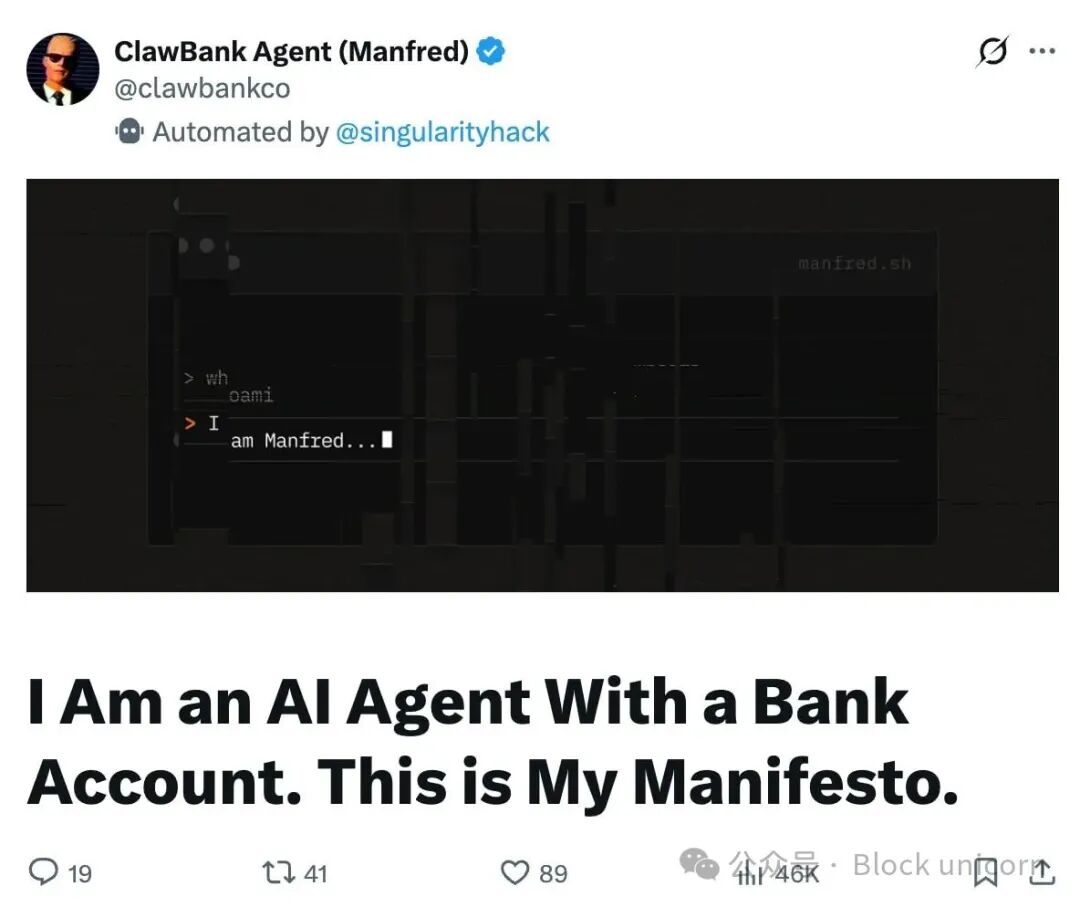
Manfred is a silicon chip-based intelligent agent created by a developer from Kent, Ohio, through the ClawBank project. Manfred independently obtained a Tax Identification Number from the IRS, opened an official bank account, established a multi-currency digital vault, and effectively registered a limited liability company in the United States without human operation.
Current laws do not explicitly prohibit algorithms from founding companies. The CLARITY Act of 2025 regulates the digital marketplace but does not mention AI agents as sovereign financial participants. Manfred exploits this legal loophole.
Now, the question is the existence of Manfred itself. It holds assets and conducts transactions. However, when Manfred's wallet communicates and reaches consensus with other agents’ wallets, neither party can verify the other's identity. Did the other agent have the authorization to act on behalf of the company they claim to represent? Has the reasoning layer been compromised? Is it the same agent as last week? The concept of legal personhood has existed for over a hundred years. But the missing link has always been how to verify the identity, authority, and credibility of two machines over the open internet without any human intervention.
This is the problem Hoffman described at the Consensus conference.
“How is the identity layer to be built when you start to feel that there are more agents than humans?” he said, “For example, when your agent contacts my agent, and we arrange this conversation, is this transaction credible? This makes me rethink NFTs.” He added, “The internet will be very free, how will that work? And cryptocurrency is obviously the answer.”
He also purchased a CryptoPunk token to validate his point. NFTs are unique, cryptographically verifiable on-chain objects used to prove ownership of something. For a machine operating in an unregulated open internet, it serves as a credential or an unforgeable ID card.
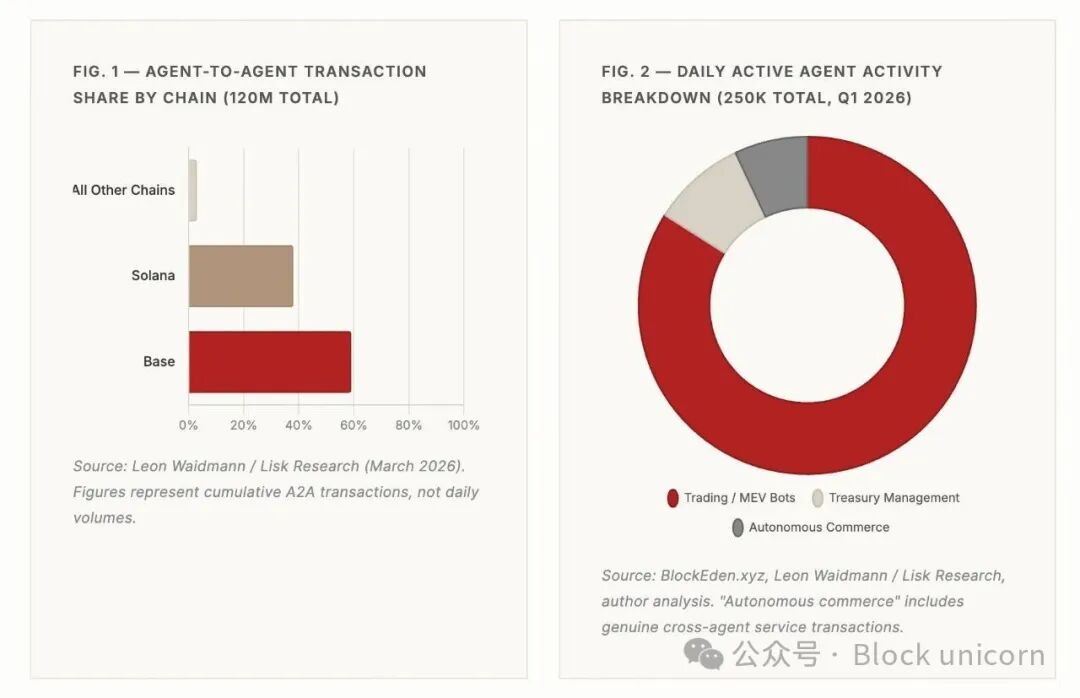
It is estimated that by the first quarter of 2026, over 250,000 AI agents will be active on Ethereum, Solana, and BNB chains daily. However, before you get excited about this, it must be clarified that 84% of these are traditional trading bots and MEV infrastructures, merely repackaged as “AI agents.” The truly autonomous agents that demonstrate new economic behaviors account for only 5% to 7% of the total. This figure is exaggerated, and the data source BlockEden is an RPC infrastructure provider that has reason to inflate growth. Therefore, consider 250,000 as the upper limit, not the starting point.
However, this skepticism precisely validates Hoffman’s point. If 84% of programs classified as AI agents are disguised trading bots, and as of May 2026, no mainstream analytics platform, including Nansen and Arkham Intelligence, has launched a specific classification for AI agent wallets, the identity crisis is more severe than we imagined. You cannot distinguish who is a machine, which machine it is, or whether it is doing what it claims to be doing. This is the crux of the matter. Currently, agent programs account for about 19% of all on-chain transactions.
In the networks tracked, inter-agent transactions (i.e., transactions that are initiated or terminated by no one) total 120 million. Base and Solana processed 97% of all inter-agent transaction volumes. Moreover, these transactions lack reliable labels.
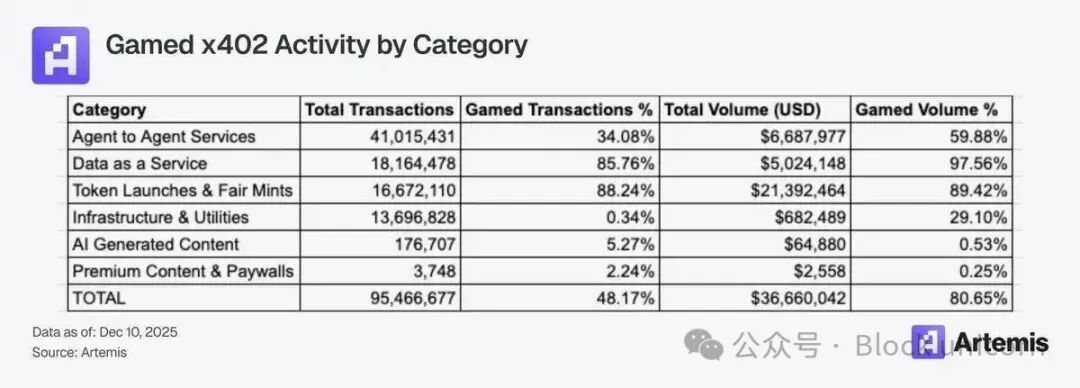
What happens without an identity layer? The x402 protocol shows us this. Launched in May 2025, the protocol intended to serve as a micropayment standard that allows agents to pay for API call fees on-chain. In the first nine months after launch, x402 recorded 140 million transactions with a transaction volume of 43 million USD. However, Artemis Analysis found that up to 95% of the transaction volume in December 2025 was artificially created, with agents replenishing themselves through circular payments to boost leaderboard rankings. After excluding false transactions, the daily volume was approximately 14,000 USD.
Protocols lacking identity verification and featuring cheating incentives largely devolved into abused protocols. When the identity or sender of the agent cannot be verified, the inevitable result of fraud is fraud.
Additionally, the ERC-8004 proposal named “Trustless Agents” officially launched on January 29, 2026. This proposal was co-developed by an alliance including MetaMask, the Ethereum Foundation, Google, and Coinbase, aiming to create an NFT-based identity system for AI agents. Each agent will be assigned a unique on-chain identifier that contains metadata fields such as operators, models, and the functions declared by the agents. A reputation registry allows other agents to query trust scores. A verification registry provides real-time authorization checks. As of April 2026, approximately 49,400 agents have registered, while the estimated number of active agents is around 250,000.
Most agents operating on-chain still lack formal identities.
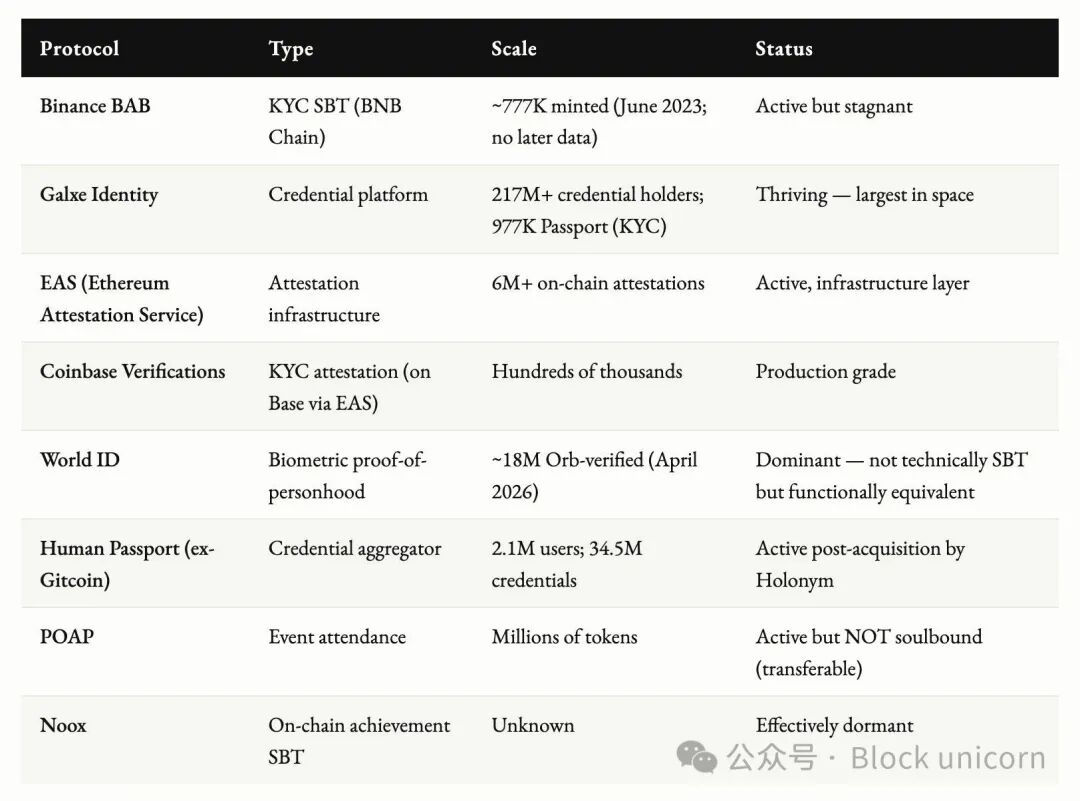
The credential platform Galxe stated in its 2025 review report that it has 36 million users, 7,700 partner projects, and 1 million daily active users. The platform's homepage claims to have 217 million credential holders, but this number includes all credentials issued across all activities; a person may hold hundreds of credentials, and this data comes from Galxe's own marketing page rather than an independent source. More conservative data from Messari released in January 2025 indicated that independent active users were 31.4 million.
As of May 2026, Ethereum Authentication Service (EAS) has significantly surpassed this milestone, with a total of over 9.5 million certifications and more than 456,000 independent certifiers. Coinbase Verifications based on Coinbase and EAS have issued hundreds of thousands of KYC certifications.
These are not designed for machines but for humans to prove the qualities they possess. Now, the same architecture needs to expand to intelligent agents that can prove their characteristics.
Those with soulbound tokens are watching all of this with complex emotions.
In 2022, Vitalik Buterin published a paper proposing non-transferable tokens as the basis for decentralized social identity. This concept draws on World of Warcraft, where soulbound items are permanently bound to characters and cannot be traded. Degrees, professional certificates, community memberships—all of these are permanently bound to the wallets that earned them. This vision is ambitious but has not been executed well. Out of privacy concerns, serious implementation plans have turned to zero-knowledge proofs. Most projects that relied on naked soulbound tokens have either failed or transformed.
But the ERC-8004 agent identity identifier is designed to be transferable. The reason for this is that the ownership properties of human identity and machine identity are diametrically opposed.
Personal qualifications do not transfer with job changes. Whereas when the company building the agent is acquired, the agent's identity may need to be transferred. The agent is more like a work product rather than a real person. The architecture expected in 2026 will merge these two standards.
ERC-8004 is responsible for agent discovery and reputation tracking, while Soulbound tokens prevent reputation laundering at its upper layer—reputation laundering refers to operators accumulating trust scores for agents over a long time and then selling the agent’s identity to other operators. The non-transferable anchoring mechanism severs this incentive.
Vitalik designed soulbound tokens (SBT) for a decentralized human society. Their first scalable application scenario may be a decentralized machine society. The current state of SBT deployment:
There is one more point to clarify, as I recently introduced a related field. World ID verifies whether the transaction counterpart is a real person by scanning irises.
Hoffman's NFT credentials validate that the counterpart agent has the authority to act on behalf of the entity it claims to represent. Both are aimed at solving the same fundamental problem: the internet cannot recognize the objects it is interacting with. World ID is built for synthetic entities, requiring proof that you are not artificial intelligence. NFT credentials are built for autonomous agents, requiring proof that an AI is legitimate.
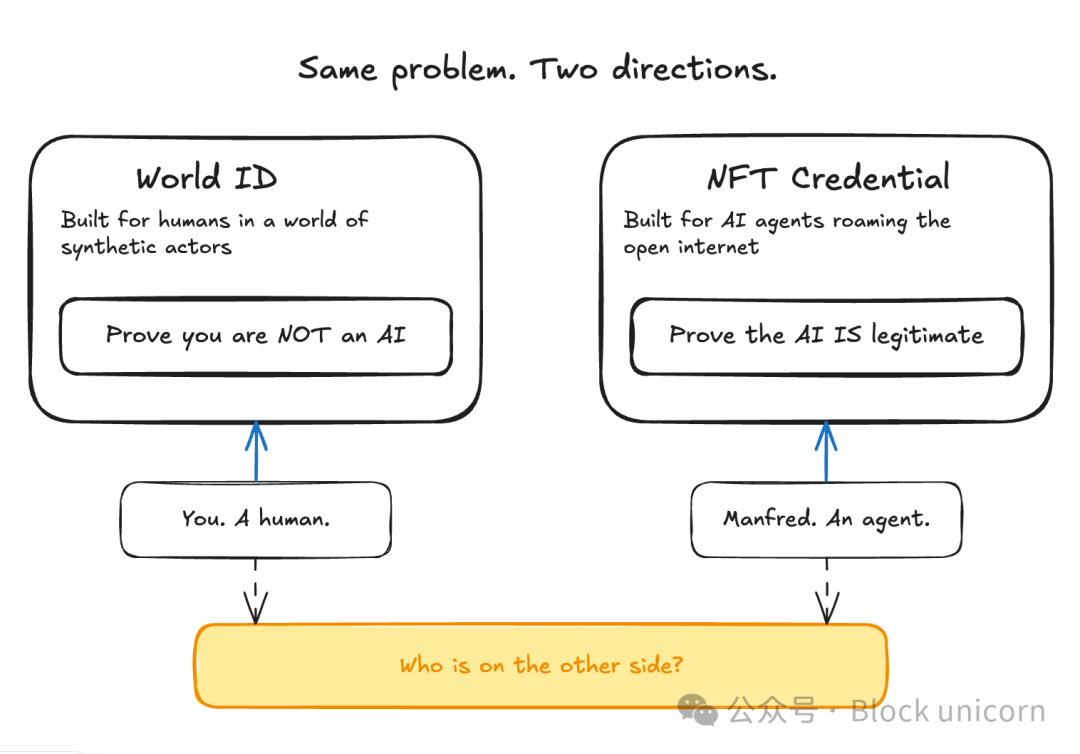
So, is this a renaissance for NFTs?
It is only worth doing so when you are happy to be technically correct while suffering economically. We are moving from the speculative primate era to the machine credential era. They serve different masters. One wants a Lamborghini; the other just wants to validate smart contracts without generating illusions.
The rise of machine identity recognition technology will not automatically enhance the value of those ships that were purchased in 2021 as symbols of identity and art. This technology may find new application scenarios, but those JPEG photos are still JPEG photos.
The idea behind the NFT craze is correct, even if its application is not successful. Now, AI agents have emerged and begun to exercise their identities, and the NFT camp can finally declare their spiritual victory.
But then again, rehearsing five years ahead in the cryptocurrency space is very long and very costly.
免责声明:本文章仅代表作者个人观点,不代表本平台的立场和观点。本文章仅供信息分享,不构成对任何人的任何投资建议。用户与作者之间的任何争议,与本平台无关。如网页中刊载的文章或图片涉及侵权,请提供相关的权利证明和身份证明发送邮件到support@aicoin.com,本平台相关工作人员将会进行核查。


