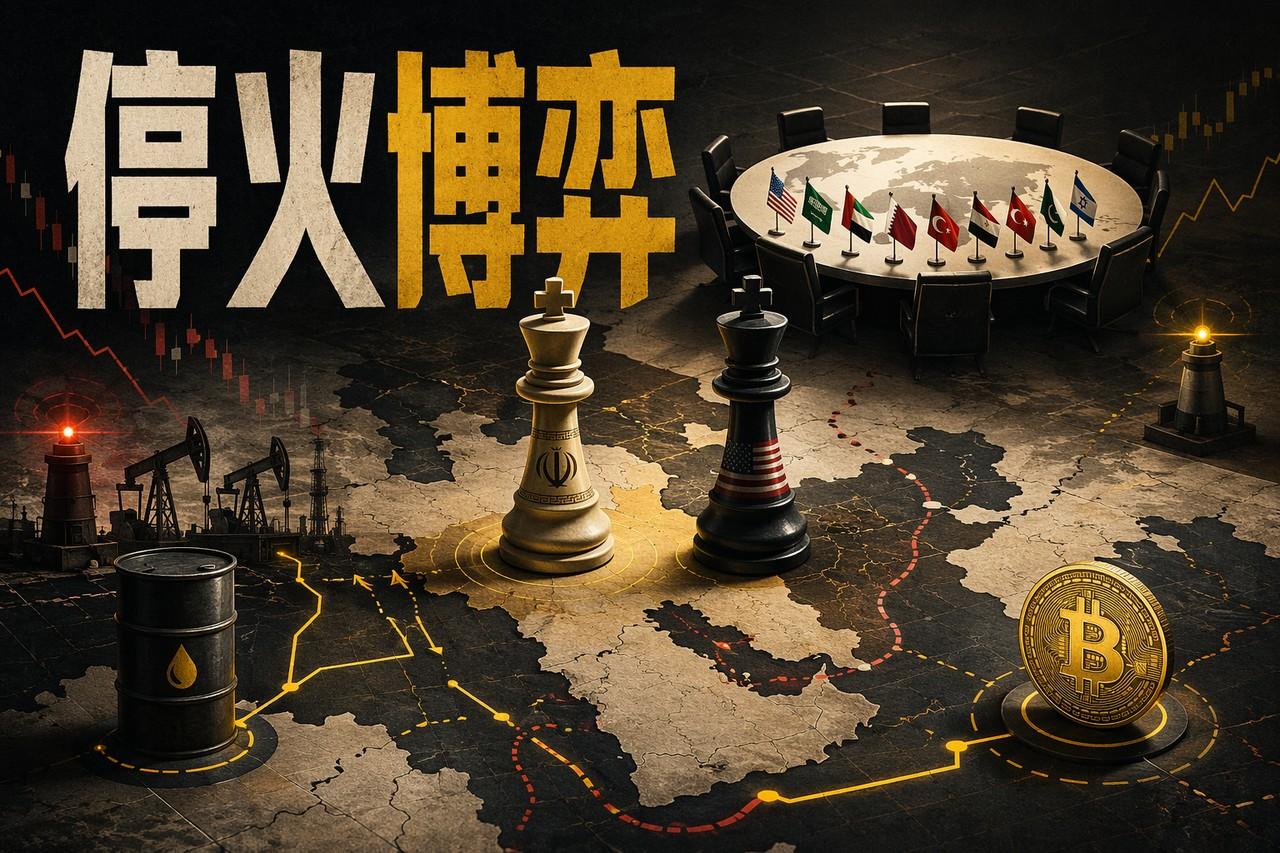
As of May 23, 2026, under the mediation of Pakistan, Iran and the United States are engaging in indirect negotiations centered around a memorandum of understanding aimed at ending warfare on multiple fronts. Iranian Foreign Ministry spokesperson Ismail Baghaei has clearly stated that the current priority is to discuss achieving a ceasefire across various fronts, including the direction of Lebanon, while the nuclear issue is intentionally postponed for several days or even weeks. The real hard bargaining chip brought to the table is the Strait of Hormuz, which connects the Persian Gulf with the Gulf of Oman and carries global crucial oil and gas shipping: Tehran has proposed to Washington through Pakistan two proposals: one is to "reopen the Strait of Hormuz" in exchange for U.S. compensation, and the other is to negotiate on sanctions against Iran and the issue of frozen funds prior to signing any agreement. Baghaei described this dialogue channel conveyed through a third party as "time-consuming and laborious," attributing the difficulties to decades of hostile U.S. policy. Moreover, outside the negotiation table, the blockchain-based prediction market Polymarket has begun pricing this game ahead of time—some Chinese media outlets citing its data show that the implied probability of the "Strait of Hormuz being navigable by the end of this month" is only about 4%, while the probability of it being navigable by the end of next month is about 33%. The tug of war over geopolitical risk premiums between energy and crypto assets is already reflecting market pessimism before any concrete agreements materialize.
Hormuz as a Bargaining Chip: Iran's Trading Conditions
As market expectations become increasingly pessimistic, Iran has pushed the Strait of Hormuz itself onto the negotiation table. Among the two proposals relayed through Pakistani mediators, the first is highly symbolic: exchanging "opening/reopening the Strait of Hormuz" for U.S. compensation. Some Saudi and Chinese media reports have clearly revealed Iran's pricing logic to the outside world—it is no longer just using the threat of blockade to create risk premiums, but directly linking the reopening of this global energy choke point to "compensation," attempting to package the losses caused by long-term sanctions and conflict as negotiable bargaining chips. Notably, there is currently no information available regarding the amount of compensation or specific calculation methods, leaving the outside world with only this conceptual card thrown out by Iran.
More critically, is the second precondition placed before the signing of any text: before negotiating any MOU, the issues of sanctions against Iran and frozen funds must be discussed. This adjustment in sequence itself is a statement of position. Iranian Foreign Ministry spokesperson Ismail Baghaei emphasized that the focus of this MOU is to end warfare on multiple fronts, including Lebanon, but Tehran is clearly unwilling to pay for a ceasefire without seeing economic maneuvering space. Therefore, the current stage of negotiations is effectively advancing on two tracks simultaneously: one track seeks to establish a minimally acceptable framework for multi-front ceasefires, while the other aims to pry open a gap on sanctions and frozen assets. The truly thorny nuclear issue is intentionally delayed to the future, "in several days or weeks", to become the central topic of a more difficult round of negotiation.
Pakistan's Shuttle Mediation: A Scarce Channel Amid Hostilities
To advance simultaneously on the ceasefire framework and economic bargaining chips, both the U.S. and Iran have had to rely on a mediator they can barely accept—Pakistan. According to publicly available information, the current mediator facilitating communication and suggestions between Iran and the U.S. is the Pakistani channel. Tehran has not deliberately downplayed this point; the Iranian Foreign Ministry spokesperson has publicly thanked Pakistan, viewing its shuttle mediation as a prerequisite for maintaining this round of indirect dialogue. Against the backdrop of decades of hostility and sanctions, any direct dialogue comes with a huge political cost, allowing a third party to test the other side's bottom line without exposing "who spoke first."
However, this channel itself is far from smooth. Ismail Baghaei described the process of dialogue with the U.S. mediated by Pakistan as "time-consuming and laborious," directly attributing the difficulties to decades of hostile U.S. policy—this serves as a description of the current pace and as a preemptive waiver of potential failure: if negotiations fail, the responsibility lies with that historical context, rather than with Tehran's adjustment of stance. Moreover, it is dramatic that the outside world does not yet grasp the specific identity and visiting details of the Pakistani mediator, and the timeline for the next round of negotiations is completely blank. The only confirmed fact is that neither side has found a better option than this arduous channel, which makes the entire game surrounding the MOU slowly advance amid opacity.
A Strait Influencing Oil Prices, Cargo Ships, and Risk Appetite
On the map, the Strait of Hormuz is merely a narrow passage between the Persian Gulf and the Gulf of Oman, but for global energy and shipping, it serves more like a master valve—almost all oil and gas tankers heading out to sea from the Persian Gulf must pass through here. Because of this, any signs regarding "restricted passage," "blockade," or "restoration" are sufficient to alter tanker routes, refinery procurement rhythms, and traders' expectations for oil prices in the coming months. Historical experience repeatedly proves that risk expectations can quickly transform into oil price volatility, shipping insurance, and freight rate premiums, subsequently driving up global risk-averse sentiment, suppressing stocks, currencies, and even some risk appetite for cryptocurrencies.
In this context, bets surrounding the navigability prospects of the Strait of Hormuz have become a reflection of market sentiment themselves. Some Chinese media outlets citing Polymarket data state that the probability of "the Strait of Hormuz being navigable by the end of this month" is approximately 4%, with the probability of it being navigable by the end of next month at about 33%. Predictably, market participants are evidently unwilling to give high odds for a quick easing of the situation in the short term. More challenging is the lack of clear information publicly stating whether the strait is currently under full blockade or partial navigation restrictions, making it impossible to ascertain how real transportation volumes are changing. Only subjective pricing surrounding future scenarios remains: the oil market is preemptively marking up risk premiums for potential supply disturbances, and global portfolios are being forced to reassess the weights of risk and safe-haven assets under this opacity.
The Shadow of Sanctions and Frozen Funds: What Iran Truly Wants in Return
While global markets repeatedly price in oil prices and the probability of the Strait of Hormuz, Tehran is truly focusing on a few numbers on the balance sheet at the negotiation table. Through Pakistani intermediaries, Iran demands that before signing any memorandum of understanding, the issues of sanctions against Iran and frozen overseas funds must be brought to the forefront; this is one of its rigid prerequisites. The cumulative impact of long
免责声明:本文章仅代表作者个人观点,不代表本平台的立场和观点。本文章仅供信息分享,不构成对任何人的任何投资建议。用户与作者之间的任何争议,与本平台无关。如网页中刊载的文章或图片涉及侵权,请提供相关的权利证明和身份证明发送邮件到support@aicoin.com,本平台相关工作人员将会进行核查。