Original | Odaily Planet Daily (@OdailyChina)
Author | Wenser (@wenser2010)
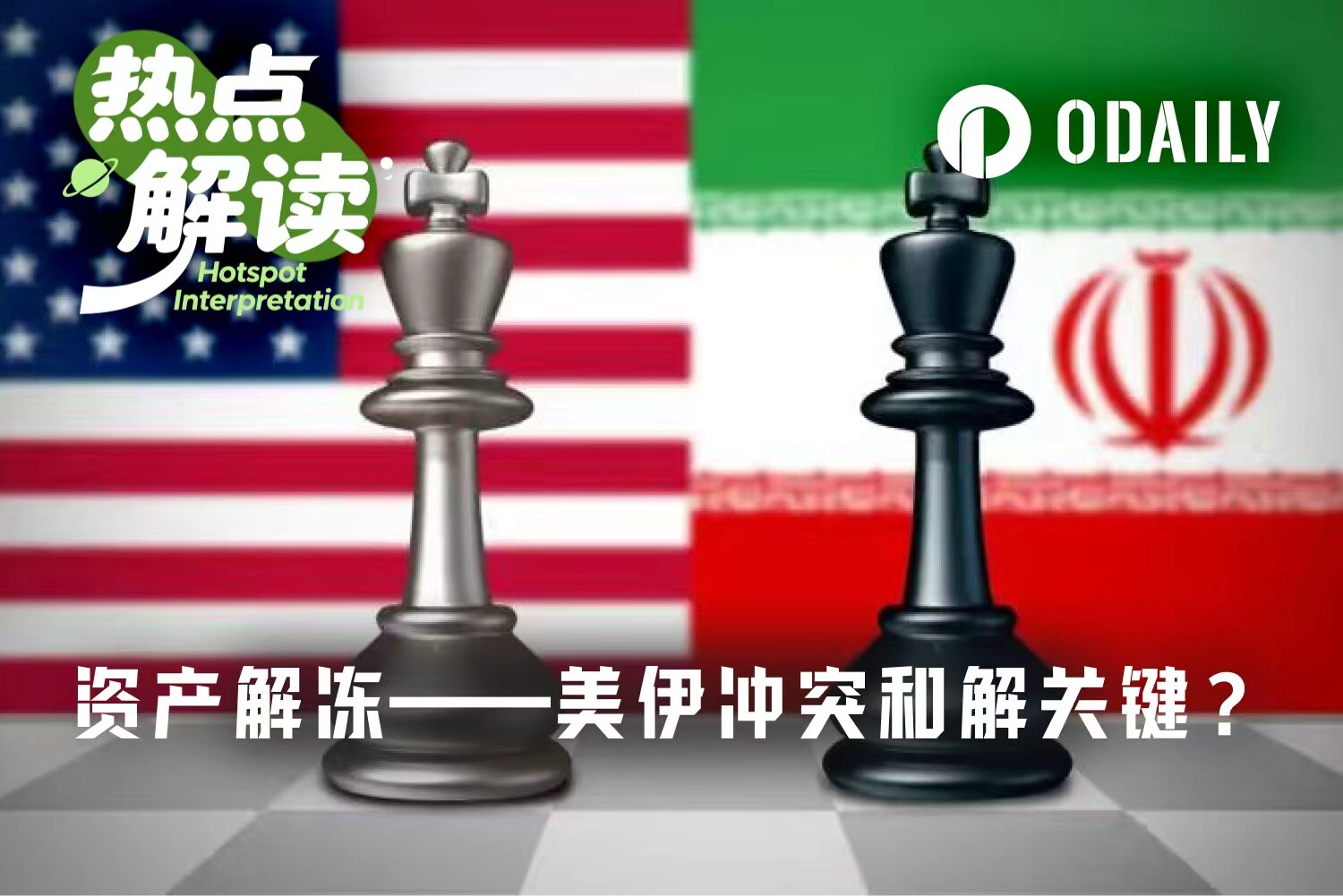
On June 10, on the 103rd day of the U.S.-Israeli-Iranian war, the negotiation between the U.S. and Iran remains challenging, with no conclusion in sight.
Today, following Israel's initiation of strikes against Iran, according to U.S. officials, the third round of U.S. strikes against Iran has also begun and ended swiftly. Behind this century-old conflict, the key to reconciliation lies not only in the deeper issues of Iranian nuclear weapons and uranium enrichment materials but also in the current crucial sticking point, which is the frozen Iranian assets valued at $24 billion, including about $1 billion in cryptocurrency.
Where do these assets come from? What does the cryptocurrency encompass? Can both parties come to an agreement on this later? The above questions are the main topics of this article.
Trump's Absurd "Dual Approach": Coexistence of Toughness and Compromise
The key figure in whether the U.S.-Iran conflict can be resolved through negotiations is undoubtedly U.S. President Trump. However, as a businessman, Trump exhibits a particularly smooth character, focusing more on practical interests compared to politician-type presidents, thus presenting a very fragmented image externally: on one hand, his public statements are sometimes tough and sometimes soft; on the other hand, he is accustomed to creating confusion by using excuses of negotiations, reconciliation, and “reaching an agreement soon” to mislead Iran and even the global news media, achieving the purposes of “manipulating capital markets” and other unspeakable goals.
According to CNN reports, since the Iranian conflict broke out on February 28, Trump has made statements similar to “a U.S.-Iran agreement is about to be reached” over 30 times on social media, in public appearances, and during phone interviews with media reporters (Odaily Planet Daily notes: some say at least 37 times).
In view of this, Iran has not harbored the illusion that negotiations would be completed in one go but has instead divided them into a four-stage plan.
On June 4, according to Iranian media Fars News, Iran outlined a four-stage plan for reaching an agreement with the U.S.:
- The first stage focuses on a complete cessation of all military actions across all fronts, including those of Iran, the U.S., and the resistance axis;
- The core of the second stage is the implementation measures regarding four key issues, including: the Strait of Hormuz and relevant mechanisms, lifting blockades, canceling oil restrictions and sanctions, and unfreezing some Iranian assets;
- The third stage will start broader negotiations on sanctions and nuclear issues after objective and verifiable measures are implemented;
- The fourth stage involves the establishment of a supervisory committee to oversee the execution of the agreement and track compliance by all parties.
Previously, both the U.S. and Iran had ceased hostilities, but due to Israel's renewed attacks on Iran and the turmoil in Lebanon, the efforts in the first stage were partially thwarted; the second stage, however, remains the main sticking point in the negotiations between the U.S. and Iran.
The Specific Amount of Frozen Assets: Iran Claims $24 Billion, the U.S. Previously Seized $1 Billion in Cryptocurrency
Previously, CNN reported that a U.S. official familiar with the negotiations stated that one of the remaining key issues in the U.S.-Iran negotiations is the economic compensation problem, as Trump is eager to reach an agreement that is viewed as superior to that during the Obama administration.
The official stated, Iran has indicated to the mediating parties that once both sides agree on a preliminary memorandum of understanding, they hope to receive some form of economic compensation quickly, rather than postponing it to a later time. However, officials of Trump's administration are concerned that unfreezing funds at such an early stage may alleviate the economic damage to Iran—this could eliminate, or at least weaken, a key bargaining chip that Washington has over Tehran. This chip will be crucial for the U.S. to enter the second stage of negotiations to discuss specific details of Iran’s nuclear program. Trump has clearly stated to his team that he hopes any agreement looks much tougher than the one reached in 2015 and to avoid any actions that could be interpreted as “handing over large sums of cash”—a phrase Trump previously used to criticize Obama's decision to provide economic compensation to Iran.
On June 6, media reports stated that a potential agreement between the U.S. and Iran hinges on whether the U.S. agrees to release the $24 billion in frozen Iranian assets. This amount was later confirmed by Iranian officials.
On that day, according to Iran's Tasnim News Agency report, Iran's Deputy Minister of Foreign Affairs for Legal and International Affairs Kazem Jalali stated that once any memorandum of understanding is signed with the U.S., at least 50% of the frozen financial assets must be immediately unfrozen. He added that the remaining funds should be “unfrozen within a limited time of one to two months after the signing of the agreement.” Jalali stated that these assets belong to Iran and were “illegally frozen” by the U.S., and unfreezing these assets is a core requirement for any potential understanding. He mentioned that the remaining details of the funding mechanism, including technical and financial arrangements, would be further negotiated during the 60-day implementation period following the signing of the memorandum.
However, this request was immediately met with Trump's firm rejection: he stated that he would not unfreeze Iranian assets or lift any sanctions in advance within any agreement.
At the end of May, U.S. Treasury Secretary Scott Bessent stated in an interview with Fox News that the U.S. had seized about $1 billion in Iranian cryptocurrency. Bessent stated this operation was part of sanctions against the Iranian regime and its proxy networks, with the relevant funds being frozen. This includes approximately $344 million in USDT stablecoins frozen by the stablecoin issuer Tether in April of this year, as well as other cryptocurrencies like BTC and ETH.
He stated that before the intervention of the U.S. Treasury, the Iranian regime was stealing between $400 million to $500 million per month and distributing this money to dozens of high-ranking officials. “We are working with allies across Europe to seize various villas, houses, and properties,” Bessent explained. “And this money was actually robbed from the Iranian people.” Additionally, according to analysis from Bitcoin News, the figures Bessent first disclosed in late April were around “close to $500 million,” while the latest figure from May 29 has surpassed $1 billion, indicating that the enforcement of this operation named “Operation Economic Fury” is continuously intensifying.
It is worth mentioning that according to Wikipedia information, the U.S. had even seized a skyscraper owned by the Iranian government in Manhattan (valued at over $1 billion) and its accumulated rent (about $50 million).
Moreover, according to the latest media reports, the U.S. is considering using the frozen Iranian assets to fund the reconstruction and repair of Gulf countries affected by the "U.S.-Israeli-Iran conflict." Insiders stated that Treasury Secretary Scott Bessent has instructed the relevant team to assess the damages caused by Iran to its Gulf allies. Additionally, the U.S. is also considering using frozen Iranian assets to compensate for any potential future losses.
Considering the above information, although Trump said last night that he was “very close to reaching a very good, strong, and powerful agreement,” the U.S.-Israeli-Iran conflict is still likely to remain unresolved without a determination on compensation and handling of frozen assets.
As for the impact on cryptocurrency assets, it mainly focuses on the macro situation affecting the cryptocurrency market, with relatively little impact on specific currencies like BTC and ETH.
In the coming period, although both parties hope to quickly end this conflict, the limitations of interest disputes and the international situation imply that a “talking while fighting, fighting while talking” situation might continue to be the norm for the U.S., Iran, and even Israel.
免责声明:本文章仅代表作者个人观点,不代表本平台的立场和观点。本文章仅供信息分享,不构成对任何人的任何投资建议。用户与作者之间的任何争议,与本平台无关。如网页中刊载的文章或图片涉及侵权,请提供相关的权利证明和身份证明发送邮件到support@aicoin.com,本平台相关工作人员将会进行核查。


