In the middle of 2026, SpaceX completed the allocation of equity for institutions and strategic shareholders around June 12, widely seen as a key move before its IPO. This coincided almost precisely with the $12 billion financing round secured by Prometheus, co-founded by Jeff Bezos, which achieved a valuation of approximately $41 billion (backed by institutions like JPMorgan and BlackRock). Additionally, the expansion of AI infrastructure demand, soaring high-end PCB orders, and the recognition of HVLP4 copper foil as a new supply bottleneck beginning in the second half of the year, which even necessitated top manufacturers, including Nvidia, to personally coordinate upstream materials, collectively pushed "space + AI infrastructure" to the forefront of global venture capital allocation, becoming the center of a new round of high-beta assets. In parallel, Kalshi launched perpetual contracts supporting 11 types of cryptocurrencies and announced plans to launch a professional terminal, Kalshi Pro, this summer. Meanwhile, Alliance co-founder Imran Khan enlisted former Anthropic employees, publicly betting that "cryptocurrency will become the default settlement layer of the internet," advancing projects integrating cryptocurrency, AI, and trading, indicating that event-driven derivatives and prediction markets are embedding crypto assets directly into the settlement system of USD and USD-pegged assets, providing new trading and hedging tools for macro and political risk. Under the narrative of AI capital tide and the substantial size of SpaceX equity, the high correlation between BTC and global tech stocks is further amplified, with ETH and on-chain funding beginning to be viewed as part of the same group of risk factors associated with AI and space assets. Global risk capital is being reallocated among space equity, AI infrastructure, and on-chain assets, forcing the market to undergo a systematic repricing of the risk premiums and correlation structures of BTC, ETH, and a broader range of on-chain capital.
SpaceX Equity Surge and Political Capital
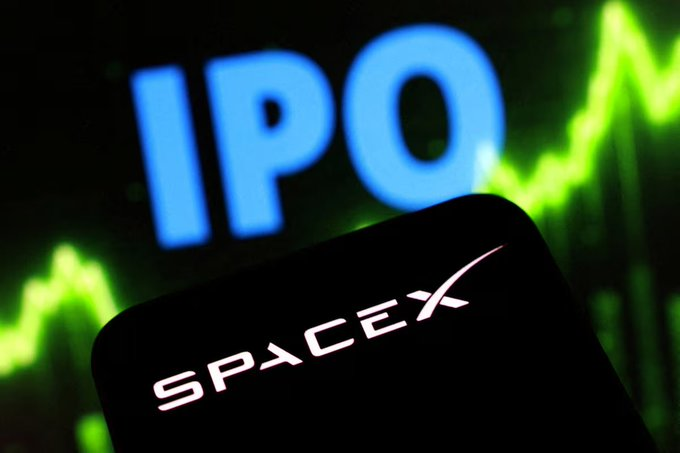
This round of equity allocation for institutions and strategic shareholders at SpaceX effectively placed "tech giant returns" and "political family returns" on the same balance sheet. The market noted that Alphabet's approximately $900 million investment made around 2015 (pending verification) is now estimated to yield potential book profits in the hundreds of billions, with some sources even citing an exaggerated figure of approximately $109 billion. In contrast, the Trump family's indirect ownership of SpaceX shares through 1789 Capital has a cap of around $44 million. The stark disparity between the two illustrates the pricing power of early tech capital in the space economy, and also implies that as SpaceX is regarded as one of the highest-valued privately held companies globally, it deepens the bond between tech giants and political capital on the same rocket, where any valuation or regulatory shock is no longer merely a "company event," but a repricing of a tech-political composite asset.
For the cryptocurrency market, this composite asset structure brings a dual force of pull. On one hand, SpaceX is included in the wave of equity issuances of mega-cap companies like Google, Meta, and OpenAI, and the upcoming IPO and liquidity of old shares will absorb a portion of global growth capital in the short to medium term, causing BTC, ETH, and on-chain assets, also seen as high beta, to passively “yield” in the funding queue, leading to temporary pressure on risk premiums and weakening the price elasticity relative to traditional tech stocks. On the other hand, the potential conflicts of interest raised by the Trump family's equity holdings introduce policy and geopolitical uncertainties into SpaceX's story. This structural noise of “political investment in space” may lead some institutions to include BTC and ETH in their hedging baskets to mitigate potential regulatory shifts or policy tail risks that may emerge post-IPO, thus creating new tensions between capital outflows and increased risk-off allocation, and forcing the market to reevaluate the allocation value of on-chain assets under more complex political variables.
Prometheus Raises $12 Billion and Risk Premiums
Nearly on the same timeline as the redistributing of SpaceX equity, the Prometheus, co-founded by Jeff Bezos, announced the completion of a $12 billion Series B financing round, achieving a valuation of approximately $41 billion. This “Series B is a mega IPO” scale turns the slogan “AI is the new infrastructure” into the mainline on the balance sheet. More importantly, this round, led by top traditional financial institutions like JPMorgan and BlackRock, signals that Wall Street's risk budget is systematically shifting towards AI infrastructure: within the same asset allocation framework of the same fund, high beta positions originally allocated to crypto, early tech stocks, and even some emerging markets are being partially rewritten into AI + space combinations like “Prometheus + SpaceX.”
When AI unicorns can secure $12 billion and a $41 billion valuation at the pre-IPO stage, they effectively raise the “benchmark yield imagination” of global risk assets: If AI equity is market-assumed to potentially deliver annualized returns of several tens of points over the next few years, then BTC, ETH, and other high-volatility assets lacking cash flow and industry moats find their relative risk compensation space constricted. Simultaneously, the recently observed high positive correlation between BTC and global tech stocks leads many institutions to perceive “buying tech-leading AI stocks” and “buying BTC” as two expressions revolving around the same tech risk factor; during hotter phases of the AI narrative, capital is more inclined to favor stocks and options that can be matched with specific enterprises, orders, and hardware bottlenecks, rather than on-chain assets burdened by both regulatory and narrative uncertainties. The outcome is structural outflows within high beta sectors: some institutions withdraw from altcoins and other long-tail assets, concentrating risk budgets on liquid cores like BTC and ETH, then extending to AI equities and related derivatives such as Prometheus, reshuffling the lineup under the same set of risk factors, leading long-tail on-chain assets to be the first to feel the risk premium repricing pressure of being “squeezed out” in this round of AI capital tide.
Nvidia's Upstream Bottleneck Amplifying the AI Cycle
Following the flow of funds retreating from long-tail on-chain assets towards AI and core liquidity assets reveals a stricter constraint: AI servers have transitioned from a “just pay and get the goods” business. High-end PCB orders have been pushed to high levels due to AI infrastructure demand in recent years, and starting in the second half of this year, the industry has shifted its focus to HVLP4 copper foil—identified as a new critical constraint. Sources indicate that primary manufacturers, including Nvidia, no longer satisfied with traditional supply chain segmentation, are directly involved in the coordination of upstream PCB materials, solely to lock in enough capacity for the next generation of AI servers, acknowledging that AI expansion has hit a tangible physical supply ceiling.
If this bottleneck persists, the production costs and delivery cycles of AI servers will be elevated, forcing the capital spending rhythm of cloud providers and large tech companies to become more "jumpy" rather than linearly extrapolated. Macro-wise, this will amplify the volatility of tech stocks during rising interest rates and costs, also impacting high beta assets within the same factor basket. For BTC and ETH, which are already highly correlated with global tech stocks, when the AI hardware cycle shifts from a rapid expansion to peaks or bottlenecks, the “Beta engine” of tech growth expectations will begin to stall, providing an opportunity for them to be repriced in institutional asset allocation from “derivative bets following tech stocks” to more pure alternative expressions of liquidity tightness and changes in risk sentiment.
Kalshi Pro and AI Cryptocurrency Trading
When Kalshi launched perpetual contracts supporting 11 cryptocurrencies on its platform and announced plans to introduce a professional and institutional trading terminal, Kalshi Pro, in the summer of 2026, a sector previously seen as a "niche prediction market" began to evolve toward professional derivatives and cryptocurrency trading terminals. Prediction markets and event-driven derivatives have been traditionally used to hedge macro data, election, and regulatory volatility risks, typically settling in USD or mainstream USD-pegged tokens; now, when the same platform hosts event contracts and multi-currency perpetual contracts in a single professional interface, macro and political risks no longer correspond solely to “USD exposure,” but are directly reflected in the margin and settlement needs of BTC, ETH, and major on-chain USD assets, systematically raising the weight of crypto assets in macro risk trading baskets.
Simultaneously, Alliance co-founder Imran Khan publicly stated that “cryptocurrency will become the default settlement layer of the internet, with AI as the next generation computing platform,” and has formed a team of former Anthropic employees to develop a project integrating cryptocurrency, AI, and trading. This structural narrative of “AI making decisions and cryptocurrency handling settlements” provides a clear endgame for the aforementioned platform: AI agents automatically scan data, price event contracts and perpetual positions in times of escalating macro and election risks, choosing to settle and re-collateralize with BTC, ETH, or USD-pegged tokens, forming a mechanical transmission chain from macro narratives to on-chain margins. This means that every fluctuation in macro and political risks is more likely to be first magnified in the margin demand and capital flows of BTC and ETH.
Crypto Chips in the AI and Space Grand Cycle
In this round of “AI + Space” super long capital cycle, the revaluation and distribution of SpaceX equity is viewed by the market as a critical element of the potential equity issuance wave of mega-cap companies like Google, Meta, and OpenAI. Coupled with the $12 billion financing and $41 billion valuation secured by Prometheus locking in the narrative of “AI infrastructure as essential assets,” and with HVLP4 copper foil becoming a new bottleneck in AI server capacity and Nvidia personally coordinating upstream supplies, global funding interest is being redirected towards equities capable of directly leveraging computing power and space infrastructure. This has temporarily compressed the relative attractiveness of BTC and ETH, raising the yield thresholds of all risk assets to a level where the key question is whether one can participate in AI and space. Unlike the previous "liquidity-driven" market, this time, in order for crypto assets to remain in the portfolio, it relies more on the rewriting of functional roles: Kalshi has supported perpetual contracts for 11 cryptocurrencies and plans to launch Kalshi Pro in the summer of 2026, incorporating BTC, ETH, and USD-pegged tokens into the margin and settlement assets of macro and political event contracts; the AI + crypto trading team led by Imran Khan aims to develop a model-driven strategy infrastructure based on the premise that "crypto is the default settlement layer of the internet." As AI and space equity become the long-cycle main line, cryptocurrencies are migrating from being "pure speculative chips" to serving as "margin and settlement layers for macro risks," with their valuations increasingly dependent on three sets of variables: the strength of the correlation between BTC, ETH, and AI tech stocks, the total market capitalization of USD-pegged tokens and the direction of net flows of on-chain funding, and how the IPO windows of SpaceX and AI giants realign global funding's risk budgets between AI, space, and cryptocurrency.
Join our community to discuss and become stronger together!
AiCoin exclusive Hyperliquid benefits: https://app.hyperliquid.xyz/join/AICOIN88
AiCoin exclusive Aster benefits: https://www.asterdex.com/zh-CN/referral/9C50e2
On-chain Telegram community: https://t.me/AiCoinWhaleData
On-chain community: https://www.aicoin.com/link/chat?cid=N6OVMor5g
AiCoin on-chain Twitter: https://x.com/aicoinwhaledata
免责声明:本文章仅代表作者个人观点,不代表本平台的立场和观点。本文章仅供信息分享,不构成对任何人的任何投资建议。用户与作者之间的任何争议,与本平台无关。如网页中刊载的文章或图片涉及侵权,请提供相关的权利证明和身份证明发送邮件到support@aicoin.com,本平台相关工作人员将会进行核查。