Recently, I have been pondering grid trading and have tried various auxiliary indicators. After much exploration, I found that the Bollinger Bands are indeed practical, perfectly addressing the most troublesome issue in grid trading—how to predict whether the next move will be oscillating or trending, when to open a grid, and when to pause and avoid the market. Today, we will thoroughly discuss Bollinger Bands from basic principles to practical trading points, applicable whether you are doing short-term swings or running grid strategies.
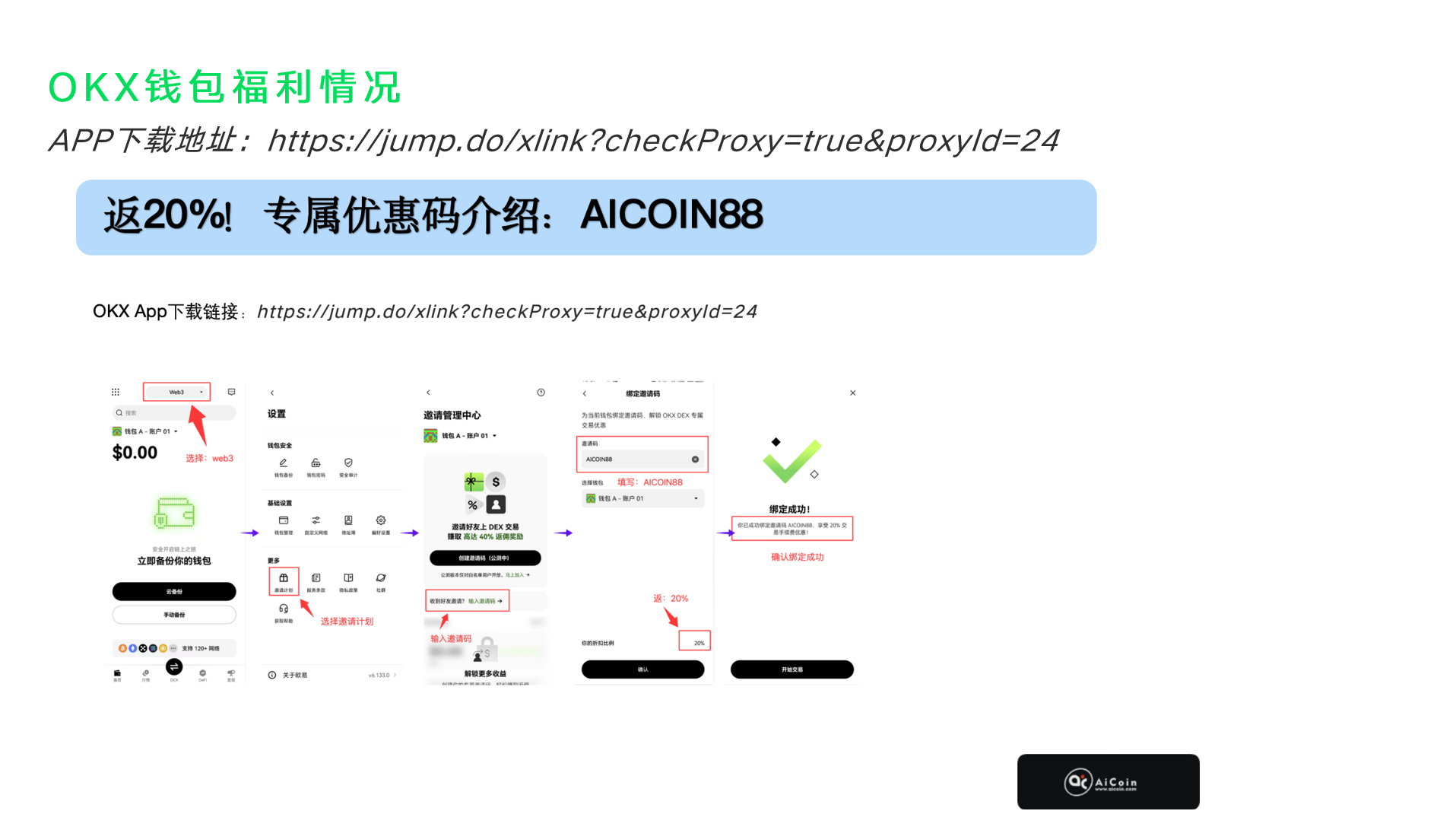
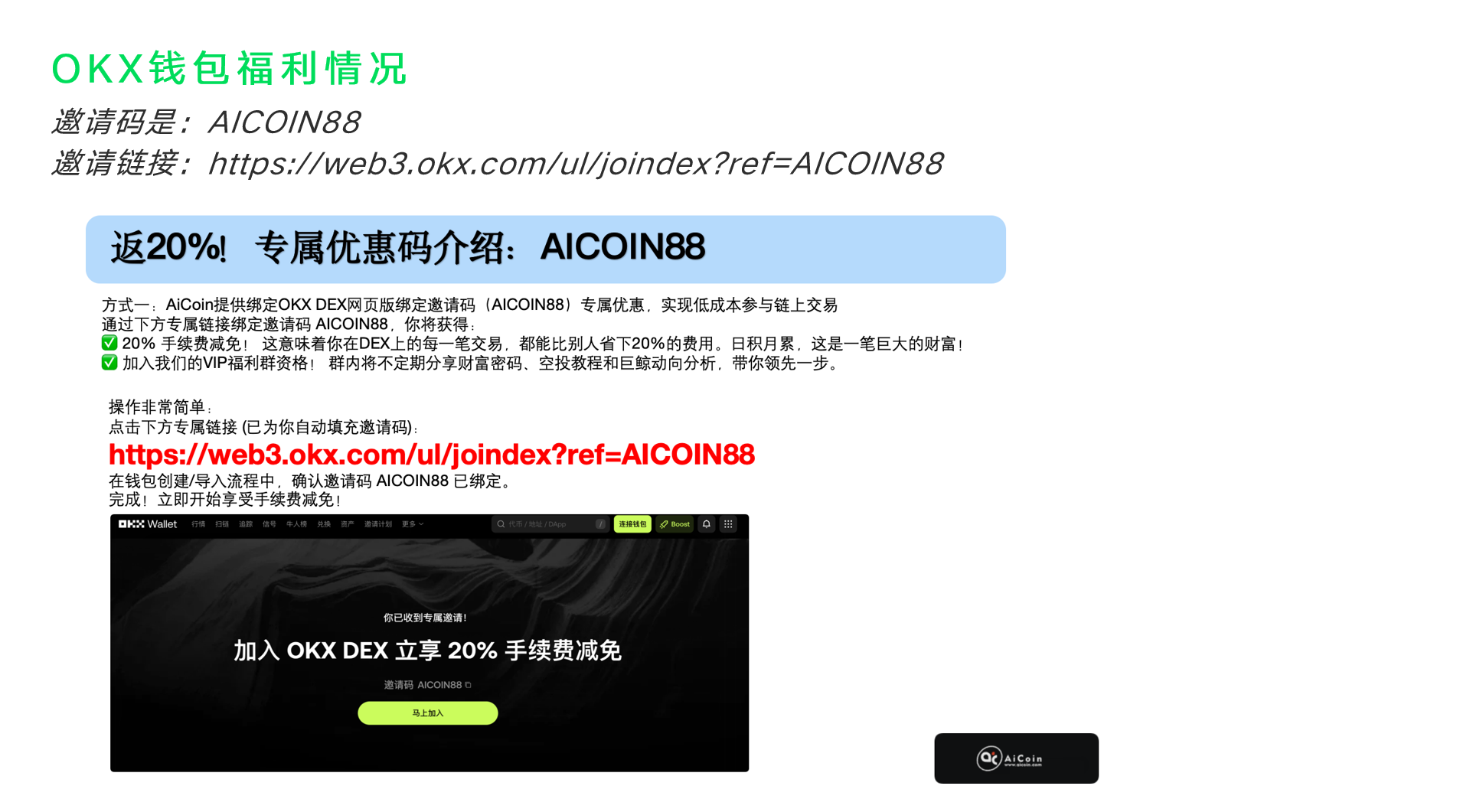
Remember to fill in the OKX invitation code before starting
The invitation code is: AICOIN88
Invitation link: https://web3.okx.com/ul/joindex?ref=AICOIN88


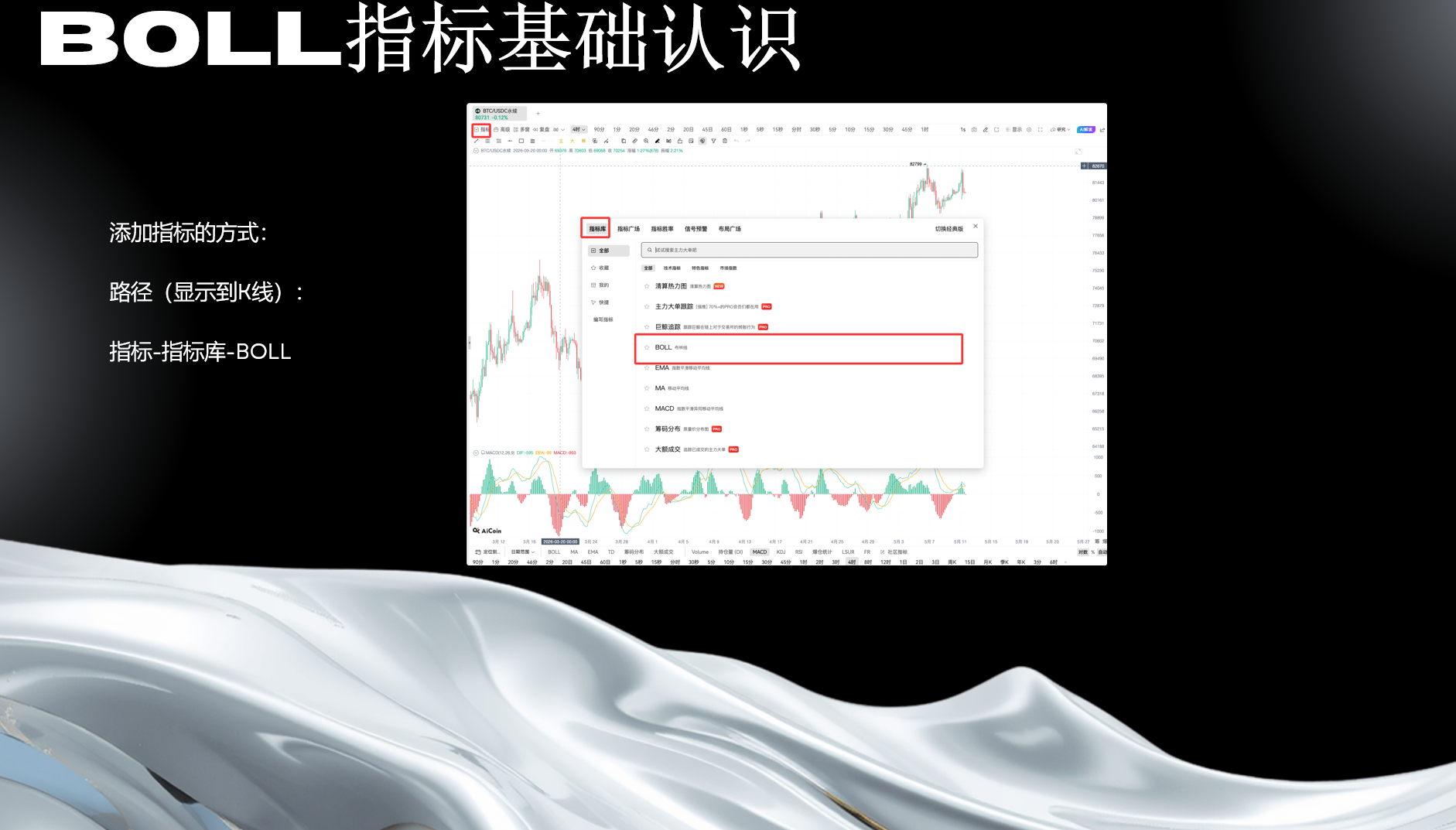
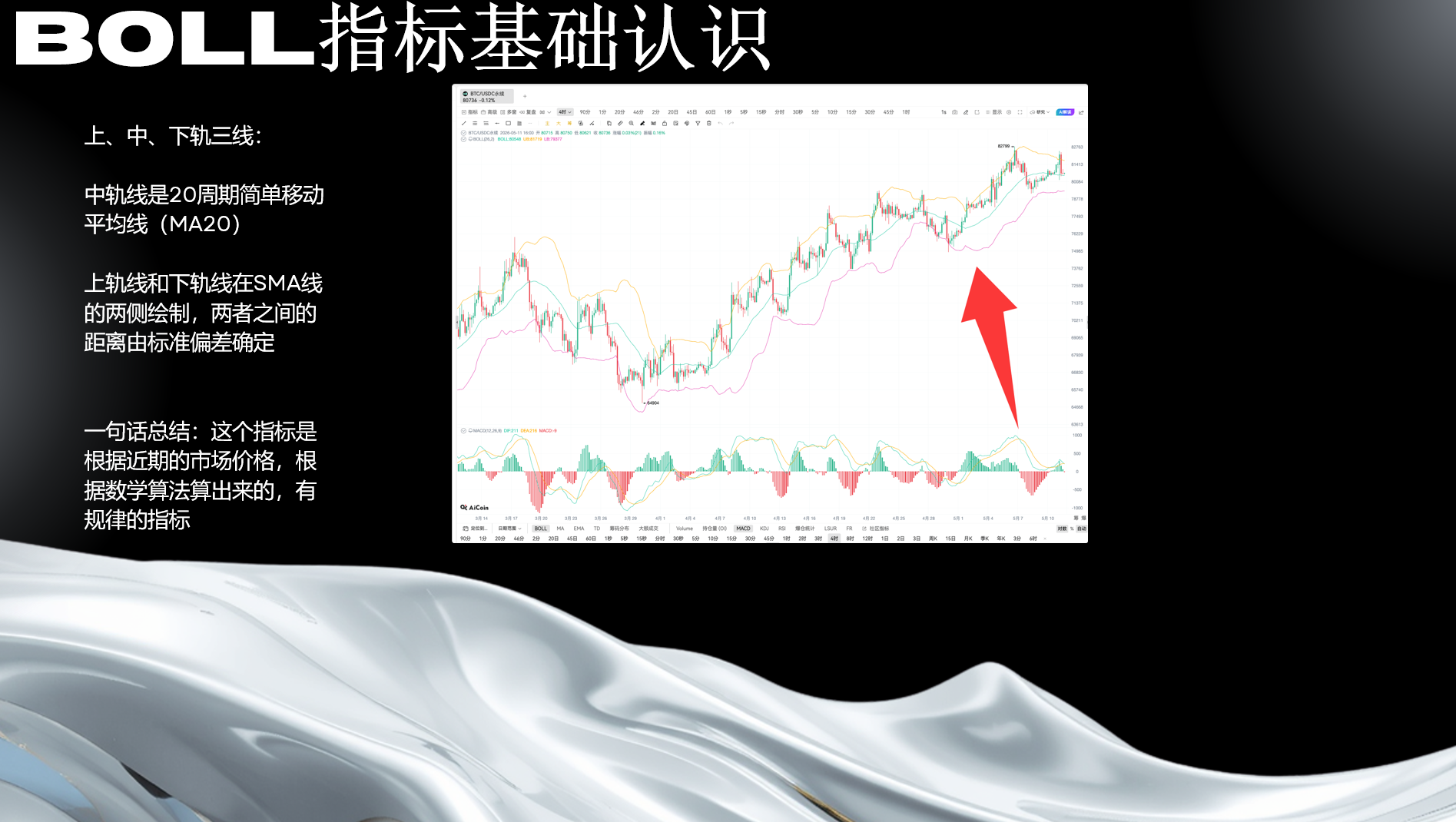

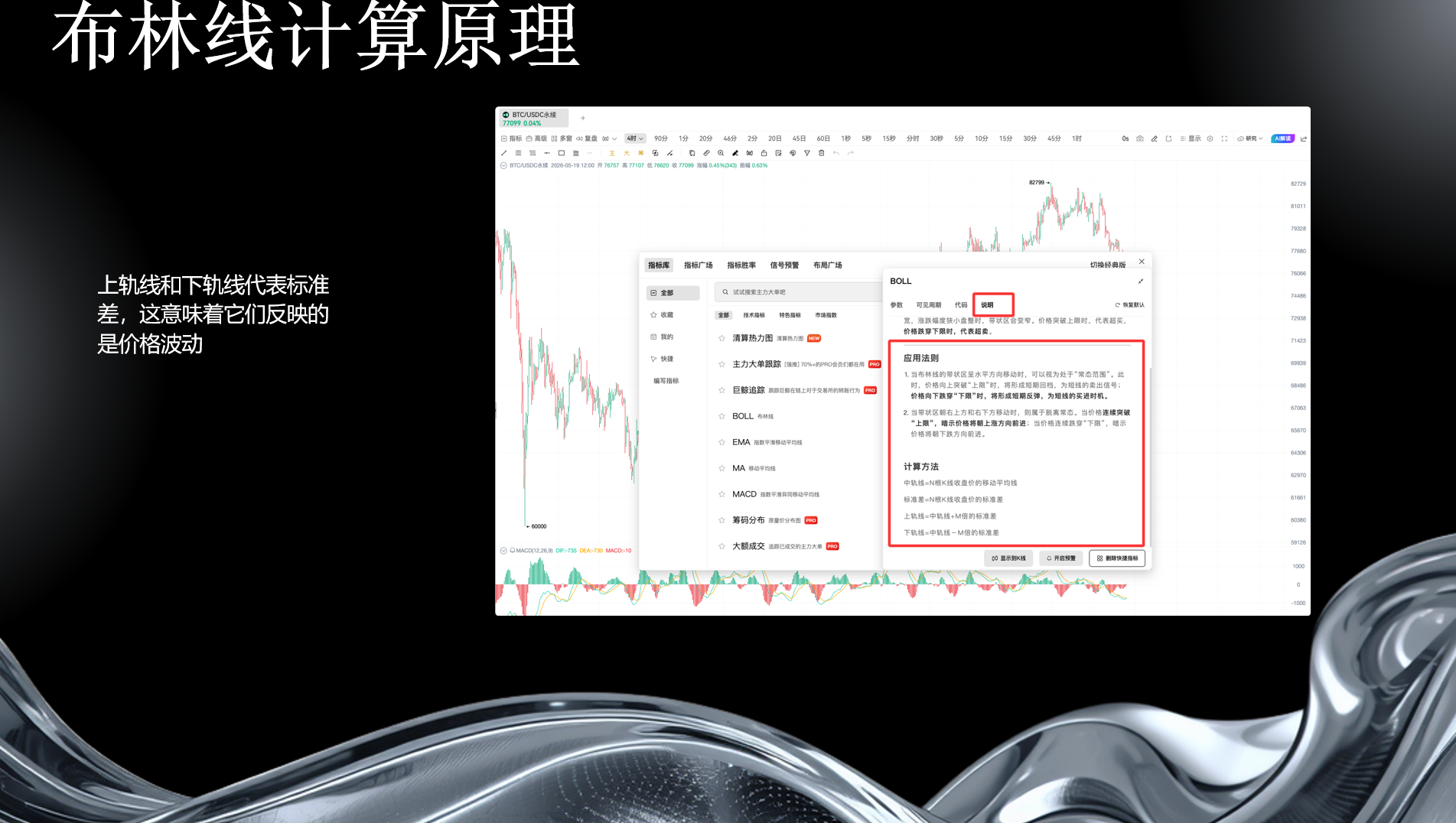

First, let me explain what Bollinger Bands really are. Many people know there are three lines, but may not be clear about their origin. This indicator was invented by technical analyst John Bollinger. Initially, when he was trading futures, he used fixed proportion channels to gauge market movement, but faced huge losses when commodities experienced a dramatic uptrend. Subsequently, he combined the concept of standard deviation from statistics with technical analysis, refining it into Bollinger Bands. Simply put, the middle line is the 20-period moving average, commonly referred to as MA20, the upper band is the middle line plus two standard deviations, and the lower band is the middle line minus two standard deviations. Unlike rigid fixed channels, the width of Bollinger Bands automatically adjusts according to market fluctuations; the channel widens during high volatility and narrows when volatility is low, providing a more accurate reflection of true market sentiment compared to fixed proportion channels.
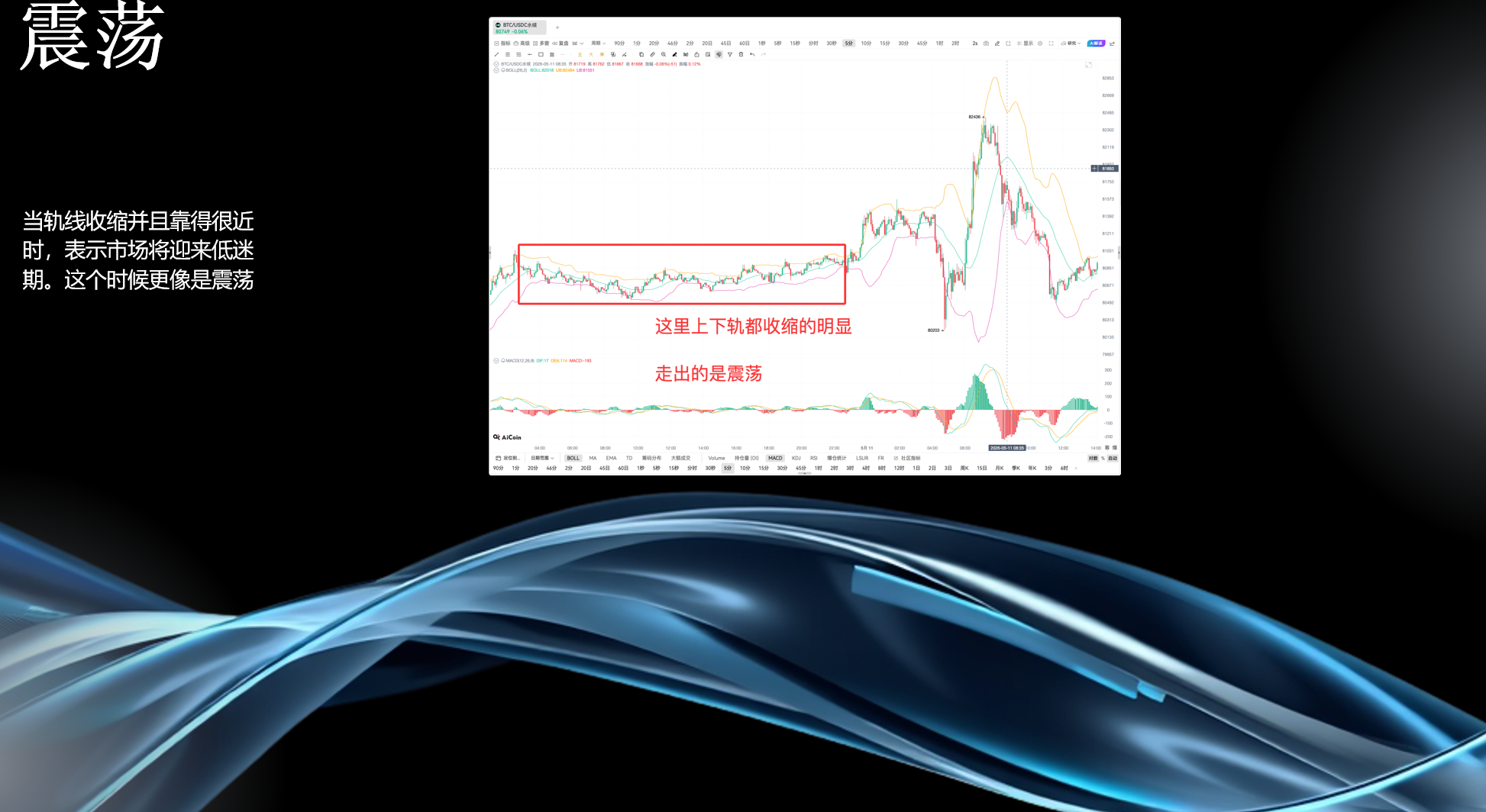
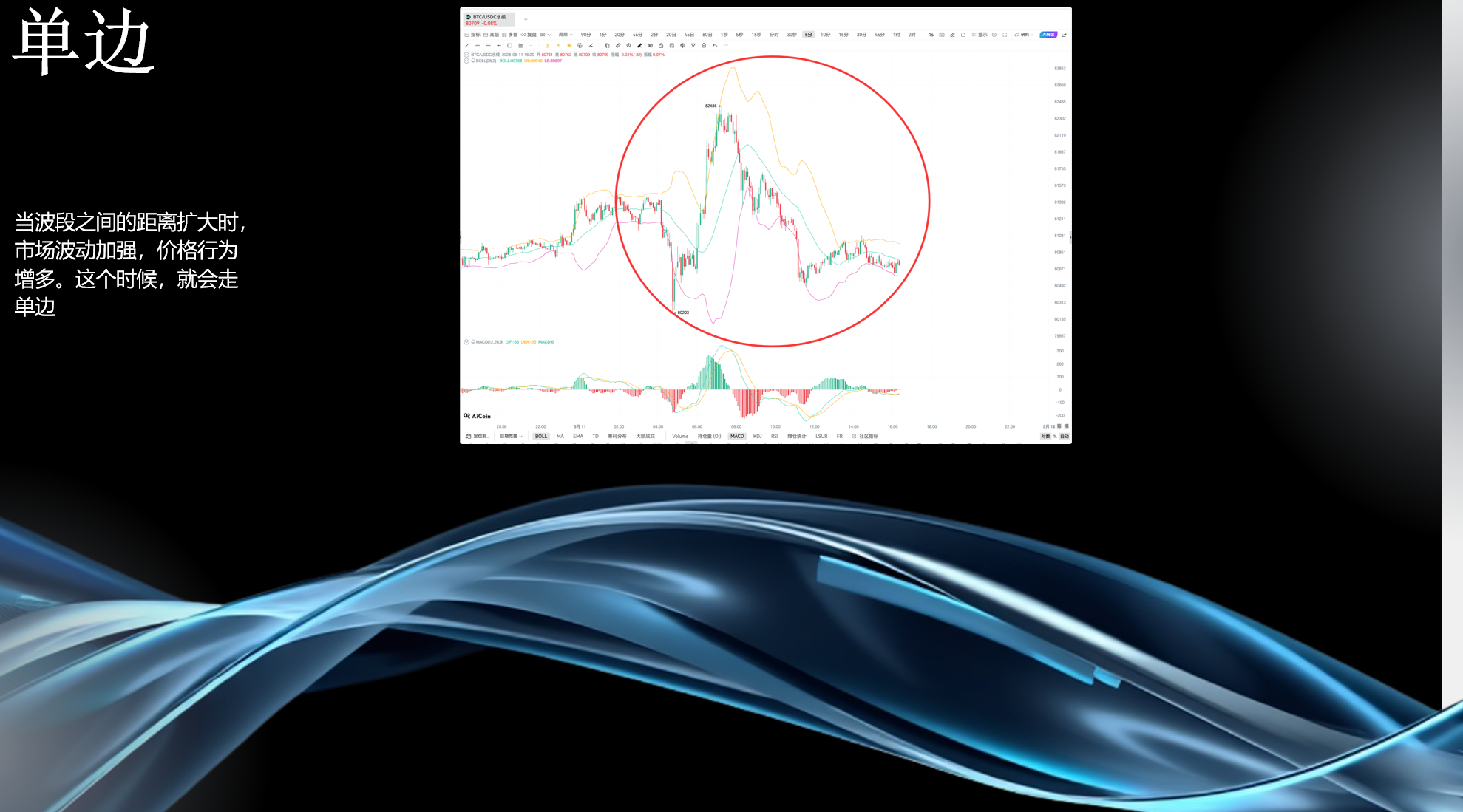
The most practical function of Bollinger Bands is the quick differentiation between oscillating and trending markets, which is essential for grid traders. After all, grid trading is most vulnerable to trending markets, and only in oscillating conditions can one consistently profit from price discrepancies. The method of determining this is very intuitive: just look at the width of the channel. When the upper and lower bands start to converge and the channel narrows, it indicates that market volatility is decreasing, and it is highly likely that the next move will be oscillating, making it a good time to open a grid; if the previously narrowing channel suddenly widens, and the distance between the upper and lower bands increases, it suggests that the market is about to enter a trending phase—this is when one should stop the grid to avoid being caught by a trend. Conversely, after a trending move, if the channel gradually narrows, it indicates that the market is likely returning to oscillating conditions. In short: narrowing indicates oscillation, widening indicates a trend. By capturing the widening signal in advance, one can avoid many pitfalls in grid trading.
The second basic usage is to use the bands as support and resistance levels. The upper band naturally serves as a resistance level; when the price touches the upper band, it enters an overbought condition and is likely to pull back. The lower band corresponds to the support level; when the price drops near the lower band, it indicates an oversold condition and is likely to rebound. If the price "breaks out," meaning it significantly rises above the upper band or falls below the lower band, this signifies a stronger reversal signal. In normal market conditions, prices rarely move outside the Bollinger Bands; when they do, it often marks a temporary high or low, making reversal points in an oscillating market highly likely. Our AiCoin Bollinger Bands indicator can also enable background filling, allowing even very small breakout signals to be captured at a glance, making it very convenient to use. 
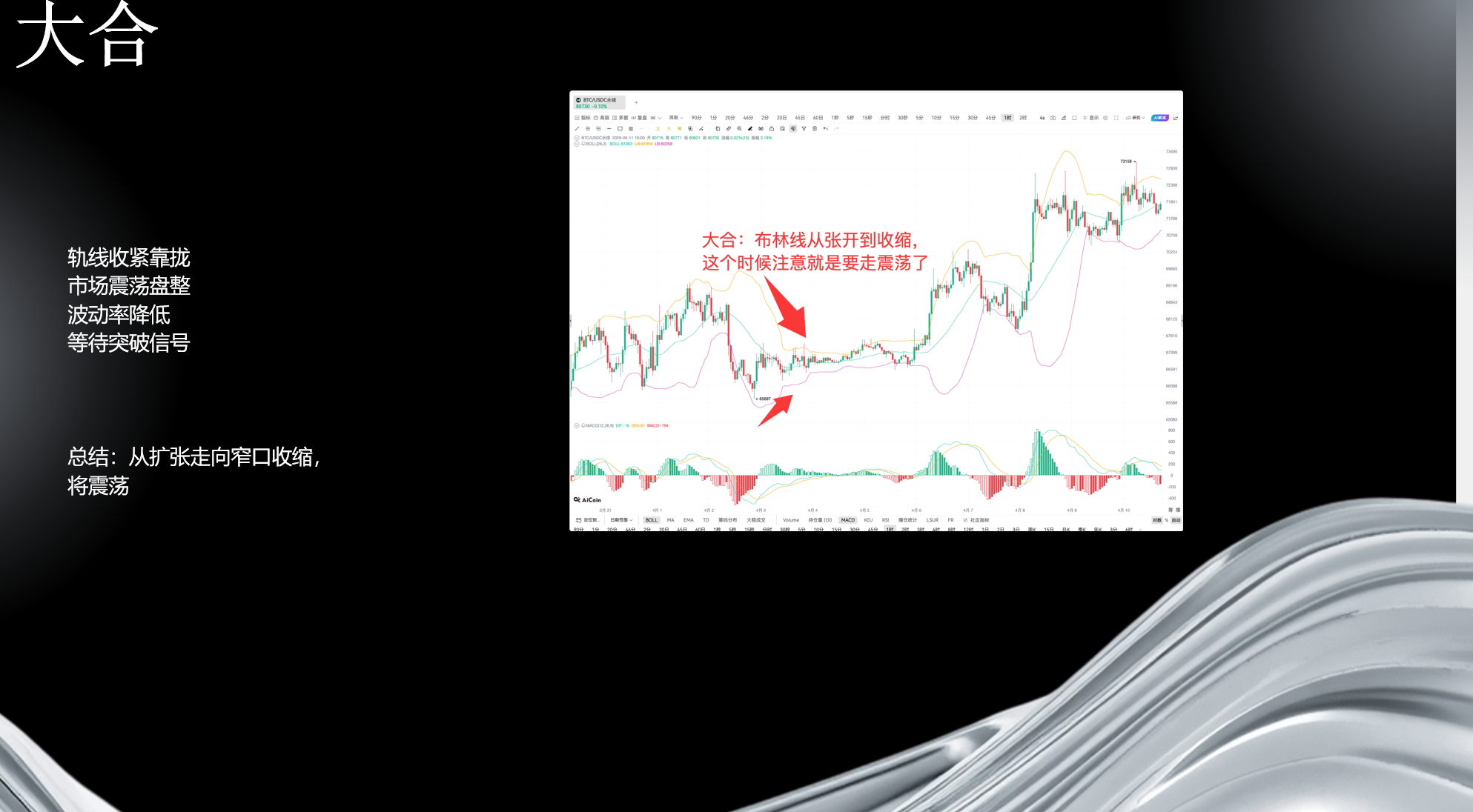
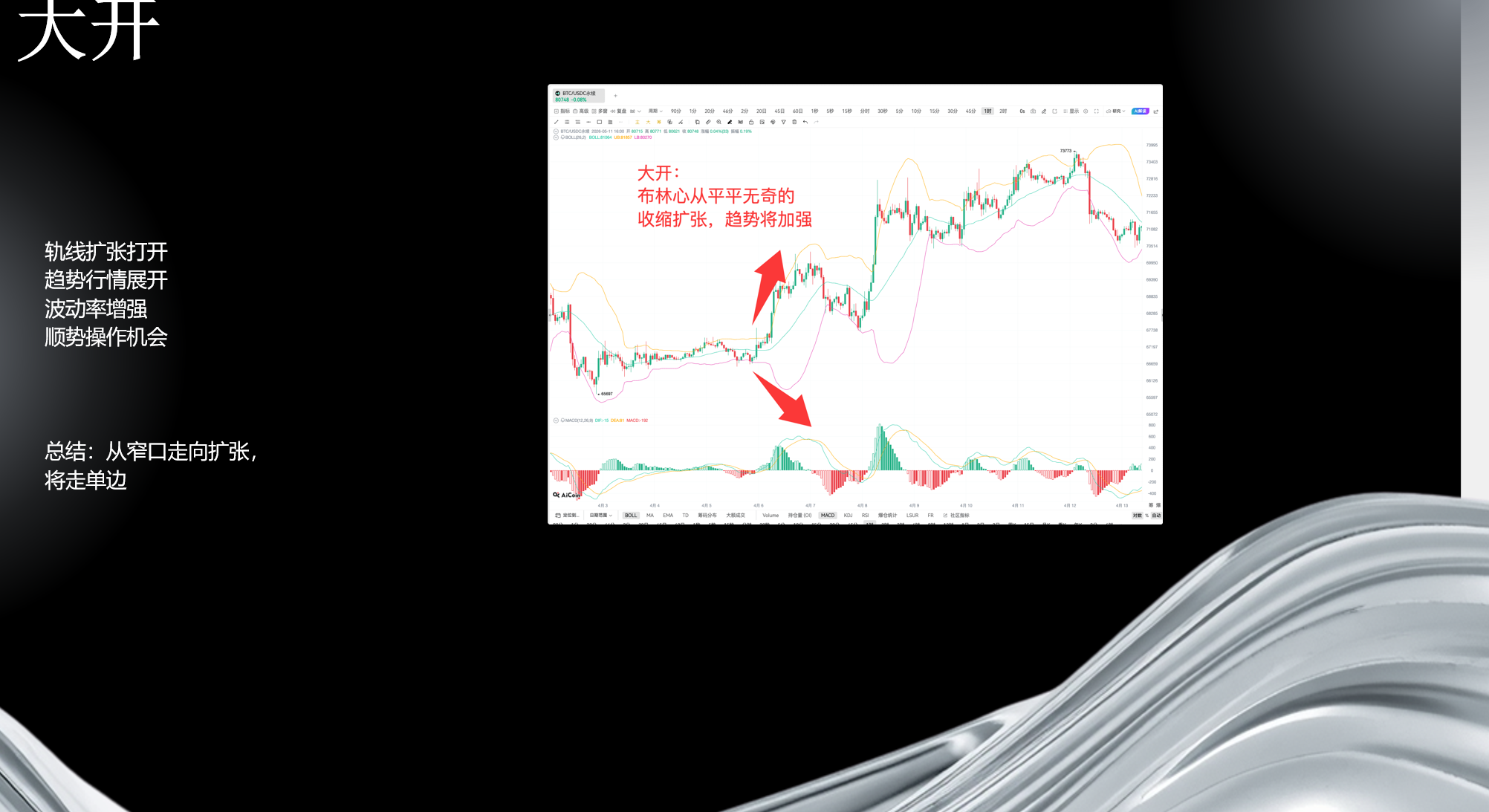
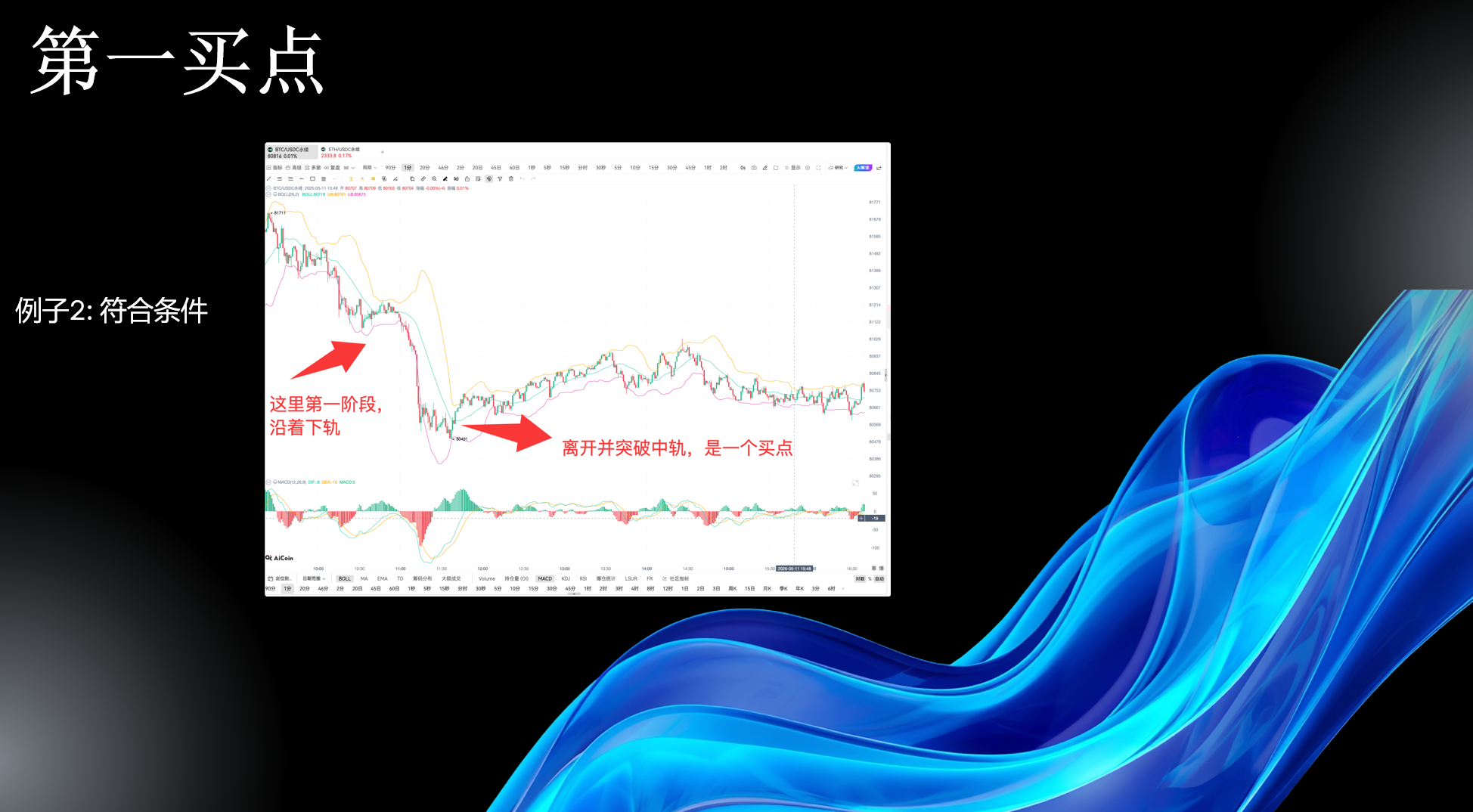
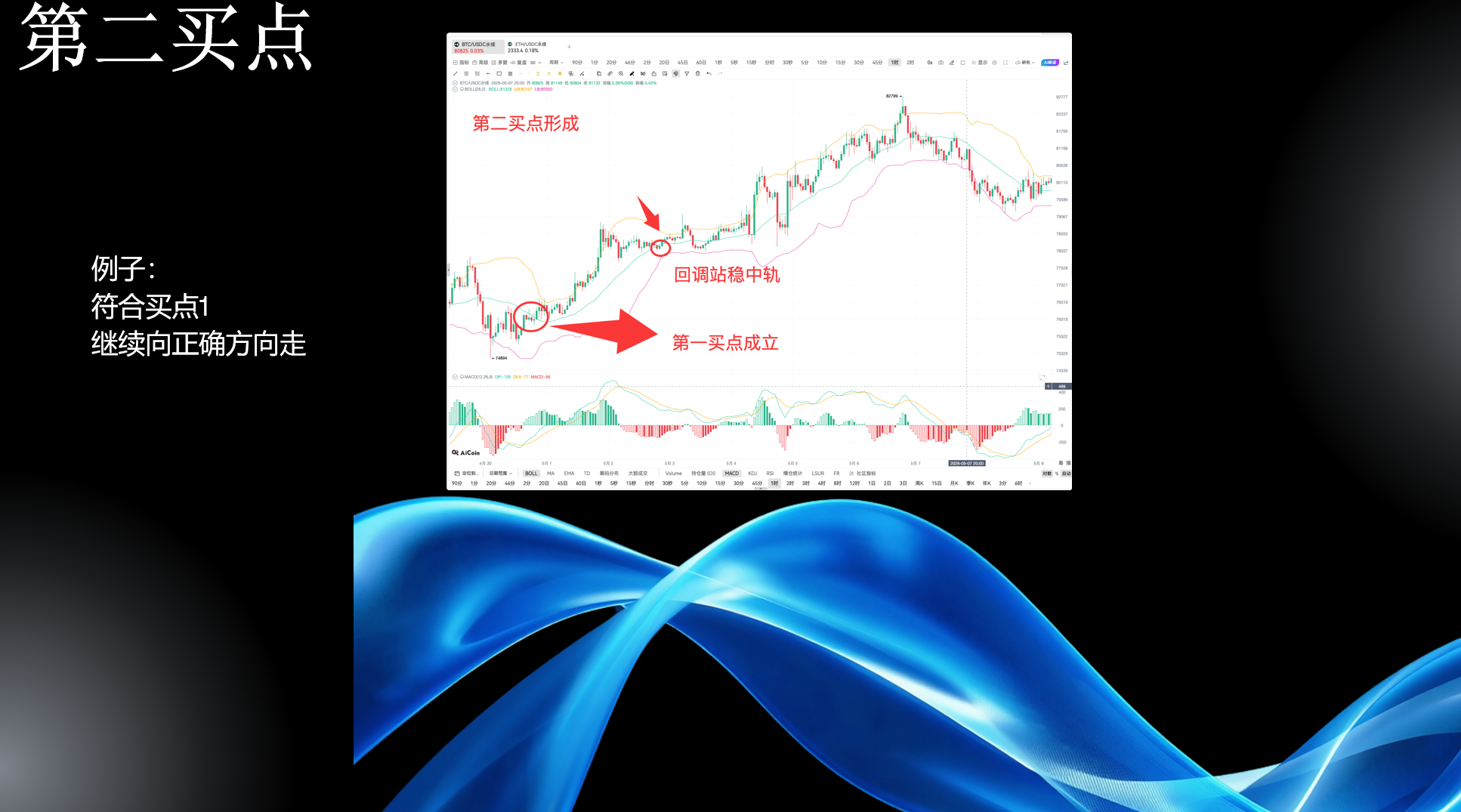
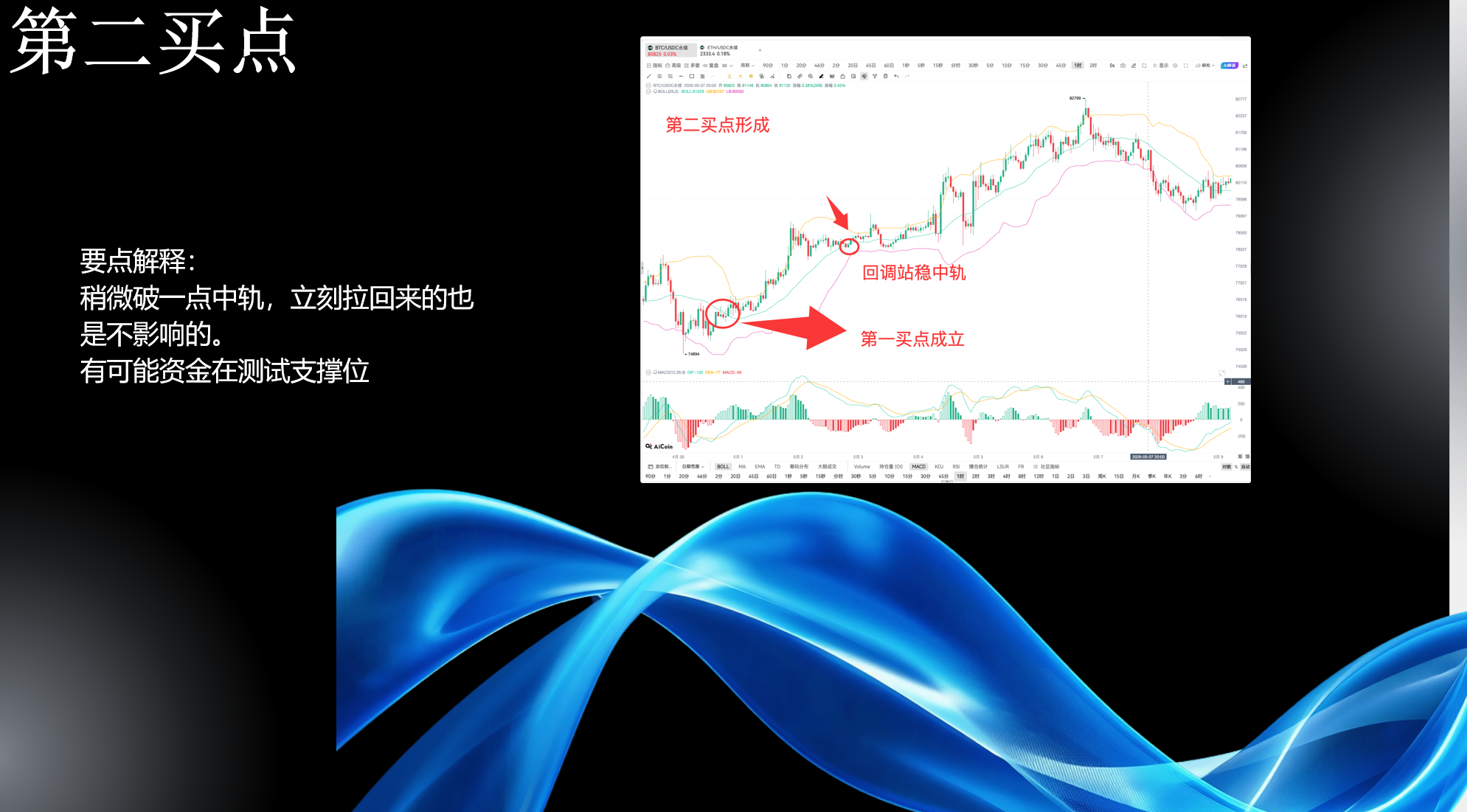
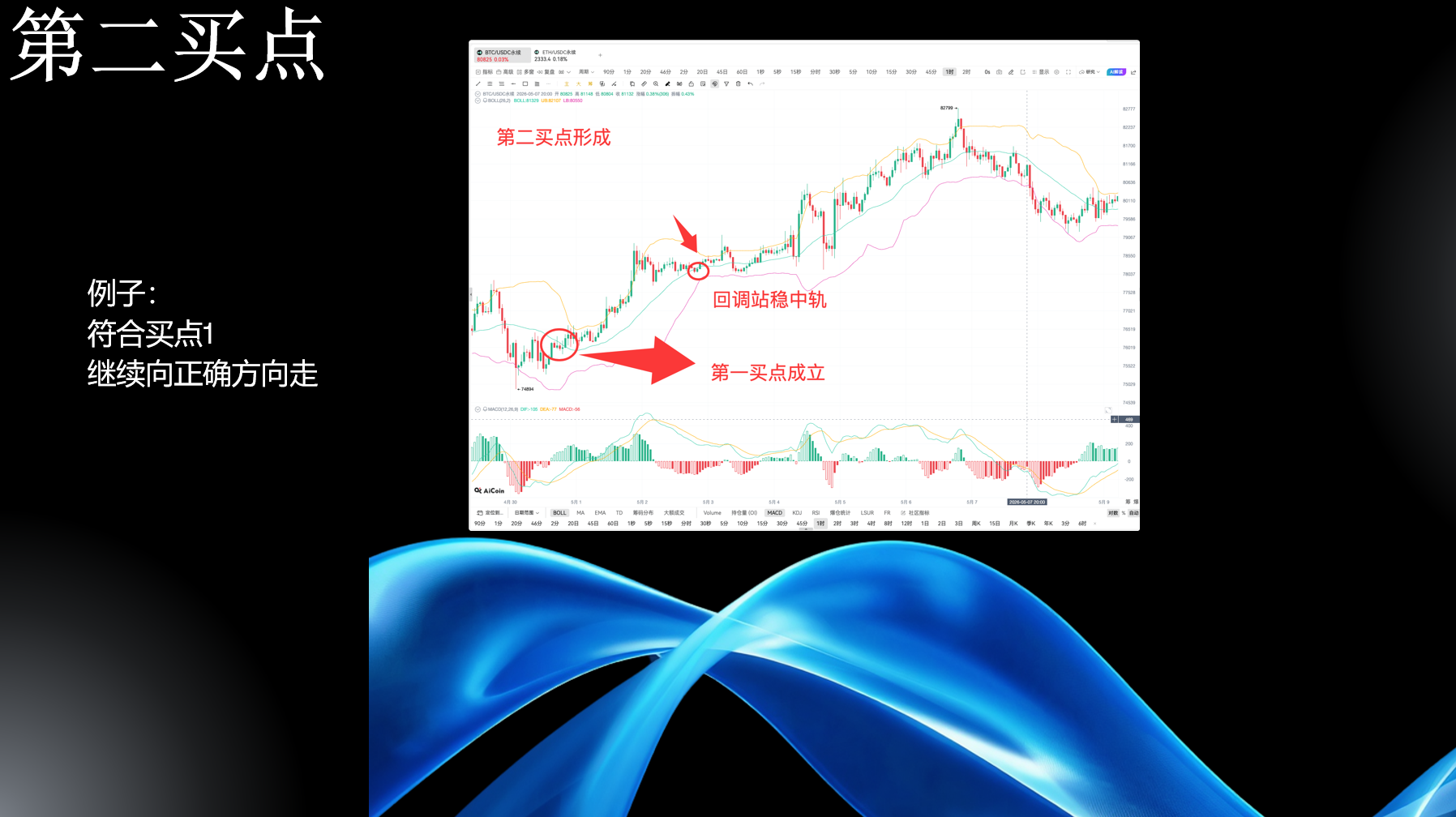
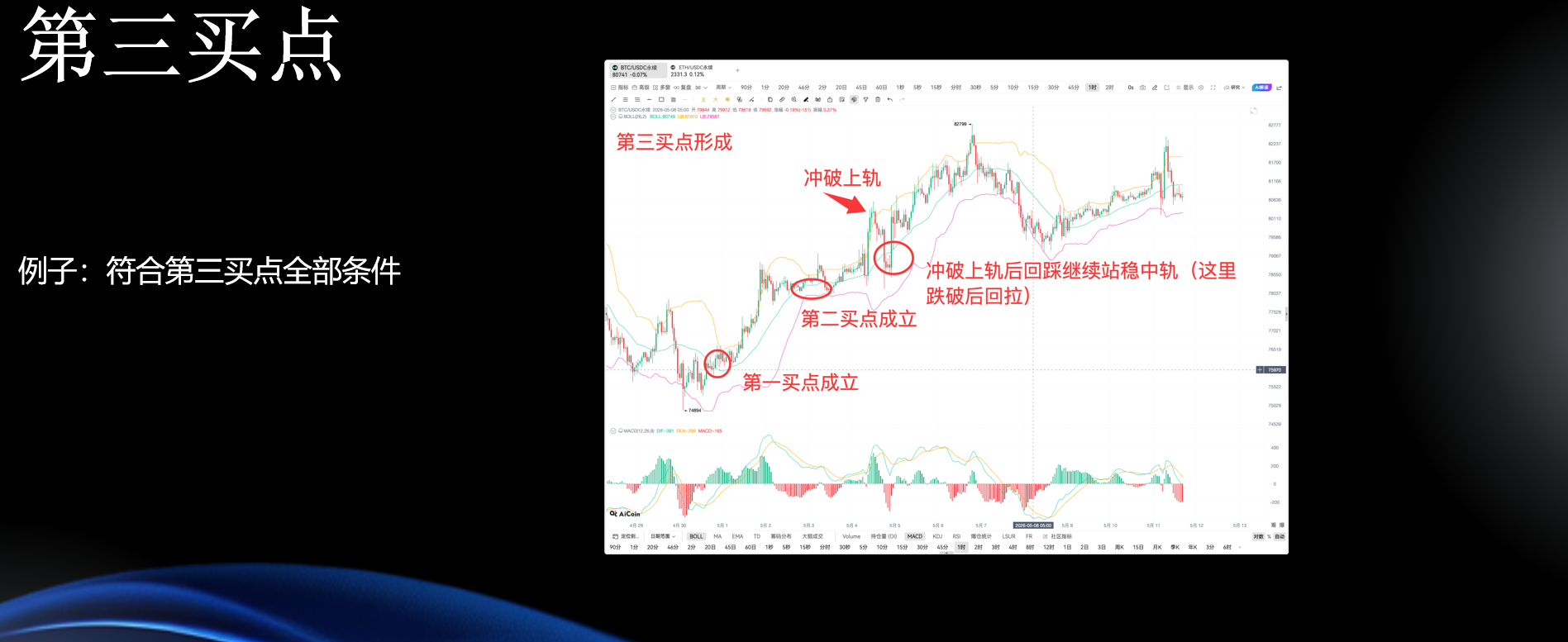
Next is the most core practical section: how to use Bollinger Bands to identify specific buying and selling points. I broke this down into three buying points and three selling points to correspond to different risk preferences, allowing everyone to choose according to their own style. First, let's discuss the buying points, starting with the most aggressive first buying point. When the price is closely hugging the lower band and continues to decline, then gradually pulls away from the lower band and breaks above the middle band, that is the first entry signal. This indicates that the market has just shifted from weakness to strength, offering the largest potential profit margin but with relatively higher risk, suitable for those with an aggressive style who can bear volatility. For most people, I recommend the second buying point as a more stable option. After the price breaks above the middle band, there is often a retest confirmation; if it can consistently hold above the middle band during the retest and does not fall below it, this indicates that support is effective. Entering at this point will have a significantly higher probability of success, representing the best cost-effectiveness. The third buying point is more advanced: if the price breaks above the upper band and then falls back to the middle band and stabilizes, it indicates that the upward trend is still continuing. However, signals at this position are less frequent and are more difficult to judge, so it is not necessary to force it as a main operation. Of course, failures can occur; if the price fails to hold above the middle band after breaking it, quickly drops back below the middle band, it indicates a failed support test and that the market has not truly strengthened yet. In this case, do not force it—cut losses if needed. I generally set a 10% stop-loss line; in indicator trading, always prioritize risk control. 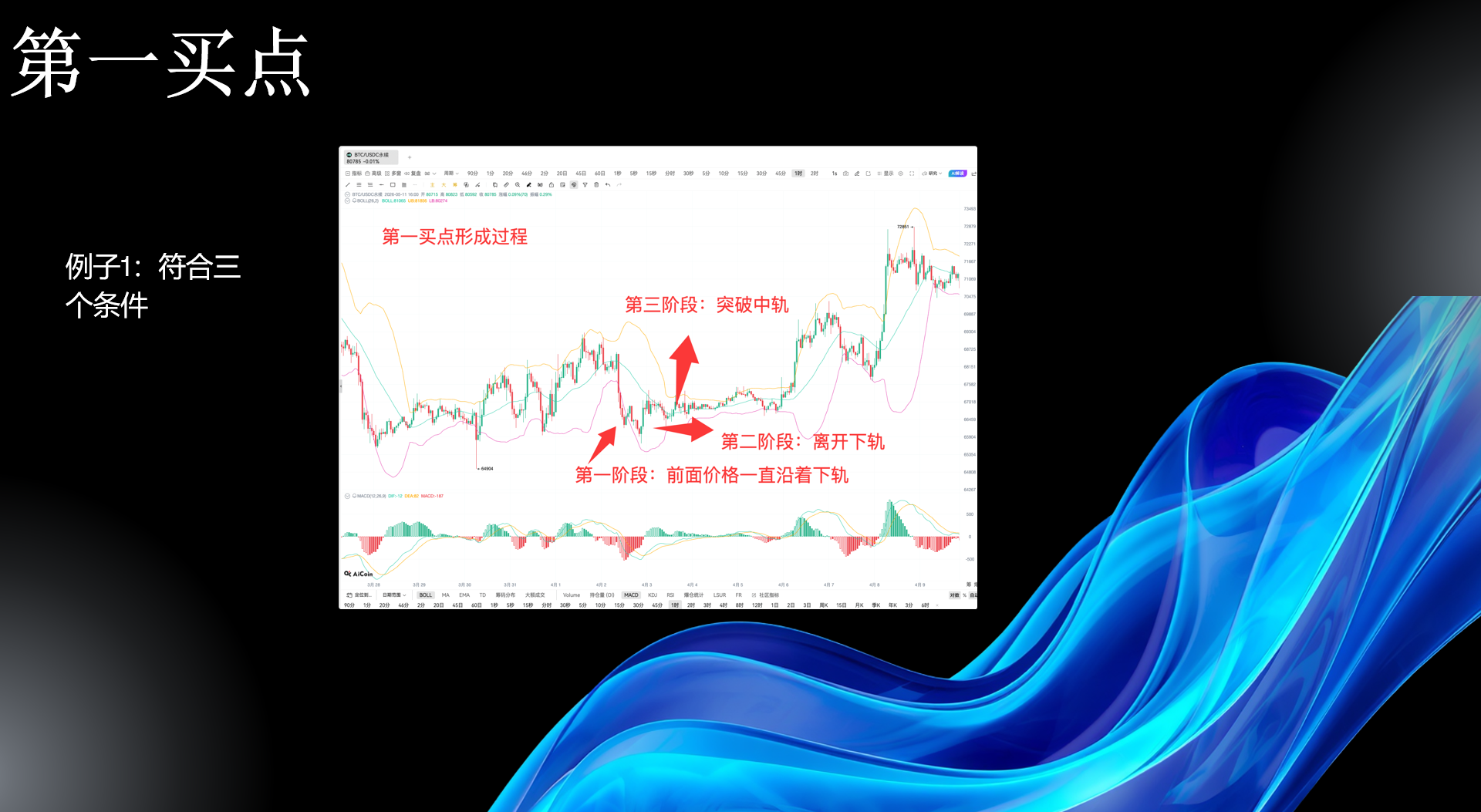
The logic of the selling points is completely symmetrical to the buying points, just understand it in reverse. The first selling point occurs when the price touches the upper band and rises for a period, then turns down and breaks below the middle band, indicating a shift from a strong to a weak market; one should reduce positions for profit immediately. The second selling point is identified when a drop below the middle band occurs followed by a rebound, but the price fails to rise above the middle band, indicating effective pressure—this is the second exit signal, confirming the lack of strength in the rebound, suitable for cautious investors to gradually exit. The third selling point occurs when the price completely breaks below the lower band; if it fails to pull back above the lower band, this confirms that the downtrend is established, and one should fully liquidate their positions. In practice, focusing on the first and second buying and selling points is sufficient, as they are manageable risks with stable winning probabilities. The third buying and selling points are more challenging and do not need to be forced in every market segment.
Finally, let's summarize: the core of Bollinger Bands consists of three main uses: first, to observe channel width and determine whether the market will be oscillating or trending next; second, to look at band support and resistance to find reversal points for overbought and oversold situations; third, to combine the middle band's support tests to find specific entry and exit points. One more thing to emphasize: all technical indicators are probabilistic tools; none are 100% accurate, and they must be used in conjunction with the broader market environment, along with strictly set stop-losses. Once you become proficient, whether in grid trading or short-term swings, you will avoid many unnecessary pitfalls.
If you trade frequently, run grids, participate in trading competitions, or engage in platform activities, you can register for OKX using our exclusive link to enjoy a permanent 20% fee discount. Don't underestimate this 20%; as the number of trades increases, the savings can be substantial, leading to clear long-term advantages.
We have live streams every day, and we welcome you to follow the AiCoin community! Reserve your spot early👇
https://www.aicoin.com/zh-Hans/live/list?tab=upcoming
Join our community to discuss and grow stronger together!
Official Telegram community: https://t.me/aicoincn
AiCoin Chinese Twitter: https://x.com/AiCoinzh
This article represents only the author's personal views and does not reflect the platform's stance or opinions. This article is for information sharing only and does not constitute investment advice for anyone.
免责声明:本文章仅代表作者个人观点,不代表本平台的立场和观点。本文章仅供信息分享,不构成对任何人的任何投资建议。用户与作者之间的任何争议,与本平台无关。如网页中刊载的文章或图片涉及侵权,请提供相关的权利证明和身份证明发送邮件到support@aicoin.com,本平台相关工作人员将会进行核查。