Original Title: 2026 Digital Asset Outlook: Dawn of the Institutional Era
Original Author: Grayscale research team
Translated by: Peggy, BlockBeats
Editor's Note: After years of high volatility and strong narrative-driven cycles, crypto assets are entering a distinctly different phase. Rising uncertainty in the fiat currency system, the gradual formation of regulatory frameworks, and the advancement of spot ETPs, stablecoin legislation, and institutional allocation are reshaping the way capital enters the crypto market.
Grayscale's core judgment in the "2026 Digital Asset Outlook" is that the dominant force in the crypto market is shifting from retail cycles to institutional capital. Prices are no longer primarily driven by emotional surges but are increasingly influenced by compliant channels, long-term funds, and sustainable fundamentals, weakening the narrative of the "four-year cycle."
This article systematically outlines the ten investment themes that may shape the market in 2026, from value storage, stablecoins, and asset tokenization to DeFi, AI, and privacy infrastructure, sketching a crypto ecosystem that is gradually embedding itself into the mainstream financial system. The report also clearly points out which hot topics are more like "noise" in the short term rather than decisive variables.
The following is the original text:
Key Takeaways
We expect that 2026 will accelerate structural changes in digital asset investment, driven primarily by two major themes: the rising demand for alternative value storage tools at the macro level and significant improvements in regulatory clarity. The combination of these two factors is expected to introduce new sources of capital, expand the adoption of digital assets (especially among wealth management advisors and institutional investors), and promote a more comprehensive integration of public blockchains into mainstream financial infrastructure.
Based on these trends, we anticipate that digital asset valuations will rise overall in 2026, while the so-called "four-year cycle" (the theory that the crypto market follows a fixed four-year rhythm) will come to an end. In our view, Bitcoin's price is likely to reach a new historical high in the first half of the year.
Grayscale expects bipartisan-supported structural legislation for the crypto market to officially become law in the United States in 2026. This will further deepen the integration between public blockchains and traditional finance, promote compliant trading of digital asset securities, and potentially allow startups and established companies to conduct on-chain issuance.
The outlook for the fiat currency system is becoming increasingly uncertain; in contrast, we can almost be certain that the 20 millionth Bitcoin will be mined in March 2026. Against the backdrop of rising fiat risks, digital currencies like Bitcoin and Ethereum, which possess characteristics of transparency, programmability, and ultimately scarce supply, are expected to see stronger demand.
We anticipate that more crypto assets will be made available to investors in the form of exchange-traded products (ETPs) in 2026. These products have had a good start, but many platforms are still conducting due diligence and advancing the inclusion of crypto assets into asset allocation processes. As this process matures, slower but substantial institutional capital is expected to continue entering the market in 2026.
We have also outlined the top ten crypto investment themes for 2026 to reflect the wide range of application scenarios emerging from public blockchain technology. Each theme corresponds to related crypto assets:
- The risk of dollar depreciation drives demand for currency alternatives
- Improved regulatory clarity supports the adoption of digital assets
- The impact of the GENIUS Act continues to expand after its implementation
- Asset tokenization reaches a critical turning point
- Blockchain moves into the mainstream, increasing demand for privacy solutions
- AI moves towards centralization, calling for blockchain-style solutions
- DeFi accelerates development, led by lending
- Mainstream adoption drives the construction of next-generation infrastructure
- A greater focus on sustainable revenue models
- Investors will "default" to seeking staking yields
Finally, we also pointed out two topics that are expected not to have a substantial impact on the crypto market in 2026:
Quantum Computing: We believe that research and preparation for post-quantum cryptography will continue, but it is unlikely to affect market valuations within the next year.
Digital Asset Trust Companies (DATs): Despite receiving considerable media attention, we judge that they will not become key variables influencing the trends of the digital asset market in 2026.
2026 Digital Asset Outlook: The Dawn of the Institutional Era
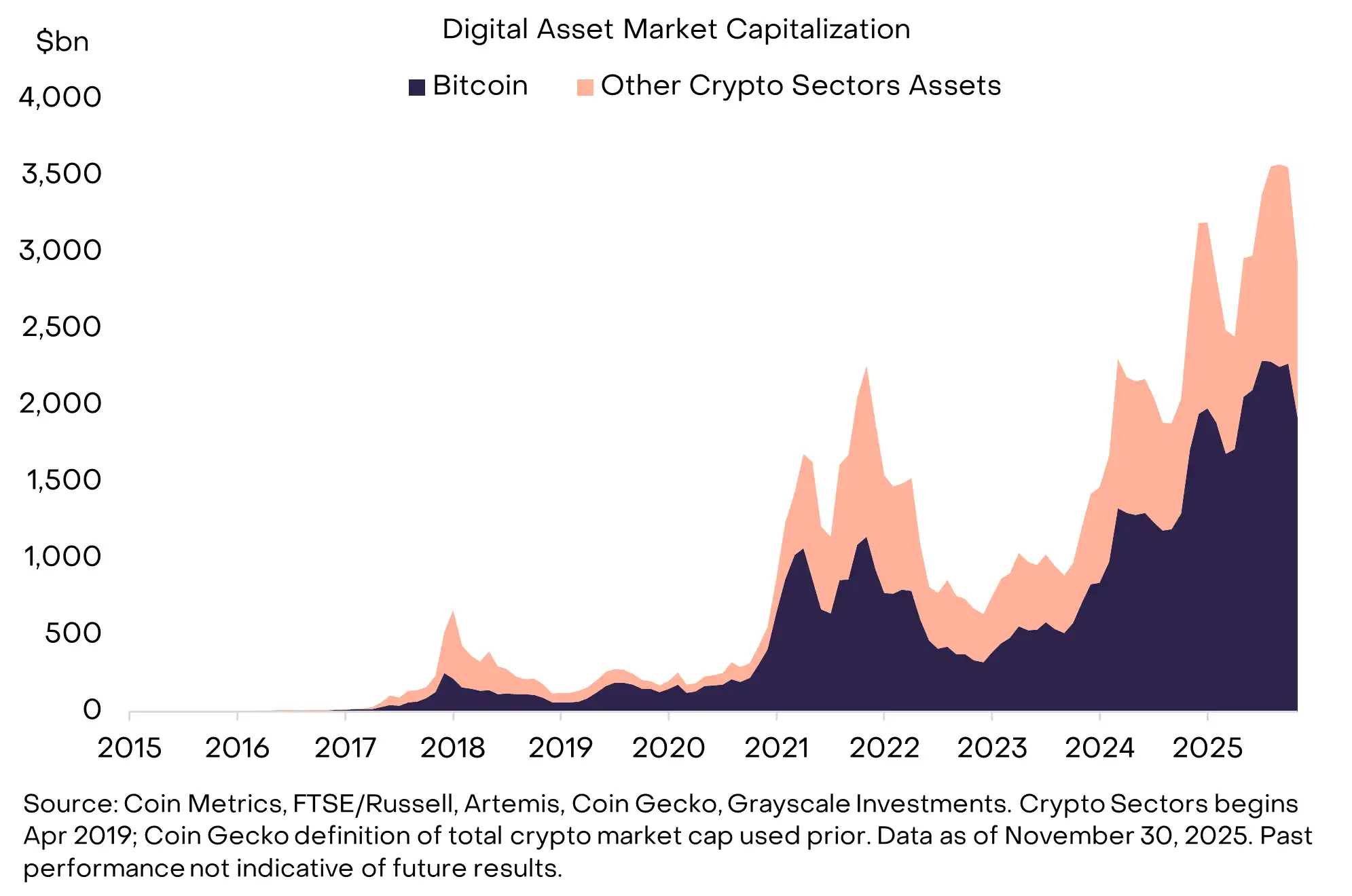
Fifteen years ago, cryptocurrency was still an experimental attempt: there was only one asset in the market, Bitcoin, with a market cap of about $1 million. Today, cryptocurrency has evolved into an emerging industry and grown into a medium-sized alternative asset class, consisting of millions of tokens with a total market cap of about $3 trillion (see Chart 1).
As major economies gradually establish more complete regulatory frameworks, the integration of public blockchains and traditional financial systems is deepening, continuously attracting long-term capital inflows into this market.
Chart 1: Crypto assets have grown into a medium-sized alternative asset class
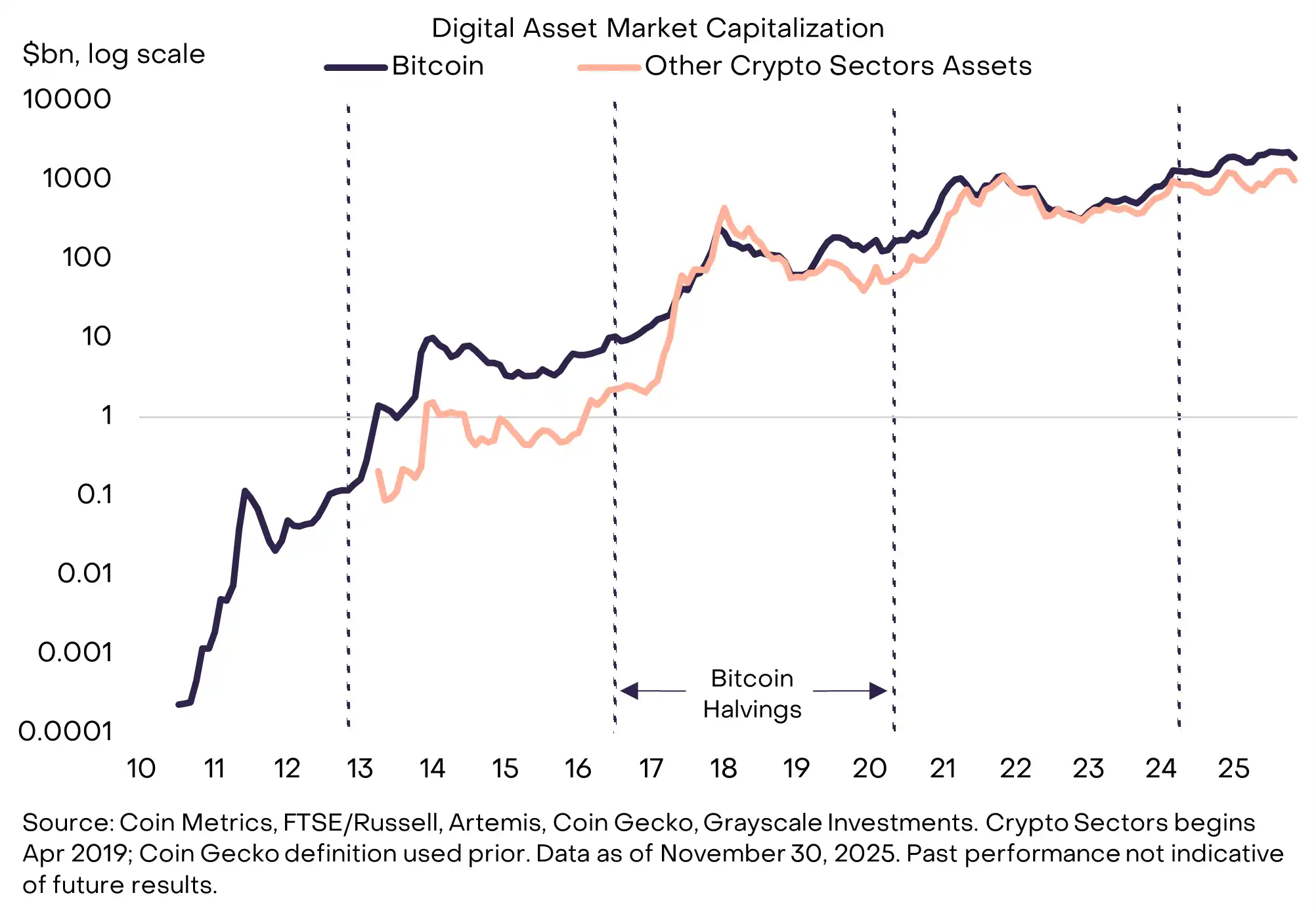
Throughout the development of crypto assets, token valuations have experienced four significant cyclical pullbacks, roughly following a four-year rhythm (see Chart 2). In three of these cases, the cyclical peaks in valuations occurred about 1 to 1.5 years after Bitcoin halving events; Bitcoin halving itself also occurs on a four-year cycle.
The current bull market has lasted for over three years, with the most recent Bitcoin halving occurring in April 2024, more than 1.5 years ago. Therefore, some market participants, based on traditional experience, judge that Bitcoin's price may have peaked in October, and 2026 will be a challenging year for crypto asset returns.
Chart 2: The valuation increase in 2026 will mark the end of the "four-year cycle" theory
Grayscale believes that the crypto asset class is in a sustained bull market, and 2026 will be a key point in the so-called "four-year cycle" coming to an end. We expect that the valuations of six major crypto asset sectors will rise across the board in 2026 and judge that Bitcoin's price is likely to break previous historical highs in the first half of the year.
Our optimism is primarily based on two core pillars:
First, the macro demand for alternative value storage tools will persist.
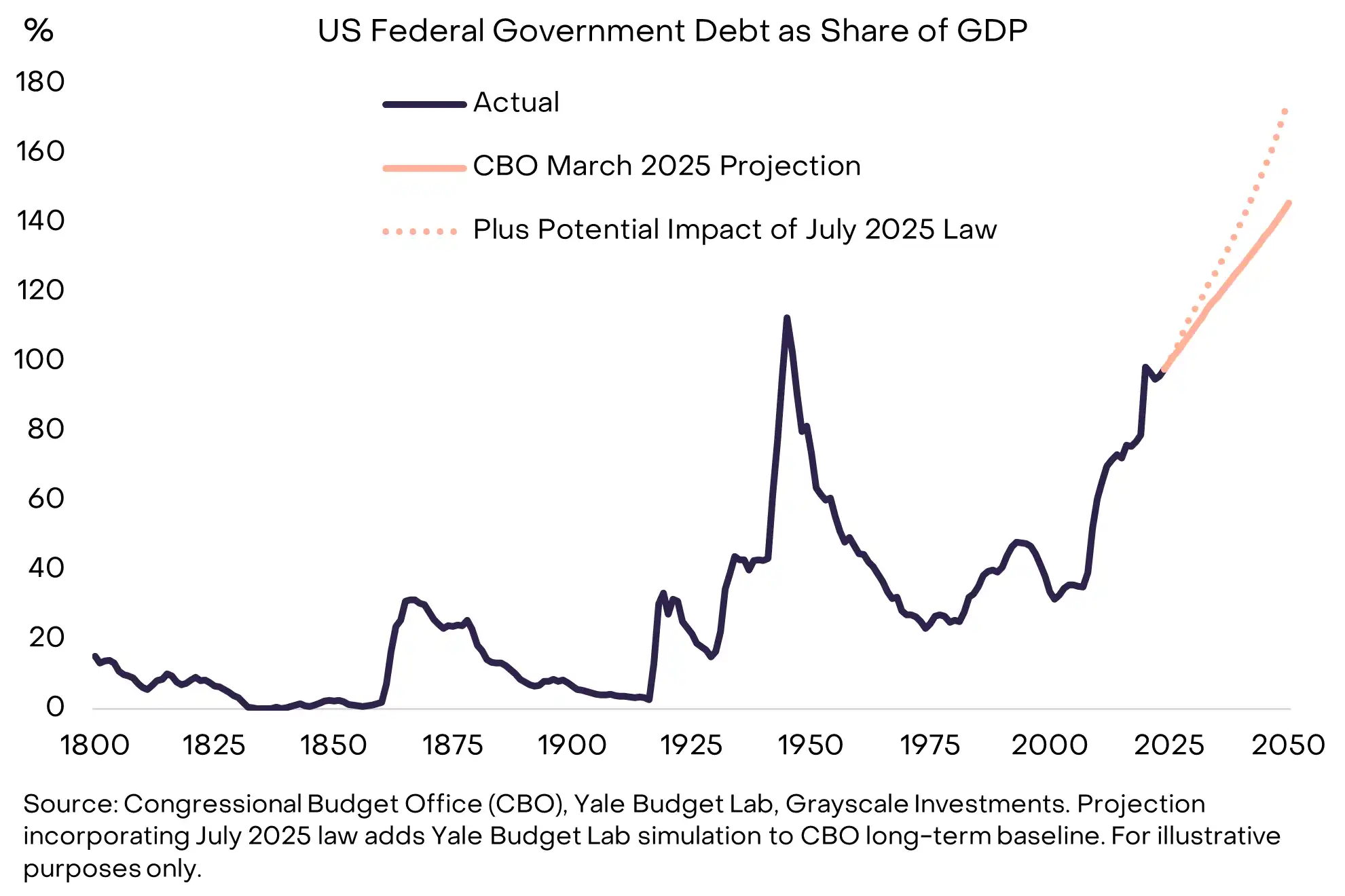
By market capitalization, Bitcoin and Ethereum are currently the two largest crypto assets and can be viewed as scarce digital commodities and alternative currency assets. Meanwhile, the fiat currency system (and assets priced in fiat) is facing additional risks, with high and rising public sector debt potentially putting pressure on inflation in the medium to long term (see Chart 3).
In this context, scarce commodities, whether in physical form like gold and silver or in digital form like Bitcoin and Ethereum, may serve as a "ballast" in investment portfolios to hedge against fiat currency risks. In our view, as long as the risk of fiat depreciation continues to rise, the demand for portfolio allocation to Bitcoin and Ethereum is likely to increase in tandem.
Chart 3: The U.S. debt issue undermines the credibility of low inflation expectations
Second, regulatory clarity is driving institutional capital into the public blockchain space.
This point is easily overlooked, but until this year, the U.S. government was still investigating and/or suing several leading institutions in the crypto industry, including Coinbase, Ripple, Binance, Robinhood, Consensys, Uniswap, and OpenSea. Even today, exchanges and other crypto intermediaries still lack clear and unified regulatory guidance at the spot market level.
However, the situation is slowly but clearly turning around.
In 2023, Grayscale won its lawsuit against the U.S. Securities and Exchange Commission (SEC), paving the way for crypto spot exchange-traded products (ETPs);
In 2024, Bitcoin and Ethereum spot ETPs officially enter the market;
In 2025, the U.S. Congress passed the GENIUS Act for stablecoins, and regulators began to adjust their attitudes toward the crypto industry, continuing to emphasize consumer protection and financial stability while collaborating with the industry to provide clearer regulatory guidance;
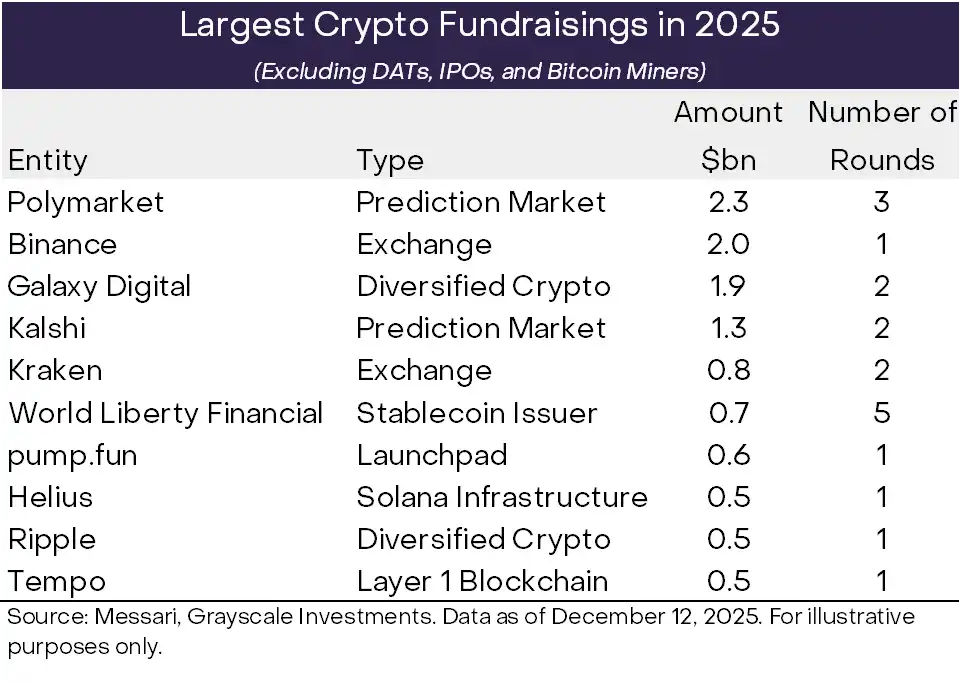
In 2026, Grayscale expects Congress to pass bipartisan-supported structural legislation for the crypto market, which is expected to institutionalize the position of blockchain finance in the U.S. capital markets and further promote the continuous inflow of institutional investment (see Chart 4).
Chart 4: Rising financing scale may reflect increasing institutional confidence
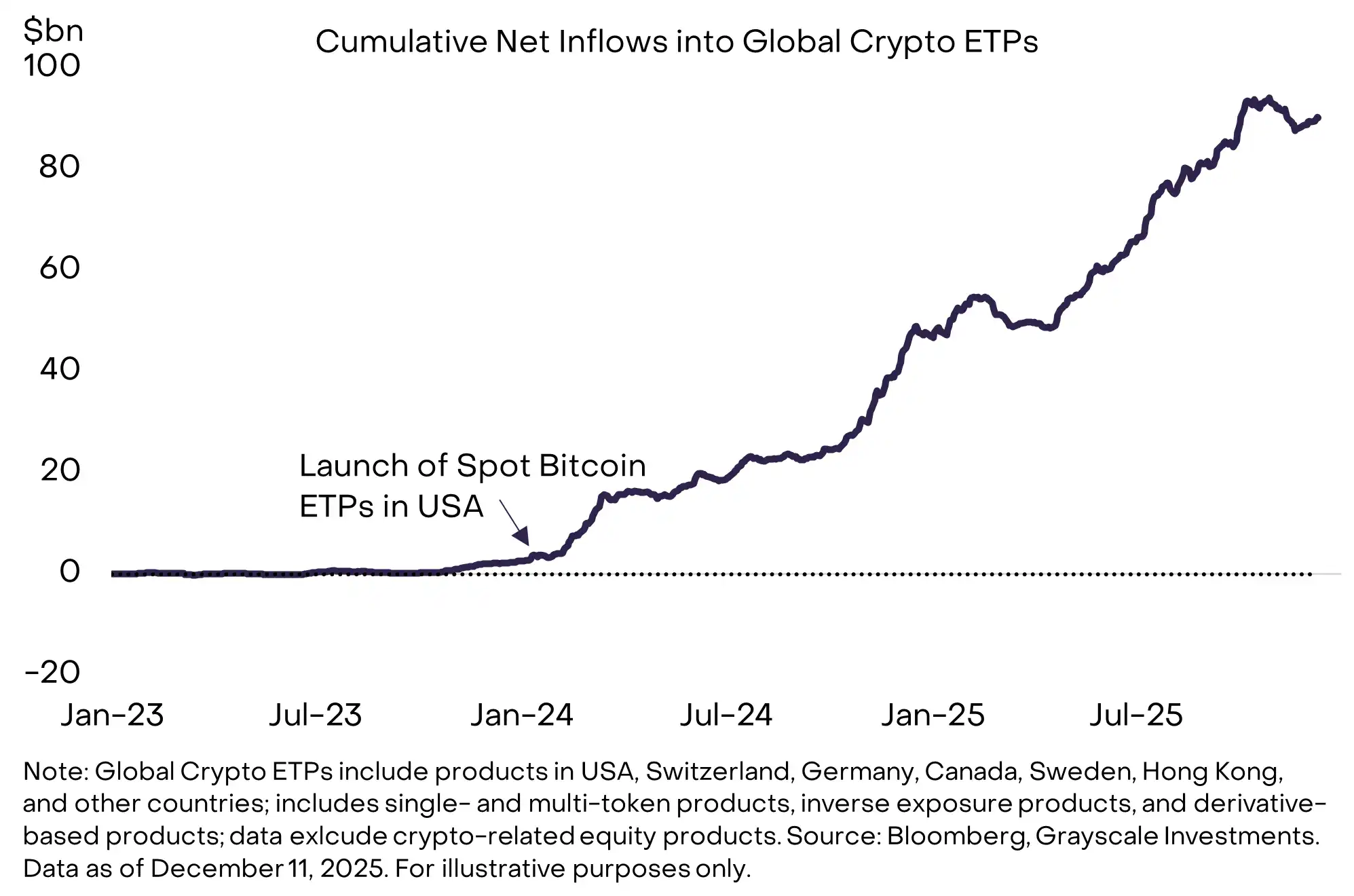
In our view, new funds entering the crypto ecosystem will primarily flow in through spot ETPs. Since the launch of Bitcoin spot ETPs in the U.S. in January 2024, global crypto ETPs have recorded approximately $87 billion in net inflows (see Chart 5).
Although these products achieved significant success at launch, the process of incorporating crypto assets into mainstream portfolios is still in its early stages. Grayscale estimates that the proportion of crypto assets in the wealth managed by U.S. trustees/advisors is still less than 0.5%. As more investment platforms complete due diligence, establish corresponding capital market assumptions, and incorporate crypto assets into model portfolios, this proportion is expected to continue to rise.
In addition to wealth management channels, some pioneering institutions have already allocated crypto ETPs in their institutional portfolios, including Harvard Management Company and Mubadala (one of Abu Dhabi's sovereign wealth funds). We expect that by 2026, this list of institutions will expand significantly.
Chart 5: Crypto spot ETPs continue to attract net inflows
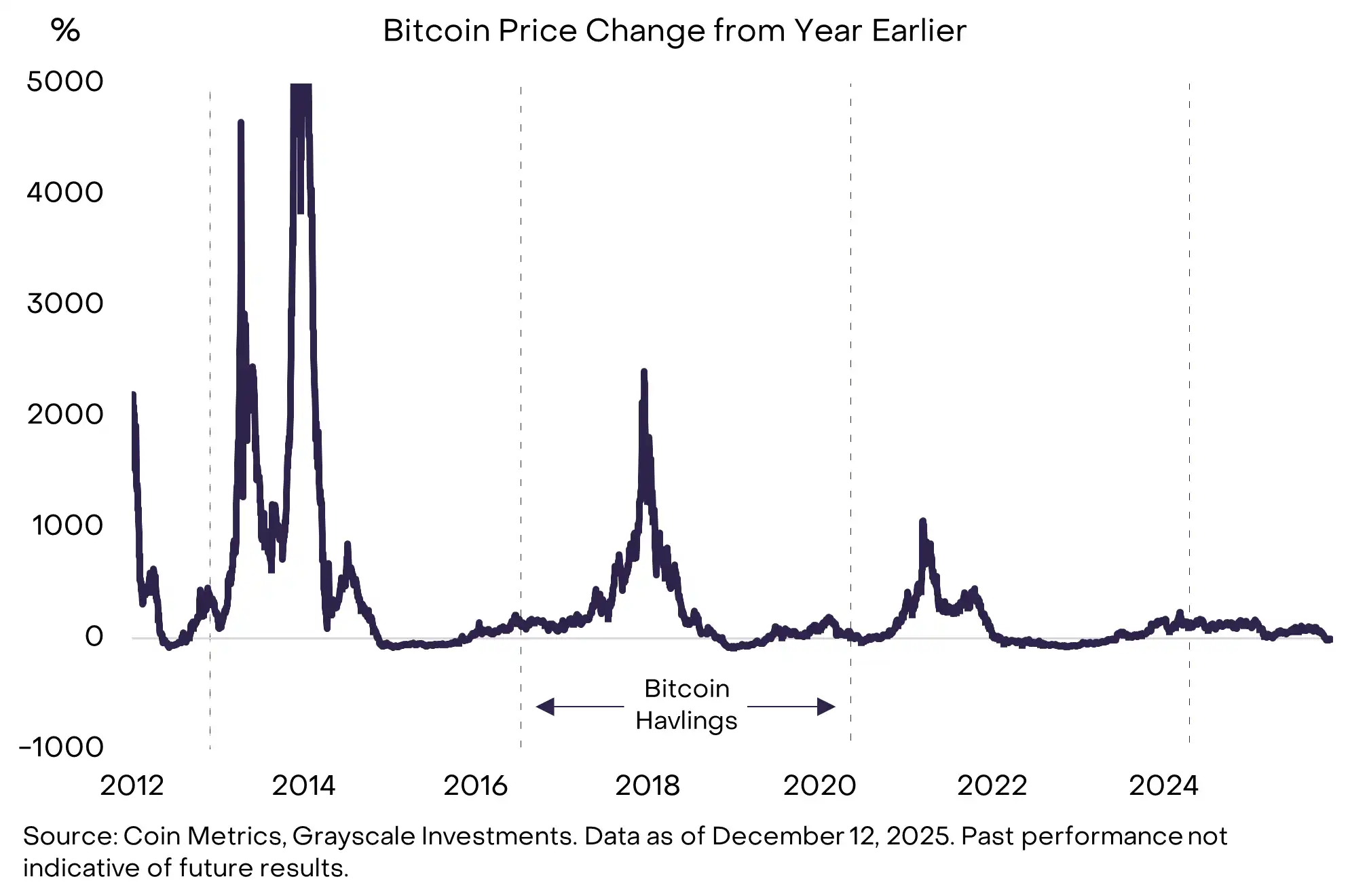
As the crypto market is increasingly driven by institutional capital inflows, the characteristics of price performance are also changing. In each previous bull market, Bitcoin's price had risen by at least 1000% within a year (see Chart 6). In this cycle, the highest year-on-year increase was about 240% (as of the annual interval ending in March 2024).
We believe that this difference reflects a more robust and sustained institutional buying behavior in recent times, rather than the past cycles driven by retail sentiment chasing price increases. Although investing in crypto assets still carries significant risks, at the time of writing this report, we assess that the probability of experiencing a deep and prolonged cyclical pullback is relatively low. In contrast, driven by the continuous inflow of institutional capital, prices are more likely to exhibit a smoother, gradual upward trend, which is expected to become the dominant movement next year.
Chart 6: Bitcoin prices have not experienced dramatic surges in this cycle
A relatively favorable macro market environment may also provide some buffer against downside risks for token prices in 2026.
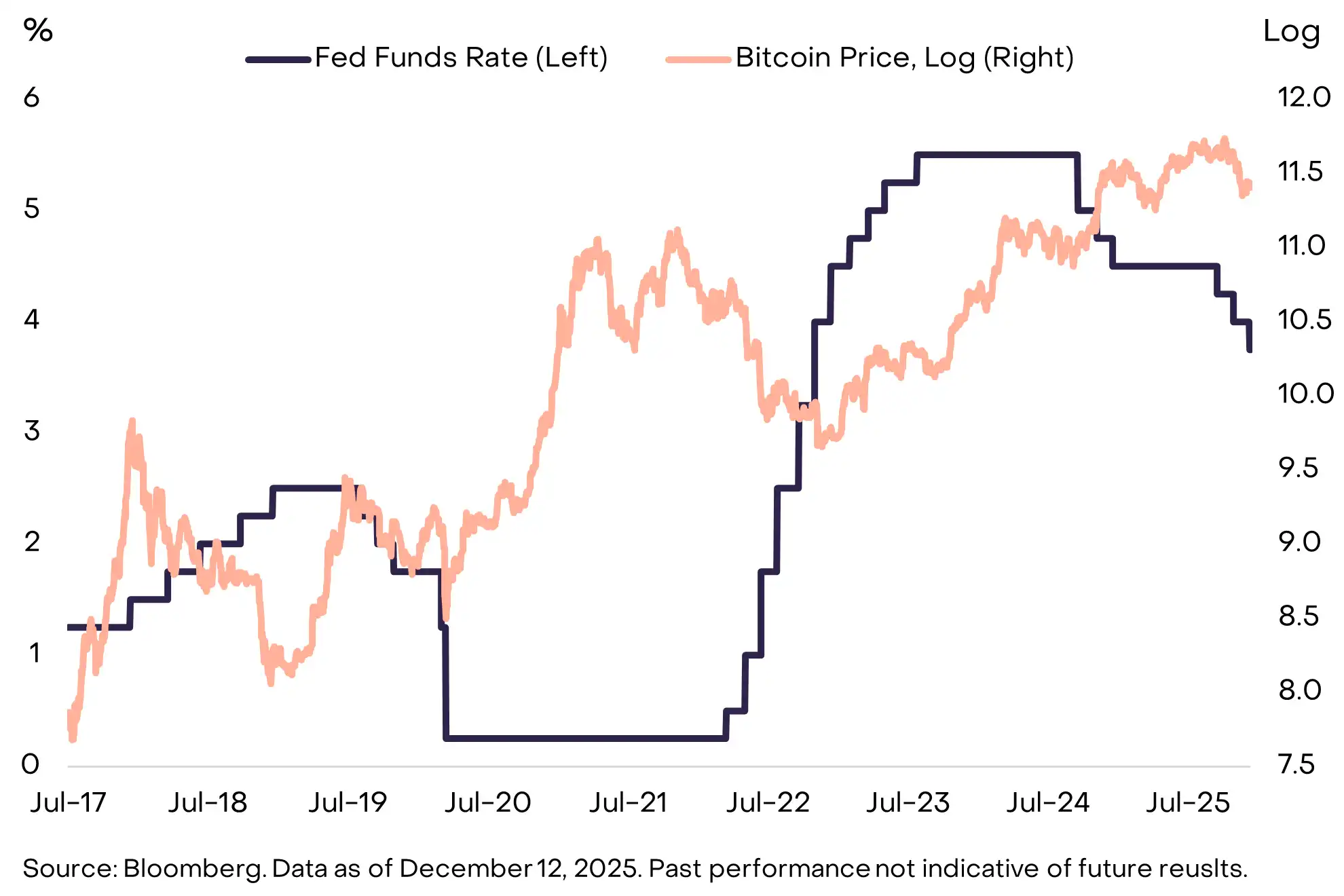
Historically, the previous two cyclical peaks occurred during periods of Federal Reserve interest rate hikes (see Chart 7). In contrast, the Federal Reserve has cut rates three times in 2025 and is expected to continue lowering rates next year.
Kevin Hassett, who is seen as a potential successor to Jerome Powell as the Federal Reserve Chair, recently stated on "Face the Nation": "The American people can expect that President Trump will choose someone who can help them get cheaper auto loans and make it easier to obtain mortgages at lower interest rates."
Overall, economic growth combined with a relatively accommodative Federal Reserve policy environment typically enhances investors' risk appetite and creates potential upside for risk assets, including crypto assets.
Chart 7: Previous cyclical peaks often coincided with Federal Reserve interest rate hikes
Like other asset classes, the prices of crypto assets are also driven by fundamentals and capital flows. The commodity market exhibits cyclical characteristics, and crypto assets may also experience prolonged cyclical pullbacks at certain stages in the future. However, we believe that 2026 does not possess such conditions.
From a fundamental perspective, the supporting factors remain solid: the ongoing macro demand for alternative value storage tools and the influx of institutional capital driven by improved regulatory clarity are laying a long-term foundation for public blockchain technology. Meanwhile, new capital continues to enter the market. By the end of next year, crypto ETPs are likely to appear in more investment portfolios. This cycle has not seen a single, concentrated wave of retail capital; instead, there is a continuous and stable demand for crypto ETPs from various investment portfolios. In an overall relatively favorable macro environment, we believe this is a key condition for the crypto asset class to reach new highs in 2026.
Top Ten Crypto Investment Themes for 2026
Crypto assets are a highly diversified asset class that reflects the various application scenarios covered by public blockchain technology. The following section outlines Grayscale's judgments on the ten most important crypto investment themes for 2026, along with two "red herrings." Under each theme, we list the tokens that we believe are most relevant. For a classification of investable digital asset types, please refer to our Crypto Sectors framework.
Theme 1: The Risk of Dollar Depreciation Drives Demand for Currency Alternatives
Relevant Crypto Assets: BTC, ETH, ZEC
The U.S. economy is facing structural debt issues (see Chart 3), which may exert pressure on the dollar's status as a value storage tool in the medium to long term. Other countries face similar challenges, but since the dollar remains the most important international currency today, the credibility of U.S. policy is particularly crucial for potential cross-border capital flows.
In our view, only a small portion of digital assets has the feasibility to become value storage tools, with prerequisites including: a sufficiently broad adoption base, a highly decentralized network structure, and limited supply growth. The most typical representatives are the two largest crypto assets by market capitalization—Bitcoin and Ethereum. Similar to physical gold, their value partly derives from their scarcity and autonomy.
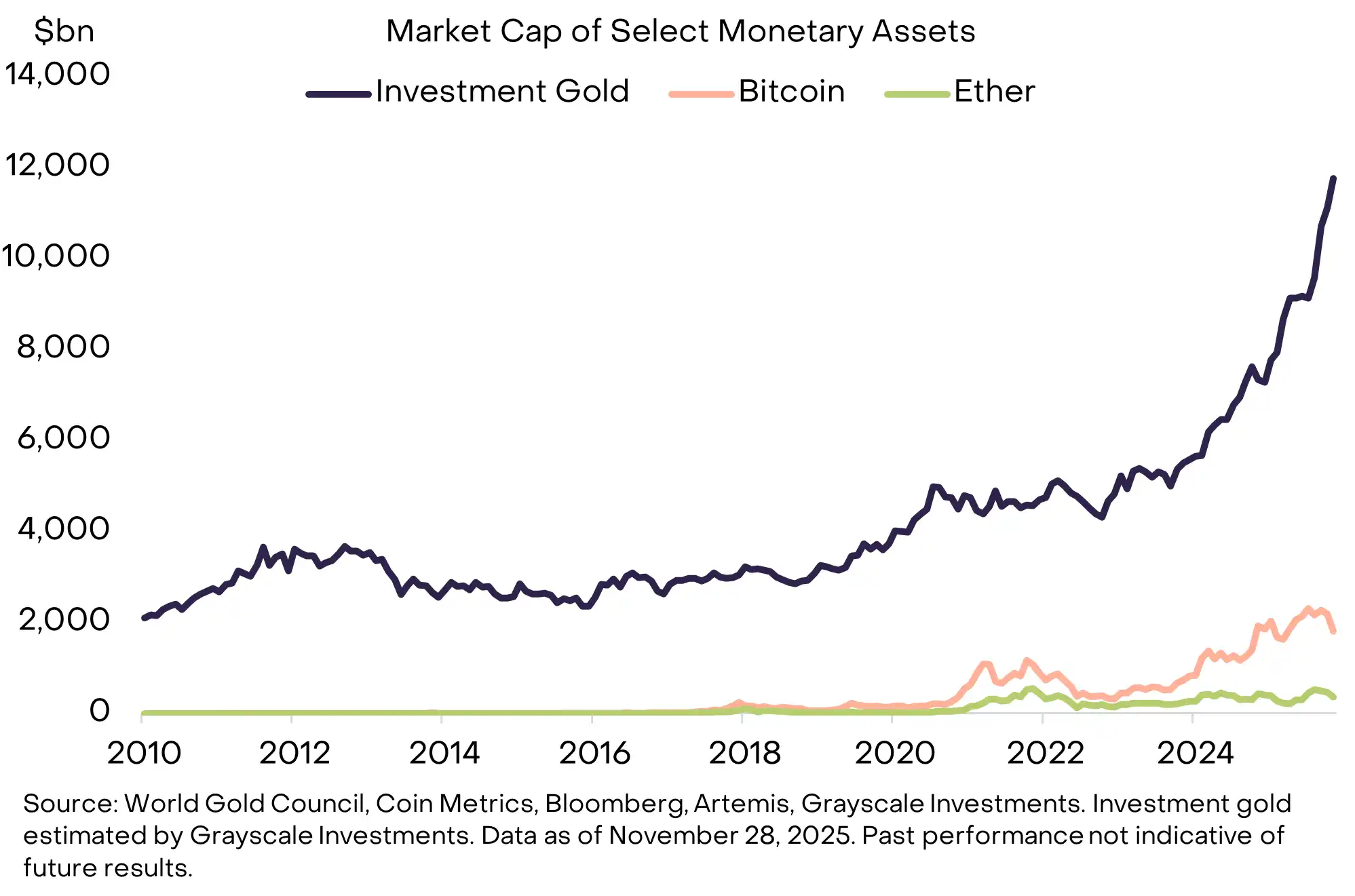
The total supply of Bitcoin is permanently capped at 21 million coins, entirely determined by program rules. For example, we can be highly certain that the 20 millionth Bitcoin will be mined in March 2026. This transparent, predictable, and ultimately scarce digital currency system is not a complex concept, but its appeal is continuously rising in the current environment where the fiat currency system faces tail risks. As long as the macro imbalances causing fiat currency risks continue to worsen, the demand for alternative value storage assets in investment portfolios may continue to rise (see Chart 8).
Additionally, Zcash, as a smaller decentralized digital currency with privacy features, may also be suitable for hedging against dollar depreciation risk in investment portfolios (see Theme 5).
Chart 8: Macro imbalances may drive increased demand for alternative value storage tools
Theme 2: Improved Regulatory Clarity Supports the Widespread Adoption of Digital Assets
Relevant Crypto Assets: Almost all
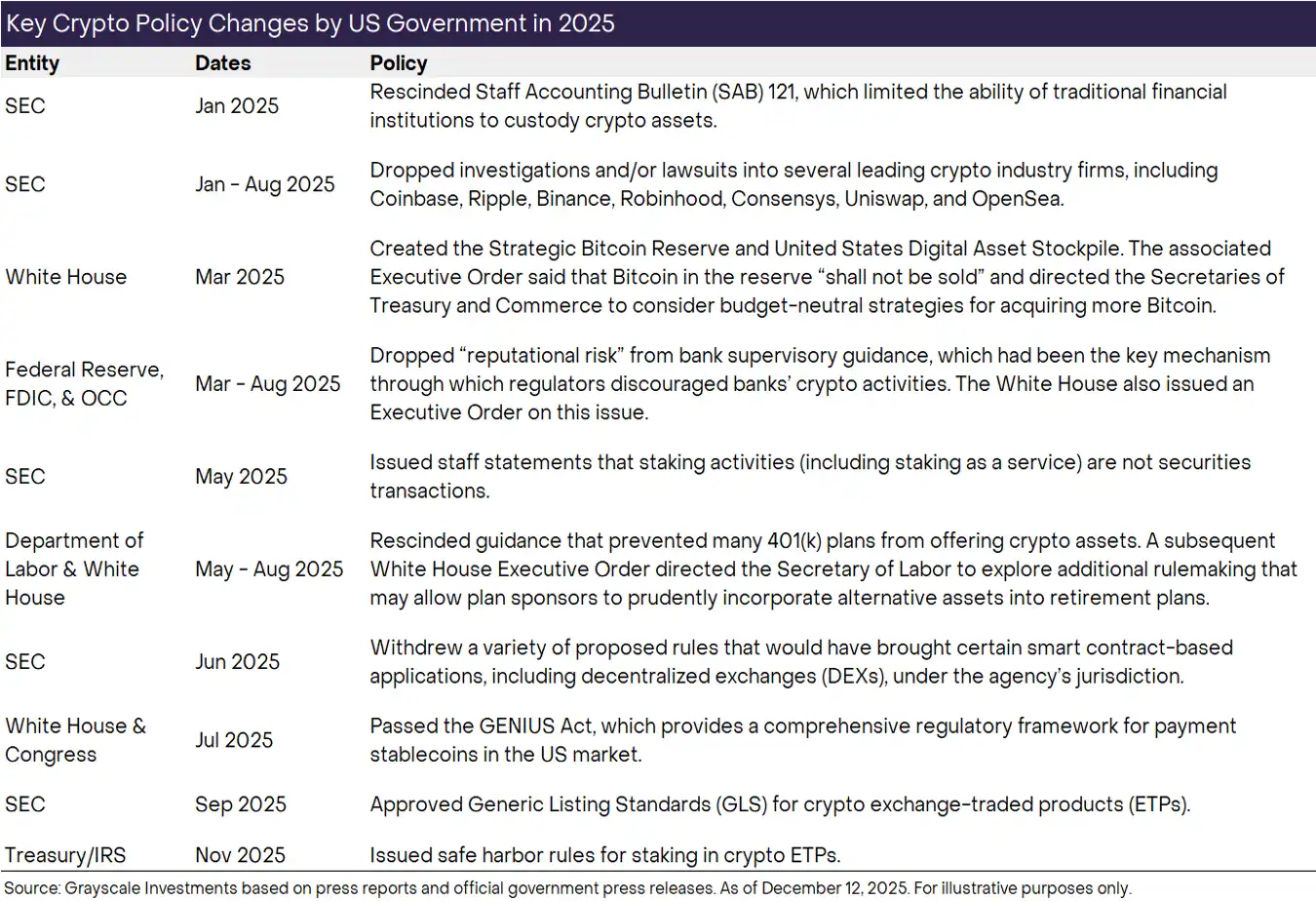
In 2025, the U.S. took a key step toward regulatory clarity for crypto, including: the passage of the GENIUS Act for stablecoins, the repeal of the SEC's Staff Accounting Bulletin No. 121 (SAB 121, related to custody accounting treatment), the introduction of universal listing standards for crypto ETPs, and efforts to address the crypto industry's access issues within the traditional banking system (see Chart 9).
Looking ahead to 2026, we expect another decisive step—the passage of bipartisan-supported legislation for the crypto market structure. The U.S. House of Representatives passed its version of the bill, the "Clarity Act," in July, and the Senate subsequently initiated its legislative process. Although specific terms still require further negotiation, the overall framework of this legislation will provide a set of rules for the crypto capital market that aligns with traditional finance, covering registration and disclosure requirements, classification standards for crypto assets, and conduct regulations for insiders.
In practice, a more complete regulatory framework gradually taking shape in the U.S. and other major economies means that regulated financial service institutions may formally incorporate digital assets into their balance sheets and begin trading on the blockchain. This is also expected to promote on-chain capital formation—both startups and established companies may issue compliant on-chain tokens. By further unleashing the potential of blockchain technology, regulatory clarity is expected to elevate the value center of the crypto asset class as a whole.
Given the potential importance of regulatory clarity in driving the development of crypto assets in 2026, we believe that significant disagreements or breakdowns among Congress members during the legislative process should be viewed as a major downside risk.
Chart 9: The U.S. made significant progress in advancing crypto regulatory clarity in 2025
Theme 3: The Impact of the GENIUS Act Continues to Expand for Stablecoins
Relevant Crypto Assets: ETH, TRX, BNB, SOL, XPL, LINK
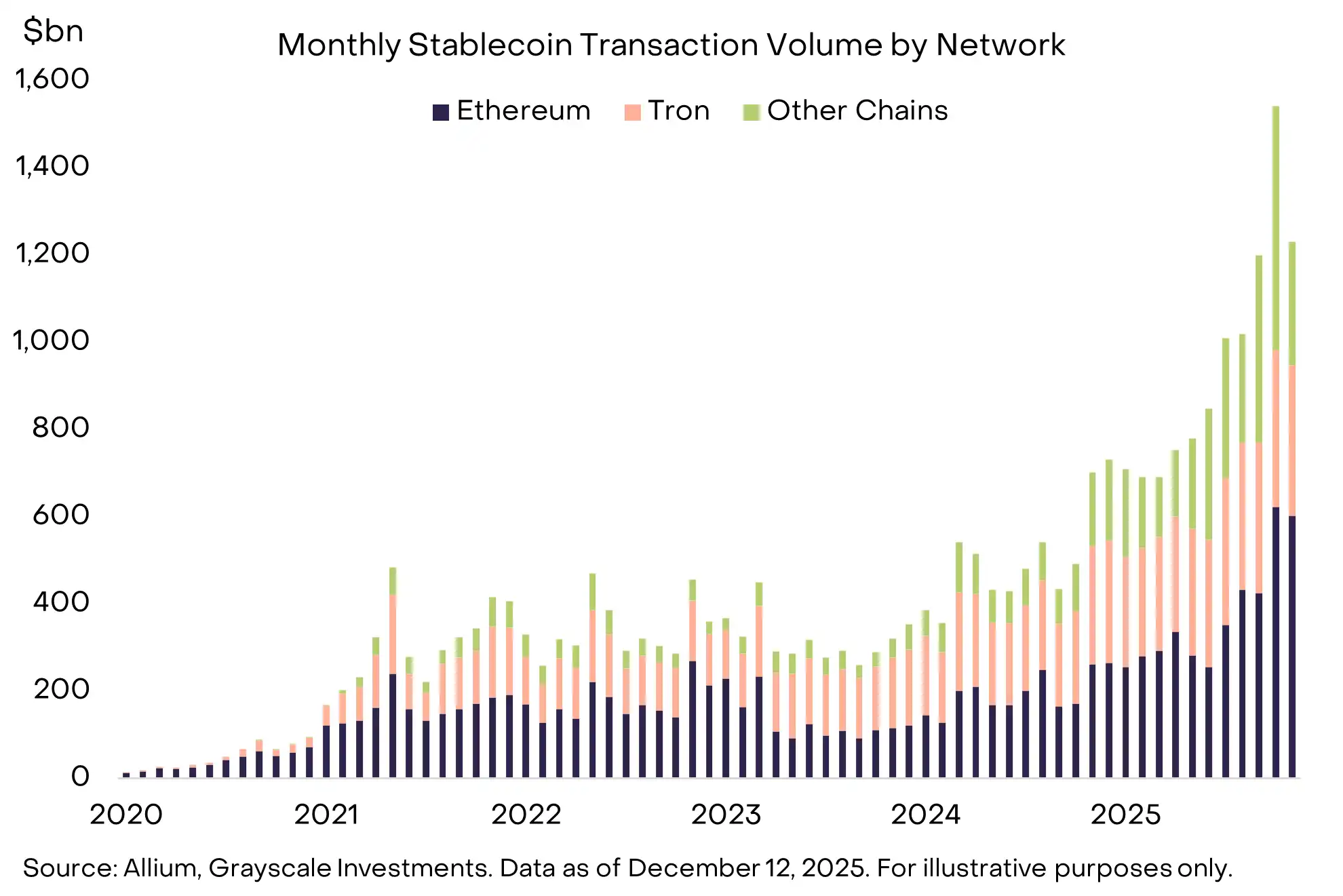
Stablecoins experienced a true "breakthrough moment" in 2025: their circulating supply rose to approximately $300 billion, with an average monthly trading volume of about $1.1 trillion over the past six months as of November; meanwhile, the U.S. Congress passed the GENIUS Act, leading to a significant acceleration of institutional capital inflows into this sector (see Chart 10).
Looking ahead to 2026, we expect these changes to translate into tangible applications: stablecoins will be more widely integrated into cross-border payment services; used as collateral for derivatives exchanges; appear on corporate balance sheets; and become an alternative to credit cards in online consumer payments. At the same time, the continued warming of prediction markets may further generate new demand for stablecoins.
The sustained growth in stablecoin trading volume will directly benefit the blockchain networks that support these transactions (e.g., ETH, TRX, BNB, SOL, etc.), while also driving the development of a series of supporting infrastructures (such as LINK) and decentralized finance (DeFi) applications (see Theme 7).
Chart 10: Stablecoins are entering a critical explosive period
Theme 4: Asset Tokenization Reaches a Critical Turning Point
Relevant Crypto Assets: LINK, ETH, SOL, AVAX, BNB, CC
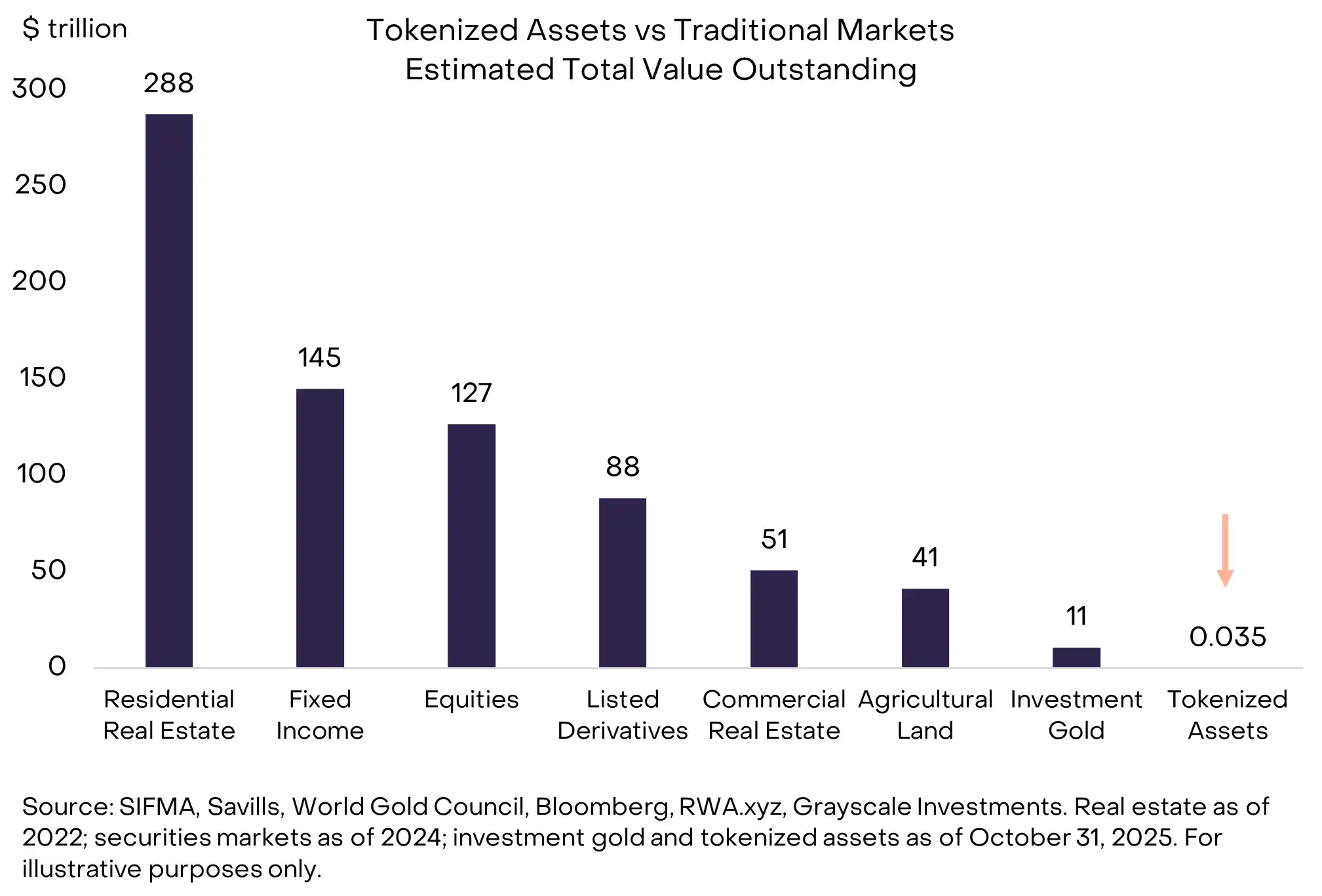
In terms of current scale, tokenized assets remain insignificant: they account for only about 0.01% of the total market capitalization of global stocks and bonds (see Chart 11). Grayscale expects that as blockchain technology matures and regulatory clarity continues to improve, asset tokenization will experience accelerated growth in the coming years.
In our view, it is not unimaginable for the scale of tokenized assets to achieve approximately 1,000 times growth by 2030. This expansion process is likely to create significant value for blockchain networks that handle tokenized asset transactions and various supporting applications.
Currently, leading public chains in the tokenized asset space include Ethereum (ETH), BNB Chain (BNB), and Solana (SOL), but this landscape may change in the future. In terms of supporting applications, Chainlink (LINK) is considered to have a particularly outstanding competitive advantage due to its unique and comprehensive software technology stack.
Chart 11: Tokenized assets have enormous growth potential
Theme 5: Blockchain Moves into the Mainstream, Increasing Demand for Privacy Solutions
Relevant Crypto Assets: ZEC, AZTEC, RAIL
Privacy is a fundamental component of the financial system. Most people assume that their salary income, tax information, asset scale, and consumption behavior should not be publicly displayed on a public ledger. However, most current blockchains are designed with a default of high transparency. If public blockchains are to integrate more deeply into the financial system, they must be accompanied by more mature and robust privacy infrastructure—and this is becoming increasingly evident as regulation drives the integration of blockchain and traditional finance.
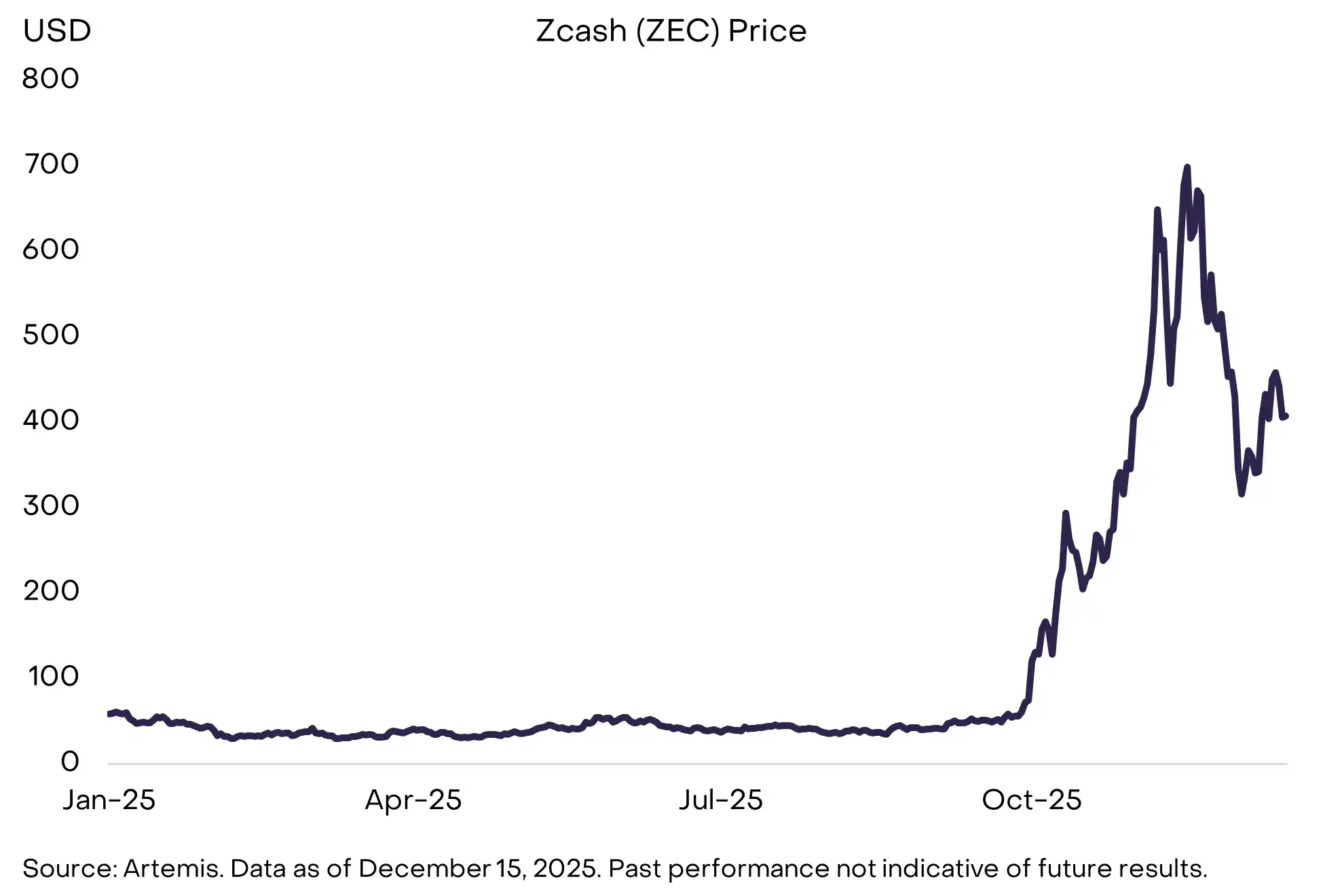
In the context of increasing investor attention to privacy issues, one potential beneficiary is Zcash (ZEC): a decentralized digital currency structurally similar to Bitcoin but with built-in privacy protection features. Zcash saw a significant increase in the fourth quarter of 2025 (see Chart 12). Other important projects include Aztec (a privacy-focused Ethereum Layer 2 network) and Railgun (a privacy middleware for DeFi).
Additionally, we may see mainstream smart contract platforms begin to adopt "confidential transactions" mechanisms more widely, such as Ethereum's ERC-7984 standard and Solana's Confidential Transfers token extension. Meanwhile, the improvement of privacy tools may also compel the DeFi sector to upgrade its identity verification and compliance infrastructure in tandem.
Chart 12: Crypto investors' attention to privacy features is increasing
Theme 6: AI Moves Towards Centralization, Calling for Blockchain Solutions
Relevant Crypto Assets: TAO, IP, NEAR, WORLD
The underlying compatibility between crypto technology and artificial intelligence has never been as clear and strong as it is today. Currently, AI systems are gradually concentrating in the hands of a few leading companies, raising a series of concerns about trust, bias, and ownership; crypto technology precisely provides a set of foundational capabilities (primitives) that can directly address these risks.
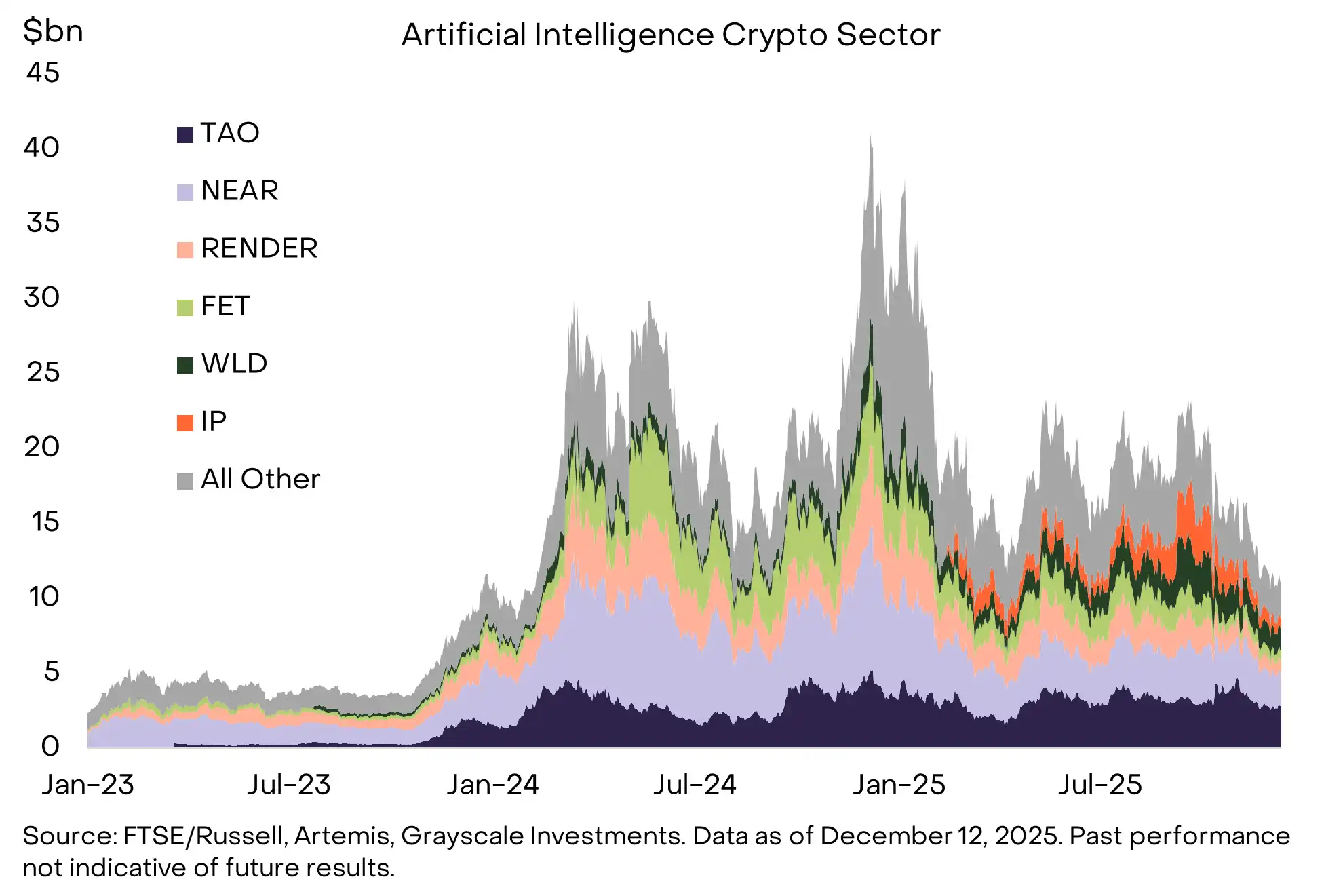
For example, decentralized AI development platforms like Bittensor aim to reduce reliance on centralized AI technologies; World offers verifiable "Proof of Personhood" to distinguish real humans from intelligent agents in an environment flooded with synthetic activities; and networks like Story Protocol provide transparent, traceable on-chain expressions for intellectual property in an era where the sources of digital content are increasingly difficult to identify. Meanwhile, tools like X402, a zero-fee stablecoin payment layer running on Base and Solana, provide the necessary low-cost, instant micropayment capabilities for economic interactions between agents or between machines and humans.
These elements together form the early infrastructure of what is called the "agent economy": in this system, identity, computing power, data, and payments must possess verifiable, programmable, and censorship-resistant characteristics. Although this ecosystem is still in its early stages and development is uneven, the intersection of crypto and AI remains one of the most promising application directions in the entire industry. As AI becomes more decentralized, autonomous, and capable of economic behavior, protocols that are building real infrastructure are expected to become potential beneficiaries (see Chart 13).
Chart 13: Blockchain provides pathways to address some key risks for AI
Theme 7: DeFi Accelerates Development, Led by the Lending Sector
Relevant Crypto Assets: AAVE, MORPHO, MAPLE, KMNO, UNI, AERO, RAY, JUP, HYPE, LINK
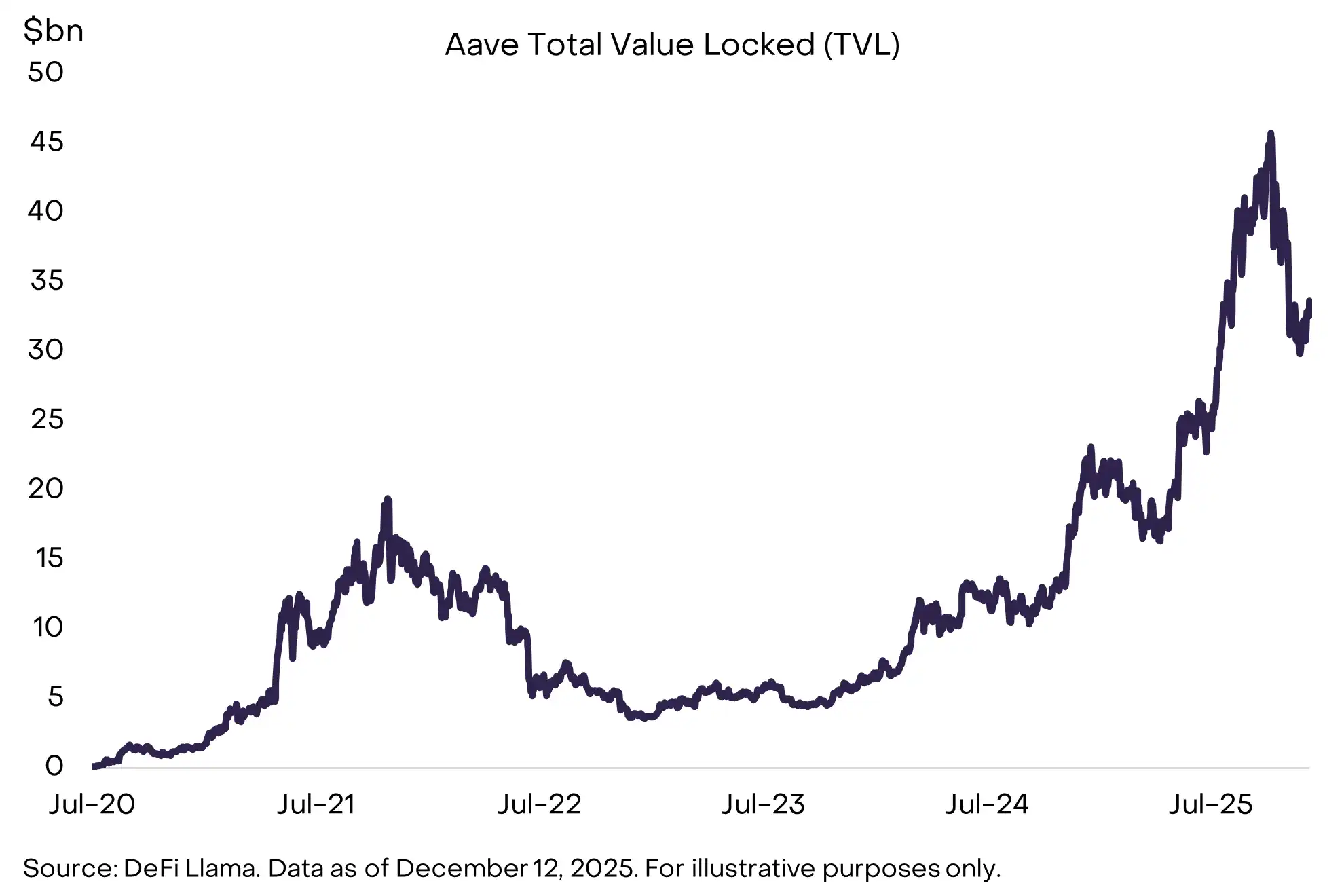
Driven by both technological maturity and an improved regulatory environment, DeFi applications significantly accelerated in 2025. The growth of stablecoins and tokenized assets is one of the most prominent success stories, but at the same time, the DeFi lending sector has also achieved substantial expansion, led by protocols such as Aave, Morpho, and Maple Finance (see Chart 14).
Meanwhile, decentralized perpetual contract exchanges (such as Hyperliquid) have consistently approached or even matched some large centralized derivatives exchanges in terms of open contract size and daily trading volume. Looking ahead, as liquidity improves, cross-protocol interoperability enhances, and connections to real-world price systems become tighter, DeFi is gradually becoming a trusted alternative for users wishing to conduct financial activities directly on-chain.
We expect more DeFi protocols to collaborate with traditional fintech companies to leverage their mature infrastructure and existing user bases. In this process, core DeFi protocols are likely to continue benefiting—including lending platforms (like AAVE), decentralized exchanges (like UNI, HYPE), and related infrastructure protocols (like LINK); at the same time, public chain networks that host most DeFi activities (such as ETH, SOL, BASE) will also benefit.
Chart 14: The scale and form of DeFi continue to expand, with an increasingly diverse ecosystem
Theme 8: Mainstream Adoption Forces Upgrades to Next-Generation Infrastructure
Relevant Crypto Assets: SUI, MON, NEAR, MEGA
Next-generation blockchains are continuously pushing the boundaries of technology forward. However, some investors believe that there is currently no need for more block space, as the demand for existing public chains has not yet been fully absorbed. Solana was once a typical case of this skepticism: as a high-performance public chain with limited usage, it was seen as "excess block space" until the subsequent wave of applications arrived, allowing it to grow into one of the most successful examples in the industry.
Not all current high-performance public chains will replicate Solana's path, but we believe that a few projects among them are likely to achieve breakthroughs. Superior technology does not necessarily lead to adoption, but the architecture of these next-generation networks gives them unique advantages in emerging application scenarios, such as AI micropayments, real-time gaming loops, high-frequency on-chain trading, and intent-based systems.
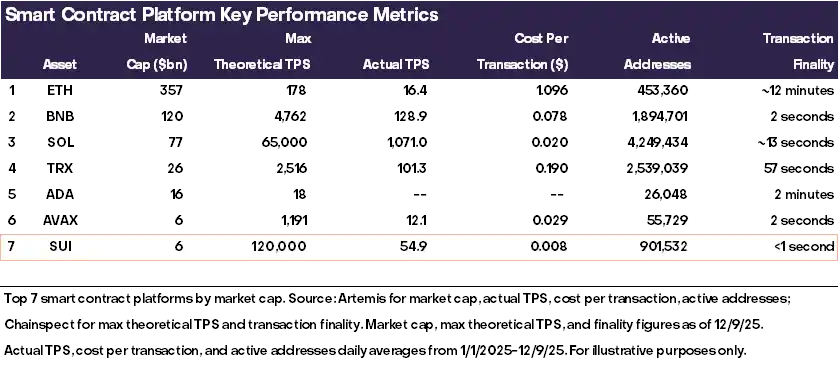
In this tier, we expect Sui to stand out, benefiting from its clear technological leadership and highly integrated development strategy (see Chart 15). Other noteworthy projects include Monad (parallelized EVM architecture), MegaETH (ultra-fast Ethereum Layer 2 network), and Near (focusing on AI and making progress with its Intents product).
Chart 15: Next-generation blockchains like Sui can achieve faster and lower-cost transaction experiences
Theme 9: Greater Focus on Sustainable Revenue Generation
Relevant Crypto Assets: SOL, ETH, BNB, HYPE, PUMP, TRX
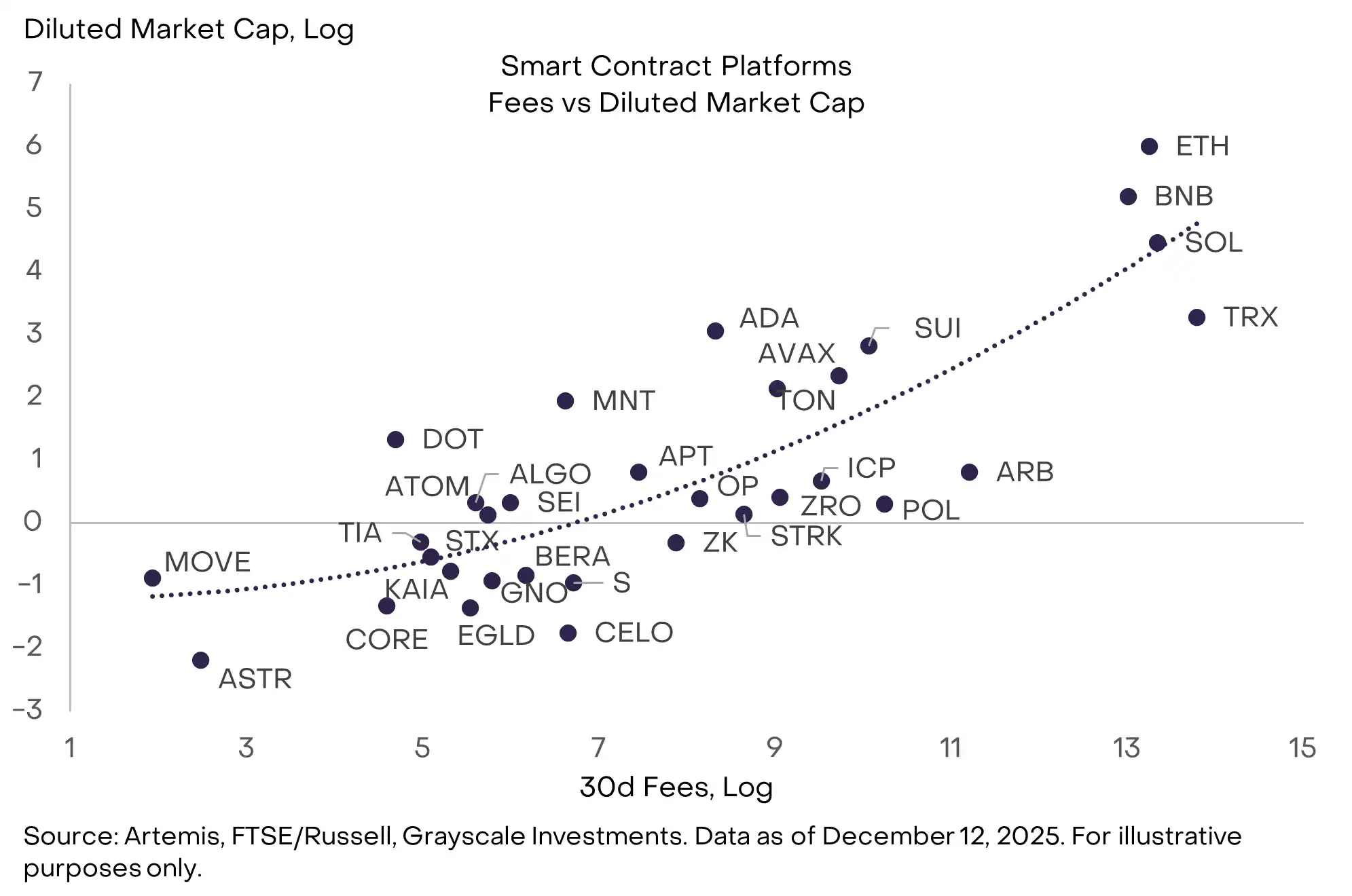
Blockchains are not traditional enterprises, but they also possess quantifiable fundamental indicators, including: user numbers, transaction counts, fees, locked funds (capital/TVL), developer scale, and application ecosystems. Among these indicators, Grayscale believes that transaction fees are the most valuable single fundamental indicator because they are the hardest to manipulate artificially and have higher comparability across different blockchains (while also exhibiting the best empirical fit).
From the perspective of traditional corporate finance, transaction fees can be likened to "revenue." For blockchain applications, it is also necessary to further distinguish between protocol-level fees/revenue and "supply-side" fees/revenue. As institutional investors begin to systematically allocate crypto assets, we expect them to pay more attention to blockchains and applications with higher fee revenue levels or clear growth trends (excluding Bitcoin).
Currently, among smart contract platforms, those with relatively high fee revenues include TRX, SOL, ETH, and BNB (see Chart 16); while in application-layer assets, projects with high revenue performance include HYPE, PUMP, and others.
Chart 16: Institutional investors may scrutinize the fundamental performance of blockchains more rigorously
Theme 10: Investors Will "Default" to Staking
Relevant Crypto Assets: LDO, JTO
In 2025, U.S. policymakers made two key adjustments regarding staking mechanisms, paving the way for more token holders to participate in staking activities:
(1) The U.S. Securities and Exchange Commission (SEC) explicitly stated that liquid staking activities do not constitute securities transactions;
(2) The U.S. Internal Revenue Service (IRS) and the Treasury confirmed that investment trusts and exchange-traded products (ETPs) can stake digital assets.
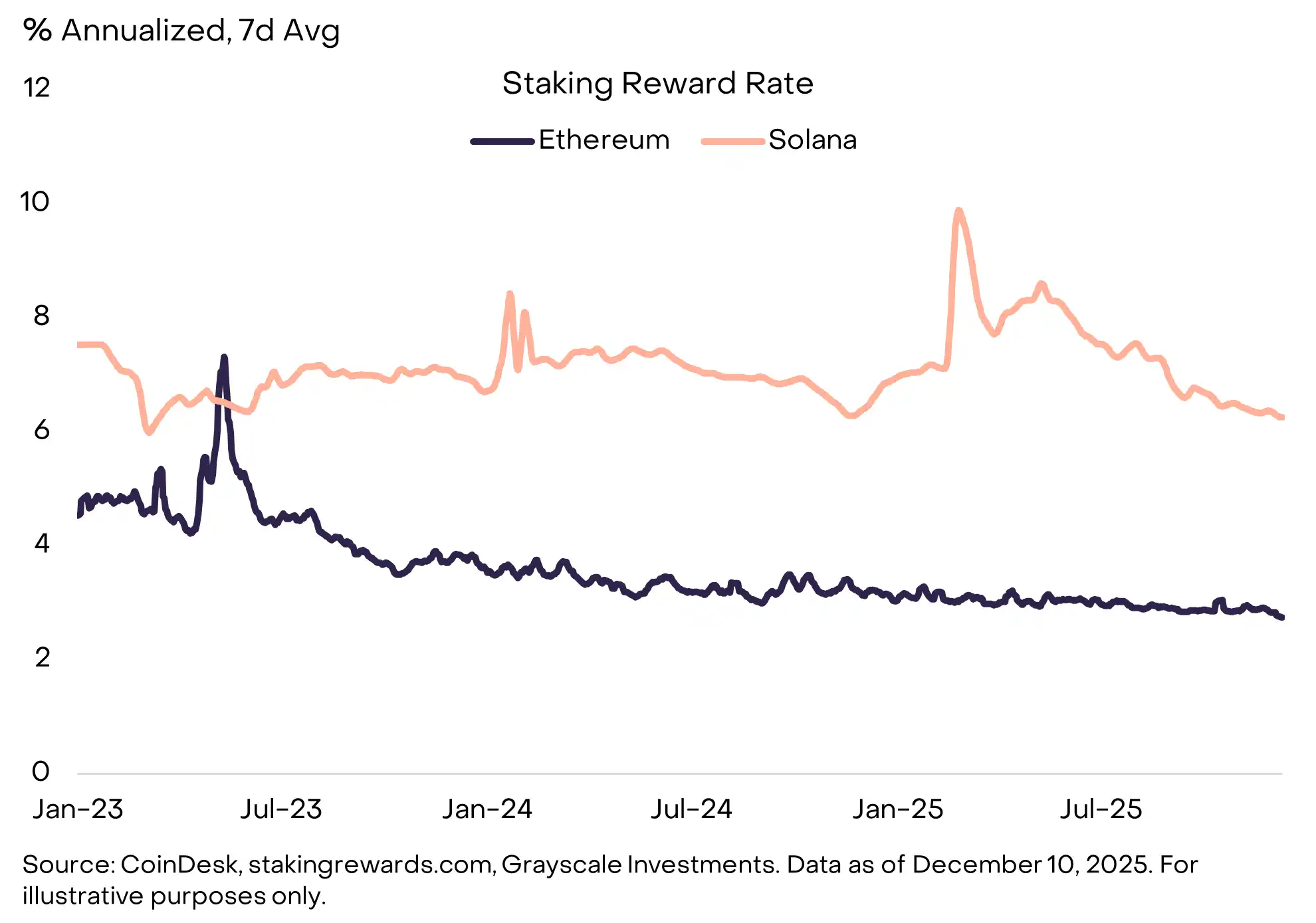
The regulatory guidance surrounding liquid staking services is expected to directly benefit Lido and Jito—both of which are leading liquid staking protocols in the Ethereum and Solana ecosystems, respectively, based on TVL (total value locked). From a broader perspective, the ability of crypto ETPs to participate in staking is likely to make "staking as a default holding method" the standard structure for proof-of-stake (PoS) token investments, thereby raising the overall staking ratio and exerting some downward pressure on staking returns (see Chart 17).
In an environment where staking is more widely adopted, custodial staking through ETPs will provide investors with a convenient way to earn staking rewards; while on-chain, non-custodial liquid staking will have unique advantages in terms of composability within the DeFi ecosystem. We expect this dual-track coexistence structure to persist for quite some time.
Chart 17: PoS tokens inherently possess staking yield mechanisms
Red Herrings for 2026
We expect that the aforementioned investment themes will have a tangible impact on the development of the crypto market in 2026. However, there are also two topics that, despite high discussion volume, we do not believe will materially influence the crypto market trends next year: the potential threat of quantum computing to cryptography and the evolution of Digital Asset Trusts (DATs). A significant amount of market attention will be devoted to these two issues, but in our view, they are not core variables determining the market outlook.
Regarding Quantum Computing
If the technological advancements in quantum computing continue to progress, most blockchains will eventually need to upgrade their cryptographic systems. Theoretically, sufficiently powerful quantum computers could derive private keys from public keys, thereby generating valid digital signatures and transferring user assets. Therefore, Bitcoin, along with the vast majority of blockchains and the entire modern economic system that relies on cryptography, will need to transition to post-quantum cryptographic tools in the long term. However, experts generally believe that quantum computers capable of breaking Bitcoin's cryptography are unlikely to emerge before 2030. We expect that research and community-level preparations around quantum risks will accelerate in 2026, but this theme is unlikely to have a substantial impact on prices in the short term.
Regarding Digital Asset Trusts (DATs)
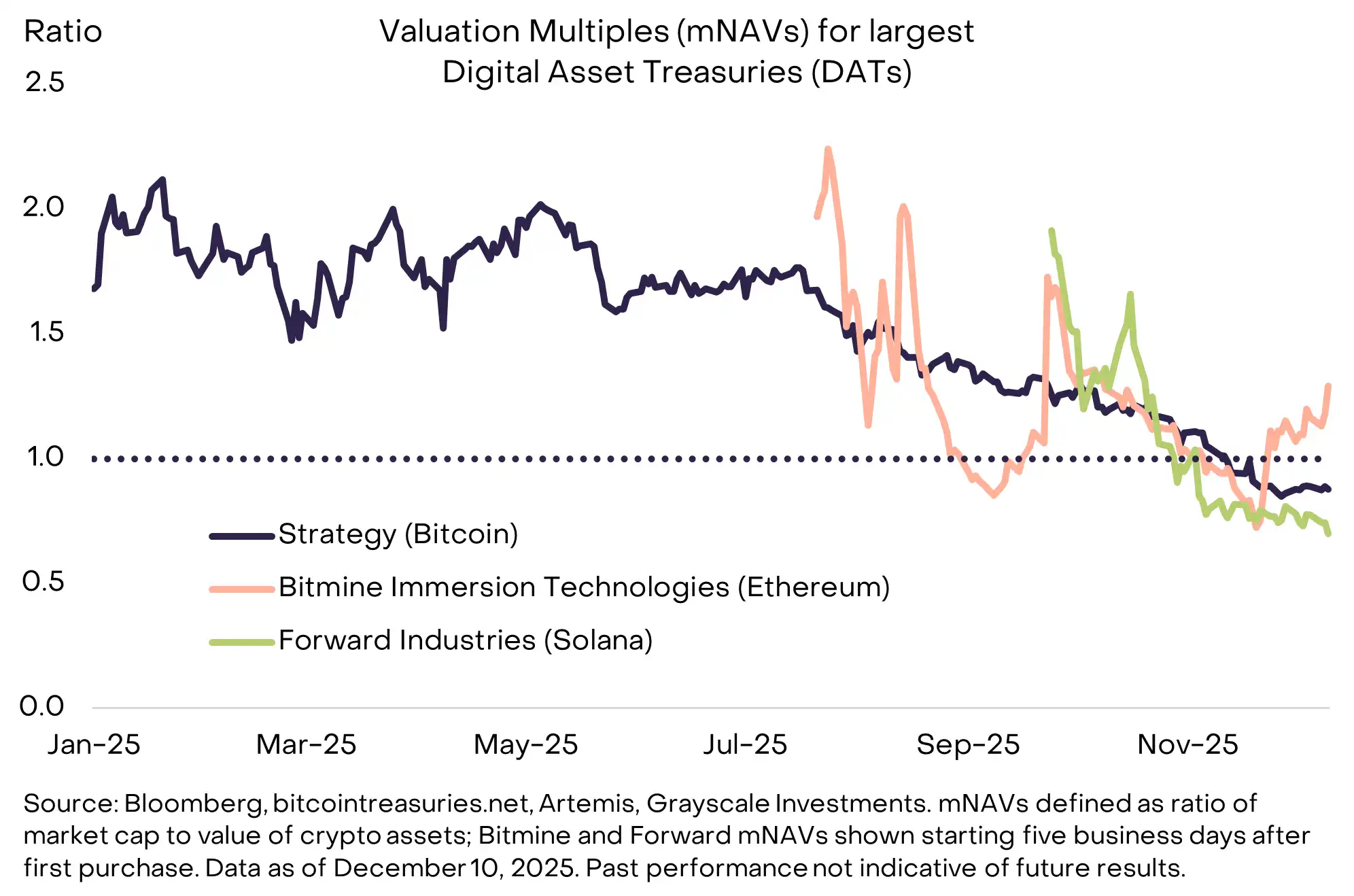
The strategy of "incorporating digital assets into corporate balance sheets," pioneered by Michael Saylor, has spawned dozens of imitators in 2025. According to our estimates, DATs currently hold 3.7% of the total Bitcoin supply, 4.6% of Ethereum, and 2.5% of Solana. However, since the peak in mid-2025, demand for such tools has cooled: the largest DAT's mNAV (market value/net asset value) has recently fallen back to near 1.0 (see Chart 18).
It is important to note that most DATs have not employed excessive leverage (or have not leveraged at all), making it unlikely that they will be forced to sell assets during market downturns. The largest DAT by market value, Strategy, has recently established a dollar reserve fund to ensure that it can continue to pay dividends on its preferred stock even if Bitcoin prices fall. We expect that the behavior of most DATs will resemble that of closed-end funds: trading within a range around net asset value, occasionally trading at a premium or discount, but rarely actively liquidating assets.
Overall, these tools are likely to become a long-term component of the crypto investment landscape, but in our view, they are unlikely to become a major source of new token demand in 2026, nor are they likely to constitute a significant source of selling pressure.
Chart 18: DAT premium levels have significantly converged, but the likelihood of large-scale asset sales is low
Conclusion
We hold an optimistic view on the prospects for digital assets in 2026, supported by the resonance of two forces: the ongoing macro demand for alternative value storage tools and the continuous improvement in regulatory clarity. Key themes for next year are likely to revolve around the deepening connection between blockchain finance and traditional finance, as well as the continued influx of institutional capital. Tokens that gain institutional adoption often have clear use cases, sustainable revenue models, and the ability to enter compliant trading venues and application systems. Investors can also expect to see the range of crypto assets available for investment through ETPs continue to expand, with staking mechanisms being defaulted where conditions allow.
At the same time, regulatory clarity and the institutionalization process will raise the entry barriers to mainstream success. For example, crypto projects may need to meet new registration and disclosure requirements to enter regulated exchanges. Institutional investors are also more likely to overlook crypto assets that lack clear use cases—even if these assets currently have relatively high market values. The GENIUS Act legally distinguishes between regulated payment-type stablecoins (which enjoy corresponding rights and bear corresponding obligations under U.S. law) and other stablecoins (which do not have equivalent rights). Similarly, we expect that the institutional era of crypto assets will further widen the gap between assets that can enter compliant channels and connect with institutional capital and those that cannot gain equivalent access.
The crypto industry is entering a new phase, and not every token will successfully transition from the old era to the new one.
免责声明:本文章仅代表作者个人观点,不代表本平台的立场和观点。本文章仅供信息分享,不构成对任何人的任何投资建议。用户与作者之间的任何争议,与本平台无关。如网页中刊载的文章或图片涉及侵权,请提供相关的权利证明和身份证明发送邮件到support@aicoin.com,本平台相关工作人员将会进行核查。