The battlefield has entered its 17th day, the smoke over Tehran has not dissipated, but in the trading halls of London and New York, the bets on when this conflict will end have been increasing.
Everything originated from a bold estimation model proposed by Marcko Papic, Chief Geopolitical Strategist at BCA Research: The probability of a ceasefire within two weeks is as high as 60%. This strategist simplified the complex war into a formula—subtracting Iran's "pain threshold" from the intensity of U.S. bombings, then subtracting the response strength of other countries globally, the remainder is the duration of the war.
As diplomats worked for a ceasefire, Wall Street algorithms were already pricing the "post-war order."
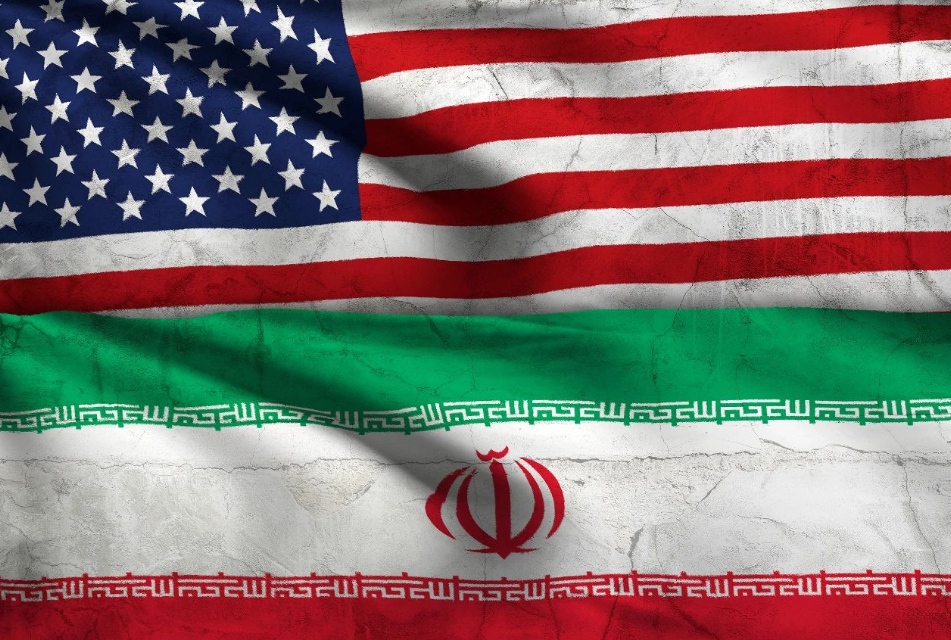
1. The battlefield enters "overtime": a signal of a final battle or a dying struggle?
● As of March 16, U.S. and Israeli military strikes against Iran have continued for 17 days, and the situation is far more complex than the Trump administration anticipated. Iran's Supreme Leader Ali Khamenei has appointed former commander of the Islamic Revolutionary Guard Corps, Mohsen Rezaei, as a military advisor, displaying a posture for prolonged combat. Iranian Foreign Minister Amir-Abdollahian has made strong statements: Iran has never requested a ceasefire and will continue to defend itself until the U.S. realizes this is an "illegal war that cannot be won."
● On the military front, Iran's counterattack tactics have undergone a qualitative change. According to observations from CCTV military experts, Iran has entered a new stage of "cascading strikes":
1. New weapons debut: Previously seldom-used ballistic missiles have been widely employed, even using hypersonic missiles to directly strike targets within Israel.
2. Combination attack strategy: Drones form an infiltration mode combining speed variability, stealth and non-stealth, making the Israeli military's "Iron Dome" ineffective.
3. Target diversification: The attack range has expanded from purely military targets to economic ones. The Iranian Islamic Revolutionary Guard Corps has stated it will target U.S. industries in the Middle East and has even suggested related personnel evacuate the region.
● Retired Major General Li Zhengjie pointed out a key signal in his analysis: Iran shot down a U.S. MQ-9 drone, proving its radar and air defense systems have not been destroyed and still possess aerial denial capability. He concludes that the first two weeks were merely the "opening battle," and we have now entered the real "final battle."
● This means that the critical variable in Papic's model—"the intensity of U.S. punitive bombings"—has managed to destroy over 6,000 military targets in Iran but has not fractured its core retaliatory capabilities.
2. A massive global "mediation group," but silence in the Strait of Hormuz
Another critical variable in Papic's model—the reactions of other countries globally—is evolving rapidly, but this evolution has not gone entirely according to the U.S. script.
1. Diplomatically: one-sided "mediation"
The President of the UAE and the Crown Prince of Saudi Arabia spoke over the phone, emphasizing that the situation threatens global stability and must immediately stop military escalation. The Iraqi Prime Minister spoke with the Egyptian President, calling on the international community to take responsibility and halt the conflict. The Russian Ministry of Foreign Affairs directly called for a ceasefire. Even in the streets of London, tens of thousands gathered to protest U.S. and Israeli actions, starkly contrasting with only a few hundred supporters on the other side.
2. Militarily: the U.S. faces an "ally Waterloo"
Trump's plan to form a "Hormuz Alliance" has suffered a major setback. British Prime Minister Starmer clearly stated that the UK "will not be drawn into a broader Middle Eastern war," and that securing navigation in the Strait of Hormuz is not NATO's mission. Countries like Germany, Poland, Greece, and Australia have successively rejected requests for troop deployment, either directly saying "no" or deflecting with "not participating under current conditions."
3. Shipping reality: the global artery is "bleeding"
Despite politicians' calculations, physical reality is harsh: global energy shipping through the Strait of Hormuz experienced its first total shutdown on the 14th. Although India secured the safety of its two oil tankers through negotiations, and France and Italy are reportedly in discussions with Tehran, these are merely isolated exceptions. The UAE's Fujairah Port—one of the few oil export hubs that can bypass the Strait of Hormuz—has been attacked, leading to a suspension of oil loading operations, and flights at Dubai International Airport were temporarily halted.
This situation starkly contrasts with the example from the 1980s cited by Papic. At that time, the U.S., France, the UK, and the Soviet Union jointly cleared mines to open the strait, but today, the division among global powers on Middle Eastern issues has made joint escort unattainable.
3. The capital's intuition: betting on ceasefire while scrambling for shortages
Amid this sense of division, the performance of financial markets is particularly strange. It seems to simultaneously believe in Papic's "two-week ceasefire theory" while pricing in the substantial damage to oil facilities.
1. Oil price "rollercoaster"
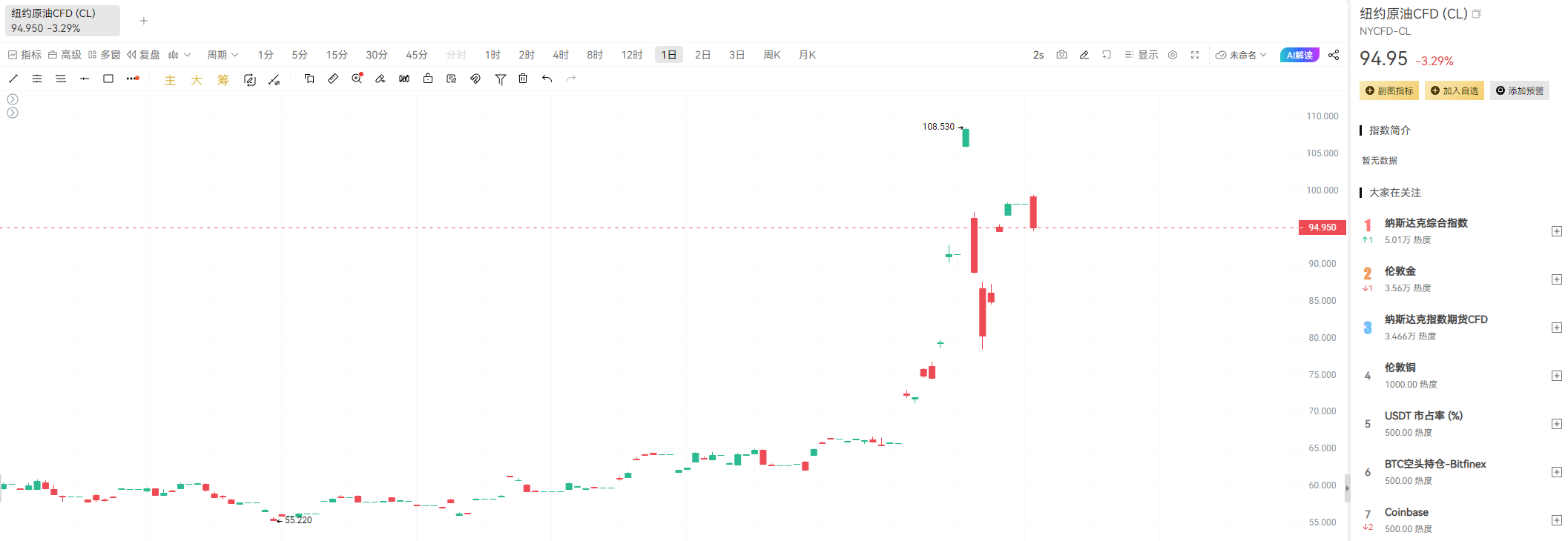
On March 16, New York light crude oil futures fell more than 5%, closing at $93.5 per barrel. This sharp drop has been interpreted as a market vote on short-term ceasefire expectations. However, this does not conceal another fact: oil prices remain in a high volatility range; any news about attacks on Fujairah Port or continued blockage of the Strait of Hormuz can instantly trigger buy orders.
2. Asset rotation: from oil itself to "water suppliers"
Papic previously recommended targets that would benefit from the conflict, including Brent crude oil futures, U.S. oil equipment industry ETFs, and tanker shipping sectors. Capital is precisely targeting these areas.
Although the data for U.S. oil equipment industry ETFs has not yet been fully updated, the logic remains robust: regardless of who wins, after Iran's oil field facilities suffer damage, the future demand for maintenance and new capacity globally will rise.
4. Insights on capital flow from the perspective of the AiCoin platform
In the face of such a complex geopolitical situation, ordinary investors often get lost in contradictory headlines. However, by using professional tools like the AiCoin platform, we can penetrate the fog and capture the essence of capital movement.
● Emotional games behind the candlesticks: By observing the recent trends of crude oil and related targets through AiCoin’s candlestick tool, we can clearly see the violent tug-of-war between "expectations" and "reality."
○ The significant decline in oil prices on March 16 formed a long bear candlestick on the chart, but trading volume did not shrink dramatically, which often signals the resolution of short-term profit-taking and the entry of new risk-averse funds. AiCoin’s multi-timeframe candlestick comparison feature helps investors distinguish whether this is a trend reversal or merely a technical correction at the daily level.
● Authenticity determined by capital flow: News may be fabricated, emotions can be colored, but the flow of real money does not lie. By using AiCoin’s main capital flow monitoring, we can track whether the oil shipping sector (like Sinochem South Oil) on an active day is being driven by retail speculation or institutional accumulation.
○ Data shows that despite the sector’s liquidity recently turning red, on the active day, the net buying amount by main funds displayed a "red fat, green thin" pattern, indicating that behind the upward surge, there is indeed macro hedging capital betting on the "long-term blockades" of the Strait of Hormuz.
● Deep data mining of expectation gaps: The market often overreacts to known information, and real opportunities are hidden in expectation gaps. For instance, while Papic's model indicates "Iran's pain threshold is low," by analyzing AiCoin’s on-chain data or the redemption data of relevant ETFs, we can observe whether underlying funds are genuinely betting on Iran's capitulation.
5. Conclusion: Whose "pain threshold" will be reached first?
Papic's formula may seem cold and ingenious, yet it overlooks the most unpredictable human variables.
Iran's Supreme Leader reiterated on social media: reparations will be demanded from enemies. If enemies refuse, equivalent value assets will be destroyed. This statement reflects a "pain threshold" evidently much higher than Wall Street's calculations.
Currently, the noose of war is simultaneously tightening around the necks of three parties:
● Iran: Faced with the destruction of military facilities and threats to its economic lifeline, it holds sufficient leverage through strikes on U.S. bases and seizing global oil tankers.
● The United States: Despite overwhelming military power, it faces the embarrassment of collective "defection" by allies. Trump’s threats to NATO allies that failure to act will lead to a "bad future" sound more like the roar of a lone figure.
● The globe: A surge in oil prices could cut global economic growth by 0.3 percentage points and increase inflation, a pain unbearable for struggling Europe and emerging markets.
Ultimately, the first to cry out in pain may not be bombarded Tehran, but the central bankers sitting in trading halls helplessly watching freight rates soar and inflation rise.
A ceasefire within two weeks? The probability might indeed be 60%. But even if the gunfire stops, the deep reshaping of the global energy landscape and capital flow caused by this conflict has only just begun.
Join our community, let’s discuss and become stronger together!
Official Telegram community: https://t.me/aicoincn
AiCoin Chinese Twitter: https://x.com/AiCoinzh
OKX Welfare Group: https://aicoin.com/link/chat?cid=l61eM4owQ
Binance Welfare Group: https://aicoin.com/link/chat?cid=ynr7d1P6Z
免责声明:本文章仅代表作者个人观点,不代表本平台的立场和观点。本文章仅供信息分享,不构成对任何人的任何投资建议。用户与作者之间的任何争议,与本平台无关。如网页中刊载的文章或图片涉及侵权,请提供相关的权利证明和身份证明发送邮件到support@aicoin.com,本平台相关工作人员将会进行核查。


