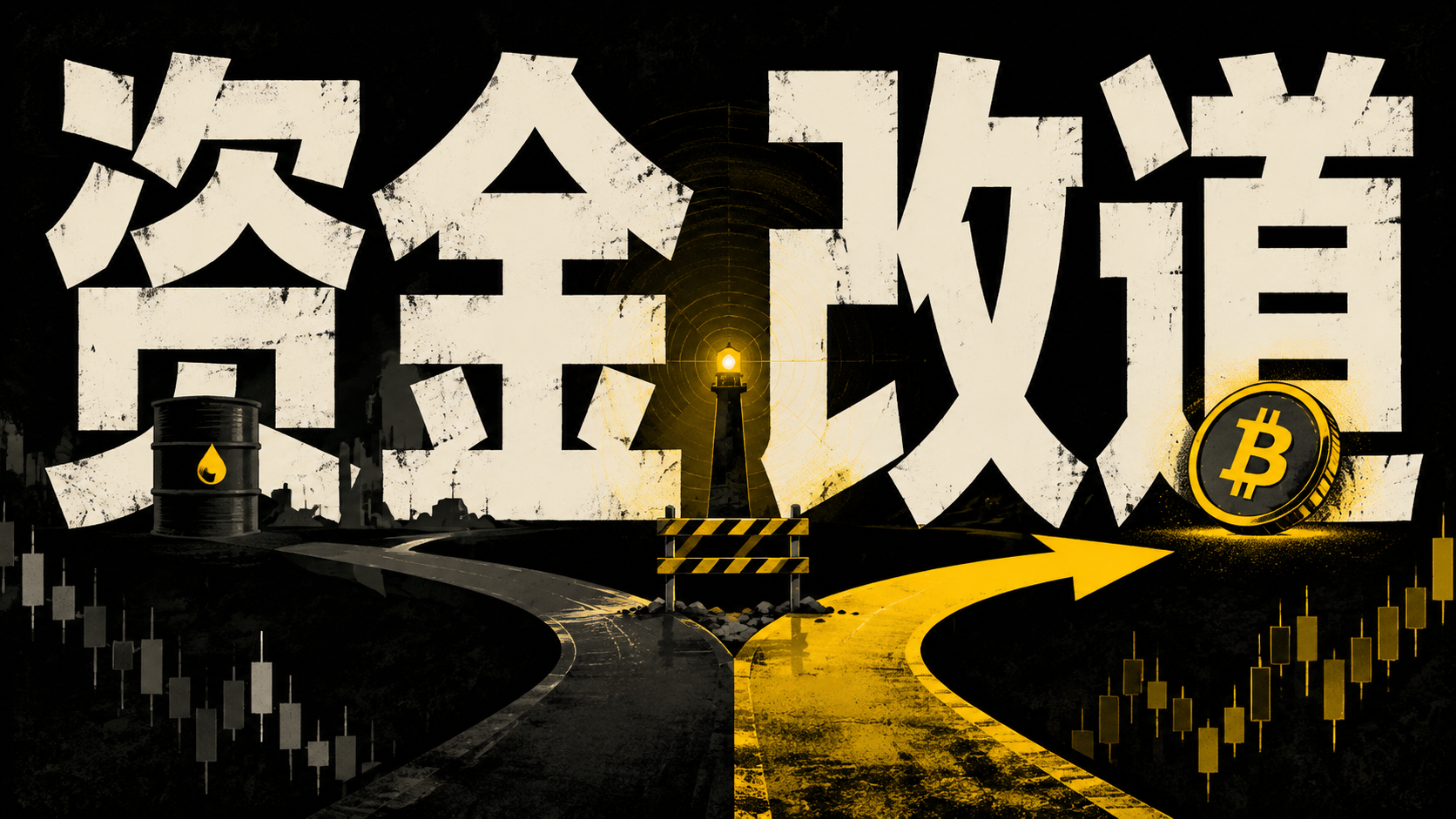
On May 21, 2026, two entirely different regulatory paths were simultaneously illuminated on the same map: in Dubai, the Virtual Assets Regulatory Authority (VARA), which is responsible for virtual assets, announced that it had granted a crypto business license to Payward, Kraken's parent company, allowing it to offer a complete set of trading and revenue services locally through a regulated entity, including spot trading, margin trading, OTC trading, and staking; while in Moscow, during the “Russian Digital Financial System” conference, Deputy Minister of Finance Ivan Chebeskov stated that the ministry is working with the central bank to advance the amendment of cryptocurrency market regulation legislation, planning to finalize the legislative timetable early next week, and intends to directly categorize digital currencies and related tokens as foreign exchange assets (this key information is currently only found in his statement). On the same day, on one side, a licensing system was used to bring overseas leading platforms into the local financial framework, while on the other side, an attempt was made to force on-chain assets into the outdated framework of foreign exchange regulation, pointing to the same question: who will control cross-border capital flows, and who will define the rules under which users can hold and use these assets. Next, how the formal entry ticket obtained by Payward in Dubai will rewrite the priority of international platforms in the Middle East; how Russia, if it truly regards digital assets as foreign exchange, will reshape the compliance boundaries and costs for its banks, enterprises, and individuals; when the two categorizations of “financial license business” and “foreign exchange assets” begin to influence business models and risk management assumptions, the global location selection, capital flow, and acceptable compliance thresholds for ordinary users will all be forced to reposition themselves in this differentiation, which is the core impact that this article attempts to dismantle.
Dubai Licensing: Kraken's Parent Company Obtains Multi-Business Authorization
On May 21, 2026, the Dubai Virtual Assets Regulatory Authority (VARA) announced that it has granted a crypto business license to Payward, the parent company of Kraken. This is not a "symbolic entry ticket," but a highly comprehensive multi-business authorization: Payward can provide compliant spot trading, margin trading, OTC trading, and staking services in Dubai through a regulated entity. The licensing authority is not a traditional financial regulatory extension department but VARA, which was specifically established for virtual assets in Dubai, carrying its own independent licensing system. This means that every core revenue line of Payward in the local market will be incorporated into a specially designed regulatory framework.
For the Kraken ecosystem, this license serves as a “compliance anchor” in the Middle Eastern market: spot, leverage, OTC, and staking are all contained within the same regulatory box, allowing the group to complete the main business loop from trade matching to liquidity management in one location, rather than splitting products in a gray area and taking a roundabout way to access regional users. For other global platforms, the pressure lies in the fact that VARA is providing a replicable blueprint that can also be used as a threshold—anyone who wishes to provide a full suite of services to institutions and high-net-worth clients in the Middle East will need to obtain similar multi-business authorization; and once more and more jurisdictions begin to require “licensing by business line,” the previously light compliance model that relied on a single license to cover the globe will quickly lose pricing power and bargaining space in regional competition.
From Gray to Licensed: Compliance New Boundaries for Platforms and Users in Dubai
Under VARA's framework, platforms that truly want to "land" in Dubai must first cross the entry threshold—providing crypto trading and staking services to local users requires obtaining a formal license. A license means that the platform is no longer "a global website with an Arabic page" testing the waters lightly, but must embed local anti-money laundering, KYC, and risk management into its business foundations: from identity verification before account opening, to funds source review, and controlling risk exposure of leverage and staking positions, everything needs to operate within regulatory oversight. The authorization received by Payward covers core businesses including spot, margin, OTC, and staking, essentially bundling the obligations of compliance across multiple business lines under a single license; any failure in risk control on any business chain will no longer be merely a commercial risk but will be interpreted as a regulatory compliance issue.
For local and regional users, this license directly redraws the boundaries of accessible products and acceptable risks: on one hand, users can access the complete product line of spot, margin, OTC, and staking through regulated entities, no longer relying on gray channels to access overseas accounts; on the other hand, KYC and anti-money laundering filters raise the threshold, which naturally constrains high leverage and complex structured products to some extent. Users enjoy clearer legal protection boundaries rather than unlimited risk choices. For project parties, market makers, and institutional investors, the signal is equally clear: Dubai welcomes the inflow of liquidity and product supply that enters “with a license,” and the licensing system provides a regulatory counterpart to connect with, but also frontloads the costs of testing and trial and error—whoever wants to make Dubai a hub for business and capital in the Middle East must accept long-term constraints on risk control, disclosure, and client selection under VARA's rules.
Russia Redefines: Cryptocurrency Assets Pushed into Foreign Exchange Framework
Unlike Dubai's separate regulatory licensing system for crypto businesses, Moscow has chosen the path of “integrating into the old framework.” On May 21, 2026, during the “Russian Digital Financial System” conference, Deputy Minister of Finance Ivan Chebeskov stated that the ministry is working with the central bank to advance amendments to the cryptocurrency market regulation legislation, planning to complete the revision work arrangement by "early next week," and intends to classify digital currencies and fiat-pegged tokens as foreign exchange assets (according to a single source). Once this categorization is written into law, relevant tokens will be legally considered similar to foreign currency assets, and all trading, payment, and cross-border flows surrounding them will be pulled into the existing toolbox of foreign exchange management and capital controls in Russia, led by banks and licensed institutions accustomed to foreign exchange compliance review, and regulatory authorities can also apply the existing declaration, limit, and traceability requirements from the foreign exchange sector to “take over” the previously peripheral cryptocurrency liquidity.
The real suspense lies in the fact that the details remain opaque. Apart from Chebeskov's public statement, there has been no formally released amendment text, and questions from the public regarding whether retail investors will be subject to annual or single purchase limits, whether the central bank will have the authority to dynamically adjust the list of regulated crypto assets, and which specific tokens will be included in the “foreign exchange assets” list remain at the level of single-source reporting and speculation. For domestic platforms, banks, and ordinary holders, this means they can only anticipate a direction in advance—cryptocurrency assets are being incorporated into a tightly regulated track alongside foreign exchange—but they cannot design business structures or asset allocations based on the textual provisions, and the ultimate impact will only become apparent once the boundaries of quotas, lists, and regulatory authorities are truly written into legal clauses.
Collision of Regulatory Paths: License Cities vs. Sanctioned Economies
On the same timeline, Dubai and Russia offer almost opposite regulatory imaginations: the former uses licenses to incorporate crypto businesses into the local financial industry layout, while the latter prepares to push digital assets through the gateway of foreign exchange control. The Dubai model, centered around VARA, considers spot, margin, OTC, and staking as “licensed financial services,” and from the moment Kraken’s parent company Payward obtained the license, its business direction, fee structure, and token listing choices in the local market must revolve around a clear institutional regulatory logic. For cross-border capital, this path encourages "leaving uncertainties abroad": platforms set their clearing, risk control, and headquarters in licensed cities, with local regulation ensuring transparency, and then output a compliant identity to global high-net-worth and institutional users.
The path that Russia intends to take is different: in the context of long-term sanctions and capital controls, if digital currency and fiat-pegged tokens are formally recognized as “foreign exchange assets,” they will be brought into the compliance track originally belonging to dollar and euro settlement, with potential applicability to foreign exchange declaration, quota management, and bank review frameworks. This will directly reshape how enterprises and banks utilize cryptocurrency assets—funds that were previously considered within the “gray area on-chain” will either be forced back onto balance sheets as a controlled cross-border settlement tool or shrink as institutions proactively reduce exposure due to rising regulatory costs and disclosure requirements. The combination of the two paths creates new regulatory tensions: global platforms may choose to establish a compliance “front office” in Dubai while cautiously assessing whether to touch foreign exchange asset rules in Russia; when cross-border funds flow through these two jurisdictions, they will repeatedly weigh the balance between license disclosures and foreign exchange declarations. International regulatory collaboration will also redefine risk levels and compliance arbitrage space around the combination of “licensed cities + foreign exchange control countries,” ultimately determining which funds can still be considered acceptable compliant flows and which will be categorized as high-risk.
Redrawing the Global Regulatory Landscape: Next Steps for Platforms and Users
By May 21, 2026, two divergent paths have already been laid out: Dubai, through VARA and its specialized agency licensing system, has brought Payward under regulation, clearly allowing spot, margin, OTC, and staking; while the Russian Ministry of Finance and the central bank are pushing legislative amendments to include digital currencies and certain fiat-pegged tokens within the framework of foreign exchange assets. The former views compliance as urban infrastructure to attract institutions, while the latter sees cryptocurrency as a cross-border tool that requires capital controls. The same type of asset is rewritten into financial services constrained by licenses or foreign exchange exposures requiring declarations under different coordinate systems, thereby pulling the global regulatory landscape into clearer delineations. But both ends are still just the beginning: the Dubai license has just landed, and Payward’s product portfolio and whether it supports local currency deposits remain undisclosed; the Moscow amendment draft timetable has just been announced, and details about retail quotas, the list of regulated assets, and the specific powers of the central bank all remain unpublished. Moving forward, other jurisdictions will have to make their own choices between “licensing” or “foreign exchange”: whether to emulate Dubai and package trading, leverage, and staking into the financial licensing system, or to approach the Russian model and treat on-chain assets as another foreign exchange channel for designing tax and declaration rules. This will determine where global platforms establish front offices, where market makers and project parties migrate liquidity, and whether ordinary users face simple product differences or completely different compliance identities and risk labels when logging into the same platform in different countries.
Join our community to discuss and become stronger together!
Official Telegram community: https://t.me/aicoincn
AiCoin Chinese Twitter: https://x.com/AiCoinzh
OKX benefit group: https://aicoin.com/link/chat?cid=l61eM4owQ
Binance benefit group: https://aicoin.com/link/chat?cid=ynr7d1P6Z
免责声明:本文章仅代表作者个人观点,不代表本平台的立场和观点。本文章仅供信息分享,不构成对任何人的任何投资建议。用户与作者之间的任何争议,与本平台无关。如网页中刊载的文章或图片涉及侵权,请提供相关的权利证明和身份证明发送邮件到support@aicoin.com,本平台相关工作人员将会进行核查。