Abstract
In 2026, the tokenized stock market is shifting from a fringe experiment to a mainstream track, driven primarily by the explosive growth of the perpetual contract, an innovative product form. According to CoinLaw data, as of May 2026, the distributed value of the tokenized stock market has surpassed $1.43 billion, with a 30-day growth rate of 25.83% and a total of 267,000 holders, marking the highest growth rate among all RWA assets. Decentralized perpetual contract exchanges, represented by Hyperliquid, have surpassed the derivatives trading volume of Coinbase International, indicating that on-chain stock derivatives are evolving into a new type of financial market with independent pricing capabilities and institutional operational mechanisms. We will systematically analyze the evolution logic of fully collateralized spot and perpetual contract product structures, assess the competitive landscape of leading participants like Hyperliquid and Ondo Finance, and empirically validate their overnight price discovery function using on-chain data from Samsung Electronics and SK Hynix perpetual contracts, identifying core risks in this track and proposing three investment themes: funding rate arbitrage, cross-exchange spread arbitrage, and market-making services.
1. Product Structure and Evolution Logic of the Tokenized Stock Market
The true paradigm shift in the tokenized stock market occurred between 2023 and 2025, propelled by the maturation of three key variables. First, the on-chain perpetual contract mechanism matured—GMX's GLP pool model, the order book architecture of dYdX v4, and Hyperliquid's dedicated L1 engine built on Arbitrum Stylus have compressed the latency for on-chain derivatives to milliseconds while achieving continuous trading capabilities around the clock, which traditional centralized exchanges cannot provide through built-in oracles and settlement engines. Second, the oracle infrastructure has undergone leapfrog upgrades—Chainlink Data Streams and Pyth Network enable Asian stock prices to be on-chain with sub-second delays, addressing the long-standing issue of price source reliability for tokenized financial products. Third, the regulatory framework has begun to take shape—by late 2025 to early 2026, the SEC has signaled readiness to launch an "Innovation Exemption," providing a regulatory sandbox path for compliant tokenized products; on June 8, 2026, Coinbase officially launched four CFTC-regulated stock index perpetual contracts (AI10, China10, Defense10, Tech100), marking the entry of regulated entities into this track.
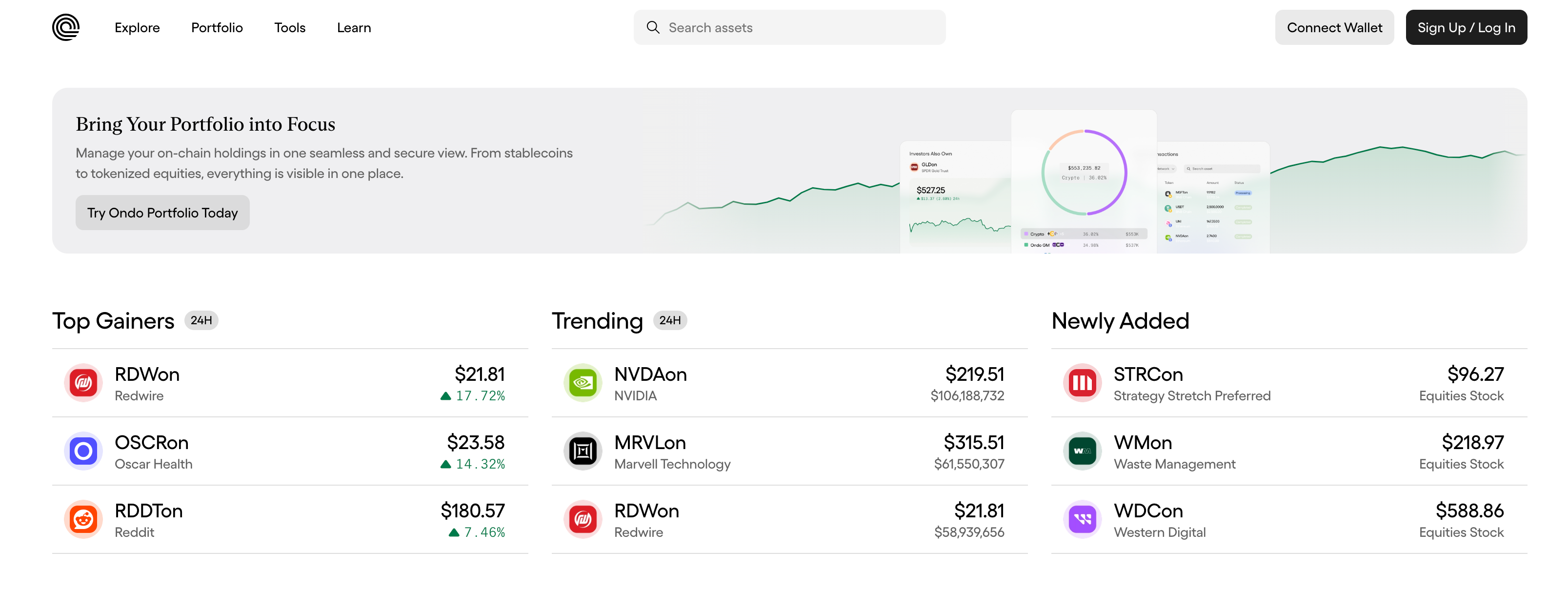
From a product structure perspective, the current market consists of two distinct yet complementary product types. The first type is fully collateralized spot tokenization, represented by Ondo Finance, xStocks, and Backed. Ondo Finance holds an absolute leading position with a TVL of $887.8 million, accounting for 60.87% of the market share, covering 231 stocks; xStocks ranks second with a TVL of $394.2 million, making up 27.03%. The core value of these products lies in cross-border investment accessibility and settlement efficiency—investors can hold global stocks without opening local brokerage accounts, with on-chain settlement shortening T+2 to T+0.
The second type is perpetual contracts, represented by Hyperliquid, Binance, and dYdX. These products do not hold actual stocks but use stablecoins as margin to track asset price targets, with the primary advantage being 24/7 trading, leveraging up to 20 times, and the ability for rapid listing without holding underlying assets. A typical example is that in October 2025, after the Hyperliquid community passed the HIP-3 proposal, perpetual contracts for Korean blue-chip stocks such as Samsung Electronics and SK Hynix were launched, triggering a wave of "tokenized stock contracts going on-chain" primarily centered on the Asian market, followed by Binance quickly launching similar products.
2. Market Structure Reconstruction and Competitive Landscape Driven by Perpetual Contracts
In 2026, the competitive landscape of tokenized stock perpetual contracts presents a clear three-layer structure: on-chain protocol domination layer, centralized exchange catch-up layer, and gradual institutional entry layer. Hyperliquid, leveraging the ultra-low latency and zero Gas fee advantages of its dedicated L1 chain, captures about 50% of the trading volume share in the perpetual contract market. Its core strategy can be summarized as "geographic arbitrage"—prioritizing coverage of high-liquidity Asian markets, such as Korea and Japan, and establishing liquidity barriers during local exchange downtime, thus attracting global speculators and hedgers. Binance, as the largest cryptocurrency trading platform globally, has accelerated the expansion of its tokenized stock perpetual contract product line by the end of 2025, forming a duopoly with Hyperliquid. The price differences for the same asset between the two average between 0.93% and 1.03%, with extreme conditions reaching up to 2.3%, reflecting insufficient competition among market makers and creating fertile ground for arbitrage trading.
Coinbase, relying on its CFTC regulatory license, follows a "compliance alternative" path, providing U.S. institutional investors with the first regulated on-chain stock derivatives entry point. The four index perpetual contracts (AI10, China10, Defense10, Tech100) launched in June 2026 adopt a centralized clearing model, with each transaction going through KYC verification and anti-money laundering checks, contrasting sharply with Hyperliquid's decentralized permissionless model. dYdX v4 is built as an independent application chain based on Cosmos SDK, focusing on institutional-level order books and cross-chain interoperability; GMX's GLP model provides a more flexible listing and liquidity provision mechanism for smaller assets. In terms of the evolution of competitive focus, the market is shifting from "who goes live first" to "who prices most accurately"—oracle latency, market maker depth, and clearing mechanisms have become the three main pillars determining platform competitiveness. Empirical studies indicate that the price of perpetual contracts correlates highly (0.85 to 0.89) with the opening price of the underlying stock the next day, with regression coefficients of 0.93 and 1.00, which means that tokenized stock perpetual contracts are no longer just passive tools for tracking prices but are becoming an independent information aggregation and price discovery mechanism operating separately from traditional exchanges.
3. On-chain Data Validation: The Triple Value Creation of Perpetual Contracts
The widespread attention on tokenized stock perpetual contracts stems from their creation of three unique values that traditional stock markets cannot provide. The first value is the overnight price discovery function. Through systematic research on Samsung Electronics and SK Hynix perpetual contracts, it was discovered that the after-hours movements of these two assets systematically lead the opening price the next day. Specifically, if the Samsung Electronics perpetual contract shows an upward trend after the KOSPI closes, the probability of a higher open the next day is about 82%; conversely, if it falls, the probability of a lower open reaches 96%. The data for SK Hynix is equally striking, with an upward trend indicating a 95% probability of a higher open the next day and a downward trend signifying a 78% probability of a lower open. More critically, regression coefficient analysis indicates values of 0.93 and 1.00, showing that the overnight perpetual contracts can not only predict the opening direction for the following day but also accurately anticipate the magnitude of the opening gap. This information aggregation capability is derived from the continuous operation of the on-chain market 24/7—macro news from around the world, corporate announcements, and industry dynamics can be reflected in perpetual contract prices in real-time without waiting for the next trading day's opening auction.
The second value is the delta-neutrally arbitrage mechanism driven by funding rates. The design of funding rates in perpetual contracts naturally facilitates the transfer of interests between bulls and bears—when market sentiment is bullish, bulls pay funding rates to bears, and vice versa. Data shows that the Samsung Electronics perpetual contract generates an average of about 0.15% positive premium during the day, while SK Hynix corresponds to approximately 0.23%. Theoretically, constructing a delta-neutral strategy by buying fully collateralized spot tokens while simultaneously selling an equal amount of perpetual contract positions can completely eliminate directional exposure and achieve annual yields of 66.7% to 119.7% based solely on funding rates. Of course, in actual execution, factors such as slippage costs, basis risk, and fund utilization rate may compress theoretical profit margins, but this is already sufficient to attract professional market makers and quantitative hedge funds to participate en masse. The third value is the structural opportunity for cross-exchange arbitrage. Due to the fragmentation of the same asset across multiple independent platforms and the absence of a unified clearing mechanism, the average price spread for Samsung Electronics perpetual contracts between Binance and Hyperliquid maintains at 0.93%, reaching up to 2.3% in extreme periods. Particularly during nighttime and weekends, when the spot market is closed and on-chain liquidity decreases, the spread further widens, providing periodic profit opportunities for arbitrage traders with multi-platform access capabilities.
4. Four Directions of Innovation Trends and Business Opportunities
The rapid expansion of the tokenized stock perpetual contract market is spawning four innovation directions with independent commercial value. The first direction is specialized market-making services. Unlike the monopolistic model of licensed market makers in traditional financial markets, on-chain perpetual contract market-making is open to any participant with sufficient capital and technical capabilities. The current reality of independent pricing for the same asset spread across multiple platforms means that price spreads naturally expand to 0.15% to 0.75% during nighttime and weekend hours, creating a sustained and highly predictable profit space for specialized market makers. The second direction is localized oracle services. The pricing needs for Asian market stocks outside of New York and London trading hours have given rise to a new niche market for oracles—oracle service providers capable of offering high-frequency, multi-layer verified pricing data during Asian stock market downtime will become key infrastructure providers in this track. The third direction is tokenized issuance intermediary services. Currently, many assets in KOSPI 200, Nikkei 225, and Hang Seng Index have yet to achieve tokenized issuance. A one-stop "issuance as a service" platform that facilitates compliance coordination, asset custody, pricing parameter setting, and liquidity guidance between traditional securities issuers and on-chain trading platforms has vast market potential. The fourth direction is on-chain hedge funds based on basis. Compared to traditional basis hedging, on-chain perpetual contract versions have unique advantages of fast capital turnover (no securities settlement cycle) and providing composite revenue sources through cross-platform price differentials, allowing specialized hedge funds to dynamically allocate positions across multiple platforms for high-frequency trading to amplify returns.
From a broader industry perspective, Coinbase's launch of CFTC-regulated index perpetual contracts signifies that U.S. regulators are beginning to formally categorize this new type of financial product. The Basel Committee has restarted its review of rules regarding banks' exposure to cryptocurrencies in November 2025. Once banks are allowed to hold tokenized stock exposure, the liquidity in the entire track will experience exponential growth. 4Pillars Research predicts that if 1% of global stock market value is tokenized, the market size could reach $13.4 trillion by 2030, while the current penetration rate is less than one ten-thousandth.
5. Risk Framework and Investment Strategy
Although the tokenized stock perpetual contract market is growing rapidly, its risk structure is complex and multi-layered. Smart contract risk represents the most direct technical threat—perpetual contract protocols suffered cumulative losses exceeding $500 million from oracle attacks, clearing logic loopholes, and front-end manipulations between 2024 and 2025. Among the most cautionary events is the February 2025 Hyperliquid JELLY token incident that exposed flaws in the clearing mechanism, causing some users to suffer actual losses involuntarily. From a market risk perspective, the high leverage characteristic amplifies profits but also exponentially heightens liquidation risks; low liquidity environments during earnings seasons or significant policy announcements may trigger chain liquidations leading to price collapses. Liquidity fragmentation risk constitutes a third dimension of systemic threat—perpetual contracts for the same asset, such as Samsung Electronics or SK Hynix, are priced independently across multiple platforms, with a lack of unified clearing coordination mechanisms potentially causing massive and lasting price distortions in parallel markets during extreme conditions.
Regulatory uncertainty is the largest external variable. Countries exhibit significant divergence in their stances on this issue: the U.S. CLARITY Act legislative process has proposed a safe harbor clause for DeFi developers but overall progress is hindered; the EU MiCA framework has yet to clarify the specific coverage of on-chain stock derivatives; Hong Kong and Singapore, as Asian financial centers, have not issued specialized regulatory guidelines for tokenized stocks; and the Financial Services Agency's cautious stance on crypto derivatives may also limit the promotion speed of this product in the Japanese market.

Based on the above risk framework, investment strategies can be constructed from three dimensions. The first dimension is platform token allocation strategy—HYPE tokens are highly linked to the Hyperliquid platform's transaction volume due to the 30% buyback and burn mechanism, while ONDO and DYDX represent the core beta assets of leading protocols in the RWA track and decentralized derivatives infrastructure. The second dimension is ecosystem participation strategy—quantitative teams can deploy automated trading systems based on funding rate arbitrage and cross-platform spread arbitrage, while retail investors can utilize the overnight price discovery feature to optimize traditional next-day trading decisions. Empirical data show that assisted decision-making can enhance the win rate of short-term strategies in Asian markets by about 7 to 12 percentage points. The third dimension is Gamma market-making strategy—providing liquidity across multiple exchanges and automatically hedging exposure to earn bid-ask spreads while capitalizing on the periodic directional income from funding rates to enhance overall returns. Core risk observation indicators should focus on three time nodes: the Roman Storm trial results affecting the legal boundary of DeFi developer responsibilities in the second half of 2026, whether the CLARITY Act can achieve substantial legislative progress in Congress, and the specific compliance requirements for travel rules in DeFi scenarios during the next revision of FATF standards.
6. Conclusion and Future Outlook
The true historical significance of tokenized stock perpetual contracts lies in their attempt to answer the most core proposition since the birth of blockchain technology: can on-chain finance transcend the narrow category of "on-chain finance for cryptocurrencies" to genuinely become "on-chain finance for all assets"? The high degree of alignment (up to 85%) in the price trend of the Samsung Electronics perpetual contract, along with regression coefficients of 0.93 to 1.00, strongly demonstrates that on-chain derivatives can not only effectively track the price movement trajectories of traditional assets but also independently execute effective price discovery and information aggregation functions during traditional market downtime. Judging from the investment clock's perspective, the key catalytic window for this track is from the second half of 2026 to 2027—the market response following the launch of Coinbase's regulated index perpetual contracts, the official implementation of the SEC's "Innovation Exemption," and whether Hyperliquid can maintain its leading market share in the on-chain perpetual contract space will become core reference points to determine whether the tokenized stock market can transition from the experimental stage to the mainstream stage. For investors with sufficient risk tolerance, the current penetration rate of less than 0.01% of global stock market value compared to the compounded growth rate exceeding 200% constitutes a typical early-stage investment scenario—high return potential coexists with high uncertainty, necessitating a selection process for investment targets based on controllable underlying risks, traceable compliance pathways, and verifiable technological iterations.
免责声明:本文章仅代表作者个人观点,不代表本平台的立场和观点。本文章仅供信息分享,不构成对任何人的任何投资建议。用户与作者之间的任何争议,与本平台无关。如网页中刊载的文章或图片涉及侵权,请提供相关的权利证明和身份证明发送邮件到support@aicoin.com,本平台相关工作人员将会进行核查。


