Author: Nancy, PANews
After enduring the brutal cleansing of market cycles, there are few survivors in the NFT space, and even the once top-tier Flow cannot escape the fate of changing times, beginning to seek new growth points.
On December 2, Flow announced its transformation into a democratized consumer-grade DeFi, a strategic adjustment that has attracted market attention. With a large user base and unique technological advantages, Flow attempts to achieve self-rescue by adapting to market changes. However, whether it can secure a place in the fiercely competitive DeFi battlefield remains a huge question mark.
Launching DeFi Lending and Wealth Management Products, Upgrading to Deflationary Tokens
"Today's DeFi is filled with hostility; users must possess advanced technical skills to survive, as issues like slippage, MEV, and liquidation chain reactions are rampant. Every interface is designed for experts, leaving others to stand on the sidelines. This is the gap we aim to fill," stated Dapper Labs CEO Roham.
In response to this situation, Flow's new goal is to create consumer-oriented DeFi, allowing ordinary users to enjoy the benefits of the crypto world without needing to become technical experts, truly achieving a user-friendly experience for mainstream users.
Flow is building a series of network architecture components called "built-in protocols," which are more akin to public financial facilities directly embedded in the network layer. In the DeFi field, built-in protocols can provide shared liquidity across the entire ecosystem and integrate funding pools from various verticals, avoiding liquidity fragmentation and allowing new projects to bypass cold start challenges.
The automated lending protocol Flow Credit Market (FCM) is the first built-in protocol developed by the Flow Foundation. It utilizes Flow's native on-chain scheduling system to set periodic triggers without the need for external oracles, significantly reducing liquidation risks while enhancing loan-to-value (LTV), thus providing higher natural returns for both borrowers and lenders.
Dapper Labs CEO Roham pointed out that traditional DeFi lending is often punitive, only liquidating and charging penalties when users' positions approach liquidation. In contrast, FCM employs proactive risk management, continuously monitoring each position on-chain and automatically rebalancing before risks arise. Internal risk simulations show that FCM has protected user deposits from liquidation during several major market crashes in the past, while reducing costs by up to 99.9% compared to other lending protocols on different networks.
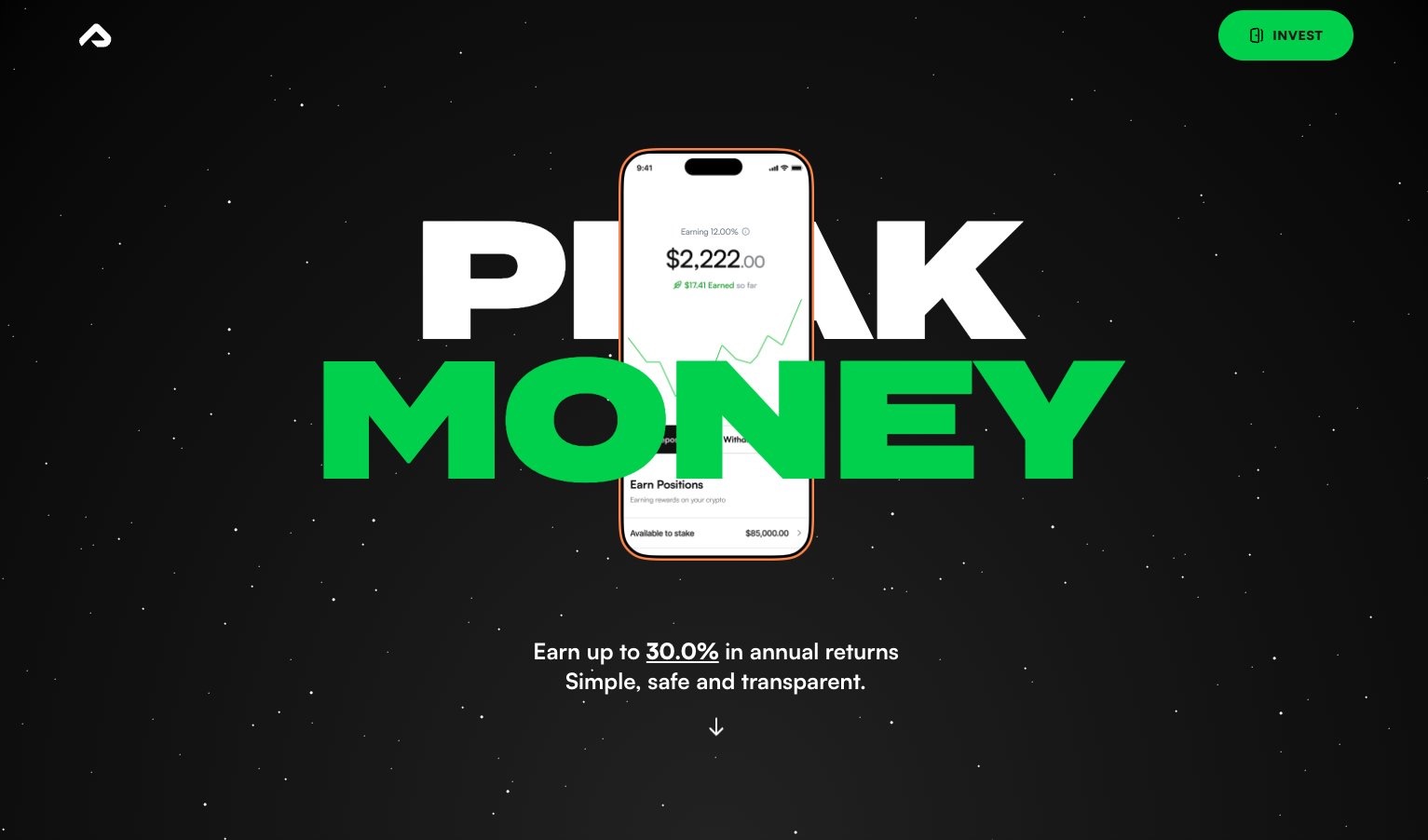
To accelerate the launch of FCM, Dapper Labs introduced a consumer-grade financial flywheel application called Peak Money, aiming to become the next entry point for 100 million new users into crypto. According to Roham, users can deposit cash or crypto assets (such as Bitcoin, Ethereum, and FLOW) into Peak Money to earn higher returns than any bank (with APY for cryptocurrencies and cash reaching up to 25% and 10%, respectively), while funds can be earned and used at any time. The product has no minimum threshold, no gatekeepers, no mnemonic phrases, and no concerns about liquidation risks. Peak Money will announce specific loss event protection details when the product officially launches. Currently, Peak Money has opened a waitlist.
Additionally, Flow's built-in protocols may expand in the future to include perpetual contracts, prediction markets, and more, providing mainstream consumers with more user-friendly DeFi applications.
To achieve sustainable value capture, Flow has upgraded its tokens, shifting to deflationary tokens. The FLIP-351 proposal put forward by the Flow Foundation directly ties network usage to network value. Every transaction will burn tokens, creating scarcity through network activity, thereby enhancing token value. When the network consistently operates at around 250 TPS, the FLOW token will achieve net deflation. Even so, Flow's transaction costs remain lower than those of mainstream networks like Solana and Base. It is important to note that the current price of FLOW tokens has fallen by more than 90% from historical peaks.
What Confidence and Challenges Does Flow Have in Its Cross-Industry Transformation to DeFi?
The current DeFi market is in a phase of rapid growth alongside fierce competition. As the regulatory environment becomes more favorable, leading protocols are solidifying their positions with first-mover advantages, and traditional institutions with dual advantages of compliance and capital are accelerating their entry, raising the barriers to entry in the space.
As one of the few crypto sectors that have validated product-market fit (PMF), DeFi still possesses significant growth potential. For Flow, which is attempting to transition from consumer-grade L1 to DeFi infrastructure, this is not only an opportunity for strategic reshaping but also a challenging "reboot."
As a "newcomer" in the DeFi space, Flow has certain confidence in its cross-industry transformation. On one hand, Flow is not starting from scratch; its accumulation in the NFT field provides it with a unique starting line. With the phenomenal application NBA Top Shot, Flow has amassed a large user base, and although interest has significantly declined from its peak, the traffic it has retained is still considerable. According to official data, Flow has over 41 million total accounts and more than 1.1 million monthly active users. Additionally, according to DeFiLlama data, as of December 3, Flow's TVL reached $107 million, a 187.1% increase since the beginning of the year.

At the same time, Flow has technological advantages, as it is designed for large-scale consumer applications, meeting the high-frequency trading demands of DeFi with a low-threshold, low-cost, and high-throughput on-chain environment. In October of this year, Flow also launched two key upgrades, Forte and Crescendo, aimed at addressing scalability, deep innovation in DeFi, and cross-chain interoperability, further providing technical support for its ecological transformation. Among them, Forte's core goal is to completely free complex on-chain financial logic from reliance on off-chain bots or centralized custodial services, allowing all automation (limit orders, dynamic interest rates, strategy vaults, etc.) to run securely on-chain, making it easier for developers to create complex financial applications; Crescendo upgraded Flow to introduce Ethereum Virtual Machine (EVM) equivalence, enabling seamless interoperability with Ethereum-based applications and protocols.
Flow claims to be one of the few blockchains capable of supporting millions of daily active users (DAU) without incurring high or unpredictable gas fees.
However, Flow's transformation path still faces significant challenges. On one hand, new public chains face the liquidity cold start problem. Although Flow has a considerable user base, it mainly consists of NFT players, most of whom have already left the space. How to re-attract these users and convert them into DeFi users remains a significant uncertainty.
On the other hand, the ecosystems of leading public chains are already rich and have formed barriers, and Flow needs to quickly attract high-quality developers and build market-recognized innovative applications to create a sustainable positive cycle in its ecosystem.
More importantly, for a long time, Flow has been firmly labeled as an NFT public chain by the market. To break this inherent impression, Flow must present a successful DeFi application case to prove its adaptability in the financial sector.
In summary, the technical architecture and user accumulation provide more certainty for Flow's "re-entrepreneurship." However, whether this transformation can succeed ultimately hinges on Flow's ability to activate dormant NFT users through a compelling DeFi narrative and break through liquidity barriers.
免责声明:本文章仅代表作者个人观点,不代表本平台的立场和观点。本文章仅供信息分享,不构成对任何人的任何投资建议。用户与作者之间的任何争议,与本平台无关。如网页中刊载的文章或图片涉及侵权,请提供相关的权利证明和身份证明发送邮件到support@aicoin.com,本平台相关工作人员将会进行核查。


