"Youth, don't be afraid, there's nothing to fear."
整理|连冉
编辑|靖宇
At the end of 2025, Luo Yonghao returned to the stage of Geek Park.
Luo Yonghao was very candid on the stage of Geek Park IF 2026. Facing Geek Park's founder and president Zhang Peng, Luo Yonghao said he found a new self-consistency in his new project "Luo Yonghao's Crossroads": restraining his own talent.
Luo Yonghao discovered that the core of doing a podcast is not "what I want to do," but "what I don't want to do"—no longer pursuing verbal suppression, but leaving the stage for the most remarkable elites in China.
Although he insists on not accepting payment to appear on the podcast, he has completed another dimension of "catching everything" in this way.
Facing this group of young entrepreneurs who "don't even have a sense of fear," Luo Yonghao's feelings are complex, "both happy for them and angry at myself."
He is happy that today all doors are open to young people, and they have been exposed to the best things early on; he is angry that in his youth, material and cultural resources were not so abundant. But he is comforted that although Smartisan Technology failed, the "legacy" it left still nourishes a new generation of product managers—this may be the reason he is "forced to be respected."
But he clearly has no intention of handing over the baton. "Mainly relying on the failure of my career," this self-deprecating remark hides his still vigorous fighting spirit.
Facing the grand wave of AI, which is even more monumental than the Industrial Revolution, he bluntly stated, "If we can't make it this time, there will be no excuses." In the next decade, mobile phones will still not be replaced, and Luo Yonghao is still not ready to exit the stage.
Luo Yonghao said he can "tinker for another ten years" because the day he imagines, the era of technological revolution benefiting humanity, is coming.
The following is the transcript of the dialogue between Luo Yonghao and Zhang Peng at the Geek Park IF 2026 Innovation Conference, organized by Geek Park:
01 The "Initial Motivation" for Doing a Podcast
Zhang Peng: In June, we talked about podcasts at the Founder Park event, and not long after, "Luo Yonghao's Crossroads" was launched. Everyone enjoyed it, but I feel you haven't had the chance to seriously talk about: what was the "initial motivation" for doing this program?
Luo Yonghao: This initial motivation is not for any dignified reason.
Last year, we developed a hardware and software integrated AI smart hardware solution. If we could deliver on time, it would definitely have been the best product of last year. But there was an unexpected issue in engineering—when we used to make phones, it was always hardware problems, but last year, for some reason, it was the software that had issues, while the hardware was fine. This was quite awkward; a bunch of machines we produced could only sit in the warehouse "gathering dust."
Due to a catastrophic accident in R&D, the project had to be scrapped and restarted, and funds suddenly became tight. At this point, I faced two choices:
The first was to go out and raise funds again. But the timing was off—let me remind the entrepreneurs present, when problems arise and you go to raise funds, the explanation cost is extremely high. In fact, there were many opportunities along the way, and many people approached us, but we didn't take them. At that time, we thought we had enough money and wanted to wait until the product came out and "made a splash" before discussing it, so we wouldn't be short on funds. But now, with insufficient funds, forcing ourselves to raise money would be very distracting, especially when the company is not doing well; it could take up more than 50% of the CEO's time.
The second option was to continue R&D but find a way to make some money to "supplement household expenses."
Zhang Peng: Can I understand it this way? When the hardware product encountered difficulties, you treated yourself as a product to make money?
Luo Yonghao: Yes, and there are some traditional advantages in this area, so it doesn't take too much effort to make money.
Zhang Peng: It seems that very few people in the domestic podcast circle can make big money. What made you think this could work?
Luo Yonghao: It might also be because someone like me hasn't entered the field; I don't know the reason. Anyway, we made money on the first day.
Zhang Peng: Does the program have a specific positioning?
Luo Yonghao: No. I just express appropriate content in the right way at the right time. When the company went bankrupt back then, I didn't boast; instead, I sincerely came out to reflect and admit what low-level mistakes we made. I still have a sense of proportion; in such occasions, boasting is definitely not appropriate.
Taking this opportunity, I would like to suggest to my peers in the Chinese podcast industry: you must do video podcasts. I have seen many peers have a kind of "fundamentalist" obsession, believing that only pure audio is the authentic podcast. Where does this strange obsession come from? I completely cannot understand.
There are two facts that everyone needs to see clearly:
First, the top podcasts in the U.S. are all launched with both audio and video simultaneously, and the video data is usually much better than the audio.
Second, the high proportion of audio podcasts in the U.S. is because they mainly commute by driving, which forces them to listen; while most people in China commute by subway or bus, which allows for video viewing. So don't treat "only being able to listen to audio" as an ironclad rule of podcasts; that is a compromise in a specific scenario, not the essence of the product.
So I sincerely suggest my peers to let go of this obsession. Since you are doing it, shoot the video at the same time, distribute it across all platforms, and let users choose whether to watch or listen. That's what we did on the first day, launching on all 11 platforms. The results also proved my judgment: our video views accounted for 80% to 90%, while the proportion of pure audio was very low. This also confirms what I just said, that the commuting environment in China determines that video podcasts are the mainstream.
Zhang Peng: From the results, sticking to doing video podcasts, does this year's performance meet your expectations?
Luo Yonghao: Yes, it meets expectations. The results are very good, with an average of about 10 million views per episode, and some as high as 30 million. I want to remind you, President Peng, that this is still achieved using my spare time. Because in our week of 7 days, I spend 5 days busy with "The Fine Red Line," one day is for rest or not resting, and another day is for doing the podcast, roughly like that.
So if the benefits from this part are particularly good, to the extent that management thinks we should invest more energy there—if that happens—then it will change to twice a week, which would be 100 episodes a year; if it changes to three times, then it would be 150 episodes. That's roughly how it is; it's not certain yet.
Zhang Peng: Just using "one-seventh of Old Luo," you've achieved today's results.
Luo Yonghao: More like one-sixth; one-seventh is a bit of an exaggeration because I also take a day off.
Zhang Peng: The program is so popular that there are inevitably rumors: it costs a lot to appear on Old Luo's podcast. Is this true?
Luo Yonghao: This is a blatant slander and "mud-slinging," this is a rumor. Our podcast cannot be bought with money. If it could be bought with money, we would have started doing it in August, and now after more than three months, we should be considering going public. Because many entrepreneurs are willing to pay to appear on our podcast, but we have never accepted payment to appear on the podcast. Although I am not a media person by background, I still have some journalistic ideals.
So our podcast cannot be bought with money. Indeed, we have many commercial collaborations, and the revenue is good. But when dealing with companies, we find that what they are most willing to pay for is actually the "slot to appear on the podcast."
If we didn't stick to our principles, for example, mixing in 1-2 paid episodes in 10 episodes, the profit for that year would indeed be much thicker. To be honest, I am also human, and I have been tempted. But I know that once we open that door, the team's values will "go dirty," and I won't be able to lead that team anymore.
So we keep this line very strictly. But misunderstandings can easily arise: some companies indeed appeared on the podcast and also paid me to shoot advertisements. This inevitably gives the outside world the impression: is "appearing on the podcast for free" just a facade, and paying for advertisements is the disguised ticket price?
So there are some "unbelieving" entrepreneurs who come in, insisting on not doing any commercial placements, just appearing on the podcast, which is actually also testing me. But the fact proves that as long as the person is suitable, even if our business team is rejected in negotiations, the program will still go on as usual.
These are completely independent systems. There has never been a "must pay the business team to appear on the podcast" kind of bundled transaction. This has never happened.
Zhang Peng: It's neither that you can appear by paying money, nor is it that appearing for free serves as a precursor to future commercial cooperation.
Luo Yonghao: This will absolutely not happen.
02 What is the Logic Behind Selecting Guests for "Crossroads"?
Zhang Peng: What is the logic behind selecting guests? Since it's not "money can get you in."
Luo Yonghao: Our country has come to this point, and there are remarkable elites in every industry. We just want to "catch all the elites in China." Especially if we can achieve 100 episodes a year—actually, there won't be more than 100 people in China who deserve a 5-hour in-depth interview podcast—so we want to talk to all these people. Many people, even if I don't record this program, I still want to hear how they talk to others.
So the standard for selecting guests is the most outstanding group in various industries. We want to hear from them; if there are no restrictions of 60 or 90 minutes from traditional television, and they have ample time, say 5 to 8 hours, what can they output for us? So basically, this principle guides our work.
Zhang Peng: Today is a revelation. I just saw two images; these are related to your commercialization, right?

Almost blocking Teacher Luo's face|Image source: Luo Yonghao's Crossroads
Luo Yonghao: Yes, after we started this podcast, many companies came to us on the first day, hoping to have placements. When we were discussing—look, there are Luckin Coffee, Yima delivering wine, Cooltech power banks, and stationery. The chair I was sitting on was buried in there, called the Leisure Ergonomic Chair.
After these things were placed here, some of our audience started to complain, saying we had these influences. I got angry at them, saying, "Are you listening for free? If you're listening for free, then don't say so much." I said, "Why did I only place these five? It's because we didn't recruit more; if we could recruit more, we wouldn't hesitate to make it look like a pile of products. Because the key is to listen to what I am saying and what our guests are saying."
This on-site sponsorship is the core reason that allows the program to operate for free. Although we don't recommend doing it this way, this image is a bit exaggerated—in reality, there were only five placed, and by mid-next year, we should be able to place more than 10. So this revenue is also good and does not affect the content at all. You think, if I took money to invite guests, then they would definitely have to interfere with the content, right? Then you wouldn't be guaranteed quality and clean content.
After adding sponsorship, the content can be guaranteed, but none of these companies have a boss coming to the program yet, so it can be clearly divided.
Zhang Peng: Let me ask a more specific question. Creating content requires a rigorous system, but your personal style is very casual. How does your team operate? From topic selection, background research to outlines, how does this process work together?
Luo Yonghao: Are you talking about the team's management of me?
Zhang Peng: Yes, can they manage you?
Luo Yonghao: It's hard to manage.
Our operating process is as follows:
The first step is "selecting guests." Whether it's called a topic selection meeting or a guest selection meeting, I will participate in the discussion and decide who we want to invite. The team will first contact them, and if they can't reach them, I will use my social connections to try to contact them.
The second step is "in-depth research." There are dedicated team members responsible for thoroughly researching the guest's life, reading materials that may amount to tens of thousands to hundreds of thousands of words. If it's a filmmaker, we need to arrange for someone to watch their movies, and I have to watch them too; if it's a writer, we need to read their books. After completing this homework, the team produces the first draft of the interview outline. After I digest the core information they have organized, which is several tens of thousands of words, I then make additions and deletions to the outline.
When I arrived at the recording site, although I had an outline with about 60 questions, it mainly served as a reminder. It's normal to go off track when the conversation gets lively. However, if we stray too far, the team will warn me through a teleprompter to reel it back in a bit.
For me personally, I invest about 10 to 12 hours a week into this. Our content team now has about ten people, each responsible for specific guests. In this model, productivity can easily expand; just adding a few more hands can cover hundreds of guests.
As for "management," I basically follow orders throughout the operation. If there are disagreements on specific points during the conversation, I might just "speak out" without caring too much. But after speaking, the editing rights are in their hands, and they have the authority to cut things out.
So, the constraints on me are such that—the process isn't painful, and the results aren't solely determined by me, so it's manageable.
This is better than live broadcasting. It's hard to control me during a live show, and I feel uncomfortable. But when they record, they don't control me, and they can manage me during the editing process. This way, everything runs smoothly, and there are rarely any arguments.
03 Relying on "Talent" or "Effort"?
Zhang Peng: You set the benchmark for video podcasts right from the start. Is this due to talent or effort? Is it "just chat when they come," or do you put in a lot of hard work for each person?
Luo Yonghao: Are you talking about the interviews?
Zhang Peng: Have you ever thought, "This person is quite important; I need to spend more time," or is it the same for everyone, just chat when they come?
Luo Yonghao: Just chat when they come, but I do a lot of preparation.
For example, the writer we invited now, I had already read his book. I had a wide range of interests when I was younger. So before he came, I had already read most of it. For instance, when Teacher Liu Zhenyun came to record, I only needed to read his new book because I had read many of his previous works. This is the benefit of having knowledgeable people doing podcasts; you don't have to read everything fresh.
Another example is if a film director comes; if they come this year, I might have already seen their past works and only need to watch the latest one, so the workload isn't too heavy. This part can't be called talent; it can only be called accumulation.
Aside from that, I actually don't use much of my talent when recording podcasts; instead, I have to restrain my talent. Because I have always been very talkative, able to argue, and can debate, but none of that is useful in a podcast. How can you argue with the guests you invite?
Zhang Peng: The final product seems very harmonious. So you've really never had a confrontation or argument with a guest?
Luo Yonghao: Almost never. Sometimes we might go beyond what the editor originally expected, getting tangled up on a question for 20 minutes, and then it gets cut out later. That does happen, but it's definitely not confrontational. Because it's not an argument; they are not my enemies; they come as our guests, so it won't reach that point.
So I feel that, for me, I haven't used any talent; instead, I have to restrain it. If a guest says something I don't quite agree with, I don't feel the need to compete internally. So it becomes a matter of restraint.
Zhang Peng: You used to react quickly, even a bit "aggressively." But doing a podcast requires digging into the guests, which requires restraint. Is there a sense of confrontation in your mind?
Luo Yonghao: There's no internal confrontation; it's just that sometimes there are some muscle memories. For example, if we're chatting, and they say something I don't quite agree with, my muscle memory might kick in—my brain hasn't even started, but my cerebellum might react—there's a conscious effort to "counter" those points.
Zhang Peng: The cerebellum reacting means your facial muscles are already starting to show expressions?
Luo Yonghao: If there's something bad, it can be cut out. Although I might feel my expression is poor at the time, it can be edited out later.
Zhang Peng: I see in your podcast that your expression is always calm, and your reactions are minimal. Are you deliberately controlling your inner activities?
Luo Yonghao: Not really. Sometimes I can't control it well, and they might "steal shots," cutting in a calm shot from somewhere else, making it seem like I was calm throughout. There are always ways to handle it, as long as it's not live.
Zhang Peng: Is there a possibility that you might adjust your style in the future?
Luo Yonghao: Let me add something to the question you just asked. After the first two episodes aired, some people criticized me, saying, "Aren't you inviting guests? Why are you talking so much?" So I started to talk less, and later I ended up saying even less, which made it easier for me. Why should I say so much? It's better for me to say less and let the guests speak more; the effect is quite good. I realized that the core of doing this podcast is not about what I want to do, but about what I don't want to do. This is quite easy for me.
Zhang Peng: This might be the first time you've discovered that "not doing" can be more effective than "doing."
Luo Yonghao: It could also be that at the beginning of the recording, I was a newcomer myself. I not only needed to be humble in posture but also needed to be genuinely humble from the depths of my soul. I am confident that I can do it exceptionally well, and I have great confidence; it might take about six months.
Based on past experience, if I make the podcast the best it can be in six months, I believe I won't necessarily be so humble by then. There is a misunderstanding that people think "dialogue with so-and-so" means we each say 50%, which is also okay. But now I feel that after the guests come, they all have very rich insights, and I really don't need to say too much, which is quite good.
Zhang Peng: This year you've talked to more than a dozen guests. While they're not here, let's talk: who has been the most different from your expectations?
Luo Yonghao: The most impressive and completely different from my previous impression is the magician Liu Qian.
I am a mild magic enthusiast, and my previous understanding of Liu Qian was limited to the Spring Festival Gala: seeing him once a year and then watching the whole country "chirp" about him the next day. Before that, I thought he was just an excellent magician skilled in performance, and that was it.
This time I invited him because of Tim's recommendation (the previous guest on Luo Yonghao's podcast). We wanted to create a "person-to-person" phenomenon among guests; he recommended Liu Qian, and since I like watching magic, I invited him.
The conversation shocked me. The Liu Qian presented at the Spring Festival Gala is really just the tip of the iceberg of his true abilities. To fit the festive atmosphere and the "family-friendly" needs, he actually performed in a restrained manner during the gala, with limited things he could do. But his true understanding of magic, his pursuit, and his achievements internationally are far deeper than what we see.
Those few hours of exchange opened up a whole new universe for me as a mild enthusiast. That recording was also the "most intense" one—our studio staff actually forgot to work while listening. This was the only time the on-site staff became completely immersed, entering a "flow" state, forgetting the work they were supposed to do, and just listening in awe.
The impact of that live experience was enormous. You think he is like that, but then you discover he has a hidden side, and that side is ten or twenty times stronger than the one you thought you knew. After the episode aired, the audience's reaction was the same as mine: they knew Liu Qian was impressive, but they didn't know he was this impressive. His understanding of magic has reached a philosophical level, completely beyond our general understanding.
Zhang Peng: What about in the tech circle?
Luo Yonghao: Yes. The tech leaders who came were basically okay; I had a relatively good understanding beforehand, and there weren't any significant discrepancies.
Let me mention the ethics of the people we interview in their work. I have only "goodwill" and "neutrality" towards our guests; there is no malice.
If there is malice, I won't interview them. If I want to criticize an entrepreneur or expose their dark secrets, I should do my own research and write an article, rather than trick them into an interview and then edit it to produce negative material. That kind of approach is unethical in professional ethics.
We insist on this principle and continue to do so. I believe that in less than half a year or a year, we will become the first choice for elites in any industry in China when they want to express themselves to the public; I have that confidence.
Currently, internet media often engages in "clickbait" for traffic KPIs, even setting traps during interviews to provoke guests just to capture a few words of the guests losing their composure for news. This leads entrepreneurs to have a love-hate relationship with the media, feeling like they need to guard against thieves.
From day one, we established the rule: if there is malice, we won't interview; if we interview, there is no malice. I firmly believe that by adhering to this principle for half a year to a year, elites in any industry in China will choose us when they want to express themselves.
Zhang Peng: So who is the next guest to be released? Can you give us a sneak peek?
Luo Yonghao: Today is Sunday; tomorrow, Monday, we will announce it, and the full episode will be released on Tuesday. This episode features Yan Junjie, the founder of MiniMax. He is one of the best performers among China's "Six Little Dragons" in AI. Many people boast about having laid out their AI plans early, but Yan Junjie is genuine. He left SenseTime a year before the ChatGPT explosion to work on large models; that's real foresight. I talked to him for five hours, and it was very exciting.
Zhang Peng: Is there anyone you particularly wanted to talk to this year but couldn't?
Luo Yonghao: There are definitely guests I wanted to invite but couldn't. However, I feel it's not appropriate to discuss this in this setting. Because if I say I want to invite someone I haven't been able to, it puts pressure on them; they might have reasonable reasons for not wanting to be interviewed, and that's hard to say.
Zhang Peng: Teacher Luo is quite considerate; we won't expand on this topic.
Luo Yonghao: Not many people have noticed my considerate side; you are one of them, and you truly understand.
Zhang Peng: Another impression is that everyone thought you would only talk about the tech circle, but it turns out your "spectrum" is very broad. Was this your design from the beginning?
Luo Yonghao: Yes, it was designed this way from the start.
There are two common approaches to doing podcasts: if the discussion is very professional and in-depth, it will become a niche podcast or one for a specific group; if the topics are more generalized, it will become something for the general public.
Doing a niche podcast has high commercial value as well—if we only interviewed entrepreneurs and discussed technology, its commercial value might be higher, which is certainly possible. But why didn't we follow a professional route? If we only invited people from the tech world and discussed it in a professional manner, it would clash with what Zhang Peng has been doing.
Geek Park has proven its professionalism and influence in this field in China over the past decade, and we wouldn't dare to recklessly engage in confrontational activities with you. Not because of our friendship (laughs).
I still hope that people outside the tech circle can pay attention to tech-related matters. Many people mistakenly believe that AI has nothing to do with them, and they may regret it in the future. I hope to invite professionals from all walks of life to explain more generalized topics to the public so that they can understand. That was the positioning from the beginning.
Zhang Peng: This is indeed very valuable. The tech circle particularly needs roles like yours to act as an "interface," truly translating hardcore tech value for the public and helping everyone "break out of their circles."
Luo Yonghao: The benefits of discussing more generalized topics are also evident. Afterward, the teams from Ideal Auto and Xiaopeng Auto told us that after that episode aired, their car sales increased.
An important point is that we didn't discuss how many levels of autonomous driving there are or what technical paths to achieve it; that's not what the public wants to see. People want to understand what Li Xiang and Xiaopeng are like. "With so many new car-making forces, who should we buy from? Let's buy from them." This is the mutual benefit of generalized topics for us and the interviewed guests. For another car brand, they didn't know who the boss was, so they didn't consider it. I'm also pointing out to car company owners that if you don't come soon, it will be dangerous.
Zhang Peng: Didn't you just say not to put pressure on them?
Luo Yonghao: That was a joke. For example, Teacher Li Bin hasn't come. We don't want to put pressure on Teacher Li Bin; the reason we mention this is that since Ideal and Xiaopeng came, the audience is asking when Teacher Li Bin will come. We also asked, and it just so happened that their schedule didn't match with their activities and promotions, so he hasn't come yet. I believe he will come later.
04 How Do You View the New Generation of Entrepreneurs?
Zhang Peng: I noticed that the first guest on your list, Tim, is a young person with a clear "generational gap" from you.
Luo Yonghao: This is a bit awkward. Among the guests we have invited, only one is older than me, and after 12 episodes, there might only be one who is older. Why? Because I’m getting old. It’s already hard for me to find someone older than myself. From this perspective, all the guests we invite are young, with Tim and He Tongxue being the youngest.
Zhang Peng: What do you think of this generation of young people? After chatting with them, has your previous understanding been overturned?
Luo Yonghao: There are outstanding young people emerging in various fields, and I feel both happy and angry. I’m happy because I definitely want to see more excellent young people in all walks of life, indicating that our future is more promising; I’m angry because they are not only excellent but also have indeed grown up in good conditions.
Zhang Peng: Are you envious?
Luo Yonghao: Angry. When I was young, I had nothing, while they had digital products bought for them by their parents. I was born in 1972 and experienced malnutrition, let alone digital products. So sometimes I feel happy, and sometimes I envy the environment in which they grew up.
Zhang Peng: A better growing environment has brought about what essential differences for this generation of young people?
Luo Yonghao: Let me give you an example. I know quite a few friends in music in Beijing, and they have lamented a truth: when they go abroad, they often see sixteen or seventeen-year-olds performing on the street with a bowl. Meanwhile, here, after more than a decade or two of "band veterans," listening for a while can be quite frustrating. They find that these fifteen or sixteen-year-old middle school students are at a level comparable to their own.
What’s the reason? Half is talent, and the other half is the starting line. They tell me that our generation grew up listening to "musically poor" songs, and it wasn’t until we were in our twenties that we truly heard good music, and only then did we start to rock, struggling until we were thirty to achieve something. Those kids, on the other hand, are doing so well at fifteen or sixteen because they were already exposed to world-class things when they were six or seven. So, early exposure is crucial.
Now, young people in their twenties in China are the same; they lack nothing in their growth process—material, spiritual, and cultural resources are all available. In the past, when we saw the highest achievements in a certain field, it was often described as "opening a new door." But this term doesn’t apply to today’s young people—because when they grew up, all the doors were already open; they could choose freely. In such a cultural soil, the nutrients are very abundant.
For example, on Zcool, I often see some fifteen or sixteen-year-old illustrators who can create world-class works before they even reach adulthood. This was unimaginable in our time. My peers’ early illustration works were often "so bad they were unwatchable." But today, fifteen or sixteen-year-olds are producing at a world level. This again proves that what you are exposed to in childhood often determines your future height.
Zhang Peng: Experience is a particularly important asset. Moreover, in recent years, this "wealth of experience" has indeed manifested in young people.
Luo Yonghao: When we were young, we were interested in the PC revolution, and that was just looking at things like "Zhongguancun Online," right? If there had been Geek Park back then, how could we… you know.
Zhang Peng: With a sufficiently broad "experience," pursuing a deeper "understanding" is what might lead to remarkable achievements in the future.
Luo Yonghao: There’s also something else. You see, many of the high-achieving young people we seek out grew up with parents who didn’t supervise them much, which is very important. You can be exposed to all kinds of good things, and if your parents have a relatively open-minded attitude, it’s more conducive to the child growing up to be exceptional, increasing the probability significantly.
If parents have all the conditions but are very strict with their children, it’s hard for the child to achieve anything particularly good. We have aired 12 episodes, but we actually completed interviews and research for 17 or 18 episodes. At the beginning, I always ask about their childhood, and it’s basically like this.
Chinese parents who "chicken baby" can give their children a little breathing room; that breath might be their future achievements. Meanwhile, what you are forcing them to do now may not turn out well.
Zhang Peng: That’s quite an unexpected perspective.
Luo Yonghao: Among the guests I interviewed, some grew up in rural areas or small counties, where their parents had little education. Sometimes, simply because they were busy, they didn’t pay attention, and the children achieved success. Others had parents who vaguely felt they shouldn’t interfere too much, seeing that their children seemed very smart, so they thought, "I won’t interfere too much." These factors are very important. If you force things according to the parents’ wishes, it’s hard to achieve success.
Zhang Peng: Speaking of young people, I heard that you not only chat with them but also recently made a special trip to Shenzhen for research. It’s said that this "field trip" had a huge impact on you? What exactly happened?
Luo Yonghao: Because the team members felt that commercializing from day one was quite successful and they wanted to earn more money, they asked me for ideas. We wanted to create a bigger event at the end of the year—I even consulted with Peng Zong about it, as he holds the Geek Park Conference twice a year—I said, "We also want to hold a Crossroads Conference." Peng Zong gave some suggestions. If we want to execute it seriously, we need to do a lot of homework.
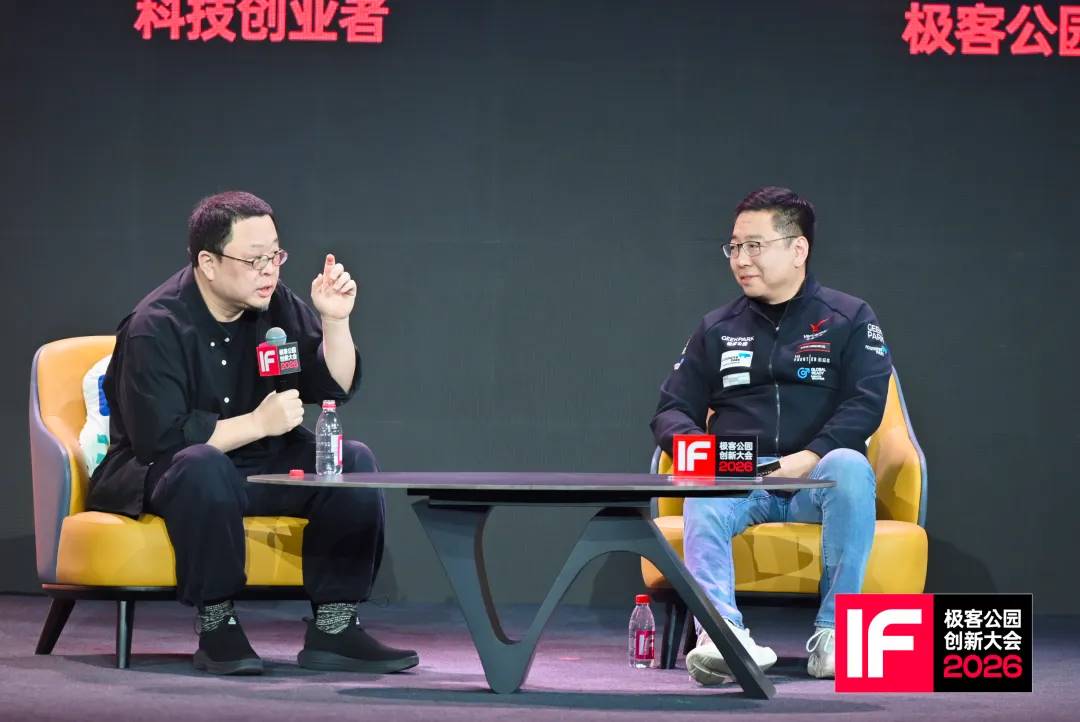
Luo explained in detail about the upcoming "Crossroads Annual Technology Innovation Sharing Conference"|Image source: Geek Park
We want to hold a "Crossroads Annual Technology Innovation Sharing Conference" in Shanghai on December 30 this year, where we will share a dozen innovative software and hardware products, all developed by Chinese teams.
It must be innovative; "good" is not enough; it has to be both innovative and good. Following this principle, when looking at hardware, we can basically only go to Shenzhen. While there are hardware makers all over China, the main hub is Shenzhen. Henri from Kickstarter, who just spoke, helped us with a lot of introductions.
We made two trips to Shenzhen, visited several processing factories, and also the XbotPark robot base, which is a unique hardware startup incubator in the world. We saw dozens of teams. It left a deep impression because today, if you want to start a hardware business, the best place in the world is Shenzhen, no doubt about it.
In recent years, everyone has noticed that in the field of technological innovation in the United States, software is still at the forefront, but hardware has diminished; Japan has very few hardware innovations, and they are rare. Occasionally, there are one or two rich second-generation individuals who often create "pretty but useless" things. For example, the world-renowned Teenage Engineering team has made many beautiful and interesting but useless items—of course, I like them; I’m not criticizing them. I come from an artistic background, and I also appreciate beautiful and useless things.
But if you want to do something substantial in the tech field, there’s no place that can compare to Shenzhen. Visiting one company after another in Shenzhen is quite impactful.
Zhang Peng: You visited very early-stage young teams.
Luo Yonghao: It’s hard to imagine that in my time, or anywhere on Earth outside of Shenzhen, there could be university students who haven’t graduated, eighteen or nineteen years old, gathering there with like-minded individuals, diving into hardware, especially smart hardware and the combination of software and hardware. It’s quite shocking; I feel happy for them and angry for myself. I can’t say too much now, but there will be many amazing things shared at the conference at the end of the year, and you will be surprised.
Zhang Peng: In previous years, when you were making phones, you also frequently went to Shenzhen. Comparing now, what do you think is the biggest change?
Luo Yonghao: When we went back then, there weren’t as many young teams making "novel and cool" things. At that time, while China’s technology was also thriving, and many companies were making novel and impressive things, you wouldn’t see young people—some even still in their first year of college—doing this.
Zhang Peng: Now young people have an earlier starting line. Do these new generation entrepreneurs still recognize you?
Luo Yonghao: They basically all know me. Although Smartisan Technology failed, the "legacy" it left has made some investors and business people look down on me—those people I don’t care about.
However, those who truly understand products, the product managers in China, are different. Even though we were completely beaten by competitors in the market, many people in the product departments of those competitors are still my fans because they understand products. As for the technical teams, there are basically no fans of mine; those in the profit realization departments look down on me even more. That’s roughly the current situation.
When I visit those startups, if the CEO comes from a product background rather than a technical one, they will be particularly friendly. They often quietly tell me, "Old Luo, I bought five Smartisan phones back in the day…" Especially those involved in the combination of software and hardware or pure hardware, as long as they are responsible for products, they have a natural affinity for me. They feel like "finally meeting you," and even though you failed commercially, we particularly recognize your products. This situation is very common.
This is even the case in Silicon Valley. At that time, news reports said that Zuckerberg poached 11 AI experts from OpenAI, seven of whom were Chinese. When I went to the U.S., I specifically wanted to see how impressive these Chinese experts were.
A friend helped me set up a group, and I met with one of the highest-valued individuals. When we met, this person was even more excited than I was, pulling me aside to say he was a "die-hard Smartisan fan." It turned out that before he went to study in the U.S., he had applied to be an intern at Smartisan Technology but was "cruelly rejected" by our HR twice. With no other option, he went to the U.S. to get a degree, later joined OpenAI, and became one of the top figures in the Chinese AI circle.
Zhang Peng: So you have contributed to the development of AI in the world.
Luo Yonghao: Is it possible that our HR rejecting him led to his high achievements? I don’t know; I have no answer. Anyway, I went back and blacklisted our HR—who is also an old friend—on WeChat. I was quite touched, feeling that although Smartisan Technology failed, its legacy might still last for many years. I feel quite guilty that I haven’t accomplished anything in the years to come.
Zhang Peng: What do you think truly moved them? What made them remember you to this day and even have an impact on them?
Luo Yonghao: It’s the product.
Zhang Peng: Is it because everyone shares a kind of aesthetic for the product?
Luo Yonghao: When we were making Smartisan Technology, those who understood products, especially teams like product managers, had a very high recognition of our products. This is a very natural result.
It’s just that I’ve grown old without realizing it. You will know this in the future; everyone here will grow old. When you get old, you don’t realize it during the process. For example, you feel like you’ve only aged ten years when in fact you’ve aged twenty. At that point, you’re still alive, and suddenly you become "respected." This feeling is quite complex for me.
Now, when I go to meet those young entrepreneurs in the tech circle, if they come from a product background, they have a particularly special feeling towards me. That’s when I realize I’ve been forced to become "respected."
Zhang Peng: Here’s the question: you don’t plan to retire and will continue to make products in the future. Doesn’t that mean you’ll be directly competing with this group of "new waves" who have grown up watching you?
Luo Yonghao: Being respected can also compete with young people.
Some people ask me, "Do you feel pressure from them, given that they’ve been exposed to such good things from a young age and are now achieving such excellence at a young age?" There is definitely pressure, but it’s all good, positive pressure. Others think, "You’re already old; your physical strength, energy, and creativity have declined. Can you still compete with them?" That’s hard to say. Some young people have misunderstandings about "Old Luo," and some have given up themselves. For someone like me, who never stops and keeps pushing forward, I feel I can still keep going for another ten years or more.
Luo Yonghao: Let me also share some common knowledge. Many people think that once someone receives a lifetime achievement award, they can no longer compete, which is a big misunderstanding. I often look for stories like this to motivate myself: Henry Fonda, Paul Newman—these Hollywood stars won the Oscar Lifetime Achievement Award and then went on to win Best Actor again. Can you argue with that?
So I feel that after receiving my lifetime achievement award in the product field, is it possible for me to win another "Best Actor" in the product domain? We shall see.
Zhang Peng: This is indeed something we are very much looking forward to.
Luo Yonghao: Now, with an average lifespan of over 80 years, and with breakthroughs in genetic science, we might soon live to over 100. My future plans are all based on a "half-century" perspective.
05 What Opportunities Are There for Entrepreneurship Today?
Zhang Peng: During your interactions with this generation of young people, what kind of advice have you given them?
Luo Yonghao: I’m very cautious about this. We were young once, and it’s quite annoying when "Old Luo" comes over and starts pointing fingers. Now, when I talk to them about products, I add a lot of prefixes.
Zhang Peng: What kind of prefixes?
Luo Yonghao: There are about seven layers of Buff. I start by saying, "I’m not sure if I should say this," then, "After all, I’m not a specialist in this area; you definitely know more than I do," followed by, "My experience is based on my past, which may not be free of mistakes," and "I’ll share something for your reference; if it’s wrong, feel free to correct me."
Zhang Peng: That’s six layers.
Luo Yonghao: There’s also, "I guess someone in your team might have mentioned this." In fact, if necessary, I could keep going. But generally, by this point, they start to get impatient: "Teacher Luo, just say it." I say, "You asked me to say it."
This is the final part, so I shift the responsibility to them and then gently suggest that this might be incorrect.
Zhang Peng: I think your "interactive experience" in giving advice to young people is quite well done.
Luo Yonghao: You have to say the right things at the right stage. At our age, being careless can be particularly annoying.
Zhang Peng: Let me ask, even though you’re this age, how can you "reverse the aging effect" and make young people more willing to be friends with you and communicate with you?
Luo Yonghao: It mainly relies on not being successful in my career. Think about it: if during the time of Smartisan Technology I had achieved a valuation in the hundreds of billions and became a star entrepreneur in China, ranking among the top few, would I still have this much drive now? I can’t say for sure; human nature is very complex.
The fact that I still have this good drive is somewhat related to not having achieved particularly great results before. Denying this would be dishonest.
We should try to empathize more; the world will be much better. When we were young, we were also bullied by "Old Luo." After you become "Old Luo," do you want to bully young people? That’s one aspect. Keeping such thoughts in mind occasionally will help you avoid being too embarrassing or going off track.
Zhang Peng: It sounds like you have two layers of understanding about young people this year: one is that this generation of young people is very capable.
Luo Yonghao: Extremely capable. The field of technological innovation is exceptionally impressive, not just ordinary.
06 Luo Yonghao: No Plans to "Pass the Baton"
Zhang Peng: However, the other layer is that even though they are very capable, you, Teacher Luo, have no plans to pass the baton in product development.
Luo Yonghao: Right, I have no plans to pass the baton. I will use my influence and what I can do to help them succeed while not neglecting my own matters.
Zhang Peng: A few days ago, you announced that New Year’s Eve event. Previously, you only released a text preview. Today, can you take this opportunity to explain it in detail? Many people outside are guessing if this is a "year-end big sales event"?
Luo Yonghao: It’s not.
Zhang Peng: How should we understand it?
Luo Yonghao: Because at the end of the year, we will discuss about 5 to 8 software products and 5 to 8 hardware products, totaling a dozen or less than 20 innovative products. These will include products from large enterprises, small and medium-sized enterprises, and even startups and entrepreneurial teams. Among them, there are both mature products and newly developed engineering prototypes that cannot be mass-produced.
We select products that must be innovative, and we actively choose them. In the same category, within our reach, we scour to find the best; only then do we charge for them.
Zhang Peng: So the prerequisite is that you find the products good enough and are convinced by them?
Luo Yonghao: Yes, but not entirely. We have a product selection team, so sometimes I mistakenly think a product is very good, but they go back and discuss it behind my back, listing all its shortcomings. When they come back to talk to me, I can be persuaded and may also reject it.
Zhang Peng: How do you set the selection criteria?
Luo Yonghao: First is a good product, second is innovation. Or the other way around: first is innovation, because some good products need to go through two or three iterations to become particularly good. But if something is very innovative now, we believe it deserves support.
Especially at Professor Li Zexiang’s place, there are all kinds of bizarre hardware startup projects, and some kids are creating astonishing things even before they graduate. If you’re not a particularly unhealthy middle-aged person, seeing that will genuinely make you feel very gratified and happy.
Zhang Peng: It feels a bit like becoming an accelerator.
Luo Yonghao: When we visited Professor Li Zexiang’s innovative robotics base, they had already completed the incubation phase, and now they are starting to present an engineering prototype to society. At this point, they need someone who understands the market, knows marketing, can tell stories, can boast, and has some idealism to give them a push. So we position ourselves as—I believe we can quickly become—China’s best technology accelerator and booster.
Zhang Peng: You want to add a boosting force at this stage to help them be better recognized by the market.
Luo Yonghao: Rapid commercialization, entering the public eye.
Zhang Peng: This is indeed a pain point in the industry. Many hardcore teams have produced good products but fail because "good wine fears no alley." Strong technology, weak marketing. Do you think this misalignment is still common in today’s hard tech entrepreneurship?
Luo Yonghao: This also makes us quite cautious when selecting products. To be honest, we are quite nervous about it. Because we need to ensure that what we are helping to accelerate and boost is the best in this stage.
If two companies have comparable capabilities, with product capabilities and technical research and development strength being equal, then at this point, it might come down to who understands marketing better, who understands production and manufacturing better—these are all hard skills. There are also soft skills like marketing, promotion, and brand storytelling; none of these can be avoided in modern enterprises. When we can’t avoid them, we are very afraid of overlooking the best in a field and promoting the second best. This is our biggest psychological burden.
We need to ensure that every time we help accelerate and boost, it is the best in that field and at that time.
Zhang Peng: But there’s a risk here: it’s hard to make judgments across different fields. How do you ensure that your selection team "understands the industry" and won’t miss the best one among so many different tracks in hard tech?
Luo Yonghao: We have also built a technology company with over 1,200 people, with experts from various industries. So today, when I’m doing this kind of work, many of my old colleagues and friends in the industry, without any conflicts of interest, are willing to help us as advisors for free.
Zhang Peng: So you’re bringing in "external brains" for objective evaluation.
Luo Yonghao: Yes, so I don’t lack people for professional judgment. For example, in the AI field, our internal team may not have strong technical evaluation capabilities. But haven’t we interviewed many impressive AI startups in China one by one? Since I’m not charging them, when I encounter difficulties, I can just say, "We’re currently looking at a project, and there are some hardcore technologies we can’t evaluate; can you help us with the assessment?" They are definitely willing to help.
To be honest, the value of doing this podcast is much greater than I imagined. Whether it’s for social value, commercial interests, or my own growth, the help is enormous. If I keep recording at this pace for a year and a half or two years at most, I’ll get to know elites from various industries in China. The benefits this brings to my growth, career, and the big things I want to do in the future are truly beyond words.
This was an unexpected gain that I didn’t anticipate when starting the project. Although I’ve been in the industry for so many years, if I want to meet top figures in any field, I could connect with them through a couple of friends. But I’m socially anxious; if I have to ask someone to introduce me to someone for help, I find it particularly difficult and feel a heavy psychological burden. However, doing the podcast makes everything feel very natural and smooth.
When someone comes from far away and talks to me for seven hours, I can’t just not add them on WeChat, right? After adding them, if I encounter any problems in the future, I can ask them, and I find they are very willing to help. So the long-term value this brings to me may far exceed my wildest imagination.
Zhang Peng: Speaking of this, many people, including myself, feel that your state has noticeably improved since you started the podcast this year.
Luo Yonghao: It’s quite good. Because I’ve done live-streaming e-commerce selling goods, I don’t think that work is bad, but indeed, my personality is not suited for repetitive labor; I need to do creative work. So live-streaming sales cannot allow for creative labor; it’s just repetition. But now, interviewing these elites from various industries, I don’t feel like I’m doing repetitive work because I constantly learn a lot from them.
Moreover, what you see is all discounted. We also delete 10% to 20% at the request of their PR teams; those are things I still enjoyed myself.
What’s deleted isn’t necessarily inappropriate; a lot of it is valuable content. The PR teams ask for deletions because, during online dissemination, some statements can be misinterpreted and turned into something else.
So based on their years of PR experience, they want to delete those. But those are actually quite precious. It’s because the current self-media environment is not good; it easily leads to misdirection, so they are very cautious and delete those. They worry about distortion in the dissemination channels, so they remove them. But those deletions have become my own benefits.
So I don’t feel exhausted recording this program; I feel like I’m absorbing a lot of nutrients and can keep doing it. That’s why I’m in good spirits now, and this is also related.
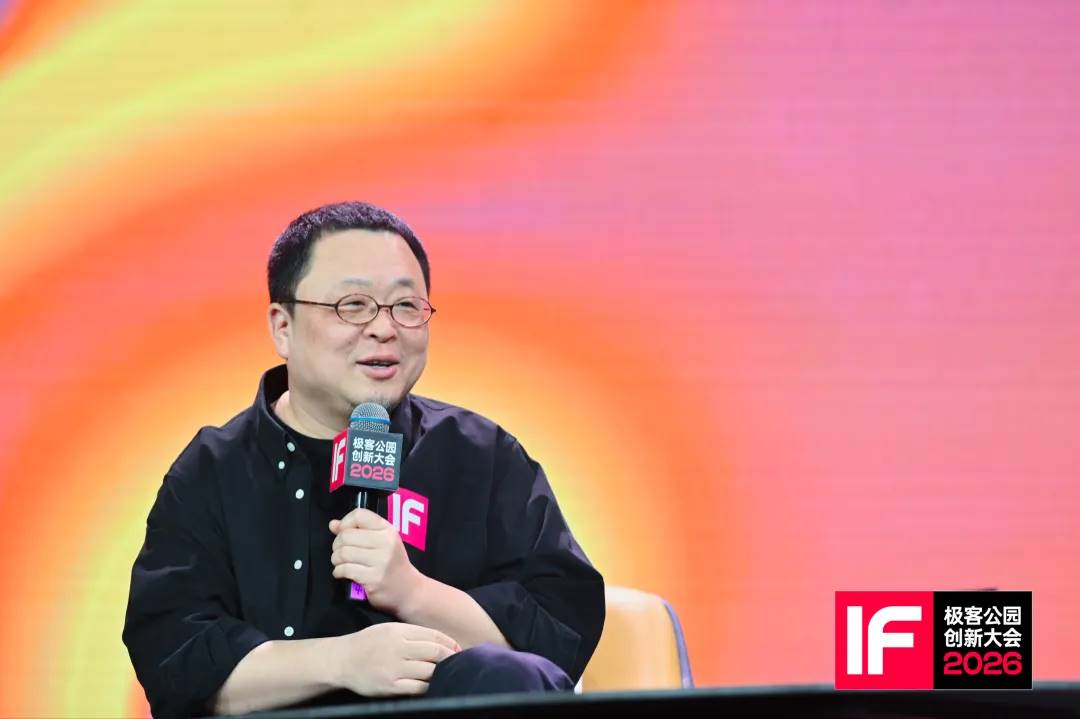
Teacher Luo is happier doing the podcast than before|Image source: Geek Park
Zhang Peng: This kind of creative joy indeed nourishes people. You see, over the years when you were running your tech company, you had to lead a group of people like a captain, confirming for them, "This is the direction; follow this."
Luo Yonghao: Including during times of lack of confidence.
Zhang Peng: You had to hold up even when you lacked confidence?
Luo Yonghao: What else could I do?
Zhang Peng: That’s true. So can it be understood that when chatting with these guests, you’ve shifted from being the "driver" to being a "passenger," instead absorbing energy?
Luo Yonghao: I forgot to mention, our first principle for inviting guests is— they can’t be worse than me in this field; otherwise, what would I talk about? They must be stronger than me.
Zhang Peng: You’ve taken a "luxury free class."
Luo Yonghao: Yes, everyone comes to give me a luxury free class; I’ve made a killing.
Zhang Peng: Now that you’re over fifty, the old Chinese saying goes, "At fifty, one knows their destiny." Do you feel this way?
Luo Yonghao: I don't care that much. The average lifespan is now 80 years, so saying "At fifty, one knows their destiny" is actually a bit far-fetched. When the ancients said this, the average lifespan was only in the 30s, and that was counting famines and wars. Most people didn't reach the "destiny" before they died. Now that we can live to over 80, what destiny can we know at fifty? I guess you are also planning your future work based on a "half-century" perspective.
Zhang Peng: Let's talk about the future. What new goals are you most interested in and excited about right now?
Luo Yonghao: It definitely still involves making products. I'm both happy and a bit pressured because this wave of the AI revolution is said to be a bigger opportunity than the Industrial Revolution. So if nothing comes out of this wave, it will indeed be hard to find excuses—last time there were some excuses, but this time there are none. I'm happy, excited, and nervous; it's a great entrepreneurial state.
Zhang Peng: Do you have a more concrete idea?
Luo Yonghao: At our year-end conference, we not only selected outstanding products from various industries but also included something we are working on ourselves.
Zhang Peng: You want to bring some "private goods"?
Luo Yonghao: Yes, I want to bring private goods.
Zhang Peng: If that thing isn't better than others, it might not be presentable.
Luo Yonghao: Then I won't present it.
Zhang Peng: In this wave of AI, young people might feel that there are many big companies and limited resources. As Luo Yonghao, what is your specific track and strategy in this era?
Luo Yonghao: We are currently cautious about doing things that the giants are watching; we need to take it step by step.
First, we do things that they don't particularly care about but have enough value to support our progress; after accumulating enough, when we feel it's time, we will then tackle things that are more likely to be quickly crushed by the giants.
Right now, if a startup creates something good that aligns with the interests of the giants, most of the time it gets "killed by copying"—the "copy" in "copying"—rather than being acquired. This is an objective fact that everyone should be aware of.
We are very careful when we do things. If something is likely to be copied and killed, we will hold back. But you can't make things too small either, or you won't be able to scale. So we cautiously pick out those "middle-ground" opportunities from the myriad of startup possibilities, which the giants won't pay attention to until you reach a certain influence and value. It's actually quite painful, but it's the only way to go.
This includes mobile phones. Smartisan Technology has been out of business for seven years, yet last year we still saw over a million daily active users—those friends still using old phones. People keep asking, "Why not make a phone again? Just release one model a year; selling a million or two isn't a big deal." But that would only allow the team to barely make a living, with no significant growth. There have been offers for investment, but I don't dare to make phones again, fearing I would lose other people's money.
However, if we create a bunch of things and achieve great success, with plenty of our own money, I wouldn't rule out restarting the phone business. But there's a problem: once we get it right, the idea will definitely be copied by big companies, and the outcome is basically predetermined.
So we are also thinking, can we "kidnap" one of the "giants" in the process of doing this? If it works out, I wouldn't mind being the boss; I just hope the product is done right in the correct direction.
Take AI phones as an example. The AI revolution has been going on for three years, yet whether it's Apple, Samsung, or Huawei, Xiaomi, OPPO, they haven't produced anything in the smartphone space. Instead, "Doubao" (a brand) might be more daring and less burdened, making a bold attempt, and now all the apps want to ban it.
So, this matter is indeed much more complicated than friends who love products imagine. It's not just about making a good product; there are many considerations.
Zhang Peng: If you really want to make a change in the mobile phone industry today, where do you think the core innovation point lies?
Luo Yonghao: Simply connecting everything in the phone with an AI assistant can create a revolutionary experience.
But this is very difficult. The complexity lies not in the technology or engineering accumulation; those are minor issues. In the future, as AI's coding ability becomes stronger, those won't be problems. The hardest part is the rulers of the old world; they have to refute their original interests, and they lack the ability to innovate, mainly relying on copying. In this situation, how do you create something that avoids being copied and killed by them?
To be honest, creating such a product requires 80% of the effort in defense and negotiation, while only 20% is needed to make a product that can outperform theirs. But doing well also risks being killed, so this is a particularly complex systemic issue.
Going "overseas" might be an option. Look at the Nothing Phone; its founder, Carl Pei, is also a young entrepreneur I really like. Nothing's software is quite ordinary, but the industrial design is excellent. He has avoided the domestic market because the competition in the mobile phone sector here is the fiercest and most brutal.
So he has been focusing on overseas markets and has achieved great success in India. Now he is doing quite well, and I'm very happy for him.
Forget about phones; it's too complicated.
Zhang Peng: I can sense that you haven't completely let go of the phone issue in your heart.
Luo Yonghao: It's not that I can't let go of the phone itself; it's that I want to create something at the "operating system level that combines software and hardware."
Although we see all kinds of glasses and various AI gadgets constantly emerging, I believe that in the next ten years, nothing will replace the phone. If that's the case, I have to reconsider the phone. If in the next ten years the phone can be replaced by glasses, then I wouldn't care about phones at all; I'd only focus on glasses.
Right now, it seems that the maturity of the glasses supply chain will take more than ten years, so there's no chance in the short term; it's impossible to replace the phone. So I can only keep an eye on the phone.
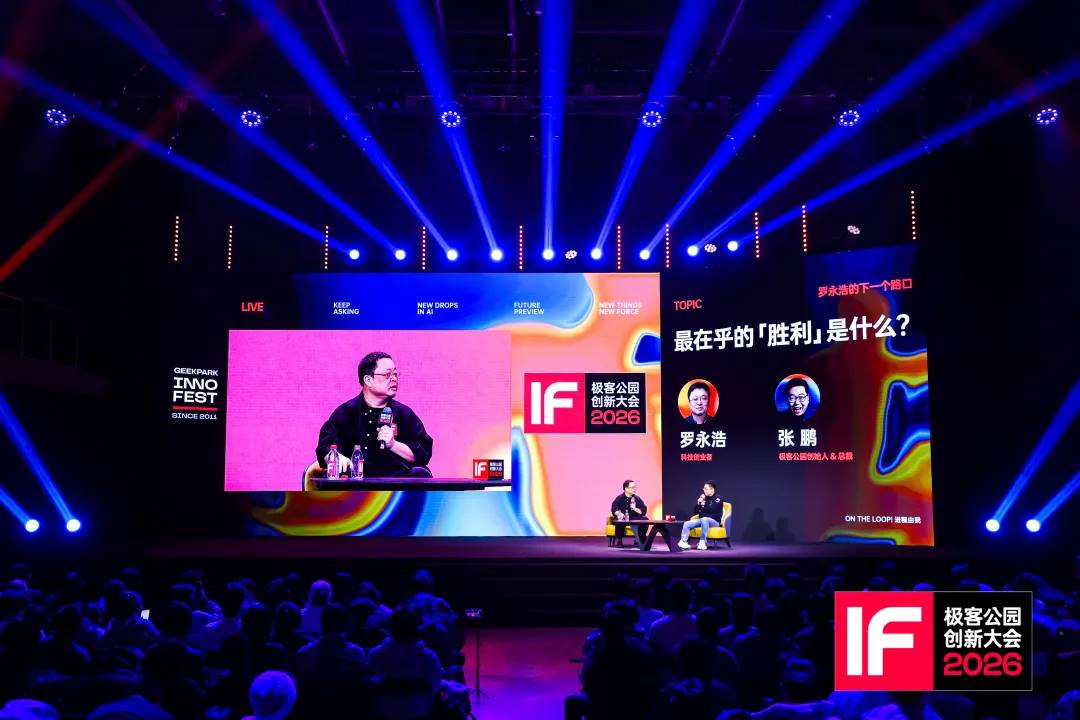
Luo Yonghao talks with Zhang Peng|Image source: Geek Park
Zhang Peng: Do you hope to personally drive this change, or are you just happy to see the change happen?
Luo Yonghao: I'm happy either way. After Steve Jobs passed away, it seems there aren't many innovative companies left; even Jobs' own company isn't innovating anymore.
So I hope any company can quickly produce an AI phone to benefit humanity; I would be happy. Even if it means burning my own money, I would be willing to prototype the world's best AI phone and let them copy me. If I go bankrupt, I would be fine with that. That's the truth.
I don't know if I can say this, but at least one of China's mobile giants is very eager for me to become a senior executive partner and help them make phones; we've been discussing it for over a year. But I feel that the boss's ideas about the product don't align with mine. If I go there, ultimately he will have the final say, and I feel that the product might not come out well. Based on this consideration, I didn't go.
There's another company where the boss doesn't hope for me to go, but I want to go.
Zhang Peng: A "missed opportunity" in reverse?
Luo Yonghao: Yes, I wouldn't mind working for him as long as we can make this phone. But he is somewhat hesitant about me. That's just how life is.
Zhang Peng: One last question: years ago when you came to Geek Park, you said if you had the chance to leave a message for your younger self, it would be "Don't be afraid, kid." Today, facing this group of "very capable" young people, what would you like to say to them?
Luo Yonghao: The same—don't be afraid; there's nothing to be afraid of.
I think they especially don't need to be afraid; the conditions they grew up in are many times better than what we had. Now, Chinese tech companies are going overseas in bulk to tap into global markets. In certain fields, it's really hard to succeed in China—you just need to get a few things right, and you will be crushed by the giants. But if you break out into the global market, there are still plenty of opportunities; there's no need to be afraid.
Actually, saying this is a bit redundant; they are already fearless, and I particularly like this. My peers were also "brave while being afraid" when they were young, but today's young people don't even have a sense of fear, which makes me very happy.
At least among entrepreneurs, this is common. This also confirms that my thoughts when I was young were correct. I believed we shouldn't be so timid, while most of my peers were still quite constrained by the pressures of reality. Now that young people are like this, I am particularly pleased. The day I imagined is coming.
Zhang Peng: Great! It used to be a spark, and now it has finally spread. I wish you continued exploration of the future you are interested in.
免责声明:本文章仅代表作者个人观点,不代表本平台的立场和观点。本文章仅供信息分享,不构成对任何人的任何投资建议。用户与作者之间的任何争议,与本平台无关。如网页中刊载的文章或图片涉及侵权,请提供相关的权利证明和身份证明发送邮件到support@aicoin.com,本平台相关工作人员将会进行核查。


