Original | Odaily Planet Daily (@OdailyChina)

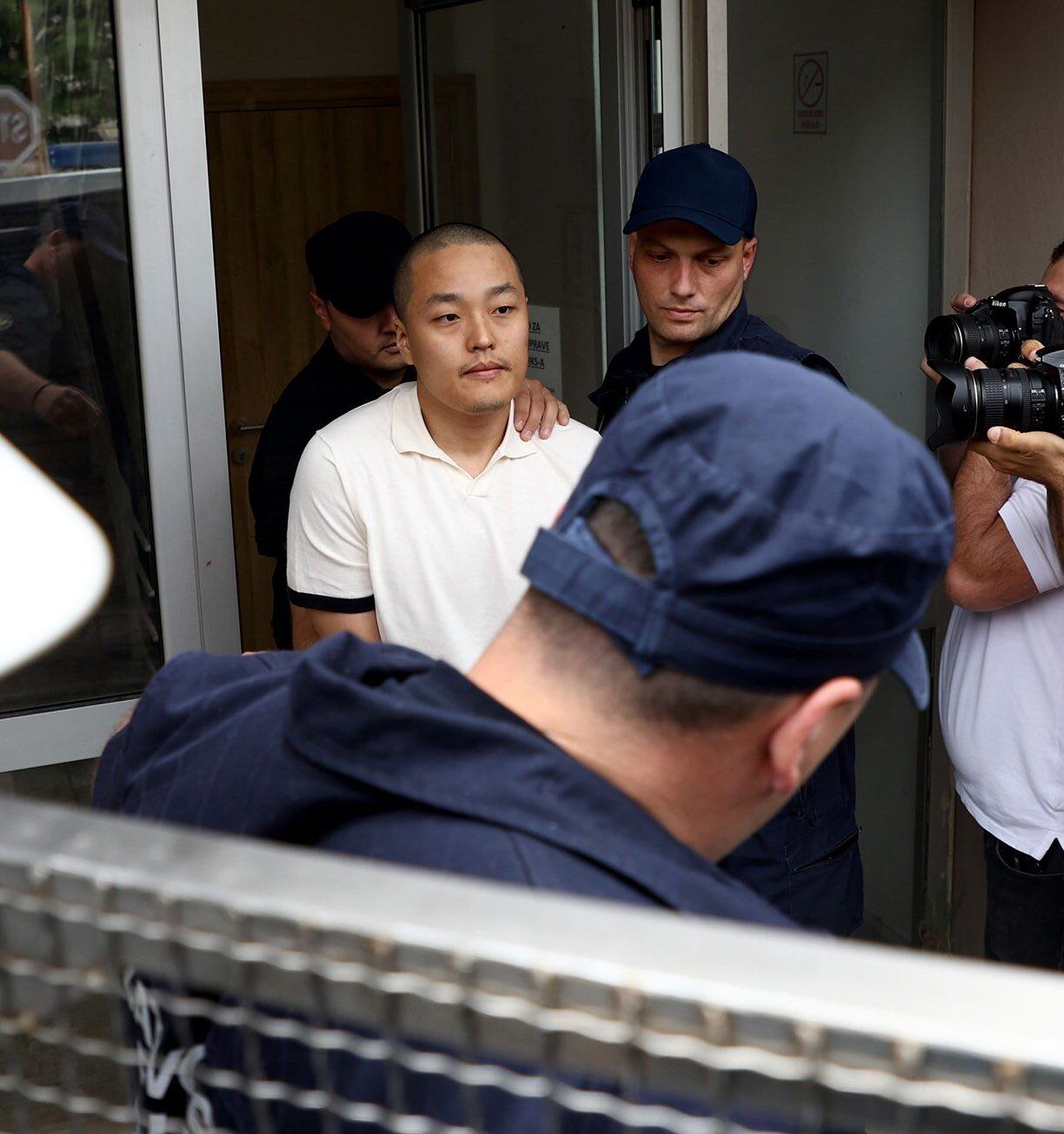
On December 11, Eastern Time, the U.S. District Court for the Southern District of New York held a sentencing hearing for Do Kwon, the co-founder of Terraform Labs, in Court 1305. During the hearing, Judge Paul Engelmayer announced a 15-year prison sentence for Do Kwon.
Do Kwon has now become another well-known figure in the industry to receive a heavy sentence, following FTX founder Sam Bankman-Fried and Celsius Network founder Alex Mashinsky.
The Myth and Collapse of Terra
The algorithmic stablecoin project Terra, developed by Terraform Labs (with the project token LUNA and stablecoin UST), was one of the most prominent projects in the last bull market.
Algorithmic mechanisms were a hot trend in stablecoin innovation during the last cycle. Unlike mainstream over-collateralization mechanisms, algorithmic stablecoins do not require full collateral but are designed around market supply and demand to dynamically maintain the "peg" of the coin's price. For example, in the case of Terra, the protocol allowed market participants to mint UST by burning an equivalent amount of LUNA or vice versa, burning UST to exchange for an equivalent amount of LUNA. When the demand for UST increased and the price rose above $1, arbitrage opportunities would drive the market to burn LUNA to mint UST for profit; conversely, if the demand for UST decreased and the price fell below $1, the market would be driven to burn UST and mint LUNA for profit.
This "left foot stepping on the right foot" technique between LUNA and UST created the growth miracle of Terra. The circulating supply of UST once reached $18.7 billion, showing a trend to challenge the king of stablecoins, USDT; the price of LUNA once approached $120, corresponding to a market cap of $41 billion, briefly ranking among the top five in cryptocurrency market capitalization.
However, history has proven that any stablecoin mechanism without sufficient collateral is an illusion. While it may operate temporarily under normal market conditions, it has poor risk resistance in extreme situations. In May 2022, the bubble of Terra ultimately burst, and under collective panic, this algorithmic stable mechanism led to a deeper death spiral. Within just a few days, hundreds of billions in market value of LUNA and the "value" of UST evaporated.
From a macro perspective, the collapse of Terra is considered by many industry insiders to be one of the core events that caused the subsequent prolonged market downturn. From a micro perspective, the explosion of Terra led to countless investors suffering massive losses, with some users even choosing to commit suicide out of despair.
Escape, Hiding, Capture, and Extradition
After the collapse of Terra, prosecutors in both South Korea and the United States charged Do Kwon with conspiracy to commit fraud, commodity fraud, telecommunications fraud, securities fraud, and conspiracy to manipulate the market and money laundering. In September 2022, South Korean prosecutors issued a red notice through Interpol, requesting police worldwide to assist in the arrest of Do Kwon.
Although Do Kwon remained active on social media and responded by saying, "I'm not on the run," no one knew his exact location. It wasn't until a year later that people learned Do Kwon had been hiding in Serbia and Montenegro to evade Interpol's pursuit.
On March 23, 2023, Do Kwon and Terraform's CFO Han Chang-joon attempted to fly from Podgorica, Montenegro, to Dubai using forged Costa Rican passports but were arrested by local police at the airport. About two hours before Do Kwon's arrest, an informant informed Montenegro's top police officer, Interior Minister Filip Adžić, that Do Kwon might be in the country. Adžić recounted to the WSJ that the informant sent Do Kwon's passport details to his phone, and when he called the border police chief, the police had just apprehended Do Kwon at the airport.
The interior minister stated in his call to the border police chief, "Do you know who that person is? He is very famous and has a lot of money."
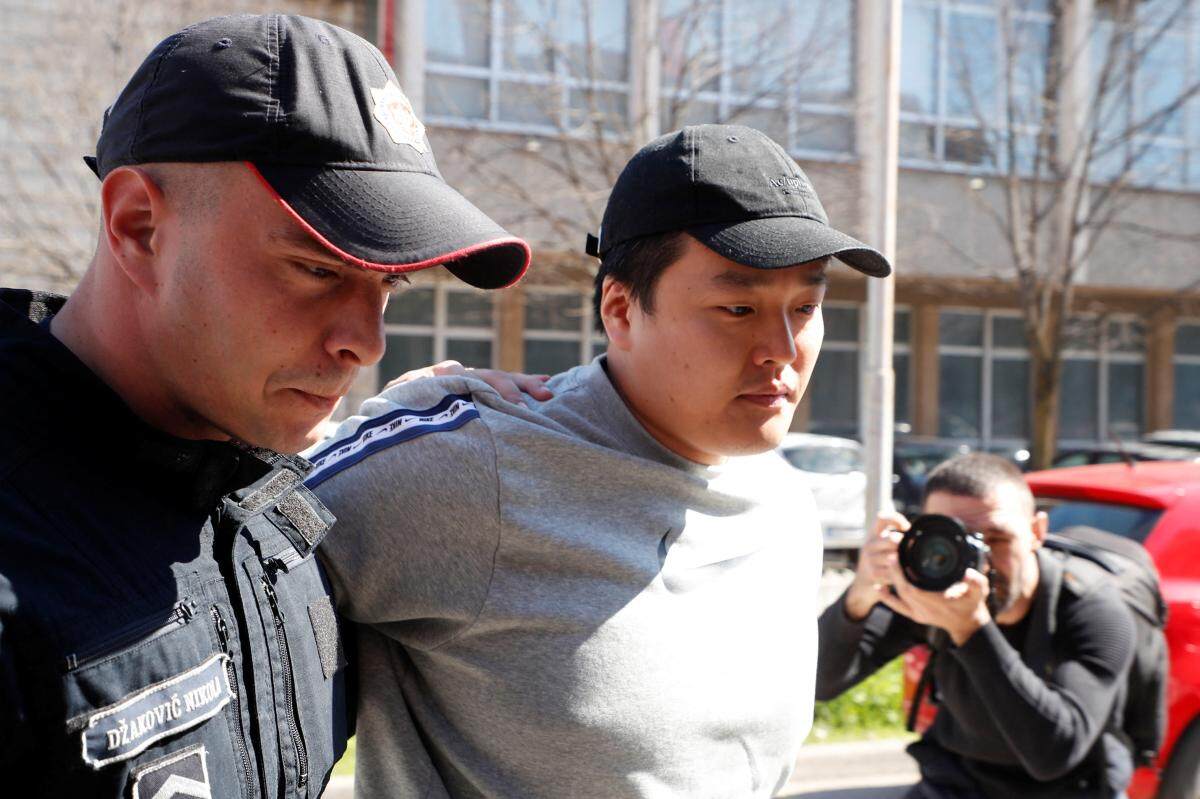
Odaily Note: Photo from the scene of Do Kwon's arrest.
After his arrest, Do Kwon was initially held in solitary confinement in the pre-trial detention area of the Spuz prison in Montenegro. On June 19, 2023, he was sentenced to four months in prison by a Montenegrin court for forging passports. At that time, both South Korea and the United States sought to extradite Do Kwon from Montenegro. In response to requests from U.S. and South Korean authorities, the Montenegrin High Court subsequently extended Do Kwon's detention.
In March 2024, Do Kwon was granted permission to leave prison, but considering he still faced criminal charges from several countries, the Montenegrin High Court ordered the confiscation of his passport to prevent him from leaving the country. At that time, the decision regarding Do Kwon's extradition was still pending, with Montenegrin prosecutors opposing his extradition to South Korea, preferring instead that he be sent to the United States, where he could face a longer sentence if convicted.
The suspense was finally resolved on the last day of 2024, when Montenegrin Prime Minister Milojko Spajic officially announced that the procedures for extraditing Do Kwon to the United States had been completed.
On January 2, 2025, Do Kwon made his first public appearance in a U.S. court. During a hearing at the Manhattan federal court, Do Kwon pleaded not guilty, but as the case progressed, he pleaded guilty to two of the charges (conspiracy to commit fraud and telecommunications fraud) in August of this year.
Ultimately, on December 11, Judge Paul Engelmayer read out Do Kwon's sentencing fate.
Controversy Over Sentencing
Regarding Do Kwon's sentencing, the prosecution and defense had differing opinions.
Last Thursday, U.S. federal prosecutors submitted a request to the judge of the Southern District of New York, stating that Do Kwon should be sentenced to 12 years in prison.
On the other hand, Do Kwon's defense team requested a five-year sentence, arguing that Do Kwon had already served time in Montenegro and could face further prosecution in South Korea. However, U.S. officials argued that only a long prison sentence could reflect the scale of the fraud and deter similar behavior in the future.
The prosecution contended that only a long prison sentence could reflect the scale of Do Kwon's fraud and deter similar behavior. As a reference, the losses related to the collapse of Terraform exceeded the combined losses of SBF's FTX, Alex Mashinsky's Celsius, and OneCoin. SBF will serve 25 years, while Mashinsky has already been sentenced to 12 years in prison for fraud.
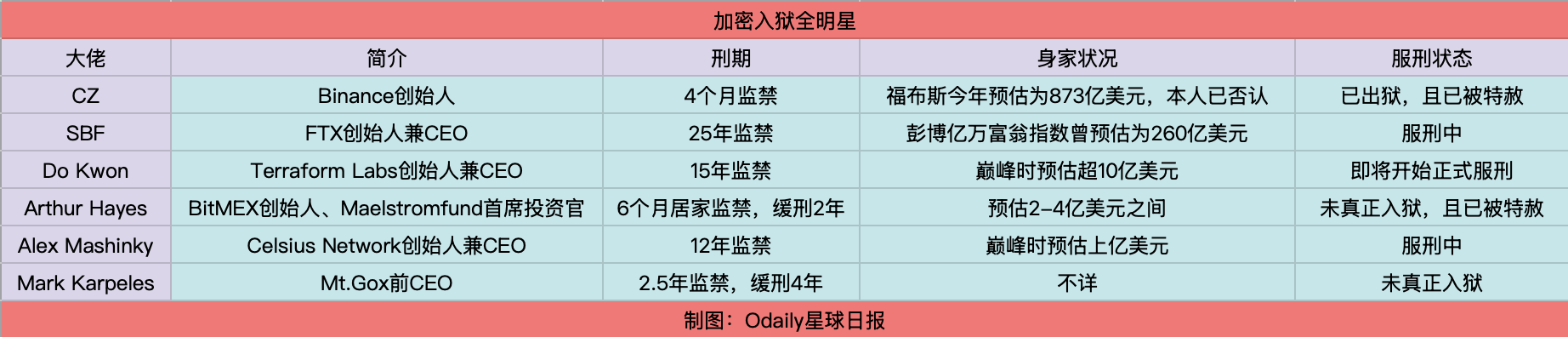
Odaily Note: Representatives of the cryptocurrency industry who have been sentenced in recent years.
The prosecution wrote in their documents: "The collapse of Terraform triggered a series of crises that swept through the cryptocurrency market, indirectly causing the subsequent industry winter. Do Kwon fled from this crisis, and during his time in hiding, he was vague in interviews and tweets, shifting responsibility to others, and refused extradition after being captured… Do Kwon's misconduct, the consequences of his crimes, and his reaction to the exposure of the conspiracy are sufficient to warrant a heavy sentence. In fact, the circumstances of the crime alone are enough to support the maximum penalty."
Surprisingly, the sentence handed down by the judge ultimately exceeded the prosecution's request for 12 years, with Judge Paul Engelmayer stating that Do Kwon "chose to lie" and "made the wrong choice."
A Hasty End to a Concluded Era
From SBF to Do Kwon, those names once admired by countless people are now concluding in a very hasty manner.
In the narrative of the last bull market, projects like Terra and FTX represented the most radical, ambitious, and blind expansion forces in the crypto world. They rapidly accumulated vast capital and prestige in the name of technological innovation but ultimately fell into the abyss amid regulatory gaps, uncontrolled risks, and human greed.
However, the development of the industry will not come to a halt due to individual downfalls. The cryptocurrency market has already entered a new cycle, with new stablecoin models, new financial vernacular, and stricter regulatory requirements redefining the underlying order of the industry. History will remember the former glory of Terra, but it will also remember the price it left behind — a reality and warning that all future entrants must face.
免责声明:本文章仅代表作者个人观点,不代表本平台的立场和观点。本文章仅供信息分享,不构成对任何人的任何投资建议。用户与作者之间的任何争议,与本平台无关。如网页中刊载的文章或图片涉及侵权,请提供相关的权利证明和身份证明发送邮件到support@aicoin.com,本平台相关工作人员将会进行核查。