After meeting with Kevin Warsh, Trump publicly listed the former Federal Reserve governor as the top candidate for the next Federal Reserve chair, marking an escalation in the battle for control of the world's most important central bank.
In Trump's view, the chair of the Federal Reserve seems to be merely a "rate-cutting license" that can execute his will. On December 13, Trump announced to the media that after meeting with Warsh, the former Federal Reserve governor had risen to the top of his list for the next Federal Reserve chair.
He had previously set clear criteria for the Federal Reserve chair: only appoint "candidates willing to cut rates."
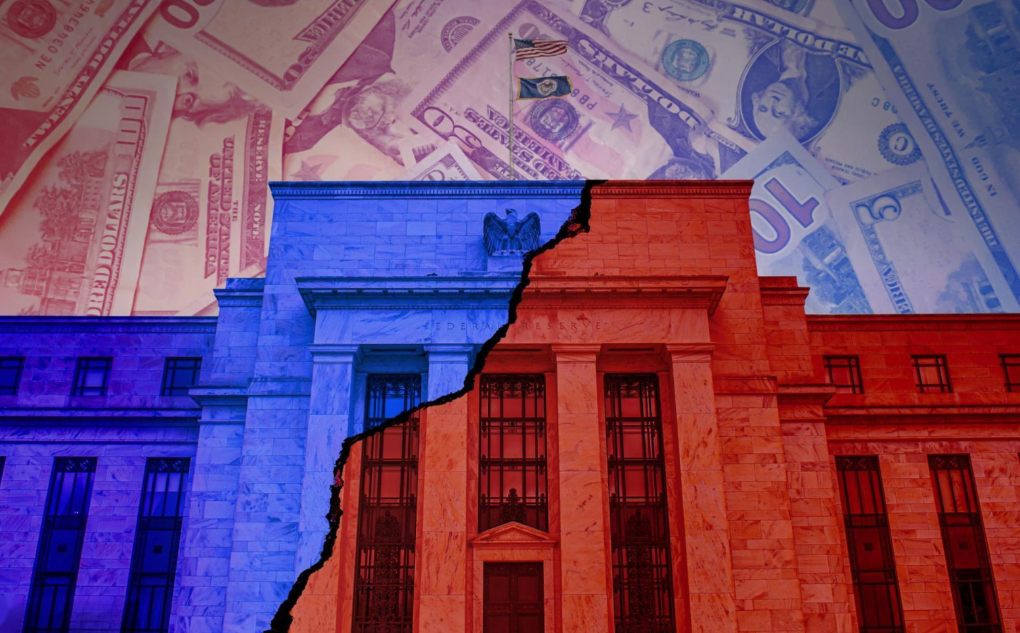
1. Power Struggle
● For Federal Reserve Chair Jerome Powell, his term is entering a countdown filled with uncertainty. Although his chairmanship will end in May 2026, his term as a Federal Reserve governor will not expire until January 2028. This means that even if he is not chair, he may still remain within the Federal Reserve's decision-making body.
● The conflict between Trump and Powell has a long history. As early as July of this year, The New York Times reported that Trump had drafted a letter to fire Powell. Trump's dissatisfaction mainly centers on Powell's "slow rate cuts" and adherence to the Federal Reserve's principle of "independent operation."
● However, from a legal perspective, the U.S. president cannot arbitrarily fire the Federal Reserve chair. This institutional design is intended to ensure that monetary policy is not subject to short-term political interference. Tiffany Wilding, an economist at Pacific Investment Management Company, pointed out that Trump is more likely to reshape the Federal Reserve landscape through personnel appointments rather than direct firings.
2. Candidate Competition
The competition for the Federal Reserve chair is essentially a contest between two "Kevins" — Kevin Warsh and Kevin Hassett.
● Warsh was considered by Trump as a candidate for Federal Reserve chair in 2017. He has direct experience working within the Federal Reserve, having served as a governor from 2006 to 2011. Hassett currently serves as the director of the White House Council of Economic Advisers and is a core economic advisor to Trump.
● In this "loyalty test," both candidates have shown positions highly consistent with Trump's policies. Hassett has publicly stated that if the data supports it, "there is plenty of room for significant rate cuts." He even explicitly mentioned that the rate cut could "exceed 25 basis points."
● Warsh has criticized the Federal Reserve for overreacting to Trump's tariff policies, arguing that the inflation caused by tariffs is "temporary," and that the Federal Reserve's reluctance to cut rates "is eroding its credibility."
Candidates
Current Position
Trump Relationship
Kevin Warsh
Former Federal Reserve Governor
Long-term admiration, interviewed in 2017
Kevin Hassett
Director of the White House Council of Economic Advisers
Core economic advisor, close relationship
3. Policy Proposals
● In a recent series of statements, Warsh has proposed more radical reform plans than Hassett. He not only calls for rate cuts but also advocates for "systemic reform" within the Federal Reserve. He openly criticizes the Federal Reserve for having "too many redundancies" and needing to "bring in some new talent."
● Warsh has also proposed a groundbreaking idea: the Federal Reserve should coordinate with the Treasury on how to manage bond issuance. He suggested, "We need a new agreement between the Treasury and the Federal Reserve, just like we did in 1951."
This proposal to more closely bind monetary policy with fiscal policy runs counter to the traditional concept of maintaining the Federal Reserve's independent decision-making.
● Regarding Trump's tariff policies, Warsh provides "theoretical support," arguing that "tariffs do not lead to inflation," and that even if there are price increases due to tariffs, they are merely "one-time price changes." This stance sharply contrasts with the views of many economists.
● Although Hassett also supports rate cuts, his statements are relatively more cautious. He emphasizes that the Federal Reserve chair's responsibility is to "observe data and make adjustments," arguing that prematurely announcing the interest rate path for the next six months is "irresponsible."
4. Market and Reactions
● Trump's public intervention in the Federal Reserve's personnel arrangements has raised widespread concerns. Democratic Senator Elizabeth Warren has explicitly stated her worry that Trump will appoint a "puppet" as Federal Reserve chair.
● Wall Street is equally uneasy. JPMorgan CEO Jamie Dimon has warned that "the independence of the Federal Reserve is crucial," and that intervening in the Federal Reserve "often leads to adverse consequences."
● From a market perspective, the competition for the Federal Reserve chair has begun to affect investor behavior. A report from the Wealth Group indicates that uncertainty about the interest rate path is causing market estimates to become chaotic. Although the market had previously expected three rate cuts in 2025, the probability of the first rate cut in September is currently only 21%.
● The U.S. economy is facing a "triple high dilemma": high debt (national debt exceeding $37 trillion), high inflation (core PCE still at 2.7%), and high valuations (S&P 500 forward P/E ratio at 22.2 times). In this context, politically driven rate cuts could repeat the "Great Inflation" of the 1970s.
5. Historical Comparison
The conflict between U.S. presidents and Federal Reserve chairs is not unprecedented.
● Historically, President Lyndon Johnson clashed with then-chairman William Martin over the Federal Reserve's rate hike policies; President Richard Nixon also pressured then-chairman Arthur Burns to maintain loose monetary policy.
● However, Trump's approach is fundamentally different from his predecessors. He not only publicly criticizes but reportedly has also drafted dismissal letters, a direct challenge to the Federal Reserve's independence that "has never been seen in U.S. history."
● Unlike historical conflicts, Trump has begun to actively screen alternative candidates rather than limiting himself to verbal pressure. In the 1970s, Burns significantly cut rates under pressure from the Nixon administration, ultimately leading the U.S. into severe inflation. This historical lesson has made many particularly wary of current political interventions.
On December 14, Trump reiterated his desire to see interest rates remain at 1% or lower within a year, setting a clear quantitative benchmark for his "rate cut pressure test."
When asked whether the Federal Reserve chair should consult the president on interest rate decisions, Trump's response broke with tradition: "I have always been very successful, and I think my role should at least be to make suggestions."
As the list of candidates becomes clearer, global markets are holding their breath for the final outcome of this power struggle.
Join our community to discuss and grow stronger together!
Official Telegram community: https://t.me/aicoincn
AiCoin Chinese Twitter: https://x.com/AiCoinzh
OKX benefits group: https://aicoin.com/link/chat?cid=l61eM4owQ
Binance benefits group: https://aicoin.com/link/chat?cid=ynr7d1P6Z
免责声明:本文章仅代表作者个人观点,不代表本平台的立场和观点。本文章仅供信息分享,不构成对任何人的任何投资建议。用户与作者之间的任何争议,与本平台无关。如网页中刊载的文章或图片涉及侵权,请提供相关的权利证明和身份证明发送邮件到support@aicoin.com,本平台相关工作人员将会进行核查。