Ripple breaks the deadlock, Swift leads the way.
Written by: Sanqing, Foresight News
During the Sibos 2025 conference in Frankfurt, Swift's Chief Business Officer Thierry Chilosi and Standard Chartered Bank's Global Head of Transaction Banking Michael Spiegel discussed the significant transformation of global finance. As tokenization moves from pilot to reality, Swift officially announced the addition of a blockchain-based shared ledger to its infrastructure, aimed at achieving trustworthy and interoperable digital finance on a global scale. This ledger will serve as a secure, real-time transaction record between financial institutions, validating transaction sequences and executing agreed rules through smart contracts, intended to complement existing systems and seamlessly connect traditional finance with tokenized assets.
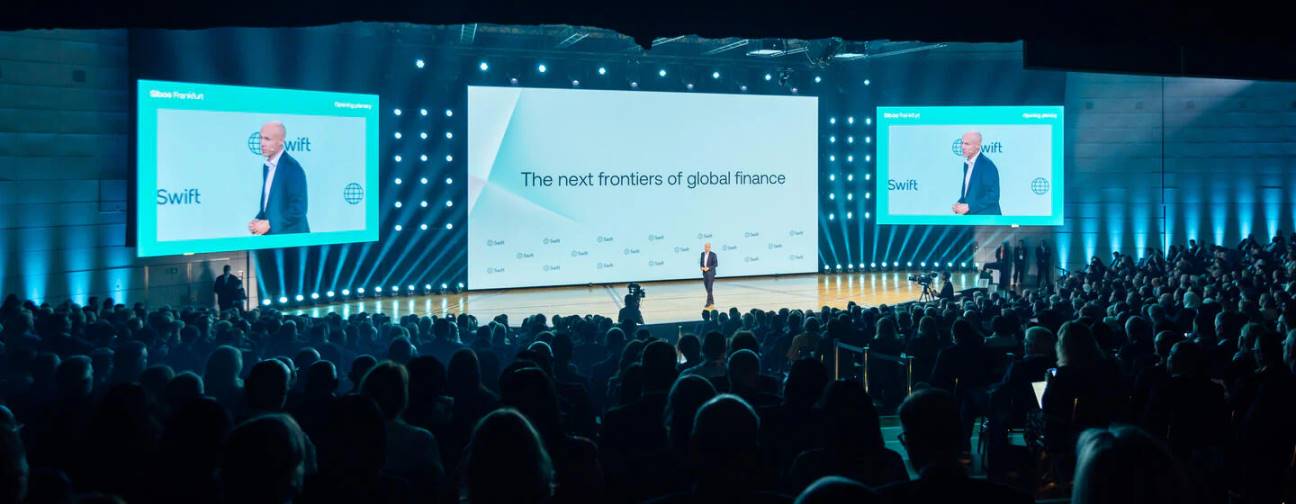
Image source: Swift official website
Although Swift did not directly specify the technology platform when initially announcing this significant news to the banking industry, Consensys CEO Joe Lubin revealed at the Token2049 conference in Singapore that Swift is utilizing the Ethereum Layer 2 network Linea to build its new payment settlement platform. By adopting Linea's zk-EVM aggregation technology, Swift can meet the financial industry's stringent requirements for 24/7 real-time settlement and security while significantly reducing costs and delays. Currently, over 30 top global financial institutions, including JPMorgan Chase, Bank of America, and Citibank, are prepared to participate in this Linea-based blockchain payment track pilot.
Ripple's Deep Dive and Current Status
Before discussing Swift, we must revisit the pioneer that has challenged the old system for over a decade: Ripple.
In 2012, Ripple emerged with the XRP Ledger (XRPL), with the core goal of replacing the inefficient Swift correspondent banking model. During this period, Ripple successfully built the global payment network RippleNet, connecting over 300 financial institutions and proving that XRP could reduce cross-border settlement times from several days to 3 to 5 seconds through its On-Demand Liquidity (ODL) service in fragmented markets like Southeast Asia.
Entering 2020, Ripple faced a blockade in the U.S. market due to securities allegations stemming from a lawsuit by the SEC, but its global scale continued to expand. By 2022, its business had reached over 40 payment markets, with total payments doubling to approximately $30 billion.
In 2023, Ripple experienced a turning point when a court ruled that XRP itself is not a security, marking a milestone victory for Ripple and the industry.
By August 2025, with the SEC completely abandoning its appeal, this five-year legal tug-of-war came to an end, and the complete clarification of XRP's legal status led to the approval of an XRP spot ETF, marking its official entry into the asset allocation lists of mainstream institutions.
Today, Ripple has launched cross-border payment services in multiple real-world scenarios, ranging from retail remittances to enterprise-level payments.
In the retail sector, Japan's SBI Remit has utilized XRP to bridge real-time remittance channels to the Philippines, Vietnam, and Indonesia, significantly reducing the pre-funding costs for overseas workers; Santander Bank provides customers with transparent real-time transfers through its One Pay FX app. Meanwhile, the Southeast Asian payment platform Tranglo has significantly improved the efficiency of peso to baht conversions with the support of Ripple ODL.
At the enterprise level, American Express and PNC Bank have optimized B2B trade settlements and international payment experiences using RippleNet.
Additionally, in national infrastructure, Ripple has collaborated with over 20 countries, including Palau, Montenegro, and Bhutan, to develop CBDC platforms, applying blockchain technology to the issuance and settlement systems of sovereign currencies.
Why Did Swift Choose Linea?
As giants lay out their plans in the Ethereum ecosystem, they have shown a high degree of consistency in their preference for Layer 2 technology: Coinbase's Base chain is built on the OP Stack, while Robinhood announced this year the launch of the Robinhood Chain based on Arbitrum technology to support the tokenization of RWAs and 24/7 trading.
This preference stems from the fact that L2 can leverage Ethereum's security while meeting high-performance demands through a modular architecture. Swift's choice of Linea over OP or Arbitrum lies in the fundamental differences in underlying validation logic.
OP and Arbitrum use Optimistic Rollup, which assumes transactions are valid by default and only verifies them when challenged, often requiring several days for asset withdrawals due to a challenge period. This poses a significant time cost for financial settlements that seek liquidity.
In contrast, Linea employs zk-EVM, which provides instant validity proofs through mathematical means. For Swift and its partner banks, which need to handle massive value settlements, zk-EVM not only offers faster final confirmations but also ensures compliance verification while protecting transaction privacy.
Swift's choice of Linea embodies the first principles of capital operation: maximizing liquidity velocity.
Capital will migrate like fluid from the traditional system of telegram instructions, which requires large pre-funding reserves in Nostro/Vostro accounts, high friction (with layers of fees from correspondent banks), and slow settlements (taking several days), to a blockchain digital system characterized by high velocity, low friction, and fast settlements.
Swift processes approximately $150 trillion in global payments annually, and if it can achieve atomic-level reconciliation and 24/7 real-time settlements through Linea's technology stack, it means that the tens of trillions of dollars in reserves that were previously held to hedge against settlement delays in the global financial system will be released and reinjected into the real economy.
As Consensys CEO Joe Lubin stated at the Token 2049 conference in Singapore, this is not just a technological upgrade; it is the true convergence of TradFi and DeFi, marking the transition of global value transfer protocols from the "telegram instruction era" to the "mathematical verification era."
The Significance of Swift Embracing Blockchain
As a global financial backbone network processing approximately $150 trillion in transaction volume annually, Swift's decision to build a ledger on Linea, an Ethereum Layer 2, signifies that blockchain technology will become the heart of mainstream finance.
Swift will eliminate fragmentation between different tokenized networks through unified technical standards, breaking down the long-standing barriers between TradFi and DeFi, and embedding the efficiency genes of decentralized finance into traditional settlement systems.
With a real-time shared ledger operating 24/7, global financial institutions will no longer be constrained by the cumbersome manual reconciliation and time zone delays of the correspondent banking model. The massive capital that was previously held in correspondent bank accounts to hedge against settlement risks will be effectively released, allowing the speed of capital flow to truly match the demands of the modern economy, thus ushering in a new era of global value transfer that is more transparent, lower cost, and more interoperable.
Ripple has spent a decade trying to build a new city based on the XRP Ledger outside the old system, but its current network of connected financial institutions appears weak compared to Swift's existing network, which covers over 200 countries and more than 11,000 institutions.
The core threat from Swift lies in its "asset neutrality." Unlike Ripple's ODL model, which heavily relies on XRP as a bridge currency, Swift's blockchain ledger is designed to support multiple assets, including fiat currencies, stablecoins, and CBDCs.
Banks within the Swift system do not need to bear the volatility risk of a single asset and can achieve instant settlements by upgrading existing tracks. This combination of "stock advantage + technological compliance" is making Ripple face the most profound chill since its inception.
免责声明:本文章仅代表作者个人观点,不代表本平台的立场和观点。本文章仅供信息分享,不构成对任何人的任何投资建议。用户与作者之间的任何争议,与本平台无关。如网页中刊载的文章或图片涉及侵权,请提供相关的权利证明和身份证明发送邮件到support@aicoin.com,本平台相关工作人员将会进行核查。


