In the midst of strategizing, we decide the outcome from a thousand miles away. Hello everyone, I am Lin Chao, a global financial market observer, focusing on cryptocurrency market analysis, bringing you the most in-depth trading information analysis and technical teaching.
As the year comes to an end, let's talk about the volatile cryptocurrency market in 2025. This year, the global economic script has changed dramatically; the crypto world is no longer an independent adventure game. It has been thrust into the center of the global storm, becoming a key variable for observation and even hedging in this grand play. My biggest feeling this year is that the "persona" of the crypto market is undergoing a fundamental transformation. It is no longer just about the myth of getting rich quickly or a toy for tech geeks, but rather a "digital infrastructure" and "macro hedging tool" that people are starting to seriously consider in a world full of uncertainties.

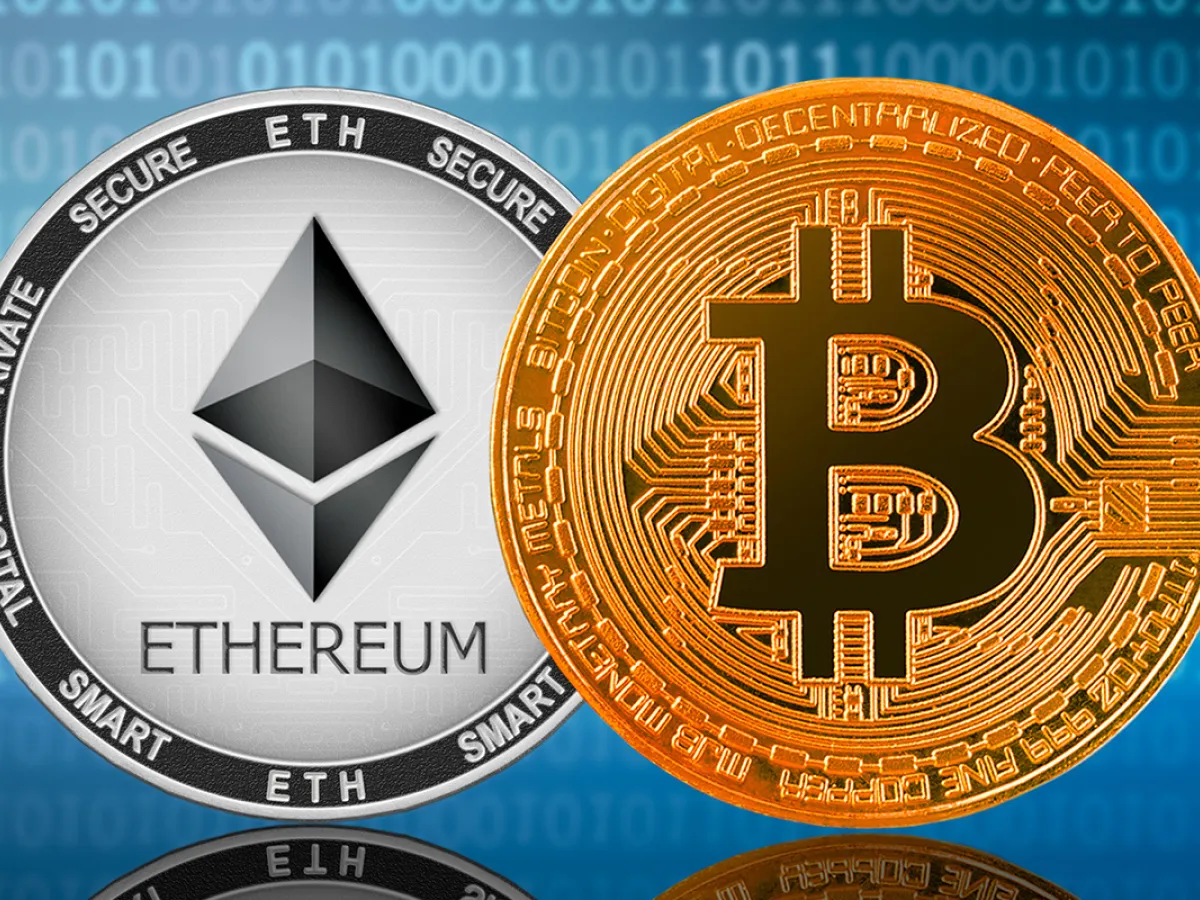
Bitcoin: From "Digital Gold" to "Sovereign Credit Hedge"
To be honest, the biggest backdrop for the global economy in 2025 is Trump's tariff war and the crazy deficit spending by various governments. When trust in the traditional system begins to crack and concerns about currency dilution arise, Bitcoin's original narrative of being "fixed in supply, transparent in rules, and without intermediaries" suddenly becomes incredibly attractive. Market performance confirms this: despite significant fluctuations in Bitcoin's price throughout the year, I believe its correlation with U.S. stocks, especially tech stocks, significantly weakened in the second half of the year. What does this indicate? It shows that more and more funds are starting to allocate it as a pure "trust anchor" independent of the traditional financial system. It is no longer just a "risk asset" that follows the ups and downs of Nasdaq.
This year, the explosive growth of AI in the U.S. stock market has been phenomenal, and the integration of the crypto world with AI has also stepped out of the conceptual fog and entered the deep waters of "problem-solving." Simply put, it involves organizing the world's idle computing power, storage, bandwidth, and even sensors through a token economic model to form a decentralized, censorship-resistant "cloud." As the world competes for expensive and monopolized computing power for AI, the value of this solution becomes evident. It is no longer just talk; it is genuinely addressing the bottleneck issues in AI development, thus attracting massive capital and completely reconstructing the valuation logic.
The Year's Biggest "Comeback": The Return of Privacy Coins
If we were to identify the most dramatic sector this year, it would undoubtedly be privacy coins. Take Zcash (ZEC) as an example; it has risen over 700% this year, staging a grand comeback. Why? This is precisely the "reflexive" result brought about by global fragmentation and regulatory pressure. On one hand, discussions in places like the EU to ban strong privacy coins have intensified their digital scarcity due to this "ban expectation." On the other hand, in an environment of escalating geopolitical conflicts and trade sanctions, the demand for "financial privacy" among enterprises and high-net-worth individuals has surged dramatically. Interestingly, traditional institutional investors like Grayscale have reopened the Zcash trust. I believe that the attribute of "privacy" has always been a fundamental logic in the crypto market, but as the market becomes more regulated, the function of crypto privacy is transitioning from a marginal, dubious feature to an "asset class" that can be allocated by mainstream institutions with clear demand. The core demand behind this is the contradiction between traditional government control needs and the needs of retail investors.
So, what substantial changes have occurred in the crypto market this year?
The narrative logic has changed: In the past, we often said "disrupt traditional finance," but now it feels more like "building the infrastructure for a parallel world." Whether it is DePIN serving AI, anonymous networks ensuring privacy, or Bitcoin as the last line of defense for value, they are no longer seeking to immediately replace the old system but are building bridges and shelters in the gaps between the new and old worlds and different sovereign jurisdictions. Their value has shifted from "better finance" to "necessary patches." The era of global central banks "injecting liquidity" is basically over; money is no longer so "foolish." Capital has become extremely selective, madly flowing into projects that can clearly prove they solve real problems (such as providing computing power and ensuring privacy). Cash flow (or clear cash flow expectations), technological moats, and actual users have become hard indicators for valuation. The market's "wealth disparity" has intensified, with smart money highly concentrated in a few high-certainty sectors. This is why I have consistently emphasized in my writings that in the future bull market, there will no longer be a broad-based rally; institutions will rely more on technical cryptocurrencies with greater consensus and higher technological barriers.
The regulatory logic has changed: Global regulation is showing "competitive evolution." The U.S. is swinging the enforcement stick (cracking down on unregistered securities) while also further "compliance" integrating crypto assets into the traditional system through products like Bitcoin spot ETFs, which is a strategy of "tame first, then utilize." Meanwhile, places like Hong Kong and the UAE are vying for industry dominance with a more open attitude. In the future, "regulatable technology" may become the mainstream design philosophy.
In summary, looking ahead to 2026:
The tariffs imposed in 2025 will fully manifest their effects on global supply chains and costs in 2026, potentially triggering "secondary inflation." This will severely disrupt the interest rate reduction rhythm of various central banks, bringing tremendous volatility to all risk assets, including cryptocurrencies. The sensitivity of the crypto market to macro data will only increase.
In 2026, institutional participation will no longer stop at buying Bitcoin ETFs. They will delve deeper into compliant DeFi architectures, RWA (with actual technology and underlying networks), and crypto-native tools tailored for professional investors like hedge funds (such as privacy settlement services). Therefore, among the top 10 cryptocurrencies, SOL, XRP, ADA, etc., may see opportunities for doubling, and institutional demand will directly give rise to the next batch of unicorns. People should stop focusing on various altcoins and redirect their attention to finding more mainstream coins with technical barriers and consensus. Moreover, if global fragmentation and competition further intensify, the demand for cryptocurrencies as a "neutral settlement layer" and "asset refuge" will grow exponentially. Conversely, the fierce competition among major powers for financial and data sovereignty may also lead to sudden, regional regulatory "black swan" events. Therefore, I believe 2026 is still a year worth looking forward to. As cryptocurrencies enter the "compliance market," having experienced the logical transformation of 2025, they will surely achieve greater accomplishments in 2026. Geopolitical risks will not persist indefinitely; as time gradually resolves conflicts, market liquidity will also gradually shift from safe-haven assets to risk assets. At that time, Bitcoin's price will surely reach new highs, and this moment is precisely when everyone should be waiting in ambush. In the field of trading, patience is the prerequisite for profit. Let’s encourage each other, and I wish everyone a bountiful 2026.
If you are feeling lost—unable to understand technology, unsure how to read charts, not knowing when to enter the market, unable to set stop losses, unclear about taking profits, randomly increasing positions, getting stuck at the bottom, unable to hold onto profits, missing market opportunities… these are common issues for retail investors. Lin Chao can help you establish the correct trading mindset. A single profitable trade speaks louder than a thousand words; repeatedly failing is not as good as finding the right direction. Instead of frequent operations, it is better to strike precisely, making each trade more valuable.
The success of investment depends not only on choosing good targets but also on when to buy and sell. Preserving capital and making good asset allocations are essential for steady progress in the ocean of investment. Life is like a long river flowing into the sea; what determines victory or defeat is never just the gains and losses of a single pass or moment, but rather planning before action and knowing when to stop to gain.
The global market is ever-changing, and the world is a whole. Follow Lin Chao to gain a top-tier global financial perspective.
This article is merely a personal opinion and does not constitute any trading advice. The crypto market is risky; invest with caution!

For real-time consultation, feel free to follow the public account: Lin Chao on Cryptocurrency.
免责声明:本文章仅代表作者个人观点,不代表本平台的立场和观点。本文章仅供信息分享,不构成对任何人的任何投资建议。用户与作者之间的任何争议,与本平台无关。如网页中刊载的文章或图片涉及侵权,请提供相关的权利证明和身份证明发送邮件到support@aicoin.com,本平台相关工作人员将会进行核查。