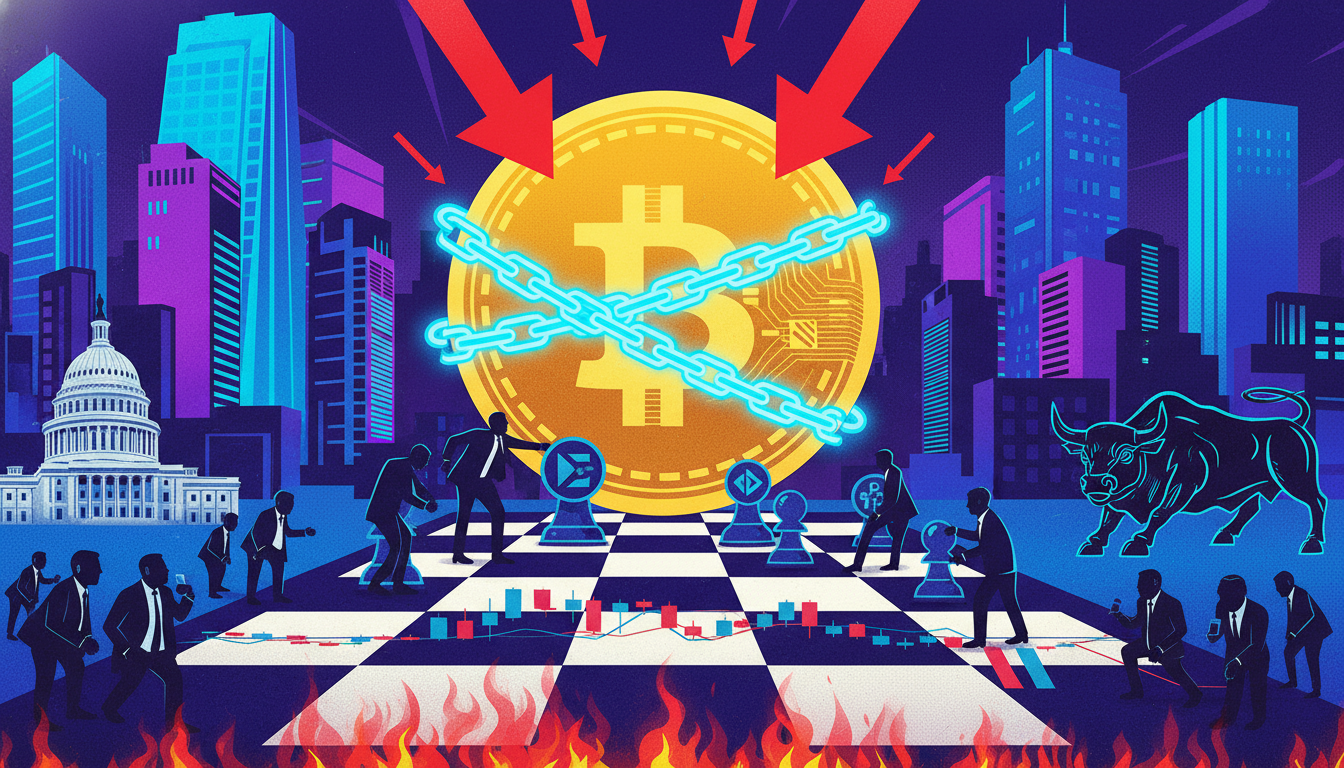
On the evening of January 31, East 8 Time, USDC's price on multiple exchanges briefly fell to the range of 0.94–0.96 USD, deviating from its peg multiple times within 24 hours, becoming a direct amplifier of market risk sentiment. Accompanied by a severe imbalance in the Curve stablecoin pool and a concentrated withdrawal of liquidity by leading market makers, USDC's "credit floor" was once again questioned by the market. This round of decoupling events is also seen as another stress test of the trust system for centralized dollar assets.
Overview of the Decoupling Event: Price, Timeline, and Exchange Linkage
● Concentrated Decoupling Time Window:
● After 20:00 on January 31, East 8 Time, USDC experienced continuous discounts on multiple spot and derivatives exchanges, with some platforms' lowest transaction prices dropping to around 0.94 USD;
● The entire decoupling process lasted several hours, repeatedly testing the 0.97–0.99 range, with post-trade liquidity significantly declining and the speed of price recovery noticeably slower than previous minor deviations.
● Price Performance Differences Among Major Exchanges:
● On platforms with good depth like Binance and OKX, the lowest prices for USDC against USDT and USD were mostly in the 0.95–0.96 USD range, but there were significant gaps in the order book at times;
● On some long-tail exchanges and DEX aggregation routes, due to delayed oracle updates and insufficient depth, the transaction price was briefly amplified to 0.94 USD or even lower;
● The marked prices for futures and perpetual contracts rely on oracles and mainstream spot indices, with discounts fluctuating between 0.5%–3%, directly impacting the margin safety of leveraged long positions.
● On-chain and Off-chain Price Linkage Characteristics:
● USDC first experienced concentrated selling pressure on CEX, followed by the exchange prices based on on-chain pools in DEX starting to follow the discount;
● Multi-chain bridges and cross-chain routes quickly spread price deviations between different public chains, leading to a short-term "flash crash" in the net asset value of DeFi protocols using USDC as a settlement unit;
● Oracle projects generally have a high update frequency, but during high volatility periods, there were several minutes of price lag, amplifying some liquidation and arbitrage activities.
● Comparison with Historical Decoupling Events:
● The current USDC discount range is significantly smaller than the 0.88–0.90 range during the Silicon Valley Bank incident in March 2023, but lasted longer and tested the peg more frequently;
● Market makers' risk preferences in this round of events have clearly contracted, with fewer proactive efforts to maintain the peg, reflecting that concerns about regulatory and interest rate environments have already been "priced in";
● Compared to previous short-term technical decouplings, this round appears more like a "fundamental doubt + liquidity contraction" composite result, laying a new psychological range for the future credit pricing of USDC.
Curve Stablecoin Pool Imbalance: USDC Being "Filled in the Pool"
● Pool Composition and Latest Proportion Changes:
● The core pools represented by Curve's 3pool and the main stablecoin pool had a relatively balanced proportion of USDC, USDT, and DAI before the event, with each asset's proportion roughly fluctuating in the 20%–45% range;
● During the decoupling, the proportion of USDC in the pool surged, with USDC's share in some main pools peaking at 50%–70%, while the proportions of USDT and DAI decreased simultaneously;
● The surge in USDC's share in the pool indicates that traders were "exchanging out" USDC using other stablecoins, characterized by:
● Selling USDT/DAI to buy USDC
● USDC being largely "left in the pool," while other stablecoins were withdrawn
● TVL and Trading Volume Fluctuation Characteristics:
● At the beginning of the decoupling, Curve-related pools experienced nominal fluctuations in TVL at the billion-dollar level, partly due to asset price deviations leading to changes in dollar valuation, and partly due to real redemptions and currency exchange behaviors;
● Trading volume surged in a short time, with the exchange volume of USDC and other stablecoins across multiple chains completing several times the usual turnover within hours, highlighting DeFi users' sensitivity to peg risks;
● As the discount narrowed, there was some TVL recovery, but the stablecoin structure in the pool has not fully returned to pre-event levels, with USDC's proportion still "weighted."
● Price Slippage and Arbitrage Space:
● The pool imbalance led to a 1%–3% on-chain discount for USDC's exchange price relative to other stablecoins, with some routes experiencing even larger instantaneous deviations during extreme periods;
● Professional arbitrage funds repeatedly engaged in cross-market trading using the price differences between CEX and Curve, which accelerated price recovery to some extent but also increased on-chain gas consumption and short-term volatility;
● For ordinary users, the "cheap USDC" resulting from the low price in the Curve pool does not equate to risk-free arbitrage, as it corresponds to a collective discount on USDC's repayment ability and liquidity.
● Signal Implications of USDC Pool Overcapacity:
● The accumulation of USDC in the pool essentially represents systematic foot voting:
● A decline in short-term trust in USDC
● An increase in relative preference for other options like USDT and DAI
● A direct impact on the previous market consensus that viewed USDC as a "risk-free dollar alternative," making it difficult for USDC's proportion to regain its past absolute dominance when designing collateral and settlement assets in the future.
Market Maker Withdrawals: Sharp Decline in Depth and Order Book Gaps
● On-chain and Off-chain Actions of Mainstream Market Makers:
● After the event, several leading market makers' USDC-related order books on CEX noticeably thinned, with a reduction in the number and levels of orders, manifested as:
● The number of executable quantities at the 1%–2% depth levels plummeted
● Large market orders amplified the price impact
● In multi-asset pools and aggregated DEX, market maker addresses began to reduce USDC position weights, even directly withdrawing some LP positions to switch into USDT, ETH, and other assets;
● Market makers also indirectly raised the risk parameters for USDC leveraged products, reducing quote sizes, leading to a temporary "drying up" of USDC leveraged market liquidity on some platforms.
● Order Book Structure and Price Spread Amplification:
● During periods dominated by selling pressure, the spread between the best bid and ask prices significantly widened, with some platforms' USDC/USDT spread expanding to several dozen basis points, far exceeding the normal single-digit basis points level;
● Due to the reduction of large orders on the order book, retail or small to medium-sized funds' market sell-offs more easily broke through multiple price levels, creating a "self-reinforcing" decline;
● Market makers tended to buy at lower prices, leading to a weak willingness to raise prices for "passive buying," slowing the overall pace of discount recovery.
● Risk Pricing Logic Behind Liquidity Withdrawal Actions:
● When pricing, market makers simultaneously consider:
● The exposure risk of USDC to underlying reserve assets
● The execution efficiency of the redemption mechanism under extreme circumstances
● The impact of short-term regulatory and macro environments on dollar assets
● During these phases of amplified uncertainty, reducing positions, increasing spreads, and lowering leverage is a more rational self-protection choice, which also means:
● USDC's "anchoring stability" begins to reflect in a higher risk premium
● The market no longer provides depth and elasticity unconditionally.
● Impact on DeFi and CeFi Linkage:
● The withdrawal of market makers in CeFi led to insufficient depth in the spot and contract markets, amplifying short-term price volatility;
● In DeFi, due to oracles referencing CEX indices, price fluctuations in turn affected the on-chain liquidation line positions, leading to a round of linked risk repricing;
● For large lending protocols relying on USDC as collateral, the cooling attitude of market makers means that their asset quality is "discounted" in the eyes of the market, potentially forcing adjustments to risk parameters and collateral ratios in the future.
Trust Reassessment: USDC's Risk Perception Has Been Completely Rewritten
This decoupling of USDC, along with the imbalance in the Curve pool and the withdrawal of liquidity by market makers, is not an isolated event but a "credit reassessment" that has been concentrated and amplified against the backdrop of a high-interest rate cycle, increasing regulatory uncertainty, and intensifying on-chain dollar competition. When the shocks to the traditional financial system overlap with the on-chain liquidity cycle, any negative signal can quickly transmit through DeFi protocols, cross-chain bridges, and CEX order books, amplifying into systemic pricing adjustments. For USDC, the previous market narrative of being "close to a risk-free dollar alternative" has been shattered, and in the future, it resembles an on-chain dollar asset with clear institutional and regulatory marks, with its risk premium likely reflected in the structure of the Curve pool, market maker depth, and cross-market spreads.
Bull-Bear Game: Can USDC Still Be Trusted?
● Optimistic/Supporters: Advocating "Controllable Risks + Regulatory Dividends"
● They believe the extent of this decoupling is limited, the duration is controllable, and under the influence of arbitrage and redemption mechanisms, USDC's price will ultimately return to the pegged range;
● They point out that USDC still has a high proportion of cash and short-term U.S. Treasury reserves, with high asset transparency and audit frequency, and its medium to long-term repayment ability has not been substantially shaken;
● They believe that as the U.S. regulatory framework gradually clarifies, dollar assets like USDC with clearer compliance paths will instead gain incremental demand from institutional funds and compliant scenarios;
● In their view, this round of events is more like a "stress test" on liquidity and sentiment levels, rather than a structural credit collapse.
● Pessimistic/Skeptics: Worrying about "Centralized Single Points + Policy Black Swans"
● They point out that the core risk of USDC lies in its high centralization: the concentration of issuance and redemption powers means that once faced with judicial or administrative restrictions, on-chain assets may face extreme scenarios of freezing or redemption delays;
● They believe that each decoupling leaves a "crack" in market psychology, prompting holders to actively diversify into USDT, DAI, and diversified on-chain dollar assets, marking the end of the era of single asset hegemony;
● They are particularly wary of the linkage response between the Curve pool imbalance and market maker liquidity withdrawal, believing it indicates a systematic reduction in professional funds' risk preferences for USDC;
● From a macro perspective, they worry that changes in the regulatory environment and tightening global dollar liquidity will continue to suppress USDC's expansion space, transforming it from a "protagonist" into "one part of a multi-asset portfolio."
Market Outlook: USDC's Role May Shift from "Anchor" to "Option"
In the short term, the market will continue to focus on USDC reserve disclosures, changes in redemption scales, the structural recovery of the Curve pool, and whether leading market makers will restore depth. If there are large-scale redemptions or adverse news from the regulatory side, price and liquidity fluctuations may be amplified again. In the medium term, both the protocol layer and user layer will place greater emphasis on the diversified allocation and decentralized supplementation of stable assets, and USDC's role in the on-chain financial system may gradually evolve from the past "single anchoring center" to an important option among many dollar alternative assets. For participants accustomed to viewing USDC as a "risk-free underlying," recalibrating risk expectations, optimizing collateral structures, and liquidation models will be core tasks for the foreseeable future.
Join our community to discuss and grow stronger together!
Official Telegram community: https://t.me/aicoincn
AiCoin Chinese Twitter: https://x.com/AiCoinzh
OKX Benefits Group: https://aicoin.com/link/chat?cid=l61eM4owQ
Binance Benefits Group: https://aicoin.com/link/chat?cid=ynr7d1P6Z
免责声明:本文章仅代表作者个人观点,不代表本平台的立场和观点。本文章仅供信息分享,不构成对任何人的任何投资建议。用户与作者之间的任何争议,与本平台无关。如网页中刊载的文章或图片涉及侵权,请提供相关的权利证明和身份证明发送邮件到support@aicoin.com,本平台相关工作人员将会进行核查。