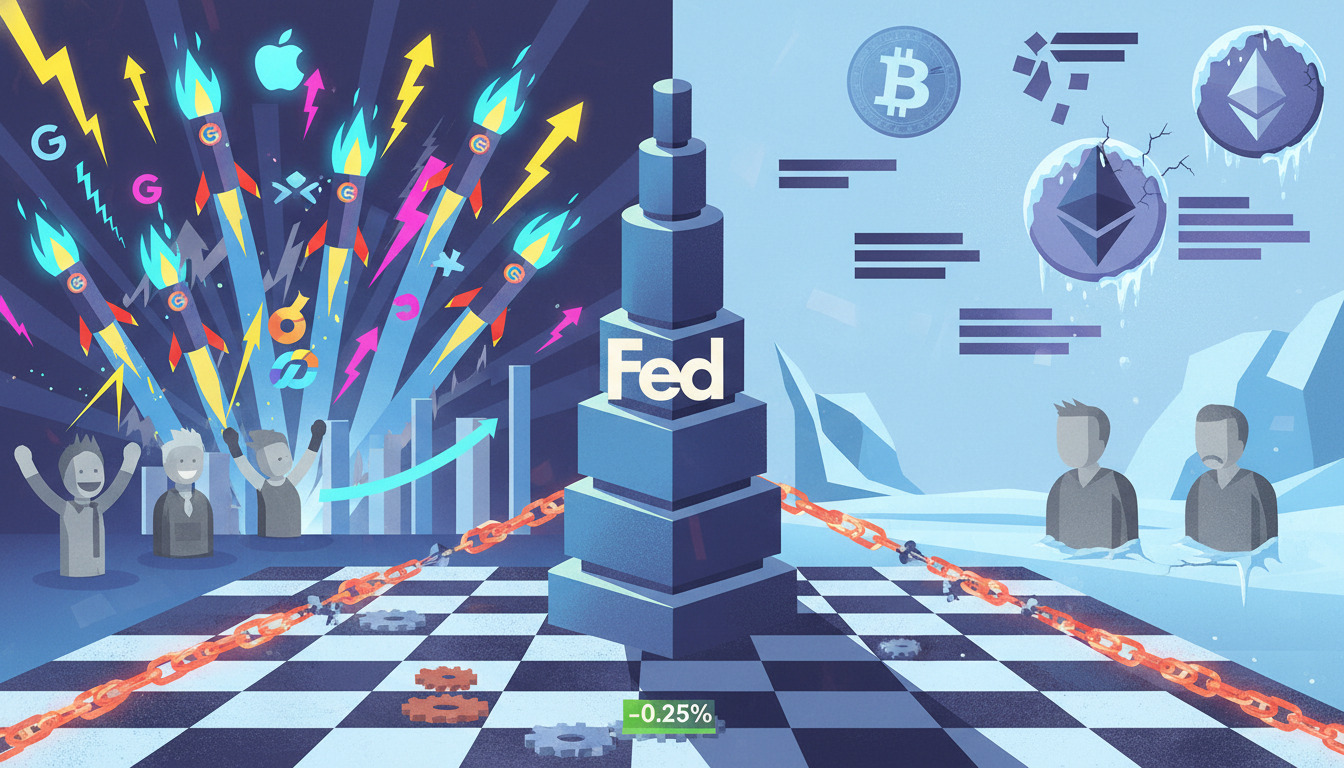
Beijing Time, December 30, 2024, the latest data on USDC on-chain capital flows and redemption changes has once again been magnified and interpreted by the market. Circle's on-chain issuance and redemption rhythm has undergone structural adjustments, particularly in the comparison between Ethereum and Tron, prompting a reassessment of preferences for dollar assets, yield environments, and cross-chain layouts. This round of capital repricing is reshaping the distribution pattern of USDC across public chains.
Ethereum USDC Capital Flowing Back to Traditional Finance
● News Driven:
● The Research Brief shows that Circle has significantly accelerated the redemption and balance sheet contraction of USDC on the Ethereum chain in Q4 2024, with multiple instances of net redemptions amounting to hundreds of millions of dollars in a single day. Although the specific destination of each asset is not visible, the overall trend indicates a withdrawal of dollar liquidity from the chain.
● Data indicates that from October to December, the circulation of USDC on Ethereum has continued to decline, with Circle repeatedly conducting large-scale redemption operations, causing the supply of USDC on Ethereum to slowly retreat from its high levels, reflecting a weakening marginal demand for dollars on-chain.
● The Brief emphasizes that the offline direction of redeemed funds currently lacks transparency, prohibiting assumptions about the chain-level breakdown of the flow of redeemed funds, thus interpretations can only be made from a total and trend perspective—namely: more dollars are being withdrawn from Ethereum back to the traditional financial system or over-the-counter environments.
● Capital Movement:
● The decline in net supply of USDC on Ethereum contrasts with the relatively attractive range of U.S. Treasury and reverse repo tool yields during the same period, leading some institutional funds to prefer moving dollars back to traditional financial markets after comparing yields, utilizing low-risk tools to earn interest and money market returns.
● The Brief points out that Circle itself holds a large amount of short-term U.S. Treasuries and cash equivalents as USDC reserves, and as redemptions increase, more reserves transition from "corresponding on-chain liabilities" to "pure offline asset allocation," amplifying the perception of capital withdrawal from the chain.
● Structurally, Ethereum has long hosted a high proportion of DeFi blue-chip protocols and institutional preferred clearing and settlement scenarios. The increase in USDC redemptions on Ethereum more reflects institutional dollars rebalancing assets between on-chain and off-chain, rather than a simple intra-chain repositioning.
● Policy and Environmental Impact:
● The Brief mentions that the broader macro interest rate and monetary policy transmission mechanisms have been intentionally downplayed in this study and not systematically elaborated upon, but it can be confirmed that the current dollar interest rate environment and U.S. Treasury yield levels have a tangible impact on the relative yield trade-off of "holding on-chain USDC vs. offline dollar assets."
● Under compliance and auditing frameworks, Circle must maintain a 1:1 asset backing for USDC, and an increase in redemptions means it needs to adjust the corresponding short-term debt, deposits, and other allocations in its balance sheet, which directly maps to the contraction of supply on the Ethereum chain.
Comparison of USDC on Tron and Dollar Asset Yields
● Changes in USDC within the Tron Ecosystem:
● The Research Brief shows that the volume of USDC in the Tron ecosystem is much smaller than the more dominant USDT, and it has not exhibited a significant "scale-level contraction" rhythm like Ethereum in 2024, instead showing slight fluctuations and structural adjustments.
● Data indicates that USDC on Tron has shown moderate net inflows or slight net outflows at various points in time, with no significant contraction overall. Compared to Ethereum's reduction, Tron appears to be in a role of "marginal experimentation" and "supplementary settlement."
● The Brief explicitly states: The specific application scenarios and industry distribution of USDC funds within the Tron ecosystem are prohibited from being fabricated, thus it does not break down by application or protocol, only discussing total on-chain volume and directional changes.
● Comparison with Traditional Dollar Yields:
● The Brief mentions that at the current interest rate levels, holding USDC does not directly generate interest, while the issuer and custodian of USDC earn returns through holding Treasuries, deposits, etc. This structure creates a yield difference between on-chain holders and offline dollar assets.
● For some funds, keeping USDC on chains like Tron requires relying on on-chain protocols or over-the-counter businesses to provide additional yields; otherwise, in a pure holding state, the opportunity cost is higher compared to holding Treasuries or money market funds.
● Considering that the Brief prohibits detailed macro interest rate transmission analysis, this section only summarizes at the level where "yield comparisons exist and affect capital allocation," without elaborating on more complex interest rate curves and duration structure logic.
● Differences in Transaction Chain Characteristics:
● Tron is known for its low fees and high transaction frequency, accommodating more scattered transfers and cross-platform deposit and withdrawal demands. USDC on Tron primarily serves as a "lightweight settlement vehicle," while Ethereum leans towards "high-value DeFi collateral and institutional settlement layers."
● The Research Brief repeatedly compares: the contraction of USDC on Ethereum primarily stems from large institutional funds withdrawing from on-chain scenarios, while Tron has not seen a similar level of rapid capital outflow.
Deep Logic of Inter-Chain USDC Structural Adjustments
This round of structural adjustments of USDC between Ethereum and Tron is not an isolated event but resonates with the dollar interest rate environment, on-chain yield opportunities, and compliance asset allocation constraints. When DeFi yields on Ethereum overall decline, while the risk-free yields of offline dollar assets (such as short-term Treasuries and money market tools) remain relatively high, institutional funds are more motivated to redeem large amounts of USDC from Ethereum, flowing back to the traditional financial system through Circle's balance sheet, in pursuit of more certain interest income and liquidity management. Meanwhile, the relatively mild fluctuations of USDC on Tron reflect its "high turnover, low stock" characteristics in payment and transfer scenarios. The ebb and flow between chains essentially represents a reallocation of dollar capital between different risk-return combinations, with Circle serving as the central hub for asset custody and settlement, clearly projecting this rebalancing onto the changes in USDC supply across various public chains through issuance and redemption data.
Bullish and Bearish Perspectives and Capital Games
● Optimistic/Supportive Views:
● Supporters believe that the redemption and balance sheet contraction of USDC on Ethereum is a normal process of returning on-chain dollars from "inefficient occupation" to more efficient asset allocation, helping to clear out bubbles and zombie liquidity.
● Some argue that as long as Circle's asset reserves are sufficient and audits are transparent, the redemption and reissuance of USDC itself reflect the optimization of funds between yield and risk—not a "run" in the coin-based sense, but a liquidity migration within the compliant dollar system.
● They also emphasize that the limited and mildly fluctuating volume of USDC on Tron indicates that the market does not exhibit systemic concerns about the USDC brand or its redemption capability, but rather reflects a structural rearrangement between chains.
● Pessimistic/Cautious Views:
● Cautious observers worry that large redemptions of USDC on Ethereum may weaken its mainstream settlement medium position in the DeFi ecosystem, potentially affecting the reliance of some protocol designs on USDC, increasing systemic leverage and the fragility of clearing mechanisms.
● Some viewpoints suggest that if the on-chain supply of USDC significantly contracts while offline dollar yields become more attractive, it may suppress the total locked value in DeFi in the medium to long term, intensifying competition between crypto-native yields and traditional financial yields.
● Other concerns focus on "information asymmetry": on-chain, one can only see USDC being burned and redeemed, but cannot see the offline destination of redeemed funds, the transparency gap may amplify market sentiment fluctuations, especially in a macro environment filled with uncertainty.
Future Focus and Potential Evolution
In the short term, the market will continue to focus on the rhythm changes in Circle's issuance and redemption scale, the redistribution of USDC supply across mainstream public chains like Ethereum and Tron, and the impact of the dollar interest rate environment on on-chain yields. If the U.S. interest rate environment reaches a substantial turning point, the relative attractiveness of on-chain and offline dollar assets will be repriced, and the inter-chain flow paths of USDC may reverse again. For participants, it is more important to track the officially disclosed reserve reports and on-chain data to understand the structural logic of capital "increasing or decreasing" between different public chains, rather than merely using a single chain's contraction or expansion to make emotional interpretations.
Join our community to discuss and become stronger together!
Official Telegram community: https://t.me/aicoincn
AiCoin Chinese Twitter: https://x.com/AiCoinzh
OKX Benefits Group: https://aicoin.com/link/chat?cid=l61eM4owQ
Binance Benefits Group: https://aicoin.com/link/chat?cid=ynr7d1P6Z
免责声明:本文章仅代表作者个人观点,不代表本平台的立场和观点。本文章仅供信息分享,不构成对任何人的任何投资建议。用户与作者之间的任何争议,与本平台无关。如网页中刊载的文章或图片涉及侵权,请提供相关的权利证明和身份证明发送邮件到support@aicoin.com,本平台相关工作人员将会进行核查。