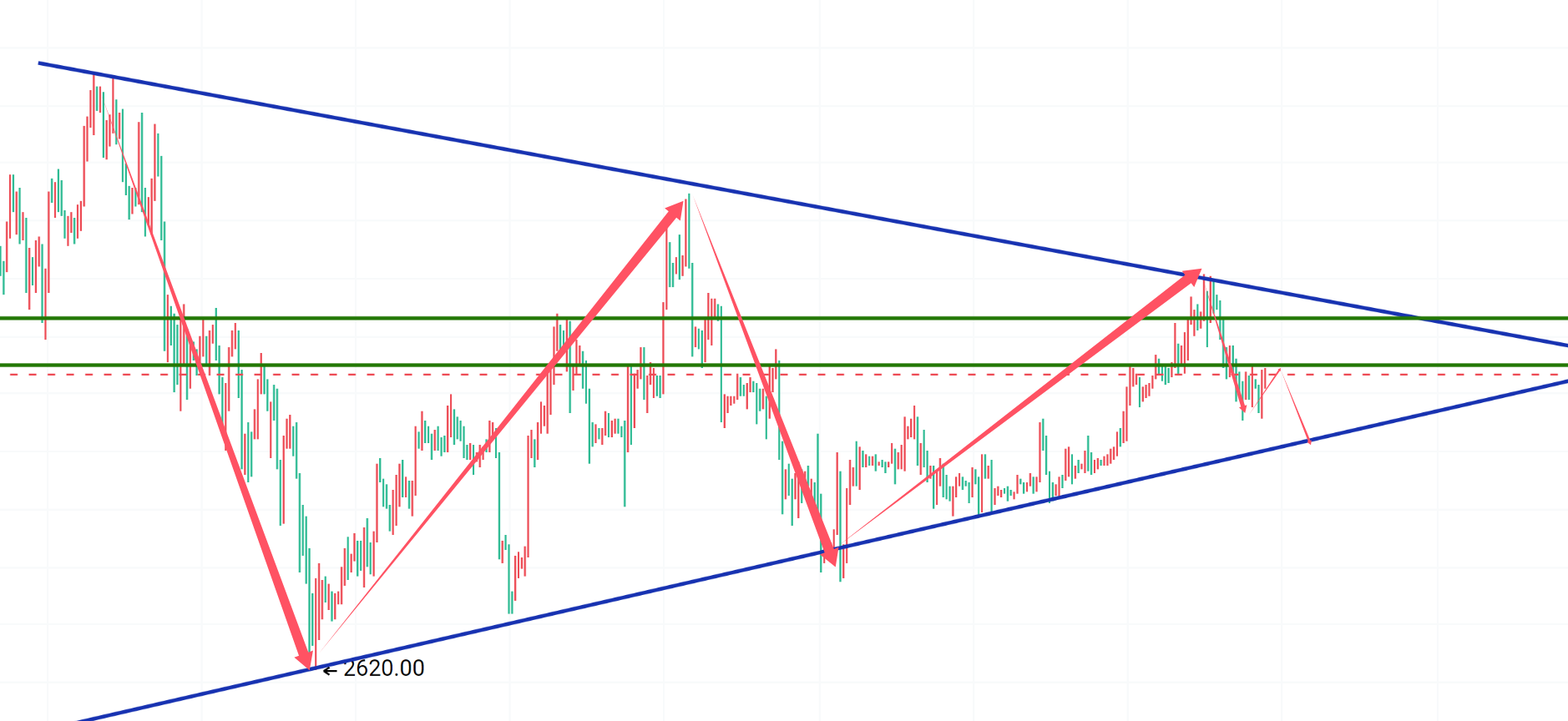
On January 8, 2026, at 8:00 AM UTC+8, ZEC experienced a rapid decline of approximately 6.4%, with the price quickly dropping from around $459 to $449, before rebounding above $465 within the same trading day, forming a clear pattern of downward spike and rapid recovery. During this period of intense price fluctuation, a bullish whale on Hyperliquid chose to increase their position by 2486 ZEC near the $459 mark, with a nominal scale of about $1.14 million, raising their overall long position on the platform to approximately $12.35 million at 10x leverage. This concentrated leveraged long position quickly amplified the market's attention and volatility on a product with already limited liquidity. Meanwhile, the clusters of long and short liquidations around the $90,000–$92,000 range for Bitcoin added a potential systemic risk backdrop to this round of fluctuations.
Price Trajectory of Rapid Decline and Rebound
● Price Range Development: According to data from public market platforms A and C, after facing pressure near $459 on January 8, ZEC was quickly sold off to a temporary low of about $449, corresponding to a decline of approximately 6.4%. Subsequently, due to buying pressure and the replenishment of derivative funds, it rebounded to around $465, forming a complete range fluctuation from breaking $459, piercing $449, and then recovering to $465.
● Time Characteristics and Trading Activity: The aforementioned price difference was mainly completed during the high-frequency trading period of that day, with quotes based on the matched prices from several mainstream exchanges. The intraday candlestick chart displayed several high-volatility bodies and long wicks, indicating a typical short-term shock rather than a continuous multi-day, one-directional downtrend.
● Differences Between Spot and Contracts: From the price pattern perspective, the process of dropping to $449 is more akin to the "stop-loss" behavior triggered by concentrated leveraged funds in the contract market, while spot trading played a more supportive and restorative role. The rapid rebound in price indicates that the active selling pressure did not persist; the key force behind the rapid amplification of volatility was the leveraged liquidations and forced exits.
● Data Source Explanation: The price ranges and fluctuations cited in this article are sourced from verifiable quotes from public market platforms A and C, rather than any internal matching data or undisclosed information, aiming to outline the typical shock-recovery path of the day, rather than exaggerating the transactions of a single platform.
Tenfold Leverage Whale Entry Amplifying Volatility
● Position Increase Details and Nominal Scale: During the rapid drop of ZEC from around $459 to $449 and its subsequent rebound, a large bullish account on Hyperliquid chose to increase their position by 2486 ZEC near $459. Based on the price at that time, the nominal scale of this new position was approximately $1.14 million, which was sufficient to visibly impact the market quotes and short-term volatility in a contract market with limited depth.
● Overall Position and Amplification Factor: Research briefs indicate that the overall nominal value of the ZEC long position held by this account on Hyperliquid is approximately $12.35 million, utilizing 10x leverage for trading. This means that the actual margin invested is significantly reduced relative to the nominal scale, and each unit price fluctuation amplifies the impact on its net value and liquidation price by about ten times, greatly compressing the risk-bearing range.
● Liquidity Shock and Liquidation Cascade: In a relatively niche asset like ZEC, which has weaker liquidity compared to BTC and mainstream large-cap coins, leveraged longs in the millions to tens of millions of dollars can easily create significant slippage and market impact upon entry and exit. When the price approaches the concentrated liquidation area of this account and other high-leverage longs, if buying support is insufficient, passive liquidations at a single point can quickly evolve into a cascading liquidation, forming a self-reinforcing "liquidation waterfall" effect, dragging down the spot and contract prices on other platforms simultaneously.
● Information Boundaries and Non-Prediction of Profit and Loss: It is important to emphasize that the earlier entry cost, historical position adjustments, and overall profit and loss status of this whale account are not currently known. Without this data, it is impossible to rigorously determine whether it is rolling over at a low position or passively adding at a high position, nor can we construct its long-term strategy and profit-loss cycle. Therefore, this article is limited to describing this position increase and leverage without further extending its potential historical behavioral logic.
Liquidity Elasticity of Privacy Coins in the Derivatives Market
As a typical privacy coin, ZEC's compliance and listing scope have long been subject to stricter scrutiny, which is directly reflected in the liquidity distribution on mainstream centralized exchanges and emerging contract platforms. Compared to Bitcoin and other mainstream large-cap coins with higher market capitalization, ZEC often has more limited order book depth on most platforms, with lower order density and fewer large orders that can be absorbed. Therefore, when a single account holds a high-leverage position with a nominal scale of millions of dollars on Hyperliquid, the disturbance to the price curve becomes increasingly apparent. Research briefs also indicate that such a scale of position is sufficient to drive visible price fluctuations on ZEC, reflecting its high elasticity and fragility in liquidity. In an environment where order book depth is relatively sparse and market maker capital allocation is limited, any directional large order is more likely to penetrate multiple price levels, triggering a series of stop-loss orders and passive liquidation instructions placed at nearby levels, causing the price to quickly deviate from "theoretical equilibrium." For traders participating in such assets, merely observing the spot price curve is often insufficient to capture the real risk; it is essential to pay attention to the structure of open interest in the contract market, funding rate levels, and the concentration of large orders, especially when choosing to use high leverage, as a sudden contraction in market liquidity can magnify small price fluctuations into a significant impact on net value.
Bitcoin Liquidation Clusters and Altcoin Linkage Risks
● Liquidation Intensity Distribution: According to liquidation heatmap data from platforms like Coinglass, Bitcoin has accumulated approximately $1.07 billion in nominal long liquidations below $90,000, while about $417 million in nominal short liquidations is clustered above $92,000. These two areas constitute highly focused liquidation clusters that the current market is paying close attention to, providing important references for the intensity of price fluctuations once key levels are breached.
● Data Attributes and Interpretation Boundaries: It is important to clarify that the liquidation heatmap presents the potential distribution of liquidation intensity within different price ranges, indicating the nominal amounts that could be triggered if liquidations occur near these points, rather than precise liquidation amounts that will definitely be executed in the future. Simplistically viewing these images as "inevitable liquidation amounts" can lead to serious misinterpretations.
● Transmission Pathways and Risk Preferences: If Bitcoin breaks below $90,000 due to macroeconomic or event-driven factors, or breaks above $92,000 in a state of exuberance, triggering concentrated liquidations on either side, it often exerts a linked impact on the risk preferences and capital allocation across the entire crypto market. When longs are passively liquidated, the overall market's risk aversion sentiment intensifies, and capital may flow out of more volatile altcoins; conversely, when shorts are massively squeezed out, short-term risk appetite may rise, and some capital may flow into high-beta assets, including privacy coins like ZEC and small to mid-cap tokens.
● Concentration of Leverage and Bidirectional Amplification: Given the significant concentration of leveraged longs in ZEC on platforms like Hyperliquid, if Bitcoin experiences substantial volatility at the aforementioned key levels, triggering systemic deleveraging or emotional amplification, the price fluctuations of ZEC are likely to be amplified in tandem. For traders holding long positions, this means both opportunities for profit expansion in favorable market conditions and significantly heightened risks of liquidation and cascading liquidations in adverse conditions, with the degree of divergence in outcomes far exceeding that of low-leverage or spot holders.
Macroeconomic Expectations and ETF Fund Sentiment Constraints
At the macro level, external analytical perspectives provide different interpretations of the short- to medium-term pressures and long-term opportunities for risk assets. According to public reports, analyst Tom Lee has pointed out that when the market "tests" the new Federal Reserve chair, a 15%–20% pullback may occur, highlighting the upper constraint on the valuation of risk assets, including crypto assets, due to monetary policy uncertainty. When the macro environment shifts to a more cautious or tighter stance, high-leverage positions are often the first to be affected, with downward fluctuations being amplified, and the passive deleveraging pressure on sensitive assets like ZEC significantly increasing. Meanwhile, Matrixport's research presents a potential scenario for long-term liquidity improvement: its report predicts that fund inflows into Bitcoin ETFs in 2026 are expected to be stronger, suggesting that over a longer time frame, the pool of funds through compliant channels may continue to expand. If this trend materializes, Bitcoin and related assets that have retraced may be poised to restore risk appetite under the push of institutional and passive funds. It is important to emphasize that both the speculation of a 15%–20% pullback triggered by the Federal Reserve's leadership change and the judgment of stronger ETF fund inflows in 2026 come from external institutions and analysts' public viewpoints, rather than certainties. For volatile and liquidity-sensitive assets like ZEC, these macro and ETF scenarios are more suitable as reference backgrounds for understanding the broader environment, rather than being directly translated into specific price targets or short-term trading instructions.
The Game of Counter-Trend Position Increase and Risk Boundaries
Returning to the event itself, we can see that after ZEC experienced a rapid decline of approximately 6.4% on January 8, it quickly rebounded, while a whale on Hyperliquid chose to increase their position by 2486 ZEC near $459, maintaining an overall long exposure of about $12.35 million at 10x leverage. This combination significantly amplified short-term volatility in a liquidity-scarce privacy coin, creating a dual-edged effect of both support and potential selling pressure on the price. Rather than fixating on the rise and fall of a single price point, it is more effective to approach from a more comprehensive risk framework: on one hand, the concentration of high leverage means that even slight price fluctuations can trigger large-scale liquidations; on the other hand, the liquidation distribution of Bitcoin around $90,000–$92,000 and the overall market leverage level add macro and systemic risks to altcoins like ZEC. Additionally, privacy coins and small to mid-cap tokens are particularly sensitive to liquidity contractions; when order book depth is weak, a single large order can rewrite the short-term price path. Therefore, for ordinary traders, it is far more crucial to moderately reduce leverage and control position sizes on such assets than to attempt to replicate the high-leverage strategies of whales. At the same time, attention should be extended to Bitcoin's key price levels, changes in macro expectations, and ETF fund inflows and outflows, rather than merely following short-term volatility sentiment. When faced with unverified specific target prices or singular judgments on demand evolution, maintaining caution and viewing them as scenario hypotheses rather than deterministic guidance can help avoid mistaking isolated predictions for trading bases, further pushing an already elastic market toward uncontrollable risk edges.
Join our community to discuss and grow stronger together!
Official Telegram community: https://t.me/aicoincn
AiCoin Chinese Twitter: https://x.com/AiCoinzh
OKX Benefits Group: https://aicoin.com/link/chat?cid=l61eM4owQ
Binance Benefits Group: https://aicoin.com/link/chat?cid=ynr7d1P6Z
免责声明:本文章仅代表作者个人观点,不代表本平台的立场和观点。本文章仅供信息分享,不构成对任何人的任何投资建议。用户与作者之间的任何争议,与本平台无关。如网页中刊载的文章或图片涉及侵权,请提供相关的权利证明和身份证明发送邮件到support@aicoin.com,本平台相关工作人员将会进行核查。