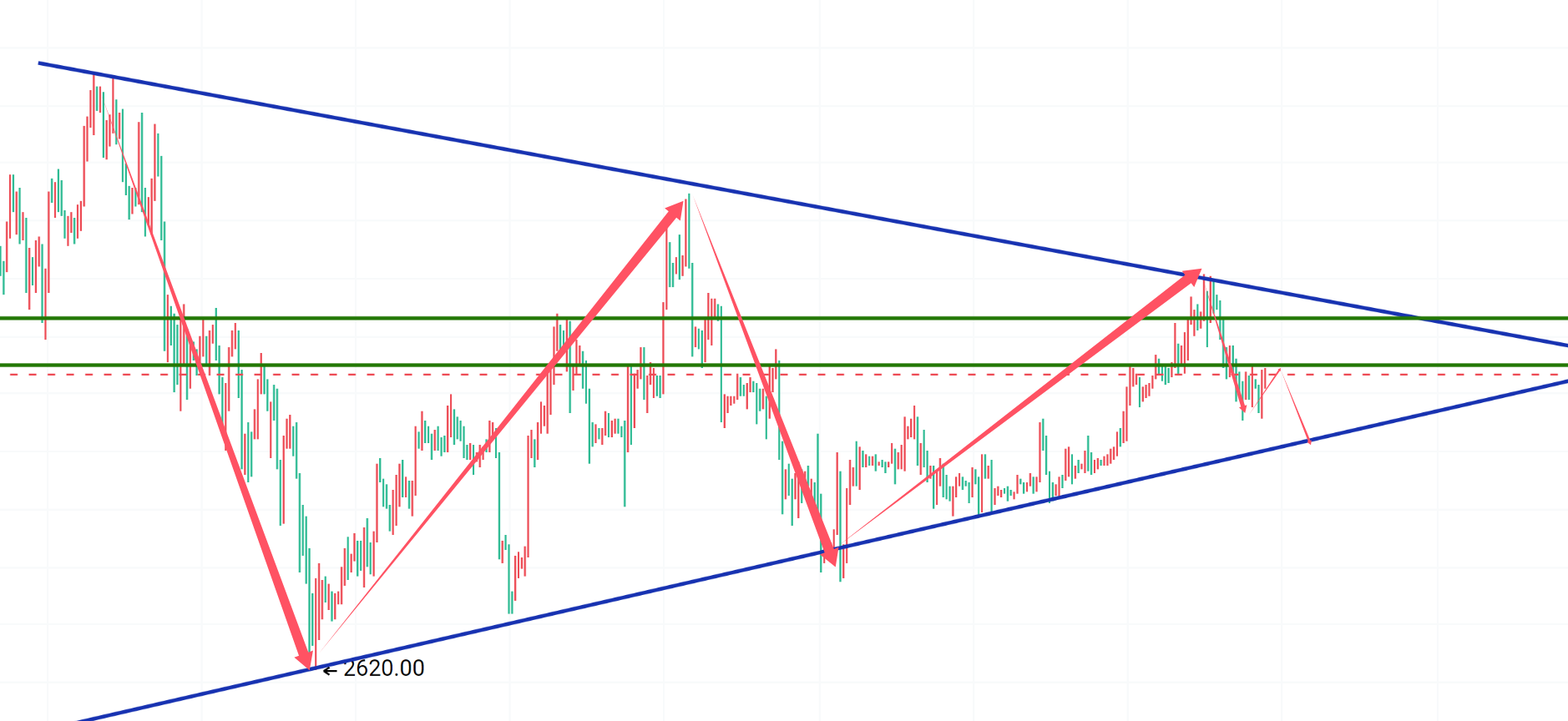
On January 8, 2026, the Chinese judicial system, leading global exchanges, and public chain founders each presented their stances almost simultaneously: the Shanghai Second Intermediate People's Court held a seminar on crimes related to virtual currencies, Binance chose to launch a Chinese Meme coin, and Vitalik Buterin publicly reiterated the technical positioning of Ethereum's underlying technology. At the same time, BTC price fell below the $90,000 mark, hitting a low of approximately $89,970.60, with a daily decline of 1.51%, contrasting sharply with reports that the market capitalization of some Meme coins briefly surpassed $10 million, creating a sense of fragmentation in risk appetite within the same day. This article will explore the refinement of China's judicial regulatory attitude, the choices of exchanges in the existing game, and the adherence to Ethereum's technical philosophy, outlining the increasingly sharp trajectory of the game among regulation, capital, and technology.
Drawing Judicial Boundaries and Refining Responsibilities
At the seminar on virtual currency crimes held on January 8, in the East Eight Time Zone, the Shanghai Second Intermediate People's Court systematically discussed the criminal risks and responsibility boundaries involving crypto assets through concentrated discussions. As a mid-level court located in a region with highly active financial and internet activities, its approach to handling related cases is seen as an important barometer in Chinese judicial practice. The statement made at the seminar that "the determination of subjective knowledge should be comprehensively judged to prevent objective blame" indicates that when faced with complex on-chain behaviors and multi-layered intermediary structures, judicial authorities are no longer satisfied with a rough path of retroactively assigning responsibility based solely on outcomes. Instead, they emphasize a comprehensive assessment that combines various factors such as the role of the actor, depth of participation, and level of information mastery. This trend of shifting from outcome-based reasoning to refined responsibility points towards a more typified and contextualized recognition of virtual currency-related behaviors: different roles, different links, and different technical participation methods will gradually be categorized into clearer legal classifications. For exchange operators, project parties, market-making teams, and ordinary participants, such discussions are not merely academic activities but are setting boundaries for future law enforcement and judicial discretion, which will have structural constraints on compliance risk control systems, product design, and even user guidance strategies in the medium to long term.
Price Decline and Repricing of Risk Appetite
On the same day, BTC price fell to approximately $89,970.60 per coin, with a daily decline of 1.51%, following a prolonged period of high ascension, market sentiment gradually shifted from exuberance to a more cautious state. For investors accustomed to a one-sided upward narrative, such a decline does not constitute a technical disaster, but against the backdrop of frequent regulatory signals and high-level consolidation, it became a trigger for repricing risk appetite. The systematic discussions at the judicial level regarding virtual currency crimes, combined with widespread expectations of tightening regulation globally, have suppressed high-leverage, high-volatility speculative behaviors in the short term, leading more funds to reassess the compliance exposure and regulatory visibility of their assets and chosen platforms. The slight price correction coexists with high-level fluctuations, reflecting, on one hand, a natural selection of some funds to take profits and reduce exposure, and on the other hand, exposing the market's collective caution towards future policy rhythms and judicial practice uncertainties. As judicial discourse becomes clearer and responsibility boundaries stabilize, the paths for domestic funds to participate in overseas crypto assets are likely to be reshaped, gradually shifting from reliance on multi-layered intermediaries and ambiguous interfaces to a structural allocation logic that is more sensitive to compliance premiums and more restrained regarding judicial red lines.
Meme Traffic and Platform Profit Motives
In stark contrast to the serious tone of the judicial discussions, another scene unfolded on the exchange side on the same day: Binance chose to launch Chinese Meme coins, including "I’m Here," with data from a single source indicating that the market capitalization of this coin reportedly surpassed $10 million in a short time. Against the backdrop of BTC's correction and tightening regulatory expectations, mainstream exchanges betting on high-volatility, high-narrative Meme assets signal an urgent demand for the redistribution of existing traffic. For platforms, introducing new Meme coins with strong topicality and social attributes can reignite user activity and trading depth in a relatively weak mainstream coin market, thereby maximizing commercial returns under limited compliance space. However, when leading platforms openly accept such assets characterized by severe price volatility and highly asymmetric information, the regulatory pressure on the topic of "investor protection" is also raised: how to define the platform's responsibility boundaries in product selection, risk warnings, and marketing guidance, and how to handle the losses of small and medium investors participating in the Meme frenzy will become core issues that judicial and regulatory bodies cannot avoid in the future. The simultaneous occurrence of the collective frenzy of Meme coins and the tightening of judicial boundaries on crimes exposes the direct collision between compliance red lines and commercial profit motives under the spotlight, highlighting the growing tension between the commercial logic of exchanges and public governance goals.
Adherence to Technical Publicness and the Cost of Decentralization
While regulatory discussions and platform profit motives intertwine, Vitalik Buterin once again emphasized the technical philosophy of Ethereum's foundational layer on January 8—he believes that Ethereum L1 should be built as a financial, identity, and governance infrastructure that does not rely on intermediaries, providing a neutral, verifiable, and censorship-resistant public base for global users. When exchanges tilt resources towards short-term narrative assets represented by Meme, and the judicial system focuses on crime identification and accountability, Vitalik deliberately shifts the focus back to the public attributes of the underlying protocol, attempting to remind the industry: regardless of market fluctuations, what truly constitutes the foundation of long-term value is whether there exists a sufficiently decentralized foundational layer that does not require trusted intermediaries. Under this technical philosophy, adhering to a highly decentralized L1 means actively accepting a certain degree of efficiency sacrifice, such as concessions in processing speed, throughput capacity, or user experience compared to highly centralized systems, in exchange for censorship resistance and neutrality of rules. Vitalik's statements do not get caught up in short-term market trends but provide developers, application parties, and even regulatory observers with a set of value coordinates: in an environment where compliance narratives are continuously reinforced and platform logic is increasingly commercialized, there remains a technical route centered on autonomy and publicness, attempting to provide a universal, auditable financial and governance infrastructure for global users without being hijacked by a single judicial jurisdiction.
The Gap Between Compliance Realities and Technical Ideals
As Chinese judicial authorities continue to refine the criteria for identifying virtual currency crimes, exchanges persist in chasing Meme traffic, while the technical camp clings to decentralization ideals, the reality of the crypto industry presents a highly fragmented state. On one hand, the court's statement to "prevent objective blame" indicates an attempt to distinguish the role differences of various participants in crypto activities through a more refined responsibility identification method within the legal context; on the other hand, the ideal of no intermediaries advocated by Ethereum seeks to distance individuals from the coercive constraints of traditional intermediary systems through the neutrality and autonomy of the protocol layer. There is an inherent tension between the two regarding the core issue of responsibility attribution: judicial logic needs to find accountable subjects in specific cases, while the protocol ideal emphasizes that in an open, permissionless network, the occurrence of behavior does not necessarily point to a controllable center. The key to future games will largely depend on whether regulators can draw a clear yet not overly rigid line between "cracking down on speculative and criminal behavior" and "protecting infrastructure innovation"—neither overly equating technology developers or underlying protocols with the responsibility of speculative activities nor effectively cracking down on illegal behaviors exploiting technological gaps. In this context, investors need to reassess their participation methods between the increasingly clear regulatory environment and the inherent profit-seeking nature of platforms: whether to continue chasing short-term gains under the Meme narrative or to seek a more sustainable and compliance-respecting allocation path, based on an understanding of judicial boundaries and technical philosophy, has become a real choice facing all participants.
Join our community to discuss and grow stronger together!
Official Telegram community: https://t.me/aicoincn
AiCoin Chinese Twitter: https://x.com/AiCoinzh
OKX Benefits Group: https://aicoin.com/link/chat?cid=l61eM4owQ
Binance Benefits Group: https://aicoin.com/link/chat?cid=ynr7d1P6Z
免责声明:本文章仅代表作者个人观点,不代表本平台的立场和观点。本文章仅供信息分享,不构成对任何人的任何投资建议。用户与作者之间的任何争议,与本平台无关。如网页中刊载的文章或图片涉及侵权,请提供相关的权利证明和身份证明发送邮件到support@aicoin.com,本平台相关工作人员将会进行核查。