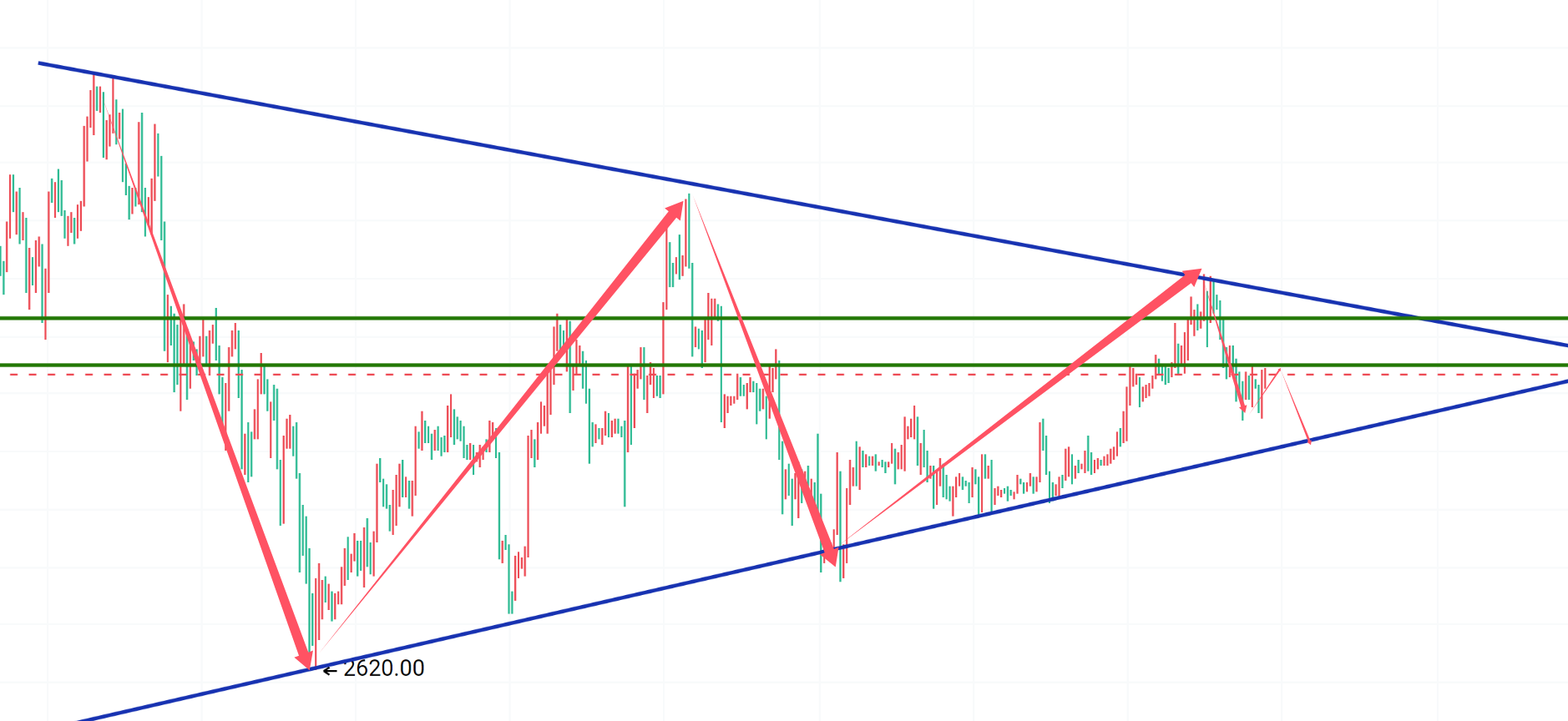
In January 2026, during a series of public technical discussions and articles, Ethereum co-founder Vitalik Buterin clearly outlined his vision for the future technical roadmap and role of Ethereum. He no longer emphasized a "large and comprehensive" universal application platform, but instead described Ethereum as the "world's heartbeat," hoping that this chain would resemble a stable, continuously pulsing global trust infrastructure. Within this framework, a core controversy was brought to the forefront: should the underlying public chain pay the price for a "millisecond-level" experience, or should it accept the reality of a 2-4 second confirmation delay, focusing its energy on bandwidth, security, and decentralization, becoming the "heartbeat signal" that all upper-layer systems can rely on? Around this controversy, Vitalik's main line of thought was clear: reshape positioning through the "world's heartbeat" narrative, respond to global scaling with a "bandwidth-first" technical route, and confirm the long-term key role of L2 in the architecture as a predetermined direction.
Turning from World Computer to World Heartbeat
In the early narrative, Ethereum was packaged as a "world computer": a globally shared, programmable computer where anyone could deploy smart contracts and run decentralized applications, seemingly capable of anything from finance to gaming to social interactions. The imagination during this phase focused on "general computing" and "universal applications," emphasizing "anything can run on it," rather than the form and rhythm that the underlying infrastructure should maintain. As time passed, the mainnet load, security incidents, and scaling games accumulated, and Vitalik began to shift his reflection from "what can be done" to "what should be done and to what extent."
The metaphor of the "world's heartbeat" is a concentrated reflection of this thinking. Vitalik no longer emphasized that Ethereum should be like a computer with unlimited performance; instead, he preferred to describe it as a continuous, reliable, and hard-to-tamper-with global pulse: every few seconds, the state is robustly updated, and new transactions and data are etched into a time series that everyone can verify. The focus here is no longer on flashy complex applications but on a long-term reliable underlying trust rhythm—it can provide a security anchor for various upper-layer systems without having to personally bear all complex logic and real-time interactions. In this narrative, Ethereum resembles BitTorrent or Linux: providing infrastructure for individuals and organizations pursuing autonomy and censorship resistance, rather than being an "integrated product for end users." BitTorrent reshaped file distribution with peer-to-peer networks, Linux restructured the server and operating system world with open-source kernels, and Ethereum attempts to carry global assets, rules, and coordination relationships with a public, verifiable state machine. Vitalik publicly stated that Ethereum should become the infrastructure for these entities like BitTorrent and Linux, rather than replacing all existing application forms, marking its transition from the narrative of a "world computer" to the evolutionary path of "world's heartbeat" infrastructure.
2 to 4 Seconds Confirmation: Ethereum Rejects Extreme Speed Competition
On more specific technical goals, Vitalik clearly stated that he hopes the Ethereum mainnet will stabilize confirmation delays at around 2-4 seconds in the foreseeable future. According to public information, this time frame is seen by him as a relatively ideal balance between user experience and system security. For ordinary users, 2-4 seconds means: a chain transfer, a key contract interaction, from initiation to being considered "basically confirmed," roughly the time it takes for a mobile screen to not yet completely black out. It does not equate to "instantaneous" millisecond-level responses, but is sufficient to support most activities that require on-chain security endorsement, such as fund transfers, important protocol state updates, and cross-application asset migrations.
In contrast, there has long been a call in the market for "millisecond-level experiences," hoping that the underlying public chain can achieve almost imperceptible instant feedback like internet applications. Vitalik's statement is, in fact, a conscious effort to delineate boundaries with this extreme low-latency expectation. He would rather accept a slightly slower user perception than allow the underlying security, robustness, and decentralization to give way to speed. The reason is that the consensus security and trust boundaries of public chains determine that they cannot infinitely compress confirmation times without incurring costs. Faster block times and more aggressive finality confirmations often mean higher hardware thresholds, more centralized node topologies, or significantly reduced buffer times for the system in attack and reorganization scenarios.
Here, delay is not just a user experience parameter but a "safety buffer" in system design. A chain hoping to support global settlement and high-value assets needs to provide a sufficiently long time window for nodes distributed around the world to receive, propagate, verify, and reach consensus on new blocks; it also needs to reserve response space for potential attacks, network partitions, and other anomalies. The goal of 2-4 seconds is a compromise to minimize user waiting time without pushing Ethereum towards structures like "high-frequency matching systems" or "centralized matching engines." Through this route, Ethereum resembles a set of rhythmically stable settlement layers rather than a low-latency engine competing with high-frequency trading systems.
Bandwidth-First Route: Paving the Way for Global Users
With the confirmation not pursuing extreme low latency, another key route proposed by Vitalik is to prioritize ecosystem bandwidth rather than merely squeezing delays. This means that in scaling design, more emphasis is placed on the amount of data and total transactions that can be processed in a unit of time, rather than pouring all technical resources into shortening confirmation times by a second or two. Bandwidth here refers not only to on-chain data throughput itself but also to the entire network's capacity to handle global nodes and users. If in the future there are thousands of validators, light nodes, and infrastructure from different regions participating together, what Ethereum needs to do is ensure that they can all synchronize and verify on-chain states at reasonable costs, rather than just pursuing "ultra-fast consensus" among a few high-performance nodes.
Imagine a scenario: a vast number of users globally simultaneously initiate transactions, call contracts, and bridge assets between different L2s. If the underlying mainnet lacks bandwidth, it will be like a highway suddenly overwhelmed by traffic; even if each vehicle can move quickly, the overall traffic efficiency will plummet. Vitalik's bandwidth-first approach aims to amplify Ethereum's coverage and inclusivity as infrastructure through higher data carrying capacity, allowing more regions and types of participants to join this network without sacrificing decentralization. Around this direction, he specifically mentioned PeerDAS and zero-knowledge proofs (ZKPs) as important tools for enhancing bandwidth and scaling capabilities. PeerDAS is seen as a solution for data availability expansion, while ZKPs provide the possibility of compressing verification costs without sacrificing security. However, the public information surrounding these technologies currently remains at the "route" level, with specific implementation progress, landing rhythm, and parameter details not fully clarified, and related timelines have yet to be publicly verified. In this vision, Ethereum resembles a broader road being built rather than creating exclusive tracks for a few racing cars.
L2 Takes Center Stage: Scaling is No Longer a Single Line
Equally emphasized alongside the bandwidth-first approach is the key role of L2 in long-term scaling. Vitalik publicly stated that L2 solutions will be central to Ethereum's future scaling strategy, meaning that the multi-layer structure has shifted from an "experimental option" to a "predetermined route." In this structure, L1 is clearly positioned as the security and settlement layer, responsible for recording final states and consensus security; while the vast majority of high-frequency trading, complex logic execution, and daily interactions are handled by various L2s running on top of it. It can be imagined as a layered financial system: the bottom layer is responsible for final settlement and regulation, while most daily payments and credit operations are completed by upper-layer commercial banks and various financial service institutions. Ethereum's L1 resembles the former, while L2 plays the role of different types of "commercial banks" and service networks.
Delegating complexity and high-frequency interactions to L2 is a choice that aligns closely with the "world's heartbeat" positioning. The tasks of L1 are narrowed down to a few core functions: maintaining a recognized global state, providing publicly transparent settlement and data availability guarantees, and offering trustworthy security anchors for L2 and application layers. This way, L1 does not have to directly execute and store every in-game click, every social message, or every small payment, but only accounts for the final important results and state changes. This design avoids turning Ethereum into a "universal application platform" that tries to do everything and leaves room for innovation for different needs of L2. Some can optimize fees and throughput to the extreme, while others can focus on specific industry logic, as long as they can reconcile with L1 in the end, they can share the security of this "world's heartbeat."
Choices for Users and Developers: Building Cities Above the Heartbeat
From the perspective of ordinary users, the 2 to 4 seconds delay combined with the multi-layer L2 architecture will reshape their interaction with Ethereum. Daily on-chain transfers, especially larger cross-application or cross-ecosystem transfers, will more likely be directed to the Ethereum mainnet or settlement paths strongly bound to the mainnet, completing secure landings within a few seconds of confirmation time. In contrast, frequent small payments, in-game operations, or interactions requiring near-instant feedback are more likely to occur in L2 or specific application layers, where the local mechanisms of these "second-layer cities" provide a smooth experience, periodically reconciling with L1. For most end users, their perceived "Ethereum experience" will increasingly be reflected through L2 and application entry points, rather than the raw form of direct interaction with the mainnet.
From the developer's perspective, this new route presents a more complex but clearer choice. To build a new application, the first decision is: what kind of combination of security level and interaction frequency is needed, and then choose the appropriate L2 or multi-L2 layout, rather than simply placing all logic on L1. In this framework, developers need to carefully weigh: which key states must rely on L1's final settlement and security guarantees, and which high-frequency operations can be completed within L2 or even the application layer, while synchronizing with L1 through periodic proof submissions or state commitments. This will change the fundamental assumptions of contract design, data structures, and even business models. Instant transaction demands will certainly not disappear; on the contrary, as on-chain activities become richer, they will only increase. However, in Vitalik's vision, such demands are more suitable to be met within different L2s or application structures—achieving "near-instant" experiences through local optimization, liquidity design, and user interface innovation—rather than betting on L1 for endless acceleration at the consensus level. What users and developers face together is no longer the imagination of a single chain's performance, but the architectural thinking of building multi-layer cities around the "world's heartbeat."
New Narrative Opening: Ethereum's Next Self-Positioning
In summary of Vitalik's statements in January 2026, it can be seen that Ethereum's story is being rewritten—from the universal platform of the "world computer" to further converge into the underlying role of "trust infrastructure." The metaphor of the "world's heartbeat" reinforces this narrative: the core value of Ethereum lies not in directly carrying all applications, but in providing a public, reliable, and verifiable foundational pulse for the entire crypto ecosystem and even the broader digital collaboration space. Around this positioning, the "bandwidth-first" technical route and L2-centric scaling architecture will profoundly influence research and development investments and ecological layouts in the coming years. The resource allocation of the developer community, the business models of infrastructure providers, and even the strategic focus of new projects will largely revolve around the combination of "mainnet as the heartbeat, L2 as the experience."
Of course, there are still many gaps to fill in the technical details of the multi-layer architecture. The specific implementation progress and performance parameters of solutions including PeerDAS and zero-knowledge proofs have not yet been fully clarified in public information. How L2s will collaborate and how to find a complete paradigm between security and usability is still far from being finalized. In an environment where other public chains and new scaling solutions are constantly emerging, whether Ethereum can maintain decentralization and security while not falling behind in user experience and innovation speed remains a long-term challenge. What Vitalik has proposed is a path that emphasizes a robust heartbeat, open bandwidth, and multi-layer collaboration, but whether this path can allow Ethereum to maintain its position as the "world's heartbeat" will ultimately require time and the market to verify.
Join our community to discuss and become stronger together!
Official Telegram community: https://t.me/aicoincn
AiCoin Chinese Twitter: https://x.com/AiCoinzh
OKX benefits group: https://aicoin.com/link/chat?cid=l61eM4owQ
Binance benefits group: https://aicoin.com/link/chat?cid=ynr7d1P6Z
免责声明:本文章仅代表作者个人观点,不代表本平台的立场和观点。本文章仅供信息分享,不构成对任何人的任何投资建议。用户与作者之间的任何争议,与本平台无关。如网页中刊载的文章或图片涉及侵权,请提供相关的权利证明和身份证明发送邮件到support@aicoin.com,本平台相关工作人员将会进行核查。