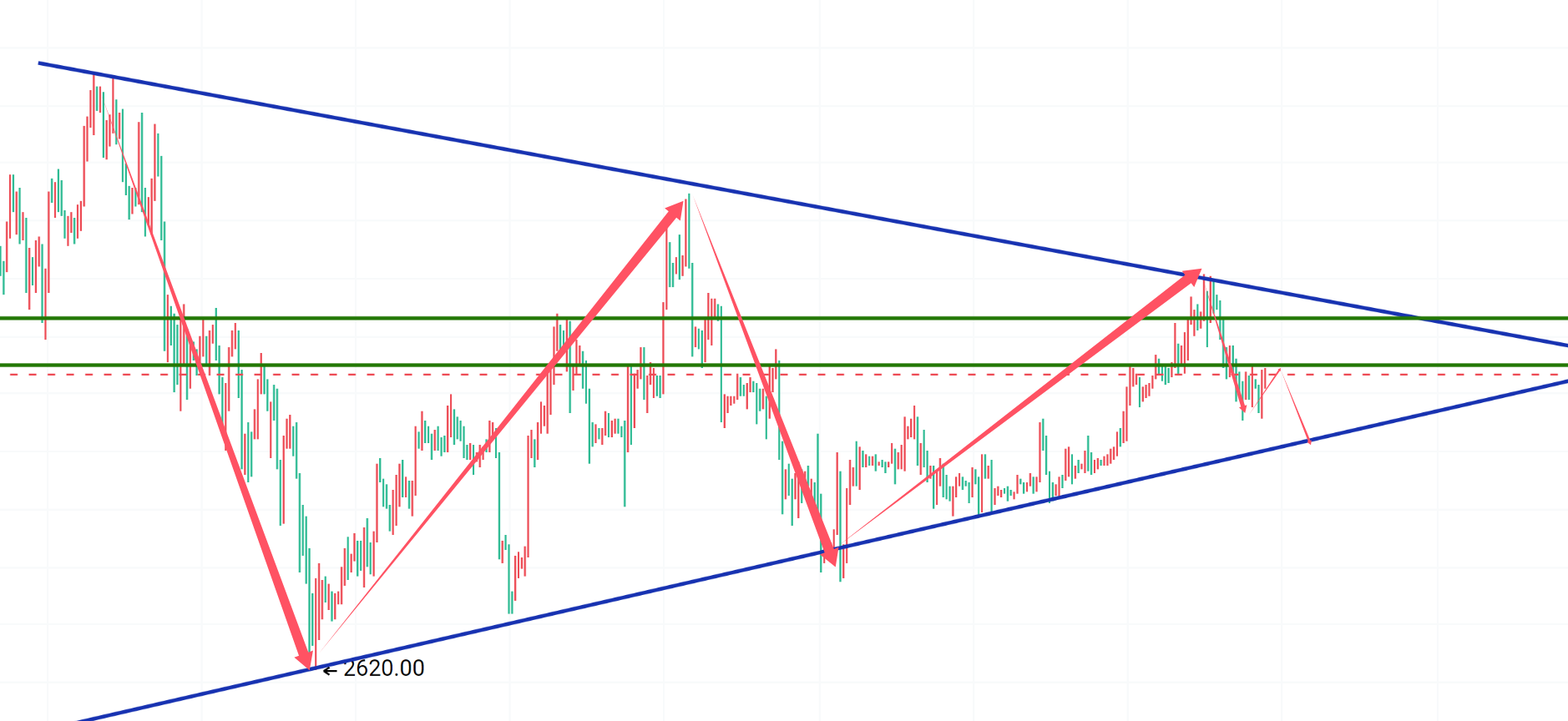
1. Views on Web3 + AI in 2026, including thoughts on X402 and ERC8004.
Now that it is 2026, I don't have any particularly new thoughts on Web 3 + AI, so I still hold the same views I have shared in the past:
What I am most concerned about and optimistic about is the Virtual ecosystem and the AI Agent economy based on cryptocurrency payments. I will keep an eye on all areas related to these, which naturally includes X402 and ERC8004.
However, speaking of AI Agent applications based on cryptocurrency payments, a new phenomenon has recently emerged:
We all know that AI Agents cannot apply for their own bank accounts like humans do. In this case, a natural thought is that AI Agents can directly complete financial transactions on-chain without going through banks.
However, some new applications are exploring how to apply for bank accounts for AI Agents, facilitating communication between AI Agents and banks.
Sometimes I find this kind of exploration puzzling: why not take the existing path and instead think about returning to the centralized world, trying to pull centralized institutions into areas where they are not needed?
2. If the Shanghai Composite Index falls by 20%, that would be around 3200. Shouldn't that mean it's time to invest regularly? Why clear out everything?
First, it still depends on what investment threshold you have set for yourself.
For example, I only start investing regularly when the Shanghai Composite Index is at 2800 or below. As long as it hasn't dropped to this threshold, I ignore the index even if it continues to fall.
Additionally, when I say the Shanghai Composite Index has fallen by 20%, I don't mean to clear out at 3200 points, but rather that I would clear out when the index has dropped 20% from its highest point.
For instance, as of the time of writing, the Shanghai Composite Index has risen to 4085 points. As long as it doesn't drop below 3100 points, I will hold on to my investments. If the index not only doesn't drop below 3100 points but continues to rise above 4085 points, then I would calculate a 20% drop from the new high before clearing out.
In the future, when this round of the A-share Shanghai Composite Index falls by 20% from its highest point, even if it drops to my investment threshold, why wouldn't I start investing regularly again?
I addressed similar questions during my second online communication in January 2025.
What I said during that communication was quite straightforward and detailed, but many of the specifics are not convenient to share in public channels. Here, I will only share a general idea.
Under what circumstances should we buy more as the price drops, and under what circumstances should we not only refrain from buying more but also consider selling more?
There is a major premise here.
That is, whether the future trend of the asset is to continue upward or downward. If the major trend is upward, then we should buy more as the price drops. However, if the major trend is downward, then we should escape at any time.
In my past ten years of investing in the CSI 300 Index, I indeed bought more as the price dropped (within my investment threshold) — that was because I believed the fundamental logic of A-shares at that time remained unchanged, so even if it temporarily fell to a low, I believed it would have the opportunity to rise again in the future.
This is similar to Warren Buffett's unwavering optimism about the future of the U.S. stock market, regardless of its fluctuations: he believes that as long as the U.S. adheres to a market economy and the rule of law, the future of the U.S. stock market will continue to rise.
Thus, during any time of crisis, whether it was World War II, the Cuban Missile Crisis, the oil crisis, the Vietnam War, the collapse of the Bretton Woods system, the bursting of the internet bubble, the subprime mortgage crisis, or the COVID-19 pandemic, he firmly believed in the future of the U.S. stock market, buying more when prices were lower and being "greedy" when prices were cheaper.
The old gentleman has proven through his life experiences that the major premise and fundamental logic he believes in have always held true, which is why the subsequent performance of the U.S. stock market has invariably exceeded previous highs.
However, there are also other historical cases.
On the eve of the liberation of Shanghai in 1949, the stock prices of the best companies on the Shanghai Stock Exchange (then called "Shanghai Securities Co., Ltd.") were continuously falling.
At this time, should investors take the opportunity to buy more as prices drop, or should they sell at any cost?
The answer is self-evident, as the major premise and fundamental logic established earlier would undergo a dramatic change in the years to come — soon the exchange would close, and companies would be nationalized.
I cite this example not to suggest that the future of A-shares will be like it was after 1949, but to express my uncertainty about whether the logic of A-shares in the future will be the same as it has been in the past few decades.
Regarding the current round of A-share market conditions, I have said that it is both a response to the current economic difficulties and can be seen as a one-time explosion of the institutional dividends accumulated over more than 40 years of China's economic development since the reform and opening up.
Therefore, for this round of market conditions, I will continue to hold until the Shanghai Composite Index falls by 20% from its highest point.
However, when the Shanghai Composite Index falls by 20% from its highest point, I believe that the current bull market for A-shares is likely in danger. After that, at least for the next ten years, I cannot see or judge how the overall trend of A-shares will be, so I will temporarily refrain from buying more as prices drop. Unless I can see the turning point where the logic is restored.
免责声明:本文章仅代表作者个人观点,不代表本平台的立场和观点。本文章仅供信息分享,不构成对任何人的任何投资建议。用户与作者之间的任何争议,与本平台无关。如网页中刊载的文章或图片涉及侵权,请提供相关的权利证明和身份证明发送邮件到support@aicoin.com,本平台相关工作人员将会进行核查。