Author: Liang Yu
Editor: Zhao Yidan
At the beginning of 2026, the launch of a seemingly simple feature has drawn dual attention from the fields of financial technology and green finance. According to news released by the Digital Renminbi Operation Management Center, in order to enrich the application of digital renminbi in "green finance" scenarios, the digital renminbi App has officially launched the "Carbon Inclusive" mini-program service, first going live in the Shanghai area.
After users activate this service, carbon credits generated from green travel behaviors such as taking the subway or riding shared bicycles will be automatically collected and can be exchanged for digital renminbi. The first platforms to be integrated include the official Shanghai Metro app Metro Metropolis, Hello Chuxing, and T3 Chuxing.
This is not just a simple "green points exchange." In the recently released "Action Plan for the Comprehensive Deepening of Carbon Market Reform in Shanghai (2026-2030)," it is clearly stated that there is a need to "explore models and paths for individual participation in carbon trading." Additionally, on January 5, the first carbon inclusive emission reduction transaction of 2026 in Shanghai was completed in Chongming District, where 300 tons of carbon inclusive emission reductions were traded through the Shanghai Environment and Energy Exchange, specifically for alternative restoration of ecological damage.
When the legal currency attributes of digital renminbi meet the environmental rights attributes of personal carbon credits, it may imply a strategic upgrade from a payment tool to ecological infrastructure, as well as a profound exploration of the future form of personal carbon assets.
1. How a Green Trip Becomes Digital Renminbi
The digital renminbi "Carbon Inclusive" service has established a clear behavioral conversion chain. Users first need to find the "Carbon Inclusive" mini-program on the service page of the digital renminbi App, complete the activation, and bind it to their account on the partner platform.
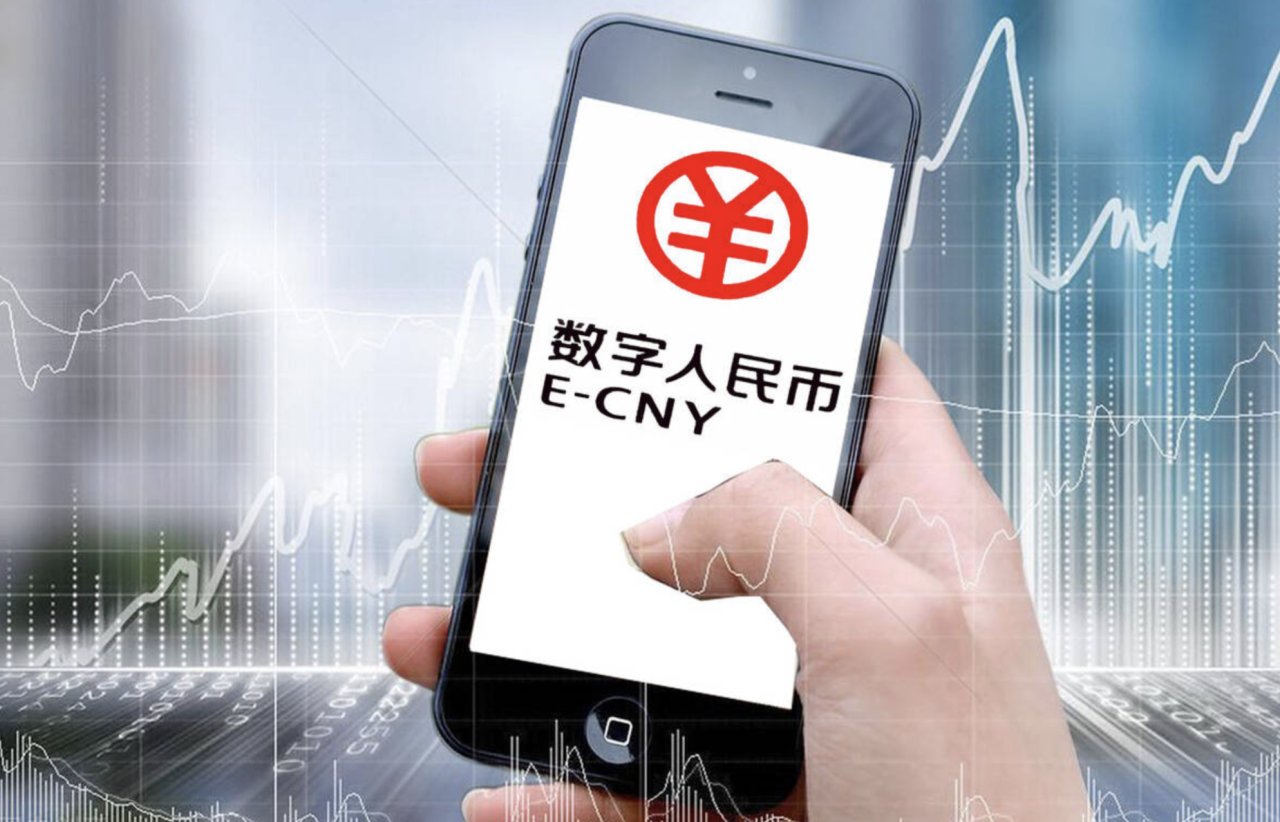
Subsequently, when users take the Shanghai Metro, use Hello shared bicycles, or ride T3 new energy vehicles, their low-carbon travel behaviors will be automatically recorded by the system, and the resulting carbon credits will be collected in their personal "Carbon Inclusive" account.
According to reports from China Science and Technology Network, the current exchange rate is 0.01 yuan of digital renminbi for every 1250 grams of carbon credits. Before exchanging, users need to activate a digital renminbi wallet and upgrade it to a real-name wallet. After a successful exchange, the digital renminbi will be credited in real-time.
This process design may seem simple, but it actually includes a complete technical chain from behavior recognition, data collection, carbon value calculation to value incentives. On the behavior data collection side, it connects urban public transportation, shared travel platforms, and ride-hailing service platforms.
On the value conversion side, it directly interfaces with China's legal digital currency system. This design allows each specific low-carbon choice made by individuals to be quantified, recorded, and assigned a clear economic value through technical means.
2. The Three New Roles of Digital Renminbi
The launch of the digital renminbi "Carbon Inclusive" pilot goes far beyond a green public welfare marketing activity. From a strategic perspective, it marks a three-tier leap for digital renminbi from a payment tool to a value infrastructure.
The first tier is the deepening of its role as a payment tool. In the past, the promotion of digital renminbi mainly relied on direct subsidy methods such as consumption red envelopes, while "Carbon Inclusive" transforms the compensation for the "negative externalities" of green behaviors into "positive usage incentives" for digital renminbi, creating a more natural and sustainable usage scenario.
This design cleverly answers the question of "why users should use digital renminbi"—not only because it is convenient, but also because it helps users monetize their environmentally friendly behaviors.
The second tier is the expansion of account functions as financial infrastructure. The requirement for a "real-name wallet" is key to understanding this layer. The real-name feature of the digital renminbi wallet ensures the unique ownership, immutability, and full traceability of carbon credits.
This gives personal "carbon accounts" financial-grade security and credibility, providing underlying support for potential future data verification, rights trading, and financial operations. This account system is fundamentally different from internet platform points, as the former is built on national financial infrastructure, possessing legality and standardization.
The third tier is positioning as a standard framework for strategic ecology. Against the backdrop of the Shanghai carbon market reform plan's clear goal to "explore models and paths for individual participation in carbon trading," the digital renminbi, through the "Carbon Inclusive" pilot, is effectively defining the preliminary standards for the collection, calculation, and exchange of personal carbon behavior data.
When individual green behaviors can be reliably recorded and incentivized through national financial infrastructure, digital renminbi may become the "payment settlement center" of the future personal carbon asset value chain.
3. Starting from Shanghai, Connecting to a Broader Market
Shanghai, as the first city to launch the "Carbon Inclusive" mini-program, is not a random choice. This city is at the forefront of carbon market construction in the country. The "Action Plan for the Comprehensive Deepening of Carbon Market Reform in Shanghai (2026-2030)," released in August 2025, clearly states that Shanghai aims to build a voluntary greenhouse gas emission reduction management system that is well-regulated, trustworthy, and widely participatory.
The plan particularly emphasizes "promoting the formation of a personal carbon credit assessment system and exploring the application of carbon credits in green finance, green consumption, and other fields."
At the same time, Shanghai already has practical experience in carbon inclusive trading. On January 5, 2026, the first carbon inclusive emission reduction transaction of the year was completed in Chongming District, where 300 tons of carbon inclusive emission reductions were traded through market mechanisms, specifically for alternative restoration of ecological damage.
This transaction has pioneered a new market path of "carbon trading + ecological restoration," allowing the "subtraction" of carbon emissions to be directly transformed into the "addition" of ecological protection.
The connection point between digital renminbi "Carbon Inclusive" and these local carbon market practices is that it provides standardized tools for the generation and recording of personal carbon reductions. When countless individuals' small-scale reduction behaviors are reliably aggregated through the digital renminbi system, it can theoretically form a carbon asset package that can be traded, linking with local and even national carbon markets.
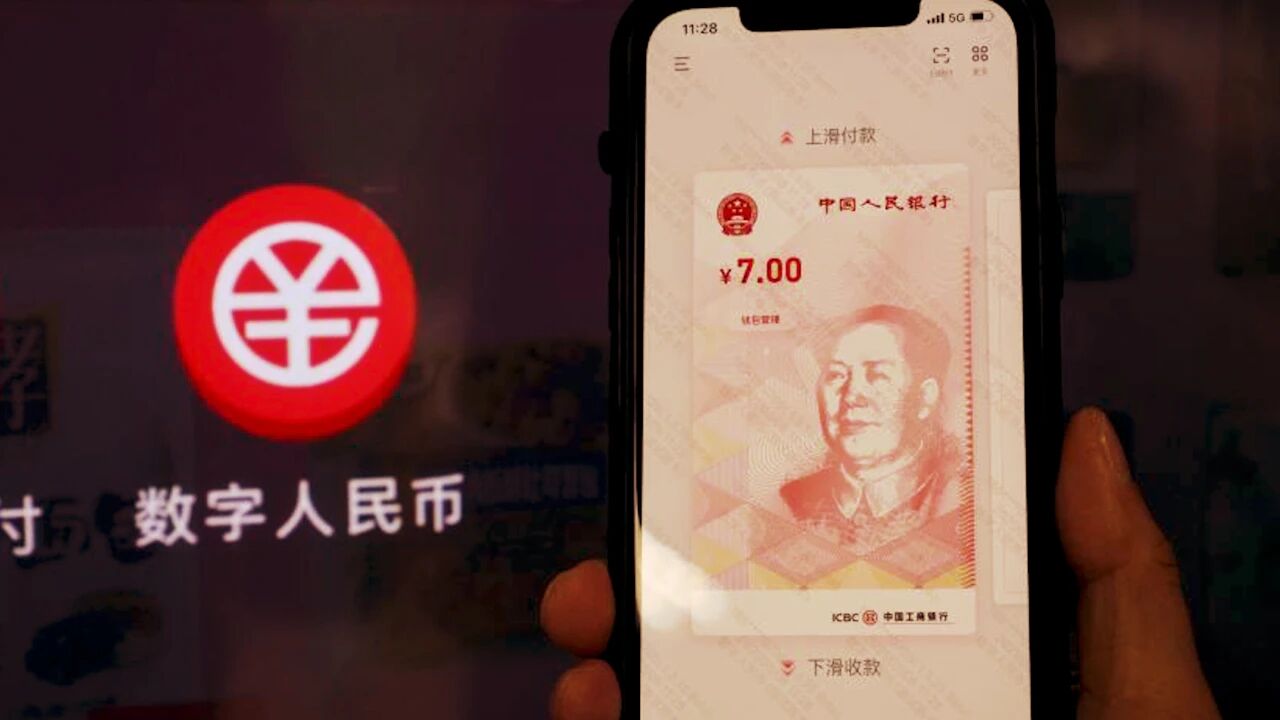
According to the planning of the Digital Renminbi Operation Management Center, the next step for the "Carbon Inclusive" service will be to "accelerate the expansion of participating regions and build a multi-city collaborative carbon inclusive service network." The potential for this cross-regional expansion should not be underestimated.
As early as July 2024, Wuhan, along with cities like Beijing, Shanghai, and Guangzhou, initiated the "Carbon Inclusive City Cooperation Initiative" and established the Carbon Inclusive City Cooperation Alliance. The first batch of alliance members includes 32 institutions such as Alipay, Didi Chuxing, and Amap, indicating that the construction of a cross-regional, cross-platform carbon inclusive ecosystem has become an industry consensus.
4. Real Challenges: Hurdles to Overcome for the Ideal Model
Despite the broad prospects of the digital renminbi "Carbon Inclusive" model, its transition from pilot to maturity still faces multiple real challenges. These challenges span various dimensions, including user incentives, data technology, financial compliance, and ecological collaboration, forming obstacles that this innovation must overcome.
The most direct issue is the sustainability of user incentives. According to existing rules, every 1250 grams of carbon credits can only be exchanged for 0.01 yuan of digital renminbi. Whether such an exchange rate can create sufficient behavioral change incentives for ordinary users still needs market testing.
The mechanism for discovering the value of green behaviors is still in the early stages of exploration. How to scientifically and fairly determine the carbon credit value of different low-carbon behaviors, avoiding "insufficient incentives" or "over-incentives," is a practical challenge faced by operations.
A deeper challenge lies in the accuracy and security of data technology. The automatic aggregation of carbon credits relies on data connectivity and real-time synchronization between different platforms, requiring technical assurance of data accuracy, tamper-proofing, and anti-cheating measures. At the same time, the requirement for "real-name wallets" means that a large amount of user behavior data will be linked to identity information.
How to strike a balance between data utilization and personal privacy protection, and how to design rules for data ownership and usage, are legal and ethical issues that this model must address.
The boundaries of financial compliance present another constraint. The current "carbon credit exchange" is essentially a one-way incentive behavior, fundamentally different from "asset trading" in a financial sense. Whether personal carbon credits possess property attributes, can be transferred, or can be used as collateral are all questions without clear legal definitions.
In the absence of a clear regulatory framework, overemphasizing the financial attributes of personal carbon credits may pose compliance risks. The operators of digital renminbi need to carefully balance innovation and compliance.
The most fundamental challenge lies in the connection path with the existing carbon market system. Currently, China's carbon market is mainly divided into a mandatory national carbon emission trading market and a voluntary emission reduction market. How the emission reductions generated by individuals through green behaviors can connect with these markets has no mature model.
Although there have been explorations, such as Hello Chuxing incorporating its users' riding carbon inclusive emission reductions into provincial carbon trading markets in Shanghai and Guangdong, these are still localized pilots. Establishing a nationwide unified standard for personal carbon reduction accounting, certification systems, and trading mechanisms requires multiple breakthroughs in policy, technology, and market.
5. Where Will Personal Carbon Credits Go?
Despite the challenges, the digital renminbi "Carbon Inclusive" pilot still provides a valuable experimental scenario for the evolution of personal carbon assets. Looking ahead, this model may gradually evolve along the path from behavioral incentives to asset recognition, and in the process, give rise to new financial services and business forms.
In the short term, "Carbon Inclusive" will continue to act as a booster for green behaviors. By expanding access scenarios (such as energy-saving appliance usage, green consumption, paperless offices, etc.) and broadening participating cities, a more extensive carbon inclusive network will be formed. At this stage, the core goal is to cultivate user habits, establish a psychological connection between carbon credits and low-carbon behaviors, and improve the data processing capabilities of the technical backend.
In the medium term, it may evolve into a personal carbon account system. With the implementation of the "Action Plan for the Comprehensive Deepening of Carbon Market Reform in Shanghai," Shanghai will "promote the formation of a personal carbon credit assessment system," and the data, technology, and user base accumulated by the digital renminbi "Carbon Inclusive" may become an important part of this system.
Personal carbon accounts will not only record emission reductions but may also include multi-dimensional data such as carbon footprints and green consumption preferences, becoming an individual's "green ID card." Financial institutions such as banks can develop green credit, low-carbon credit card products based on such accounts, incorporating carbon account information into credit assessment dimensions.
In the long term, the possibility of developing into a personal carbon asset trading platform cannot be ruled out. If future policies allow personal carbon reductions to enter carbon market trading, then the "Carbon Inclusive" built on the digital renminbi system has the potential to become a trading infrastructure.
Individuals can aggregate their dispersed emission reductions into a tradable asset package and sell it through compliant channels to enterprises or institutions with carbon offset needs. In this model, individual green behaviors will truly transform from a "cost center" to a "value center," forming a sustainable market-based incentive mechanism.
In this evolution process, the advantages of digital renminbi will gradually become prominent: its legal currency attributes provide the most stable anchor for the value scale of carbon assets; its controllable anonymity features balance privacy protection and regulatory needs; and its programmability offers technical possibilities for the automatic verification, segmentation, and settlement of carbon assets.
On the Shanghai Metro, a passenger who just exchanged carbon credits for digital renminbi puts away their phone as the train heads to the next station. Meanwhile, on the large screen of the Shanghai Environment and Energy Exchange, carbon price data is constantly fluctuating, with carbon assets seeking buyers.
In the not-so-distant future, the "carbon credits" in everyone's phone may no longer be a simple exchange voucher. They could become the digital cornerstone of personal green credit, a bridge connecting micro choices with macro goals, and a new carrier for measuring and circulating environmental rights in the digital economy era.
Some sources of information:
· "Low-carbon travel can earn digital renminbi, Shanghai takes the lead in pilot"
· "Shanghai comprehensively deepens carbon market reform and will explore models and paths for individual participation in carbon trading"
· "Shanghai's first carbon inclusive emission reduction transaction of 2026 lands in Chongming"
免责声明:本文章仅代表作者个人观点,不代表本平台的立场和观点。本文章仅供信息分享,不构成对任何人的任何投资建议。用户与作者之间的任何争议,与本平台无关。如网页中刊载的文章或图片涉及侵权,请提供相关的权利证明和身份证明发送邮件到support@aicoin.com,本平台相关工作人员将会进行核查。


