The U.S. Senate Agriculture Committee has postponed the release of a key cryptocurrency bill text and the hearing until late January. Bitcoin prices remained unusually calm after the announcement, with on-chain data showing that investors are choosing to "hold on for a rise."
A legislative effort aimed at ending the long-standing regulatory ambiguity in the U.S. cryptocurrency market is entering a critical sprint phase.
The Senate Agriculture Committee plans to release its version of the "Crypto Market Structure Act" (the CLARITY Act) text on January 21, followed by a key hearing on January 27.
This is about a week later than the originally scheduled January 15 review date. Market participants do not view this as an event that requires immediate hedging, instead showing rare patience.
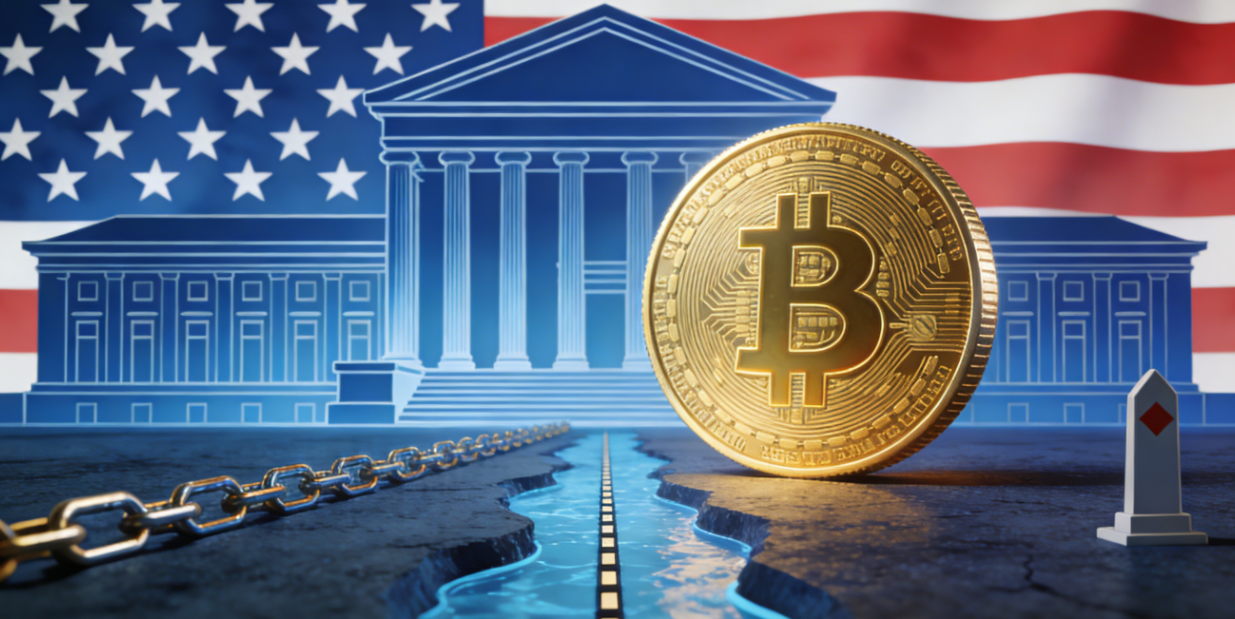
1. Bill Review
● The "Digital Asset Market Transparency Act," commonly known as the CLARITY Act, is at a delicate crossroads as it moves forward in the U.S. Senate. According to the latest schedule, the Senate Agriculture Committee plans to release the bill text on January 21, followed by a key hearing on January 27.
● This delay means that the legislative process has gained an additional week compared to the original plan, with the review originally set for January 15 being adjusted.
● Meanwhile, the Senate Banking Committee still plans to review its version of the bill on January 15. This parallel advancement by two committees reflects the complexity of the U.S. legislative process.
2. Core Content
● The core goal of the CLARITY Act is to create a clear federal regulatory framework for digital assets, ending the long-standing regulatory uncertainty that has plagued the industry. One of the most critical provisions of the bill is the clear delineation of regulatory responsibilities between the U.S. Securities and Exchange Commission (SEC) and the Commodity Futures Trading Commission (CFTC).
● Classifying digital assets as either "commodities" or "securities" based on their different characteristics is crucial, as it will provide market participants with more predictable rules.
● The bill will also establish rules for digital asset businesses, covering aspects such as trading venues and custodians. The U.S. House of Representatives passed a version of the bill in July 2025, but the Senate's progress has been relatively slow.
3. Controversial Focus
● Although the overall direction of the CLARITY Act has bipartisan support, there are still significant disagreements on specific provisions, which is part of the reason for the delay in review. Unresolved key issues include ethical provisions related to former President Trump and his family's connections to various cryptocurrency businesses.
● Quorum rules require bipartisan leadership from regulatory agencies like the SEC and CFTC, and currently, both agencies only have Republican members. Legislators disagree on how to incorporate decentralized finance (DeFi) into the existing framework. Industry organizations warn that strictly applying securities rules to DeFi protocols could push these activities offshore.
The division of power between stablecoin rewards and regulatory agencies is also a persistent point of contention.
4. Market Reaction
● Unlike the severe market volatility typically triggered by regulatory news, the cryptocurrency market has shown unusual stability in response to changes in the CLARITY Act review schedule. On-chain data indicates that market participants do not view the legislative process as a risk event that requires immediate avoidance.
● Typically, during periods of regulatory uncertainty, Bitcoin often sees significant inflows into centralized exchanges as investors prepare to sell. However, prior to the discussions on the CLARITY Act, such inflows remained limited.
● The expenditure-output profit margin indicators also confirm the market's stable mindset. These indicators collectively suggest that investors are not in a defensive state but are maintaining patience, with holding periods extending.
● The market seems to be forming a consensus that regardless of the short-term progress of the CLARITY Act, the long-term trend toward clarity in U.S. cryptocurrency regulation is irreversible.
5. Political Momentum
● The advancement of the CLARITY Act occurs against the backdrop of a significant shift in U.S. cryptocurrency policy. President Trump has repeatedly promised to make the U.S. the "world's cryptocurrency capital." Since the beginning of Trump's second term, the U.S. government has taken a series of measures friendly to the cryptocurrency industry.
● In January 2025, Trump signed an executive order on digital assets, explicitly expressing support for the development of cryptocurrencies.
○ The SEC and CFTC have also repeatedly announced that they will provide regulatory clarity for the issuance and provision of digital assets. The SEC even terminated investigations into several digital asset projects.
○ The President's Digital Asset Market Working Group released a report in July 2025, proposing a roadmap to support innovation.
These policy shifts have created a favorable political environment for the passage of the CLARITY Act. Senate Banking Committee Chairman Tim Scott has openly stated, "Democrats have been dragging their feet because they do not want President Trump to make the U.S. the world's cryptocurrency capital."
6. Regulatory Puzzle
The CLARITY Act is just one piece of the puzzle for U.S. cryptocurrency regulation in 2026. This year, multiple key regulatory measures will be rolled out, collectively shaping the U.S. cryptocurrency regulatory environment.
Key milestones for U.S. cryptocurrency regulation in 2026 include:
● On May 15, Federal Reserve Chairman Powell's term will end, and Trump may appoint a successor with a more moderate policy stance.
● On July 1, California's "Digital Financial Assets Act" will take effect, requiring institutions conducting cryptocurrency business in California to obtain a license.
● By July 18, the stablecoin regulatory guidelines established under the "GENIUS Act" will be due for release.
● In August, progress is expected on cryptocurrency tax legislation and CFTC rules regarding the application of blockchain technology in capital markets.
● On November 3, the U.S. will hold midterm elections, the results of which could directly impact the direction of cryptocurrency legislation and regulation.
7. Industry Outlook
As the regulatory framework becomes clearer, the U.S. digital asset industry is expected to welcome new development opportunities in 2026.
● The stablecoin sector may experience explosive growth. The "GENIUS Act" was issued in July 2025, but the related regulatory framework, including key OCC regulations, has yet to be published. These regulations are expected to be finalized in 2026, opening the door for various market participants to issue stablecoins.
● Asset tokenization is one of the most exciting developments in the digital asset space. With increased regulatory clarity, this trend is expected to continue in 2026, as market participants tokenize more types of financial instruments.
● The SEC has shifted its focus from enforcement to providing clearer guidance for digital asset issuers. SEC Chairman Paul Atkins announced that the SEC will execute its "crypto project," which is expected to include classifications of various categories of crypto assets and the SEC's views on each category.
8. Global Competition
The advancement of the CLARITY Act also reflects the U.S. determination to maintain its leading position in global cryptocurrency competition. Historically, regulatory enforcement actions by agencies like the SEC have prompted some cryptocurrency companies to relocate to more friendly regulatory environments overseas.
● The CLARITY Act aims to reverse this trend and encourage domestic industry development. Experts estimate that a clear regulatory framework could unlock billions of dollars in investment and create thousands of jobs in fintech, blockchain development, and related fields.
● Supporters argue that clear regulation can protect ordinary consumers and investors while promoting responsible innovation and safeguarding national security.
● As other major jurisdictions, such as the European Union, have already implemented cryptocurrency asset market regulations, the U.S. needs to ensure its competitiveness in the global digital economy through legislation like the CLARITY Act.
After the news of the bill's delayed review, Bitcoin prices did not experience a panic sell-off. Investor behavior data shows that the market reacted calmly. The global cryptocurrency market is holding its breath, as the hearing in late January may determine whether the U.S. can ultimately establish a comprehensive national digital asset policy by 2026.
Some investors have begun transferring funds from exchange wallets to personal custody wallets, a behavior typically interpreted as a signal for long-term holding. The market seems to have concluded that regardless of how tortuous the short-term legislative process may be, the trend of cryptocurrency integrating into the mainstream financial system is unstoppable.
Join our community to discuss and grow stronger together!
Official Telegram community: https://t.me/aicoincn
AiCoin Chinese Twitter: https://x.com/AiCoinzh
OKX benefits group: https://aicoin.com/link/chat?cid=l61eM4owQ
Binance benefits group: https://aicoin.com/link/chat?cid=ynr7d1P6Z
免责声明:本文章仅代表作者个人观点,不代表本平台的立场和观点。本文章仅供信息分享,不构成对任何人的任何投资建议。用户与作者之间的任何争议,与本平台无关。如网页中刊载的文章或图片涉及侵权,请提供相关的权利证明和身份证明发送邮件到support@aicoin.com,本平台相关工作人员将会进行核查。


