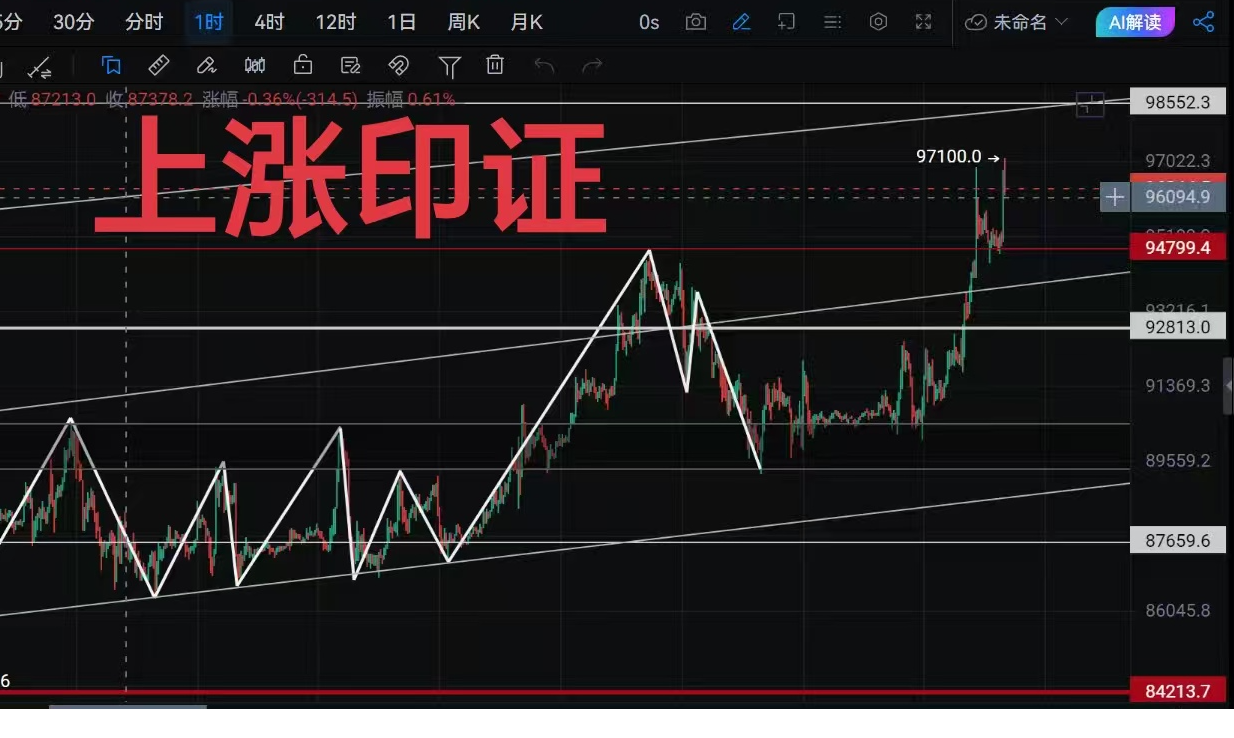
In the early hours of today, Bitcoin and Ethereum surged simultaneously, entering a consolidation phase during the day, with momentum gradually easing and short-term correction signals becoming increasingly evident. The evening session in the U.S. will be a key battleground, with the dual impact of institutional movements and speeches from Federal Reserve executives likely to trigger a directional breakout in the market. Attention should be paid to the strength of any pullback and the effectiveness of support levels.

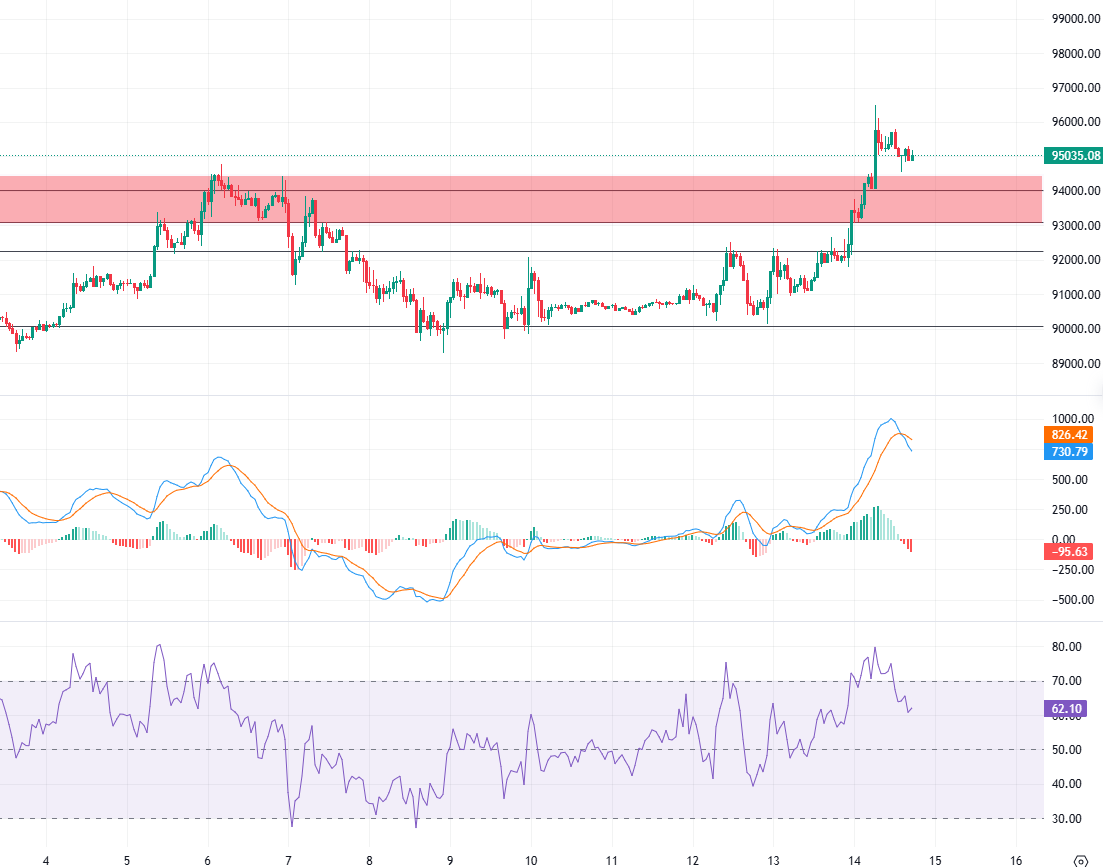
For Bitcoin, after the surge, it has been oscillating within a narrow range of 94800-95500 throughout the day, with the narrowing volatility highlighting the divergence between bulls and bears. From a technical perspective, the four-hour MACD momentum continues to shrink, and the RSI indicator has shown signs of turning down after entering the overbought zone, indicating a weakening short-term upward momentum. The hourly MACD has also expanded below the zero line, clearly indicating a short-term correction demand. The core support below focuses on the 94000-93000 area, which serves as the upper boundary of a previous large trading range and has completed the role reversal from "resistance to support" after breaking through. If a pullback stabilizes in this area, the subsequent rebound trend is expected to continue; however, if it effectively breaks down, this round of rebound will be declared over, and the price will likely further test the 92000-90000 area for support.
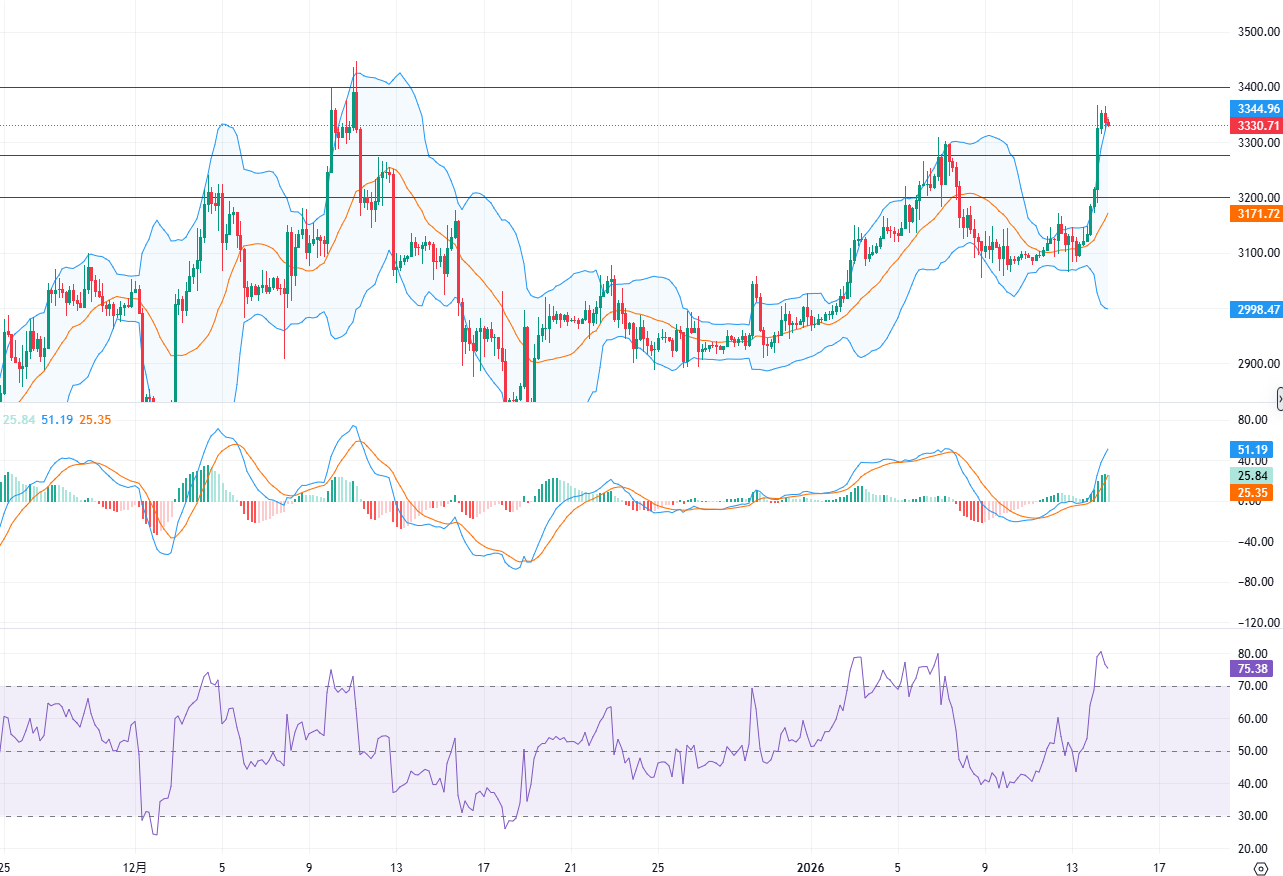
Ethereum's pullback strength is weaker than Bitcoin's, maintaining a sideways oscillation in the 3320-3350 range after the surge, with short-term buying providing some support for the price. Technical indicators show that the four-hour MACD has a demand for correction, and the hourly level has shown clear pullback signals, with the current pullback strength being limited or only temporarily supported by buying. The evening trend will be a key basis for judgment. The short-term support below needs to focus on the 3280-3240 area, which is also where last week's rebound high is located. This pullback after the breakout will directly test the strength of the support. If the support holds, the price is expected to initiate another rebound; if the support fails and breaks down, the price will fall back into the previous trading range, continuing the weak oscillation pattern.
It is important to emphasize that the market performance during tonight's U.S. session is crucial. The inflow and outflow of institutional funds and the policy signals released by Federal Reserve executives will directly affect the sentiment and capital flow in the cryptocurrency market, ultimately determining whether the trend continues upward or begins to correct downward.

Regarding the potential issues of Bitcoin and Ethereum positions caused by the current market situation, maintaining a calm mindset and avoiding emotional trading is the core prerequisite for resolving positions. The following expands on the ideas for resolving positions based on practical scenarios, for investors to flexibly reference according to their own holdings:
First, comprehensively assess the core elements of the position. It is essential to focus on three key pieces of information: First, the position size. If the position is light, one can wait for a pullback near key support levels to reduce or close positions; if the position is heavy, one should prioritize reducing positions in batches at lower prices to gradually lower risk exposure and avoid being passively pressured by heavy positions. Second, the buying price. If the buying price is relatively low, one should decisively set stop-loss orders to prevent trend reversals from expanding losses; if at a mid-level, one can temporarily observe and make decisions based on the evening's market direction; if at a high level, there is no need to rush to stop-loss, and one can wait for clear pullback signals before adjusting. Third, the trend matching degree. In a downtrend, one can patiently hold and wait for rebound opportunities; in a sideways market, if the loss is small, one should decisively exit to avoid repeated volatility risks; in an uptrend, regardless of position size, strict stop-loss measures should be implemented to prevent losses from expanding.
Second, make scientific choices regarding stop-loss and holding positions. Although stop-loss may lead to immediate losses, it is an effective means of avoiding greater risks, especially when the logic for opening a position disappears (e.g., breaking key support) or the trend clearly reverses; stop-loss is a necessary operation to protect capital safety. If choosing to continue holding, one should patiently wait for repair opportunities in line with the current trend, but be wary of the risk of "repeatedly being trapped" in a downtrend, avoiding losses from expanding due to a lucky mindset.
Third, standardize operations for averaging down and resolving positions in batches. The core purpose of averaging down is to dilute costs, but it must meet two prerequisites: First, wait for clear reversal signals, such as price stabilizing at key support levels, showing a strong rebound, or a pullback stabilizing after clear resistance; second, strictly set stop-loss for averaging down to avoid blind increases in positions leading to compounded risks. Resolving positions in batches is more suitable for investors with lower risk tolerance, gradually reducing position size through multiple small profits to lower operational pressure, such as reducing positions in batches during a rebound or partially closing positions when falling back to support levels, or using profits from other coins to hedge against trapped losses.
Fourth, strictly adhere to mindset and operational discipline. After being trapped in positions, it is easy to trigger anxiety; one should avoid delaying stop-loss opportunities due to a lucky mindset. Every operation should be based on a pre-set trading plan rather than driven by emotions, while also establishing a comprehensive risk control system to fundamentally reduce the probability of long-term losses.
It should be noted that the above ideas for resolving positions are only general references; actual operations should be adjusted based on one's own risk tolerance, holding period, and real-time market dynamics. If there are specific issues with trapped positions, further communication regarding position details can provide more targeted response suggestions.
This article is exclusively contributed by Jayne Crypto (real-time follow on the public account: Jayne Crypto), representing personal views only. Due to the timing of the article's release, the above views or suggestions may not be real-time and are for reference only; risks are borne by the reader. Trade with reasonable position control, and avoid heavy or full positions. Developing good investment habits is essential for a positive cycle!

Market fluctuations are time-sensitive; feel free to scan the QR code to follow the public account for daily market information and real-time communication.
Friendly reminder: This article is solely owned by Jayne Crypto (as shown in the image above); other advertisements at the end of the article and in the comments section are unrelated to the author! Please be cautious in distinguishing authenticity, and thank you for reading.
免责声明:本文章仅代表作者个人观点,不代表本平台的立场和观点。本文章仅供信息分享,不构成对任何人的任何投资建议。用户与作者之间的任何争议,与本平台无关。如网页中刊载的文章或图片涉及侵权,请提供相关的权利证明和身份证明发送邮件到support@aicoin.com,本平台相关工作人员将会进行核查。