Original: Dan Koe
Translation: Dr.Hash Cyber Hash
In the next 10 years, most skills may become irrelevant.
Everyone is saying this, but is it true?
However, if you are a person with "high agency," this is not a problem at all. Why? Because your success does not depend on any specific skill. You are not the type of person who focuses solely on one area. You do not limit yourself to the pursuit of high-paying jobs or prestigious degrees. You have your own vision and understand that in this era, you can learn any skill and acquire any knowledge to achieve the life you want.
Unfortunately, if your parents did not cultivate this "agency," they may not be able to pass it on to you. Unless you have gone through a deliberate process of learning and reflection, you still have a long way to go before you truly feel like you can "take control of your future."
Therefore, the most important skill is agency. This ability is crucial now, in ten years, and even until you pass away. Because if you can set the direction of your life, take the necessary actions to achieve your goals, and resist the various temptations and distractions of today's world, you will not face the risk of being "replaced" (even if you are replaced, it doesn't matter because you can quickly adapt to a new environment).
Next, I want to share five core points about "agency": what it is, why it is more important than ever, and how to practice it to achieve the life you want.
1. Agency: The Ability to Act Without Permission
"Only those who continuously resist can discover the truth, not those who comply."
— J. Krishnamurti
To understand what a person with high agency is like, we must first clarify what it is.
Agency is not blindly following others.
Compliance means your thinking still relies on societal standards.
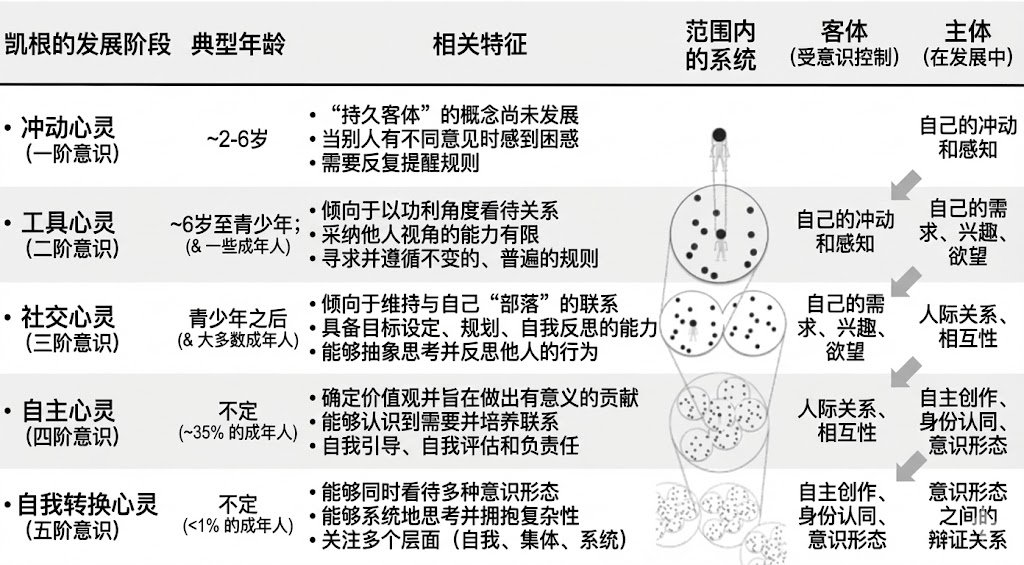
Compliance is a stage of cognitive development where your thinking is entirely influenced by culture, and the criteria for judging truth are "whether it is popular" and "whether others accept it," rather than based on your own direct experience or independent thought.
Think about it carefully; this may be the greatest threat to living a good life.
When you are born, your mind is like a new computer. While there is a basic operating system, there is no content on the hard drive. In the first 20 years of your life, you do not think independently. That’s okay; no one can do that from the start. No matter how independent you think you are, many times it is just another form of compliance.
Research shows that about 50% of the population is in a state of compliance, meaning half of the people lack a true cognitive foundation for agency.
Compliance stems from survival instincts. Humans need to survive not only on a material level (like animals reproducing genes) but also on a psychological level (spreading beliefs, viewpoints, and information).
If you are working for someone else, your agency in that field is very low because losing your job threatens your survival. So you must comply.
If you have deeply rooted beliefs that tie your identity to a specific religion or political party, your agency will also be limited because your sense of good and evil comes from culture rather than personal examination and exploration.
In the tech and business circles, everyone loves to talk about "high agency," but this is often just another form of compliance with popular culture.
Even this letter itself carries a degree of compliance. In a sense, we are all compliant.
So, what does true agency look like? How can we cultivate this ability within ourselves so that our emotions, finances, and life opportunities are not controlled by others?
(1) High agency individuals act without permission
"Having agency means you are the subject of the sentence, not the object. It is a tendency to take proactive action rather than passively waiting."
— Devin Erickson
Agency literally means "the state of being in action or operation."
When used to describe a person, it means "the tendency to initiate action toward achieving goals without external prompts, instructions, or permission."
However, when we observe successful people, we find that success is not just about taking action toward goals. Anyone can start a business, but that does not mean they will succeed. In fact, most people do not succeed because they lack a key element:
If something does not work, you reflect on the situation, make adjustments, and keep trying until you reach your goal.
So, autonomy is not just action; it is also a firm commitment to "iteration." Learning and practice go hand in hand. Making mistakes and correcting them, rather than retreating to a comfort zone because "this method doesn't work."
That's right, I'm talking about those who give up after writing for two weeks.
(2) High agency individuals treat life as an experiment
Low agency individuals often exhibit a "worker mentality."
They are assigned tasks, usually accompanied by some status or certification, which makes them crave recognition from others, leading to limited decision-making.
High agency individuals are the scientists of their own lives.
They have an idea.
They set their own goals. They build a hypothesis about how to achieve those goals. They test, adjust, research, and strive to get closer to their goals; they will fail many times. But because this is an experiment, failure is part of the process. They expect to fail because how else can they find effective methods without trial and error?
This is a major misunderstanding people have about success today. They are used to being promised by others, like a high-paying job or a business that can make them rich quickly.
They follow the steps they are supposed to take, but when they inevitably fail, they think it is impossible and blame anyone but themselves.
(3) High agency individuals believe in the value of difficulties
You want to become high agency because you believe these actions will bring positive changes to your life. You are trying to achieve a goal. Goals can be categorized into three types:
Simple goals: Things we do every day or things we can accomplish with existing skills.
Difficult goals: Things we cannot do now, but can eventually achieve if we acquire the right skills and resources.
Impossible goals: Either completely impossible in reality or things that seem impossible until we accomplish a series of "difficult goals."
Low agency individuals often have a distorted view of difficult goals.
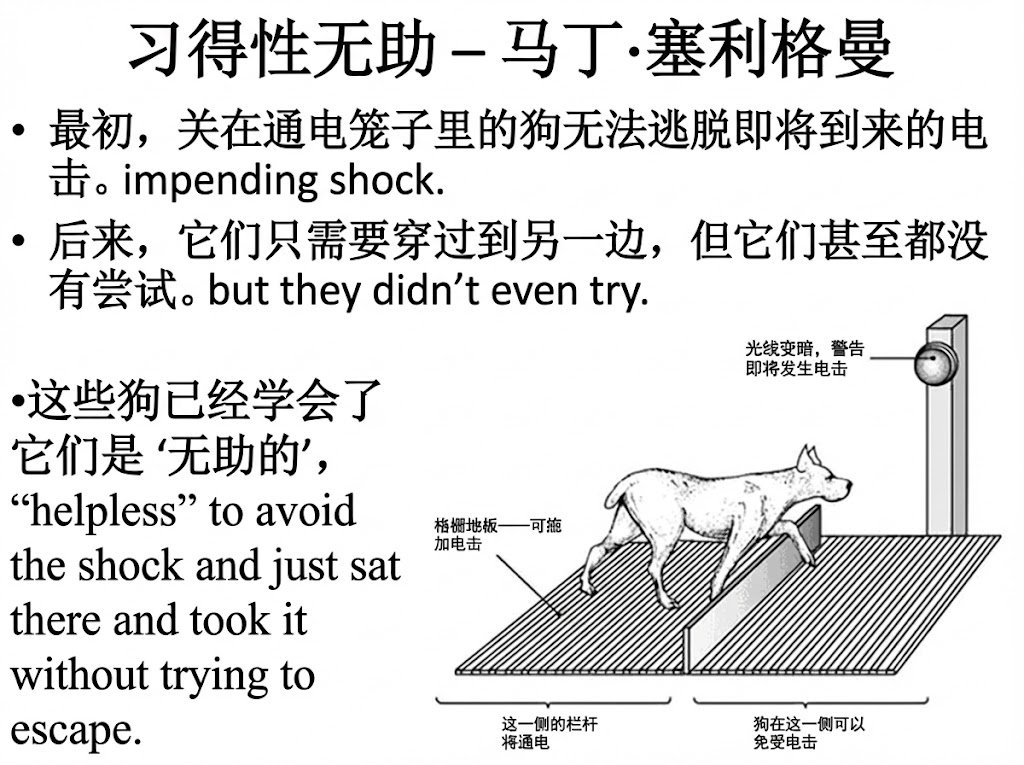
For example, in Seligman's dog experiment, dogs were exposed to unavoidable electric shocks, which made them feel a lack of control over their environment. Later, when they were placed in a situation where they could easily jump over a small wall to escape the shocks, the dogs did not attempt to do so. Even when the escape route was within reach, they just whimpered and endured the shocks. Similarly, achieving the life goals you want may be difficult, but you have been trained to believe that it is "impossible," so you do not even try. Your brain does not even allow you to consider that option. You silently endure the shocks of a predetermined life path.
However, agency can be practiced, but the specific steps will only make sense when you deeply realize how it applies to today's world.
2. AI is not a threat to high agency individuals
You can now access any knowledge you need to achieve any goal you want.
However… people still do nothing.
This is the key point.
Success is now easier than ever, but those destined not to succeed still will not succeed. It has never been about "access channels" or "equal opportunities," but about agency. High agency individuals will outpace others by ten times because they start acting without permission, and the barriers to action are almost nonexistent now. If you cannot achieve big goals due to a lack of money or resources, you can set a smaller goal as a stepping stone to acquire that money or those resources.
Everyone is worried about the same thing, and frankly, this fear is just because they cannot think clearly.
Take a typical example: everyone is shouting, "There is too much AI-generated content; human creators are doomed."
First of all, AI is a tool.
Tools need people to use them for specific purposes.
Of course, anyone can have AI generate a viral article or extract a thousand clips from a podcast and rank them by viral potential. But what’s the use? You can get a bunch of likes and followers, but can that be monetized? Is there loyalty? Are there the things that truly support a brand? Yes, you can have AI help with these, but then you are doing something entirely different. You are learning. You are orchestrating the realization of a larger vision, which is not much different from completing it yourself. You are still the decision-maker.
Of course, AI can generate beautiful images on command, but there is a world of difference between "having a vision and using AI as a tool to realize that vision" and "just wanting to quickly get an image." Many artists use AI to create drafts and then fine-tune them with Photoshop, injecting their style. Overall, AI reveals what is truly important in the creative process.
When you let AI make all the decisions for you (in other words, you let it guess what works based on thousands of opinions on the internet), there is no main thread. No theme. No personality. No vision. No context. This is the essence of a creator: a context creator, not a content creator. Without context, content is meaningless, and so is AI-generated material.
Aside from those mindless contents and meme images (though some are indeed funny), their only purpose is to keep you on the platform to be harvested by ads.
Got it?
99% of AI-generated content will directly become garbage because if the content is effective, its value is already there; whether it is AI-generated is fundamentally unimportant—because it is likely crafted by a human who has infused their personal context into it.
When building a business, you must have a brand mission; AI is just helping you execute it, and you need to iterate constantly.
When writing a book, you must control all the tiny details; beyond that, you also need to get people to read it (audience, marketing, sales); the book itself won’t do that.
When creating art, you must first have an idea that attempts to bring something into reality.
In other words, nothing has changed; people just dislike new things, and new things illuminate what has always been important. If you cannot create art with AI, it means you were never an artist to begin with. You are just good at using tools like Photoshop. Tools will be replaced. Vision and agency will not.
3. Why Generalists Will Win in the Age of AI
"The creation of schools is to enslave the smartest minds, keeping them narrow through the promise of specialized prestige, so they will not overthrow the true rulers."
Whenever I write about becoming a generalist, a versatile person, or having multiple interests, there are always people who jump out to tell me I am wrong (and they never provide any coherent arguments as to why being an expert is better).
They quote Shakespeare's classic: "A jack of all trades is a master of none." But they do not realize that this saying is taken out of context; the second half is: "But oftentimes better than a master of one."
Some may think Shakespeare was a professional playwright, but he was actually a generalist. He had to deeply understand human nature, language, classical literature, stagecraft, religion, philosophy, military tactics, music, navigation, the natural world, social structures, the body, and medicine, among other things… the list is long. He was an integrator, leveraging diverse interests as his advantage.
CEOs of Fortune 500 companies, Darwin, Jobs, or any visionary strategists who have achieved great success all have a specific vision, and then they learn and take the necessary steps to realize it. Do not confuse a specific medium or niche market with "specialization."
Experts cling to a single skill. Skills evolve and are replaced with technological advancements. We may not see it clearly now, but Photoshop has disrupted the art design industry. AI is doing the same, and those "experts" who rely on skills rather than being true artists will be very angry, as you have already seen. In contrast, generalists focus on goals and do what is necessary (including changing goals) to survive in any field.
Let me further break down this point: humans are creators of tools, and we can survive in any ecological niche because we can adapt.
If you put a lion in Alaska and a polar bear on the African savanna, they will die. If you put humans anywhere, they will build shelters, sew clothes, and hunt for food because they can plan and put those plans into action.
The reality is that to educate a large number of immigrant children in the 19th century (due to industrialization demands), the United States adopted the Prussian education model. This was not education at all; it was a weapon for mass compliance. It was designed to create obedient soldiers, compliant citizens, civil servants, and rule-abiding workers through compulsory attendance, teacher training, student testing, and grade classification. Sound familiar?
Society wants you to be simple, predictable, and easy to categorize.
Why?
Because this best serves their interests. This best serves the profits of organizations. If you understand systems theory, you will realize that systems evolve into forms that are most beneficial to the ultimate goals— in the case of society, to keep you weak and ignorant, whether this is intentional or not. This does not require conspiracy theories to explain; systems naturally shape themselves according to the desires of those at the top of the pyramid.
What should you do?
If slaves are expected to do one thing for their entire lives, thus closing their minds to learning more (specialization), then you, as a free individual, are destined to do many things in your lifetime. Resist the path that was set for you at birth.
Pursue an education based on interests. Use your abilities wisely.
4. The Five Abilities of Humans
While agency is good, we are still bound by the laws of physics.
This raises another significant concern that fluctuates with the hype cycles of AI:
Will general artificial intelligence make human intelligence irrelevant?
Let’s clarify our thoughts through a few questions.
Are human abilities limited or unlimited? As high-agency generalists, can we learn anything and do anything as long as our genes do not restrict us? We adapt and thrive in various fields through knowledge and tools. The fundamental question about human capability is: Are there limits to what we think about and how we think?
If the main limitations are the brain's processing speed and memory, can they not be enhanced? When AGI emerges, will this not become more likely? Will we not become AGI? Are we not already AGI? Are we not in the midst of superintelligence?
Speculating about these things is interesting, but that day is still some time away, so I want to focus on the near future.
Humans have five basic abilities. Can artificial intelligence make these abilities irrelevant?
1. Calculation (Mental Level)
Is there a limit to our computational abilities? No, because once you have a general-purpose computer in your hand, calculating anything is just a matter of time and memory. We already have this. Even if AGI or aliens possess this, they do not exceed our advantages in computational reserves.
You might say AGI calculates faster, but that does not accelerate the process of physical transformation, which is the process of building things. You can have an idea to build a particle collider, but you still need resources to construct it.
2. Transformation (Physical Level)
Transformation is creation. With the right knowledge, we can turn raw materials into rockets.
Human hands and bodies seem particularly adept at creating anything according to specific operational sequences. We have built spacecraft and telescopes. This means we can create "tools for making tools." We are generalists, creating tools to adapt to any environment. We are not limited to a single ecological niche like animals.
The question is: Are there limitations when these basic operations are linked together in the right way?
The answer is also no. If humans can remotely control a gorilla, given enough time, that gorilla could also follow the steps to build a rocket. Not that it could do it alone. Imagine if Elon Musk were controlling that gorilla. What would he do?
The key is time. Transformation takes time, and the singularity will not change that, just as the Enlightenment or the Big Bang did not change that. Time is a compression algorithm that prevents everything from happening simultaneously. The Enlightenment and the Big Bang clearly did not directly send rockets into the sky. In other words, AGI may calculate faster than our brains, but that does not mean it can produce physical objects faster than humans. You can have an idea for building a rocket, but you still need to acquire resources to build it.
So far, concerns about AGI seem to stem from a fundamental misunderstanding of reality itself.
After calculation and transformation, there are mutation, selection, and attention, which relate to exploring the "space of ideas" (i.e., the unknown) or how we create knowledge. We can calculate and transform, but are there limitations on the knowledge that enables us to do so?
Knowledge has two functions: The first is to make specific things happen, preferably good things rather than bad. The second is to capture patterns in reality.
This allows us to efficiently store information so that we do not have to start from scratch every time. We understand macro concepts, such as sunrise and sunset, and the changing of seasons.
Without this understanding, our lives would fall apart. Capturing patterns allows us to plan based on proximity. We know we can freeze to death in cold environments, so we use knowledge like "jackets" and "hotels" to stay warm while traveling.
Imagine the space of ideas (or the unknown) as a cosmic map with bright and dark spots. The bright spots are areas you have explored. The dark spots are where your potential lies.
This map is the surface area of ideas that can be discovered and tested against reality for their effectiveness. When the results do not bring you closer to your goals or take you further away from them, the problem is exposed, and you must make corrections toward your goals.
3. Mutation
Is there a limit to the number of new ideas we can come up with to survive and achieve our desires?
With calculation, we can traverse the entire space of ideas. With agency, we can take any step in that space and ultimately (after countless bad ideas) accidentally discover a good idea. Through creation, we can move in unique ways, such as flying over a forest instead of trudging through it.
Thus, we can understand anything, create anything, and discover an infinite number of new ideas to solve infinite problems. AGI can do these things too. We are all bound by the laws of nature, but any possibility within those laws is within reach.
4. Selection
We can come up with any idea, but can we find good ideas?
The potential problem is that without learning from mistakes, it is difficult to achieve cumulative progress. If you want to build an electric car but have to start over from building a gasoline car, that is not fun at all. As a species, we would not advance much that way.
As a general control system, we can navigate the space of ideas more efficiently, avoiding getting lost. We will correct mistakes. There is no fundamental difference in this regard.
5. Attention
Another aspect of humanity that is often taken for granted is our ability to shift focus by changing perspectives.
When problems arise, where does your attention go? If you want to build a rocket, is praying effective? Or can you switch lenses and view the situation in a way that allows you to perceive opportunities?
While this is a significant human issue (paradigm lock and attachment to ideologies), when problems arise, we do indeed have the ability to change the direction of our attention. We can put on spiritual lenses to seek calm or scientific lenses to seek progress.
Adopting a purely spiritual philosophy is no different from being an incomplete system that cannot solve certain problems. Spirituality is a great tool, but it is not the solution to everything.
5. How to Truly Practice Agency
In daily life, we usually take means for the sake of a purpose. But in games, we can take purposes for the sake of means. Playing games can be a reversal of motivation in ordinary life.
— C. Thi Nguyen, "Games: Autonomy as Art"
You develop agency by practicing the agency of others until you can create your own. In other words, you follow the rules until you can create your own rules, which means the highest form of agency is knowing when to break the constraints.
Overall, agency is not a trait but an art.
The best way to observe this art is in games.
Painting allows us to record visuals.
Music allows us to record sounds.
Stories allow us to record narratives.
Games allow us to record agency.
When playing a game, you almost always start with a goal: to win the game. From there, you have various tasks, but these tasks must be executed in an order based on experience. You start at level 1, progress to level 2 and beyond, and once you reach a higher level, you can look back and apply all the knowledge and skills to design how to achieve the next goal.
The higher the level, the more interesting life becomes because you can choose the next challenge, which is significant yet daunting. It is no longer assigned to you like in the beginner tutorial phase. This is precisely why you feel life is out of control. You level up to 10 (childhood, school, work), and then you get stuck. The game is no longer fun because the game designers do not benefit from you leveling up further, so they incentivize you to stay there. You get trapped in a cycle of boredom and anxiety because all tasks are repetitive and mindless, and any further challenges overwhelm you because you do not know how to learn. The most important boss battle in your life is: following your own path.
How to Start Practicing?
First, you just need to find a goal to pursue.
Any goal will do. Because no one really knows what they want. Instead, they have a deep understanding of what they do not want and use that as a future goal. From there, you have a direction to move forward. Set a goal to make that direction more actionable, and then execute the following steps:
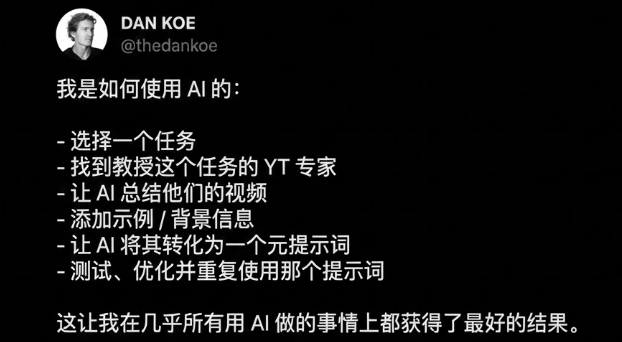
Research the processes of others' successes. You can find these on YouTube, social media, courses from well-known creators, or mentors.
Try various methods. Implement the processes you have learned and see if you can achieve results. (By the way, most methods may not work for you, but that’s okay).
Identify patterns, principles, and key points. Record the most important parts of everything you have tried. These are usually the keys to achieving results.
Create your own process. Adjust what you have learned according to your unique lifestyle and circumstances.
Teach others. Teachers learn more than students, and if you cannot explain it in a way that benefits others, it means you have not truly understood it.
This is also why I love social media.
First, that is where the attention is. You cannot build a lifelong career through radio broadcasts or by mailing handwritten letters to potential clients. Clearly, you need to write content.
Besides serving as a low-barrier, low-risk, low-cost medium to do what you want to do, learning and agency are built into it. This is the greatest game of modern times.
You can learn the agency of others through their content, guides, and courses.
You can experiment in public and receive direct feedback—you can quickly identify what works and what does not.
You are forced to learn a set of future-oriented skills.
You must truly figure out what you want to talk about on the internet.
This is your opportunity to decide how to use that information.
免责声明:本文章仅代表作者个人观点,不代表本平台的立场和观点。本文章仅供信息分享,不构成对任何人的任何投资建议。用户与作者之间的任何争议,与本平台无关。如网页中刊载的文章或图片涉及侵权,请提供相关的权利证明和身份证明发送邮件到support@aicoin.com,本平台相关工作人员将会进行核查。


