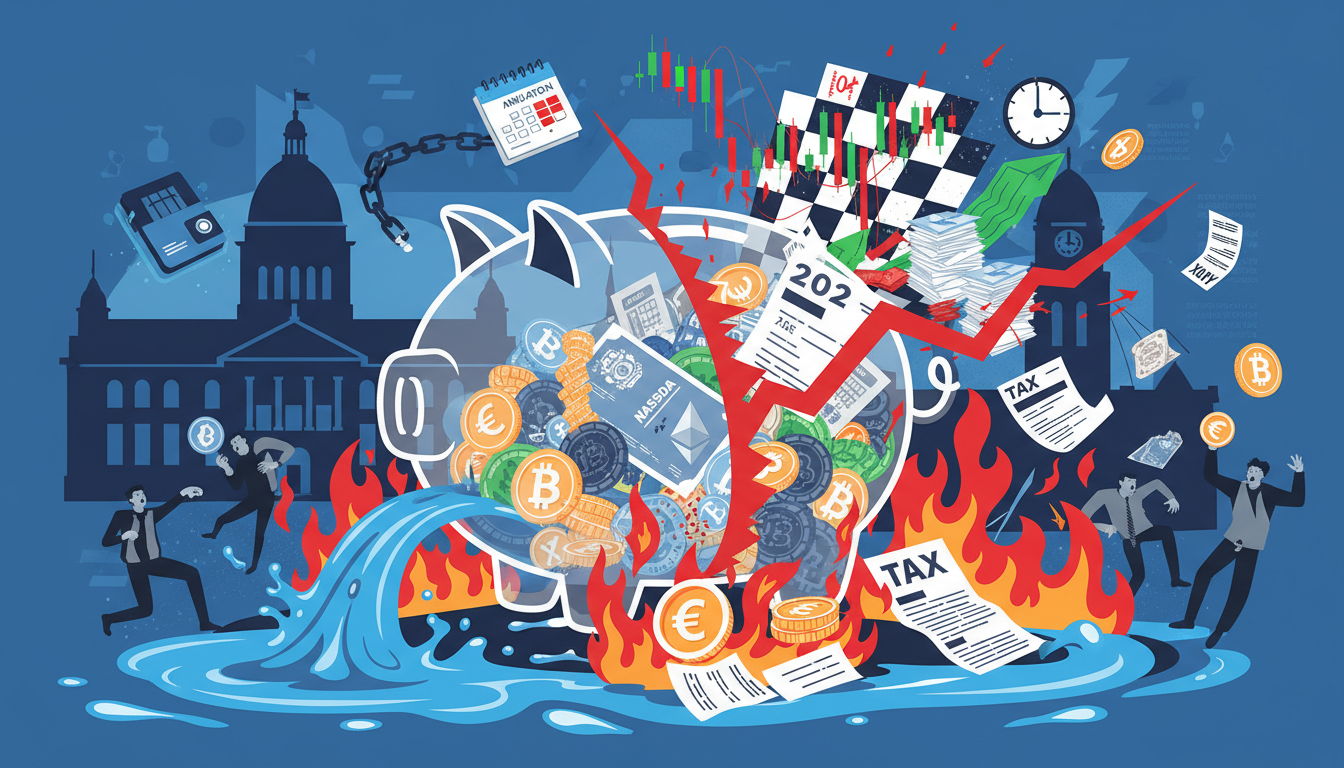
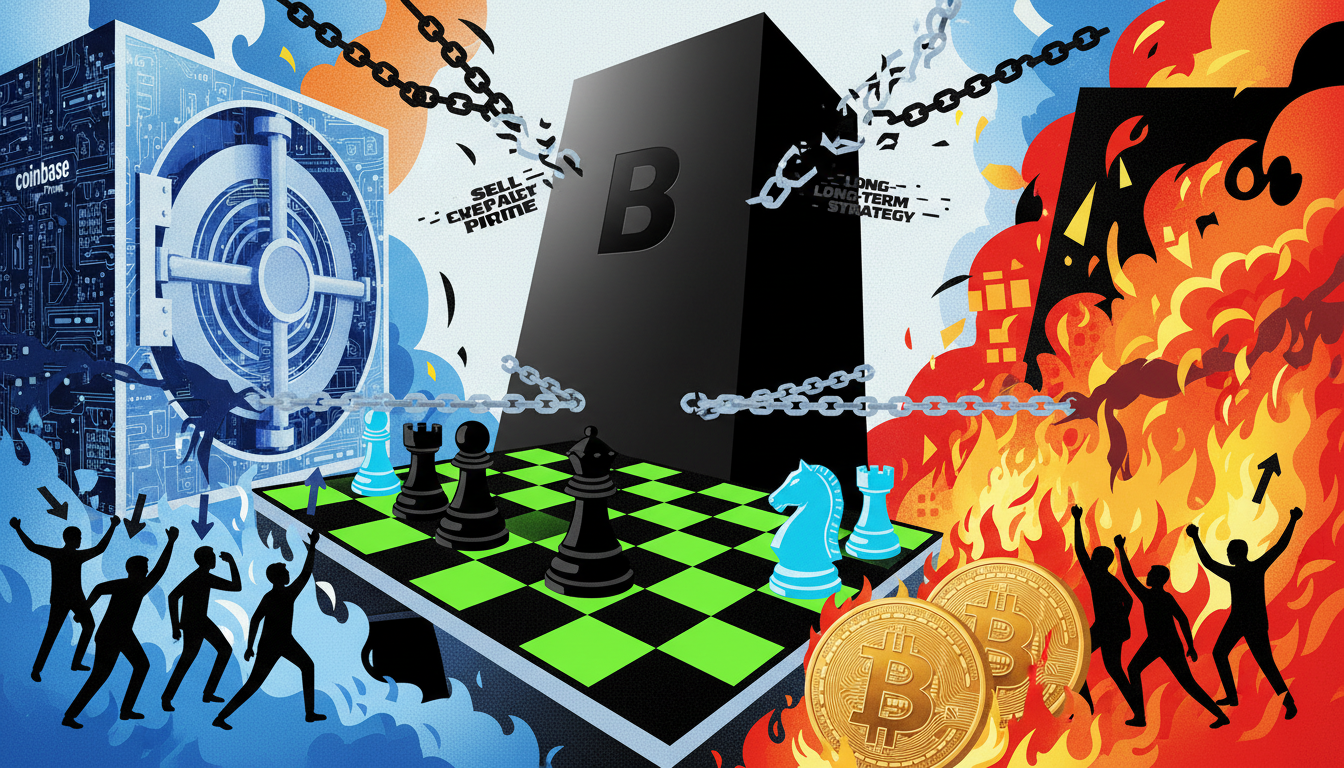
On January 22, 2026, at the Davos Forum, three narrative threads from the crypto world were simultaneously brought into the spotlight: on one side, CZ was intensively interviewed on the sidelines, attempting to reshape industry confidence with "three major development directions"; on another side, the Gwangju District Prosecutor's Office in South Korea revealed a loss of approximately 70 billion won (about 48 million USD) in Bitcoin custody, severely undermining regulatory credibility; and on the third side, Wall Street and traditional clearing networks quietly placed bets on asset tokenization and Bitcoin yield products. Behind these three scenes lies an increasingly sharp institutional conflict between the fractional reserve banking system and on-chain settlement: one side supports credit expansion with an illusion of liquidity, while the other promises "instant redemption" with verifiable balances. When regulatory trust was pierced by events, Meme assets plummeted over 80% within 24 hours, and a whale increased its short position by 374 BTC (liquidation price around 110,000 USD) at high levels, market sentiment was simultaneously pulled by both faith and fear, making the entire crypto narrative feel even more tense in the cold winds of Davos.
CZ Discusses Three Crypto Pathways in the Snow
● Direction Overview: In his public statements at Davos, CZ summarized the "three pathways" for crypto as asset tokenization, payment and settlement infrastructure, and the evolution of protocols and applications for the new network economy. He did not delve into technical details on-site but emphasized that the underlying crypto ledger can carry digital mappings of real assets, serve as a channel for cross-border settlement and value transfer, and provide native incentives and ownership carriers for future more complex human-machine networks and machine economies. He views these three as the main framework for the next cycle of the industry.
● Breaking Through Fractional Reserves: CZ once again targeted the fractional reserve banking system, pointing out that the frequent liquidity crises in the traditional banking system stem from the essence that "deposits do not equal instant withdrawal." For comparison, he mentioned that Binance completed approximately 14 billion USD in equivalent withdrawals within a week in December 2023, while the platform continued to operate normally. He used this to demonstrate that if crypto exchanges adopt full or high reserve ratios, combined with on-chain verifiable reserves, they would outperform banks under extreme pressure. He attempted to reshape the market's perception of the payment capabilities and transparency of centralized crypto platforms through this case.
● Long-term Sovereign Narrative: When asked how "crypto can enter the sovereign and institutional level," CZ mentioned discussions with 12 governments regarding asset tokenization but did not disclose the names of the countries or specific progress. This vague number indicates that regulation and state machinery have already placed tokenization on the agenda, while also reminding the market that this is more like a slow variable requiring years of negotiation, pilot projects, and legislative games, rather than a short-term benefit that can be immediately reflected in coin prices. Asset tokenization is packaged as a "long-term story crossing sovereign boundaries," coexisting with uncertainty and imaginative space.
From NYSCE Rumors to Visa
● Traditional Exchanges' Tokenization Trials: The rumors about the NYSCE preparing a tokenization platform provide an imaginative anchor for traditional financial narratives at Davos. If these established exchanges indeed approach crypto assets through tokenization, they can map familiar securities and fund products onto the blockchain while leveraging their licenses and compliance experience to attract institutional funds. However, research briefs clearly state that whether the platform will launch and how it will be designed remains an information gap; for now, it can only be seen as a signal of traditional exchanges "evaluating and testing the waters," rather than a quantifiable progress report.
● From Passive Holding to Active Design: Compared to vague rumors, the tokenized Bitcoin yield fund launched by Nomura's Laser Digital is a reality. This product no longer simply buys and holds BTC but processes the Bitcoin yield curve through financial engineering and packages it in tokenized form for qualified investors. This means traditional financial institutions are beginning to actively design yield structure products based on BTC, shifting from passive Bitcoin allocation to "using Bitcoin as material for interest rates and volatility," which will have a far greater impact on market structure than early trust-based holdings.
● Clearing Network Backend Integration: The brief mentions that the claim that Visa and Mastercard may use on-chain assets for settlement in the backend remains unverified information, but it is enough to indicate that traditional clearing networks are facing dual pressures of cost and efficiency. When licensed card organizations maintain fiat pricing and user experience in the front end but consider using on-chain assets to optimize cross-border clearing and fund turnover in the backend, the so-called "on-chain" becomes a form of implicit integration at the infrastructure level. This type of "backend integration" does not require users to understand crypto details but may quietly reshape the global payment and clearing cost structure within a few years.
The 70 Billion Won Loss in South Korea
● The Contrast of Official Pitfalls: On the same timeline, the news of the Gwangju District Prosecutor's Office's loss of approximately 70 billion won (about 48 million USD) in Bitcoin custody creates a strong contrast. According to existing reports, this batch of BTC, originally intended for case seizure and preservation, was held on a platform later proven to be a "fraud website," resulting in the asset's evaporation. Technical implementation details have not been disclosed, but the outcome is shocking to the market: the law enforcement agency, which should have the power to investigate and hold accountable, became a victim in the custody of on-chain assets, exposing the official's lack of experience and procedural flaws in crypto operations.
● Internal Injury to Regulatory Credibility: When even the prosecutorial agency cannot properly safeguard BTC, the market will naturally question whether the various "risk warnings" and custody guidelines issued to ordinary investors are truly reliable. This incident, with losses amounting to tens of millions of dollars, is not only an operational error but also a stress test of regulatory credibility: if regulators themselves have not established a qualified custody, auditing, and risk control system, then their scrutiny and restrictions on the industry will be hard to convince the public, and may even be seen as "outsiders managing insiders."
● Two Possible Regulatory Response Paths: From a regulatory perspective, such events often push the wheels to roll in one of two directions: first, using this as a reason to further increase crackdown and regulatory intensity, compressing gray areas through stricter licensing requirements and cross-border cooperation; second, being forced by reality to begin building more professional official custody and auditing infrastructure, introducing third-party professional institutions, and strengthening multi-signature and tiered permission management. Specific provisions and policy statements are still undecided, but it can be expected that South Korea and other observing countries will treat the Gwangju loss as a "negative teaching material."
Meme Coin Plunge and Whale Shorts
● The Cliff of Emotion Pricing: Amid the layering of macro and regulatory narratives, the speculative segment in the over-the-counter market experienced a roller coaster during Davos. The RALPH Meme coin plummeted over 80% within 24 hours, with media commentary bluntly stating, "price volatility is huge and highly dependent on market sentiment." This token, which has almost no fundamentals, is valued more by public opinion flow, social dissemination, and short-term capital games; once the emotional inflection point appears, the selling pressure lacks support, and the price naturally experiences a cliff-like collapse, becoming a significant amplifier of market panic.
● Whale's High-Stakes Bet: On the other hand, on-chain and exchange monitoring data show that a certain whale address holds 374 BTC in short positions, with a liquidation price around 110,000 USD. At the current price level, this means that the address is clearly betting on a price decline at high levels and is willing to bear significant volatility risk. Such large leveraged short positions inherently signal market sentiment: a portion of substantial funds believes there is ample room for a pullback above the current price, and once their positions are widely discussed in the market, it can easily trigger a chain reaction among retail investors questioning "whether to reduce positions early."
● The Cycle of Emotion—Leverage—Liquidation: When high-leverage derivatives and Meme speculation narratives combine, they form a typical "emotion—leverage—liquidation" vicious cycle. Macroeconomic uncertainty, regulatory noise, and official pitfalls have weakened long-term confidence, with the Meme segment collapsing first on the emotional side, triggering initial declines; the downward trend then triggers margin calls and forced liquidations of large leveraged positions, further amplifying volatility; and the liquidation waterfall, in turn, reinforces pessimistic expectations, making short-term capital more inclined to short or wait, causing the entire market to slide from "greed" to "extreme fear" in a short time, with prices and narratives being stretched tighter.
Regulatory Passports and the New AI Era
● Concept of Cross-Border Compliance Identity: When discussing future regulatory frameworks, CZ proposed the concept of a "regulatory passport," attempting to provide a cross-border identifiable compliance identity for crypto businesses and assets in the reality of multiple countries' capital controls. This concept remains at the vision level, with details of institutional design, issuing entities, and applicable scope still to be verified. However, its core logic is clear: using a set of compliance credentials recognized by multiple countries to reduce the costs of duplicate reviews and legal uncertainties, allowing compliant entities to flow more smoothly across multiple jurisdictions.
● Tension Between Financial Sovereignty and Capital Flow: Once a mechanism similar to a "regulatory passport" is implemented in certain countries or regions, it will inevitably create tension with existing capital controls and financial sovereignty in various countries. On one hand, the demand for cross-border capital flow due to asset tokenization is real, as enterprises and high-net-worth individuals wish to enhance the mobility of funds under legal premises; on the other hand, sovereign nations are naturally wary of capital outflows and systemic risks, and cannot easily outsource the review power entirely to a multinational "passport." The key to future games lies in how to introduce more efficient cross-border compliance channels without undermining local regulatory authority.
● Machine Economy and New Settlement Media: From a broader perspective, concepts such as AI Agent native currency have begun to emerge in the market, attempting to design a dedicated settlement medium for a future highly automated economy characterized by frequent transactions between machines. The brief clearly states that the theoretical basis and realization path of such concepts still have significant uncertainties, making it difficult to make in-depth judgments from technical routes, consensus mechanisms, or economic models. However, the signal it releases is very clear: if future economic participants are no longer limited to humans but include large-scale autonomous intelligent agents, then the existing payment and settlement systems will likely require a structural reconstruction.
The Interwoven Narratives of 2026
This "snow drama" at Davos violently stitched together three narrative threads that were originally evolving separately: one is the crypto institutional confidence represented by CZ, emphasizing full (or high) reserves, on-chain verifiable reserves, and the long-term opportunities of asset tokenization; the second is the regulatory fragility exposed by the South Korean prosecutorial case, reminding the market that "officials can also stumble on-chain," and compliance and custody do not inherently equal safety; the third is that traditional institutions and Wall Street, through tokenized Bitcoin yield funds, large BTC short positions, and potential backend integration of clearing networks, silently completed their own accumulation and hedging layouts, building new yield and risk structures on top of price volatility.
In the short term, the Meme coin plunge and high-leverage shorts will continue to amplify volatility, and the emotional fissures exposed during Davos will require more time to repair. However, from a longer cycle perspective, the main line still revolves around the tug-of-war between "sovereignty and protocols" and "compliance and innovation": sovereign nations and regulatory agencies are reluctant to relinquish control while having to face the technological spillover of protocol layers and tokenized assets; innovators are trying to find passports within the system while being forced to accept constraints of custody, auditing, and transparency. This structural contradiction will become the most important background noise in the crypto industry in the coming years.
Looking ahead to the next year, several key observation points are worth continuous tracking: first, whether various tokenization projects will see real implementation and large-scale adoption, rather than remaining at the white paper and pilot stage; second, how countries will adjust their regulatory frameworks and custody standards following the official asset custody turmoil, and whether this will promote the construction of more professional infrastructure; third, whether AI and payment giants will truly integrate on-chain settlement into the backend, thereby transforming the global payment and clearing network with minimal user awareness. The answers will not be revealed in the next market fluctuation, but Davos has already set the stage for this long-term game.
Join our community to discuss and grow stronger together!
Official Telegram community: https://t.me/aicoincn
AiCoin Chinese Twitter: https://x.com/AiCoinzh
OKX benefits group: https://aicoin.com/link/chat?cid=l61eM4owQ
Binance benefits group: https://aicoin.com/link/chat?cid=ynr7d1P6Z
免责声明:本文章仅代表作者个人观点,不代表本平台的立场和观点。本文章仅供信息分享,不构成对任何人的任何投资建议。用户与作者之间的任何争议,与本平台无关。如网页中刊载的文章或图片涉及侵权,请提供相关的权利证明和身份证明发送邮件到support@aicoin.com,本平台相关工作人员将会进行核查。