Since the beginning of 2026, the international gold market has experienced explosive trends. As of the time of writing, the spot gold price has surpassed the significant threshold of $4965 per ounce, setting a new historical peak, with an increase of over 15% since the beginning of the year.
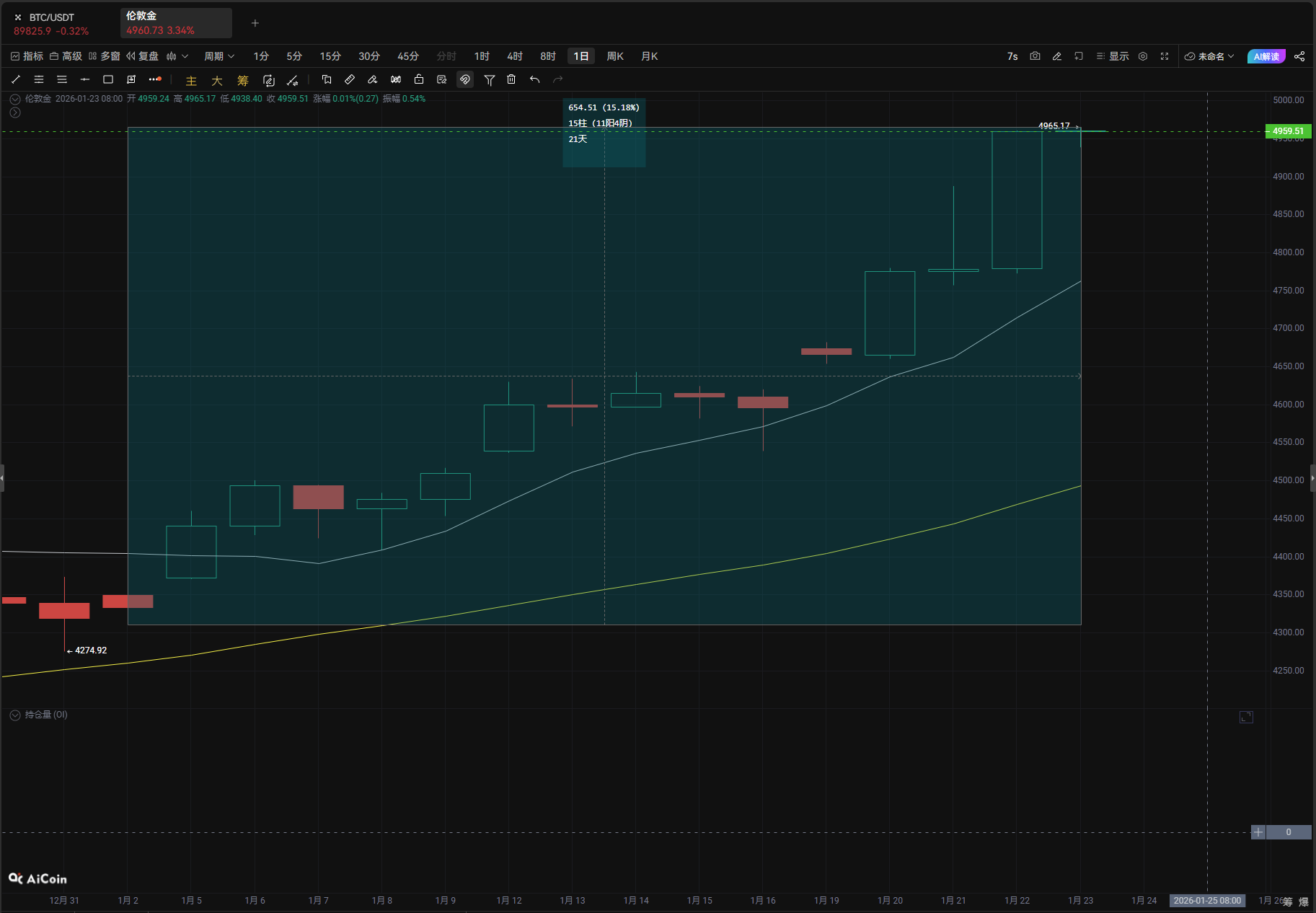
This surge in gold prices is not an isolated event; it is underpinned by a crisis of trust in dollar assets triggered by escalating geopolitical tensions between the US and Europe, the market uncertainties stemming from the erratic policies of Trump, and the ongoing accumulation by global central banks and ETFs. Together, these factors have laid a solid foundation for a gold bull market. In the context of weakening global economic recovery momentum and rising undercurrents of geopolitical conflict, the market has dramatically amplified gold's safe-haven attributes and value storage functions.
US-EU Disputes Ignite a Wave of Dollar Asset Sell-offs
The US and EU's struggle over the sovereignty and interests surrounding Greenland, a Danish autonomous territory, has become the core trigger for recent upheavals in the global capital markets. Although US President Trump suddenly announced on January 21 that he would withdraw the threat of tariffs against eight European countries, claiming a framework consensus had been reached with NATO Secretary General on the Greenland agreement, the weeks-long standoff has already caused irreversible damage to market confidence. The European response has continued to escalate, with the European Parliament announcing on January 20 the freezing of the approval process for the US-EU trade agreement, and core countries like Germany and France clearly stating they would initiate a tariff retaliation list and consider using "trade rocket launchers" as tools against coercion.
The geopolitical tensions have directly impacted the dollar asset market, with Denmark firing the first shot in the sell-off of US Treasury bonds. On January 20, Denmark's "Academic Pension Fund" announced it would sell all of its $100 million holdings in US Treasuries by the end of the month, citing "the poor fiscal condition of the US government." Although the fund denied a direct connection to the Greenland dispute, the market widely interpreted it as a covert counterattack against US geopolitical pressure. Subsequently, another Danish pension fund, PBU, confirmed it was also selling US Treasuries.
According to Deutsche Bank's estimates, European countries hold about $8 trillion in US bonds and stocks, nearly double the total held by other regions globally. If geopolitical conflicts escalate into a full-blown trade war, a reduction in dollar asset allocations by the EU could deliver a fatal blow to the US Treasury market.
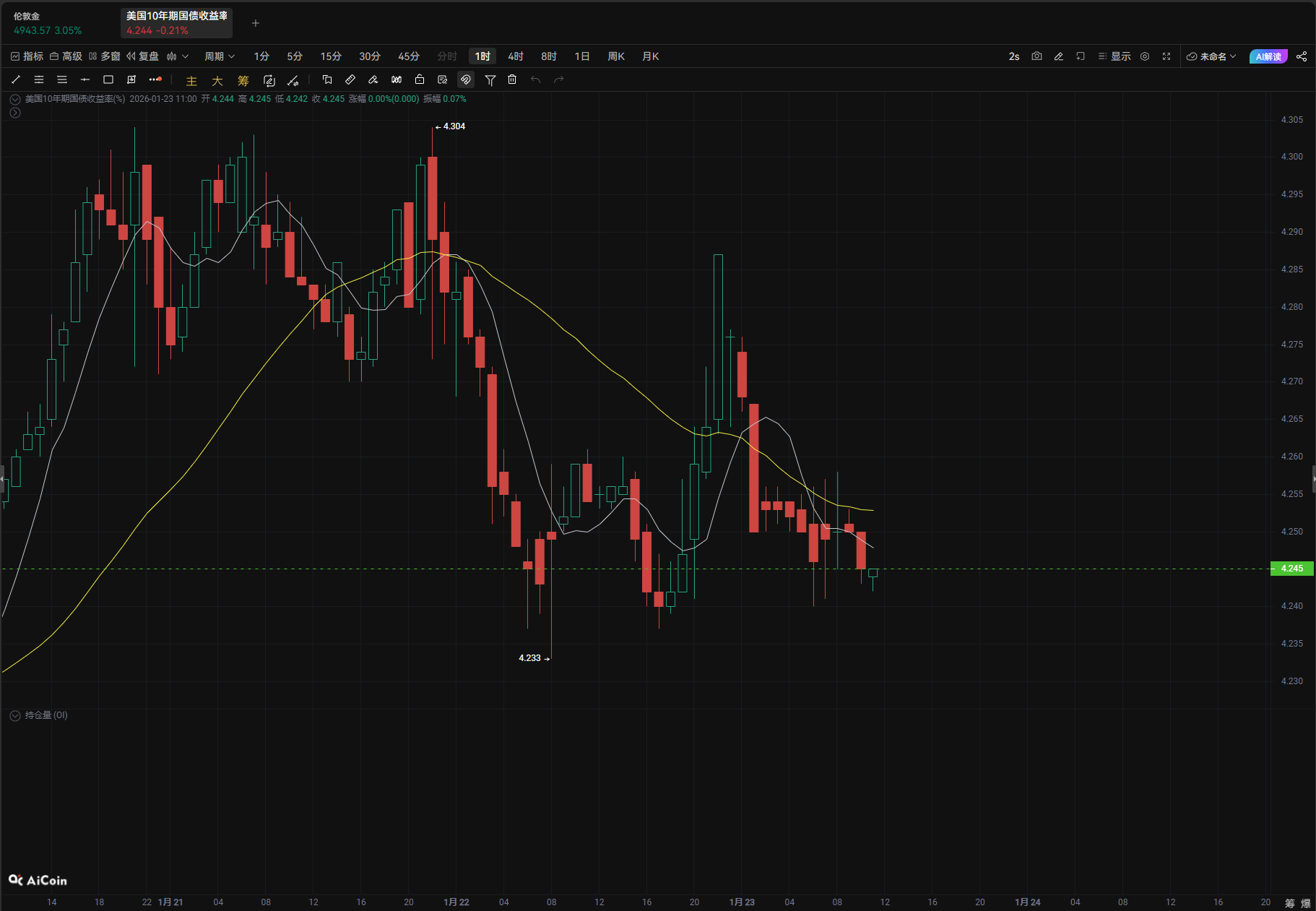
As a result, on January 22, US Treasury yields collectively fell, with the 10-year Treasury yield dropping by 5.16 basis points to 4.241%. The attractiveness of dollar assets continued to weaken, accelerating the flow of funds into safe-haven assets like gold.
Trump's Game Theory Amplifies Market Risk Aversion
The erratic policy style of the Trump administration has become an "unstable factor" disturbing global markets. Although the withdrawal of the tariff threat against Europe has temporarily eased market tensions, a review of his administration's trajectory shows that the extreme pressure of "taxes if the island is not sold" to the sudden shift to a conciliatory stance has itself exacerbated the chaos in market expectations.
Market analysts generally believe that Trump's compromise is more about fearing the impact on capital markets—his initiated tariff wars have previously led to a "triple kill" of US stocks, Treasuries, and the dollar. With midterm elections approaching, maintaining stability in financial markets has become a significant consideration for him.
According to insiders, the framework of the Greenland agreement reached between the US and EU does not involve a transfer of sovereignty but includes terms for the US to deploy missile defense systems in Greenland, update defense agreements, and expand military presence in the Arctic region, indicating that the US-EU geopolitical competition over Arctic interests will continue for the long term.
Moreover, the Trump administration's hardline stance on trade policy and geopolitical intervention has not fundamentally changed, and its tariff stick against other countries could still drop at any time. This long-term uncertainty has become one of the core logics supporting gold's safe-haven demand.
Goldman Sachs has clearly pointed out in its research report that hedging positions against global macro policy risks will remain stable, and core risks such as fiscal sustainability are unlikely to be fully resolved in 2026, which will continue to support gold's safe-haven buying.
Central Banks and ETFs Create Bullish Support
If geopolitical and policy factors are the "catalysts" for the surge in gold prices, then the ongoing strong fundamental support is the "ballast" for the continuation of the bull market. The normalization of gold purchases by global central banks has become the most solid pillar of gold demand.
Goldman Sachs predicts that in 2026, global central bank gold purchases will average 60 tons per month, with emerging market central banks continuing to increase their gold allocations due to the need for diversification of foreign exchange reserves, representing a qualitative improvement from the monthly average of 17 tons before 2022.
The explosive growth of private sector investment demand has further amplified the rise in gold prices. Global gold ETF holdings have continued to climb, achieving net inflows for the seventh consecutive month in December 2025, with an inflow scale of $10 billion that month, and total assets under management growing by 5%. As the world's largest gold ETF, SPDR Gold Shares saw its holdings rise to 1085.67 tons on January 16, reaching a two-year high with a year-on-year increase of 24.9%. Goldman Sachs analysis indicates that since early 2025, Western ETF holdings have increased by about 500 tons, far exceeding model predictions based on Federal Reserve rate cuts, making the diversification of gold allocations by the private sector an irreversible trend.
The favorable macroeconomic environment further strengthens gold's investment value. The market generally expects the Federal Reserve to implement a 50 basis point rate cut in 2026, and during a rate decline cycle, the attractiveness of gold as a non-yielding asset will continue to rise. Additionally, issues such as insufficient global economic recovery momentum and high fiscal deficits in major economies are also driving investors to view gold as a core tool for hedging against inflation and economic recession risks. With multiple demands converging, the gold market has formed a resonance buying pattern of "central banks + ETFs + retail investors," providing strong momentum for gold prices to break through $4965.
Bull Market Continues but Short-term Volatility Must Be Watched
Regarding the future trend of gold, mainstream institutions generally hold an optimistic view. Goldman Sachs, in its latest report on January 22, raised its December 2026 gold price forecast from $4900 to $5400, expecting gold prices to rise by 13% from current levels by the end of the year. The core logic behind this is that private sector gold holdings for hedging policy risks will not be liquidated in 2026, which will continue to elevate the central tendency of gold prices.

However, there are potential risk points in the market. Goldman Sachs warns that if the perception of global fiscal and monetary policy risks significantly decreases, leading to the liquidation of macro hedging positions, it could trigger a short-term correction in gold prices. Additionally, factors such as a temporary easing of US-EU geopolitical tensions and a rebound in the dollar index could also exert short-term pressure on gold prices.
Nevertheless, from a long-term perspective, trends such as the restructuring of the global geopolitical landscape, the weakening of dollar hegemony, and the diversification of central bank monetary systems will provide long-term support for the gold bull market.
Industry experts point out that the recent breakthrough of gold prices to a historical high is essentially an inevitable result of the decline in market risk appetite and the reshaping of asset allocation logic during the reconstruction of the global economy and geopolitical order. In an era where uncertainty has become the norm, the strategic value of gold will further stand out, and its price central tendency is expected to continue to rise, but investors need to rationally view short-term volatility and focus on long-term allocation value.
Join our community to discuss and grow stronger together!
Official Telegram community: t.me/aicoincn_
_AiCoin Chinese Twitter: https://x.com/AiCoinzh
Group chat - Wealth Group:_
https://www.aicoin.com/link/chat?cid=10013
The above information is compiled based on online sources and does not represent the views of the AiCoin platform. It does not constitute any investment advice. Readers should exercise their own judgment and manage financial risks accordingly.
免责声明:本文章仅代表作者个人观点,不代表本平台的立场和观点。本文章仅供信息分享,不构成对任何人的任何投资建议。用户与作者之间的任何争议,与本平台无关。如网页中刊载的文章或图片涉及侵权,请提供相关的权利证明和身份证明发送邮件到support@aicoin.com,本平台相关工作人员将会进行核查。


