On January 23, Eastern Standard Time, Grayscale submitted its first spot BNB ETF application to the SEC, throwing a regulatory "test stone" into a market with low sentiment. At the same time, on-chain data and institutional reports provided complex signals: on one hand, DDC Enterprise increased its Bitcoin holdings to 1,583 BTC, with a paper yield of about 33.8%, while on the other hand, the proportion of respondents in a Coinbase institutional survey who believe the market is in a bear market rose to 26%, reaching a six-month high. Meanwhile, regulatory and security incidents from France intertwined with the DeFi incentive wave: approximately 50,000 customer data from Waltio was leaked and ransomed, and dYdX saw its trading volume surge by about 340% over the past 12 months while launching a $100,000 USDC Affiliate Booster program. The crypto market, under multiple lines of competition, is being pulled between "innovation," "compliance," and "fear."
Grayscale's Shift to BNB: The Expansion of the ETF Battlefield
● Path Changes and Motivation: Grayscale has previously completed the transition from the closed-end trust product GBTC to a spot BTC ETF, opening an important compliance channel for Bitcoin within the U.S. traditional financial system. Now, its renewed bet on BNB signifies a transition from a "single flagship asset" to a "multi-asset layout," attempting to replicate the compliance, operational, and branding experience accumulated from the BTC ETF onto other high-market-cap assets, thereby continuing its voice in the crypto financial product arena.
● Rarity of the Event and Signals: This submission is the first spot ETF application for BNB, which is rare given the SEC's long-standing focus solely on BTC, later expanding to ETH. This action itself is significant. It is not only an attempt to create a single product but is also seen by the market as part of traditional institutions publicly "endorsing" BNB, releasing potential signals that non-BTC assets may have the opportunity to enter mainstream financial product shelves, enhancing BNB's "investability" from a compliance fund perspective.
● Non-BTC/ETH Asset Barometer: Opinions from sources like Golden Finance suggest that this will test the SEC's acceptance of non-BTC and ETH assets. Due to the current lack of more such spot ETF precedents, Grayscale's application resembles a "boundary test": any positive progress could be interpreted as an expansion of regulatory scope, prompting the crypto market to reassess the probability and order of other mainstream assets (such as major public chains and leading ecosystem tokens) entering the ETF system.
Regulatory Boundary Testing: Can BNB Enter the "Mainstream List"?
● Background Differences: The approval of the Bitcoin spot ETF is based on its long-standing perception as a "commodity" or "digital gold," leading to a certain consensus in the market regarding its non-security attributes. In contrast, BNB is deeply tied to specific trading platforms and ecosystems, making regulatory scrutiny of its nature, use, and potential conflicts of interest more complex. The current regulatory perception environment shows a clear gap compared to the already approved BTC ETF, and this uncertainty has become a focal point of market attention.
● Two Paths of Demonstration Effect: If the BNB spot ETF progresses relatively smoothly, even a more open expression during the review process could be interpreted as "non-BTC/ETH blue-chip assets are likely to gain similar pathways," thereby heating up expectations for other mainstream coins. Conversely, if the process encounters significant obstacles or severe questioning, it would suppress expectations for ETFization of similar assets, reinforcing the market consensus of "BTC and other assets having layered regulatory treatment," leading to a concentration of funds on a very few compliant targets.
● Layout Logic Under Uncertainty: In the absence of a predictable SEC stance and a clear timeline, market participants' strategies lean more towards gambling on probabilities rather than certain outcomes. Some funds may preemptively position themselves in BNB and its ecosystem assets through the secondary market, viewing the ETF application as a medium- to long-term narrative chip; while more cautious funds may prefer to continue allocating around the already approved BTC ETF and traditional assets, treating the BNB event as an "option" to observe changes in regulatory attitudes, testing with light positions rather than heavy bets.
Increasing Holdings While Calling for a Bear: Institutional Sentiment Split
● DDC's Increased Holdings and Paper Profits: On-chain data shows that DDC Enterprise currently holds 1,583 BTC, with an overall paper yield of about 33.8%, corresponding to a significant Bitcoin exposure maintained during high volatility price phases. This figure reflects that some institutions are still using the pullback phase for structural accumulation, hedging short-term sentiment and macro noise over a longer time dimension while maintaining their basic judgment of Bitcoin as a "core allocation asset."
● Contradictory Signals of Rising Bear Market Expectations: A survey released by Coinbase Institutional shows that 26% of institutional investors believe the current market is in a bear market, marking a six-month high. This data juxtaposed with the accumulation behavior of institutions like DDC presents a stark contrast: while the survey leans verbally towards pessimism, the capital actions have not seen a large-scale withdrawal; instead, some institutions are still actively increasing their positions. This "discrepancy between mindset and behavior" has become a typical feature of this market narrative.
● Multiple Pressures from Pullbacks, Regulation, and Macro: Multiple rounds of price pullbacks, coupled with slow regulatory progress and macro uncertainty, make it difficult for institutions to provide an optimistic judgment on the medium- to short-term direction. On one hand, the speed of regulatory advancement and product approval results are filled with uncertainty; on the other hand, the interest rate environment and liquidity expectations suppress the valuation elasticity of high-risk assets. In this context, institutions exhibit a "buying while being pessimistic" split mentality: maintaining long-term options on crypto at the asset allocation level, while emphasizing defense and risk in emotional expressions to lower public opinion and compliance pressure in internal and external decision-making mechanisms.
French Tax Law and Data Leaks: Compliance Red Lines and Trust Cracks
● Constraints of Mandatory Tax Reporting: France has legislated to mandate tax reporting for crypto assets starting in 2025, imposing substantial constraints on local and even some European investors' behaviors. For individuals, this means moving from "optional reporting" to "mandatory accounting," requiring comprehensive inclusion of crypto asset holdings, transactions, and earnings into the tax system, reshaping the balance of privacy, costs, and compliance risks in the allocation of funds on-chain and off-chain.
● Vulnerability of Compliance Service Providers Exposed: To help users navigate complex reporting processes, the local French platform Waltio has played a key role in tax compliance services. However, approximately 50,000 customer data was leaked and ransomed by hackers, which not only shattered users' intuitive expectations of "compliance intermediaries > hacker risks" but also exposed potential shortcomings in the security architecture and risk control systems of these service providers, indicating that compliance is no longer inherently synonymous with "greater safety."
● Chain Reaction of Tax Pressure and Security Incidents: As tax reporting becomes a rigid requirement, and compliance service providers frequently experience security incidents, the psychological costs faced by retail investors rise sharply. Some investors may choose to reduce on-chain activities and compress crypto holdings to lower reporting and leakage risks, while others may turn to more anonymous or decentralized tools, attempting to find a gray area between compliance and privacy. Overall, the combination of strengthened compliance and security incidents is likely to make new incoming funds more hesitant and cause existing funds to waver between "honest reporting" and "risk avoidance."
dYdX's High Growth and $100,000 Incentive: DeFi Competing for Existing Attention
● The Momentum Behind 340% Growth in Trading Volume: The decentralized derivatives trading platform dYdX has seen its trading volume grow by about 340% over the past 12 months, which is highly recognizable in an overall market environment with cold sentiment and pressured real trading demand. This growth indicates that the derivatives narrative still has stickiness during downturns and reflects that some traders are more willing to take market risks within decentralized structures rather than relying entirely on the custody and risk control of centralized platforms.
● The Logic Behind the $100,000 USDC Affiliate Booster: To further compete for users and liquidity, dYdX launched a total of $100,000 USDC Affiliate Booster program, amplifying channel effects through referral rewards and alliance rebates, concentrating limited marketing budgets on high conversion rate traffic entrances. In a bear market with limited incremental funds, this refined incentive mechanism aims to stimulate trading depth and activity, reduce the trial and error costs for new users, while binding a group of long-term traffic-driving "interest communities."
● Strategic Divide Between Centralized and DeFi: Compared to the centralized path that promotes ETFs and attracts traditional funds through compliance licenses, DeFi relies more on token economics and incentive programs to "ignite sentiment" among existing users. The former emphasizes regulatory frameworks, custody security, and institutional-level experiences, while the latter emphasizes open access, composability, and yield elasticity. In the current low sentiment environment, centralized products find it harder to win through simple interest spreads, while DeFi competes for active funds through high-intensity incentives, causing the market to oscillate between "safety compliance premiums" and "yield elasticity premiums."
Intertwining Innovation and Anxiety: The Roadmap for the Next Round of Capital Migration
Grayscale's application for a BNB spot ETF, the continued accumulation by institutions like DDC Enterprise amid price volatility, and the high-intensity expansion of DeFi protocols like dYdX in trading volume and incentives collectively constitute the "product innovation wave" in this round of the crypto industry. From Wall Street's ETF shelves to perpetual contracts on-chain, and to segmented tax compliance services, new and old financial structures are surrounding the same batch of assets and users.
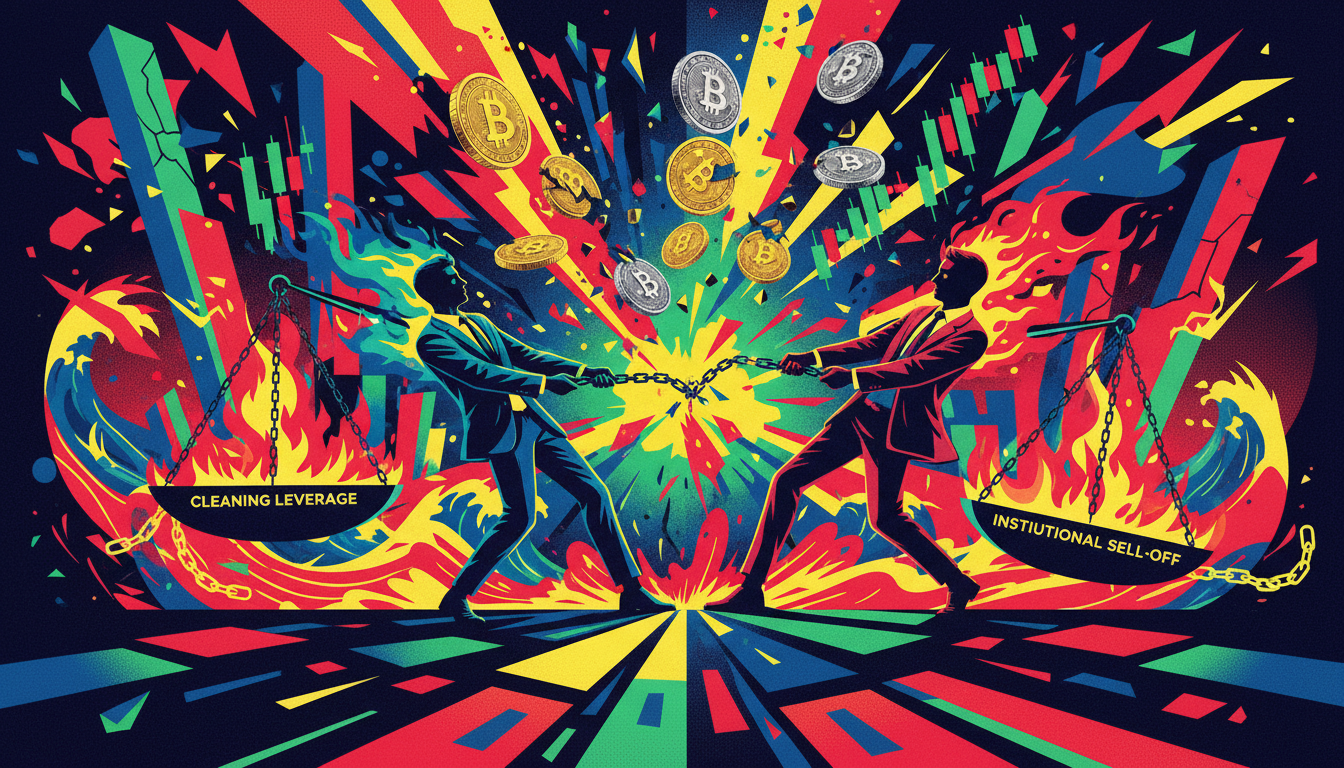
However, the rising proportion of 26% of institutions believing they are in a bear market in the Coinbase survey, coupled with France's mandatory tax reporting starting in 2025 and the Waltio data leak incident, means this wave of innovation is destined to face a more cautious and even skeptical capital attitude. The blurred regulatory boundaries, rising compliance costs, and frequent security incidents have made "accepting new products" and "defending existing assets" the two poles of tug-of-war among fund managers, also forming the backdrop of this cycle's narrative.
In the near future, capital is likely to form a diversion pattern among three main lines: one part will continue to flow into traditional ETFs and compliant financial products centered around BTC, seeking risk exposure within the visible range of regulation; another part will focus on licensed platforms and tax compliance tools, viewing "compliance capability" as a prerequisite for the long-term survival of assets; at the same time, a considerable proportion of active funds will frequently rotate in decentralized tracks like dYdX, using liquidity and leverage to seek excess returns in a high-volatility environment. In the intertwining of innovation and anxiety, the next round of migration in the crypto market may no longer be a simple "bull-bear switch," but rather a continuous reorganization between different levels of compliance and risk preferences.
Join our community to discuss and become stronger together!
Official Telegram community: https://t.me/aicoincn
AiCoin Chinese Twitter: https://x.com/AiCoinzh
OKX Welfare Group: https://aicoin.com/link/chat?cid=l61eM4owQ
Binance Welfare Group: https://aicoin.com/link/chat?cid=ynr7d1P6Z
免责声明:本文章仅代表作者个人观点,不代表本平台的立场和观点。本文章仅供信息分享,不构成对任何人的任何投资建议。用户与作者之间的任何争议,与本平台无关。如网页中刊载的文章或图片涉及侵权,请提供相关的权利证明和身份证明发送邮件到support@aicoin.com,本平台相关工作人员将会进行核查。