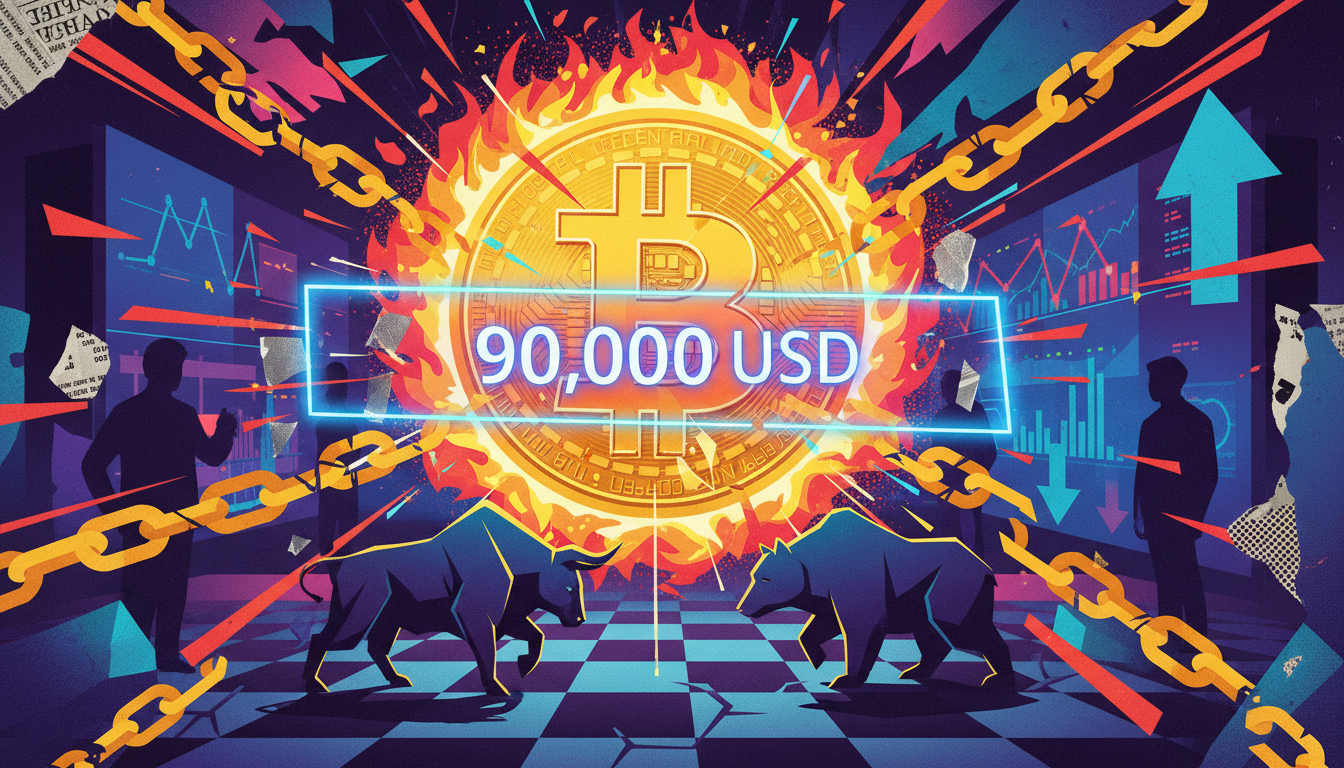
On January 24, 2026, at 8:00 AM UTC+8, Eric Trump, the second son of Donald Trump, made a high-profile statement on social media, announcing that the market capitalization of the dollar-pegged token USD1 has surpassed that of PayPal's PYUSD. This statement sparked discussions in both the cryptocurrency and traditional finance circles. At the same time as this tweet, Bitcoin's price broke $90,000, spot gold reached a historical high of $4,980 per ounce, and silver futures surpassed $101 per ounce. The simultaneous peaks of risk assets and traditional safe-haven assets provided a dramatic backdrop for the competition surrounding the "future form of the dollar." A dollar token still in its growth phase was elevated to the center of discourse by a member of the Trump family, signaling that the competition extends beyond just a race with PayPal; it also involves a long-term narrative about monetary sovereignty and financial order among Wall Street, Silicon Valley, and Washington.
Eric Trump's Endorsement: The Signal of a Tweet
● Public Declaration: In his statement on January 24, Eric Trump directly claimed that the market capitalization of USD1 has surpassed that of PayPal's PYUSD, and his tone was not one of a technical report but rather a declaration of a "milestone victory." He described this moment as a phased victory for the team and supporters, clearly aiming to package a dollar token still in its expansion phase as a new banner that can compete head-on with traditional payment giants.
● Global Currency Narrative: More significantly, he stated, as quoted by multiple media outlets, that "this is an important milestone for USD1, not just concerning cryptocurrency, but regarding the future of building a global currency." This statement elevates USD1 from a mere technical product to the level of a "global currency framework." In the context of the intertwining of U.S. electoral politics and financial regulation, this represents a deliberate binding of "national narrative" and "currency narrative," shaping a token into an extension or even a corrective force against the existing dollar system.
● Symbolism of the Political Family's Bet: When a scion of a former president publicly bets on a specific crypto asset, the signal goes far beyond that of an ordinary KOL endorsement. It conveys to the crypto industry a stance of "we understand and support this sector," while also projecting an image to voters of "anti-establishment, embracing new finance." For the industry, this is seen as a nascent form of political endorsement; for voters, it symbolizes a commitment to having a "backup plan" amid high inflation and uncertainty.
The Mental Tug-of-War Between PayPal's PYUSD and the New Token USD1
● Confrontation of Two Dollar Tokens: In terms of positioning, USD1 is packaged as an "emerging dollar-pegged token," attempting to stand at the intersection of crypto-native scenarios and broader payment needs; while PYUSD is a compliant dollar token under the PayPal payment empire, more like an interface extending traditional payment networks into the on-chain world. The former markets itself on "growth potential" and "decentralized context," while the latter relies on years of accumulated payment scenarios and compliance experience, each representing two distinct paths for the digitization of the dollar.
● The Narrative Meaning of "Market Capitalization Surpassing": Eric Trump emphasized that "the market capitalization has surpassed PYUSD" as a milestone, which is essentially a typical brand and mental battle. Even if we cannot verify the specific market capitalization figures, this statement still conveys a core message to the market—within user expectations and capital attention, a politically charged new project is tearing open the moat constructed by traditional payment giants, reopening competition over "who represents the digital form of the dollar."
● Data Gaps and Directional Judgments: Currently, public channels lack accurate market capitalization and ranking data for USD1 and PYUSD, and the external figures in the brief are marked as "to be verified." Under this premise, we can only discuss competitive directions based on the known market landscape: if PayPal continues to delve into compliant payment scenarios, while USD1 leverages political traffic and a crypto-native ecosystem, the two are more likely to form a long-term tug-of-war in user perception and scenario penetration, rather than a simple short-term comparison of "who is bigger."
The Contradictory Resonance of Bitcoin at $90,000 and New Highs in Gold and Silver
● Market Peaks in Synchrony: At the same time Eric Trump made his statement, a rare "multi-asset resonance" occurred in the market. Bitcoin's price broke $90,000/USDT, setting a new high; spot gold reached $4,980 per ounce, breaking historical records; and New York silver futures surpassed $101 per ounce, also reaching a new level. This simultaneous rise of risk assets and traditional safe-haven assets provides a striking contemporary backdrop for the narrative surrounding dollar tokens like USD1.
● Inflation Expectations and Policy Uncertainty: When Bitcoin and gold and silver hit new highs, the market is often not making a single choice between "optimism" and "panic," but rather hedging against inflation and currency devaluation expectations and policy path uncertainties. On one hand, funds seek excess returns through high-beta assets like Bitcoin amid currency devaluation; on the other hand, they lock in hedging assets with gold and silver to guard against macro or geopolitical upheaval. This contradictory coexistence of configurations itself is a silent vote of confidence in the long-term credibility of fiat currency.
● The Logic of "Dollar Substitutes" Being Sought After: In this macro sentiment, tokens like USD1, which are dollar-pegged and claim to be "crypto-native," are more easily packaged as "substitutes and extensions of the dollar." For some investors, it retains the familiarity of dollar pricing while embedding on-chain transfers, cross-border flows, and potential yield scenarios, becoming an intermediary layer between "fiat accounts" and "high-volatility crypto assets." When trust in fiat currency diminishes, but the dollar system remains dominant, such dollar tokens naturally possess the soil for layered narratives.
From CZ's Regret to Compliance Anxiety: Under the Shadow of U.S. Regulation
● CZ's Reflection and Shadow: Binance founder CZ once publicly stated, "If I could do it all over again, I would block U.S. users from day one." This reflection, coming after a compliance storm, has become a classic footnote regarding U.S. regulatory risks in the crypto industry. It serves as a reminder to all newcomers: once you touch U.S. users and the dollar clearing system, you inevitably enter the U.S. regulatory machine gun nest, where any early "gray growth" could turn into accountability and fines years later.
● The New Game Brought by Trump's Narrative: In this context, the USD1 narrative related to the Trump family is inherently filled with game-like implications. On one hand, the image of being "anti-establishment" and "daring to confront Washington" allows them to mobilize a segment of the crypto community dissatisfied with regulation; on the other hand, when it comes to voter bases, regulation, and industry interests, simple confrontation is not feasible. Balancing between "attracting crypto voters," "not angering regulatory bodies," and "leaving gray space for related industries" will be a long-term challenge for such political crypto projects.
● The Compliance Inquiry of USD1: Once USD1 moves towards the public, all compliance questions that dollar tokens cannot avoid will be magnified: Does it involve securities attributes?, how to conduct strict KYC and sanctions compliance?, and how to audit and disclose the underlying reserves. Under the tradition of U.S. regulatory agencies holding the crypto industry accountable years later, any initial gray areas could be traced back once the project scales up. Therefore, for USD1, the real test is not "whether it can out-narrate PYUSD," but rather "whether it can survive the compliance cycle under a magnifying glass."
The Bet Between Wall Street and Retail Investors: Who is Betting on Which Dollar
● Different Positions of Funds: In the competition between USD1 and PYUSD, traditional financial institutions, crypto-native funds, and retail investors are likely to make different choices. Traditional institutions are more inclined towards familiar compliant partners, such as PayPal products, emphasizing compliance and auditing; crypto-native funds are more willing to gamble between political narratives and high growth expectations, valuing early dividends and ecosystem integration; while retail investors often sway under emotional and brand-driven influences, casting multiple rounds of votes with their funds between the "Trump family halo" and "PayPal's long-standing reputation."
● Variables Influencing Fund Flows: In this betting game, factors such as political endorsement, payment ecosystem, exchange listings, and liquidity depth will directly affect who can become the "daily used dollar token." If USD1 can quickly connect exchanges, wallets, and application scenarios, combined with political traffic, it may achieve initial accumulation in the crypto circle; while PYUSD, relying on a vast merchant network and user base, embeds on-chain dollars into real-world payments, leading to a division of labor competition between the two paths in on-chain transactions vs. offline payments.
● Reconfiguration of the Three-Tier Dollar Structure: More broadly, this competition points to the internal "three-tier structure" of the dollar system: official dollars (central bank and government bonds), platform dollars (dollar liabilities issued by PayPal, banks, and internet giants), and crypto dollars (on-chain issued, globally circulated dollar tokens). USD1 attempts to penetrate from the third tier, challenging the second tier of platform dollars under the support of political narratives; PYUSD serves as a testing ground for platform dollars extending into crypto dollars. The ebb and flow between the two will partially reshape the boundaries and discourse power of these three tiers.
After the Market Capitalization Milestone: USD1 at the Crossroads of Crowning and Backlash
The announcement that USD1 has "surpassed PYUSD in market capitalization" symbolizes another step in the dollar's credit spilling into the on-chain world and further cryptocurrency-ization: the dollar is no longer just a product exclusive to central banks and commercial banks, but is being disassembled, repackaged, and contested across multiple technological and institutional platforms. However, in the absence of transparent market capitalization data and clear disclosures of interest relationships, all discourse around "surpassing" and "milestones" carries a heavy narrative and marketing color, which is also the largest source of noise and uncertainty in the current discussions surrounding USD1. Looking ahead, under the intertwining of regulatory cycles, electoral processes, and global risk preferences, USD1 may either be "crowned" in the resonance of politics and markets, becoming an important pole in the landscape of crypto dollars, or it may face "backlash" amid compliance checks, narrative overextension, or macro headwinds, being seen as yet another fleeting political financial experiment that ignites briefly and cools rapidly.
Join our community to discuss and grow stronger together!
Official Telegram community: https://t.me/aicoincn
AiCoin Chinese Twitter: https://x.com/AiCoinzh
OKX Benefits Group: https://aicoin.com/link/chat?cid=l61eM4owQ
Binance Benefits Group: https://aicoin.com/link/chat?cid=ynr7d1P6Z
免责声明:本文章仅代表作者个人观点,不代表本平台的立场和观点。本文章仅供信息分享,不构成对任何人的任何投资建议。用户与作者之间的任何争议,与本平台无关。如网页中刊载的文章或图片涉及侵权,请提供相关的权利证明和身份证明发送邮件到support@aicoin.com,本平台相关工作人员将会进行核查。