The increase in Bitcoin's value has far outpaced traditional assets like gold and silver in 2023 and 2024. Bloomberg analysts have pointed out the truth behind the current market slump: institutional expectations have been overdrawn too early, and prices need time to allow reality to catch up with the wings of imagination.
Bloomberg ETF analyst Eric Balchunas recently noted on social media that Bitcoin has risen 429% since 2022, far exceeding gold's 177% and silver's 350% increases.
Even though other assets have recently experienced their "best year ever," Bitcoin remains sluggish, and these assets have yet to catch up to Bitcoin's long-term performance.

1. Market Short-sightedness vs. Long-term Perspective
● The current panic among Bitcoin holders and the schadenfreude of bears, according to Balchunas, is "quite short-sighted." He emphasizes that the market seems to have forgotten Bitcoin's astonishing performance in 2023 and 2024.
● Data shows that Bitcoin began this upward cycle before BlackRock submitted its Bitcoin ETF application in 2022. Since then, Bitcoin has risen 429%, while gold has only risen 177% and silver 350%.
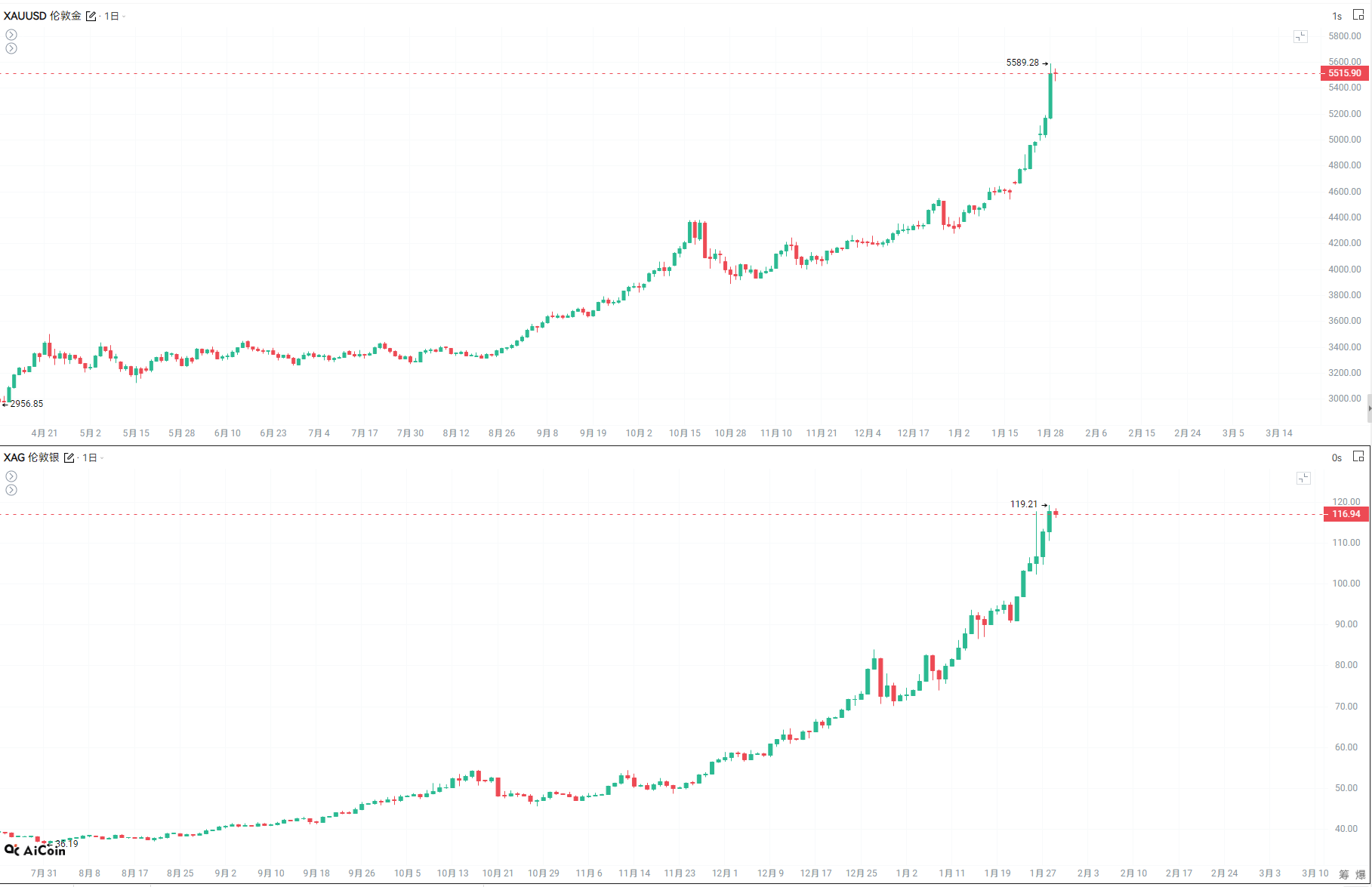
● This data comparison reveals Bitcoin's long-term growth potential as an asset class. Even in the face of recent sluggish performance, Bitcoin's historical performance still far exceeds that of traditional safe-haven assets and tech stock indices.
2. Premature Pricing of Institutional Narratives
● Balchunas believes that the fundamental reason for Bitcoin's current consolidation phase is that the market narrative of "institutionalization" has been priced in too early and too quickly.
● The market completed its price reflection of this trend before institutionalization actually materialized. This premature pricing has led Bitcoin's price to require some time for consolidation, allowing reality to catch up with the previous price increases.
● This phenomenon is not uncommon in the crypto market. Industry observers note that the market often prices in positive developments before they actually occur, and when the good news finally arrives, prices may stagnate. The approval of Bitcoin ETFs is a typical case, as the market had already factored this element into prices before the ETF was officially approved.
3. Decoupling Phenomenon Between Bitcoin and Gold
A noteworthy phenomenon emerged in early 2026: gold prices broke through the historical barrier of $5,000, while Bitcoin fell about 36% from its peak.
● This divergence contradicts traditional understanding, as historically, gold and Bitcoin have shown a high correlation for most of the time. Both possess anti-inflation properties, but gold is positioned as a safe-haven asset, while Bitcoin is more often viewed as a risk asset.
● Currently, the primary buyers of gold are central banks seeking "national security," while Bitcoin is purchased by institutional investors pursuing "bull market returns." During times of geopolitical uncertainty, institutional investors often hesitate to act, leading to price differentiation between the two assets.
● Market analysts use the "Bitcoin/Gold ratio" to measure the relative value between these two assets, which can serve as a tool for trading decisions.
4. Shift in Market Cycle Paradigms
● The Bitcoin market is undergoing a fundamental transformation, with the traditional four-year halving cycle being replaced by a two-year institutional cycle. The previous cycle model driven by miner economics and retail sentiment has become ineffective. With the launch of Bitcoin ETFs, the flow of funds from institutions and sovereign buyers has far surpassed the impact of miner sales.
● The new cycle is driven by ETF cost basis and annual performance pressure on fund managers. Most professional fund managers assess investment returns based on a 1-2 year time frame and settle fees and performance bonuses on December 31 each year.
● The overall average cost basis for U.S. spot Bitcoin ETFs is currently around $84,000, which has become a key psychological and technical anchor point for Bitcoin prices.
5. Structural Changes in the Crypto Market
● The crypto market is undergoing a deep transformation, shifting from "speculative frenzy" to "value cultivation." The growth logic of the crypto economy is transitioning from relying on asset price fluctuations for "cyclical growth" to depending on real demand and cash flow for "trend growth."
● In this transformation process, the realization and explosion of real use cases have become key driving forces. The crypto ecosystem has now surpassed the realm of a single digital currency, encompassing various innovative forms such as stablecoins, permissionless exchanges, and DePIN.
● The industry's "institutional infrastructure" is also becoming increasingly refined, with breakthroughs in the consistency of token interests and value capture issues as regulatory frameworks become clearer.
6. The Double-Edged Sword Effect of Institutional Participation
The launch of Bitcoin ETFs has brought structural changes to the market but has also introduced new dynamics. A large amount of Bitcoin purchased and held by ETFs is effectively "locked" and removed from daily trading circulation.
● This change has led to a reduction in Bitcoin's trading volume, with annualized volatility dropping from the previous range of 80-150% to a new range of 30-60%. The reduction in volatility makes Bitcoin more akin to "institutional-grade volatility" assets, making it more suitable for large-scale portfolio allocation.
● Institutional participation has also brought new challenges. When all institutions hold the same asset, market liquidity may flow in one direction—either collectively buying or collectively selling, which can amplify potential market volatility.
● The average cost basis of ETF investors has become a key factor influencing market sentiment and price trends. When prices fall below this level, it may trigger programmatic selling.
7. Future Outlook and Strategies for Bitcoin
● Bitcoin is undergoing a transformation from a "speculative object" to an "asset allocation tool," a process that may initiate a structural slow bull cycle spanning over a decade. During this transformation, whenever signs of a market sentiment overheating appear, new "liquidity" often enters the market, interrupting the downward trend.
● As ETFs mature and institutional allocation weights increase, Bitcoin may complete its preliminary transformation from a risk asset to a safe-haven asset.
● Some industry leaders remain optimistic about Bitcoin's long-term prospects. Billionaire twins Tyler and Cameron Winklevoss predict that Bitcoin could eventually reach $1 million, solidifying its status as "digital gold."
The Bitcoin market is repositioning itself in the wave of institutionalization. The pendulum of the traditional four-year halving cycle has come to a halt, replaced by a new rhythm driven by ETF fund flows and institutional performance assessments over two years.
The market has overdrawn expectations of "institutionalization," forcing Bitcoin into a consolidation phase, waiting for the pace of real-world adoption to catch up with price movements.
As gold breaks through the $5,000 high, Bitcoin lingers in the valley—this divergence between the two assets not only reflects market sentiment but also embodies the growing pains of the crypto economy's transition from conceptual speculation to real value creation.
Institutional investors hold substantial funds but are sensitive to prices, and their annual performance pressures are reshaping Bitcoin's volatility curve.
Join our community to discuss and grow stronger together!
Official Telegram community: https://t.me/aicoincn
AiCoin Chinese Twitter: https://x.com/AiCoinzh
OKX benefits group: https://aicoin.com/link/chat?cid=l61eM4owQ
Binance benefits group: https://aicoin.com/link/chat?cid=ynr7d1P6Z
免责声明:本文章仅代表作者个人观点,不代表本平台的立场和观点。本文章仅供信息分享,不构成对任何人的任何投资建议。用户与作者之间的任何争议,与本平台无关。如网页中刊载的文章或图片涉及侵权,请提供相关的权利证明和身份证明发送邮件到support@aicoin.com,本平台相关工作人员将会进行核查。


