On January 29, 2026, Aster launched a $50,000 prize pool trading challenge, CoinList initiated a $200 million public sale of FT, the New York Stock Exchange announced the construction of a blockchain securities trading platform, and TRM Labs released the latest report on illegal cryptocurrency trading. These four seemingly disparate events overlapped within the same time window. Meanwhile, the price of BTC fell below $88,000, with a 24-hour decline between 1.3%-1.66%. The Federal Reserve was about to hold a new round of interest rate decisions, and market sentiment clearly shifted towards sensitivity and caution. On one side, the NYSE committed to building a 24/7 on-chain securities infrastructure, while on the other, TRM Labs disclosed that illegal cryptocurrency trading volume reached $158 billion in 2025, accounting for 1.2% of the total, with illegal entities occupying 2.7% of market liquidity. The dislocation between traditional finance accelerating on-chain and the black market reaching new highs became the true core of this narrative.
NYSE On-Chain: Wall Street's Schedule Rewritten
● The institutional impact of an all-weather platform: The NYSE announced the construction of a blockchain securities trading platform and publicly emphasized its evolution towards 24/7 uninterrupted trading. This commitment directly impacts the traditional schedule centered around pre-market and after-hours trading. For the past pricing model anchored on closing prices and overnight news, 24/7 liquidity means volatility will be re-sliced, and price formation will no longer revolve around a few key time points but will be extended into a continuous game curve. Wall Street traders, market makers, and strategies designed around "opening-closing" are all forced to reconstruct their rhythms.
● Acceleration of traditional institutions' digital competition: Since 2024, Wall Street giants like Goldman Sachs and JPMorgan have successively increased their investments in digital asset custody and on-chain settlement pilots, while the NYSE's direct promotion of a blockchain securities platform undoubtedly elevates this competition to a higher level. Unlike previous "tokenization trial" marginal businesses, this time the trading layer of the core securities market is being moved on-chain, creating a new race within traditional institutions: "whoever occupies the all-weather liquidity entry first will control the next generation of capital allocation." Other large exchanges and clearing institutions cannot stand by idly; the digitization of traditional finance is shifting from "incremental business" to "survival issue."
● Reshaping market making, risk control, and regulatory rhythms: All-weather trading means market makers need to maintain bilateral quotes over more time periods, and risk models must shift from "overnight gap risk" to "continuous tail volatility management." For position leverage, margin calls, and liquidity management, the past rhythm centered around daily closing settlements will be disrupted, and risk control systems must upgrade to operate around real-time on-chain data. The rhythm of regulatory work must also change: the regulatory processes that once relied on trading days and disclosure windows will be forced to transition to "continuous monitoring and immediate intervention," putting systemic pressure on regulatory technology and resource allocation.
$200 Million Public Sale and Prize Pool Battle Ignite Short-Term Sentiment
● $200 million public sale and FD $1 billion narrative premium: CoinList launched a $200 million public sale of FT, which corresponds to a potential FDV of about $1 billion in market expectations, making FT quickly the focus of the new narrative in the AC system. For veteran players who have experienced multiple bull and bear markets, such a large-scale public sale feels more like a "compliance-driven primary market feast," not only locking in large-scale capital attention but also amplifying the stimulating effect on overall on-chain risk appetite. At a time of rising macro uncertainty, such a massive public sale itself becomes a public vote on "whether the market still has enough absorption capacity."
● Retail speculation angle under Aster's $50,000 prize pool: Alongside FT's massive public sale, Aster launched a $50,000 prize pool trading challenge, attracting a large influx of retail and high-frequency participants in a short time. For trading platforms, this is a typical move to ignite short-term trading activity with real money; for participants, in the context of increased volatility and unresolved macro issues, using small funds to vie for the prize pool and transaction fee rebates becomes a choice to "hedge against boring trades." Such events reinforce the short-term speculative atmosphere, carving out attention that should have been focused on BTC and mainstream assets, directing it towards higher frequency and more gamified scenarios.
● The chain reaction of public sales and incentives on volatility and capital diversion: When BTC fell 1.3%-1.66% within 24 hours and dropped below $88,000, the panic in the secondary market had not spiraled out of control, but there was a noticeable "slight bleeding" effect from capital being siphoned off by public sales and events. Some funds chose to lock in and participate in the FT public sale, while others were attracted by trading incentives from platforms like Aster, thus weakening the buying power and bullish momentum for mainstream coins. Under these conditions, even a slight macro negative or uncertainty is enough to push prices into a correction range, resulting in a structural misalignment where "mainstream coins weaken while themes and activities become locally fervent."
$158 Billion in Illegal Trading: A Snapshot of the Black Market Under Compliance Expansion
● $158 billion and the dual mirror of 1.2%: TRM Labs' report shows that illegal cryptocurrency trading volume reached $158 billion in 2025, accounting for 1.2% of the total annual cryptocurrency trading volume. In absolute terms, this is the highest level to date, indicating that black market funds have not receded within a larger total; in terms of proportion, 1.2% has significantly decreased from earlier stages, reflecting that the growth rate of compliant funds exceeds that of black market expansion. This combination of "record high scale, declining proportion" reveals a growing market: both legal and illegal funds are entering, but the former is moving faster.
● The ebb and flow of compliant and black market trading: The core logic behind the absolute scale increase is the continuous expansion of the overall cryptocurrency market's market value and liquidity since 2024, with institutional products and on-chain infrastructure attracting a large amount of traditional capital. Black market funds have not immediately shrunk due to strengthened regulation; instead, they continue to amplify their stock through more covert paths, allowing them to maintain a $158 billion scale even as the total market expands. The declining proportion indicates that regulation and compliance are indeed changing the capital structure, but it also reminds the market: black market trading continues to survive robustly within a larger pool, rather than simply being wiped out.
● The implicit leverage of 2.7% liquidity occupation on price discovery: The report also points out that illegal entities occupy about 2.7% of market liquidity, which deeply penetrates the order book and price discovery mechanism. Even if it only accounts for a low single digit, once these funds concentrate their efforts during relatively weak liquidity periods or varieties, they can significantly influence short-term price trajectories through large orders, sell-offs, or price increases. In an all-weather trading and fragmented liquidity environment, 2.7% of "gray liquidity" acts more like a lever that can amplify small fluctuations at any time, making prices more prone to overshooting and "unjustified" violent fluctuations at key macro nodes.
Hesitation Below $88,000: Pricing Uncertainty with Slight Corrections
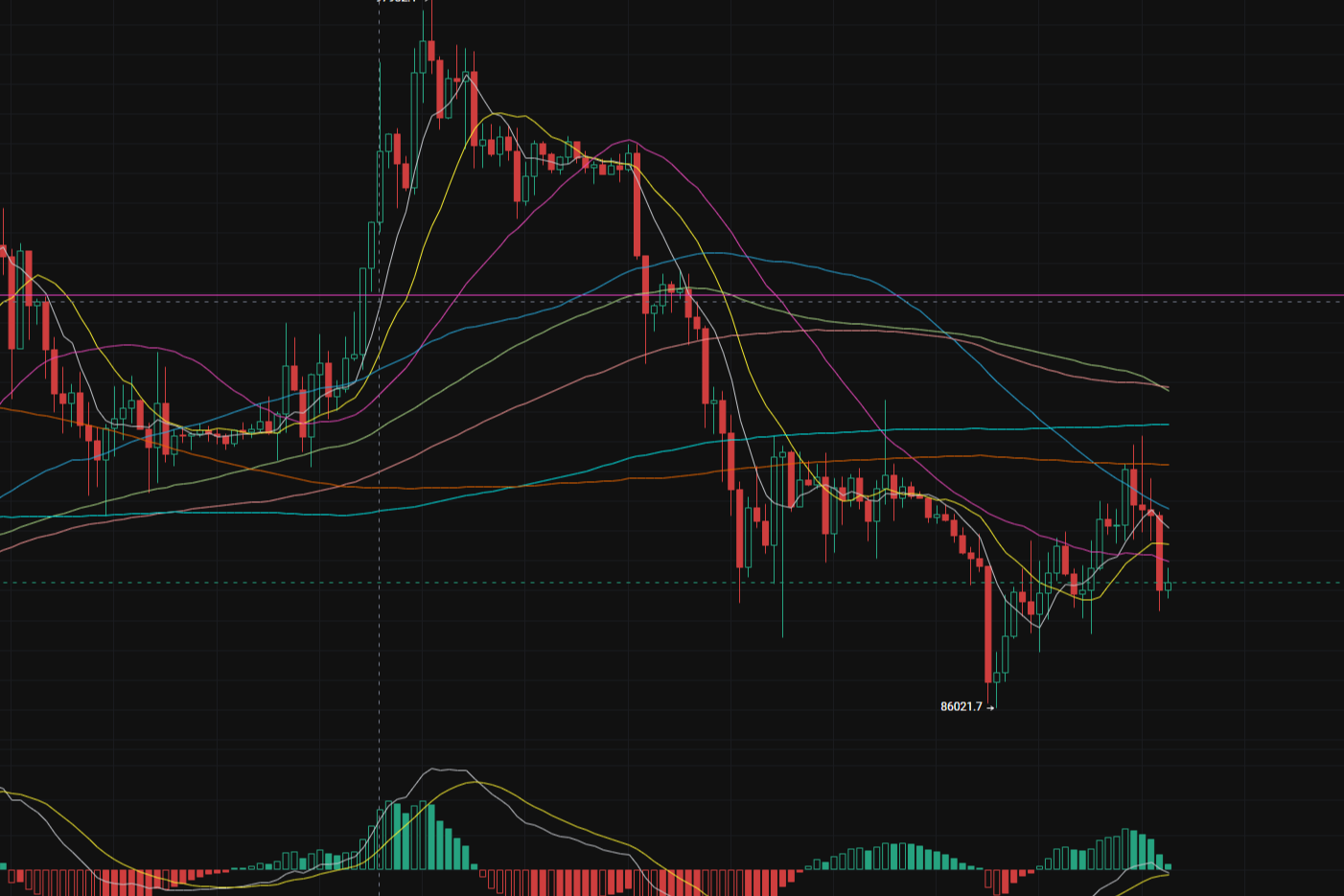
● The market and emotional reflection of falling below $88,000: Around January 29, BTC price fell below $88,000, with a 24-hour decline of 1.3%-1.66%. This level of adjustment is far from a crash, but it is enough to break the previous high-level consolidation expectations. Although trading data did not show panic selling, the willingness to chase prices on the buy side clearly weakened, with bulls shifting from "increasing positions to break through" to "reducing positions to protect profits," while bears chose to test pressure near key integer levels. The price curve reflects a typical hesitation: there is no violent sell-off, but also a lack of strong counterattacks, resembling a "symbolic risk reassessment."
● The resonance of corrections with interest rate decisions and capital diversion: This slight correction occurred in a sensitive window before the Federal Reserve's interest rate decision, resonating with the aforementioned FT $200 million public sale, Aster's trading challenge, and other on-chain activities on a capital level. On one hand, macro uncertainty suppressed the willingness of new funds to enter; on the other hand, part of the existing funds was locked in public sales and event competitions, weakening the support for mainstream assets like BTC. In this structure, even a slight price retreat is enough to trigger a conservative tendency of "securing profits first," making it easier for the market to seek new balance points downward rather than upward.
● Gentle pricing between on-chain and black market shadows: On one side is the wave of mainstreaming on-chain driven by institutions like the NYSE, and on the other is the structural concerns brought by $158 billion in illegal trading volume and 2.7% gray liquidity. The market did not respond with a crash or surge but chose to complete a gentle calibration within a 1%-2% decline range. This slight correction is essentially a compromise: it acknowledges that macro and regulatory uncertainties need to be priced in while unwilling to easily negate the long-term bullish logic brought by "Wall Street on-chain" and "compliance expansion." BTC's hesitation below $88,000 is the market seeking a temporarily acceptable compromise point between bullish and bearish narratives.
Regulation and Wall Street: One Wants to Accelerate, One Dares Not Let Go
● The tension between the NYSE's high-profile on-chain move and "regulation still needs to be strengthened": On one hand, the NYSE entered the scene with the stance that "the 24/7 trading platform will completely change Wall Street's schedule," directly introducing blockchain into mainstream securities trading; on the other hand, TRM Labs bluntly stated in its report that "$158 billion in illegal trading volume shows that regulation still needs to be strengthened." These two narratives juxtaposed within the same time window create a strong contrast. The former represents traditional capital's positive bet on on-chain infrastructure, while the latter reminds us that under regulatory gaps and technical complexities, black market funds still have enough space to operate, making regulatory authorities unable to slow down the pace while also not daring to fully let go.
● A regulatory path of caution and release: In the face of an all-weather on-chain market and $158 billion in illegal trading volume, regulatory authorities are more likely to adopt a "layered release" strategy: for large traditional institutions like the NYSE that are subject to strict scrutiny, they will be granted a higher degree of innovation space under the premise of sufficient capital and complete compliance processes; for on-chain activities with strong anonymity and intense cross-border flow, they will strengthen KYC/AML and enhance scrutiny of fiat currency entry and exit to build an outer defense line. The realistic choice for regulation is not simply to embrace or suppress but to find a gray area that balances innovation and risk control between "main channel openness" and "tightening high-risk edges."
● The future of the game between Wall Street, compliance institutions, and the black and gray industries: In the coming years, as Wall Street's on-chain infrastructure gradually takes shape, compliance institutions will further attract traditional capital through products like ETFs, on-chain securities, and compliant custody, while the black and gray industries will continue to seek new chains, new protocols, and new tools to bypass regulatory blockades. Both sides will engage in a tug-of-war over regulatory rules, technical thresholds, and sources of funds: if regulation is too loose, black market trading will quickly erode compliant channels; if regulation is too tight, it will raise innovation costs and weaken the dollar system's ability to attract global cryptocurrency liquidity. This game is destined to exist long-term, and its intensity will directly shape the structure and participant composition of the next bull market.
Betting on the Next Bull Market Between Blood Loss and Expansion
On one end is the NYSE building a blockchain securities platform, CoinList's $200 million FT public sale, and Aster and other platforms continuously ramping up trading incentives, driving compliance, institutionalization, and mainstream expansion; on the other end is the $158 billion in illegal trading volume, 2.7% gray liquidity, and the slight correction of BTC falling below $88,000, casting a clear shadow over this round of prosperity. Capital experiences short-term "blood loss" in public sales and activities, while prices choose a gentle retreat amid macro and regulatory uncertainties, which is the true reflection of the current market.
The proportion of illegal trading has dropped to 1.2%, yet the absolute amount has reached a new high, conveying two signals: first, the overall market is large enough to accommodate a higher volume of the black market without overwhelming the system; second, a more advanced and systematic regulatory framework is being accelerated by market pressures. From the NYSE's all-weather planning to TRM Labs' indication of regulatory gaps, it suggests that the next bull market will not just be a game of price and narrative, but rather a result of capital reallocation at a higher dimension following upgrades in regulatory frameworks and compliance infrastructure.
Looking ahead to around 2026, as an all-weather on-chain Wall Street gradually takes shape, compliant capital will reshape mainstream liquidity pools through standardized products, on-chain securities, and institutional custody; meanwhile, black market capital will be forced to migrate to more concealed and higher-cost corners under regulatory pressure. The cryptocurrency narrative will also shift from a singular "decentralized rebellion" to a complex ecosystem of "compliant capital, institutional products, and black market funds coexisting": a bull market will no longer just be about new price highs, but rather a systemic reassessment following upgrades in chip structure, regulatory architecture, and sources of funds.
Join our community to discuss and become stronger together!
Official Telegram community: https://t.me/aicoincn
AiCoin Chinese Twitter: https://x.com/AiCoinzh
OKX benefits group: https://aicoin.com/link/chat?cid=l61eM4owQ
Binance benefits group: https://aicoin.com/link/chat?cid=ynr7d1P6Z
免责声明:本文章仅代表作者个人观点,不代表本平台的立场和观点。本文章仅供信息分享,不构成对任何人的任何投资建议。用户与作者之间的任何争议,与本平台无关。如网页中刊载的文章或图片涉及侵权,请提供相关的权利证明和身份证明发送邮件到support@aicoin.com,本平台相关工作人员将会进行核查。