What to know : Pudgy Penguins is emerging as one of the strongest NFT-native brands of this cycle, shifting from speculative “digital luxury goods” into a multi-vertical consumer IP platform. Its strategy is to acquire users through mainstream channels first; toys, retail partnerships and viral media, then onboard them into Web3 through games, NFTs and the PENGU token. The ecosystem now spans phygital products (> $13M retail sales and >1M units sold), games and experiences (Pudgy Party surpassed 500k downloads in two weeks), and a widely distributed token (airdropped to 6M+ wallets). While the market is currently pricing Pudgy at a premium relative to traditional IP peers, sustained success depends on execution across retail expansion, gaming adoption and deeper token utility.
About a year ago, we published an open letter outlining practical, achievable steps an incoming administration could take to make the United States the crypto capital of the world, reflecting the views of the crypto law bar. The goal was not to promote crypto as an ideology, but to convey the perspective of lawyers working in the field on how thoughtful regulatory policy could unlock innovation and ensure that the next generation of financial and internet infrastructure would be built on American soil.
On the anniversary of that letter, as market structure legislation hangs on a knife’s edge, it is worth taking stock. The last year has been unusually eventful for U.S. crypto policy, and in many respects, the pace and scope of progress have exceeded even our more hopeful predictions. This moment calls for a kind of report card—one that both recognizes meaningful achievements and identifies the work that remains if the U.S. is to sustain and build on its leadership.
Taking stock
Our letter focused on three broad priorities: supporting U.S.-domiciled crypto companies, promoting core crypto values in public policy and cultivating a welcoming domestic business environment for builders and entrepreneurs.
Since then, lawmakers have advanced forward-looking policies across all three fronts. Importantly, much of the progress has occurred not through sweeping legislative overhauls alone, but through sustained, pragmatic work at the agency level—work that has begun to replace years of uncertainty with a more coherent regulatory posture. While the job is far from finished, the overall direction of travel is unmistakably positive.
Supporting U.S.-based companies (letter grade: A-)
Our letter emphasized that U.S.-based crypto companies need clear, durable rules of the road to compete globally. We argued that market structure legislation was essential, but we also highlighted several specific sectors—stablecoins, decentralized finance and the integration of traditional finance—where tailored regulatory attention could unlock outsized benefits.
On this front, progress has been substantial.
General rules of the road
Momentum toward comprehensive market structure legislation has continued and Congress stands poised to clarify the respective roles of securities and commodities regulators in crypto markets—though it has most recently stalled amid disagreements over stablecoin yield. While a final statutory framework is still pending, the direction is clear: public blockchains are no longer regulatory black sheep but set to become a permanent part of the U.S. financial system, deserving of its own fit-for-purpose rules. As lawmakers approach the finish line on the market structure bill, we encourage them and the industry to resolve remaining disagreements in favor of open, innovative use cases rather than cement the advantages of incumbent crypto intermediaries, such as centralized exchanges. The bill is not perfect, but the diversity of industry stakeholders supporting it is an endorsement that it is good enough—and urgent enough—to become law.
Stablecoins
Here, progress has been especially notable. The passage of stablecoin legislation and the commencement of initial rulemakings have provided long-awaited clarity around issuance, reserves and supervision. This has given more U.S. companies a viable path to compete with offshore issuers, while protecting consumers from weak or opaque reserves and reinforcing dollar primacy in global digital markets. However, some of these victories are now at risk as the big banks attempt to reopen the Genius Act during market structure negotiations. Moreover, regulators must remain cognizant not to reduce crypto’s disintermediated infrastructure to merely the back-end for centralized custodial stablecoin issuers.
TradFi integration
The past year has also seen meaningful steps toward integrating crypto infrastructure into traditional financial markets. Banks, fintechs, asset managers and market intermediaries now operate with greater confidence that responsible engagement with digital assets will not invite reflexive regulatory backlash. This has opened the door to broader institutional participation, improved market plumbing, and more resilient financial rails. Unthinkable a year ago, key regulators, including the SEC, CFTC and OCC, are preparing for a financial system defined by tokenized securities, new on-chain asset classes and even decentralized finance and promising to cooperate on streamlining regulation for so-called “super apps” that span securities and commodities trading and other innovative products.
DeFi
Decentralized finance remains the most challenging category to regulate, but the conversation has matured. Regulators increasingly recognize that DeFi protocols do not fit neatly into frameworks designed for intermediaries, and efforts at distinguishing infrastructure (and its developers) from activity are bearing fruit. However, in codifying a control standard that distinguishes decentralized from centralized finance, lawmakers should take care not to draw the line so rigidly that DeFi protocols are discouraged from adopting basic safety and compliance measures, such as asset curation and sanctions screening, needed to protect users and comply with the law.
Much of this progress traces back to unusually visionary leadership at the Securities and Exchange Commission. Under new leadership, the SEC has moved away from regulation by enforcement and toward a serious effort to modernize securities laws for a tokenized world. That shift—now echoed by the CFTC—has done more than any single policy initiative to restore confidence among U.S. builders. Still, legislation insulated from political cycles and changes in agency leadership is needed to cement these gains, and the window to do so is rapidly closing.
Crypto values (letter grade: B+)
Crypto is not just a set of disruptive technologies; it is also a deeply American ideology rooted in openness, permissionless innovation, censorship resistance and individual autonomy. In our open letter, we argued that this meant that crypto must be treated the same as other technologies in certain contexts and differently in others.
Encouragingly, over the past year, crypto values have begun to find clearer expression in policy discussions and proposed legislation, such as around self-custody and privacy. That said, tensions remain. Crypto policy still oscillates between freedom-enabling instincts and reflexive containment driven by legitimate governmental concerns about illicit finance, tax evasion and national security. We remain convinced that crypto-native solutions, such as zero-knowledge proofs and portable identities, offer constructive alternatives to familiar regulatory approaches that rest on the financial surveillance of financial intermediaries.
Over the past year, regulators have made tangible progress in a range of important areas, such as repealing the IRS DeFi Broker Rule and reigning in OFAC enforcement, but other notable areas, like a comprehensive tax overhaul that does not unfairly punish crypto’s open and permissionless architecture, continue to lag.
The progress here is real, but uneven. Continued industry engagement will be essential to ensure that core crypto values are not gradually eroded through well-intentioned but blunt regulation intended to make things easier for regulators and traditional businesses. After all, crypto was not born to assist government, optimize finance or streamline applications. It was born to set people free. Regulation should not extinguish this core tenet by concentrating network sovereignty in the hands of the State or closed platforms, thereby sidelining the self-governing communities of builders and users that it was meant to serve.
A welcoming business environment (letter grade: B)
A year ago, we argued that regulatory clarity alone would not be sufficient to attract and retain crypto entrepreneurs. Builders also need a business environment that is predictable, fair and competitive with jurisdictions that have actively courted digital asset innovation.
The administration has made meaningful strides on this front. The tone has shifted decisively from hostility to engagement. Entrepreneurs are less susceptible to bureaucratic caprice and are more likely to encounter regulators who engage constructively rather than punitively. Notably, the OCC’s recent decision to grant national trust charters to fintechs and stablecoin issuers, as well as ongoing discussions regarding skinny master accounts, are an endorsement that blockchain-based firms should operate on an even plane with traditional financial firms.
Still, structural challenges persist. State-by-state fragmentation continues to impose real costs on startups. And while the overall posture is more welcoming, it has yet to translate into a truly frictionless environment for early-stage builders. For instance, despite the availability of DUNAs and 501(c)(4)s as domestic token stewards, projects continue to rely on offshore structures for tax reasons and greater certainty surrounding public token sales.
Room for improvement
Despite the overwhelmingly positive trajectory, the past year has also surfaced important cautionary lessons.
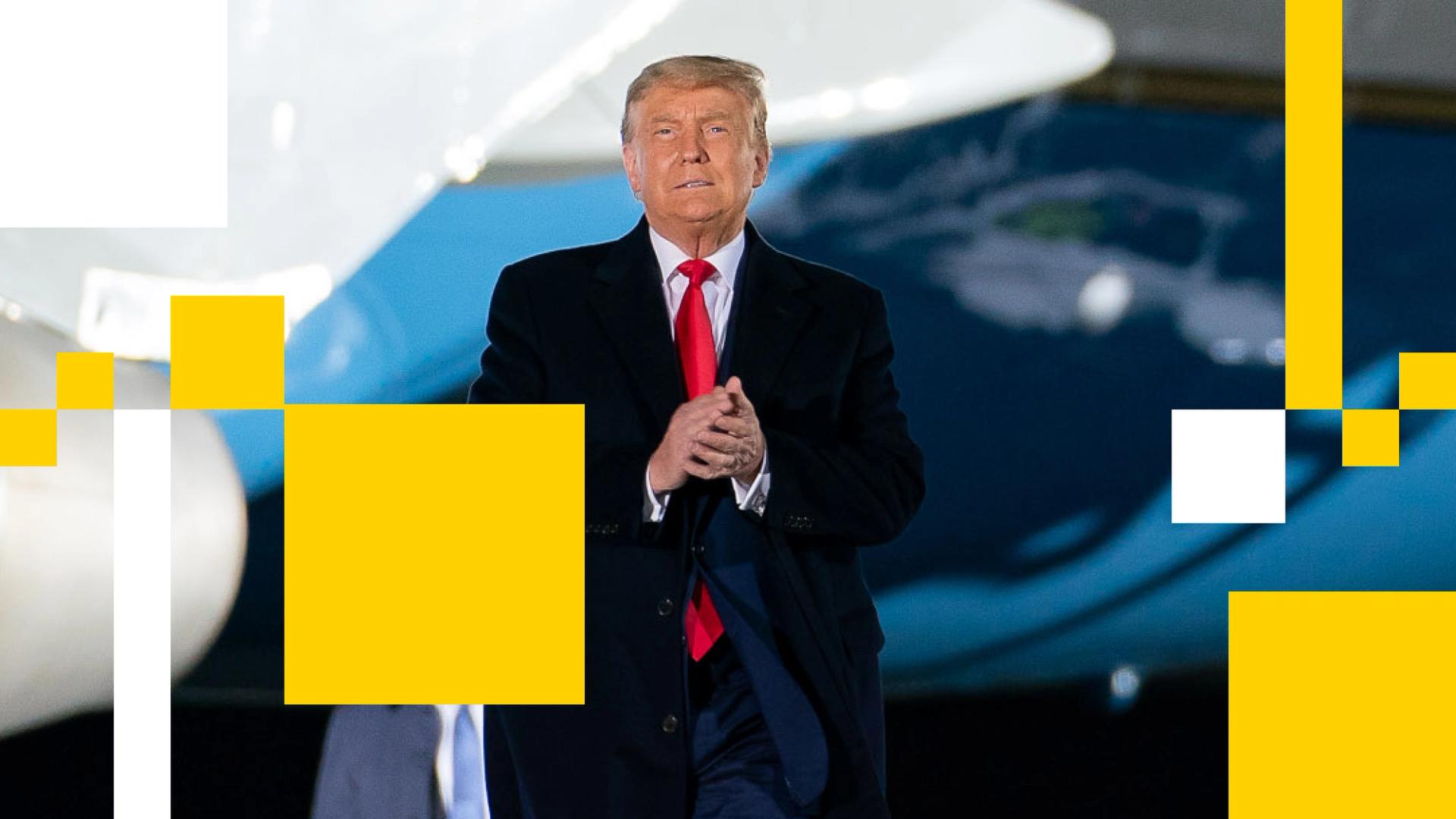
One development we did not foresee was the extent to which the president’s own family would become directly involved in crypto markets. Our original letter was published just days before the launch of a high-profile memecoin associated with the Trump brand. Whatever one thinks of memecoins as a category, this episode underscored the need for clear ethical guardrails to prevent the appearance—or reality—of conflicts of interest that could undermine public trust in crypto policy writ large.
More broadly, the next phase of American crypto leadership will depend less on regulators and more on builders themselves. Policy has opened doors; now it is incumbent on entrepreneurs to walk through them. The coming years will test whether crypto can deliver on its long-promised use cases: faster and cheaper payments, open capital markets, user-owned platforms and programmable financial infrastructure that serves real economic needs.
Looking ahead
If the last year has demonstrated anything, it is that progress is possible, and when it comes, it can be swift.
The challenge now is to consolidate those gains—to finish the work of market-structure legislation, deepen commitments to privacy and decentralization, and translate regulatory clarity into tangible economic growth. If builders rise to the occasion, the United States will not merely host crypto innovation; it will be the driver of it and shape its future.
One year ago, becoming the crypto capital of the world felt purely aspirational. Today, it feels achievable—provided lawmakers and industry actors remain clear-eyed, principled and ambitious about what comes next.
Ivo Entchev, Olta Andoni, Stephen Rutenberg, Donna Redel
The views represented and reflected upon herein are those of the signatories and not necessarily of their employers.
免责声明:本文章仅代表作者个人观点,不代表本平台的立场和观点。本文章仅供信息分享,不构成对任何人的任何投资建议。用户与作者之间的任何争议,与本平台无关。如网页中刊载的文章或图片涉及侵权,请提供相关的权利证明和身份证明发送邮件到support@aicoin.com,本平台相关工作人员将会进行核查。


