After hours of intense debate between representatives from banks and the cryptocurrency industry at the White House, both sides maintained their positions, leaving only a commitment to "find a solution by the end of February."
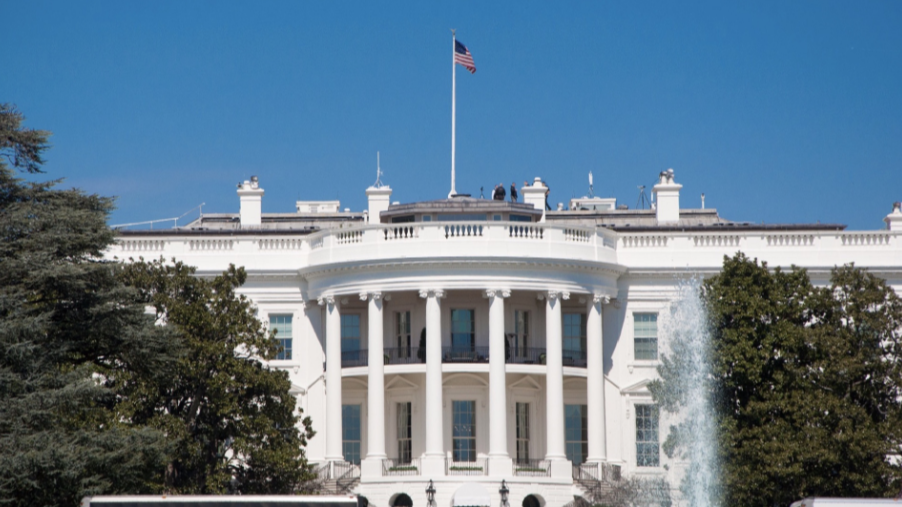
On February 2, a closed-door meeting that could determine the future of digital finance in the United States was held at the Eisenhower Executive Office Building. Representatives from Coinbase, major cryptocurrency trade groups, and banking organizations gathered in Washington to try to resolve the thorny disagreements over stablecoin yields in the proposed CLARITY Act.
The banking sector clearly stated that allowing stablecoin yields would lead to a massive outflow of deposits. Standard Chartered Bank predicts that by the end of 2028, stablecoins could siphon off about $500 billion in deposits from the U.S. banking system.
1. Core Controversy: A Direct Clash Between Traditional Finance and Crypto Innovation
● The White House meeting was chaired by Patrick Harker, a member of the President's Digital Asset Advisory Committee. The closed-door session lasted for several hours, but no substantial agreement was reached regarding stablecoin yields.
● Representatives from the cryptocurrency industry expressed a positive attitude towards the meeting's progress. Summer Mersinger, CEO of the Blockchain Association, called the meeting an "important step towards seeking bipartisan legislative solutions for the digital asset market structure."
● Cody Carbone, CEO of the Digital Chamber of Commerce, stated, "Today's meeting at the White House is exactly the type of progress needed to advance market structure legislation, and we are committed to finding solutions to this core obstacle."
2. Banking Position: Protecting the Stability of the Traditional Financial System
The banking sector displayed a tough stance in this game. Sources indicated that bank representatives were quite firm, suggesting they had little flexibility for compromise negotiations through member banks.
● Representatives from the Bank Policy Institute, American Bankers Association, Financial Services Forum, and Independent Community Bankers of America all attended the meeting. They unanimously agreed that any legislation must support "local family and small business loans that drive economic growth," while also protecting "the safety and soundness of the financial system."
● Banking groups particularly criticized the GENIUS Stablecoin Act passed last summer. Although the law prohibits issuers from paying direct interest to stablecoin holders, it does not prevent third-party platforms like Coinbase from offering rewards.
3. Crypto Industry's Counterattack: Upholding Innovation and Competitiveness
The cryptocurrency industry countered the banks' position. Companies like Coinbase believe this issue was already discussed before the GENIUS Act was passed, and that banks are trying to stifle competition.
● Notably, the issue of stablecoin yields has become a key obstacle to the legislative process. Last month, a Senate Banking Committee hearing was scheduled but was canceled at the last minute because Coinbase stated it would not support the bill, listing stablecoin yield handling as a key issue.
● Carbone pointed out that while there was no "final solution" at Monday's meeting, all parties had identified major pain points and potential areas for compromise, and a path was laid out to reach a solution by the end of February.
4. Legislative Stalemate and Political Background: The Trump Administration's Crypto Commitment
● The CLARITY Act (H.R.3633) passed the House with overwhelming bipartisan support in July 2025 and is seen as the first comprehensive federal regulatory framework for cryptocurrency in the U.S.
● The current Trump administration is eager to fulfill its campaign promise to the cryptocurrency industry—"to provide a clear and friendly regulatory environment." Insiders revealed that if Monday's negotiations failed to make progress, the White House summit might be postponed.
● On another track, the Senate Agriculture Committee has proposed its own version of a cryptocurrency market structure bill. The committee recently rescheduled its review time after a winter storm disrupted the agenda in Washington, D.C.
5. Market Reaction and Industry Outlook: Opportunities Amid Uncertainty
As the meeting took place, the cryptocurrency market was experiencing significant volatility. Bitcoin briefly fell to $74,532 before rebounding to around $79,000.
● Traditional banks and cryptocurrency companies are clashing over the issue of stablecoin yields. Banks are pushing for restrictions on yields due to concerns about a significant outflow of funds from savings accounts. Standard Chartered Bank warned that without yield restrictions, $500 billion could leave developed countries by 2028.
● Some analysts warned that if the summit leads to stricter rules, liquidity for stablecoins could decline, putting more short-term pressure on Bitcoin. There are also divisions within the cryptocurrency industry. Reports indicate that Tether supports legislation banning such yields.
● Meanwhile, Matt Hogan, Chief Investment Officer of cryptocurrency investment firm Bitwise, warned this week that if comprehensive rules are not passed, the digital asset industry may enter a prolonged "prove it" phase.
● Harker has urged lawmakers to move quickly on implementation. Hogan believes the U.S. needs to act immediately to remain competitive in the global digital asset race.
6. Pathways and Challenges: Future Compromise Space for Both Sides
After the White House meeting, all parties agreed to scale down future meetings, as the White House hopes everyone will be prepared to make decisions and compromises.
● Insiders revealed that the meeting may push for a technical compromise. Possible directions for compromise include:
○ Prohibiting stablecoin issuers from paying direct interest but allowing compliant platforms like Coinbase and Kraken to use their own funds to offer rewards to users;
○ Setting yield caps;
○ Clearly distinguishing between "payment stablecoins" and "investment tokens."
The cryptocurrency industry emphasized that globally, including China's digital yuan (e-CNY), several central bank digital currencies have explored interest mechanisms. If the U.S. self-limits, it may relinquish the dominance of the digital dollar.
As representatives from the cryptocurrency industry left the White House, they carried the commitment to "find a solution by the end of February." However, another remark made during the meeting more accurately reflected the situation: someone pointed out that the banking representatives were "outnumbered," suggesting that in this battle for dominance in digital finance, traditional banks may be losing ground.
With subsequent meetings being scaled down and the agenda tightening, a fundamental question remains unresolved: Who will define the future of currency and financial services? Will it be the centralized logic of a century-old banking system, or will it embrace a new paradigm of programmable, open, and global digital finance?
Regardless of the outcome, this meeting marks the official entry of crypto assets into the core agenda of national financial strategy. February 2, 2026, may become a turning point in the history of digital finance in the United States.
Join our community to discuss and grow stronger together!
Official Telegram community: https://t.me/aicoincn
AiCoin Chinese Twitter: https://x.com/AiCoinzh
OKX benefits group: https://aicoin.com/link/chat?cid=l61eM4owQ
Binance benefits group: https://aicoin.com/link/chat?cid=ynr7d1P6Z
免责声明:本文章仅代表作者个人观点,不代表本平台的立场和观点。本文章仅供信息分享,不构成对任何人的任何投资建议。用户与作者之间的任何争议,与本平台无关。如网页中刊载的文章或图片涉及侵权,请提供相关的权利证明和身份证明发送邮件到support@aicoin.com,本平台相关工作人员将会进行核查。